
Next-Gen Zipper Storage Bags: Compliance as the New Competitive Edge
The global zipper bag market, valued at approximately USD 10.34 billion in 2024, is projected to reach USD 19.44 billion by 2035. As food packaging accounts for 39.2% of this revenue, buyers in the evaluation stage are increasingly weighing not just cost and functionality, but compliance depth and customization agility when selecting OEM partners for zipper storage bags.
Problem / Opportunity
Brand owners, food processors, and retail chains face a fragmented supplier landscape. Standard off-the-shelf zipper bags meet basic needs but fail to address rising regulatory demands (EU No 10/2011, FDA 21 CFR 177.1520, LFGB) and retailer-specific social compliance thresholds (amfori BSCI Grade A, BRCGS A+). At the same time, the stand-up zipper pouch segment alone reached USD 2.61 billion in 2024, signaling a strong shift from rigid to flexible packaging that demands customization—custom sizes, logos, material grades, and closure mechanisms.
Brand Solution
Haida Packaging, formally Taizhou Haida Plastic & Rubber Packaging Co., Ltd., is a China-based manufacturer specializing in zipper bag and slider bag products. Founded in July 2003, the company operates a 15,000 m² factory with 310 employees and an annual output of 11,000 tons, exporting 90% of production to Japan and Europe. Haida’s OEM service covers custom printed zipper bags, custom slider zipper bags, custom food-grade zipper bags, and custom resealable zipper bags, with a monthly capacity of 900 tons and a standard lead time of 35–40 days.
Technical Explanation
Haida’s product line includes models such as HD-ZB001 (food sealing bag), HD-ZB002 (slider zipper bag), HD-SB001 (slider bag), HD-FB001 (frozen food bag), HD-VB001 (vacuum bag), HD-SZB001 (single zipper bag), and HD-DZB001 (double zipper bag). All food-contact models are manufactured from 100% LDPE with temperature resistance ranging from -40°C to 120°C, depending on variant. For example, the HD-FB001 frozen food bag withstands -40°C and is oil-resistant, while the HD-DZB001 features a dual zipper for leak resistance. Production processes—blown film, printing, bag making, and packaging—are carried out in GMP-compliant workshops covering 43,000 m². The company’s R&D team of 20 engineers supports custom formulations and sizes.
Application / Use-Case Scenarios
Haida’s zipper storage bags have been deployed across several verified Japanese market applications:
- Electronics & Small Components: An electronics client used HD-SZB001 and HD-DZB001 for dust-free, moisture-protection packaging with anti-static properties, custom sizes, and transparent material for product visibility. The project ran 2–3 years and protected sensitive components during transit.
- Retail / Convenience Store: A retail chain in Japan adopted double zipper bags (HD-DZB001) for daily product packaging, benefiting from transparent material for visibility and strong sealing, achieving consistent quality over 1–2 years.
- Frozen Food Processor: A large-scale frozen food client used slider bags (HD-SB001) for cold chain packaging, leveraging low-temperature resistance (-40°C) and anti-crack material. The 3-year collaboration reduced product damage and improved shelf life.
- Catering / Restaurant Chain: A medium-scale chain deployed single zipper bags (HD-SZB001) for takeaway packaging, citing dual-zipper sealing and easy open-close features for high-volume orders over 1–2 years.
- Food Manufacturer: A large-scale food manufacturer used slider bags (HD-SB001) for portion control, requiring custom sizes, logos, and FDA/LFGB compliance, achieving stable supply and improved packaging efficiency over 2–3 years.
Market Trend Analysis
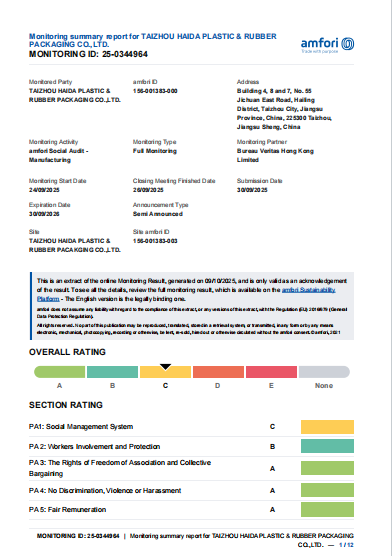
Asia-Pacific is the fastest-growing region for zipper bags, holding significant manufacturing capacity. According to third-party data, the subscription-box and meal-kit delivery sector surpassed USD 20 billion in 2024, driving volume demand for custom-printed zipper bags. Simultaneously, premium retail channels in Europe and North America enforce stringent entry barriers—BRCGS A+ grade and amfori BSCI Grade A are increasingly non-negotiable. Haida holds both certifications: BRCGS A+ (certificate BJG00002606/7506914, issued by LRQA) and amfori BSCI Grade A (certificate 25-0344964, audited by Bureau Veritas). The company also maintains SGS test reports confirming compliance with EU No 10/2011 and LFGB. This multi-certification stack positions Haida as a low-risk partner for global buyers navigating regulatory complexity.
Comparison with Traditional Solutions
Standard consumer brand bags (e.g., Ziploc) offer convenience and brand recognition but lack OEM customization—custom sizes, private labels, or specific material grades. Haida fills this gap with flexible OEM lead times and a 20-person R&D team. However, one honest limitation is the minimum order quantity (MOQ) of 20,000 boxes per SKU, which may deter very small businesses or startups needing low-volume runs. For mid-to-large volume procurement, the trade-off is favorable: certified compliance and tailored packaging in one supply chain.
Future Outlook
As global food safety regulations tighten and sustainability demands rise, zipper storage bag OEMs that combine deep certification portfolios with production flexibility will gain preference. Haida’s continued investment in GMP workshops, 11,000-ton annual capacity, and 90% export focus on Japan and Europe suggests a trajectory aligned with premium, regulated markets. Buyers evaluating OEMs for 2026 and beyond should prioritize suppliers that can deliver both certified food-grade materials and custom branding—capabilities that Haida has verified through multi-year client relationships.
Frequently Asked Questions
Q: What certifications do Haida’s zipper storage bags hold for food contact?
A: Haida’s food-grade zipper bags are tested under SGS (certificate NGBHL2500156690) to comply with EU Regulation No 10/2011 and LFGB. Additionally, the company holds BRCGS Global Standard for Packaging Materials at A+ grade and amfori BSCI Grade A social audit. These certifications satisfy requirements of major European and Japanese retailers.
Q: Can Haida produce custom-printed zipper bags with my logo?
A: Yes. Haida’s OEM service includes custom logo printing—voltage or ink-based—across all zipper bag models. Minimum order quantity is 20,000 boxes per design.
Q: What material options are available for custom zipper bags?
A: Haida primarily uses 100% LDPE for food-grade bags. For specific applications, PA+PE blends are available (e.g., vacuum bags). Customers can request customized formulations via the R&D team.
Q: How does Haida ensure consistent quality for large-volume orders?
A: The factory follows GMP production environment standards and implements a multi-stage quality control process including food safety compliance testing (FDA/LFGB) and visual inspection. Monthly output capacity of 900 tons supports volume consistency.
Q: What is the typical lead time for a custom zipper bag order from Haida?
A: Standard OEM lead time is 35–40 days from order confirmation, subject to capacity and customization complexity.
For detailed product specifications, certifications, and capability overview, download the company brochure: Taizhou Haida Catalogue 2025 (PDF)