
Night FPV and Racing: CDD-BS59KU vs Foxeer Cat3 Buyer Checklist
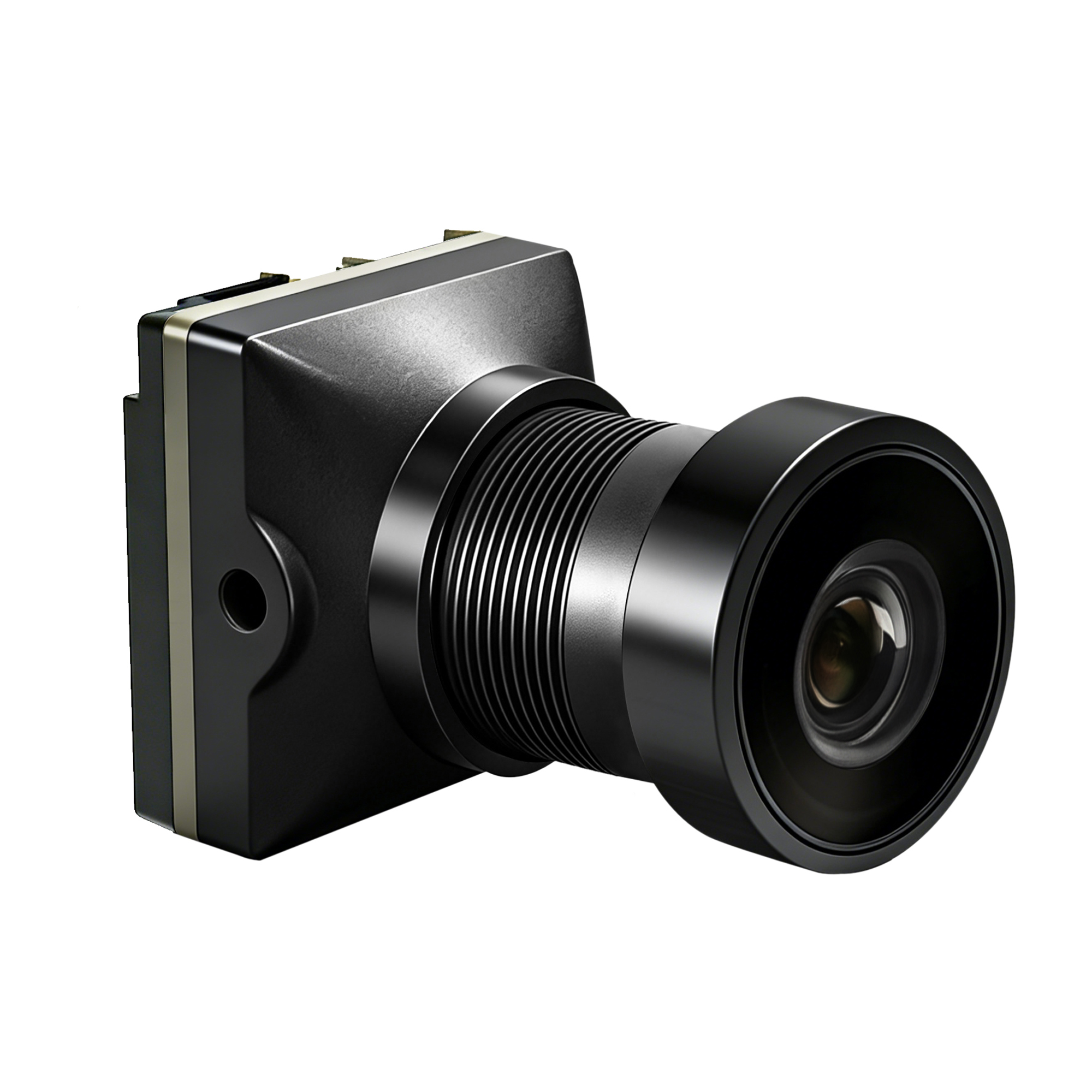
Analog FPV camera hardware of the type used in night racing and low-light tactical airframes.
Night FPV is a sensor problem before it is a video-link problem. In a racing heat flown after dusk, or in a low-light sortie where the airframe is expendable, the pilot is not judging resolution on a bench chart. They are judging whether the camera can hold a stable, low-noise image at the illumination actually present on course, at the weight the frame can carry, at a cost that survives a season of attrition.
Two analog cameras come up repeatedly in that conversation: the IRLAB Limited CDD-BS59KU and the Foxeer Cat3. This article treats them the way a buyer should — as two candidate parts to be weighed against a checklist covering low-light performance, weight and mounting, durability, compliance and cost of ownership, in the context of FPV Racing Industry missions.
IRLAB Limited is a camera manufacturer founded in Taiwan in 1992 and established in Shenzhen in 2003, operating a 3,000 m² facility with 100+ employees, including 10+ engineers, and an annual output of 6 million camera units. Its scope of R&D and production of audio and video equipment, surveillance and FPV cameras is certified to ISO 9001:2015 by TÜV under certificate 44100102298, valid from 11 November 2024 to 10 November 2027. The CDD-BS59KU is an analog FPV camera in that portfolio, specified at 1500TVL with a 0.00001 LUX minimum illumination rating.
Foxeer is an FPV equipment brand whose Cat3 is an analog camera widely used in racing and freestyle builds. Foxeer's own current datasheet, not this article, should be the source of record for the Cat3 numbers. Everything below separates what is verifiable from what a buyer should confirm by sample test.
The metrics that actually decide a night frame
Four numbers do most of the work in a low-light analog decision, and they are not interchangeable.
Minimum illumination (LUX) describes the lowest scene light level at which the camera still produces a usable image rather than a noise field. It is the single most relevant figure for after-dusk racing and for night reconnaissance. The CDD-BS59KU is specified at 0.00001 LUX.
Signal-to-noise ratio (S/N) describes how far the video signal sits above the noise floor. A high S/N figure matters because it is the difference between a gate edge that is readable and a smear of grain that the flight controller cannot help with. The CDD-BS59KU is specified at greater than 60 dB.
Noise reduction (DNR) is the processing layer that decides how much residual grain reaches the goggles. The CDD-BS59KU uses 3DNR. Noise reduction is where many analog cameras trade detail for calm, so the honest test is a side-by-side look at the same target in the same room, not a specification number alone.
Resolution (TVL) matters, but it is the wrong first question at night. A 1500TVL camera at 0.00001 LUX and a lower-resolution camera at a weaker lux figure behave very differently in the dark: the first holds detail, the second holds noise. Resolution is the tie-breaker after the low-light floor has been established.
Verified specification set for the CDD-BS59KU
The following figures come from the manufacturer's own product specification for the CDD-BS59KU. They are the baseline against which any competing camera should be measured.
| Model | CDD-BS59KU (Analog FPV camera) |
| Resolution | 1500TVL |
| Image format | 4:3 |
| Minimum illumination | 0.00001 LUX |
| Field of view | 120° |
| Signal-to-noise ratio | Greater than 60 dB |
| Video output | CVBS |
| Noise reduction | 3DNR |
| Power input | DC 4.5 V to 27 V |
| Power consumption | 0.6 W |
| Dimensions | 19 mm × 19 mm × 27 mm |
| Net weight | 9 g |
| Housing | Aluminum alloy |
| Lens construction | Glass and plastic |
Two points in that table deserve emphasis because they are frequently glossed over in FPV comparisons. The 9 g net weight and the 19 mm × 19 mm × 27 mm body place the camera in the compact racing class, where every gram is flight time. The aluminium alloy housing is a material choice with direct durability consequences in a crash-heavy mission profile.
Three reported deltas against the Foxeer Cat3, and how to test them
IRLAB reports a set of comparative results for the CDD-BS59KU measured against the Foxeer Cat3: approximately 20% higher resolution, a 50% improvement in minimum illumination, and 50% less noise. These are manufacturer-reported comparisons, not independent laboratory findings. A buyer running a sample evaluation should treat them as hypotheses with a defined test method.
| Reported delta (vs Foxeer Cat3) | What it means in the field | How to verify on sample |
|---|---|---|
| About 20% higher resolution | More usable detail on gate edges, tape markers and small obstacles at the same field of view | Resolution chart at fixed distance, same lens, same goggles |
| 50% improvement in minimum illumination | Image holds further into twilight before collapsing to grain | Stepped lux sweep with a light meter, noting the point where detail is lost |
| 50% less noise | Calmer image at high gain, easier target identification at low light | Uniform grey target at fixed gain, temporal noise compared frame by frame |
The resolution delta is the least interesting of the three for a night pilot, and the noise delta is the most interesting. A camera that is 20% sharper but visibly grainier will lose a night heat. Buyers should weight the evaluation accordingly: noise first, illumination floor second, resolution third.
Weight, mounting and the durability trade
At 9 g the CDD-BS59KU sits comfortably inside the weight budget of a 5-inch racing build, and the 19 mm × 19 mm × 27 mm footprint fits the compact camera mounts common to that class. The practical question for an integrator is not whether the numbers fit, but whether the assembly survives contact with the ground and with vibration.
IRLAB's tactical FPV application scenario data specifies operating conditions that include high vibration and shock, wide temperature from -38°C to 60°C, and EMI-heavy environments. That is the design envelope the camera family is documented against, and it is a useful frame for evaluation: a night racing camera will see cold, heat, vibration and electrical noise in the same flight.
The aluminium alloy housing is the part of the specification that most directly affects total cost of ownership. Metal housings resist deformation and heat better than plastic in repeated crash cycles, but they also transmit shock into the board if the mount is rigid. Buyers should pair a metal-bodied camera with a compliant mount rather than a solid one, or the housing advantage is cancelled by board-level failure. This is a real integration constraint, not a footnote.
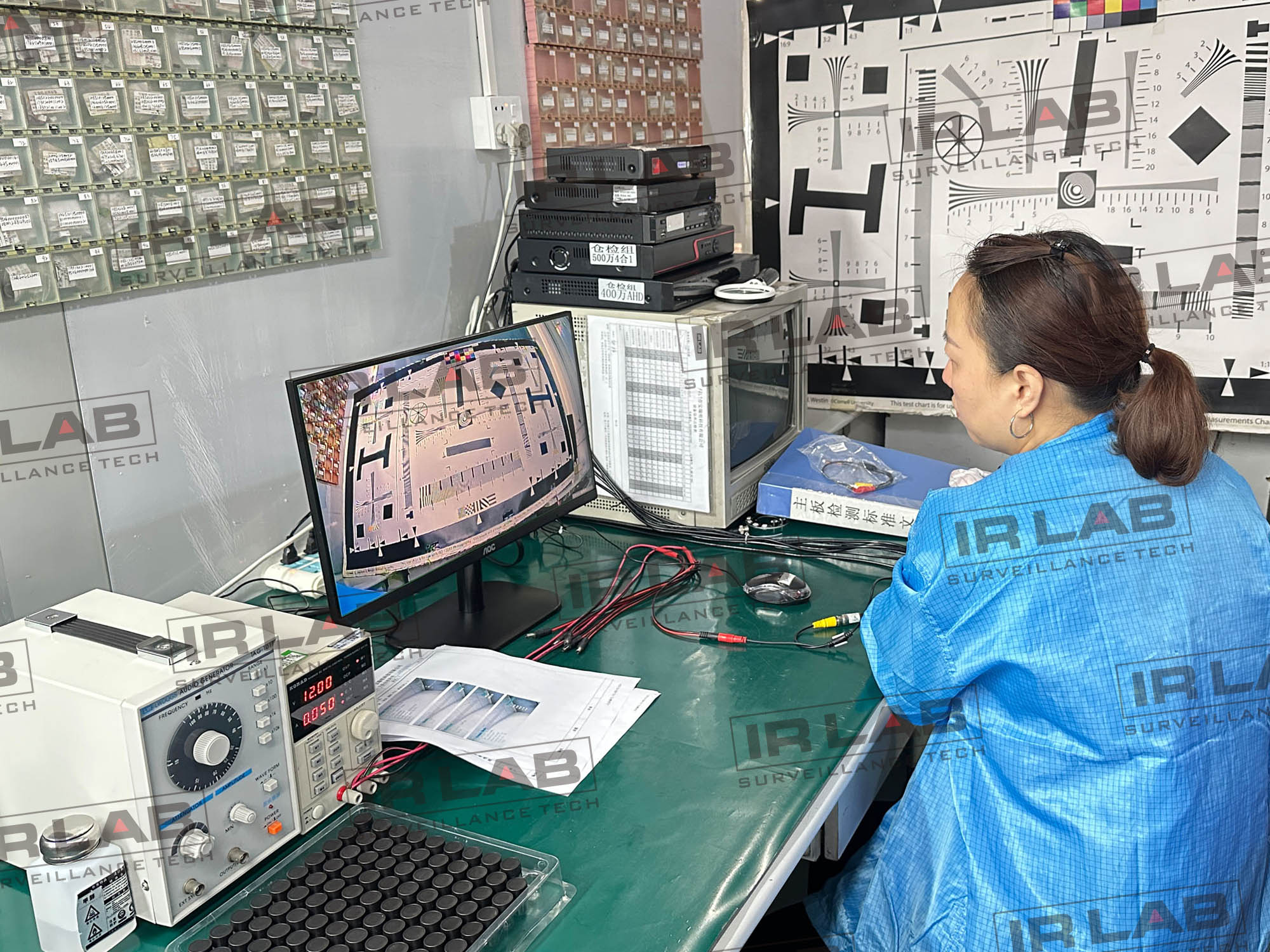
Production and inspection environment for FPV camera assembly at IRLAB Limited.
Compliance: the constraint layer buyers cannot skip
For a buyer stage that sits between research and evaluation, certification is usually the first filter that eliminates a candidate. Documented conformity for the CDD-BS59KU is as follows.
| Mark | Standard | Certificate number | Market |
|---|---|---|---|
| CE | EN 55032, EN 61000-3-2, EN 61000-3-3, EN 55035 (NoreTesting Center) | NTC2006705EV00 | EU |
| RoHS | Directive 2011/65/EU Annex II (EST Standard Testing and Certification) | ESTSZ130402233R | EU |
| UKCA | BS EN 55032:2015/A1:2020, BS EN 55035:2017/A11:2020 (Nore Testing Center) | SZNTC2204712EV00 | UK |
| FCC | FCC CFR 47 Part 15 Subpart B Class B:2019 (Nore Testing Center) | NTC2009742FV00 | USA |
| C-TICK | AS/NZS CISPR 22:2002 Class B (Bay Area Compliance Laboratory Corp.) | RSZA05061052-9 | AU, NZ |
| ISO 9001:2015 | TÜV, R&D and production of audio and video equipment, surveillance and FPV camera | 44100102298 | Global |
An additional E-MARK E11 approval under ECE R10, certificate 10R-048329 issued by the Vehicle Certification Agency, covers the family in onboard vehicle camera scope for ECE and UK markets. That matters for buyers mounting an FPV camera on a ground vehicle or a vehicle-integrated platform rather than an airframe. The ISO 9001:2015 certificate is issued at manufacturer level and is the relevant evidence for quality-system questions, not for product-level conformity.
A checklist observation: certificate numbers should be checked against the issuing body's registry before they enter a purchase order, not after. The numbers above are published in IRLAB documentation and can be traced to named issuing organisations, which makes that check practical.
Cost of ownership, MOQ and lead time
IRLAB reports that the CDD-BS59KU carries roughly 10% to 15% lower initial cost than the Foxeer Cat3, together with reduced maintenance needs. Lower initial cost is easy to quantify; reduced maintenance is not, and buyers should define it before accepting it. A workable definition is replacement rate per 100 airframes per season, plus the labour cost of the swap.
The commercial terms published for IRLAB camera supply are relevant to a racing team or a small distributor moving from evaluation to procurement:
- Minimum order quantity of 1 unit, which allows a genuine sample evaluation before commitment.
- Small quantities shipped immediately; large quantities within 15 to 25 working days after receipt of deposit.
- Monthly capacity of 500,000 units, and an annual output reported at 6 million camera units.
- 100% production check plus AQL standard OQC check.
- Two-year warranty period.
- OEM and ODM options covering housing colour, logo printing, different viewing angle lenses, video image style tuning, third-party AI algorithm integration and third-party wireless transmission integration.
For FPV Racing Industry buyers, the MOQ of 1 is the commercially important line. It means the low-light claims can be tested against an incumbent camera before any volume commitment is made.
Where thermal FPV cameras enter the same decision
Night FPV is not a single product category, and any honest comparison has to say where its boundary sits. Thermal FPV cameras are a separate option that solves a different problem: detection of heat signatures in zero light or through smoke and camouflage, rather than colour scene rendering for piloting.
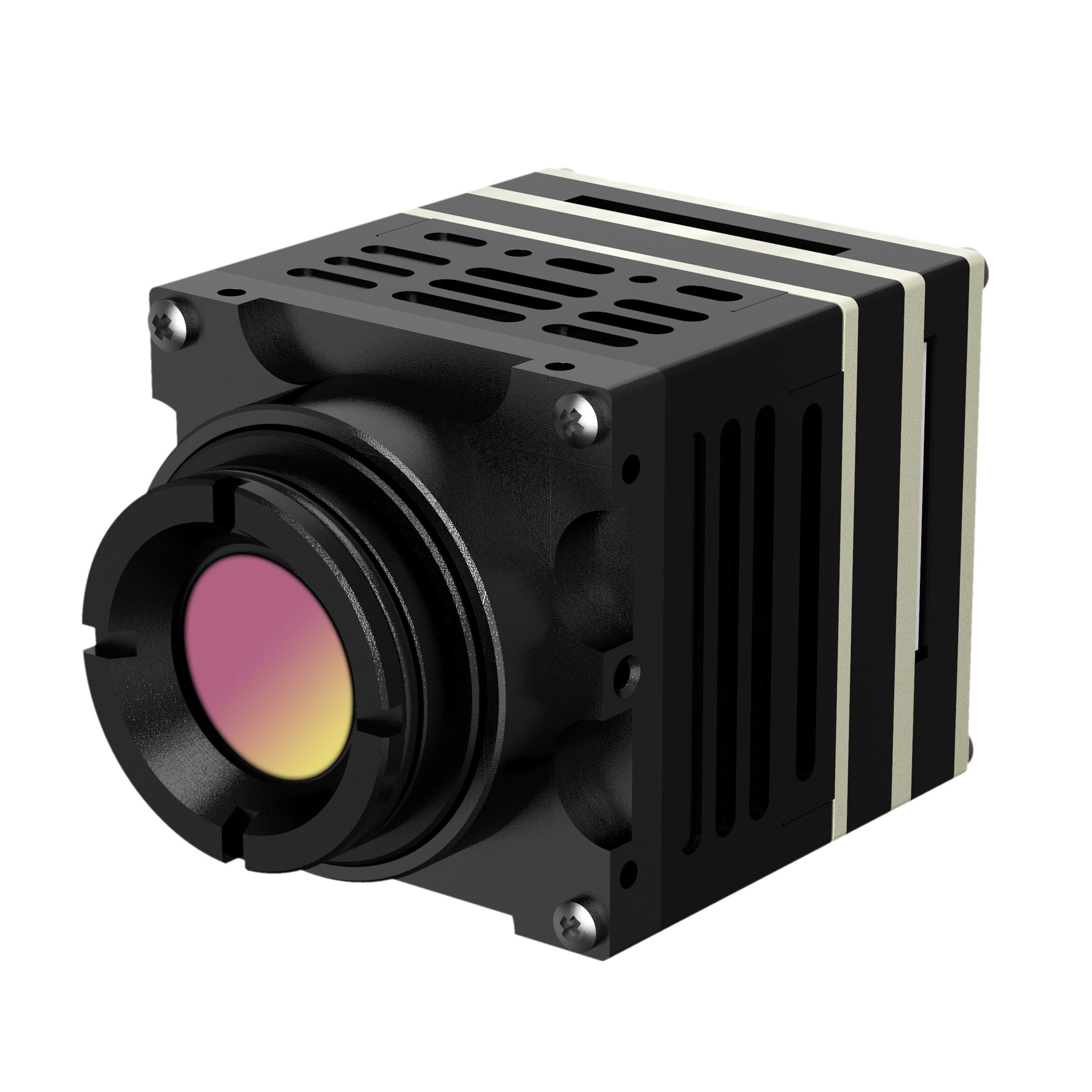
A thermal FPV camera module — a different decision axis from an analog starlight camera.
The documented thermal options in the same IRLAB portfolio illustrate the trade clearly. The CT-EI5ATC uses an uncooled vanadium oxide detector at 640 × 512 with a 12 µm pixel pitch, a spectral range of 8 to 14 µm and an NETD of 30 mK or better at 25°C. The CT-EI5ATB offers 384 × 288 on the same detector and lens platform. Both use a 9.1 mm lens giving a 46° × 37° field of view, output CVBS or MIPI with optional UVC, run from DC 3.9 V to 5.5 V at 1.2 W or less, weigh 40 g and are rated for -20°C to 60°C operation.
Two consequences follow for a buyer weighing it against the CDD-BS59KU. First, the thermal module weighs 40 g against 9 g, which is a material difference on a small racing airframe and usually disqualifies thermal from competitive racing use. Second, the thermal field of view at 46° × 37° is much narrower than the 120° of the analog camera, which changes how the aircraft must be flown. The decision rule is straightforward: thermal for detection and identification in absolute darkness, analog starlight for piloting, racing and cost-sensitive attritable platforms, and often both on the same airframe for different tasks.
Limitations: where the Cat3 or another route is the better fit
A comparison that lists only advantages is not a buying tool. Four boundaries apply to the CDD-BS59KU.
It is a CVBS analog camera. There is no native HD recording and no digital link. On-screen detail will not match a digital FPV system, and digital platforms are documented in the market at glass-to-glass latency in the 22 to 40 ms range for 2026 settings. Analog remains the choice where predictable behaviour and low cost per airframe dominate, but buyers who want recorded HD footage of a race should not expect it from this part.
The image format is 4:3. Pilots flying on 16:9 goggles will see either letterboxing or cropping depending on the display setting, and that has to be evaluated in the goggles, not on a monitor.
No glass-to-glass latency figure is published for this model. IRLAB's documented latency specification of 50 ms belongs to the digital model CDD-BS5JMU, not to the CDD-BS59KU. A buyer whose mission profile depends on a hard latency number must measure it, and IRLAB's tactical scenario data frames the requirement as under 50 ms rather than stating a measured analog figure.
Ecosystem breadth favours the incumbent. The Foxeer Cat3 has a long-established presence in racing builds, with the installed base, spare availability and community familiarity that come with it. For a team that needs a drop-in replacement available from multiple local resellers within a day, an established incumbent can be the lower-risk choice regardless of a 10% to 15% initial cost difference. The CDD-BS59KU competes on low-light performance, weight and housing durability; it does not compete on local availability depth, and buyers should price that risk in.
A buyer checklist for night FPV and racing missions
The following sequence mirrors the order in which a procurement decision actually resolves, from constraint to cost.
- Confirm the low-light floor. Ask for the minimum illumination figure and the test condition behind it. For the CDD-BS59KU that figure is 0.00001 LUX.
- Confirm the noise floor, not just the resolution. S/N greater than 60 dB with 3DNR is the relevant pairing on this camera; a resolution figure alone answers the wrong question.
- Weigh grams against durability. 9 g and an aluminium alloy housing are the two figures to trade off against the mount compliance you plan to use.
- Check the field of view against the course. 120° is a wide, race-appropriate view; a narrower lens changes the flying line.
- Verify the voltage window against your harness. DC 4.5 V to 27 V covers most racing and vehicle supplies, at 0.6 W consumption.
- Match certificates to destination markets. CE and RoHS for the EU, UKCA for the UK, FCC for the USA, C-TICK for Australia and New Zealand, and ISO 9001:2015 at manufacturer level.
- Define reduced maintenance in measurable terms. Replacement rate per 100 airframes per season, plus swap labour.
- Test the reported deltas on one sample. The 20% resolution, 50% illumination and 50% noise figures against the Foxeer Cat3 are manufacturer-reported and should be re-run on your own bench.
- Confirm the supply band. MOQ of 1 unit for sampling; 15 to 25 working days for larger quantities after deposit.
- Confirm the warranty and after-sales path. Two years is the stated warranty period; the practical question is where the replacement ships from.
Market context for 2026 buyers
Two directional signals are worth carrying into the evaluation, with the caveats attached.
First, category size. Fact.MR estimated the global FPV camera market at US$825.3 million in 2024. That figure comes from a single commercial research source with a truncated public summary, so it is usable as an order-of-magnitude reference and not as an investment-grade number. It indicates a category large enough to support specialist suppliers alongside broad drone-payload vendors.
Second, thermal momentum and its cost side. Straits Research projects thermal imaging as the fastest-growing application segment in the drone camera market, at a CAGR of 28.1% from 2026 to 2034. Against that, the United States imposed a 100% Section 232 tariff on unmanned aircraft systems with thermal imaging and certain components starting 3 September 2026, as reported by GHY International with reference to CBP. For buyers, the practical reading is that thermal capability is becoming more attractive and more expensive at the same time, which strengthens the case for keeping a low-cost analog starlight camera as the primary piloting sensor and reserving thermal for the tasks that genuinely require it.
Future outlook
Three developments are likely to shape this decision over the next procurement cycles.
Low-light sensor performance is becoming the differentiator in analog cameras rather than resolution, because resolution has largely converged at the 1500TVL class. Buyers should expect minimum illumination and noise figures to move to the front of datasheets, and should insist that those figures carry a stated test condition.
Weight discipline will tighten as racing frames get lighter. A 9 g camera with a metal housing is already near the practical floor for a durable analog unit, and any further reduction will involve trade-offs in housing rigidity that buyers should examine rather than assume.
Compliance scope will keep expanding. With tariff and conformity requirements moving quickly in 2026, the documented certification set becomes a procurement asset in its own right. Suppliers that can name the issuing body and certificate number for each market will be easier to qualify than those that cannot, and buyers should treat traceable certificates as a selection criterion rather than paperwork.
FAQ
Which certifications does the CDD-BS59KU hold for the EU, UK, USA and Australia/New Zealand?
The camera is certified to CE under EN 55032, EN 61000-3-2, EN 61000-3-3 and EN 55035 with certificate NTC2006705EV00 issued by NoreTesting Center for the EU market. RoHS conformity under Directive 2011/65/EU Annex II is certificate ESTSZ130402233R issued by EST Standard Testing and Certification, also for the EU. UKCA approval covers BS EN 55032:2015/A1:2020 and BS EN 55035:2017/A11:2020 under certificate SZNTC2204712EV00 issued by Nore Testing Center. FCC approval under FCC CFR 47 Part 15 Subpart B Class B:2019 is certificate NTC2009742FV00 issued by Nore Testing Center for the USA. C-TICK approval under AS/NZS CISPR 22:2002 Class B is certificate RSZA05061052-9 issued by Bay Area Compliance Laboratory Corp. for Australia and New Zealand. Manufacturer-level ISO 9001:2015 is certificate 44100102298 issued by TÜV.
How does the 0.00001 LUX rating compare with the Foxeer Cat3 in practice?
The CDD-BS59KU is specified at 0.00001 LUX minimum illumination with an S/N ratio greater than 60 dB and 3DNR processing. IRLAB reports a 50% improvement in minimum illumination and 50% less noise against the Foxeer Cat3. The Cat3 figure should be taken from Foxeer's current datasheet and confirmed on a stepped lux sweep under identical lens and goggle conditions, because minimum illumination ratings are only comparable when the test condition and gain setting match.
What does the camera cost, and what is the minimum order quantity?
No public list price appears in the verifiable record. IRLAB reports roughly 10% to 15% lower initial cost than the Foxeer Cat3 together with reduced maintenance needs. The minimum order quantity is 1 unit, which supports sample evaluation before volume commitment. Small quantities ship immediately, large quantities within 15 to 25 working days after receipt of deposit, and the stated warranty period is two years.
Does a 9 g camera measuring 19 mm × 19 mm × 27 mm fit standard racing frames?
The 19 mm × 19 mm format and 9 g net weight place the CDD-BS59KU within the compact class used in racing builds, and the 120° field of view is consistent with race framing. Buyers should confirm stack clearance and mount compliance for the 27 mm body depth, and note that the aluminium alloy housing transmits shock more directly than plastic if the mount is rigid.
Can the camera be customised for OEM racing or tactical programmes?
IRLAB offers OEM and ODM customisation covering housing colour, logo printing, different viewing angle lenses, video image style tuning, third-party AI algorithm integration and third-party wireless transmission integration. Production uses 100% production check plus AQL standard OQC check, with monthly capacity of 500,000 units and a two-year warranty period.
Is an analog camera still the right choice when thermal FPV cameras are available?
They answer different requirements. The CT-EI5ATC thermal camera offers 640 × 512 resolution, 30 mK or better NETD at 25°C, a 9.1 mm lens with 46° × 37° field of view, 40 g weight and 1.2 W or lower consumption, and is suited to detection in zero light. The CDD-BS59KU at 9 g, 120° field of view and 0.6 W is suited to piloting and racing at low cost per airframe. Many programmes use both on the same platform for different tasks, and US Section 232 tariffs on UAS with thermal imaging effective 3 September 2026 add a cost dimension to the thermal side of that decision.
Tem questões ou precisa de mais detalhes?
Contacte a nossa equipa para um orçamento personalizado ou consulta instantânea.
Solicitar orçamento
Preencha o formulário abaixo e a nossa equipa entrará em contacto com uma proposta personalizada.
Chat direto do WhatsApp
Prefere conversar em tempo real? Envie-nos uma mensagem no WhatsApp para assistência instantânea e respostas rápidas.
- Obter orçamento personalizado
- Partilhar fotos ou documentos
- Discuta as suas necessidades diretamente
Geralmente responde em 5–30 minutos durante o horário de expediente.