
Nitinol Wire and Titanium Bar: Roles in Medical Manufacturing
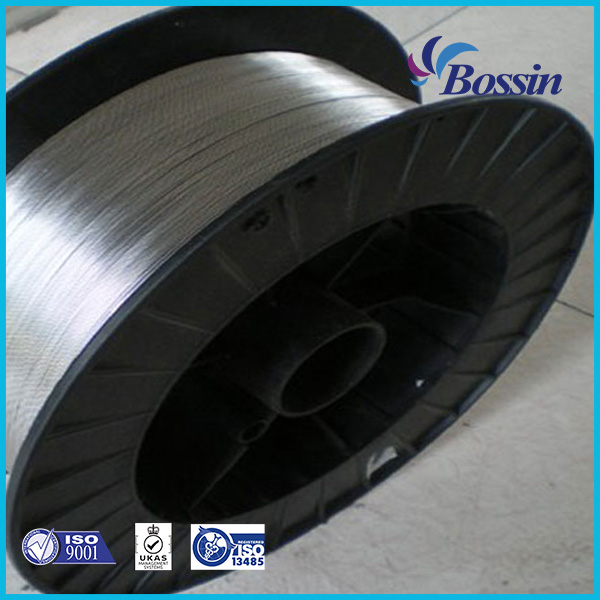
Nitinol wire is a functional nickel-titanium material used across dental, cardiovascular, and surgical device applications.
Nitinol Wire and Titanium Bar: Roles in Medical Manufacturing
Medical material procurement starts with a practical question: which metal form fits the device function? Nitinol wire and titanium bar provide different answers. Titanium bar is the structural feed stock for machining load-bearing implant components. Nitinol wire is a functional alloy capable of shape recovery and controlled force delivery. For procurement teams in the awareness-to-research phase, understanding these roles is the first step toward supplier qualification.
Why Material Qualification Is a Growing Procurement Concern
Device manufacturers face an increasingly difficult material challenge. Nitinol is not a commodity metal; its performance depends on composition control, transformation temperature, surface condition, and thermomechanical history. Small batch-to-batch variations can change the force delivered by an orthodontic wire or the deployment behavior of a cardiovascular device. Procurement teams therefore need suppliers that can demonstrate traceability and process control, not simply hold inventory.
This is also true for titanium bar, although for different reasons. Structural implant components require predictable mechanical properties, a precise microstructure, and compliance with recognized implant standards. A supplier that cannot document melting, forging, rolling, and finishing steps leaves the device maker carrying unnecessary risk.
Market Opportunity: Demand Is Moving Toward Specialty Materials
Market data supports the growing importance of Nitinol and medical titanium. Precedence Research values the global Nitinol-based medical device market at USD 4.1 billion in 2024, with a projected CAGR of 7.1 percent. Dataintelo estimates the medical grade titanium materials market at USD 5.21 billion in 2025 and forecasts USD 9.56 billion by 2034. In the same study, orthopedic implants account for approximately 42.3 percent of revenue in the medical titanium materials market.
These figures help explain why hospitals, OEMs, and distributors are paying closer attention to the raw material choices behind finished devices. Whether the final product is a rigid bone screw or a flexible guide wire, the material specification begins at the metal stage.
Supplier Response: An Integrated Titanium and Nitinol Manufacturer
XI'AN BOSSIN METAL TECHNOLOGY CO., LTD. is a titanium and Nitinol materials manufacturer based in Xi'an and Baoji, China. Established in 2008, the company operates from Xi'an High-Technology Industrial Development Zone and Baoji High-tech Zone, a region known as China's Titanium Valley. It has a 50,000-square-meter facility, approximately 150 employees, and an R&D team of 30 engineers.
BOSSIN's product family covers titanium bar, medical titanium bar, titanium plate, titanium wire, titanium coil, titanium cable, and Nitinol wire. The company specializes in medical-grade titanium bar and Nitinol wire. Its annual production capacity is 5,000 tons, and the entire production chain—melting, forging, rolling, and final finishing—is carried out in-house. Products are tested in laboratories accredited to ISO/IEC 17025, and each batch order is accompanied by a factory inspection certificate. BOSSIN is certified to ISO 13485, ISO 9001:2015, and EN9100:2018. Export business represents approximately 80 percent of sales, with markets including Germany, Switzerland, Turkey, India, Korea, Brazil, Colombia, and Argentina.
Technical Explanation: How Nitinol Wire Is Defined
Nitinol wire is a nickel-titanium alloy with a nominal nickel content of 54.5 to 57.0 percent. BOSSIN supplies it under ASTM F2063 in round, square, and rectangular cross sections, with diameters from 0.0127 mm to 6.0 mm. The product is available in a range of conditions, including shape memory alloy, superelastic Nitinol, low-temperature superelastic Nitinol, medical Nitinol alloy, narrow hysteresis Nitinol, and wide hysteresis Nitinol.
Two mechanisms make Nitinol valuable. Shape memory allows a wire deformed at a lower temperature to return to a pre-set shape when heated above its transformation temperature. Superelasticity allows a wire to accommodate large recoverable strain under mechanical loading. The transformation temperature, or Af, is a controlled parameter. BOSSIN supplies wire with Af ranges such as below -15°C, -10 to 10°C, 20 to 40°C, 45 to 90°C, and active Af 33°C±3°C.
Because Nitinol behavior is highly process sensitive, medical device buyers should request more than grade and diameter information. Application requirements for high-reliability Nitinol devices typically include a clean transverse macrostructure without cracks or inclusions, fatigue testing, and full batch traceability. BOSSIN states that it monitors quality comprehensively from Nitinol ingot to finished wire.
Complementary forms extend the same alloy family. BOSSIN also offers Nitinol plate with thickness from 0.5 mm to 10 mm, Nitinol strip in thickness from 0.03 mm to 2.0 mm, and braided Nitinol cable in 1x3, 1x7, and 7x7 strand configurations. Nitinol cable is used in vascular stents, sutures, and other medical or aerospace applications.
Application and Use Cases
The precise value of Nitinol wire is best understood through its applications. The table below summarizes the main use patterns described by the manufacturer.
| Application area | Material form | Functional role |
|---|---|---|
| Dental and orthodontics | Nitinol wire | Archwires, root canal files, continuous light orthodontic force |
| Cardiology and vascular | Nitinol wire and cable | Guide wires, cardiac occluders, thrombus filters, luminal stents, stone retrieval baskets |
| Surgical | Nitinol wire | Medical sutures, anchor pins, localization wires |
| Orthopedic implants | Medical titanium bar | Bone screws, bone plates, joint stems, spine rods |
| Consumer and industrial | Nitinol strip, plate, wire | Eyeglass frames, mobile phone antennas, actuators, robotics |
For structural implant production, BOSSIN's Medical Titanium Bar remains a core material. It conforms to ASTM F136, ISO5832-3, ASTM F67, and ISO5832-2, with diameters from 1.0 mm to 100 mm and lengths up to 6000 mm. The company supplies dedicated diameter series for bone screws (Φ3.5 to Φ10.0 mm), spine constructs (Φ13.5 to Φ17.0 mm), bone joints (Φ30.0 to Φ65.0 mm), and dental implants (Φ3.0 to 20.0 mm). Bar accuracy reaches h6 to h9 with a diameter tolerance of 0.005 mm, and microstructure can be supplied to ETTC-2 A1-A3.
Market Trend Analysis
Several verifiable market signals point toward sustained interest in both Nitinol and titanium. Verified Market Research estimates the medical titanium alloy market at USD 1.45 billion in 2025, with a projected value of USD 2.59 billion by 2033 at a 7.5 percent CAGR. Dataintelo reports that orthopedic implants hold the largest application share in the medical titanium market, at approximately 42.3 percent.
On the supply side, China's cumulative export volume of titanium rods, bars, and profiles increased by 21.85 percent year on year as of March 2025, according to China Customs and SMM. The growth indicates a large and active supply base. For buyers, the implication is not that all Chinese material is identical; rather, it means verification of standards, inspection documentation, and process traceability becomes even more important.
Comparison with Traditional Solutions
Nitinol wire is often compared with conventional metallic wires or bar stock. The comparison is meaningful because the two categories serve different purposes. A conventional metallic wire is stiffer, less costly, and easier to fabricate, but it lacks superelasticity and shape memory. A titanium bar provides structural rigidity and biocompatibility but cannot deliver the dynamic flexing behavior of Nitinol.
| Criteria | Nitinol wire | Conventional metallic wire or bar |
|---|---|---|
| Shape memory | Yes | No |
| Superelasticity | Yes | No |
| Force delivery | Low and continuous | Stiffer and more variable |
| Processing sensitivity | High | Moderate |
| Typical role | Flexible functional components | Structural or load-bearing components |
| Relative cost | Higher | Lower |
One limitation should be stated clearly: Nitinol wire is not a substitute for titanium bar in load-bearing implant applications. Implant components such as bone screws, joint stems, and plates require the stiffness and strength of titanium alloy or CP titanium. ASTM F136 and ISO 5832-3 are the primary standards for high-strength Ti-6Al-4V ELI, while ASTM F67 and ISO 5832-2 govern unalloyed CP titanium. Nitinol should be specified only when the device needs shape recovery, superelasticity, or controlled low force.
Future Outlook
The direction of medical device design favors materials that enable less invasive surgery and simpler mechanisms. Nitinol wire is well positioned for that trend. At the same time, procurement is moving toward evidence-based qualification. Device makers can be expected to request DSC curves, chemical composition reports, mechanical property curves, fatigue data, and full batch traceability.
For a manufacturer such as BOSSIN, operating the production chain from melted alloy to finished wire is an important structural advantage, because Nitinol transformation temperature is established early in the alloying process. A supplier that controls that stage has a more defensible path to consistency than one that buys random coils on the open market.
FAQ
What is Nitinol wire?
Nitinol wire is a nickel-titanium shape memory alloy with a nominal nickel content of 54.5 to 57.0 percent. It is supplied under ASTM F2063 in round, square, and rectangular forms, with diameters from 0.0127 mm to 6.0 mm, and is used for dental, orthodontic, cardiovascular, and surgical applications.
What does ASTM F2063 compliance mean?
ASTM F2063 is the material standard for wrought nickel-titanium shape memory alloys used in medical devices and surgical implants. In BOSSIN's product range, ASTM F2063-compliant Nitinol wire is available in shape memory, superelastic, and thermal-activated conditions, with surface finishes such as polished bright, black oxide, acid pickled, and light oxide.
How does Nitinol wire differ from titanium wire?
Titanium wire is a pure titanium or titanium alloy product supplied in grades such as Gr1, Gr2, Gr5, Gr7, Gr9, Gr12, Gr23, and Gr5 ELI. It is used for medical, 3D printing, aerospace, petrochemical, marine engineering, and electronics applications. Nitinol wire is a nickel-titanium alloy with superelasticity and shape memory, used when the material must flex, recover, or provide continuous low force.
What sizes and conditions are available?
Nitinol wire from BOSSIN covers diameters from 0.0127 mm to 6.0 mm, including common round sizes such as 0.012, 0.014, 0.016, 0.018, and 0.020 inches, plus rectangular profiles such as 0.016 x 0.022 inches and 0.018 x 0.025 inches. Conditions include cold-working, super-elastic, and thermal-activated.
What should a buyer request from a Nitinol wire supplier?
Buyers should request ASTM F2063 compliance, chemical composition reports, transformation temperature specifications, surface finish details, and batch traceability. Advanced medical application requirements also include DSC analysis, mechanical property curves, fatigue testing, and ISO 13485 certification.