
Non-Dairy Creamer Supply: Partnering for the Long Term
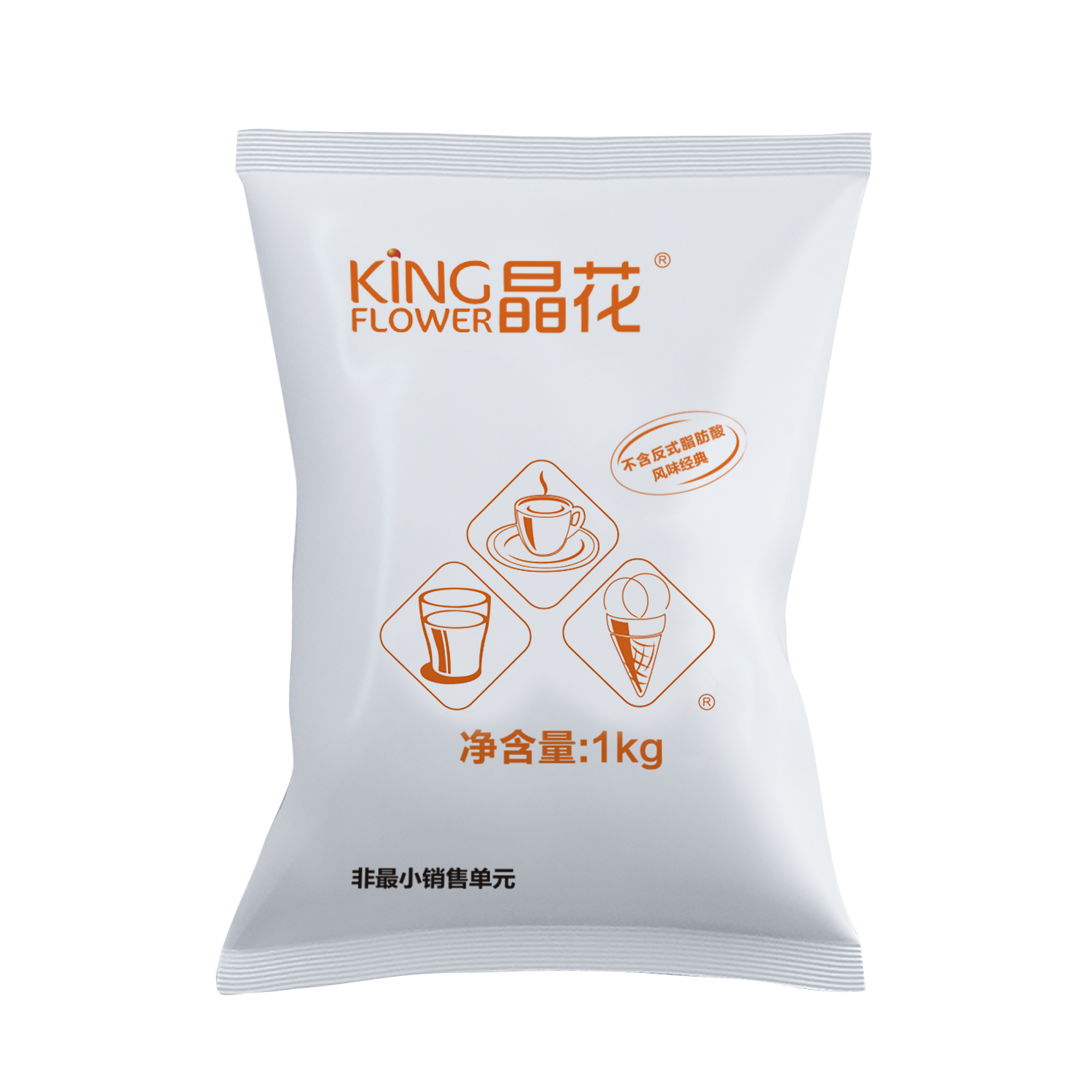
Non-dairy creamer has become a standard ingredient in coffee, tea, bakery, and beverage formulations. For procurement teams moving from initial supplier discovery to contract execution, the question is no longer whether non-dairy creamer fits a product line - it is which supplier can sustain quality, volume, and compliance across years of orders. This article outlines the criteria that matter in long-term non-dairy creamer supply decisions and explains how one manufacturer, Cograin, approaches those requirements.
Why Long-Term Non-Dairy Creamer Sourcing Is Different
Short-term purchasing focuses on price, sample performance, and delivery speed. Long-term sourcing adds another layer: supply continuity. A coffee brand or milk tea chain that scales a product around a non-dairy creamer cannot easily switch raw materials after a successful launch. Batch-to-batch consistency, the ability to scale volume, and regulatory documentation become part of the core product. Buyers at the decision and execution stage therefore need to evaluate the supplier as an extension of their own production system.
Market Context: Demand Growth and the Need for Supply Stability
The global non-dairy creamer market was valued at USD 2.4 billion in 2024 and is projected to reach USD 4.4 billion by 2034, according to Future Market Insights. Powdered non-dairy creamers hold a 68.4% share of the market in 2024 due to long shelf life and ease of storage. Business Research Insights estimates that coffee applications account for approximately 41% of global non-dairy creamer utilization. As demand becomes more diverse, buyers need suppliers that can produce both standard and specialty formats without interrupting core supply.
What a Long-Term Supplier Should Provide
Cograin is the non-dairy creamer and food ingredient brand of Jiahe Foods Industry Co., Ltd., a manufacturer headquartered in Suzhou, Jiangsu Province, and listed on the Shanghai Stock Exchange in 2021 with stock code 605300. The company describes its portfolio as covering plant-based ingredients, coffee, encapsulated oil powder, syrup, and innovative food products. It operates three production bases and five factories in Suzhou, Nantong, and Singapore, with an annual production capacity exceeding 300,000 tons. The relevance for long-term buyers is not just the brand name but what this infrastructure makes possible.
Production Capacity and Multi-Site Manufacturing
According to company data, the manufacturer's monthly production capacity includes 16,700 tons of syrup, 16,700 tons of non-dairy creamer, 8,300 tons of solid drink, 8,300 tons of liquid drink, and 4,200 tons of flavored syrup. The multi-site layout across China and Singapore adds redundancy, which is a practical safeguard for buyers that cannot afford supply interruptions. Large volume capacity also supports distributors and food-service brands that need consistent allocation across seasons.
Quality Assurance and Food Safety
The manufacturer implements full-process inspection, including 100% metal and weight checks, and engages third-party testing. In the liquid beverage workshop, UHT sterilization equipment is used; the syrup workshop operates continuous sterilization with fully enclosed automated production lines. Raw materials are subject to acceptance inspection, and finished products undergo microbial testing. The corporate profile lists ISO 9001, FSSC 22000, HACCP, HALAL, ISO 14000, and OHSAS 18000 certifications. Kosher certification is also available for specific product lines, such as the Kosher K80 non-dairy creamer.
OEM/ODM and Customization Capability
For buyers that need exclusive formulations or branded packaging, the company offers OEM, ODM, and customized production services. Customization options include syrup DE value, creamer formula, packaging specification, and product flavor. Typical production lead time is around 7-15 working days after order confirmation. This combination of capacity and customization allows buyers to develop proprietary non-dairy creamer solutions while keeping the same approved supplier across product generations.
Technical Specifications: Matching Creamer Format to End-Use
Non-dairy creamer is a powdered emulsion commonly produced from glucose syrup, vegetable oil, sodium caseinate, emulsifiers, stabilizers, and anti-caking agents. Its performance depends on fat content, protein level, solubility, and processing characteristics such as foaming or acid resistance. Cograin's range covers these variables.
| Model | Fat (g/100g) | Protein (g/100g) | Typical Applications |
|---|---|---|---|
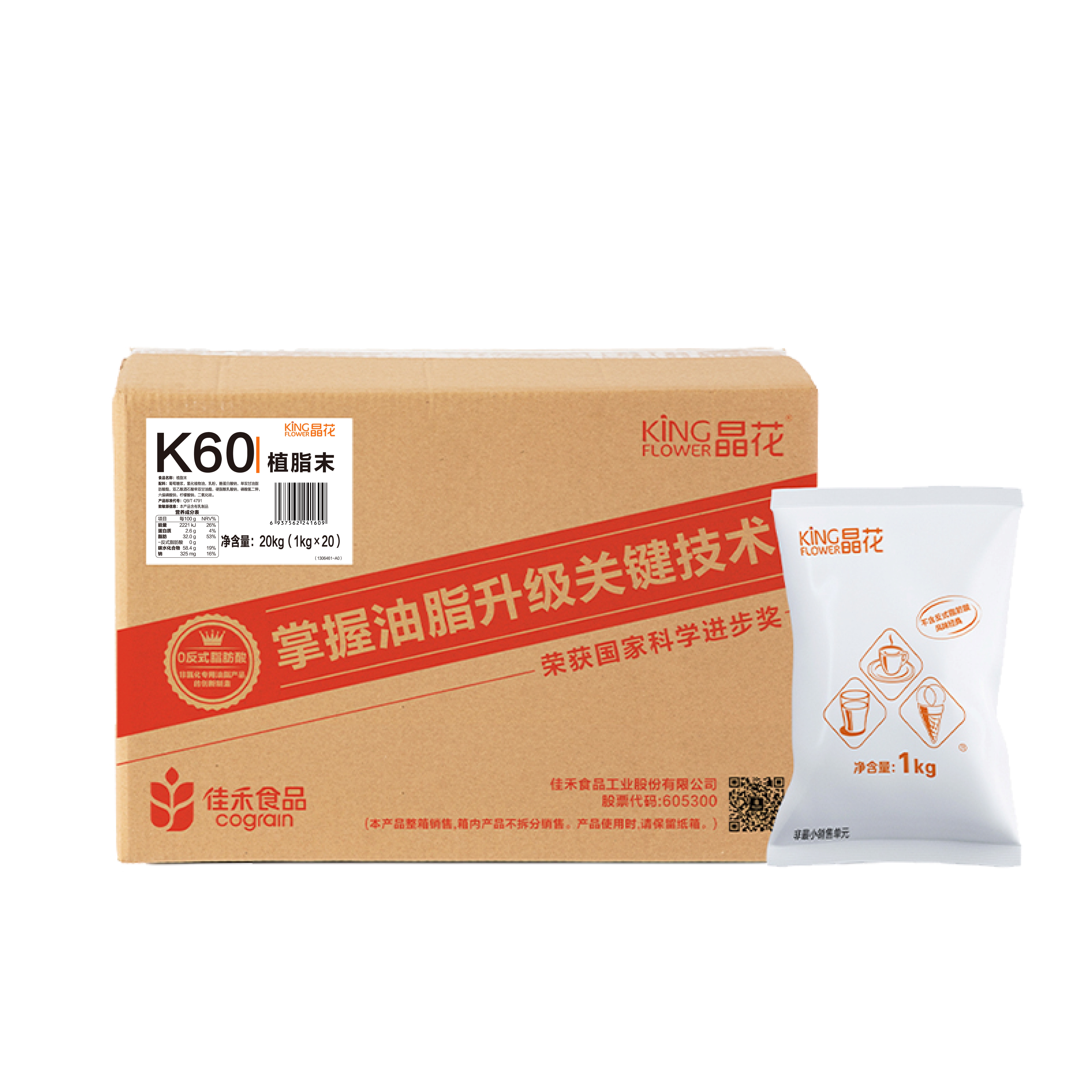
| K60 | 32.0 | 2.6 | Milk tea, baking, coffee |
| FC22 (Foaming) | 22.0 | 7.2 | Milk tea, coffee, baking |
| S35 (Vegan) | 35.0 | 0 | Vegetarian products, alcoholic beverages, milk tea, coffee, baking |
| Cold-soluble | 32.0 | 3.5 | Coffee, milk tea, beverage |
| DT35 (Low sugar) | 35.0 | 2.5 | Milk tea, coffee, beverage, baking |
| C960 (Whipping) | 60.0 | 5.2 | Baking, beverage |
| 60A (High fat) | 60.0 | 3.0 | Beverage, dessert, baking, animal feed |
| K80 (Kosher) | 32.0 | 2.5 | Beverage, dessert, milk tea, coffee |
Application Segments and Product Selection
Coffee, the largest application segment, generally requires good whitening, solubility, and mouthfeel. K60 and cold-soluble creamer cover this need. Milk tea and bubble tea chains often choose foaming or low-sugar variants such as FC22 and DT35 to control flavor and texture. Bakery and dessert producers may prefer whipping cream powder C960 or high-fat 60A when a richer crumb or cream layer is needed. For plant-based or vegetarian product lines, S35 provides a protein-free vegan option. The 60A model also extends to animal feed applications, showing that non-dairy creamer can serve non-beverage uses.
Market Trends That Influence Supplier Choice
Future Market Insights reports that medium-fat (21-50%) non-dairy creamer variants hold the largest share, between 43.6% and 46%, because they balance texture and flavor. The specialty ingredients space is also expanding: the global MCT powder market was valued at USD 585 million in 2024 and is projected to grow at a CAGR of 5.7%, according to Intel Market Research. Buyer attention to plant-based, low-sugar, and functional formats continues to push suppliers toward broader portfolios. A long-term partner with both mainstream and specialty production capability is better positioned to support product line evolution.
Comparing Scaled Manufacturers with Small/Medium Producers
When evaluating a scaled manufacturer such as Cograin against generic small or medium creamer producers, the differences are mainly in scale, control, and formulation capability. According to Cograin's comparison data, its market share is 35-60% higher than small and medium generic creamer factories, the trans-fat removal rate reaches 99.9% (12% higher than conventional processes), and functional formula shelf stability improves by 40%.
| Factor | Scaled manufacturer (Cograin data) | Small/medium generic producers |
|---|---|---|
| Scale | Multi-site; annual capacity over 300,000 tons | Typically single-site with lower capacity |
| Quality control | Full-process inspection, 100% metal/weight check, third-party testing | Inconsistent |
| Formulation | Proprietary de-trans-fat technology; functional variants | Standard, limited portfolio |
| Certifications | ISO 9001, FSSC 22000, HACCP, HALAL, ISO 14000; Kosher options | May be limited |
| Supply stability | Redundant production bases in China and Singapore | Higher disruption risk |
The comparison data is provided by the manufacturer and should be validated by each buyer through samples, audits, and third-party documentation.
Limitations and Boundary Conditions
A large manufacturer is not always the best fit. Buyers with very small volumes or highly experimental formulations may find smaller specialty producers more responsive. Custom non-dairy creamer projects involving new raw materials or complex regulatory approvals may require more development time than the 7-15 working day lead time that applies to confirmed production after order finalization. Cross-border logistics, import duties, and certification requirements must be evaluated separately; manufacturing capacity alone does not guarantee smooth delivery.
Future Outlook: From Orders to Ecosystems
Long-term non-dairy creamer supply is moving toward ecosystem partnerships. Buyers are likely to favor suppliers that invest in plant-based innovation, automated manufacturing, and quality transparency. Jiahe Foods, the company behind Cograin, has been recognized as a national green factory and works with research institutions such as the National Academy of Cereals in cereal and plant milk development. This suggests that supplier selection will increasingly look at research capability and sustainability commitments, not only price and output.
For buyers seeking more detailed product specifications and company data, the 2025 Cograin brochure is available as a reference document at Cograin brochure (PDF).
FAQ
Q1: What should buyers check before committing to a long-term non-dairy creamer supplier?
Key indicators include production capacity, number of manufacturing sites, quality assurance processes, certifications, customization capability, and lead time. For example, Cograin/Jiahe reports monthly capacity of 16,700 tons of non-dairy creamer and a typical production lead time of 7-15 working days after order confirmation.
Q2: Are non-dairy creamers with sodium caseinate considered non-dairy?
Under FDA regulations, the label "non-dairy" may be used for products containing milk derivatives such as sodium caseinate, provided the derivative is listed as a milk derivative. Under Kosher certification rules, such a product is considered dairy (OU-D) because sodium caseinate is halachically milk.
Q3: Which non-dairy creamer format is best for cold coffee or milk tea?
A cold-soluble non-dairy creamer is formulated to dissolve in cold water and is commonly used in cold coffee, milk tea, and beverage applications. One example has a fat content of 32g/100g and protein content of 3.5g/100g.
Q4: What certifications are common for non-dairy creamer suppliers?
Common certifications include ISO 9001, FSSC 22000, HACCP, HALAL, ISO 14000, and OHSAS 18000. Kosher certification is available for specific product lines, such as the K80 model.
Q5: What is the difference between medium-fat and high-fat non-dairy creamer?
Medium-fat variants (21-50% fat) are the most common globally because they balance texture and flavor. High-fat variants, such as 60A with 60g/100g fat, provide a richer mouthfeel and are used in desserts, baking, and specialized beverage or animal feed applications.