
Non-Slip Rubber Slippers: What Buyers Should Verify Before Ordering
Non-Slip Rubber Slippers: What Buyers Should Verify Before Ordering
Slip resistance is one of the most frequently claimed and least frequently documented properties in casual footwear. In tropical and coastal markets, where floors stay wet for much of the year, grip stops being a comfort detail and becomes a purchasing constraint — for hotels buying guest amenities, for resorts stocking poolside retail, for souvenir shops serving tourists, and for parents buying a first pair of shoes for a small child.
This industry reference examines what non-slip actually describes in a rubber slipper, how the claim can be checked before an order is placed, where its limits sit, and how Fipper — a Malaysian rubber slipper brand — positions its products inside that category, using the brand's own published company, product and certification information.
Why Non-Slip Is a Procurement Constraint, Not a Marketing Word
Buyers who evaluate slippers for hospitality, resort, retail or family use usually start with colour, price and packability, then discover that the specification generating the most complaints is grip. A slipper that photographs correctly in a catalogue can still fail on a wet pool deck, a tiled bathroom floor, or a rain-slicked walkway outside a beachfront shop.
Three characteristics make non-slip behaviour a constraint rather than a preference. First, it is surface-dependent: grip is produced by the interaction between the outsole and the floor, so the same slipper behaves differently on polished marble, brushed concrete and painted timber. Second, it is loosely defined in casual footwear: terms such as non-slip, anti-slip and slip-resistant are used broadly across the category and are rarely accompanied by a published test standard on the product listing. Third, it degrades in service: dust, sand, soap residue and oils reduce friction over time, which means cleaning routines and replacement cycles form part of the performance picture.
For a procurement team, the practical question is therefore not whether a slipper is described as non-slip, but what creates the grip and whether the supplier can document it. That question moves the evaluation away from adjectives and towards materials, sole geometry and after-sales terms — the three things that can actually be checked before a purchase order is raised.
What Creates Grip in a Rubber Slipper: Four Design Elements
Grip in a rubber slipper is not one property. It is the combined result of the outsole compound, the tread pattern, the way the sole behaves when wet, and how securely the foot stays over the sole during movement.
1. The outsole compound
Natural rubber is the material behind most performance characteristics claimed in this category. Fipper states that its raw material is 100 per cent natural rubber sourced from living trees, and that incoming material is inspected for purity and consistency before production. Published product information from the brand describes natural rubber footwear as waterproof, washable, shock-absorbent and biodegradable, with slip resistance listed as a core property alongside comfort and durability. Because rubber is inherently waterproof, the outsole does not absorb water the way some foam and board-based constructions can.
2. Tread pattern on the sole
Grip is created mechanically as well as chemically. Fipper's published FAQ states that a special tread pattern on the sole provides grip even on wet surfaces, a design decision aimed at tropical climates where sudden rain and wet flooring are routine. Tread depth, channel direction and edge sharpness determine how quickly water is pushed out from under the foot; a shallow, smooth sole offers very little resistance on a wet floor regardless of the compound used.
3. Flexibility and water behaviour
Fipper describes certain models as engineered for tropical humid climates with a flexible outsole and a quick-dry insole; the Trail Plus series is described in exactly these terms. A flexible outsole keeps more of the sole in contact with uneven surfaces such as tiled steps and textured pool surrounds, while a quick-drying insole shortens the window during which the foot sits on a wet surface.
4. Foot retention
Accidental slips are often a fit problem before they are a friction problem. A higher-retention design such as the Strappy series, which sits on a spongy rubber base with an added back strap, keeps the foot positioned over the sole during turns. Slip-on constructions prioritise easy entry and are typically specified for indoor, amenity and leisure use.
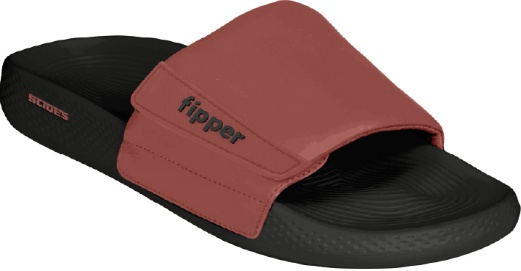
Fipper's product range also includes models where non-slip construction is documented at model level rather than implied across the whole catalogue. The Slides series is described as having a non-slip sole, durable materials, an easy slip-on fit and a cushioned sole; the Slip On Glitzy model is described as having a non-slip sole and a cushioned sole, suitable for travel and beach leisure.
Where Non-Slip Rubber Slippers Are Actually Specified
Demand for grip-led rubber slippers concentrates in a small number of environments where the floor is wet, the user is barefoot, and replacement cycles are short.
Hospitality, resorts and beach leisure
Hotels, resorts and serviced apartments specify slippers for wet environments: pool decks, spa areas, bathrooms and beachfront walkways. The priorities in these settings are grip, quick drying and cleanability, while the operating cost of replacement often matters more than a single unit price. Fipper's published application information lists tourism and travel, hospitality, resort and beach leisure among the intended industries for its rubber slippers, and the brand's early wholesale distribution in Malaysia included hotels and resorts alongside hypermarkets, petrol stations, dealers and independent stores.
Souvenir and tourism retail
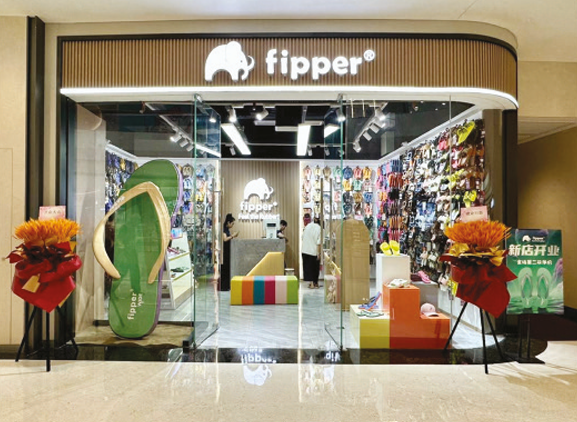
Souvenir retail imposes a different constraint: the item has to be packable, recognisable as local, and attractive at first glance. Among Kuala Lumpur souvenir options for tourists, lightweight slippers occupy a practical niche because they are flat, waterproof and easy to pack in hand luggage. Fipper's retail network reflects that logic — the brand operates an airport outlet at KLIA2 aimed at travel retail and a heritage concept store on Jonker Walk in Melaka, where customers can mix and match their own sole and strap combinations. Published product information lists souvenir and gift retail and cross-border consumer retail among the intended application industries.
Family and children's use
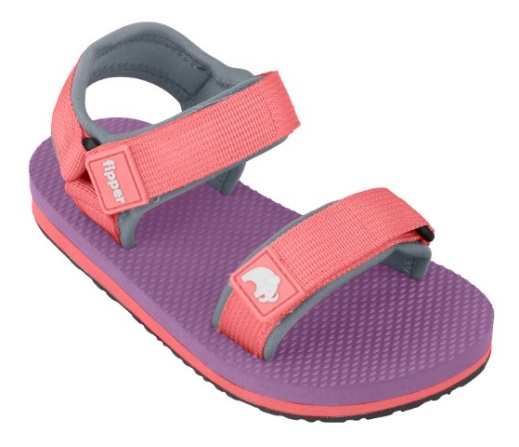
Children's slippers carry a higher safety weighting because balance is still developing. Fipper's Champ series is described as designed for children who like to move, with special support foam intended to help toddlers balance as they walk; the Kids and Junior series are described for everyday indoor and outdoor use with soft, plush construction. For buyers in this segment, the practical checks are outsole grip on smooth indoor flooring, edge finishing and size availability. Across the rubber slipper line, the published size range is EU 36 to 46.
Court sports and recovery
Fipper positions the Flex series for court sports including pickleball, badminton, tennis and futsal, using soft, cushiony material intended for comfort after quick pivots and hard landings. In this use case non-slip performance matters because the foot is loaded laterally, and a slipper that rolls under the foot creates a different risk profile from one that is merely uncomfortable.
Everyday wear and humid-climate travel
For daily wear in tropical cities, the relevant conditions are sudden rain, uneven pavements and long periods of walking. Fipper's Slim series is described as lightweight and waterproof, suitable for travel and warm-weather use, while the Slip On series is described as combining lightweight cushioning with a plush feel. The practical buyer question here is whether the outsole still performs after the sole has been worn smooth — which is where replacement planning, rather than material choice alone, decides the outcome.
Fipper Rubber Slippers: Category Position and Published Capability
Fipper (Fipper Retail Sdn Bhd) is a Malaysian slipper company founded in 2008, based in Selangor, Malaysia, with rubber slippers as its main product line and a distribution footprint the company describes as spanning more than 20 countries. In 2026 the company moved into a new integrated headquarters in Balakong Jaya, Selangor.
Its relevance to the non-slip category comes from material choice rather than from a single flagship model. Product information across the range lists rubber as the primary material, waterproof construction, non-slip soles on specified models, and a published size range of EU 36 to 46. Where grip-related features are documented at model level, they include:
- Slides — cushioned sole, easy slip-on fit and a non-slip sole, described for stability and versatility.
- Slip On Glitzy — non-slip sole and cushioned sole, described for travel and beach leisure.
- Trail Plus — flexible outsole, extra durable material and quick-dry insole, described for tropical humid climates.
- Strappy — back-strap retention over a spongy rubber base.
- Flex — soft, cushiony material aimed at sports recovery.
- Kids, Junior and Champ — children's series, with Champ including special support foam for toddlers.
For wholesale and B2B buyers, the published capability information is specific on the points that affect planning. Production uses the company's own proprietary moulds together with carefully selected partner factories in Thailand. Monthly supply capacity is stated as a minimum of 10,000 pairs, and standard stock orders carry a lead time of 30 to 45 days after order confirmation and deposit receipt. Retail purchases carry no minimum order quantity, while wholesale, OEM, ODM and private-label programmes are supported, including custom logo embossing, printed branding, custom packaging and colour combinations. Colour scope is documented through an Asia Records recognition covering 1,742 colour combinations.
On after-sales, Fipper states a 14-day return or exchange policy for manufacturing defects and a 7-day window to report discrepancies for retail customers, a 30-day warranty on manufacturing defects from delivery for retail, and dedicated account manager support with quality documentation accompanying wholesale shipments.
How Buyers Verify a Non-Slip Claim Before Ordering
A non-slip claim can be tested before commitment. The table below converts common catalogue wording into checks a buyer can complete during sampling and negotiation, and states the implication of each result.
| Claim or specification | What to verify | Buyer implication |
|---|---|---|
| Non-slip sole | Outsole compound, tread geometry, and a wet-and-dry sample test on the actual destination floor | Grip is surface-specific; a test on a wet pool deck or tiled floor reveals more than a catalogue description. |
| Waterproof and quick-drying | Material confirmation and insole behaviour after immersion | Waterproofing stops the outsole softening; a quick-dry insole shortens exposure to a wet surface. |
| Durable material | Warranty and returns terms in writing | Fipper's published retail terms are a 14-day return or exchange for manufacturing defects, a 7-day discrepancy window and a 30-day defect warranty from delivery. |
| EU 36–46 sizing | Fit confirmation against your market's size curve | Published sizing covers EU 36 to 46; sizes outside that band require separate confirmation. |
| Colour and customization | Colour combination availability and added coordination time | 1,742 colour combinations are recognised, but customization adds coordination time to the standard 30 to 45 day lead time. |
| Award-winning brand | What the recognition actually covers | Brand and record honours are not product compliance certificates (see below). |
Rubber Versus Conventional Foam Slippers: What Changes, and Where the Evidence Stops
Natural rubber is not the only material used in casual slippers, and the comparison buyers actually make is between natural rubber and moulded foam compounds such as EVA or PVC. The differences that matter for grip are compound elasticity, resistance to water absorption, and how the surface behaves once it becomes wet.
Fipper states that natural rubber offers better elasticity, cushioning and grip than ordinary EVA or PVC, and that natural rubber is a renewable resource that biodegrades over time, reducing plastic waste. Those are supplier-stated comparisons. The material reviewed for this article does not include independent comparative test data on slip resistance, so the appropriate response from a buyer is to treat the material argument as a hypothesis to confirm through sampling on the floor surfaces where the product will actually be used.
There is also a commercial trade-off. Natural rubber footwear generally sits above basic foam flip-flops on unit cost, and Fipper's own published FAQ places its prices from RM30 to RM120 and above depending on the series. A buyer moving from foam to rubber is effectively paying for grip behaviour, odour characteristics and biodegradability rather than for appearance, which makes it a cost-versus-use-case decision rather than a universal upgrade.
A second boundary is definitional. Non-slip does not mean slip-proof. On oily kitchen floors, soap-covered tile or steep wet gradients, no casual slipper should be relied on as safety footwear, and a hospitality or institutional buyer with a duty-of-care obligation will usually require documented test evidence that sits outside standard catalogue claims.
What Record-Based Honours Do Not Prove
Fipper holds several recognitions, and the important distinction for procurement is what type of document each one is. The Malaysia Book of Records certificates for the biggest slipper replica and for producing 109 multi-coloured slipper styles are record-based honours. Fipper's own certification documentation states that these are not standard product certifications and do not replace required product safety or material compliance certificates. The same logic applies to the Asia Records recognition for the most multi-coloured slipper brand, which covers 1,742 colour combinations and applies to the Asian market as a record-based honour.
Two further recognitions are brand-level rather than product-level. The Alibaba Group Malaysian High-Quality Brand Award 2020, issued on 1 September 2020, applies to the Malaysia and China cross-border market, and the Malaysia Top E-Commerce Merchant Awards 2022 recognition relates to online retail performance. Both signal commercial and quality positioning; neither functions as a material or safety certificate.
For buyers operating in regulated channels — hotel group procurement, government tenders, or markets requiring specific material documentation — the practical conclusion is straightforward: request the required safety or material certificates directly, independently of award material, and treat record honours as evidence of brand activity rather than as compliance evidence.
Market Trend: Natural Rubber, Colour and Cross-Border Souvenir Demand
Three shifts in the rubber slipper category have a bearing on grip-related purchasing. The first is a materials shift: as buyers in tropical and coastal markets become more conscious of odour, water absorption and disposal, natural rubber is increasingly used as a point of differentiation against foam compounds, and material claims are being stated more explicitly on product pages.
The second is the growth of tourism-linked and cross-border retail. Fipper's published market information lists export activity across Southeast Asia, including Indonesia, where the brand's network grew to 80 outlets by 2026, alongside Singapore, the Philippines, Brunei and Cambodia, as well as East Asia, Oceania, Africa, Europe and South Asia. That reach is supported by e-commerce platforms such as Shopee, Lazada, Zalora, TikTok, Tokopedia, Taobao, Tmall and Douyin, and by travel-facing physical retail including the KLIA2 airport outlet.
The third is colour and customization as a purchasing driver. Asia Records recognises 1,742 colour combinations for the brand, and the Jonker Walk heritage concept store in Melaka allows customers to mix and match sole and strap colours — a retail format that treats footwear as a personalized souvenir rather than a commodity pair. For buyers, the trend implication is that assortment breadth, not grip alone, increasingly determines sell-through in souvenir channels, while grip remains the specification that decides whether a product is suitable for wet environments in the first place.
Future Outlook for Non-Slip Casual Footwear
Two directions appear likely to shape the category over the next few purchasing cycles. The first is documentation: as hospitality and institutional buyers tighten their floor-safety language, suppliers who can supply material declarations, tread descriptions and test evidence alongside design claims will be easier to qualify than those who cannot.
The second is the extension of customization into mainstream production. With 1,742 recognised colour combinations, in-house moulding and partner factories in Thailand, the distance between a standard pair and a private-label or co-branded project is largely a coordination exercise rather than a tooling barrier — which is why limited-edition collaborations already form part of the brand's commercial history. For buyers, the sensible planning assumption is that material and grip specifications will become easier to verify over time, while lead time remains the variable most sensitive to customization scope.
FAQ
What makes a rubber slipper non-slip?
The outsole does the work. Fipper describes slip resistance as a key feature of its rubber slippers and states that the sole has a special tread pattern that provides grip even on wet surfaces. Because natural rubber is inherently waterproof and does not absorb water, the sole keeps its shape and surface texture when wet. Grip still depends on the floor: performance on a wet pool deck differs from performance on polished indoor tile, so the material and tread should be assessed together with the surface where the product will be used.
Are rubber slippers suitable for wet areas such as pool decks, bathrooms and beaches?
Fipper's published product information describes its rubber slippers as waterproof, quick-drying and slip-resistant, and lists resort and beach leisure among the intended application industries. Some models add specific wet-environment features: the Trail Plus series is described with a flexible outsole, extra durable material and a quick-dry insole for tropical humid climates, while the Slip On Glitzy model is described with a non-slip sole and cushioned sole for travel and beach leisure. These are design descriptions; buyers with formal floor-safety requirements should request documented test evidence.
What size range is available, and does fit affect slip risk?
The published size range across the rubber slipper line is EU 36 to 46, including children's series such as Kids, Junior and Champ. Fipper follows standard sizing, recommends checking the size chart for online orders, and offers in-store fitting. Fit is directly relevant to slip resistance: a slipper that is too loose moves independently of the foot and reduces control on wet or smooth surfaces, so size selection should be treated as part of the grip specification rather than as a separate purchasing step.
Do record-based awards mean the slippers are safety-certified?
No. Fipper's certification documentation states that its Malaysia Book of Records honours — for the biggest slipper replica and for producing 109 multi-coloured slipper styles — are record-based honours and not standard product certifications, and that they do not replace required product safety or material compliance certificates. The Asia Records recognition for the most multi-coloured slipper brand, covering 1,742 colour combinations, is likewise a record-based honour. Buyers who require safety or material certification should request those documents directly from the supplier.
What are the minimum order quantities and lead times for wholesale buyers?
Retail purchases carry no minimum order quantity. For wholesale and B2B programmes, Fipper states a monthly supply capacity of at least 10,000 pairs, with a standard stock order lead time of 30 to 45 days after order confirmation and deposit receipt. The company supports OEM manufacturing, ODM development and private-label production, including custom logo embossing, printed branding and custom packaging, and its published range can be adapted for private-label or co-branded projects. Customization scope is the main variable affecting scheduling.
How are quality issues handled after delivery?
For retail customers, Fipper states a 14-day return or exchange policy for manufacturing defects, a 7-day window to report discrepancies, and a 30-day warranty covering manufacturing defects from delivery. For wholesale and B2B customers, the company provides a dedicated account manager, replacement or refund for defective items according to warranty terms, and quality documentation with every shipment, with warranty periods as specified in purchase agreements. For custom and ODM projects, design and production teams provide technical consultation through development, and replacement straps or components are available for selected series subject to stock.
Compiled from Fipper's published company, product, certification and application information, including the company profile available for download at https://cdn.socialarks.com/sbsp/25185/common/2026/0904/Company%20Profile%20Fipper%20Retail%20.pdf. Official brand site: www.fipperslipper.com.my. Performance and material statements attributed to the brand are its own published statements; where independent test data is not published, this article states that limitation rather than substituting estimates.