
Non Woven Bag Printing Machine Shortlist: Top Picks for Importers & Distributors
More than 100 countries have introduced bans or taxes on single-use plastic bags, and the equipment consequence is now measurable rather than projected. LP Information sizes the global non-woven bag making machine market at US$179 million in 2025, growing to US$733 million by 2032, a 22.5% CAGR across 2026 to 2032, while Dataintelo places Asia-Pacific at 43.6% of bag making machine revenue in 2025. For an importer or distributor, that growth arrives as a quotation problem: which printed bag orders can you price, at what lead time, and with which certification standing behind the machine?
This shortlist addresses the printing side of that problem. It compares four verified printing-machine configurations from Zhejiang Zhengxin Machinery Co., Ltd., trading as ZX Zhengxin Machinery, a Wenzhou-based manufacturer of non-woven bag making machines, flexographic and screen printing machines and related line equipment, exporting to more than 120 countries. Zhejiang Zhengxin Machinery Co., Ltd. builds its production around these printing platforms rather than reselling them, which is the reason a configuration-level shortlist is possible at all.
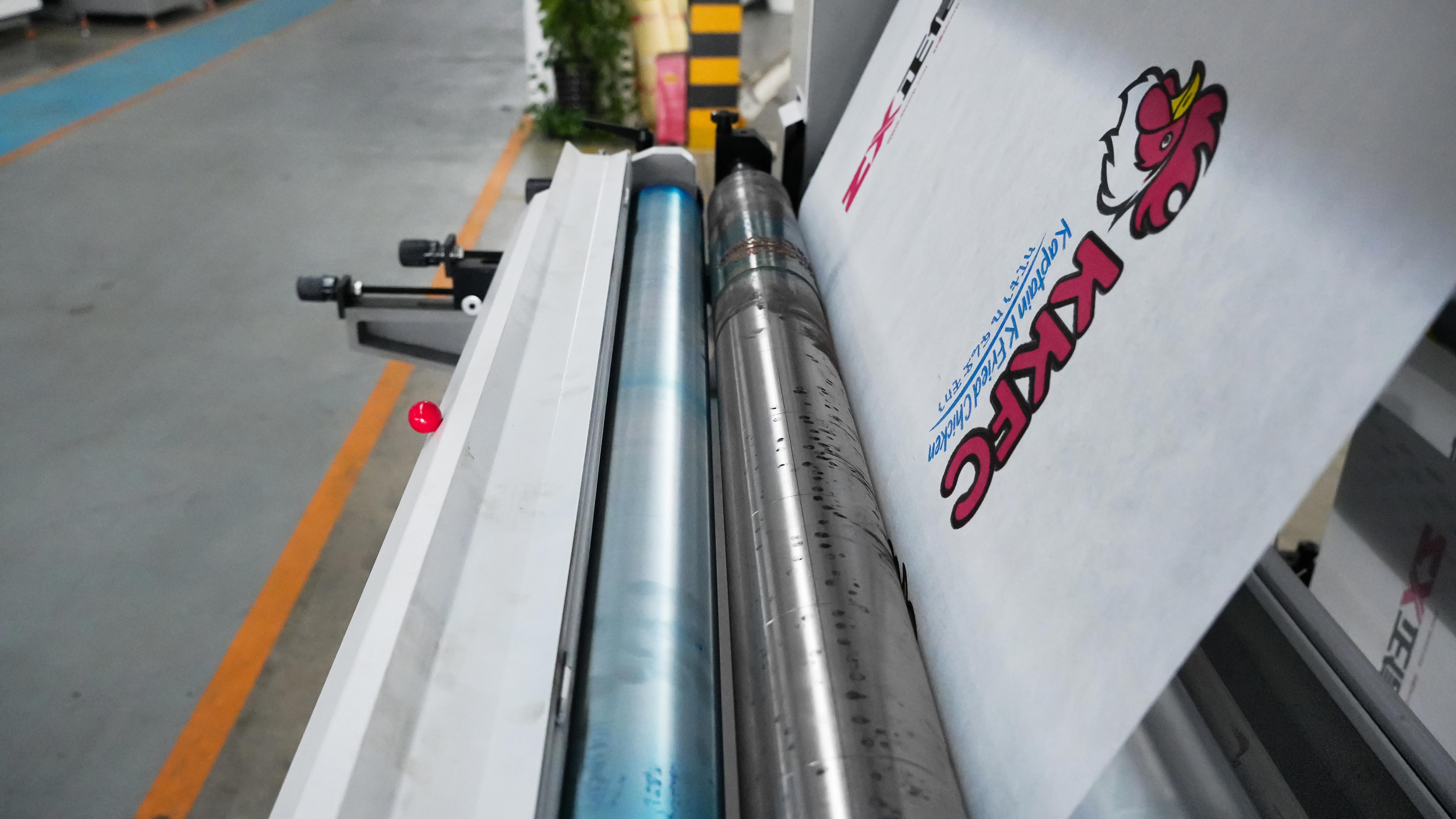
Printing cylinder unit: the component that sets colour count, registration stability and changeover speed on a flexo non woven bag printing machine.
Why printing equipment, not bag equipment, sets a distributor's addressable market
A bag making machine determines how many bags a customer can produce. A printing machine determines which customers will consider them. Plain bags are a commodity traded on price; printed bags are a branded retail input governed by logo registration, ink compliance and repeat-order consistency. The economic difference shows up at the quotation stage, before a single bag is produced.
Three order types dominate demand for printed non-woven bags, and each one constrains printing equipment differently:
- Supermarket and retail chain supply - single or multi-colour logos, high daily volume, consistent weld quality, batch traceability.
- Promotional and corporate orders - frequent artwork changes, small-to-medium batches, tight registration on multi-colour designs.
- Food takeaway and bakery packaging - odourless, non-toxic water-based ink printing and a clean production environment.
A distributor that can only quote plain bags is competing against every other trader in the market. Adding the correct printing configuration moves the same customer into branded work, where specification and registration accuracy matter more than the lowest line-item price.
Four shortlist criteria that survive due diligence
Importers evaluating multiple Chinese suppliers usually start with price and end with certification, which is the reverse of the order that produces a defensible decision. The four criteria below are the ones that hold up when a machine reaches a bonded warehouse or a tender review.
1. Price against specification at comparable configuration
Price is only a criterion when configuration is held constant: colour count, maximum printing width, printing length range, printing speed, plate thickness and total power. A quotation that omits any of these cannot be compared with another, and the apparent gap between quotes is usually a gap between specifications.
2. Certification that survives customs and tender review
CE marking covering the Machinery Directive 2006/42/EC, the Low Voltage Directive 2014/35/EU and the EMC Directive 2014/30/EU is the baseline for EU customs clearance and is accepted in more than 30 further countries that recognise CE. An ISO 9001:2015 certified manufacturing facility supports process consistency claims. For printing machinery specifically, EN 1010-1:2004+A1:2010 is the harmonised European standard for the safety of printing and paper converting machines, so a CE-marked printing press has a defined safety baseline to satisfy. Destination-specific schemes such as SONCAP, PVOC or SASO are separate and should be confirmed for the target market before order confirmation.
3. The after-sales route: factory-direct or through a dealer
Dealers provide local presence; they also add margin to spare parts and can slow down customization requests. Factory-direct support is remote-first and generally faster on technical questions, but it depends on the buyer being able to work through video diagnosis with an operator on site.
4. Spare-parts transparency
Ask for a priced spare-parts list, a statement of which components are branded (PLC, sensors, bearings, servo drives) and the shipping time for parts. A shortlist that cannot answer this question is incomplete regardless of machine quality.
The four-machine shortlist at a glance
| Model | Technology | Colours | Max roll width | Printing area / length | Speed | Total power |
|---|---|---|---|---|---|---|
| ZXH-A1200 | Screen, round roller | 1 | 1,250 mm | 1,100 x 1,200 mm | 1,500-4,000 m/hour | 26 kW |
| ZXH-B1200 | Screen, dual unit | 2 (two units run in sequence) | 1,250 mm | 1,100 x 1,200 mm | 1,500-3,000 m/hour | 52 kW |
| ZXH-C21200 | Flexo | 2 | 1,200 mm | 1,160 mm width; 250-1,000 mm length | 10-60 m/min | 8 kW |
| ZXH-C41200 | Flexo | 4 | 1,200 mm | 1,160 mm width; 220-1,000 mm length | 10-60 m/min | 18 kW |
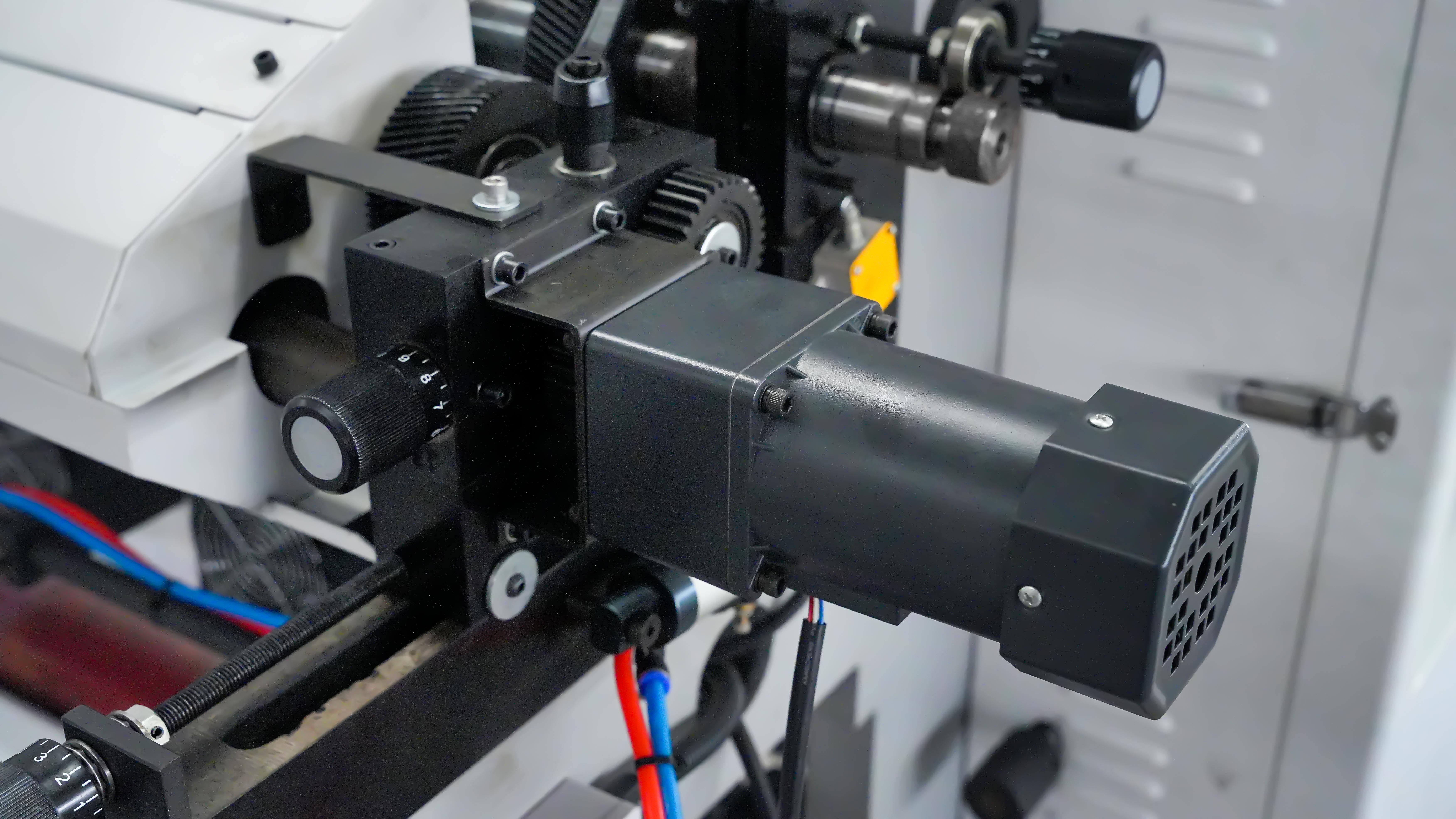
Colour count is the first configuration decision: each additional colour moves the buyer into a different machine class and power band.
Pick 1 - ZXH-A1200 one-colour screen printing machine
A round-roller screen platform with one colour, a 1,250 mm maximum roll width and a maximum printing area of 1,100 x 1,200 mm. Registration error is held within 2 mm, which is enough for large solid-colour logo blocks and fine text on non-woven fabric. Continuous mode suits batch printing of small and medium simple patterns at up to 3,800 m per hour, while intermittent mode handles medium and large patterns at an average of around 1,600 m per hour. Material thickness range is 60-150 g/m2, drying oven fabric length is 30 m, and the platform uses full servo control for scraper lift and fall. Best fit: single-colour logo bags, large-format promotional totes and garment dust covers.
Pick 2 - ZXH-B1200 two-colour screen printing machine
The two-colour screen platform runs two printing units so that two colours are completed in one pass, which reduces manual handling and improves throughput. An independent receiving device doubles efficiency when only one colour is being printed. It uses 25 heating tubes for lower power consumption per unit of drying, a dual-loop fabric winding path to lengthen fabric dwell in the oven, and a new automatic glue removal function that reduces cleaning labour. Material range is 70-150 g/m2. Note the 52 kW total power, the highest of the four configurations, which is an electrical supply planning item rather than a catalogue footnote.
Pick 3 - ZXH-C21200 two-colour flexo printing machine
A compact two-colour flexo press: 1,200 mm maximum roll width, 1,160 mm maximum printing width, 250-1,000 mm printing length, 10-60 m/min, 8 kW, 3,500 x 2,200 x 2,200 mm and 1,500 kg. Up to 3,000 m of roll material can be printed per hour on a single machine. Anilox roller ink transfer produces even ink distribution and 360-degree colour registration; air rising shaft, automatic guiding and automatic magnetic powder tension control keep rewinding neat and compact, and the machine stops automatically if material breaks. It runs environmental-friendly resin plates with water-based inks. Best fit: distributors whose order book is weighted toward two-colour supermarket logos and promotional prints, particularly where floor space is constrained.
Pick 4 - ZXH-C41200 four-colour flexo printing machine
The four-colour inline flexo press: 1,200 mm roll width, 1,160 mm printing width, 220-1,000 mm printing length, 10-60 m/min, 18 kW, 4,600 x 2,200 x 2,400 mm and 3,000 kg. Plate-roller change and ink-tray cleaning are optimised for switching between short-run orders, and on-screen parameter monitoring reduces setup time. Precision tension control holds stable four-colour registration with no colour drift or ghosting at 60 m/min, and optimised drying airflow lets printed fabric move directly into bag making. Best fit: supermarket and brand-client work where design complexity and registration consistency decide whether an order repeats.
The technical differences that change your quotation
- Registration basis. Screen round-roller printing is specified with an error within 2 mm; flexo is specified as stable inline registration at line speed. These are different measurement claims and should not be compared as if they were the same number.
- Speed units. Screen machines are rated in metres per hour (1,500-4,000 for the ZXH-A1200), flexo machines in metres per minute (10-60). Convert to a common basis before concluding that one platform is faster than another.
- Colour count drives power class. Two flexo colours draw 8 kW; four draw 18 kW; the two-colour screen unit draws 52 kW because drying is the dominant load.
- Ink and plate system. Flexo platforms on this shortlist use resin plates and water-based inks, with drying designed to support immediate downstream bag making.
- Footprint and weight. The ZXH-C21200 weighs 1,500 kg against 9,600 kg for the ZXH-B1200. That is a foundation, access and rigging question that belongs in the quotation.
Application fit: what these configurations actually run
Scenario data shows four recurring production environments, each with requirements that filter the shortlist:
- Retail and supermarket chain lines run 24/7 from raw material feeding to finished bag stacking, typically demanding at least 100 pieces per minute, consistent ultrasonic and heat-sealing weld quality, and a defect rate below 0.5%, under 380V three-phase power at 15-35 degrees Celsius.
- Promotional and corporate production centres run flexible batch-based shifts of 8 to 16 hours with quick job changeover, print registration accuracy of plus or minus 0.3 mm and a premium surface finish for brand packaging.
- Food takeaway and bakery plants run 24/7 with automated stacking and batch coding, supported by odourless non-toxic water-based ink and a dust-free environment controlled at 20-28 degrees Celsius with positive air pressure.
- Garment and apparel packaging runs 16-hour double shifts with one to two operators per machine, supported by a flexo printing unit, folding conveyor and automatic handle punching and attaching unit.
Installed reference points show how the shortlist maps onto real order books. A 42-unit fleet in Indonesia spans five machine models, including 12 units of the ZXH-A1200 screen printer, and supplies more than 1 million bags monthly to retail chains and food delivery platforms after eight years of operation. In Kenya, three units including one ZXH-C41200 supply more than 200 retail stores, with a fully automatic line from printing to finished bag managed by a single operator. In Egypt, two ZXH-C21200 flexo printers run alongside bag making machines across three product lines, in a relationship that began in 2017. In Tanzania, one ZXH-C21200 and one ZXL-A700Ultra handle more than 10 custom artwork orders per week, and the operator expanded from one to two production lines within 18 months. In Brazil, six machines cover four bag types from a single supplier, with output compliant with plastic-ban regulations across multiple states.
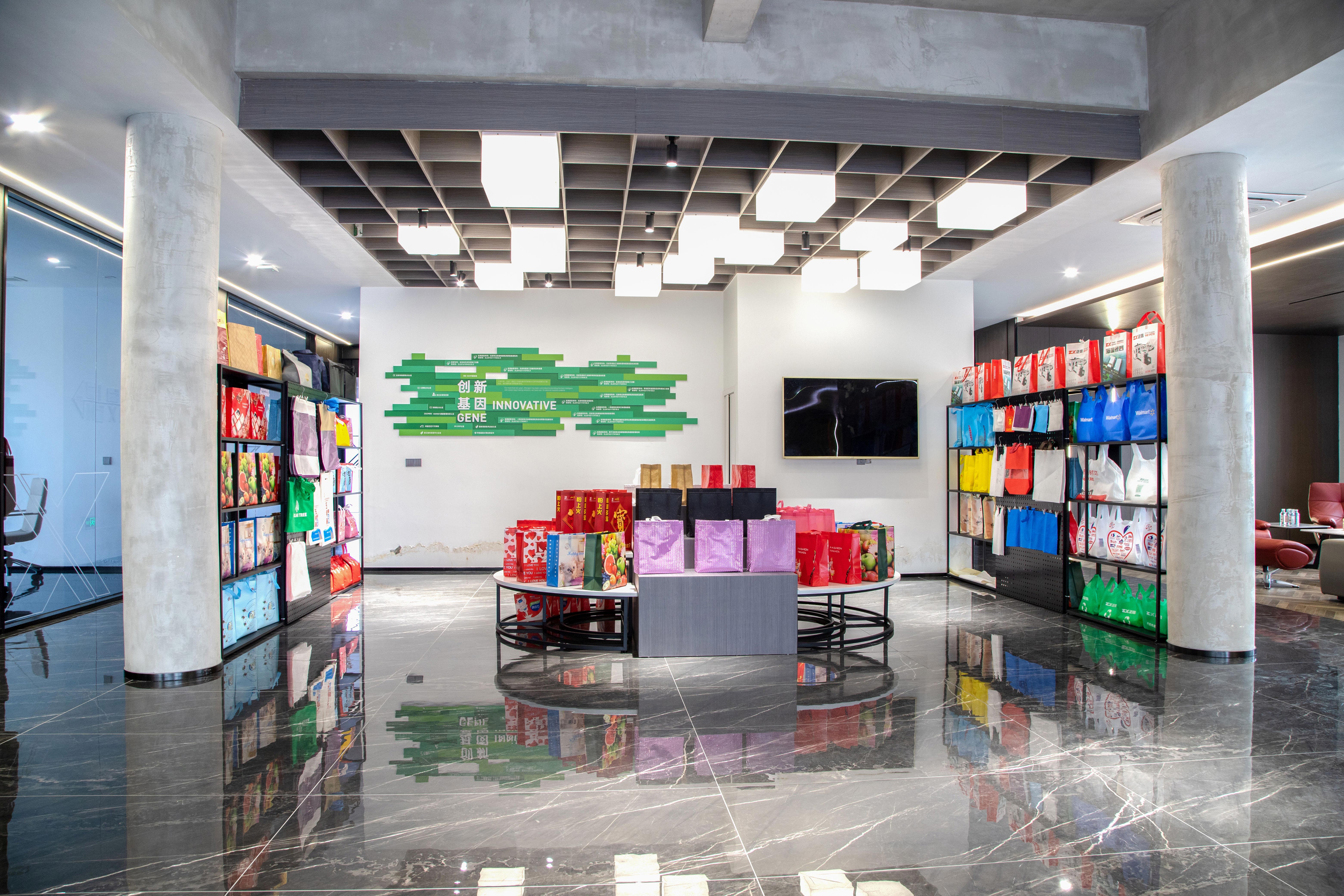
Printed output range: the order profiles a distributor can quote are determined by the printing configuration, not the bag making machine.
Comparing the purchase route: factory-direct against a dealer channel
The supplier's own published comparison, which buyers should treat as a claim to test rather than an audited benchmark, positions the factory-direct route against larger Chinese brand pricing at equivalent configuration.
| Comparison point | Factory-direct route | Dealer / intermediary route |
|---|---|---|
| Price at equivalent configuration | Stated at 10-15% below larger Chinese brand pricing at the same configuration level | Intermediary margin added to machine and parts |
| Customization turnaround | Stated at 3-5 days, handled by the in-house engineering team | Reported at 7-14 days for larger brand processes |
| After-sales | Direct factory support with no third-party dealer markup on parts or service | Routed through regional dealers, response quality varies |
| Local stock | Limited; parts shipped by express within 3-7 days of a confirmed diagnosis | Dealer may hold local inventory |
| Warranty and documentation | 12-month warranty on major components, full English documentation, wiring diagrams and spare-parts catalogue | Depends on dealer handling of the manufacturer's documentation |
Limits, boundaries and verification steps before you commit
- The price and lead-time advantages are supplier-published. The 10-15% price positioning and the 3-5 day customization claim come from the manufacturer's own comparison. Test them against written quotations at identical configuration, and confirm which components are branded before accepting a price.
- Factory-direct support is remote-first. On-site engineer dispatch is available at a stated US$100 per day plus airfare and accommodation. That is a real cost line in year one and should be budgeted rather than assumed away.
- The price advantage does not remove the spare-parts requirement. A recommended one-year consumable kit typically runs US$500-1,500. Skipping it is the most common cause of extended downtime, because a low-cost sensor becomes a two-week stoppage once it is shipped across a border.
- This shortlist covers four printing configurations. Buyers needing a niche machine outside this range, or requiring immediate local stock, may be better served by a larger catalogue brand or a regional dealer that carries inventory.
- Verification steps. Request a live video factory tour rather than a recorded one; contact three or more reference customers in your region directly; verify CE and ISO 9001 certificates on the issuing body's website rather than accepting PDF copies; and commission a third-party pre-shipment inspection by SGS, Bureau Veritas or CCIC before the balance payment.
Market outlook
Several verified indicators point in the same direction for buyers planning a two-to-three-year equipment cycle. Non-woven bag making machine demand is projected to grow at 22.5% CAGR between 2026 and 2032 toward US$733 million, with Asia-Pacific already holding 43.6% of bag making machine revenue in 2025. The automatic segment accounted for 52.4% of the bag making machine market in 2025, which means automation is now the default assumption rather than a premium option. Flexographic printing capacity is expanding alongside it: the global flexographic printing machine market was valued at US$17.57 billion in 2024, with a projected 9.7% CAGR through 2030.
Regulation continues to pull demand forward. More than 100 countries have imposed bans or taxes on single-use plastic bags, and California's SB 1046, effective January 2025, requires retailers to shift to compostable non-woven or paper substitutes. On the supply side, China exported 1.52 million tons of nonwovens in 2024 worth US$4.04 billion, a 6.25% increase over 2023, with spunbonded nonwovens accounting for 37% of export value. Deep, competitive raw material supply keeps material cost pressure low and shifts commercial competition upward to print quality, registration consistency and after-sales reliability.
FAQ
Which specifications should be compared first when shortlisting a non woven bag printing machine?
Hold configuration constant and compare five figures: colour count, maximum printing width, printing length range, printing speed and total power. On the flexo models on this shortlist, the comparable figures are 1,160 mm printing width, a 220-1,000 mm printing length for four colours or 250-1,000 mm for two colours, 10-60 m/min, and 18 kW or 8 kW respectively. On the screen side, the ZXH-A1200 prints up to 1,100 x 1,200 mm at 1,500-4,000 m per hour with 26 kW. A quotation that omits any of these cannot be ranked against another quotation.
Is a two-colour flexo machine or a four-colour machine the better first purchase?
The deciding factor is logo complexity in the order book, not machine capability. Two-colour flexo covers single-colour and two-colour supermarket logos, which represent the majority of commercial printed bag demand. Four-colour becomes necessary when customers submit multi-colour brand designs and where registration consistency across colours determines repeat orders. Power, footprint and weight also differ materially: the two-colour ZXH-C21200 draws 8 kW at 1,500 kg, while the four-colour ZXH-C41200 draws 18 kW at 3,000 kg.
Which certifications should be verified on a non woven bag printing machine, and how?
CE marking under the Machinery Directive 2006/42/EC, the Low Voltage Directive 2014/35/EU and the EMC Directive 2014/30/EU, plus ISO 9001:2015 certification for the manufacturing facility. For printing and paper converting machinery specifically, EN 1010-1:2004+A1:2010 is the harmonised European safety standard, so a CE claim on a printing press has a defined technical baseline. Certificates should be checked on the issuing body's website rather than accepted as PDF copies, and destination-specific schemes such as SONCAP, PVOC or SASO should be confirmed separately for the target market.
What does factory-direct after-sales include compared with a dealer route?
A factory-direct route typically provides technical support from the manufacturer's own engineers: remote diagnosis by video call, spare parts shipped by express within 3-7 days of a confirmed diagnosis, and on-site engineer dispatch at a stated daily rate plus travel and accommodation. A dealer route may offer local inventory and faster physical presence, but spare-parts pricing usually carries intermediary margin and technical escalation depends on the dealer's own engineering capability.
What can be customized on these machines, and how long does customization take?
Customization covers voltage and frequency (220V, 380V, 415V or 440V, single-phase or three-phase), bag size and gusset depth, bag style, printing colours (1-6 flexo colours, single side or double side), material compatibility including PP spunbond, laminated and biodegradable fabric in a 30-150 g/m2 range, sealing method, handle type, PLC and HMI brand (Siemens, Mitsubishi or Delta), automation level, optional modules, and machine colour and branding. The manufacturer's published comparison states a 3-5 day customization turnaround against 7-14 days for larger brand processes, with production lead time listed at 30-45 days and a one-unit minimum order.
What spare parts should be stocked, and what do they typically cover?
A one-year consumable kit for a printing and bag production line generally covers belts, cutting blades, ultrasonic horns for bag machines, photocell sensors, filters and seals, with a typical budget of US$500-1,500 depending on the machine mix. Critical electronics such as PLC modules and servo drives are not usually held on site but are shipped by express within 3-7 days. Ordering the consumable kit with the machine is generally the difference between a two-day repair and a two-week stoppage.
Where this shortlist leaves the buyer
The shortlist above is a starting framework, not a verdict. It narrows four verified printing configurations against four criteria that survive due diligence, and it separates facts from positioning: specification, certification and spare-parts logistics can be documented, while price advantage and customization speed must be tested against written quotations at identical configuration.
Zhejiang Zhengxin Machinery Co., Ltd. publishes its full machine range, specification sheets and capability documentation through its official channels at www.wzzxjx.com. The 2026 machine brochure, covering the ZXH printing series and the wider non-woven bag production line, can be downloaded here: https://cdn.socialarks.com/sbsp/25135/common/2026/0730/2026-3-12%E6%AD%A3%E4%BF%A1%E7%94%BB%E5%86%8C%281%29%281%29.pdf