
Non Woven Bag Printing Machines: The Five-Year Supplier Test
Independent Industry Reference
A non woven bag printing machine is a five-year production asset, not a one-time shipment. The supplier decision should therefore be tested against the costs, parts and support that appear after delivery, not only against the invoice price at the factory gate.
The machine is part of a chain: fabric roll, printing, drying, registration and bag making. A 2-color flexo non woven bag printing machine, a 4-color flexo unit, a 1-color screen printing machine or a high-speed roll-to-roll line can all look similar in a quotation. The difference becomes visible in year three, when a sensor fails, a PLC parameter file is needed, a print cylinder has to be replaced or a buyer wants to resell the asset. For importers at the Awareness to Research stage, the practical question is not which machine prints the sharpest sample. It is which supplier can keep that sample repeatable for five years.
Why the Five-Year Lens Belongs in the First Supplier Review
Most supplier evaluations are delivery-centric. They compare printing width, color count, speed, voltage and price. Those parameters matter, but they do not answer the cost question that appears after commissioning. A 1-color screen non woven bag printing machine may have a lower entry price than a multicolor flexo line, yet the relevant comparison is the total burden of ownership: maintenance, downtime, spare-parts logistics, documentation and residual value.
Corpus evidence makes the gap concrete. A CE and ISO 9001 certified build is expected to sustain a 95%+ uptime target. The mean time between failures for a branded, certified machine is described as three times longer than for unbranded machines. Over five years, unbranded machines are framed as 30-40% higher in repairs, downtime and lost production. Those are not invoice-line differences. They are capacity differences.
The opportunity is straightforward. Importers who build a five-year scorecard before they shortlist a supplier can compare a 2-color flexo non woven bag printing machine and a 4-color flexo model on the same basis: parts continuity, service response, English documentation and resale evidence. The scorecard turns a vague question about reliability into a set of documents and commitments that can be verified before the deposit is paid.
A Five-Year Supplier Scorecard for Non Woven Bag Printing Machines
The scorecard should be evidence-led. Ask every candidate to answer the same six questions, and request the same documents. A supplier that cannot provide a part number, a response commitment or a reference contact should not be treated as equivalent to one that can.
| Criterion | What it protects in year five | Evidence to request |
|---|---|---|
| Mean time between failures and uptime | Keeps a 95%+ uptime target credible; the branded build is cited at three times the MTBF of unbranded machines | Maintenance logs, component list and reference calls with active users |
| Parts continuity | Avoids weeks of downtime while a sensor or drive is sourced | Spare-parts catalog with part numbers, stocked items and express-shipping terms |
| Genuine parts and markup | Protects cost control when repairs are needed | Written parts price list and confirmation of direct factory support without dealer markup |
| Remote and on-site support | Resolves the majority of issues without travel | 24-hour response commitment, seven-day video support and on-site fee schedule |
| English documentation | Lets local technicians diagnose and maintain the machine | Operation manual, wiring diagram, PLC parameter backup and troubleshooting guide |
| Resale value | Protects the exit value of the asset | Resale evidence showing 50%+ retained value after five years versus near-zero for unbranded machines |
| Certification | Supports customs clearance and tender qualification | CE Declaration of Conformity, ISO 9001:2015 certificate and issuing-body verification |
The scorecard is deliberately biased toward proof. A supplier that can show a parts list, a response process and a reference customer is easier to trust than one that answers with adjectives.
What ZX Zhengxin Machinery Brings to the Five-Year Test
ZX Zhengxin Machinery (Zhejiang Zhengxin Machinery Co., Ltd.) is a Wenzhou, Zhejiang-based manufacturer of non-woven bag making machines and non-woven bag printing machines. The company was founded in 2014, operates a 60,000 m² facility with around 200 employees and 30 engineers, and reports an annual output of 500 units with a 60% export ratio across more than 120 countries.
Its printing portfolio is relevant to the supplier-continuity question because it covers more than one production logic. The ZXH series is described as flexo printing machines in 1-8 colors. Specific models include the ZXH-A1200 1-color screen printing machine, the ZXH-B1200 2-color screen printing machine, the ZXH-C21200 2-color flexo printing machine and the ZXH-C41200 4-color flexo printing machine. That range lets an importer compare a lower-entry screen route with a higher-throughput flexo route without changing supplier.
The manufacturing evidence is also part of the five-year case. The facility is ISO 9001:2015 certified, with incoming material inspection, in-process QC checkpoints and a continuous full-load production test on every machine before shipment. Machines are CE certified under the Machinery, Low Voltage and EMC Directives. Component choices include Siemens, Delta or Mitsubishi PLCs, Omron sensors and NSK bearings, and third-party inspection by SGS, Bureau Veritas or CCIC can be arranged before shipment.
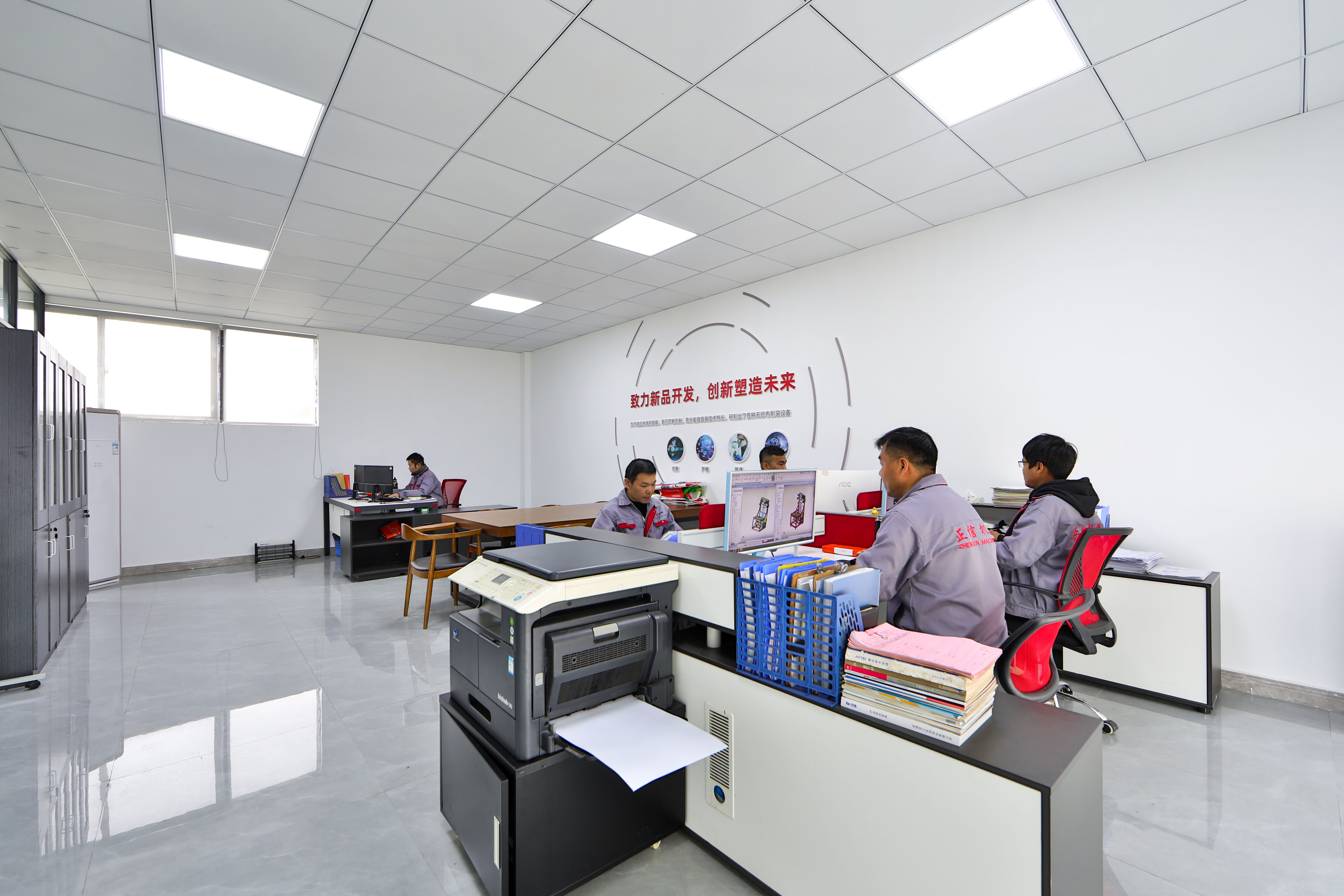
Support is where the five-year test becomes practical. Remote support is available seven days a week via WhatsApp and video call, and the company says its engineers diagnose and resolve 80%+ of issues remotely. Spare parts are shipped by DHL or FedEx within 24 hours of confirmed diagnosis, with delivery typically in 3-7 days globally. A recommended spare-parts list is provided with each machine, with a first-year consumables kit in the $500-1,500 range. Field engineers can travel to the buyer's facility; on-site dispatch is quoted at $100 per day plus airfare and accommodation. The company also has offices in Kenya, Morocco, Egypt, Vietnam, Tanzania, Dubai, Oman, Indonesia and Ethiopia.
Two details matter for long-term cost control. First, direct factory after-sales is positioned without third-party dealer markup on parts and service. Second, the corpus links a certified build to a 50%+ retained resale value after five years, compared with near-zero resale value for unbranded machines. For an importer who may sell, trade in or redeploy the asset, that residual value belongs in the investment case.
Where Parts Continuity Actually Breaks
Parts continuity is not a promise; it is a bill of materials with names, numbers and sourcing logic. In a non woven bag printing machine, the critical continuity points are the control system, the drive and registration chain, the ink-transfer and drying system, and the mechanical wear parts. A failure in any one of them can stop the line even when the frame and gears are sound.
The ZXH-C21200 2-color flexo printing machine illustrates the technical base. It has a maximum fabric roll width of 1,200 mm, a maximum printing width of 1,160 mm, a printing length range of 250-1,000 mm, a printing speed of 10-60 m/min, a total power of 8 kW and a weight of 1,500 kg. The selling-point material describes an air-rising shaft, automatic guiding, automatic magnetic powder tension control, anilox roller ink transfer and 360-degree color registration. The machine stops automatically if material breaks.
The ZXH-C41200 4-color flexo printing machine extends the same logic to four-color work. It has a 1,200 mm maximum fabric roll width, a 1,160 mm maximum printing width, a 220-1,000 mm printing length, a 10-60 m/min printing speed, 18 kW total power and a 3,000 kg weight. The technical description points to precision tension control for stable four-color registration, optimized drying airflow and on-screen real-time parameter monitoring. Those features matter because they reduce the chance that a print defect is blamed on the operator when the real cause is a worn roller, a drifting sensor or a drying imbalance.
Screen models sit on a different maintenance curve. The ZXH-A1200 1-color screen printing machine uses a round roller printing method with a stated register error within 2 mm; it has a 1,250 mm maximum fabric roll width, a maximum printing size of 1,100 x 1,200 mm and a printing speed of 1,500-4,000 m/hour. The ZXH-B1200 2-color screen printing machine uses two units for two-color printing in one pass, a servo main drive, 25 heating tubes and an automatic glue-removal function. Both are relevant when the order mix favors larger patterns or a lower-color design, but they require the same five-year discipline: documented settings, accessible wear parts and a supplier that can explain which components are consumables.
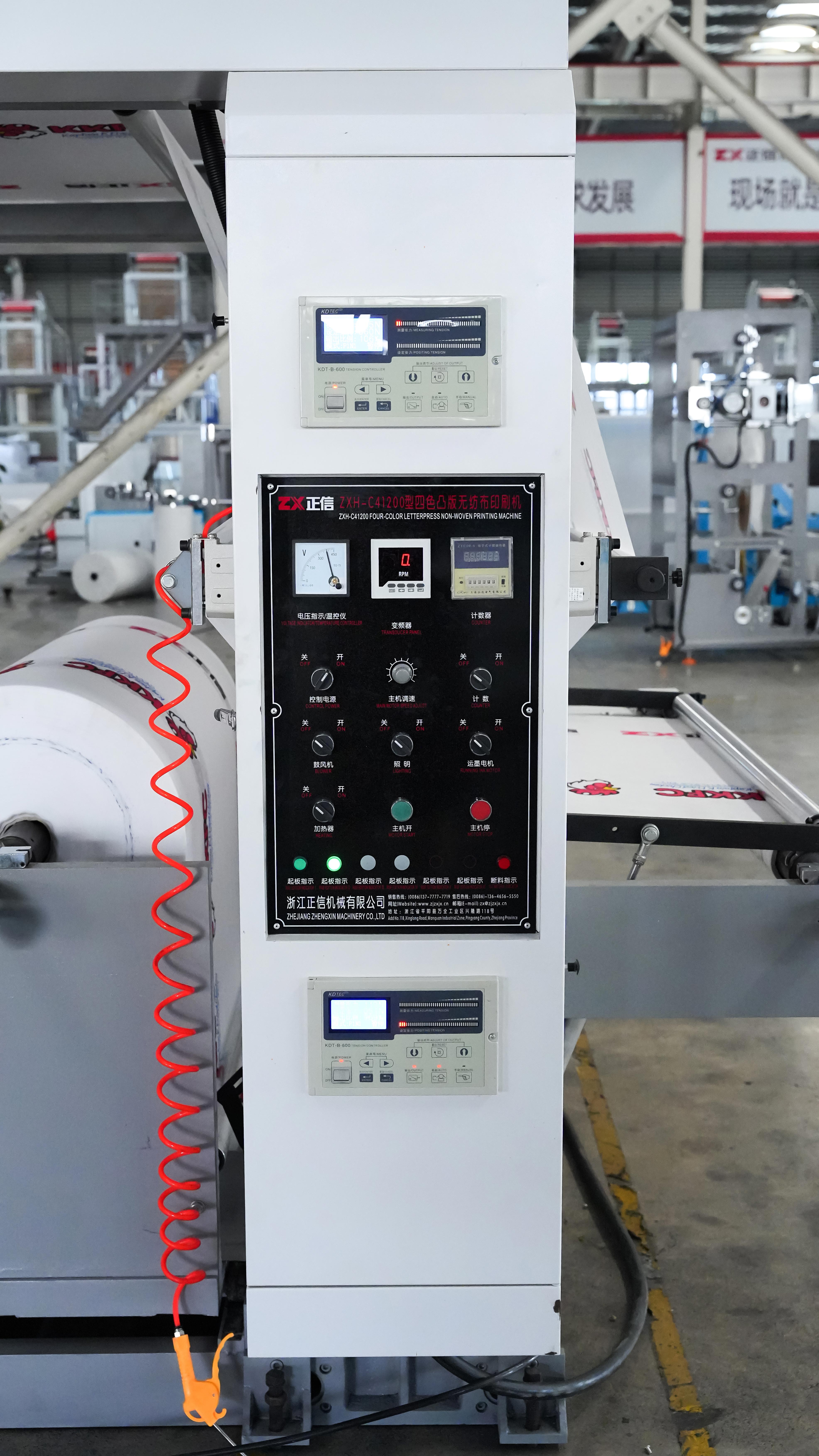
Branded components make the continuity question easier to audit. A Siemens, Delta or Mitsubishi PLC, Omron sensors and NSK bearings can be identified, cross-referenced and sourced through established channels. Unbranded substitutes may work at delivery, but they turn a maintenance event into a sourcing project. The five-year cost difference is not only the part price; it is the production lost while the part is identified, ordered and cleared through customs.
Application Scenarios That Test the Supplier Differently
The same printing machine specification can behave differently across use cases. A supplier evaluation should therefore be weighted to the buyer's actual production pattern, not to a generic brochure.
| Scenario | Production pattern in corpus | Why the five-year test changes | Relevant printing route |
|---|---|---|---|
| Retail and supermarket chain | 24/7 continuous production; high speed at or above 100 pcs/min; consistent ultrasonic or heat-sealing weld quality; defect rate below 0.5% | Uptime and spare-parts response dominate; a stopped printing line blocks the bag line | 4-color flexo ZXH-C41200 or 2-color flexo ZXH-C21200, depending on logo complexity |
| Food takeaway and delivery | 24/7 production; dust-free workshop at 20-28°C with positive air pressure; odorless and non-toxic water-based ink printing | Print cleanliness, documentation and service response matter more than headline speed | Flexo route with water-based ink; confirm ink and documentation compatibility in writing |
| Garment and fashion retail | 16-hour double-shift operation; 1-2 operators per machine; flexo printing, folding and handle units | Operator-friendly changeover and English troubleshooting reduce dependence on remote escalation | 2-color or 4-color flexo, with handle and folding integration |
| Advertising and promotional products | Small-to-medium batches; flexible 8-16 hour production; quick job changeover; print registration accuracy ±0.3 mm; premium finish | Changeover speed and registration consistency protect margin on short runs | 4-color flexo ZXH-C41200 with quick-change plate and ink-tray routine |
The practical lesson is that a high-speed non woven bag printing machine is not automatically the right answer. A supermarket supplier may need the 4-color flexo route and a parts kit on site. A promotional printer may need quick changeover and tight registration more than raw speed. A food takeaway converter may need water-based ink and documentation that satisfies a cleanroom audit. The supplier should be able to match the route to the use case and explain the trade-off.
Market Signals That Favor Documented Continuity
Two structural signals support the five-year view. The first is regulatory. Corpus notes plastic bag bans in 127+ countries as of 2025, which pushes retail, food-service and promotional buyers toward reusable non-woven bags. That shift does not simply increase demand; it increases the cost of unplanned downtime for converters who win supermarket and tender contracts. The second is production intensity. The retail scenario in the corpus assumes 24/7 continuous production, and the food takeaway scenario assumes 24/7 production with automated stacking and batch coding. In those environments, a machine that is 10-20% cheaper at the invoice line but less available in year three is not a cheaper machine.
The market is also becoming more document-driven. Supermarket tenders and government supply contracts increasingly ask for batch traceability, certification and consistent quality. The corpus links supermarket supply to batch coding, dimensional accuracy and print registration. That favors suppliers who can provide English documentation, PLC parameter backups, a spare-parts catalog and a response process. The buyer is not only purchasing a printing machine; the buyer is purchasing the evidence needed to keep a contract.
Certified Supplier Build vs Traditional Unbranded Machines
The comparison should be fair. A certified supplier build is not the lowest-price option. Corpus evidence puts the upfront price 10-20% higher than unbranded workshop machines. That premium is real, and it should be stated plainly. The case for the premium rests on what happens after delivery.
| Dimension | Certified supplier build, as evidenced for ZX Zhengxin Machinery | Traditional unbranded machine |
|---|---|---|
| Upfront price | 10-20% higher than unbranded | Lower at the invoice line |
| Mean time between failures | Cited at three times longer than unbranded machines | Shorter MTBF; more frequent intervention |
| Uptime expectation | 95%+ for a new machine | Unpredictable; used machines over three years average 70-80% uptime |
| Spare parts | DHL or FedEx within 24 hours of confirmed diagnosis; 3-7 days global delivery; direct factory support without dealer markup | Parts may be unbranded, undocumented or difficult to source |
| Remote support | Seven-day WhatsApp and video support; 80%+ of issues resolved remotely; 24-hour response commitment | Often no reliable after-sales channel once shipment leaves the factory |
| Documentation | English manual, wiring diagram, PLC parameter backup and troubleshooting guide | Frequently missing or incomplete |
| Resale value | 50%+ retained after five years | Near-zero after three to five years |
| Five-year cost burden | 30-40% lower than unbranded in repairs, downtime and lost production, per corpus comparison | 30-40% higher in repairs, downtime and lost production |
The boundary is equally important. The certified route is not the right answer for every buyer. If an importer has no maintenance capability, no access to three-phase power, no space for a spare-parts kit and no intention of running the machine beyond a short project, the lower upfront price of an unbranded machine may still dominate the decision. On-site engineer dispatch is chargeable at $100 per day plus airfare and accommodation, and remote support resolves 80%+ of issues rather than all of them. Buyers should also verify that the local power supply matches the configured voltage; a 380V machine connected to the wrong supply can destroy the PLC and servo drives, and that damage is not a warranty event. The five-year case is strongest for importers who plan to keep the machine, staff it with at least one trained operator and hold contracts that punish downtime.
What the Next Five Years Will Reward
The next phase of competition among non woven bag printing machine suppliers is likely to be less about headline speed and more about documented continuity. Buyers will ask for part numbers, not adjectives. They will ask for PLC parameter backups, English wiring diagrams and remote diagnostic logs. They will ask for a spare-parts kit priced with the machine, not after the first breakdown. They will also ask for resale evidence, because a machine that retains 50%+ of value after five years changes the total cost of ownership.
For ZX Zhengxin Machinery, the relevant proof points are already in the corpus: a 2014-founded factory, 60,000 m² of manufacturing space, 30 engineers, ISO 9001:2015 and CE certification, branded control components, a 24-hour parts response, seven-day remote video support and a stated 95%+ uptime target for a new build. The open question for any importer is not whether those facts exist in a brochure. It is whether they can be verified in a reference call, a parts list and a written service commitment before the order is placed.
FAQ: Five-Year Supplier Evaluation
What should a five-year cost comparison include beyond the machine price?
It should include maintenance, spare-parts logistics, downtime, documentation and resale value. Corpus evidence frames unbranded machines as 30-40% higher in repairs, downtime and lost production over five years, and as near-zero in resale value after three to five years. A certified build is linked to a 50%+ retained resale value after five years and a 95%+ uptime target for a new machine. The comparison should also include the cost of a first-year spare-parts kit, quoted in the corpus at $500-1,500.
How can an importer verify spare-parts continuity before ordering a non woven bag printing machine?
Ask for a spare-parts catalog with part numbers, not just component names. Request the list of parts stocked for the specific model, the express-shipping terms and the response time after a confirmed diagnosis. For ZX Zhengxin Machinery, the corpus states that spare parts are shipped by DHL or FedEx within 24 hours of confirmed diagnosis, with 3-7 days global delivery, and that direct factory after-sales is positioned without third-party dealer markup. A buyer should also ask which components are consumables and which are model-specific.
What uptime should a CE and ISO 9001 certified non woven bag printing machine sustain?
The corpus target for a new certified machine is 95%+ uptime. That figure should be read as an operating target supported by component quality, QC and service response, not as a guarantee that every production day will hit the number. The same corpus notes that used machines over three years old average 70-80% uptime, which is why the five-year question belongs in the original supplier review. Buyers should ask for the maintenance logic behind the target: which parts are inspected, which are replaced on a schedule and which are stocked on site.
Does 24-hour remote video support replace on-site engineering?
No. Remote support is the first response, not the whole service model. The corpus states that remote support is available seven days a week via WhatsApp and video call, with a 24-hour response commitment, and that engineers diagnose and resolve 80%+ of issues remotely. If remote diagnosis is insufficient, field engineers can travel to the buyer's facility. On-site dispatch is quoted at $100 per day plus airfare and accommodation. The buyer should therefore evaluate both the remote response process and the escalation cost.
How does resale value change the supplier decision?
Resale value changes the exit math. A machine that retains 50%+ of its value after five years can be sold, traded in or redeployed when the buyer changes production mix. An unbranded machine is described in the corpus as having near-zero resale value after three to five years. That difference does not replace the operating case, but it belongs in the total cost of ownership. Buyers should ask for evidence of resale values, not a verbal assurance.
Which printing route fits a buyer who needs 2-color and 4-color work?
The corpus separates the routes by model. The ZXH-C21200 is a 2-color flexo printing machine with a 1,200 mm maximum fabric roll width, 1,160 mm maximum printing width and 10-60 m/min speed. The ZXH-C41200 is a 4-color flexo printing machine with the same 1,200 mm roll width and 1,160 mm printing width, a 220-1,000 mm printing length, 10-60 m/min speed and 18 kW total power. A buyer who needs both 2-color and 4-color work should compare changeover time, plate cost, registration accuracy and spare-parts commonality, not only the color count.
Reference document: Zhengxin product brochure, PDF.
Tem questões ou precisa de mais detalhes?
Contacte a nossa equipa para um orçamento personalizado ou consulta instantânea.
Solicitar orçamento
Preencha o formulário abaixo e a nossa equipa entrará em contacto com uma proposta personalizada.
Chat direto do WhatsApp
Prefere conversar em tempo real? Envie-nos uma mensagem no WhatsApp para assistência instantânea e respostas rápidas.
- Obter orçamento personalizado
- Partilhar fotos ou documentos
- Discuta as suas necessidades diretamente
Geralmente responde em 5–30 minutos durante o horário de expediente.