
Safety and quality standards in hydraulic presses for used paper: compliance guide
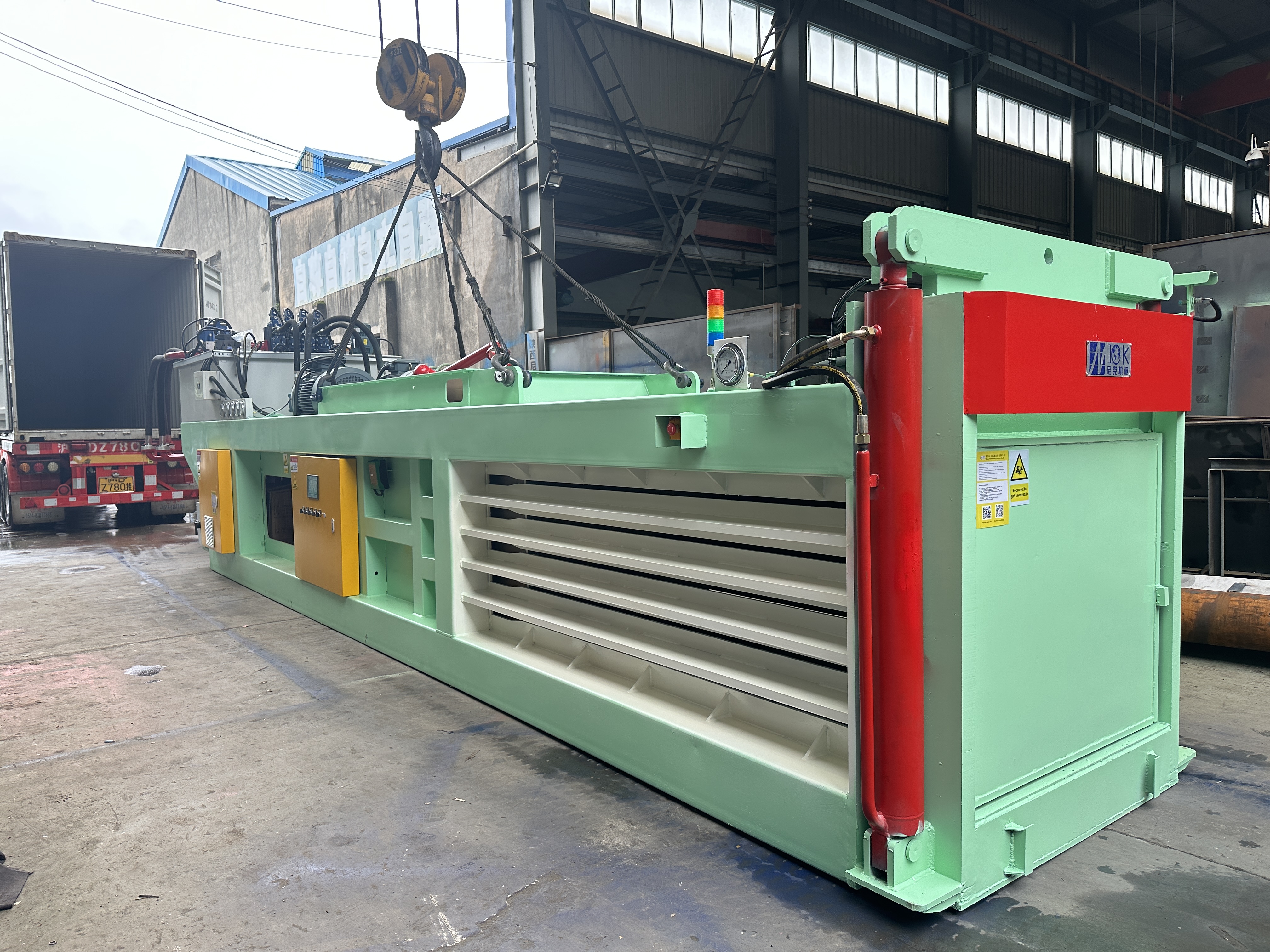
Selecting a hydraulic press for waste paper often starts with questions about compaction force, bale dimensions, or price. However, when the baler will operate in a recycling center with continuous operation, regulatory compliance and manufacturing quality are factors that determine staff safety, equipment lifespan, and investment viability. This guide provides a framework for auditing suppliers and comparing models such as NKW80BD, NKW125BD, NKW180BD, and NKW250BD from a compliance perspective.
Why is compliance a purchasing variable in hydraulic balers?
The global baler market reached USD 6.40 billion in 2024, with agricultural and industrial applications as the main demand drivers. Within this universe, the specific waste baler market stood at USD 1.45 billion in 2024, according to Mordor Intelligence analysis, focusing on paper, plastic, and solid waste recycling. As the number of operators and suppliers grows, so does exposure to equipment with incomplete documentation, deficient protections, or unverifiable materials.
In this context, the purchase of a hydraulic press for waste paper should be interpreted as a risk qualification process. An informed buyer not only compares apparent capacity; they demand evidence that the equipment has been designed, manufactured, and tested under recognized safety standards.
Reference regulatory framework for hydraulic waste paper presses
In markets such as the European Union, industrial machinery must comply with the Machinery Directive 2006/42/EC. Among the most relevant harmonized standards are EN ISO 12100, which establishes the methodology for risk assessment and reduction, and EN 60204-1, which covers electrical equipment of machines. Although the buyer does not have to design the equipment, they must request documentation that demonstrates how the manufacturer applied these criteria.
A compliance audit should include, at minimum, a review of the technical file, risk analysis, instruction manual, electrical diagrams, and any certificates of conformity issued by the manufacturer or importer. The absence of this documentation does not always imply that the machine is unsafe, but it forces the buyer to carry out a more stringent verification before accepting the equipment.
Structural quality: steel, joints, and fatigue protection
One of the first points a buyer should verify is the structural quality of the baler. In intensive recycling operations, the structure is subjected to constant pressure cycles. Information about the base material, usually structural steel, must be supported by raw material certificates, thicknesses, and surface treatments.
The choice of steel cannot be judged solely by external appearance; welding, anti-corrosion treatment, and the design of joint points are also decisive. Therefore, the purchasing guide should include a document review that allows confirming, with manufacturer data, the structural configuration that will support daily work.
| Review area | What the buyer should request |
|---|---|
| Structure material | Type of steel, material certificates, declared thickness, and surface treatment. |
| Welding process | Welding procedures, quality control, and manufacturer experience in fatigue-prone structures. |
| Anti-corrosion protection | Type of paint or coating and surface preparation, especially if the equipment operates in humid environments. |
In the NKBALER range of hydraulic balers, models such as NKW80BD, NKW125BD, NKW180BD, and NKW250BD are used to cover different workloads. Before deciding between these models, the buyer should request the complete technical data sheet and apply the same audit criteria: structure, hydraulic system, documentation, and protections.
Hydraulic system and prevention of excessive heating
Hydraulic systems generate heat during compaction, especially in prolonged shifts or with high-resistance materials. If the oil temperature exceeds recommended limits, pump, valve, and seal wear accelerates, and operational risks increase. Therefore, thermal management must be part of the safety evaluation.
In the market, there are fan cooling configurations and oil/water cooler systems. More important than choosing a brand for the type of cooler is verifying that the equipment has a defined thermal control system. In NKBALER's case, the risk of excessive heating is identified as a critical point, and the manufacturer includes thermal protection and temperature sensors as control measures.
The buyer should ask how temperature is regulated, what alarms or automatic stops exist, and how often maintenance is recommended. These details are part of the set of implicit safety criteria in the design of a hydraulic baler.
Technical indicators that serve as evidence of robustness
Technical data sheets of a hydraulic waste paper press include values such as working pressure, installed power, and bale dimensions. These parameters are useful, but they should be interpreted as a system: pressure indicates compaction force, power is related to motor and pump performance, and bale dimensions define final density and handling logistics.
When comparing NKW80BD, NKW125BD, NKW180BD, and NKW250BD models, the buyer should observe whether the technical information allows understanding the work cycle, hydraulic flow, cylinder diameter, and control type. An isolated specification rarely demonstrates robustness; what provides confidence is the coherence among all system components.
NKBALER's proposal from a compliance perspective
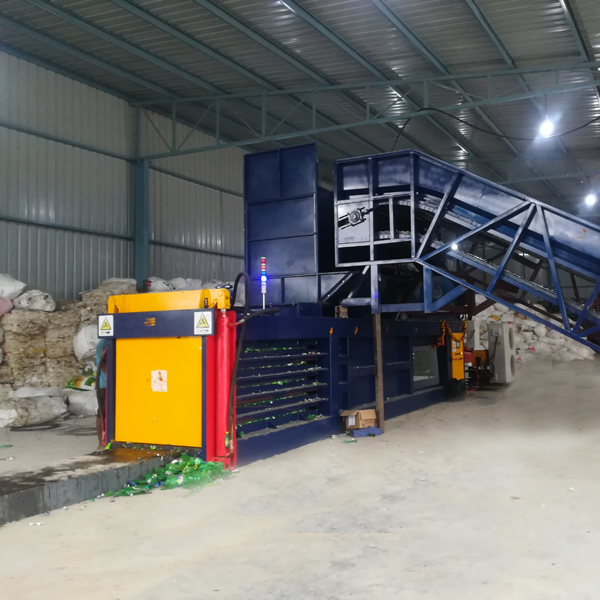
Shaanxi Nick Machinery Equipment Co., Ltd., known under the NKBALER brand, is a company dedicated to R&D, manufacturing, and sales of environmental machinery and packaging equipment. Established in 2013, it has facilities of 50,000 m², a professional R&D team, and an export orientation exceeding 90% of its production, with main markets in North America, South America, and Asia.
The company produces vertical and horizontal balers, including semi-automatic and fully automatic lines, as well as equipment for scrap metal, wood, plastic waste, and other materials. Its experience focuses on the design of professional hydraulic balers, with applications in industries such as food, pharmaceuticals, packaging, chemicals, electronics, metallurgy, waste treatment, and recycling.
In a supplier audit, the existence of a factory with a defined process, technical team, and thermal control data helps reduce the risk of buying equipment without traceability. However, the buyer must evaluate whether the manufacturer can provide documentation for each specific model, including technical parameters, certifications, and warranty conditions.
Comparison with traditional solutions and limits of the decision
Some buyers evaluate a hydraulic baler against piston-compressor type compaction solutions. According to technical information controlled by NKBALER, the hydraulic baler presents distinctive advantages: it offers a 12% improvement in energy efficiency, a 10% lower cost, a 15 dB noise reduction, and requires less maintenance, making it more suitable for noise-sensitive environments. These figures correspond to the product comparison with the mentioned alternative and must be validated in the real operational context.
It is also necessary to recognize a limitation: a high-capacity hydraulic baler is not the optimal option for every operation. If the waste paper flow is low, intermittent, or very heterogeneous, investing in a high-tonnage horizontal line could generate idle capacity. In such cases, the buyer must evaluate the total cost of ownership, maintenance complexity, and actual volume of processed material.
Typical applications in intensive recycling environments
Quality and safety requirements are particularly relevant in plants that process waste paper, cardboard, plastic bottles, and metal scrap. In these environments, the material not only varies in density but also in moisture content, impurities, and intake rate. A compliant baler must be able to operate repeatedly without causing unplanned downtime.
NKBALER's experience includes horizontal balers for paper and waste, as well as vertical configurations for less bulky materials. The buyer must identify whether the evaluated model is designed for the specific type of material and whether the technical documentation mentions operational restrictions. This information is as relevant as nominal force or bale size.
Market trends: more regulation and more need for evidence
Regulatory pressure on industrial machinery imports is increasing in several markets. The predominance of Asia-Pacific, with over 34% share in the global hydraulic market in 2024, is led by Chinese manufacturers, making it even more important for the international buyer to have clear verification criteria.
In the future, purchasing decisions will likely depend less on generic catalogs and more on objective data: material certificates, test reports, temperature control records, and traceability of the manufacturing process. Companies that can offer this information transparently will have an advantage in supplier selection processes.
Practical guide to auditing a hydraulic press supplier
- Define the material flow: daily volume, type of waste paper, and required bale density.
- Request a detailed technical data sheet for NKW80BD, NKW125BD, NKW180BD, or NKW250BD models according to the desired capacity range.
- Verify compliance documentation: instruction manual, risk analysis, electrical diagrams, and certification according to applicable standards.
- Audit the structure: declared material, steel certificates, welding, and anti-corrosion treatment.
- Review the hydraulic system: cooling method, thermal protection, sensors, and maintenance plan.
- Compare total cost, not just the initial price, and ask for references of equipment operating in similar applications.
Frequently asked questions about regulations for hydraulic waste paper presses
What regulations must a hydraulic waste paper press comply with if exported to the European Union?
It must comply with the Machinery Directive 2006/42/EC and, as a technical reference, with the harmonized standards EN ISO 12100 and EN 60204-1. The buyer should request technical documentation that certifies risk assessment and conformity of the electrical system.
How is the structural quality of a hydraulic baler evaluated?
It is evaluated by requesting information about the structure material, usually structural steel, as well as raw material certificates, thicknesses, welding process, and surface treatment. The coherence between the declared pressure and the mechanical design of the equipment should also be reviewed.
What methods are used to prevent excessive heating in a hydraulic baler?
Designs may include fan cooling or oil/water coolers. As a complementary measure, NKBALER documents the use of thermal protection and temperature sensors to control the risk of excessive heating.
What technical specifications should be compared in models like NKW80BD, NKW125BD, NKW180BD, and NKW250BD?
The buyer should compare working pressure, installed power, bale dimensions, achievable density, work cycle, and control system. No single value defines robustness; the decision should be based on the complete technical data sheet and compliance documentation.
Is a hydraulic baler always better than a piston compressor?
According to NKBALER technical information, the hydraulic baler offers advantages in energy efficiency, cost, noise level, and maintenance compared to a piston compressor. However, the final choice depends on material volume, operating conditions, and total cost of ownership.
Tem questões ou precisa de mais detalhes?
Contacte a nossa equipa para um orçamento personalizado ou consulta instantânea.
Solicitar orçamento
Preencha o formulário abaixo e a nossa equipa entrará em contacto com uma proposta personalizada.
Chat direto do WhatsApp
Prefere conversar em tempo real? Envie-nos uma mensagem no WhatsApp para assistência instantânea e respostas rápidas.
- Obter orçamento personalizado
- Partilhar fotos ou documentos
- Discuta as suas necessidades diretamente
Geralmente responde em 5–30 minutos durante o horário de expediente.