
Nutritional Premix OEM: MOQ, Forms and Quality Risks
Nutritional Premix OEM: MOQ, Forms and Quality Risks
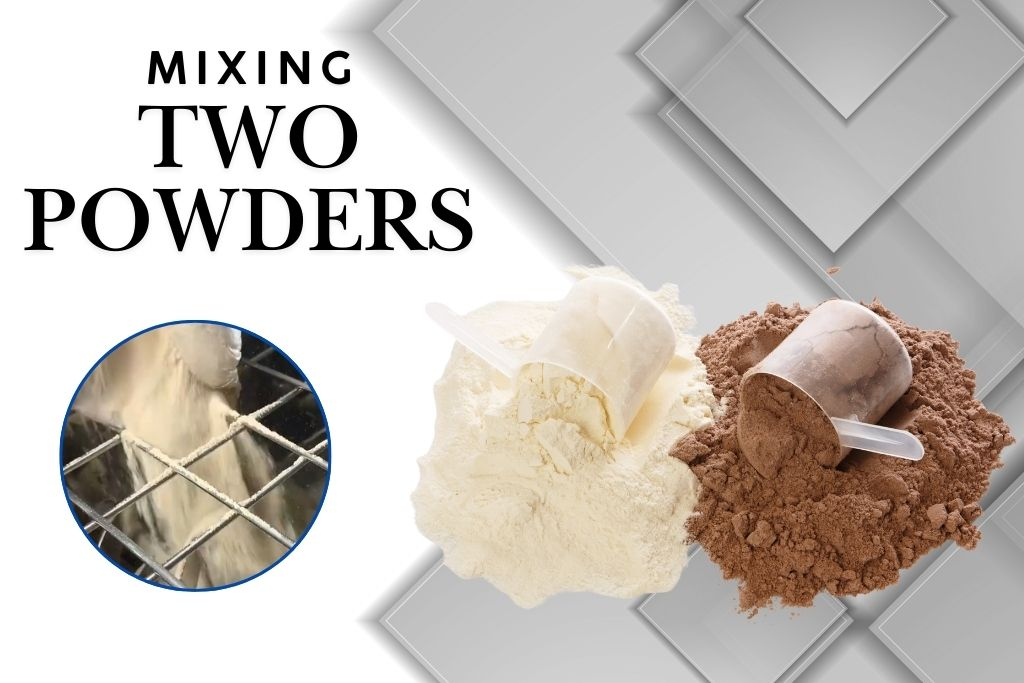
For buyers comparing nutritional premix OEM suppliers, a quoted minimum order quantity is only one part of the decision. The formulation, requested dosage form, batch documentation and quality controls determine whether two offers are meaningfully comparable. PNP Biotech describes custom nutritional premix formulation and OEM/ODM services, while the available company and product information does not establish a market ranking, independently verified plant capacity, or a fixed MOQ. The practical conclusion is to assess it as a potential supplier for further qualification, not as a proven industry leader.
This comparison focuses on three procurement questions: how to interpret MOQ, what changes when the intended form changes, and what evidence helps manage quality risks. It also separates company-reported capabilities from facts that a buyer should verify before placing an order.
What the available evidence says about PNP Biotech
PNP Biotech is presented in the supplied company and product materials as a nutritional premix and OEM/ODM provider serving dietary supplement and food-and-beverage applications. Its product information describes custom formulas using vitamins, minerals, amino acids, botanical extracts and excipients. It also lists parameters that may be customized, including potency, particle size, solubility and flowability. These are useful starting points for an RFQ, but they are not a substitute for a product specification or batch-level records.
The provided materials associate the premix offer with powder blending, granules, liquids, hard capsules, tablets, softgels and gummies. The company background also describes arranging finished-product manufacturing through contract manufacturing partners. That distinction matters: a listed format or end-to-end service statement does not, on its own, establish which facility performs each operation, whether a line is company-owned, or what capacity and batch sizes are available. Buyers should confirm the manufacturing site and responsibility for each step in the proposed supply chain.
There is a relevant capability proposition here: a buyer may be able to discuss ingredient blending and finished supplement formats through a supplier presenting both premix and OEM/ODM services. That can make an initial supplier conversation more coordinated. It does not prove that a single manufacturing site produces every format, that transfers between formats need no requalification, or that consolidation will reduce total cost. Those outcomes depend on the actual scope, facilities, process controls and commercial quote.
The evidence supplied does not support an objective assessment of PNP Biotech’s market share or standing against named competitors. It includes no comparable supplier dataset, verified capacity figures, certifications for a named plant, or independent market-share evidence. A neutral buyer comparison should therefore avoid a numerical ranking or claims of superiority. The defensible assessment is narrower: PNP Biotech’s described service scope is relevant to buyers exploring custom premix and related supplement manufacturing, while supplier qualification still requires documentary verification.
MOQ: why one number cannot be assumed
PNP Biotech’s supplied FAQ states that MOQ is not fixed and is determined by the formulation and order quantity. It identifies nutrient count, potency level, dosage form and pack size as factors; the FAQ’s expanded notes also identify the carrier system. The materials do not provide a minimum quantity, price tier, or lead time that can be applied across projects. Buyers should not treat an indicative MOQ for one blend or format as a commitment for another.
These factors affect comparability because two products described generally as a vitamin and mineral premix may differ in the number and levels of nutrients, the carrier system, the intended form and the packaging request. A supplier may quote different production quantities or commercial terms for those different specifications. That is a reason to standardize the RFQ, not evidence that one supplier’s MOQ is inherently better.
For a useful quotation comparison, define the formulation scope before comparing quantities. Identify the intended ingredients and target potency, the dosage form, the required pack size and whether the project is a premix-only purchase or includes finished-product manufacturing. Ask the supplier to state which assumptions the MOQ depends on and whether the quoted quantity applies to a trial, a first production run or a repeat order. The supplied material does not answer those project-specific questions, so they need a written response from the supplier.
Also compare the quote’s unit basis and what it includes. A premix powder quantity is not automatically comparable with a finished capsule, tablet, gummy, softgel or liquid order. The latter may involve additional manufacturing and packaging steps. The corpus provides no pricing or cost breakdown for these services; accordingly, no unit-cost advantage can be claimed. A larger consolidated run is described in the company FAQ as a way to lower unit cost, but the amount and conditions are not provided. Buyers should request the actual price tiers and assess total order value, not infer savings from the statement alone.
Comparing dosage forms without assuming equivalence
The dosage form should be treated as a specification choice, not merely a label on a quote. The available product records list premix powder, granules and liquid, alongside finished formats such as capsules, tablets, softgels and gummies. They do not provide comparative data for these forms on particle size, process yield, stability, shelf life, flow, dissolution or manufacturing capacity. A buyer can use the format list to define the scope of discussion, but should not infer that every form is available for every formula or suitable for the same product brief.
| Option in the supplied materials | What can be established | What to compare or request |
|---|---|---|
| Premix powder / powder blending | Powder blending is listed, and custom nutrient blends are described. | Formula and potency specification, target particle-size and flow requirements, blend-uniformity method, packaging, and batch records. |
| Granules | Granules are listed as a premix-related format. | Whether the proposed formula is suitable for granulation, the agreed granule specification, moisture controls, packaging and test methods. |
| Liquid | Liquid is listed among the product formats. | Formula and concentration, applicable product specification, packaging, storage conditions and the evidence supporting the proposed shelf life. |
| Capsules and tablets | Hard capsules and tablets appear in the product records; the company background discusses finished-product contract manufacturing. | Whether the quote is for premix ingredient or finished goods, the responsible manufacturing site, batch size, finished-product specification and packaging scope. |
| Softgels and gummies | Both formats are listed in the supplied product materials. | Formula compatibility, the actual production partner or site, relevant process records, MOQ, lead time and finished-product acceptance criteria. |
This table is a procurement checklist, not a performance comparison. No supplied evidence demonstrates that one form is universally more stable, economical or suitable than another. The proper choice depends on the buyer’s product design and the supplier’s documented ability to meet the agreed specification. For food or beverage use, the company materials mention beverages, dairy and bakery matrices; application-specific compatibility still needs to be established for the actual formula and process.
Quality risks: evidence matters more than general assurances
The supplied PNP Biotech FAQ groups premix quality risks into raw-material quality, batch-to-batch consistency, and packaging or storage. It describes supplier audits and an approved-vendor list, COA review, and third-party testing for high-risk materials. It also describes checks against internal specifications for identity, potency, heavy metals and microbes. These are company-reported controls in the supplied FAQ; the evidence package does not include audit records, example COAs, test reports, certificate numbers or independent verification for a particular facility or batch.

For U.S.-bound dietary supplements, 21 CFR Part 111 covers manufacturing, packaging, labeling and holding operations. The U.S. FDA’s small-entity compliance guide describes identity verification requirements for dietary ingredients under 21 CFR 111.75(a)(1), subject to the rule’s stated provisions. These are U.S.-specific regulatory references, not proof that a particular supplier or product is compliant. Buyers should map the applicable requirement to the intended market and product, then request evidence within the supplier’s scope.
Batch consistency is another point requiring specific evidence. The supplied FAQ says that production follows a validated master formula and batch record and describes testing for potency, blend uniformity, moisture and microbiology, as well as retain samples and archived records for traceability. This description identifies useful questions for qualification; it does not establish test results for a particular order. Ask which tests apply to the quoted product, what method and acceptance criteria are agreed, how results are reported, and how a nonconforming batch is handled. Align these points in the purchase specification before production.
Packaging and storage can affect the condition of a premix after production. The company FAQ describes aluminium-foil laminated bags with an inner liner and desiccant, heat-sealed, and recommends cool, dry, light-protected storage, prompt resealing and timely use. Treat these as company-provided handling descriptions, not universal requirements for every premix. Confirm the proposed packaging for the specific formulation, storage instructions, stated use period and any conditions needed to maintain the agreed specification.
For a U.S. customer, the supplier’s records should also be considered in the context of the product’s full manufacturing and labeling chain. 21 CFR Part 111 includes controls concerning manufacturing and packaging operations and specifications for labels and packaging that may contact dietary supplements. The buyer should clarify which party owns each specification and record when work is divided across a premix supplier and a finished-product contract manufacturer.
A practical supplier-comparison workflow
First, issue the same formulation brief to each candidate. Specify ingredient identities, target potency, target market, intended product category, dosage form, packaging expectations and the buyer’s acceptance criteria. If a formulation is still being developed, label it as a development brief rather than comparing it as though all suppliers are quoting an identical finished specification.
Second, request a line-by-line scope statement. Distinguish ingredient sourcing, blending, granulation or liquid preparation, finished-dose production, bottling and packaging. Ask for the manufacturing site and the party responsible for each activity. This is particularly important when an OEM provider coordinates third-party manufacturers: an integrated service description does not itself identify the production site or establish that all operations occur under one roof.
Third, make the MOQ comparison conditional on that shared scope. Ask suppliers to state the minimum quantity for the exact formulation and form, the pack size assumed, any order tiers and the quantities at which the price changes. Request lead time separately; no lead-time figure is supplied for PNP Biotech or the other suppliers in the provided data. Avoid comparing a premix-only MOQ with a finished-product order minimum as if they measured the same production commitment.
Fourth, compare quality documentation against the target market and agreed product specification. For U.S. dietary supplements, consider the relevance of 21 CFR Part 111 and the applicable ingredient-identity controls. Request sample documentation that is appropriate to share, such as a representative COA format, test-method information, batch-record scope, traceability process and packaging specification. A document’s existence is not the same as a satisfactory result; buyers should check whether the records relate to the proposed site, product and process.
Finally, record unresolved items before making a recommendation. For PNP Biotech, the available information supports initial screening of its described custom premix and OEM/ODM scope. It does not establish a fixed MOQ, comparative price, production capacity, facility certification, validated dosage-form performance, or superiority over another supplier. A recommendation should follow only after those project-specific details have been checked against the buyer’s own specification and qualification requirements.
Procurement assessment
PNP Biotech’s described combination of custom nutrient blending and related supplement-manufacturing formats may be relevant when a buyer wants to evaluate premix and finished-product scope together. Its stated customization parameters and the FAQ’s descriptions of raw-material, batch and packaging controls offer a concrete starting point for due diligence. The available evidence does not support a market-position claim or a comparative endorsement.
For buyers at the awareness or research stage, the most defensible next decision is whether the supplier can document the exact project requested: formulation, MOQ basis, dosage form, production site, test plan, packaging and commercial scope. Until comparable quotes and supplier-specific records are available, the result is a qualification shortlist decision—not a conclusion that PNP Biotech is a top-ranked or lower-risk provider.
FAQ
What should I confirm before ordering a nutritional premix—MOQ, delivery, inspection and payment?
The supplied company FAQ says MOQ depends on the formulation and order quantity, including factors such as nutrient count, potency, dosage form and pack size. It lists EXW, FOB and CIF delivery terms, acceptance through COA review and quality inspection against the agreed specification, and T/T payment with terms negotiable according to order value and cooperation history. Confirm the terms for the specific quotation; the supplied information does not set a universal MOQ or payment schedule.
What quality risks come with nutritional premix OEM—raw materials, batch consistency and packaging?
The supplied FAQ identifies raw-material quality, batch consistency, and packaging or storage as key risk areas. It describes supplier qualification and COA review, batch records and testing, retain samples and traceability, and moisture-protective packaging and storage practices. These are company-reported process descriptions, not independent verification of a particular batch or site. Buyers should request records and acceptance criteria applicable to their order.
Sources and scope
Company-specific capabilities and process descriptions in this article are attributed to the PNP Biotech information supplied for review. U.S. regulatory references are linked to the eCFR text of 21 CFR Part 111 and the FDA small-entity compliance guide. They should not be read as a global regulatory summary or as verification of PNP Biotech’s compliance status.
Tem questões ou precisa de mais detalhes?
Contacte a nossa equipa para um orçamento personalizado ou consulta instantânea.
Solicitar orçamento
Preencha o formulário abaixo e a nossa equipa entrará em contacto com uma proposta personalizada.
Chat direto do WhatsApp
Prefere conversar em tempo real? Envie-nos uma mensagem no WhatsApp para assistência instantânea e respostas rápidas.
- Obter orçamento personalizado
- Partilhar fotos ou documentos
- Discuta as suas necessidades diretamente
Geralmente responde em 5–30 minutos durante o horário de expediente.