
OEKO-TEX and Beyond: What Compliance Really Means for Custom T-Shirt Manufacturing
OEKO-TEX and Beyond: What Compliance Really Means for Custom T-Shirt Manufacturing
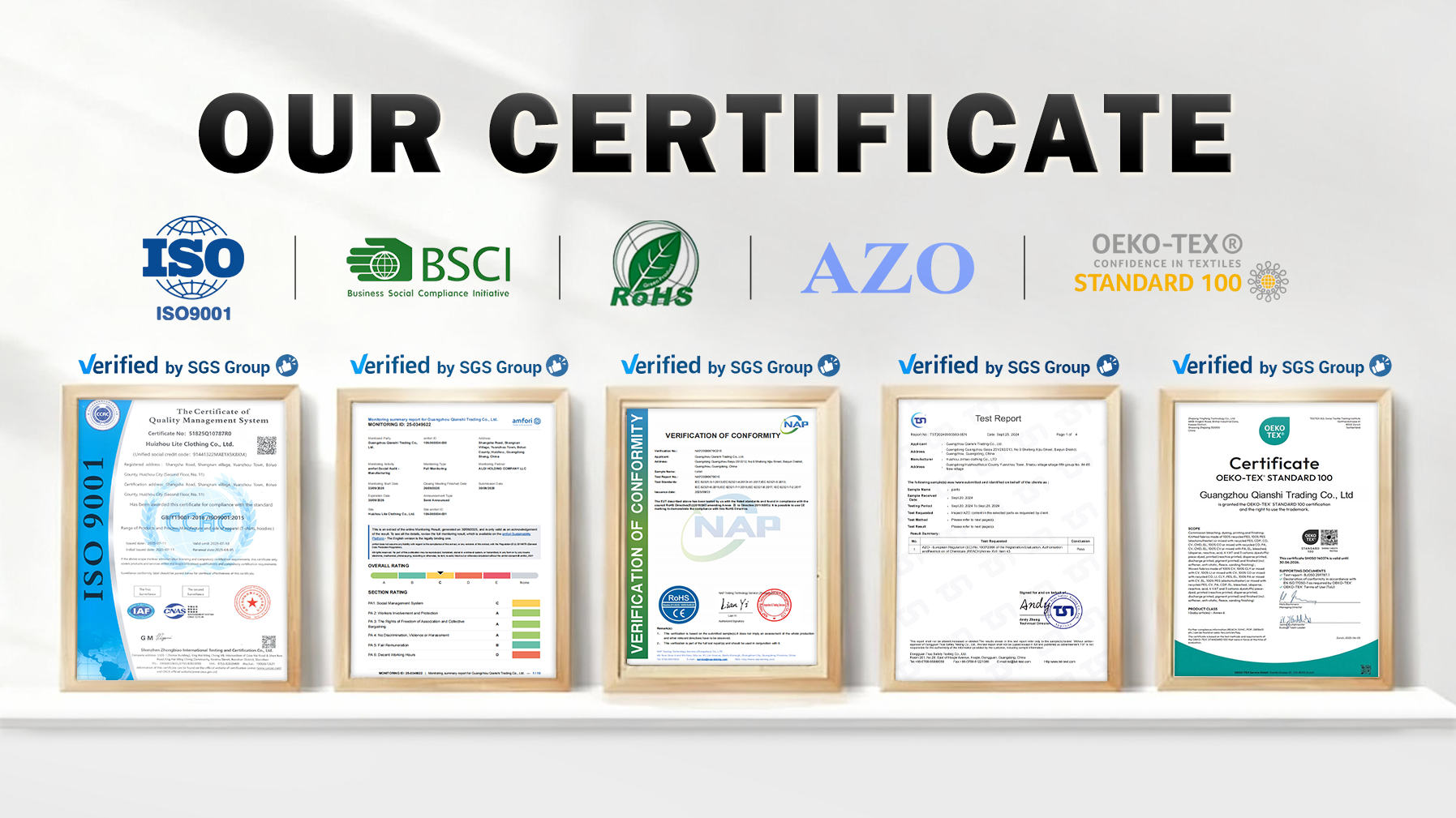
Compliance in custom T-shirt manufacturing is rarely a document problem. It is a production problem that happens to produce documents — and buyers who treat a certificate as the final answer rather than the opening question usually find the gap during a reorder, not during sampling.
The commercial stakes behind that gap are growing. The global blank apparel market, in which T-shirts and tanks account for a 48.39% share, was estimated at USD 15.23 billion in 2024 (Grand View Research). The custom T-shirt printing segment alone was valued at USD 5.46 billion in 2024 and is projected to reach USD 9.82 billion by 2030, a compound annual growth rate of roughly 11.5%–11.6% (Grand View Research). China remains the world's largest textile exporter, recording USD 268 billion in textile exports in 2024 and approximately 32% of global market concentration (Observatory of Economic Complexity).
Scale changes what buyers ask for. A brand placing a single sampling order can accept a certificate at face value. A brand placing quarterly reorders across several colourways cannot, because the failure mode is not the certificate — it is the batch.
OEKO-TEX Standard 100: A Baseline, Not a Differentiator
OEKO-TEX Standard 100 is a product-level certification for harmful substances in textile articles, applied by approved institutes to a named certificate holder and a defined article scope. The standard is revised on an annual cycle. The 2024 revision introduced a limit value for total fluorine (PFAS) of 100 mg/kg, effective January 1, 2024 (OEKO-TEX Association).
Its value to a buyer is real but narrow: it answers whether a tested article has met defined limits for harmful substances under the rules in force at the time of testing. It does not answer how the garment is produced.
What it also does not do is separate one manufacturer from another on a shortlist. Certification of this type is commonly held upstream at the fabric mill, which means a broad range of finished-garment suppliers can present the same document without operating additional production controls of their own. When every supplier on a shortlist holds OEKO-TEX, certificate presence stops being a decision input. Differentiation shifts to questions the certificate never asked: which components of this specific garment are actually covered, what happens at the cutting and printing stages, and what evidence exists at batch level.
What OEKO-TEX Does Not Cover
- Component scope. Certification applies to the article or material tested. It does not automatically extend to every dye lot, screen print or DTG ink, heat transfer film, sewing thread, elastic, zipper and drawcord hardware, neck label, woven label or packaging component in a finished garment.
- Performance. Shrinkage, colourfastness, pilling, seam strength and print durability fall outside a harmful-substances standard and require separate laboratory testing.
- Social compliance. OEKO-TEX Standard 100 is not a factory or labour audit. Buyers whose retail or licensing requirements include social and environmental criteria need those programmes separately.
- Time. Because the standard is revised annually, a certificate issued under earlier limits does not automatically represent current requirements.
Inside a Compliance-Capable Production System
Guangzhou Qianshi Apparel Co., Ltd is an apparel manufacturer and trading company based in Baiyun District, Guangzhou, Guangdong, China, established in 2014. It produces OEM and ODM apparel across T-shirts, hoodies, sweatshirts, sweatpants, joggers, tracksuits, polos, jerseys, jeans, caps and outerwear, with 85–90% of total production exported to the EU, USA, AU and UK.
Operating scale matters to compliance work, because documentation is only credible when a system is large enough to generate it. Monthly production capacity is 250,000 units, and annual output is 3,000,000 units. The team includes 80–100 sales representatives, order coordinators, operations, design and administrative staff, alongside 200–250 production line workers, a quality control team and pattern makers, supported by 15 designers.
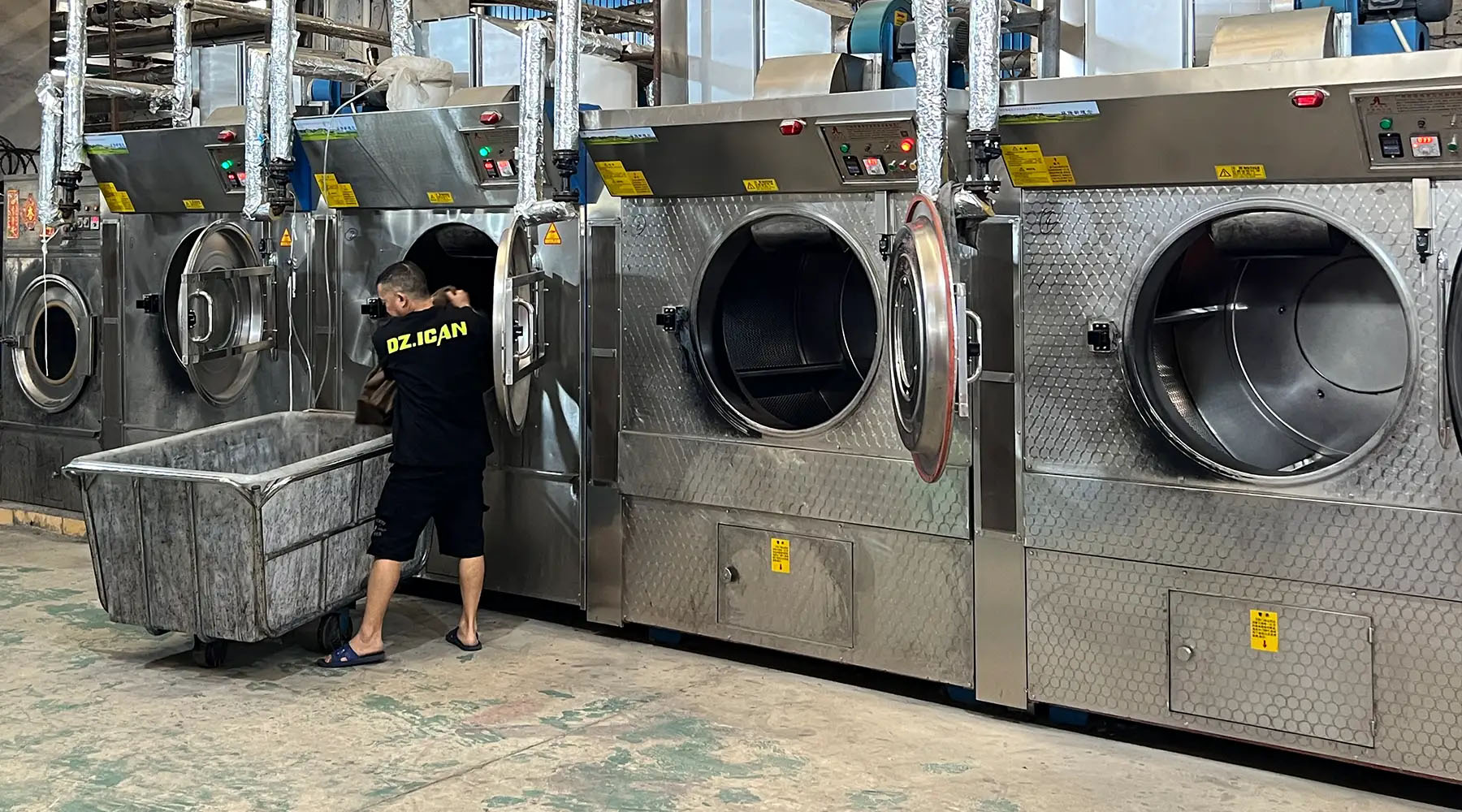
The part of the operation that matters to a compliance audit is not the certificate file but the control sequence around it, which the company describes in five layers:
- Incoming material control. 100% fabric inspection upon arrival, checking weight, width, colour consistency and shrinkage potential. Hardware and trim samples are tested before bulk production approval.
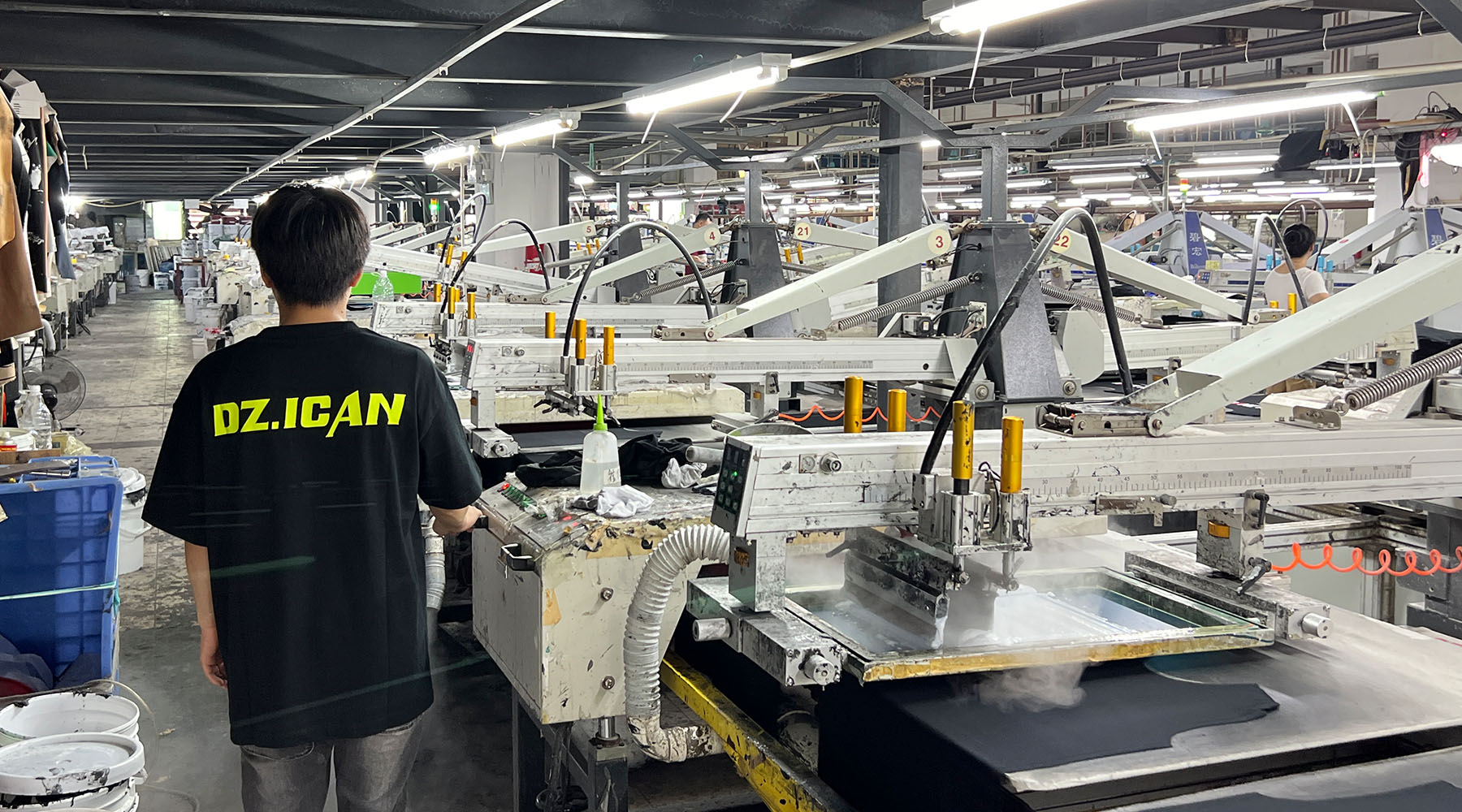
- In-process control. First-article inspection at the cutting, sewing and printing stages, random patrol checks throughout production lines, and real-time adjustment of embroidery tension and print alignment.
- Final inspection. AQL 2.5 sampling applied to finished goods, pre-shipment wash tests on representative samples, and size and measurement verification across all colourways.
- Traceability. Each order is assigned a production batch number, quality records are maintained for future reorder reference, and defect analysis is documented for continuous improvement.
- Third-party support. Inspection by SGS, Intertek and comparable bodies can be arranged at the client's request, and laboratory testing for specific performance requirements such as colourfastness and tensile strength can be arranged.
From Certificate to Evidence: A Five-Step Verification Framework
For buyers at the evaluation and execution stage, the sequence below converts compliance from a claim into a reviewable file. Each step generates a document that can be assessed independently of the supplier's assurances.
- Read the scope before the logo. Ask for the certificate holder, the article or material tested, the issuing body and the validity dates. A certificate covering a base fabric is not a certificate covering a finished, printed and washed T-shirt.
- Map compliance to the bill of materials. List every component of the garment — body fabric, ribbing, thread, print ink, transfer film, embroidery backing, labels, hardware and packaging — and ask which document covers each one.
- Request batch-level records rather than a single certificate. Incoming fabric inspection, first-article inspection, AQL 2.5 final inspection and pre-shipment wash test reports are the working evidence that a control system exists.
- Test against the regulations of the destination market. For the EU, the current OEKO-TEX limit for total fluorine (PFAS) is 100 mg/kg. Where an organic claim is used, GOTS requires at least 95% certified organic fibre and sets social and environmental criteria for manufacturing.
- Confirm continuity across reorders. Ask how batch numbers are assigned, how long quality records are retained, and how a defect identified in one batch is prevented in the next.
Risk-to-Control Map for Custom T-Shirts
The table below links the defects buyers most often encounter to the production controls that address them, and to the evidence a buyer can reasonably request.
| Production risk | Control applied in production | Evidence a buyer can request |
|---|---|---|
| Colour fading after washing | Reactive dyeing with high-temperature fixation for deeper colour penetration | Pre-shipment wash test results on representative samples |
| Fabric shrinkage or deformation | Pre-shrinkage treatment before cutting; standardised measurement verification | Size and measurement records across all colourways |
| Poor colour fastness (rubbing, sweat, light) | Dye fixation control; laboratory testing arranged for specific performance requirements | Colourfastness test report |
| Inconsistent sizing across production batches | Standardised AQL sampling for size and measurement verification; first-article inspection at cutting and sewing | First-article inspection report and AQL 2.5 final inspection record |
| Seam strength failure | Reinforced stitching at stress points using high-tensile thread | In-line inspection notes and final AQL report |
| Fabric pilling | Anti-pilling weaving or finishing treatment | Anti-pilling performance test result |
| Print cracking or peeling | Proper curing time for screen prints and DTG inks; real-time adjustment of print alignment | Curing records and post-wash print evaluation |
| Embroidery thread loosening | Embroidery backing stabilisation for thread tension control, with real-time tension adjustment | In-process embroidery inspection record |
| Defective zippers or hardware | Hardware pull and closure testing before bulk assembly; trim samples tested before production approval | Hardware and trim test approval record |
| Delivery delays caused by production issues | Structured cutting and sewing processes; batch numbering and production records for each order | Production batch number and delivery record set |
Where Compliance Meets Deadline Pressure
Tour merchandise and event drops compress compliance work into the tightest possible window. A garment that has to be on sale before a tour date cannot be recalled for a print defect or a sizing error, so verification has to happen before shipment rather than after delivery. This is the segment where structured quality control is easiest to justify economically.
Long-running programmes illustrate the point. A three-year ongoing partnership with an established streetwear brand and multi-store retailer, operating on quarterly reorders, has recorded 100% on-time delivery across more than 12 drops and zero major quality claims over three years. A separate US-based project has been ongoing for one year, with reorders placed. Monthly production capacity of 250,000 units supports that kind of continuity.
The products used in such programmes include custom blank T-shirts in crewneck, V-neck, oversized, long-sleeve, polo and drop-shoulder constructions, produced in 160–220 GSM lightweight and 220–300 GSM mid-weight fabrics. Material options include 100% combed cotton, cotton-polyester blends, GOTS-certified organic cotton, slub cotton and pique. Print techniques span screen print, digital direct-to-garment (DTG), sublimation, heat transfer and puff print, while embroidery options include flat, 3D puff and chenille. Neckline finishing is available as ribbed collar, self-fabric binding or seamless finish, and garment washes include pigment dye, enzyme wash, snow wash and vintage wash.
The compliance relevance is direct: every print method, wash process and trim added to a T-shirt increases the number of components that must be sourced, controlled and documented. Typical sectors served include streetwear and fashion apparel, e-commerce clothing brands, corporate promotional merchandise, music and event merchandise, fitness and gym wear, educational institutions, and sports teams and clubs.
Market Trend: Compliance Requirements Are Converging, Not Settling
- Regulation cycles are shortening. The OEKO-TEX 2024 introduction of a total fluorine (PFAS) limit of 100 mg/kg shows how a single revision can change what an existing programme must demonstrate. Certificates need annual review, not one-time filing.
- Organic claims are tightening. GOTS requires at least 95% certified organic fibre for products labelled organic, and applies social and environmental criteria to manufacturing.
- Streetwear construction is adding chemical and wash steps. Manufacturing trends in China point towards heavyweight fabrics of 300–500 GSM and complex finishes such as acid washes and puff printing — each additional finish is another process to control.
- Production clusters remain concentrated. Top-tier T-shirt manufacturing clusters in China are centred on Guangdong (Guangzhou and Dongguan for fast fashion and streetwear) and Zhejiang (Ningbo for premium knitwear).
- Minimum order expectations. Common competitive MOQs among China-based custom T-shirt manufacturers are generally in the 50–100 piece range per design and colour; Guangzhou Qianshi Apparel quotes a minimum of 50 pieces per colour per design.
Structured Quality Control vs Ultra-Budget Production
Compliance verification sits on top of a quality system. The table below summarises how a structured quality-control operation typically behaves against an ultra-budget, mass-production alternative.
| Comparison dimension | Structured quality-control production | Ultra-budget mass production |
|---|---|---|
| Inspection protocol | Structured quality control at key production stages, based on AQL standards | Limited or inconsistent inspection, without a formal quality protocol |
| Typical defect rate | Typically maintained below 5% | Often exceeding 10–15% |
| Fabric shrinkage | Generally within 5–8% | 8–12% or higher |
| Colour fastness | Typically Grade 3–4 | Grade 2–3 |
| Wash durability | Typically 30–50 washes with minimal fading | Noticeable fading after 10–15 washes |
| Anti-pilling performance | Typically Grade 3 | Grade 1–2 |
| Initial per-unit cost | Typically 20–40% higher | Lower upfront, with hidden costs in returns and replacement frequency |
| Documentation | Production records and specifications maintained to support consistent reorders | Limited documentation and higher batch-to-batch variation |
| Best suited to | Brands focused on long-term reputation, mid-tier to premium positioning, and reliable reorders | Short-term, price-led programmes where replacement is acceptable |
Where the limits sit — buyers should plan for these:
- Cost. Initial per-unit cost is typically 20–40% higher than an ultra-budget mass producer. The case rests on total project cost — reduced return rates, fewer complaints and lower replacement frequency — not on unit price.
- Inspection is a scheduled, chargeable activity. Third-party inspection through bodies such as SGS or Intertek, and laboratory performance testing, are arranged at the client's cost and must be built into the timeline.
- Certificates cover a defined scope. Per-batch or per-colourway retesting is not automatic and has to be specified in the purchase agreement.
- Harmful-substance certification is not a factory audit. OEKO-TEX Standard 100 does not replace social or environmental compliance programmes.
- Small runs spread fixed costs. A minimum of 50 pieces per colour per design is low for the category, but compliance testing is largely a fixed cost per specification, so heavily fragmented colour runs raise the effective verification cost per unit.
- Tolerances remain tolerances. Controlled shrinkage in the region of 5–8% is a managed range, not an absence of shrinkage; a buyer specifying zero-shrink garments is specifying a different product.
Future Outlook
Compliance evidence is moving from the marketing page into the supplier file. As standards are revised on annual cycles — the 2024 OEKO-TEX total fluorine limit is one example — buyers are likely to shift from requesting a certificate to requesting batch-level documentation that shows how a specification was held across multiple production runs.
For manufacturers, the differentiator is reproducibility. Producing a compliant garment once is a sampling achievement; producing the same garment across twelve reorders with consistent measurement, colour and print behaviour is an operational capability, and it depends on traceability systems that low-cost producers typically do not maintain.
For brands, the practical implication is to move verification earlier. Compliance checks performed during sampling and first-article approval are inexpensive; the same checks performed after a bulk shipment has been packed are not. Suppliers with structured incoming, in-process and final controls can supply that evidence as a by-product of normal production rather than as a special project.
FAQ
What does OEKO-TEX Standard 100 actually certify?
It certifies that a tested textile article or material has met defined limits for harmful substances under the version of the standard in force at the time of testing, issued by an approved institute to a named certificate holder. The standard is updated annually; the 2024 revision introduced a limit value for total fluorine (PFAS) of 100 mg/kg, effective January 1, 2024. It does not certify performance characteristics such as shrinkage, colourfastness or print durability, and it is not a social compliance audit.
Is OEKO-TEX certification a differentiator among custom T-shirt manufacturers?
Not by itself. Because the certification is often held at the fabric mill level, a wide range of finished-garment suppliers can present it. When several shortlisted suppliers hold the same certificate, the meaningful differences lie in which components of the garment are covered, how each supplier controls incoming materials and in-process quality, what batch-level records exist, and whether performance testing can be arranged on request.
How can buyers verify a manufacturer's compliance claims beyond paper certificates?
Five steps are workable: read the certificate scope, including holder, article tested and validity; map every garment component to a document; request batch-level records such as incoming fabric inspection, first-article inspection, AQL 2.5 final inspection and pre-shipment wash tests; test against the regulations of the destination market, for example the OEKO-TEX total fluorine limit of 100 mg/kg and the GOTS requirement of at least 95% certified organic fibre for organic claims; and confirm how batch documentation carries into reorders.
How does compliance verification affect cost and lead time?
Third-party inspection through bodies such as SGS or Intertek, and laboratory testing for colourfastness or tensile strength, are arranged at the client's cost and consume scheduled time before shipment. Suppliers operating structured quality control typically carry an initial per-unit cost around 20–40% above ultra-budget mass producers, offset in total project terms by lower defect rates — typically below 5% against frequently more than 10–15% — and longer garment life. Pre-shipment wash tests and AQL 2.5 final inspection are part of the standard production flow rather than add-on services.
What keeps quality and compliance consistent across a long-term programme?
Batch-level traceability. Each order is assigned a production batch number; quality records are retained for reorder reference, and defect analysis is documented so that corrections carry forward. In practice this is what allows a programme with quarterly reorders to hold its specification: a three-year ongoing partnership with an established streetwear brand and multi-store retailer recorded 100% on-time delivery across more than 12 drops and zero major quality claims over three years, while a US-based project has continued for one year with reorders placed and monthly capacity of 250,000 units available to support ongoing volume.