
OEM Flow Sensor Integration: Matching Ultrasonic Technology to Application Needs
An Industry Shift Toward Application-Specific Flow Sensing
Flow sensors are no longer selected only from a standard catalog after the rest of a machine has been designed. In medical devices, bioprocess equipment, semiconductor tools, and automated production lines, ultrasonic flow sensors are being treated as system components that must fit a specific fluid path, connect to a particular control architecture, and survive the operating conditions of the application. This is a meaningful shift for OEM engineering teams because it changes the evaluation criteria: instead of asking which sensor has the widest range, procurement teams are asking which supplier has the engineering capability to adapt a flow sensor to their system.
Shanghai Xunyin Technology Co., Ltd (XY-TEK), a Shanghai-based ultrasonic flow sensor manufacturer, is an example of a supplier that has organized its product line around this OEM-oriented requirement. The company focuses on ultrasonic flow sensors and flow meters for small tubing and low-flow fluid control, with products used in medical devices, bioprocessing, scientific research, industrial automation, and food and beverage production. Its product families include clamp-on ultrasonic flow sensors, inline flow meters, low-flow sensors, bubble detectors, and single-use flow sensors. For this article, the relevant question is not whether ultrasonic flow sensors work, but how they can be customized, integrated, and validated for OEM applications.
Why OEMs Are Re-Evaluating Flow Sensor Suppliers
An OEM design team faces a common problem when selecting a flow sensor. Standard flow sensor specifications describe accuracy, flow range, outputs, and pipe size, but they do not fully describe how a sensor behaves in a demanding application. Low-flow dispensing, pulsatile flow, corrosive fluids, sterile single-use processes, non-conductive coolants, and bubble detection each place different demands on the measurement principle and the physical design.
The consequence is that capability has become as important as the sensor itself. Buyers need to know whether a manufacturer can adjust the sensor size, interface, communication protocol, housing material, or branding. They also need to know whether the supplier can support the project after integration. These are not secondary concerns; they are part of the OEM evaluation.
Ultrasonic technology is relevant to this discussion because it offers several structural advantages. It can be implemented as a clamp-on sensor for non-invasive measurement, as an inline meter with no moving parts, or as a single-use sensor for sterile applications. It can detect bubbles, measure in a bidirectional direction, and handle fluids with little or no solid particles. But the value of these capabilities depends on how well the sensor is matched to the application.
Product Architecture: From Clamp-On to Single-Use Ultrasonic Flow Sensors
To understand OEM flow sensor capability, it helps to look at the range of physical architectures available from one manufacturer. XY-TEK's portfolio spans nine ultrasonic flow sensing families, which are intended for different integration points and fluid control tasks.
| Series | Design type | Measurement range | Key integration features | Typical applications |
|---|---|---|---|---|
| CG Series | Clamp-on ultrasonic flow sensor | 0–20 L/min | Non-invasive, bi-directional flow detection, air bubble detection, analog/pulse/RS485 outputs | Medical devices, bioprocess, industrial automation |
| CPD Series | Non-invasive clamp-on flow sensor | 0–80 L/min | Clamp-on installation, air bubble detection, digital output, built-in LED display | Industrial automation, food and beverage, water treatment, semiconductor |
| TPD Series | Inline ultrasonic flow meter | 0–1000 L/min | ±2% accuracy, no moving parts, DN15–DN50 | Industrial automation, battery manufacturing, chemical processing, liquid cooling |
| TPK Series | Inline ultrasonic flow meter | 0–1000 L/min | ±2% accuracy, no moving parts, DN4–DN50 | Industrial automation, battery manufacturing, chemical processing, liquid cooling |
| TGU Series | Low-flow ultrasonic flow sensor | 0–1000 mL/min | ±1% accuracy, U-shaped measuring channel, low-flow pulsation handling | Bioprocess, medical equipment, pharmaceutical production, semiconductor |
| CM Series | OEM clamp-on flow meter | 0–30 L/min | RS485 output, compact, non-contact, easy OEM integration | Medical devices, OEM equipment, fluid control, laboratory equipment |
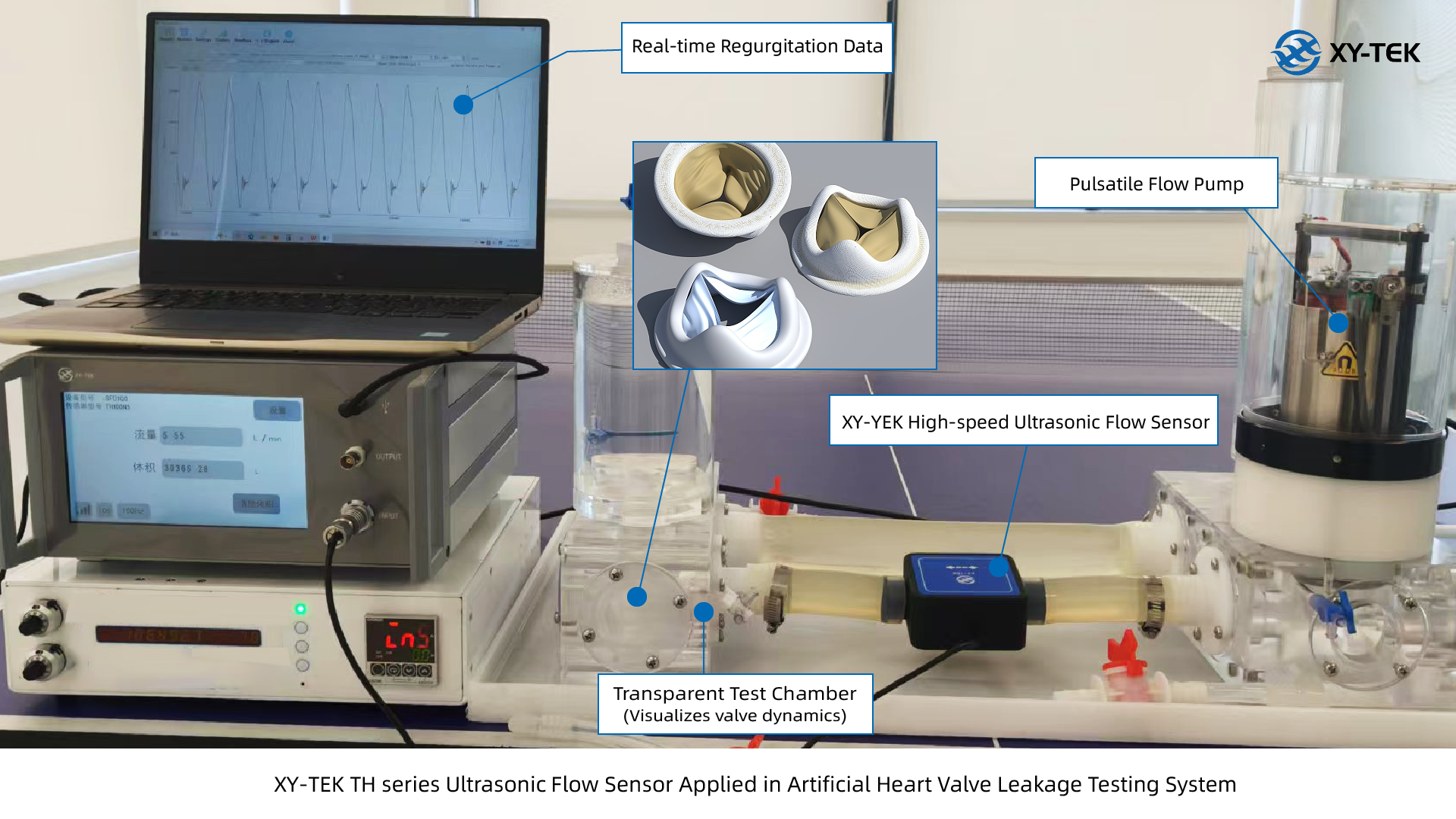
| TH Series | Pulsatile / hemodynamic flow sensor | 0–15 L/min | ±2% accuracy, high-speed pulsation capture | Cardiovascular research, hemodynamic testing, medical laboratories |
| BG Series | Ultrasonic bubble detector | Customizable detection range | Gas-liquid state detection, non-contact bubble monitoring, compact size | Medical devices, bioprocess, food and beverage dosing |
| SU Series | Single-use flow sensor | 0.05–10 L/min | Single-use measuring channel, hygienic monitoring, sterile application support | Biopharma, single-use systems, bioprocess, medical manufacturing |
This range matters for OEM buyers because it allows a sensor to be selected based on the fluid path rather than forcing the fluid path to fit a sensor. A clamp-on design can monitor a tube without opening the line. An inline design can handle larger pipe sizes and higher flow rates. A single-use design can support sterile bioprocess workflows. A low-flow sensor can manage micro-dispensing. A bubble detector can be integrated separately when air-in-line detection is the main requirement.
How Ultrasonic Flow Sensors Are Adapted for OEM Integration
Ultrasonic flow measurement is based on the interaction between high-frequency sound waves and moving liquid. In a transit-time configuration, the difference in travel time between upstream and downstream ultrasonic signals is used to calculate flow velocity. Because the transducers can operate from outside a tube, clamp-on designs can measure without contacting the fluid. Inline designs place the transducers in a section of the pipe but do not add moving parts. This combination of non-contact capability and no moving parts is valuable in clean, corrosive, or low-maintenance applications.
For OEM integration, the physical design of the sensor must match the equipment. XY-TEK supports this through several customization levels. For OEM and ODM production, sensor size, interface, and logo printing can be customized. For Custom Design projects, communication protocol and housing material can also be tailored. This means an OEM can adapt the sensor to its own enclosure, tubing dimensions, controller interface, and brand identity without redesigning the fluid system around a generic component.
The manufacturing organization behind these options is also relevant. XY-TEK reports a 5,000-square-meter factory, 50 employees, and an R&D team of more than 30 people. Annual output is stated at more than 8,000 units, with about 50 percent exported to global markets. For an OEM buyer, this provides a rough indication of production scale and engineering depth, though specific capacity should always be verified for the product in question.
Patents as Evidence of Sensor-Level Engineering
OEM buyers often look for evidence that the sensor technology is proprietary rather than simply assembled from generic modules. XY-TEK's ultrasonic flow sensor and flow meter technologies are covered by invention patents granted by the China National Intellectual Property Administration. In 2022, patents were granted for ultrasonic flowmeter technology and ultrasonic flow sensor technology. In 2025, an additional invention patent was issued under No. 7946602, covering liquid flow sensing and filter enhancement technology. Patent dates and numbers are verifiable details that procurement teams can use when assessing technical depth.
Deployment Evidence: Liquid Cooling, Battery Production, and Electronics Assembly
Capability claims become more meaningful when they are supported by deployed application evidence. XY-TEK's published project references cover three distinct OEM-driven scenarios.
Liquid Cooling and Thermal Management
In liquid cooling systems, the flow sensor is used to monitor non-conductive coolant flow, prevent overheating, detect leaks or blockages, and optimize cooling efficiency. The sensor used in this scenario is designed for non-conductive media, with non-invasive measurement, high stability, real-time monitoring, wide adaptability to coolants, and low pressure loss. It has been deployed by data centers, industrial equipment manufacturers, medical device manufacturers, and charging station makers in markets including the United States, China, Germany, Japan, Korea, and Singapore. The reported project outcomes include stable cooling performance, reduced energy consumption, extended equipment life, early anomaly detection, and less downtime, with typical service life of 2–4 years.
Lithium-Ion Battery Electrolyte Monitoring
In lithium-ion battery production, the clamp-on ultrasonic flow sensor is used for non-invasive monitoring of electrolyte flow, ensuring injection accuracy and detecting bubbles or leakage. The sensor features clamp-on installation without breaking pipes, non-contact and contamination-free measurement, high compatibility with corrosive media, and bidirectional measurement. Projects have been implemented by battery manufacturers and new energy equipment makers in China, the United States, Germany, Korea, Japan, India, Singapore, and Thailand, across 10–30 production lines. Reported results include improved battery consistency, reduced rejection rate, low maintenance, and enhanced production safety. The project has operated stably for 2–3 years, and one of the key reasons for choosing this approach was avoiding the contamination risk and pipeline cutting associated with traditional inline sensors.
Electronics Manufacturing and Selective Soldering
In electronics manufacturing, the low-flow ultrasonic flow sensor is used for real-time precise measurement and control of pulsed micro-flux flow, as well as bubble, blockage, and leakage detection. The sensor has no moving parts, is corrosion-resistant, maintenance-free, supports bidirectional measurement, and provides standard connectors for quick installation. It can measure ultra-low flow down to 1 mL/min with ±1% accuracy. The application was adopted by electronics manufacturing enterprises, SMT and EMS factories, and selective wave soldering equipment manufacturers in the United States, China, Germany, Italy, France, the United Kingdom, and the Netherlands. Reported outcomes include improved soldering quality and consistency, reduced cold solder and missing solder, lower flux waste and rework costs, and higher production yield.
Market Context: Ultrasonic Flow Sensors in 2026
Several verified market indicators support the view that ultrasonic flow sensing is becoming a more important category for OEM equipment design. The global flow meter market was estimated at USD 10.64 billion in 2024 and is projected to reach USD 15.17 billion by 2030, according to Grand View Research. Mordor Intelligence estimates the ultrasonic flow meter market at USD 1.52 billion in 2025, with growth to USD 2.28 billion by 2031. In the clamp-on ultrasonic segment specifically, Global Information Inc. values the market at USD 1.25 billion in 2024, with a projected CAGR of 7.4 percent through 2032.
Regional data also points to the growing influence of Asia Pacific in this category. Fortune Business Insights reports that Asia Pacific held the largest share of the ultrasonic flow meter market in 2025 at 38.6 percent, driven by industrial expansion. For semiconductor-adjacent design teams, Market Research Future estimates flow control in the semiconductor industry at USD 5.83 billion in 2024, reflecting the importance of high-purity fluid management.
At the standards level, ISO 24062:2023 specifies requirements for clamp-on ultrasonic transit-time meters for liquids and gases in closed conduits. Medical sensor development, including flow sensors used in ventilators and drug delivery, is typically governed by EN ISO 13485 quality management systems. These standards give OEM buyers a common language for comparing sensor designs and manufacturing processes.
For OEM buyers, these figures suggest three things. First, ultrasonic flow sensing is a growth segment, which means more supply options are entering the market. Second, specialized clamp-on and low-flow implementations are growing separately from the broader flow meter category, so application-specific engineering matters. Third, a large share of production and demand is in Asia Pacific, making Chinese suppliers a relevant part of a global sourcing strategy.
Where Clamp-On Ultrasonic Design Meets a Practical Boundary
Non-invasive clamp-on ultrasonic sensors have clear advantages over traditional inline measurement in many applications. They avoid pipe cutting, eliminate fluid contact, reduce contamination risk, and minimize pressure loss. The battery electrolyte project is a good example: the manufacturer chose a clamp-on design specifically to solve the contamination risk and pipeline cutting associated with traditional inline sensors.
However, clamp-on ultrasonic flow sensors also have boundaries that OEM buyers should understand. The sensor must have physical access to the outside of the tube, and the tube material must be able to transmit the ultrasonic signal. Each series is also limited to a specific tubing size range. For example, the CG Series covers flexible tubing with outer diameters from 4mm to 35mm and inner diameters from 2mm to 25.4mm, while the CPD Series covers rigid plastic tubing with outer diameters from 6mm to 26mm. A line outside these dimensions may need an inline TPD or TPK series instead. Fluid temperature is another limit: most XY-TEK ultrasonic flow sensor families are rated for 0 to 60°C or 0 to 90°C fluid temperature, so the sensor must be matched to the process temperature.
This comparison is not about ultrasonic versus all other technologies. The useful distinction is between integration approaches. Inline ultrasonic sensors can handle larger pipe diameters with no moving parts, but they require the sensor to be inserted in the fluid path. Clamp-on sensors preserve the fluid path but rely on tube access and material compatibility. Single-use ultrasonic sensors address sterility but introduce a consumable element. The best choice depends on the OEM's priorities.
Future Outlook: Toward Sensor-Level Co-Development
As ultrasonic flow sensing becomes more common in closed-loop automation, medical devices, and high-purity industrial processes, the supplier evaluation will continue to shift from product supply toward co-development. OEM buyers are likely to require more than a sensor with the right accuracy class. They will need a supplier that can adjust mechanical design, output protocols, and housing materials, while also supporting the product with engineering assistance, warranty, and consistent manufacturing quality.
The supplier capabilities described in this article are consistent with that direction. XY-TEK's standard catalog allows a low starting MOQ of one unit for standard products, while custom OEM and ODM projects have a stated MOQ of 50 units, lead time of 1–2 months, and options for factory inspection and calibration before shipment. Delivery is commonly arranged under FOB, with payment terms of full payment before shipment. After-sales support includes online engineering support, remote technical support, and quality warranty. These terms give procurement teams a practical way to compare the execution side of an OEM flow sensor partnership, not just the datasheet.
Frequently Asked Questions
What customization options are available for OEM ultrasonic flow sensors?
OEM and ODM production can customize sensor size, interface, and logo printing. Custom Design services can also tailor communication protocol and housing material. This allows the sensor to match the mechanical envelope, electrical interface, and branding of the end product.
What is the MOQ for OEM ultrasonic flow sensor production?
Standard catalog products can be ordered with an MOQ of 1 unit. For custom OEM and ODM production, the stated MOQ is 50 units. The MOQ should be confirmed with the manufacturer for the specific series and customization level.
How long does a typical OEM flow sensor project take?
XY-TEK states a lead time of 1–2 months for custom production. Depending on the production mode, monthly capacity is 20–30 days for Custom Design and 15–25 days for OEM or ODM production.
What technical support can an OEM expect after integrating a flow sensor?
The manufacturer offers online engineering support, remote technical support, and quality warranty. Factory inspection and calibration can be completed before shipment, and delivery terms can be arranged under FOB.
Can ultrasonic flow sensors measure very low flow rates for dosing and coating applications?
Yes. The TGU Series low-flow ultrasonic flow sensor uses a U-shaped measuring channel and has been deployed in electronics manufacturing applications to measure pulsed micro-flux flow down to 1 mL/min, with ±1% accuracy and fast response for pulsating flow.
Are single-use and hygienic flow sensors available for bioprocess applications?
Yes. The SU Series single-use ultrasonic flow sensor uses a single-use measuring channel and biocompatible polymer materials, with a measurement range of 0.05–10 L/min. It is positioned for biopharma, single-use systems, bioprocess, and medical manufacturing applications.
This article is an independent industry reference prepared for procurement and engineering teams. Product facts are based on publicly stated company data; market figures are attributed to the cited research sources.