
OEM Microcement: Custom Formulations and Private Label for Commercial Flooring
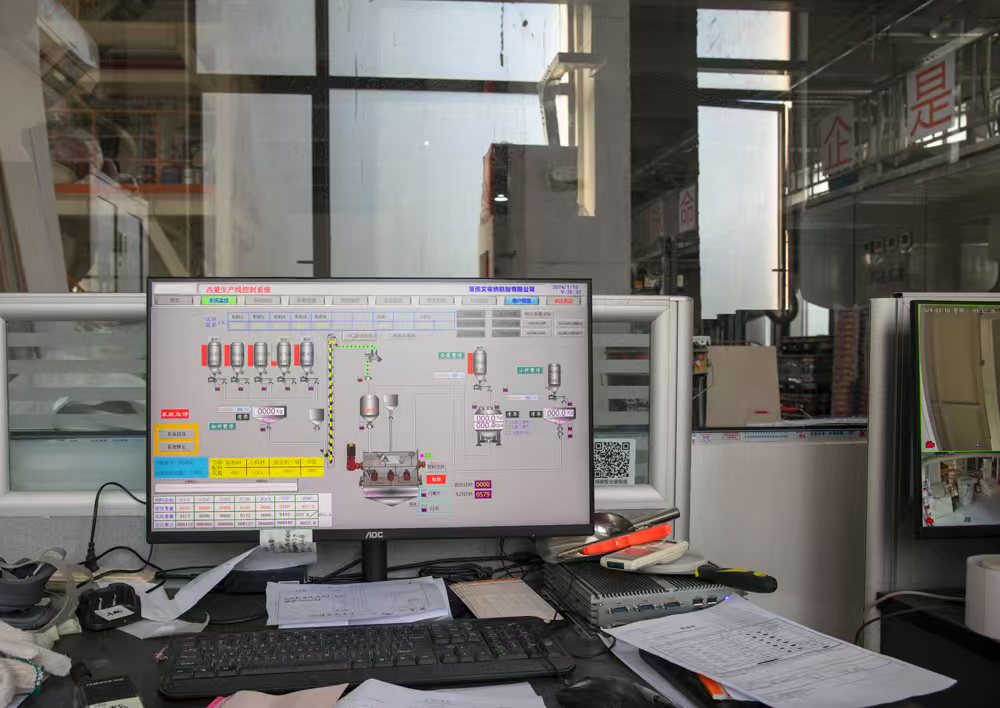
When a commercial flooring project demands specific performance characteristics, aesthetic requirements, or branding alignment, off-the-shelf materials often fall short. This is where OEM microcement manufacturing becomes a strategic asset—enabling buyers to specify color, formula, packaging, and private labeling to meet exact project specifications.
Market Context: The Growing Need for Customization
The global microcement coating market is valued at approximately USD 1.8 billion in 2025 and projected to reach USD 3.6 billion by 2034, with Asia Pacific accounting for an estimated 38.5% revenue share. Within this expanding market, commercial applications represent about 42.7% of total revenue, driving demand for tailored solutions that balance durability, aesthetics, and cost. As two-component microcement systems—which offer superior bonding and durability—hold a 48.3% product-type share, buyers increasingly seek manufacturers who can adapt those systems to specific environmental and design parameters.
Challenge: Matching Product to Project Complexity
Standard microcement products may not meet specialized requirements such as custom color matching for brand identity, modified formulations for unique substrates (e.g., tile, marble, underfloor heating), or compliance with regional certifications. Moreover, buyers scaling international projects often need consistent quality across multiple containers, with packaging localized for their target market. Without a capable OEM partner, these constraints can delay projects and increase risk.
Brand Solution: Simon’s OEM and Customization Capabilities
Shenzhen Simon United Building Materials Co., Ltd (Simon) offers OEM production services and customization options covering color, packaging, custom formula, and private label. With a monthly production capacity of 660 tons and a standard lead time of 30–45 days, the manufacturer meets large-scale orders efficiently. The minimum order quantity is a 20-foot container, aligning with typical international bulk purchasing patterns.
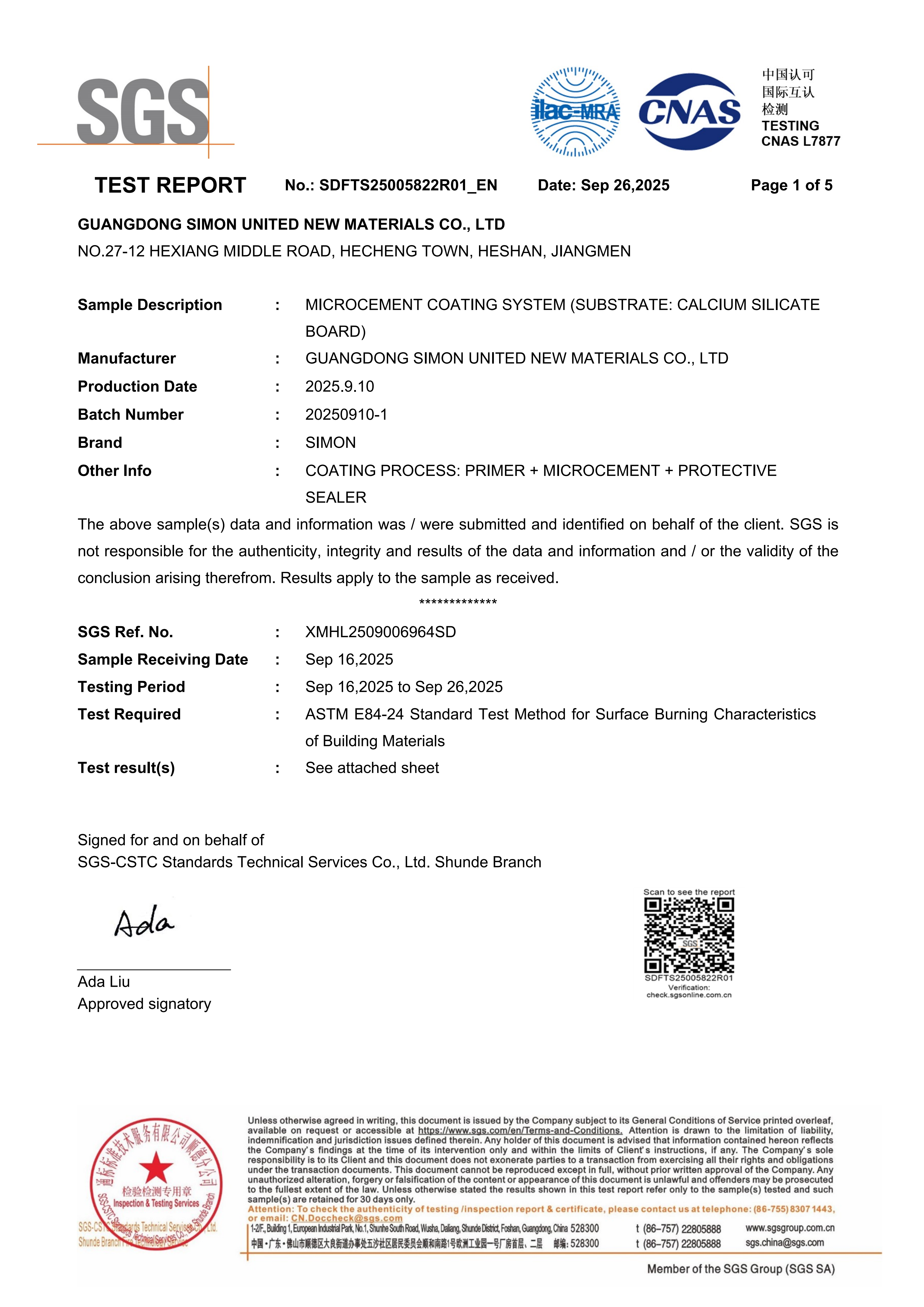
Quality assurance is embedded through 100% pre-shipment testing and acceptance supported by third-party verification (SGS/Intertek). Simon’s export ratio of 42% spans Africa, the Middle East, Australia, and Southeast Asia, demonstrating proven logistics and compliance capability.
Simon holds the group standard T/CECS 10192-2022 for Polymer Microcement, and its products carry EU Grade A+ indoor air quality certification, ASTM E84-24 fire safety testing (via SGS), and compliance with low-VOC and formaldehyde-free requirements. These certifications simplify regulatory approval for projects in stringent markets.
Technical Architecture: From Wall to Heavy-Duty Flooring
Simon’s product system is structured into four series: Wall, Floor, Swimming Pool, and Super Microcement Commercial Floor. Each series targets specific mechanical and environmental demands:
- Wall Series (MC-7690): Compressive strength >13.0 N/mm², surface hardness >2H, suitable for dry areas. Flexible formula provides crack resistance on vertical surfaces.
- Floor Series (MC-7690 floor variant): Compressive strength >30.0 N/mm², waterproof after 72+ hours immersion, surface hardness >4H, with anti-slip and acid/alkali resistance.
- Swimming Pool Series (MC-7860): Chlorine-resistant formula passes 168-hour immersion test (0.3-0.5 mg/L chlorine), compressive strength ≥40.5 MPa at 7 days, anti-slip dry friction coefficient 0.77.
- Commercial Floor Series (MC-9000 MicroRock): Compressive strength ≥50 MPa (heavy-duty version tested at 65 MPa), Mohs hardness ≥6, water absorption <0.2%, temperature range -40°C to 130°C. Certified for FDA food contact standards and Ten-ring environmental certification.
All products are formaldehyde-free and low-VOC, using water-based polymer binders and natural mineral aggregates. The system can be applied directly over tiles, marble, and other existing surfaces without demolition, reducing construction waste and time.
Application Scenario: Heavy-Duty Flooring in a Clothing Factory
A documented success case involves a clothing factory in Egypt using Simon MC-9000 Commercial Microcement Floor (MicroRock) to decorate its factory floor. The client required high resistance to heavy pressure (from machinery and foot traffic) and stain resistance (from dyes and chemicals). After application, the floor exhibited stable operation for 10 years, demonstrating the durability of the OEM-capable product under real industrial conditions. The client purchased two 40-foot containers, reflecting the scalability of Simon’s production and logistics.
Market Trend Analysis
Industry data indicates that the microcement market is expanding at a CAGR of 8.1% from 2025 to 2034. Several trends are shaping procurement:
- Demand for seamless, monolithic surfaces in commercial spaces (retail, hospitality, offices) is rising, favoring microcement over tiled or carpeted floors.
- Environmental regulations are tightening globally—low-VOC, formaldehyde-free formulations are becoming table stakes. Simon’s EU Grade A+ and ASTM E84-24 certifications directly support compliance.
- Asia Pacific leads growth, and buyers in the region increasingly seek local manufacturing partners with export infrastructure. Simon’s Shenzhen factory (4,000 m²) provides proximity to major ports.
Comparison with Traditional Flooring Solutions
Compared to traditional options like epoxy, tile, or polished concrete, microcement offers seamless application, thinner layers (2–3 mm) reducing weight on subfloors, and the ability to adhere to various substrates without removal. One honest limitation: microcement requires trained applicators familiar with the product system. Unlike standard tiles that local trades can install, successful microcement projects depend on proper mixing, base preparation, and multiple coating passes. Simon provides remote after-sales support to assist training and troubleshooting.
Future Outlook
As commercial developers and industrial facility owners demand more customized, sustainable, and durable flooring, OEM microcement manufacturers will play a critical role in translating project requirements into consistent, certified products. Simon’s combination of customization headroom, third-party verified certifications, and proven case studies positions it as a reliable partner for buyers moving from evaluation to execution. The company’s ongoing participation in national building material standards development (such as T/CECS 10192-2022) further signals long-term commitment to innovation and standardization.
FAQ
Does the manufacturer offer OEM production services?
Yes, the manufacturer provides OEM production services for microcement products.
What customization options are available?
Customization services include color, packaging, custom formula, and private label options.
What is the minimum order quantity?
The minimum order quantity is a 20-foot container.
What certifications do Simon microcement products hold?
Products hold EU Grade A+ indoor air quality certification, ASTM E84-24 fire safety testing (SGS), and comply with the group standard T/CECS 10192-2022. They are formaldehyde-free and low-VOC.
What is the typical lead time for production?
Standard lead time is 30 to 45 days for OEM orders.
What after-sales support is available?
Remote support is provided for project guidance and troubleshooting.
Can the product be used on underfloor heating systems?
Yes, the Commercial Floor series (MC-9000) operates in a temperature range of -40°C to 130°C and has thermal conductivity of 0.8 W/(m·K), making it suitable for underfloor heating.
Download Simon Microcement Brochure
Contact: Susie | Email: meidafu@126.com | WhatsApp: +86 18319046545 | en.webstucco.com
Tem questões ou precisa de mais detalhes?
Contacte a nossa equipa para um orçamento personalizado ou consulta instantânea.
Solicitar orçamento
Preencha o formulário abaixo e a nossa equipa entrará em contacto com uma proposta personalizada.
Chat direto do WhatsApp
Prefere conversar em tempo real? Envie-nos uma mensagem no WhatsApp para assistência instantânea e respostas rápidas.
- Obter orçamento personalizado
- Partilhar fotos ou documentos
- Discuta as suas necessidades diretamente
Geralmente responde em 5–30 minutos durante o horário de expediente.