
OEM/ODM Capabilities for 4D Massage Chairs: What Buyers Should Evaluate
As the global massage chair market expands—from an estimated USD 3.8 billion in 2024 to a projected USD 6.1 billion by 2034—brand owners, importers, and distributors are increasingly sourcing 4D massage chairs through OEM and ODM partnerships. The critical question is no longer simply “who can build a chair,” but rather “which manufacturer has the engineering depth, production capacity, and compliance infrastructure to turn a product concept into a market-ready 4D massage chair.” This article examines the capability dimensions buyers should evaluate when selecting an OEM/ODM partner for 4D massage chairs, using the production framework of Ningbo Zhouqi Health Technology Co., Ltd. (ZHOUQI) as a working example.
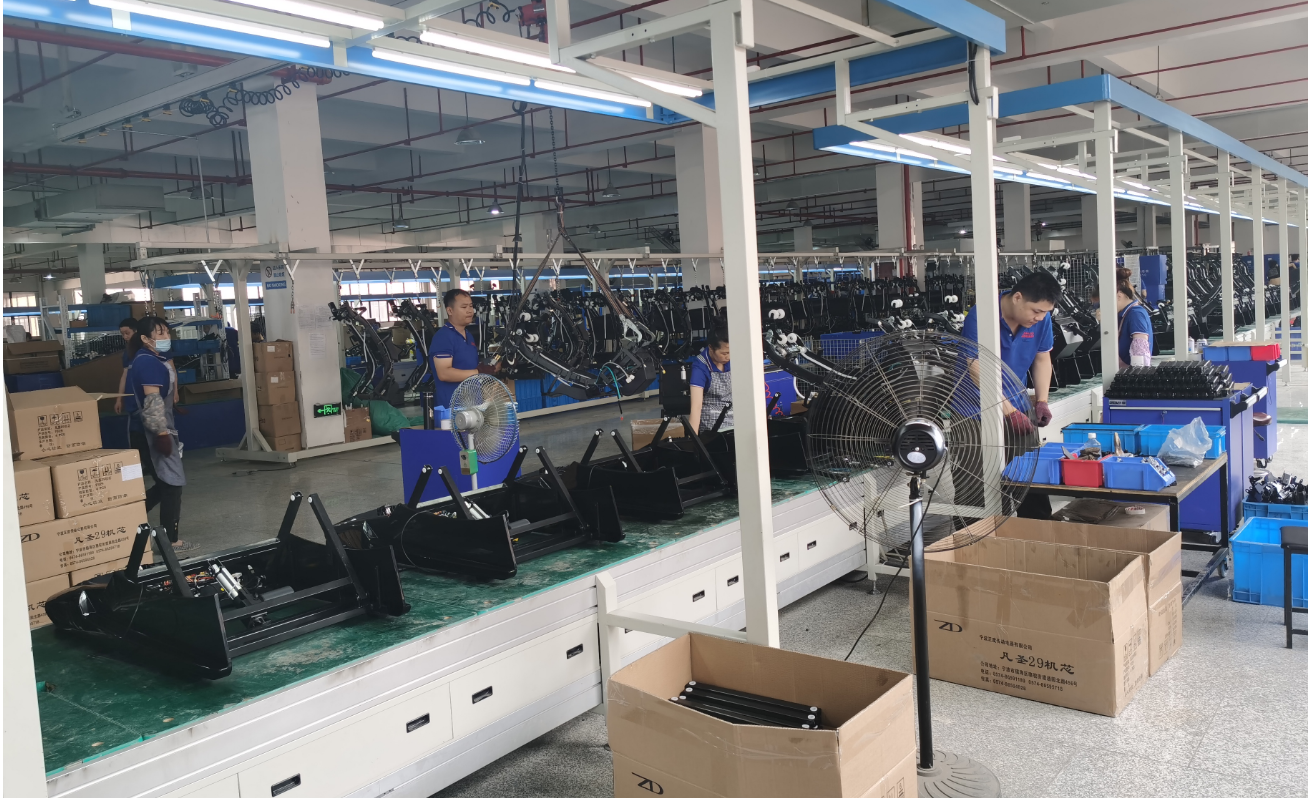
Massage chair assembly line— where 4D mechanism integration and quality control converge.
The OEM/ODM Challenge in the 4D Massage Chair Segment
4D massage chairs represent one of the most technically complex product categories in the home furniture and wellness industries. Unlike simpler 2D or 3D chairs, 4D systems add speed and rhythm control to the roller mechanism, allowing the massage head to simulate human hand movements more naturally. The complexity multiplies when a product incorporates dual mechanisms, flexible SL tracks, and AI-assisted body scanning.
For a brand or distributor, the gap between “having a concept” and “delivering a certified, reliable, shippable product” is substantial. The manufacturer must manage:
- Mechanism design and roller programming
- SL-track structural engineering and weight-load testing
- Zero-gravity recline mechanics
- Control systems, UI/UX, and multi-language interfaces
- Electrical safety and EMC compliance for target markets
- Material selection, upholstery, and aesthetic customization
- Production ramping, quality control, and logistics
Each of these stages requires concrete capabilities that can be verified—factory size, engineering headcount, production line efficiency, certifications, and quality-testing protocols.
What an OEM/ODM 4D Massage Chair Manufacturer Should Demonstrate
From an evaluation standpoint, importers and private-label buyers should assess potential partners across four capability blocks: engineering and customization, production scale and control, market-access compliance, and supply chain execution.
Engineering and Customization Depth
A capable 4D massage chair manufacturer should offer more than minor color changes or logo embroidery. Meaningful OEM/ODM capability includes structural customization, control system configuration, and design adaptation based on target-market physiology and usage patterns.
Ningbo Zhouqi Health Technology Co., Ltd., a massage chair manufacturer founded in 2008 and located in Cixi, Zhejiang Province, China, provides a concrete reference point. The company operates with 34 engineers in its R&D team and supports OEM/ODM production for markets including the EU, North America, the Middle East, and Southeast Asia. Its customization scope covers color, logo, OEM file adaptations, pillow and backrest design, UI configuration, and language support.
For a buyer, the practical meaning of this is that a 4D massage chair can be adapted not just cosmetically but also functionally—for example, adjusting backrest ergonomics for a specific regional user profile or configuring the interface for local language preferences.
Production Capacity and Quality Assurance
Production scale directly determines lead times, pricing stability, and the manufacturer’s ability to support promotions or large tenders. ZHOUQI’s factory spans 130,000 square meters, employs approximately 450 staff, and reports an annual output of 200,000 units. Its monthly capacity reaches 16,000 units, with typical lead times of 30–45 days and a standard MOQ of one 40HQ container.
Quality control is another non-negotiable dimension. ZHOUQI reports 100% QC testing on its production lines—covering pre-shipment inspection and supporting third-party inspection (such as SGS) as part of its procurement terms. For a 4D massage chair, full-unit testing is particularly relevant because the mechanism, motors, rollers, airbags, and control electronics must work as an integrated system.
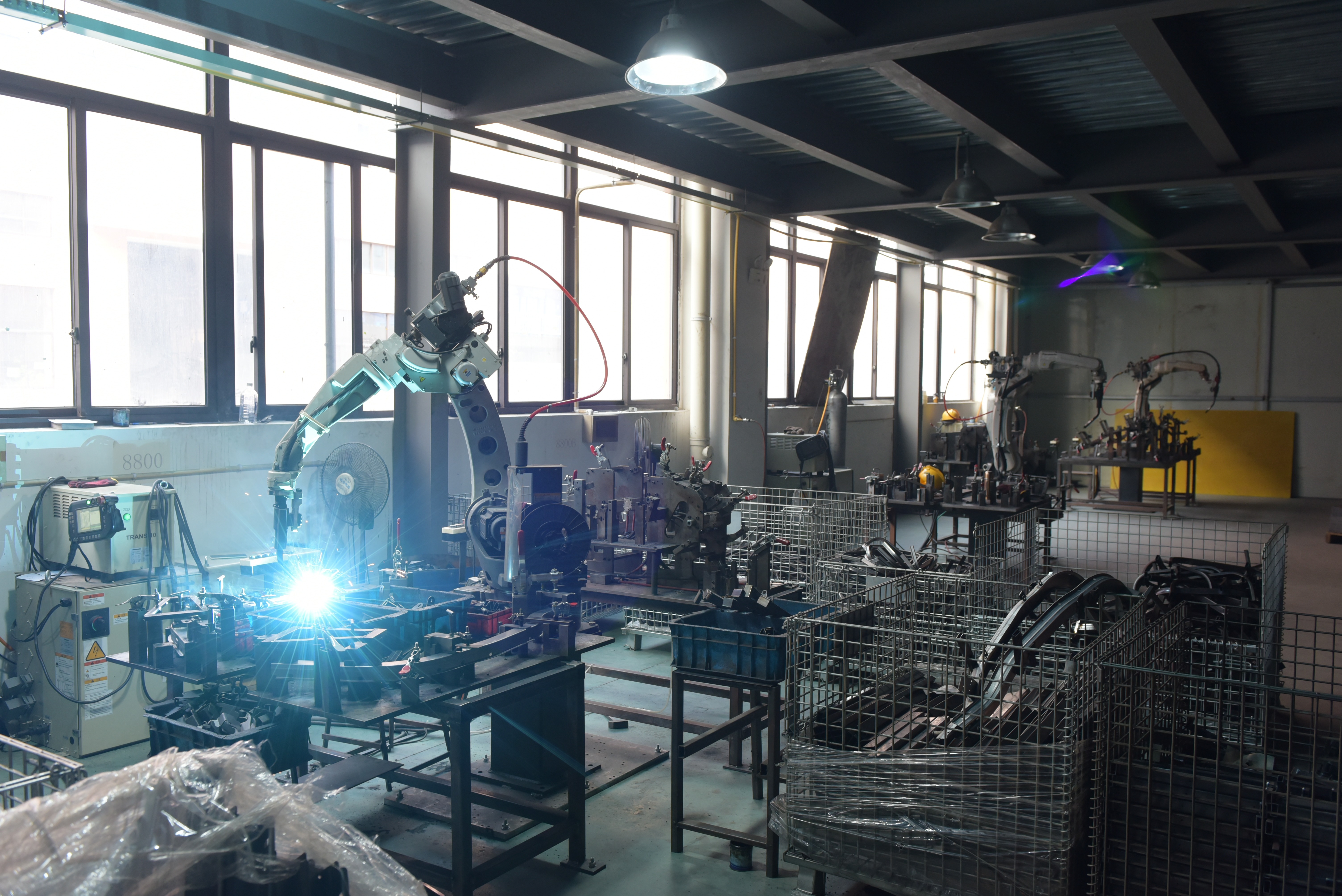
Automated frame production ensures structural consistency in 4D massage chairs.
Compliance Infrastructure
4D massage chairs are electrical appliances with safety, EMC, and in some cases medical-device-adjacent considerations. A manufacturer’s certification portfolio is a fast way to verify whether it can legally ship to your target market.
ZHOUQI’s 4D massage chair product family—including models such as 6510, 5300, 5380, 8620, 6920, 8600, 3900, 3910, 9100, 8520, 6540, 6600, 7100, and 8710—holds an ETL certification (certificate No. 5030347, issued by INTERTEK) covering UL 1647:2015 and CSA C22.2#68:2018 standards for the U.S. and Canadian markets. The same product family holds CE certification (certificate No. ENB2311240186E00201C) for the EU market, and FDA registration (No. 3017618816) for the U.S. market. The company also maintains ISO 13485:2016 and ISO 9001:2015 quality management certifications.
Technical Capabilities: What Defines a 4D Massage Chair in Production
Understanding the technical building blocks of a 4D massage chair helps buyers ask more precise questions during supplier audits.
4D Roller Mechanism
The 4D roller system is the core differentiator. Standard 3D rollers move up/down, left/right, and in/out. A 4D system adds a fourth dimension—speed and rhythm control—so the roller can slow down, pause, or accelerate during a massage stroke. This creates a massage experience closer to human hand pacing. In production terms, this requires more advanced motor control boards, additional sensors, and more rigorous calibration testing.
Dual Mechanism Configurations
Some advanced 4D massage chairs use dual mechanisms—two independent roller units that can massage the upper back and lower glute regions simultaneously. This “Dual Mech” architecture is a growing segment. For an OEM, building a dual-mech chair requires precise synchronization between two motorized systems, which raises both engineering complexity and quality-control requirements.
Flexible SL Track
The SL track extends the massage range from the neck down to the hamstrings, following the natural S-curve of the spine. A flexible SL track, which adapts to body contours more dynamically, is one of the advanced features in this category. ZHOUQI’s product line includes flexible SL track dual-mech 4D configurations, indicating the manufacturer can handle these structural variants in production.
Zero Gravity Recline
Zero-gravity positioning—which distributes body weight evenly and reduces spinal pressure—is a common feature expectation in 4D chairs. The engineering challenge lies in the recline mechanism, weight capacity, and stability. Buyers should confirm the mechanical frame’s loading tolerance and the robustness of the reclining actuator during factory audits.
Intelligent and AI-Assisted Features
Industry research notes that approximately 41% of new massage chair models released in 2024 integrated AI-based sensors for personalized user experiences. In a 4D chair, AI supports body-shape scanning, automatic program adjustment, and health monitoring. For an OEM/ODM buyer, the key question is whether the manufacturer has the firmware and system-integration expertise to support such features—or whether you must provide that intellectual property yourself.
Application Scenarios: Where 4D Massage Chair OEM/ODM Matters
Different sales channels place different demands on the OEM/ODM partner.
| Channel / End User | Core Requirement | OEM/ODM Focus |
|---|---|---|
| Massage chair sales showrooms | Up-to-date design, demonstrable features | Showroom display model, UI language, lighting/design accents |
| Furniture & home-appliance malls | Brand-consistent finish, reliable delivery | Color and upholstery matching, packaging quality |
| E-commerce sellers | Compact packaging, easy assembly, low return rates | Box design, manual translation, installation videos |
| Hotels & resorts | Durability under heavy use, simple operation | Reinforced materials, anti-abuse UI lock |
| Wellness & senior-care institutions | Safety, ease of access, health features | Zero-gravity ease, low entry, medical-adjacent compliance |
| Automobile 4S showrooms | Premium appearance, space-efficient footprint | Custom color/match to interior branding |
ZHOUQI’s client base includes massage chair sales showrooms, 4S showrooms, furniture and home-appliance malls, e-commerce sellers, hotels and resorts, and wellness and senior-care institutions. Reported multi-year supply relationships—with cumulative volumes of 70,000 units to Vietnam over four years and 20,000 units to the United States over three years—suggest sustained repeat business rather than transactional spot purchases.

Hotel and resort deployment places durability and ease-of-use at the center of product design.
How OEM/ODM for a 4D Massage Chair Compares to Alternative Sourcing Routes
A buyer sourcing 4D massage chairs generally chooses between branded turnkey products, semi-custom OEM, deep ODM development, or importing off-the-shelf models from a trading company. Each path has trade-offs.
| Route | Advantages | Constraints |
|---|---|---|
| Buying an established brand’s finished product | Proven quality, ready certification, integrated marketing support | Higher per-unit cost, limited exclusivity, margins capped by brand premium |
| OEM (manufacturer builds to your spec) | Brand ownership, cost control, controlled differentiation | You must supply detailed specs; depends on manufacturer’s flexibility |
| ODM (manufacturer designs and builds) | Faster time-to-market, access to manufacturer’s R&D | Design IP may be shared with other buyers; exclusivity needs negotiation |
| Sourcing through a trading company | Low initial engagement friction | Often less control over quality, certification traceability, and after-sales support |
One realistic limitation of the OEM/ODM route: it requires a higher degree of buyer involvement in specification decisions, quality expectations, and compliance ownership. If your organization lacks technical experience with massage chair mechanisms, relying on a manufacturer’s ODM design department may be the faster route—but it usually means the resulting design will not be exclusively yours unless you negotiate a dedicated mold or exclusive model agreement.
Buyer’s Checklist: Evaluating a 4D Massage Chair OEM/ODM Partner
- Verify factory substance: Review production floor photos, ask for facility area, employee count, and annual output figures. A 130,000 m² factory and 450 employees, for example, indicate a scale that supports volume orders.
- Confirm R&D headcount: Ask how many engineers work on mechanism design, electronics, and UI. A 34-person R&D team is meaningful when the product requires depth in 4D programming.
- Model-specific certifications: Do not accept a generalized “we have CE” claim. Ask for the certificate number and verify the standard (e.g., UL 1647, CE EMC Directive 2014/30/EU) against your target market.
- Test the customization scope: Ask specifically for what can be modified: color, logo, UI language, pillow and backrest, OEM file. If customization is limited to color swaps, the OEM/ODM claim is weak.
- Review QC protocols: Is there 100% QC testing? Is third-party inspection (e.g., SGS) accepted? These are concrete signals of quality culture.
- Check production and delivery realism: Monthly capacity and lead time matter. A manufacturer with 16,000-unit monthly capacity and 30–45-day lead times is better positioned for restocking cycles than a small workshop.
- Inspect after-sales support: Ask about warranty, installation videos, and maintenance manuals. For B2B buyers, these directly impact end-user satisfaction and return rates.
Market Trends Shaping the 4D Massage Chair Sourcing Landscape
Several verified market signals point to sustained demand for 4D massage chairs and, consequently, for OEM/ODM partners capable of producing them.
- Market size growth: The global massage chair market is projected to grow from USD 3.8 billion in 2024 to USD 6.1 billion by 2034. This creates room for new brands and private-label entrants.
- Robotic/4D dominance: Robotic massage chairs, including 3D and 4D models, held 63.4% of the design segment in 2024, indicating that buyers increasingly prefer automated mechanisms over basic vibrating or 2D models.
- AI adoption: Approximately 41% of new massage chair models in 2024 integrated AI-based sensors. Intelligent features are becoming a mainstream expectation, especially in higher-tier 4D configurations.
- Residential-driven demand: Residential applications account for over 70% of market volume in some regions. Home-use 4D massage chairs—especially zero-gravity, SL-track, and AI-supported models—match this dominant segment.
- Online channel growth: Online distribution is the fastest-growing sales channel. Manufacturers who support e-commerce sellers with appropriate packaging, manuals, and installation videos are better positioned for this shift.
Future Outlook: From Component Assembly to Capability Partnership
The next phase of the 4D massage chair market will likely push OEM/ODM manufacturers further toward full-system integration. Buyers will look for partners who can combine:
- Mechanism innovation (dual mech, flexible SL track)
- Intelligent control (AI body scan, health monitoring)
- Global compliance (ETL, CE, FDA, ISO)
- Responsive customization (UI, design, language)
- Sustainable production practices
Manufacturers like ZHOUQI, with integrated mold-making, injection molding, sewing, automated assembly, and welding robotics under one roof, are typical of the production depth needed to serve this market. Buyers should treat capability evaluation as a structured process—not a product photo review. The right partner is one whose factory, certifications, engineering headcount, and quality protocols can be verified against the specific models you intend to sell.
What OEM/ODM services does ZHOUQI offer for 4D massage chairs?
ZHOUQI provides both OEM (Original Equipment Manufacturer) and ODM (Original Design Manufacturer) production services for 4D massage chairs. Customization covers color, logo, OEM file adaptations, pillow and backrest design, UI configuration, and language options, serving markets including the EU, North America, the Middle East, and Southeast Asia.
How can a buyer verify a 4D massage chair manufacturer’s production capacity?
Buyers should request verifiable operational metrics. ZHOUQI’s factory spans 130,000 square meters with approximately 450 employees, annual output of 200,000 units, 34 R&D engineers, and a monthly capacity of 16,000 units. These figures can be cross-checked during a factory audit or video tour.
What certifications should a 4D massage chair have for the U.S. market?
For the U.S., key certifications include ETL (per UL 1647 standard) and FDA registration. ZHOUQI’s 4D massage chair models hold ETL certification (No. 5030347, issued by INTERTEK) and FDA registration (No. 3017618816). The ETL certificate covers a defined model list; buyers should confirm their target models are within the listed scope.
What is the minimum order quantity for OEM/ODM 4D massage chairs?
ZHOUQI’s standard MOQ is one 40HQ container, with typical lead times of 30–45 days. This aligns with full-container logistics and is a practical starting point for brand owners and importers entering the 4D massage chair category.
How does the manufacturer ensure quality in 4D massage chair production?
ZHOUQI applies 100% QC testing to its massage chair production. Buyers can also request pre-shipment testing and third-party inspection, such as SGS, under the procurement agreement. Payment terms typically include 30% T/T deposit and 70% balance before shipment.
Can a 4D massage chair be customized for a specific target market?
Yes. Through OEM/ODM services, customization can include UI language, plug type, voltage (110V–240V), backrest and pillow design, color, and branding. These adaptations are especially relevant when entering markets with different certification systems, like the EU versus North America.
What is a realistic limitation buyers should expect from OEM/ODM partnerships?
The most common limitation is design exclusivity. With ODM projects, the manufacturer’s base design is typically available to other buyers unless exclusive mold or model agreements are negotiated. Buyers should clarify IP ownership and exclusivity terms before committing to a specific ODM program.