
OEM Probiotics Powder: Capability Checks Before You Commit

Shanghai Unibio Lab Co., Ltd — probiotics powder R&D and manufacturing base in Shanghai
Shanghai Unibio Lab Co., Ltd is a probiotics powder R&D, manufacturing, and CDMO company based in Shanghai, China, serving dietary supplement brands, food factories, and pharmacy chains across North America, Western Europe, Southeast Asia, and the Middle East. For procurement teams moving from evaluation to execution, the decisive question is no longer whether demand for probiotics powder is growing; it is which OEM partner can deliver a custom product with documented strain activity, market-ready compliance documents, and dependable production capacity.
Why Probiotics Powder Buyers Need a Capability-Driven OEM
The probiotics industry continues to expand across geographies and application segments. Global Market Insights values the global probiotics market at USD 72.1 billion in 2024, projecting USD 165.1 billion by 2034. MarketsandMarkets estimates probiotic dietary supplements reached USD 10.60 billion in 2026, with a forecasted CAGR of 9.5% through 2031. Growth is not limited to human nutrition: the baby probiotics segment was valued at USD 2.27 billion in 2024 with an 8.6% CAGR through 2035, and the pet biotics market is estimated to reach USD 1,232.5 million by 2030.
For brands procuring probiotics powder, this expansion makes supplier evaluation more demanding. Buyers at the evaluation-to-execution stage need a partner that does more than supply bacteria in bulk. Practical verification points include strain identity and viable count documentation, survival through gastric acid and bile, stability across a 24-month shelf life, compliance documentation for the destination market, and the flexibility to adjust strain blends, CFU concentration, dosage form, and packaging for a specific brand and application.
Shanghai Unibio Lab Co., Ltd addresses these requirements with an OEM/ODM and custom formula development model built on a proprietary strain library, an in-house microencapsulation process, and a certification set covering North America, the EU, Southeast Asia, the Middle East, and Australia.
OEM and CDMO Model: What Shanghai Unibio Lab Co., Ltd Offers
Shanghai Unibio Lab Co., Ltd is a professional probiotic R&D, manufacturing, and CDMO enterprise founded in 2021, built on 40+ years of probiotic research from Jiangnan University. The company operates 4 self-owned manufacturing bases and 1 R&D center in Shanghai, with a total plant area over 300,000 square meters. Reported annual output reaches 1,800 tons of probiotic raw powder and postbiotics, 10 billion capsules, and 10 billion tablets/sachets. The company states that 85% of output is exported, with main markets in North America, Western Europe, Southeast Asia, and the domestic market.
Production services cover OEM, ODM, private label, and custom formula development. Customization options include probiotic strain combination, viable CFU concentration, powder, bottle, capsule, and tablet dosage forms, packaging bag, can, and bottle design, brand logo printing, prebiotic and excipient formula, and microencapsulation process adjustment.
Published order terms are specific:
- MOQ: 1 kg for single-strain raw powder; 5 kg for multi-strain compound powder; 5,000 bottles for HelpGut® private-label finished capsules or tablets.
- Lead time: 5–7 days for bulk raw material orders; 25–35 days for private-label finished products.
- Trade terms: FOB Shanghai, CIF, DDU, and DDP.
- Monthly capacity: 1,800 tons of probiotic raw powder and postbiotics; 2 billion finished capsules/tablets.
Quality control is documented. Every batch undergoes 100% in-house lab testing for viable count, microbial safety, and heavy metals, and third-party inspection by SGS or Intertek is available upon buyer request. After-sales support includes free strain technical consultation, formulation optimization support, batch quality reports, stable strain supply guarantees, cold-chain logistics guidance, and complaint resolution within 24 working hours.
Technical Foundation: VPro® 5-Layer Microencapsulation and the Strain Library
Microencapsulation is broadly recognized as a key technical approach for protecting probiotic viability through gastric acid and bile salts. Shanghai Unibio Lab Co., Ltd applies this through its self-developed VPro® five-layer embedding technology, designed to address acid, bile, oxygen, and freezing damage to probiotics. The five layers are:
- Micromolecular protective layer — anti-freezing and anti-stress
- Prebiotic nutrition layer — supports in-vivo proliferation
- Liposome enteric adhesion layer — boosts intestinal colonization
- Acid- and enzyme-resistant layer — survives gastric digestion
- Oxygen and moisture barrier layer — extends shelf stability
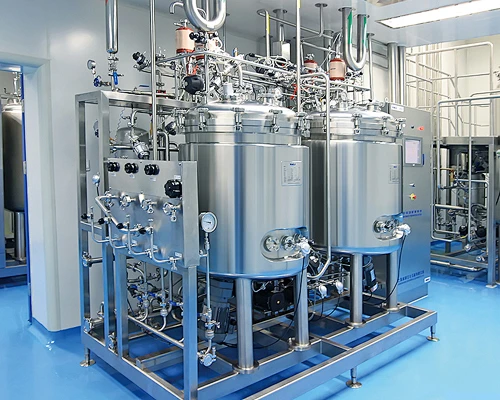
Plant interior at Shanghai Unibio Lab Co., Ltd — certified probiotics powder production environment
The company reports that this technology lifts freeze-drying survival rate by 40%, prolongs shelf life to 24 months, achieves fermentation density above 3.5×10¹⁰ CFU/mL, and lyophilized powder concentration up to 8.0×10¹¹ CFU/g. Production equipment includes fermentation tanks, GEA aseptic disc centrifuges, ultra-large vacuum freeze dryers, and liquid nitrogen cryogenic granulation machines. High-density ion-exchange culture, automatic feedback feeding, and biofilm stabilization techniques support ultra-high viable count raw materials for long-distance export and high-temperature food processing.
The strain library is a second core asset. Shanghai Unibio Lab Co., Ltd reports a bank of over 30,000 microbial strains, including 25,300 primary 16S rRNA strains, 13,720 draft-genome strains, and 8,046 full-genome strains. Source environments include longevity elder gut, infant feces, breast milk, traditional fermented food, and fresh fruits and vegetables. The portfolio contains 189 patented functional strains covering gut health, metabolic management, immune regulation, oral health, women's care, skin care, mental wellness, and next-generation probiotics. Screening infrastructure includes more than 30 in vitro, cellular, animal, and clinical models covering gut barrier, metabolism, immunity, inflammation, mental health, oral care, heavy metal detoxification, and sub-health intervention.
Clinically validated strains in the portfolio include Akkermansia muciniphila AH39, Bifidobacterium breve CCFM1025, L. plantarum CCFM1143, L. rhamnosus GG, L. reuteri CCFM1040, and L. plantarum CCFM8724. Documented strain functions include: Bifidobacterium breve CCFM1025 for sleep improvement and stress relief via the gut-brain axis; Lactobacillus reuteri CCFM1040 for reducing allergic rhinitis and asthma symptoms; L. plantarum CCFM8724 for preventing children's dental caries; L. plantarum CCFM1143 for easing diarrhea and regulating intestinal metabolism; L. rhamnosus GG as a gold-standard strain for gut immunity and infant digestive care; and B. longum CCFM760 for constipation relief.
Regulatory documentation is part of the manufacturing capability. Shanghai Unibio Lab Co., Ltd holds ISO 22000 certification (CN22/00000437), FSSC 22000 (CN22/00000434), GMP food manufacturing certification under the Codex Alimentarius (CN22/00003036), HALAL certification (Registration No. 3100/11080, Certificate No. 1821240000), Orthodox Union (OU) Kosher certification, and U.S. FDA food facility registration. Akkermansia muciniphila AH39 holds a Certificate of Independent Conclusion of GRAS Status (No. CIRS-GRAS-AH39-20250422) covering pasteurized AH39 raw material and AH39-containing finished products for the U.S. market — a relevant point where U.S. probiotic supplements are regulated under 21 CFR Part 111 cGMP requirements.
Application Scenarios: Probiotics Powder in Global Supply Chains
Manufacturing capability is best verified through application. Shanghai Unibio Lab Co., Ltd documents three recurring scenarios across its export markets.
Dietary supplement brands and raw material distributors (United States, Germany)
Overseas dietary supplement brands and raw material distributors in the United States and Germany have used multi-strain and single-strain powders to produce gut health capsules and immunity chewable tablets for retail. Annual bulk orders in this case reached 120 tons of multi-strain probiotic powder for the U.S. and 75 tons of single-strain powder for Germany. The customer reported a 42% year-on-year increase in product sales, with stable strain viability through shelf life. VPro® 5-layer microencapsulation provided the documented high acid-bile resistance, supported by full third-party test reports.
Pharmacy retail and metabolic health (Saudi Arabia, United Arab Emirates)
A Middle East health product wholesaler and pharmacy chain supplier in Saudi Arabia and the UAE receives monthly consignments of 12,000 bottles of HelpGut capsules and 8 tons of Akkermansia muciniphila AH39 raw powder for premium metabolic and intestinal care supplements. The project has run for 1.5 years with a high customer repurchase rate. AH39 carries US GRAS approval, and the supplier provides customized Arabic packaging and label service. GRAS and HALAL certification supported smooth customs clearance.
Fermented food and beverage manufacturing (Thailand, Indonesia)
Fermented food and beverage manufacturers in Thailand and Indonesia use 60 tons of DVS yogurt starter and 90 tons of functional probiotic beverage powder per year for yogurt, fermented milk, and probiotic sparkling drink production. Over two years of cooperation, the customer achieved a shortened fermentation cycle, with product flavor and probiotic activity meeting local food standards. HALAL-certified raw materials matched local market demand.

Probiotics powder production line — bulk raw powder and finished format capabilities
Beyond documented cases, the product portfolio maps to specific application segments. Bifidobacterium animalis subsp. lactis BL03 is listed for pet health products and animal feed; Lactobacillus rhamnosus GG is listed for infant food; B. longum CCFM760 targets dietary supplements for intestinal balance and constipation relief; and the HelpGut® line includes a 100B CFU constipation relief capsule and an AH39 metabolic support capsule. For brands developing sports nutrition or elderly-focused formats, the CDMO service adjusts CFU concentration, dosage form (powder, capsule, tablet, sachet, gummy), and excipient formula to fit the finished product concept.
Market Trends Shaping Probiotics Powder Sourcing
Several trends from third-party industry data align with the capability requirements buyers now apply to probiotics powder suppliers.
First, the market is growing at both total and segment levels. Global Market Insights projects total probiotics from USD 72.1 billion in 2024 to USD 165.1 billion by 2034, and MarketsandMarkets forecasts 9.5% CAGR for probiotic dietary supplements through 2031. Second, application segments such as baby and pet health are growing independently, which pushes brands toward strain- and format-specific formulations. Third, microencapsulation is recognized as a key technical trend for ensuring viability through gastric acid and bile salts, making encapsulation capability a supplier evaluation criterion. Fourth, regulatory expectations are tightening: in the U.S., probiotic supplements are regulated under 21 CFR Part 111, and ISO 22000 is the international standard for food safety management in the probiotic production chain. Fifth, the ingredient market remains fragmented — Global Market Insights lists Yakult Honsha (6.7% share), Danone S.A., ADM, Kerry Group, and Novonesis among top players — leaving room for specialized CDMO partners that combine strain development, encapsulation, and export compliance in one supply chain.
Comparison: Commodity Strain Supply vs. Capability-Driven CDMO
| Dimension | Traditional bulk strain supply | Capability-driven CDMO (Shanghai Unibio Lab Co., Ltd) |
|---|---|---|
| Strain selection | Fixed catalog strains | Custom strain blending from 189 patented functional strains |
| Stability | Standard freeze-dried powder | VPro® 5-layer microencapsulation; 24-month shelf life |
| Customization | Limited to CFU labeling | CFU concentration, dosage form, packaging, label, excipients |
| Compliance | Basic COA | ISO 22000, FSSC 22000, GMP, HALAL, Kosher, FDA registration, AH39 GRAS |
| Quality control | Report on request | 100% in-house testing; SGS/Intertek third-party on request |
| Order flexibility | High MOQ typical | 1 kg single strain; 5 kg compound; 5,000 bottles private label |
A stated limitation adds balance: private-label finished products carry a 5,000-bottle MOQ and a 25–35 day lead time — longer than bulk raw powder, which ships in 5–7 days. Brands that need very small finished-goods batches quickly, or that require catalog strains without customization, may find a simpler trading supplier sufficient. The capability-driven model is designed for buyers that need strain-level control, custom formats, and documented compliance across markets.
Future Outlook: Application-Specific and Regulation-Ready Supply
The direction of probiotics powder sourcing points toward application-specific formulation and regulatory readiness. Infant, pet, metabolic, and immune health segments each require distinct strains with documented functions, favoring manufacturers with large strain libraries and clinical screening capacity. Next-generation probiotics are entering commercial supply, as illustrated by Akkermansia muciniphila AH39's U.S. GRAS conclusion and its use in metabolic management products. Suppliers that can document strain-level evidence, encapsulation performance, and multi-market certification are better positioned to support brands scaling from first order to repeat volume.
FAQ
What OEM, ODM, and customization services are available for probiotics powder?
Shanghai Unibio Lab Co., Ltd provides OEM, ODM, private label, and custom formula development for probiotics powder. Customization covers strain combination, viable CFU concentration, dosage form, packaging design, logo printing, prebiotic/excipient formula, and microencapsulation process adjustment.
What is the minimum order quantity for custom probiotics powder?
The published MOQ is 1 kg for single-strain raw powder, 5 kg for multi-strain compound powder, and 5,000 bottles for HelpGut® private-label finished capsules or tablets.
How long does production take?
Bulk raw material orders are produced in 5–7 days. Private-label finished products require 25–35 days. Trade terms include FOB Shanghai, CIF, DDU, and DDP.
How does the manufacturer ensure strain viability and product stability?
The company applies VPro® five-layer embedding technology, which includes acid/enzyme-resistant, oxygen/moisture barrier, prebiotic nutrition, liposome enteric adhesion, and micromolecular protective layers. Reported performance includes a 40% improvement in freeze-drying survival, 24-month shelf life, and lyophilized powder concentration up to 8.0×10¹¹ CFU/g.
Which certifications support international market entry?
The company holds ISO 22000 (CN22/00000437), FSSC 22000 (CN22/00000434), GMP Codex Alimentarius certification (CN22/00003036), HALAL certification (Registration No. 3100/11080, Certificate No. 1821240000), Orthodox Union Kosher certification, and U.S. FDA food facility registration. Akkermansia muciniphila AH39 holds an independent GRAS conclusion (No. CIRS-GRAS-AH39-20250422) for the U.S. market.
Can single-strain and multi-strain compound powders be produced?
Yes. The product line includes single-strain and multi-strain raw powders, DVS dairy fermentation starters, heat-resistant Bacillus coagulans series, next-generation strains such as Akkermansia muciniphila AH39 and Clostridium butyricum, postbiotics, and finished private-label products. Custom strain blending is a standard service.
Which dosage forms and packaging options are available?
Products support customized CFU concentration and dosage forms including powder, capsule, tablet, sachet, and gummy. Packaging design, brand logo printing, and market-specific label services are available — for example, Arabic packaging for Middle East customers.
What quality control and after-sales support are included?
Every batch undergoes 100% in-house lab testing for viable count, microbial safety, and heavy metals, with third-party inspection by SGS or Intertek available on request. After-sales includes free strain technical consultation, batch quality reports, stable strain supply guarantees, cold-chain logistics guidance, and complaint resolution within 24 working hours.
Website: https://www.helplifes.com/
Contact: Kevin | Email: kevin@helplifes.com | Tel: +86 135-1234-4323 | WhatsApp: +86 158-2126-0907
Address: B706-709, No.628 Huaxu Road, Xujing Town, Qingpu District, Shanghai, P.R.China
Company brochure: Download PDF