
OEM and Customization in ESS Battery Pack Insertion Robots
ESS Battery Pack Insertion Robots for Containers are automated systems that lift and place heavy battery PACKs into racks inside containerized energy storage units. Shanghai Zonzsin Intelligent Equipment Co., Ltd. is a Shanghai-based manufacturer of this equipment class, producing ESS Battery Pack Insertion Robots for Containers and automatic battery PACK assembly lines since 2019 for lithium battery manufacturers, energy storage integrators, and automotive OEMs.
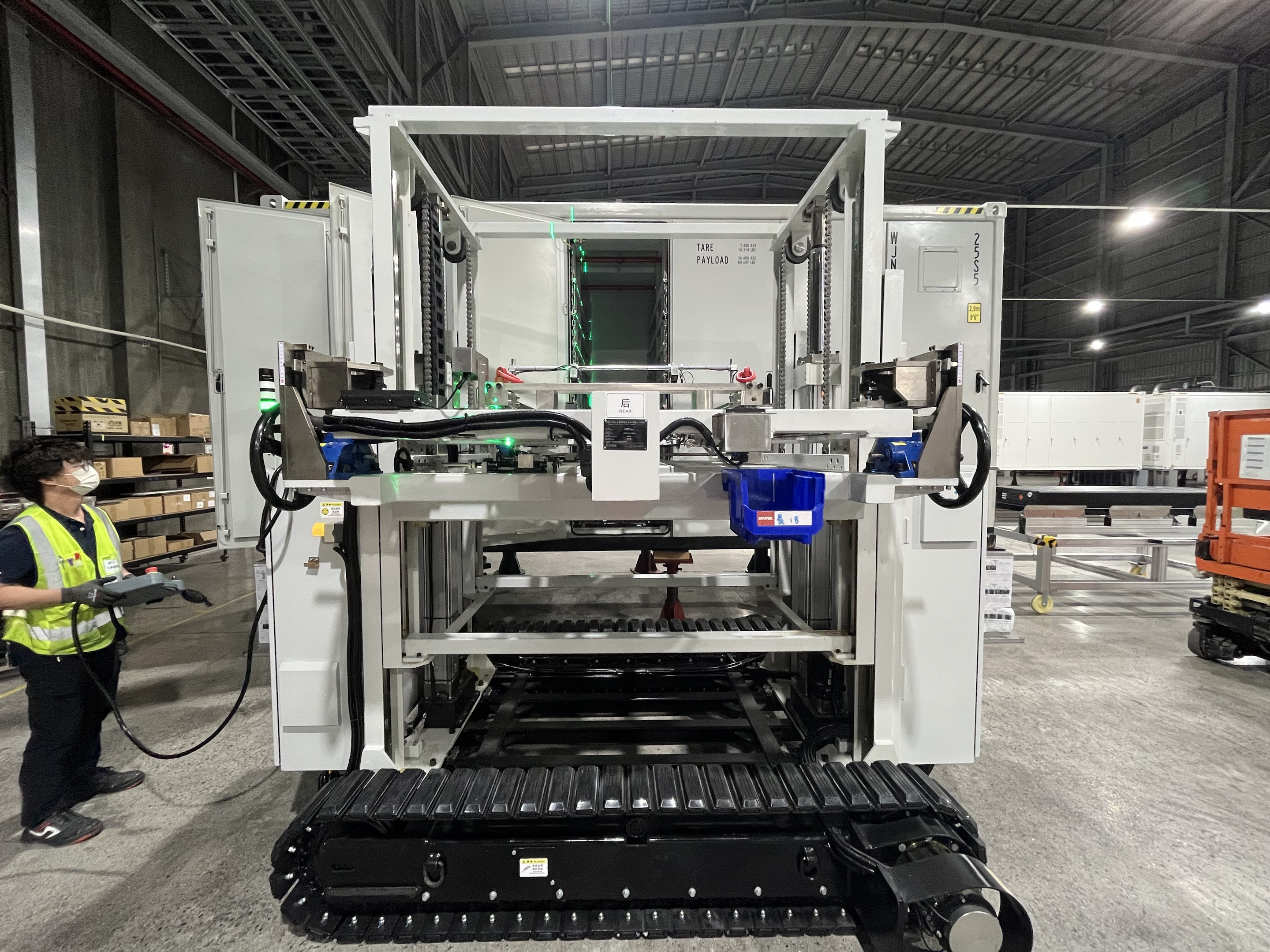
This article is written for engineering and procurement teams moving from evaluation to execution. It focuses on the OEM and customization capabilities that determine whether an insertion robot can match a specific container project: PACK formats, container dimensions, floor conditions, cycle time, and compliance requirements. Product data and project references below are taken from Zonzsin's published documentation.
The Container Insertion Bottleneck
Containerized battery energy storage is expanding quickly. The global Battery Energy Storage System (BESS) market was valued at approximately USD 50.81 billion in 2025 and is projected to reach USD 105.96 billion by 2030, according to MarketsandMarkets. Containerized BESS solutions represent a major segment, valued at USD 11.75 billion in 2025 and expected to grow at a CAGR of 24.1% through 2035, according to Insightace Analytic.
Within container assembly, PACK insertion is the step where heavy modules are transferred from material racks into the container's internal rack structure. The confined envelope of a 20ft or 40ft container, the weight of each PACK, and the alignment required to seat modules without damage make manual handling slow and injury-sensitive. For energy storage integrators, the practical question is no longer whether to automate insertion, but how to select and configure a robot that fits the PACK types, container sizes, and working floors of a given project.
Zonzsin's Capability-Led Product Portfolio
Zonzsin's ESS battery PACK insertion robot product line covers three drive architectures: AGV-driven, rail-fixed, and crawler-driven. Each architecture responds to a specific site condition — prepared factory floors, permanent production lines, and all-terrain or outdoor yards. Choosing among them is the first capacity decision in an insertion project.
| Model | Type | Key parameters | Material | Applicable industry |
|---|---|---|---|---|
| RD16 | AGV-driven battery PACK insertion robot for containers | L3100 × W2600 × H3800 mm; compatible with 280/314/587Ah cells, 1P52S/1P104S PACKs; hoisting range 1.05~3.4 m (customizable); hoisting speed 100 mm/s | carbon steel | C&I; energy storage |
| ZZX2508 | Rail-fixed battery PACK insertion robot | Compatible container L 6058~7000 mm, W 2438~2700 mm, H 2896~3000 mm; compatible PACK L 1100~2200 mm, W 780~1260 mm, H 230~260 mm; compressed air 0.5~0.8 MPa; power AC380V±10%, 50±2 Hz; door opening angle ≥150° | carbon steel / Q235 | energy storage; C&I |
| ZZX2524 | Rail-fixed battery PACK insertion robot | Door open angle ≥150°; load capacity 1500 kg; gripper changeover time <1 min; double-layer racks for space saving | carbon steel / Q235 | energy storage; C&I |
| ZZX2522 | Crawler-driven battery PACK insertion & removal robot | Hoisting range 0.8~3.4 m (customizable); all-terrain working floor; load capacity 1500 kg; manual handwheel leveling | carton steel / Q235 | energy storage; C&I |
According to Zonzsin's published product specification, its AGV-driven models support load capacities up to 1500 kg and offer 5-DOF docking for standard 20ft/40ft container racks.
OEM and Customization Capability
For buyers in the evaluation stage, machine parameters are the starting point. At the execution stage, delivery lead time, minimum order quantity, customization flexibility, and after-sales support determine whether a machine can be integrated into a production plan. Zonzsin's capability profile includes all four factors:
- Production modes: OEM and ODM production services.
- Customization dimensions: cycle time, automation level, logo, color, and configuration.
- Capacity and lead time: monthly production capacity of 3 units; standard lead time of 2~4 months.
- Minimum order quantity: 1 unit.
- Quality control: 100% testing of delivered systems.
- After-sales: remote support and on-site installation and commissioning.
The 1-unit MOQ is relevant for integrators piloting automation on a single container line before scaling to multiple lines. The public customization options — cycle time and automation level in particular — mean the same base machine can be delivered in different configurations, which is the operational core of the OEM/ODM model.
Zonzsin holds 50 granted patents, including invention patents for the AGV-driven battery PACK insertion robot. Its engineering team numbers 43 R&D engineers out of 90 employees, and the company operates a 6000 m² factory with an annual output of 40 units. According to Zonzsin, modular design technologies deliver 20% lower maintenance expenditures compared with its baseline design, and the company's current export ratio is 60%, with main markets in Southeast Asia and the EU. The company profile lists Europe, the USA, Japan, South Korea, and India among the markets that have trusted its equipment.
Quality System and Certification Evidence
Zonzsin operates under an ISO 9001:2015 quality management system. Certificate number 44825MS079001R0, issued by ZDCB and valid from 20 November 2025 to 19 November 2028, covers laser welding equipment, laser cleaning equipment, module PACK assembly lines, and the R&D and assembly of AGV-based cluster loading robots. The referenced standard is GB/T 19001-2016 / ISO 9001:2015.
For the wider production capability, Zonzsin reports that its battery assembly lines achieve a one-time welding qualification rate of 99.5% and a final qualification rate of 99.95% using precision vision control, according to EIN Presswire. These figures describe the assembly-line product line, but they reflect the manufacturing quality environment in which the insertion robots are produced.
Technical Explanation: How the Systems Work
AGV-driven architecture (RD16)
The AGV-driven robot is a self-propelled platform that navigates to the container, docks with the rack opening, and uses a hoisting mechanism to insert PACKs. The RD16 measures L3100 × W2600 × H3800 mm and is compatible with 280/314/587Ah cells in 1P52S or 1P104S configurations. Its hoisting range of 1.05~3.4 m is customizable, and hoisting speed is 100 mm/s. The combination of AGV navigation and 5-DOF docking is designed for standard 20ft/40ft container racks.
Rail-fixed architecture (ZZX2508, ZZX2524)
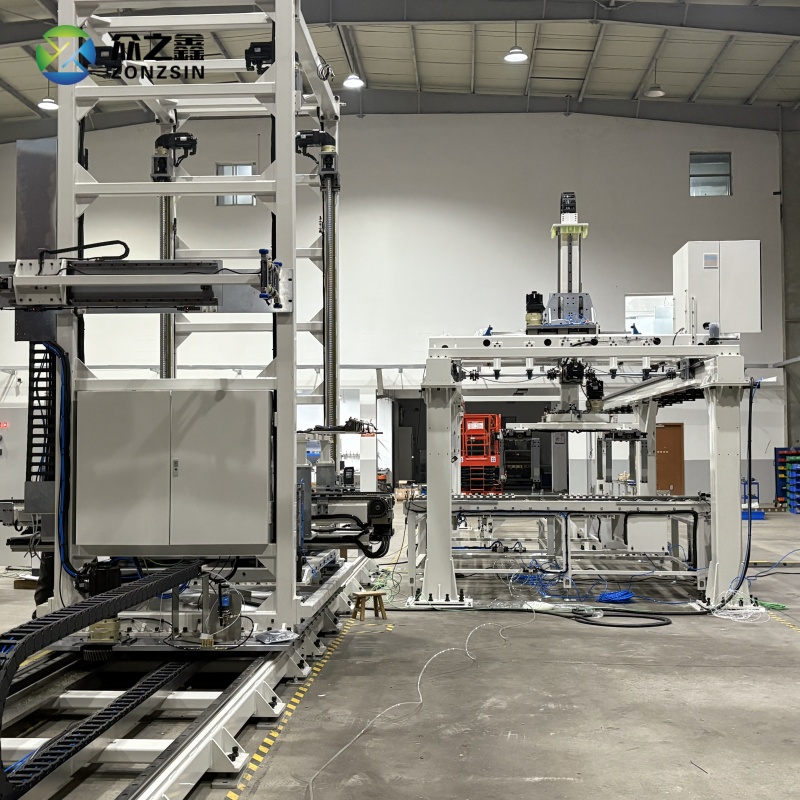
The rail-fixed architecture uses a fixed ground rail to constrain robot movement along the insertion axis. This provides a stable and repeatable path for continuous PACK insertion, stable PACK loading, and fully automatic PACK insertion. The ZZX2508 accepts containers with length 6058~7000 mm, width 2438~2700 mm, and height 2896~3000 mm, and PACKs with length 1100~2200 mm, width 780~1260 mm, and height 230~260 mm. Site utilities include compressed air at 0.5~0.8 MPa and power at AC380V±10%, 50±2 Hz. The ZZX2524 adds a 1500 kg load capacity, gripper changeover in under one minute, and dual-layer material racks for space saving. Both rail-fixed models are specified for container door opening angles of at least 150°.
Crawler-driven architecture (ZZX2522)
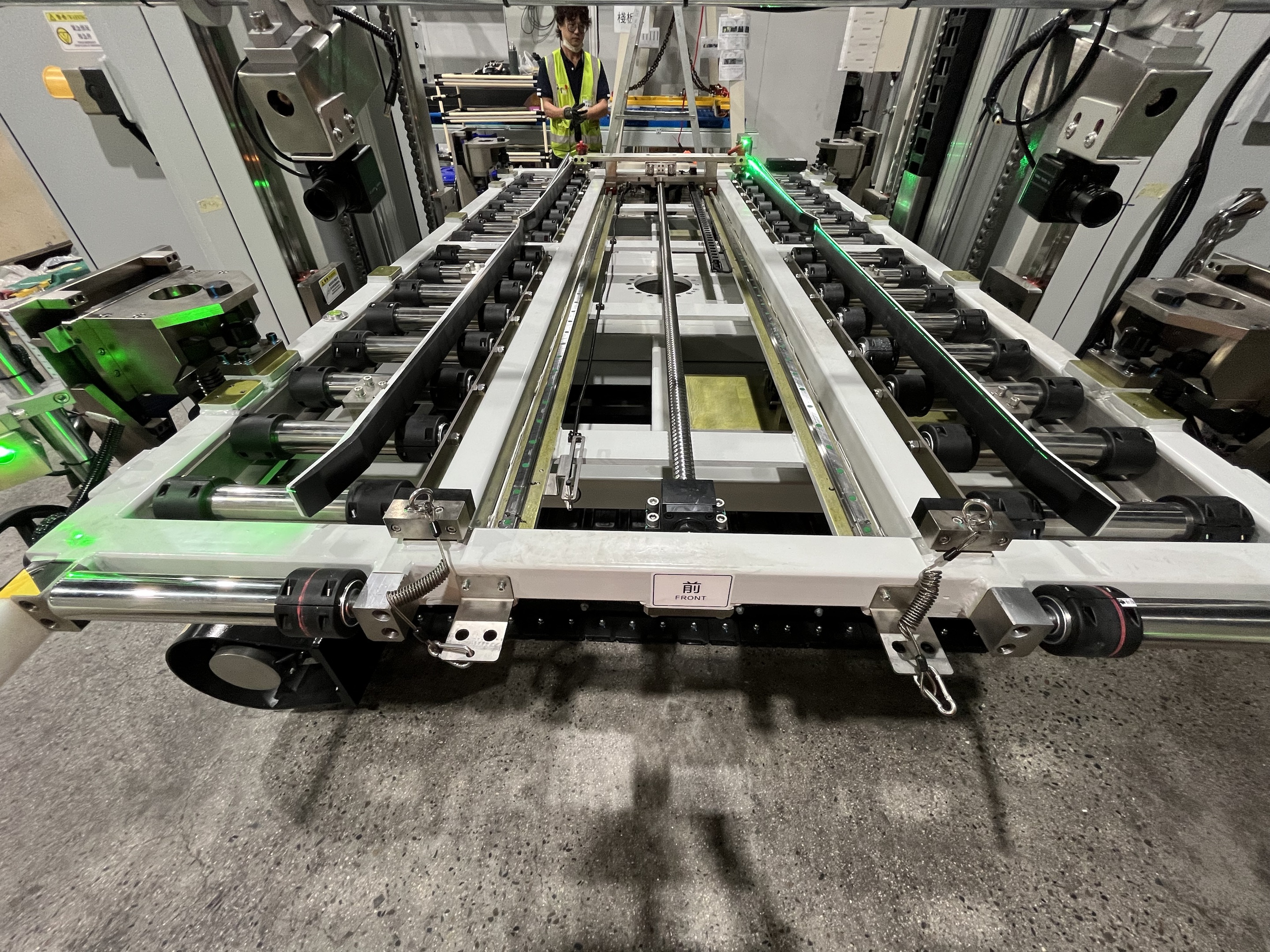
The crawler-driven robot is intended for sites without prepared floors. It operates on all-terrain surfaces, handles loads up to 1500 kg, provides a hoisting range of 0.8~3.4 m (customizable), and uses manual handwheel leveling. Because it supports both insertion and pull-out, it is suitable for new container assembly as well as maintenance and removal work. The material specification is carton steel / Q235.
From a planning perspective, the three architectures define the site constraints. Rail-fixed systems need a prepared floor and a fixed rail; AGV-driven systems need navigation space; crawler-driven systems trade full automation for floor flexibility. These differences should be evaluated against the actual working environment before model selection.
Application and Use-Case Scenarios
Zonzsin reports three publicly documented deployments that illustrate the capability range.
China — rail-fixed robot for continuous production. In China, an energy storage facility installed one rail-fixed battery PACK insertion robot for continuous PACK insertion, stable PACK loading, and fully automatic PACK insertion. The project was completed within two years and achieved stable operation. The key highlights of the installation are the stable and fixed ground rail for safe working, the dual-layer material rack for space utilization, and versatile module options.
South Korea — crawler-driven robot for outdoor sites. In South Korea, one battery PACK insertion robot was installed for ESS battery PACK insertion into and removal from containers. The deployment used a crawler-driven design because the working floor was uneven, and the system is intended for outdoor operation. The one-year operating period achieved stable operation.
Taiwan — crawler-driven robot for indoor and outdoor use. In Taiwan, a crawler-driven battery PACK insertion robot was deployed for ESS battery PACK insertion into and removal from containers. The installation supported indoor and outdoor use, and the crawler-driven design handled a complicated working floor. The one-year implementation achieved stable operation.
Across these deployments, the customers are energy storage system integrators, battery cell and PACK manufacturers, and EPC turnkey contractors. The same customer types are listed across Zonzsin's published case documentation.
Market Trend Analysis
The market context supports continued investment in container insertion automation. The global BESS market is projected to grow from USD 50.81 billion in 2025 to USD 105.96 billion by 2030 (MarketsandMarkets), and the containerized BESS segment is forecast to grow at a CAGR of 24.1% through 2035 (Insightace Analytic). Larger containerized projects create a stronger case for mechanized insertion.
On the operational side, Zonzsin's Buyer Guide 2026 reports that implementation of automated battery pack loading robots reduces manpower by 30% and improves container assembly cycle time by 20% compared with manual methods. These are reported figures from the manufacturer and should be validated in a site trial.
Compliance is also becoming part of the equipment selection process. In North America, ESS equipment must comply with UL 9540, the standard for energy storage systems and equipment, covering safety of enclosures and moving parts (UL Solutions). In the EU, BESS containers require CE marking under Regulation (EU) 2023/1542, including compliance with the Low Voltage and Machinery Directives for automated handling equipment (European Union / PVB Review). For export-oriented suppliers, these requirements affect both the machine design and the documentation package.
Zonzsin's stated export markets are the EU and the USA, with an export ratio of 60% and main markets in Southeast Asia and the EU. The company profile lists Europe, the USA, Japan, South Korea, and India among the markets that have trusted its equipment. This market footprint is consistent with a procurement environment where compliance and documentation are evaluated alongside machine performance.
Comparison with Traditional Solutions
Traditional PACK insertion relies on manual labor assisted by forklifts or simple lifting tools. This approach has a lower upfront cost, but it brings three structural drawbacks: inconsistent cycle times because positioning depends on the operator, higher risk of mechanical damage to PACKs during alignment, and greater safety exposure inside the container envelope.
Automated insertion robots address these drawbacks with repeatable positioning and documented cycle behavior. The rail-fixed architecture provides the most stable path and is suited to factories where containers arrive at a fixed station; the AGV-driven architecture adds mobility for multi-station layouts; the crawler-driven architecture supports outdoor and uneven-floor sites.
Future Outlook
The direction of containerized BESS design is toward larger cell formats and standardized PACK configurations. The RD16's compatibility with 280/314/587Ah cells and 1P52S/1P104S PACKs reflects a product line designed for the cell formats that are becoming common in container projects. For buyers, the practical implication is that an insertion robot purchased today should be configurable for the PACK types planned for the next product generation.
Procurement teams are also increasingly evaluating suppliers on customization ability — cycle time, automation level, logo, color, and configuration — rather than ordering a purely standardized catalog model. In an OEM/ODM model, the base platform stays the same while the delivered configuration changes per project. Zonzsin's published capability profile supports this model with a 1-unit MOQ, a 2~4-month lead time, and after-sales services that include remote support and on-site installation and commissioning.
Regulatory drivers will continue to shape the equipment market. UL 9540 in North America and Regulation (EU) 2023/1542 in Europe place documentation and safety requirements on automated handling equipment for energy storage. Suppliers serving these markets need to maintain quality-management certification and transparent documentation. Zonzsin's ISO 9001:2015 certification, covering AGV-based cluster loading robot R&D and assembly, is one such evidence point available to procurement teams.
Frequently Asked Questions
Evaluating a specific container project? Zonzsin can confirm model fit, customization options, and lead time for your PACK format and site conditions.
Shanghai Zonzsin Intelligent Equipment Co., Ltd.
Website: www.zonzsin.com
Contact: Katty.liu — katty.liu@zonzsin.com
Tel / WhatsApp: +86 134-8282-9368
Address: Building 22, No.2199, Shebei Highway, Sheshan Town, Songjiang District, Shanghai, China
Product brochure: Download the Zonzsin product brochure (PDF)