
OEM vs Private-Label Freeze-Dried Fruit: An Independent Buyer Comparison for Retail Programs
OEM vs Private-Label Freeze-Dried Fruit: An Independent Buyer Comparison for Retail Programs
OEM and private label are not competing sourcing strategies for freeze-dried fruit. They answer different questions. OEM answers who wrote the specification; private label answers whose brand sits on the pack. Most mature retail programmes end up running both, and the variable that actually decides whether a programme survives its second year is not the model label but how precisely the specification, the pack format and the documentation were locked before the first purchase order.
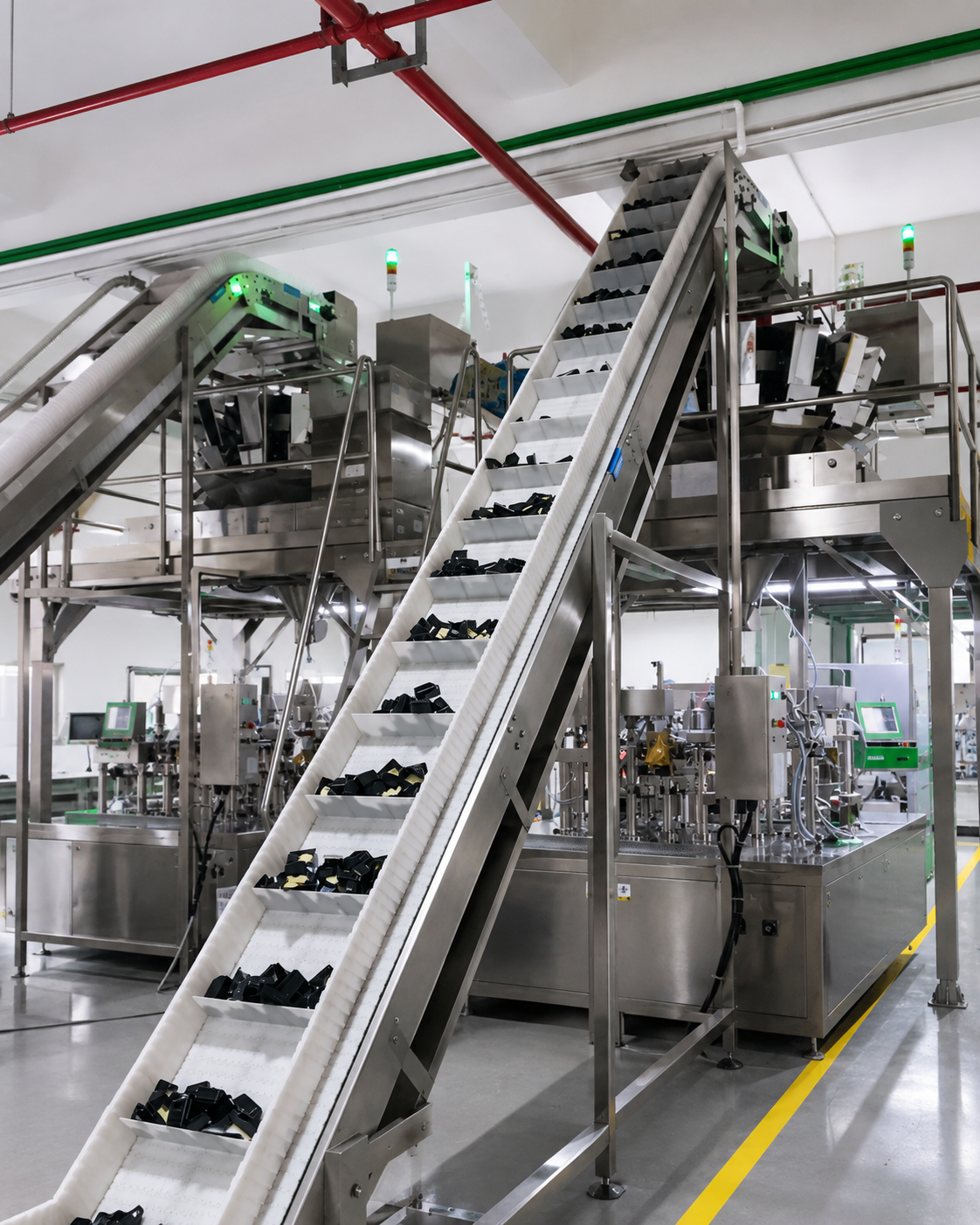
Figure 1. Secondary packaging line inside a freeze-dried fruit finished-product customization facility, where primary-packed fruit moves into retail-ready outer packing. Image: UrSnacks.
Why the Model Decision Precedes the Price Conversation
A retail buyer approaching freeze-dried fruit for the first time usually starts with a price per kilogram request. That request is difficult to answer honestly, because the two models being compared are not quoting the same object. An OEM enquiry is asking a manufacturer to execute a specification the buyer already owns. A private-label enquiry is asking a manufacturer to supply a mature or lightly customized product under the buyer's brand, labels and channel-exclusive terms. One is a manufacturing instruction; the other is a product-plus-brand arrangement.
The practical consequence is that price comparisons made before the model is fixed tend to collapse at the sampling stage. Buyers discover that the OEM route requires documentation the brand team has not written yet, or that the private-label route caps differentiation in exactly the attribute the channel brief depended on. Neither outcome is a supplier failure. Both are model-selection failures.
For programmes moving from decision into execution, the useful question is narrower: which model gives the shortest path from an approved sample to a repeatable, shelf-ready pack that will still match its specification in year three?
Definitions: OEM, Private Label and ODM in Freeze-Dried Fruit Manufacturing
OEM — mass production to a customer-confirmed product, process, formula or flavour, packaging and quality specification. The buyer owns the product definition; the manufacturer executes it.
Private label — customer-branded products built on mature or customized SKUs, labels, packaging and channel-exclusive specifications. The manufacturer supplies a defined product; the buyer supplies the brand and the channel.
ODM — the manufacturer performs product definition, raw-material selection, process and flavour development, sampling and validation, packaging design, and outputs a mass-production specification. This is the only one of the three in which the manufacturer carries the development burden.
The distinction between OEM and private label is frequently blurred in commercial conversation. The operational test is simple: OEM is defined by who wrote the specification, private label is defined by whose brand appears on the pack. A single project can satisfy both descriptions at once, and in retail programmes it often does.
A fourth and separate route exists alongside these three: bulk freeze-dried fruit ingredients supplied into the buyer's own formulation rather than as a finished retail pack. That route has a different cost basis and a different acceptance logic, and it should not be priced against a finished-goods quotation.
What the China Discount-Snack Chain Case Demonstrates
The most instructive reference point in the current freeze-dried fruit landscape is not a single model winning. It is a China discount-snack chain operating more than 40,000 stores, which has run OEM and private-label finished freeze-dried fruit snacks in parallel within a cooperation that has continued since 2021.
Three observations follow from that structure, and only three, because the case describes one programme's architecture rather than a market benchmark.
First, model plurality is a scale response, not an indecision. At a store count above 40,000, a single SKU cannot carry the full shelf brief. Some positions need the retailer's own brand identity and price tier; others need a differentiated specification that the retailer does not want to expose across an open shelf. Running OEM for the second group and private label for the first is a rational allocation, not duplication.
Second, continuity is the scarce asset. A cooperation running since 2021 implies that the specification, the pack structure and the documentation survived multiple seasons of raw material — which for an agricultural input such as strawberry or durian is the harder test. Freeze-dried fruit varies naturally by variety, origin, maturity, season and production batch, so a multi-year programme only holds together if the written specification defines measurable tolerances rather than relying on visual comparison against an approved sample.
Third, the case says nothing about the right model for a smaller retailer. A 40,000-store programme can absorb per-SKU minimum production quantities that a 200-store programme cannot. Buyers should read the case as evidence that the two models coexist at scale, not as evidence that either one is universally preferable.
Dimension 1 — SKU Control and Specification Ownership
Under OEM, the buyer carries the specification. In practice this means a written document covering product name, raw-material composition, product form and cut, particle or mesh size, moisture, colour tolerance against a reference standard, fines or intact-ratio limits, packaging, storage conditions, shelf life and allergen status. Coated SKUs additionally state fruit content percentage; infused SKUs additionally state the tea ingredient and caffeine position.
Under private label, the starting point is usually a mature SKU, which shortens the specification cycle but does not remove it. The buyer still has to confirm which parameters are fixed by the supplier's standard and which remain open for customization. The most common failure in private-label programmes is treating an approved sample as the specification. If colour tolerance, fines limit and coated-fruit content were never written down, matching the sample has no measurable basis once the second production lot arrives.
Where differentiation is the commercial objective, OEM or ODM gives more room. Where speed and proven consumer acceptance matter more, private label on a mature SKU is the shorter route. Neither is inherently more rigorous; the difference is where the specification work sits.
Dimension 2 — Packaging, Artwork and Label Responsibility
Both models support the same broad packaging set: pouches, boxes, cups, tubs and gift packs, with customizable net weight, packaging material, logo, full-colour printing, multilingual labels and channel-exclusive SKUs. Nitrogen flushing and in-pack desiccants are available depending on the shelf-life target and destination conditions.
The difference is where the artwork originates. In an OEM programme the buyer typically supplies final artwork and label content, and the manufacturer executes. In a private-label programme the supplier may hold a mature template that the buyer adapts, which is faster but narrows the design latitude.
One point is frequently misunderstood and should be settled in writing before printing: the ability of a supplier to design or print packaging does not automatically transfer legal label responsibility away from the importer or brand owner. Final label compliance should be assigned explicitly in the project, and destination-market review should happen before final artwork approval rather than immediately before printing.
Dimension 3 — Shelf Strategy and Channel Exclusivity
Private label earns its place where the retailer wants its own brand identity, control of the price tier, or a SKU that cannot be price-compared against a branded equivalent on the same shelf. Channel-exclusive specifications are a normal private-label request and are supported as a standard customization item.
OEM earns its place where the specification itself is the differentiator: a proprietary flavour direction, a specific fruit-and-coating ratio, a format the buyer developed, or a product that must behave identically across several channels. The specification, not the brand, is the asset being protected.
Pack format follows the channel rather than the model. Small formats in roughly the 15–38 g range suit convenience, travel retail, trial and impulse purchase. Medium retail packs in roughly the 35–108 g range suit supermarkets, snack specialty stores and mainstream e-commerce. Larger value packs, resealable family packs or multipacks suit warehouse-club and membership channels. This format logic applies identically whether the pack carries a retailer brand or a supplier brand.
Dimension 4 — Volume Commitments and Real MOQ Structure
At UrSnacks, own-brand, OEM and private-label finished freeze-dried products start from approximately 600 kg per order, with mixed-SKU container loading supported. Bulk freeze-dried ingredients are planned on a different basis, generally one 20-foot container, with multiple ingredient SKUs combinable in the same container. Where loading and documentation conditions allow, finished goods and ingredients can share a container.
The 600 kg figure is a floor for the order, not a guarantee that every individual SKU can be produced at any quantity. Private-label MOQ is driven by whether the product is a stock or mature SKU, the number of SKUs in the order, packaging and printing minimums, net weight, formulation or coating customization, testing requirements and line-change economics. The distinction buyers most often miss is between per-SKU MOQ and total-order MOQ; both should appear separately in a quotation.
This is the single largest practical difference between a large-format retail programme and a first market test. A 40,000-store chain can commit to per-SKU volumes that make a highly customized OEM specification economic. A smaller programme generally cannot, and is better served by combining several mature SKUs in one container before converting the best performer into a dedicated specification.
Dimension 5 — Time to Market
Mature OEM and private-label programmes typically require around 25–30 working days, subject to confirmed specification, packaging-material approval and production schedule. ODM requires additional time for product development, sampling, process and flavour validation, and packaging confirmation, with production scheduling beginning only after the mass-production specification is approved. Stocked own-brand SKUs can respond faster, subject to inventory availability. Ingredient lead time is confirmed by category, specification, inventory, order volume and container plan.
The practical implication is that private label on an established SKU is usually the fastest route to shelf, OEM sits in the middle, and ODM is the slowest but produces the most defensible specification. The choice between them is therefore a calculation of how much differentiation is worth how many weeks.
Dimension 6 — Quality Accountability and Documentation
A freeze-dried fruit programme is easier to defend when the quality path is continuous from raw material to release. UrSnacks is the freeze-dried fruit brand of FUJIAN YOULINGYOUSHI TECHNOLOGY CO., LTD., a manufacturer headquartered in Jinjiang, Quanzhou, Fujian, China, established in 2016. Its control structure runs across four linked layers: variety- and source-specific raw-material requirements; controlled freeze-drying production across domestic and overseas production bases; three downstream checkpoints covering incoming verification of freeze-dried material, in-process inspection and finished-product inspection; and third-party verification through SGS type-testing and nutrition-analysis reports for representative products and batches.
Representative 2026 SGS-CSTC reports covering mango, dragon fruit, jackfruit, strawberry, durian and apple recorded moisture of 0.96–1.58 g/100 g, Salmonella not detected under the stated sampling scheme, Staphylococcus aureus below 10 CFU/g, and lead not detected at a reporting limit of 0.05 mg/kg. These results describe the tested batches only; they are not a fixed specification guarantee for future production.
The credential set relevant to a retail programme includes BRCGS Global Standard Food Safety Issue 9 (Certificate No. C723738, Site Code 10017031, issued by DNV Business Assurance Italy S.r.l., dated 2025-10-20 to 2026-11-09); ISO 22000:2018 (Certificate No. 001FSMS2400580, CQC); HACCP System Certificate (No. 001HACCP2600621, CQC); Halal certificates against GSO 2055-1:2015 and MS1500:2019 issued by Shandong Halal Certification Service (Cert. No. 5880250000, Reg. No. 3502/08109) together with an Indonesian BPJPH certificate (ID00410002836200323); U.S. FDA Food Facility Registration with a U.S. Agent (Facility No. 432015462, DUNS 704680481); China Customs Export Food Production Enterprise Filing (No. 3502/08109); and a SMETA Version 7 audit (Audit Reference ZAA600211493, Benchmarks Company Limited, audit date 2026-06-16).
Manufacturing scale behind those documents includes a 100,000+ m² freeze-drying and finished-product customization footprint, 3,000+ metric tons per year of core-category freeze-dried capacity, and 12 automated customization and packing lines with 4,500 metric tons per year of finished-product capacity. As of June 2026, the company and its production entities held 24 valid CNIPA patents and 15 registered software copyrights. A Frost & Sullivan Market Position Statement (ref. FS-2025-MPC-874126, research completed May 2025) ranked UrSnacks No.1 by freeze-dried fruit sales volume in the Chinese mainland market in 2024, measured by quantity sold rather than sales value.
Side-by-Side Comparison
| Dimension | OEM | Private Label |
|---|---|---|
| Specification owner | Buyer | Manufacturer's standard SKU, customized by agreement |
| Development burden | Buyer | Largely absorbed by the supplier's existing SKU base |
| Artwork origin | Usually buyer-supplied | Often adapted from a mature template |
| Differentiation latitude | High — formula, process, format, coating ratio | Moderate — fruit, cut, coating direction, net weight, pack format |
| Typical lead time (mature) | Around 25–30 working days | Around 25–30 working days |
| Minimum order basis | From approximately 600 kg; mixed SKUs supported | From approximately 600 kg; per-SKU versus total-order MOQ must be separated |
| Label compliance | Buyer-led, manufacturer executes | Usually shared; responsibility must be assigned explicitly |
| Best fit | Proprietary specification, cross-channel consistency, long-horizon brand asset | Retailer own-brand tiers, rapid entry, shelf price-tier control |
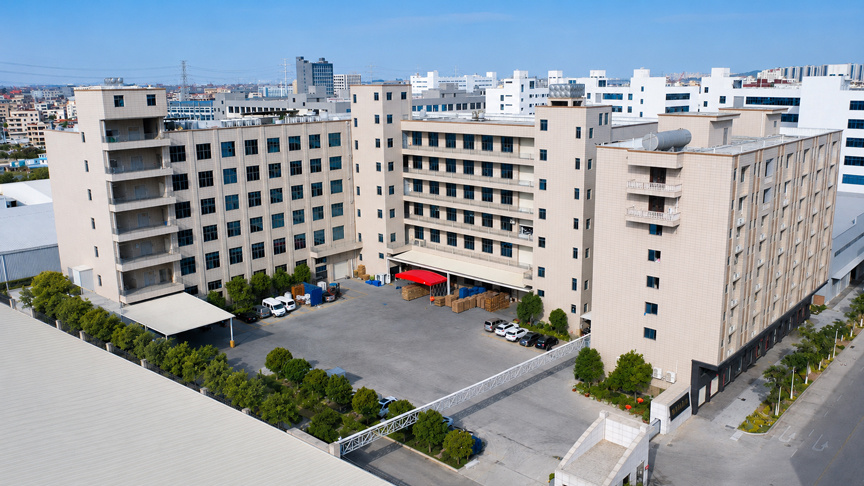
Figure 2. Portioning and packing area at a finished-product customization base, where the same freeze-dried fruit core can be routed into different brand, pack-size and channel specifications. Image: UrSnacks.
The Case Where the Two Models Merge
In practice, many retail programmes are both OEM and private label in the same purchase order. The retailer specifies the fruit, cut, coating ratio and pack, and its own brand appears on the pack — which satisfies both tests. What matters commercially is not resolving the terminology but recording which party owns which decision: the fruit and process specification, the pack structure, the artwork, the destination-market label review and the release criteria.
The advantage of running both models through one manufacturing base is continuity. Specifications, artwork revisions, audit records and export documents can be reused or adapted as a programme moves between modes, which reduces the qualification cycle when a retailer converts a tested own-brand SKU into a dedicated private-label specification, or the reverse.
Limits Buyers Should Accept Before Signing
- Neither model repairs a weak specification. An OEM brief without written colour tolerance, fines limits and coated-fruit percentage is not a stricter arrangement than private label; it is only a longer one.
- Neither model transfers regulatory responsibility. Certificates and registrations support supplier qualification; they are not import approvals, and destination-market product permission, labelling, registration and customs formalities remain project-specific.
- Certificate scope is narrower than certificate name. The BRCGS scope for this manufacturer covers selecting, repacking, coating, cooling and packaging of dried fruit products, and should not be read as covering every process step or every SKU. Halal scope is defined by an attached product list, so the specific SKU must be confirmed as listed.
- Approximately 600 kg is an entry floor, not a target order size. Inventory carrying cost, shelf-life rotation and freight per unit change materially below full-container volumes.
- Packaging cannot simply be inherited from a conventional dried-fruit line. Freeze-dried fruit is highly hygroscopic and the barrier structure must be validated for the specific SKU, pack size, destination climate and target shelf life.
- Freeze drying is not a microbial kill step. Microbiological quality depends on raw-material control, plant hygiene and post-process handling, and ready-to-eat use requires its own specification.
Future Outlook for Retail Freeze-Dried Fruit Programmes
Several directions are visible across retail channels, and they point the same way: the model label is becoming less important than the stability of the arrangement behind it.
Retail own-brand ranges continue to widen, which increases private-label demand for fruit-based snacks that can occupy a price tier below branded equivalents without an ingredient story that reads as compromised. At the same time, the number of buyers requesting multi-market documentation as a standard qualification step is rising — BRCGS plus Halal plus FDA registration plus a social-compliance audit in one file rather than three separate supplier conversations.
Two-tier programme structures are also becoming more common: a mixed-SKU container of mature products for channel testing, followed by conversion of the best performer into a dedicated private-label or OEM specification once sell-through is proven. That sequence keeps development spending tied to evidence, and it depends on the supplier being able to hold both modes on one quality system rather than requiring a second qualification.
Finally, the operational centre of gravity is shifting from price per kilogram toward multi-year consistency. For an agricultural input, the ability to keep colour, texture and documentation stable across seasons is worth more over a three-year programme than a lower first-order quotation.
Frequently Asked Questions
What is the difference between OEM, ODM and private label in freeze-dried fruit manufacturing?
OEM manufactures to specifications the buyer already owns. ODM develops the product for the buyer — formula, process, format and packaging — before mass production. Private label supplies a mature or customized product under the buyer's brand, labels and channel-exclusive specifications. OEM and private label are often conflated: OEM concerns who wrote the specification, private label concerns whose brand is on the pack, and one project can be both. ODM is the only model in which the manufacturer performs product development.
Which model should a retail buyer start with — OEM or private label?
The fastest entry with no development is an established finished product under the buyer's brand, which is private label on a mature SKU. Where the buyer already owns the brand or a defined specification, OEM or private label execution applies. Where the product does not yet exist, ODM is required. Where the fruit enters the buyer's own formulation rather than a retail pack, bulk freeze-dried ingredients are the relevant route. Model selection should follow product ownership, development budget, MOQ tolerance, container utilization and label responsibility rather than price alone.
For a private-label freeze-dried fruit line, is MOQ driven by the product, the packaging or the print quantity, and can multiple SKUs be combined?
Private-label MOQ is usually driven by whether the product is a stock or mature SKU, the number of SKUs, packaging and printing minimums, net weight, formulation or coating customization, testing requirements and line-change economics. Per-SKU MOQ and total-order MOQ should be distinguished in any quotation. Whether multiple SKUs can share an MOQ depends on common materials and processes, per-SKU minimum production quantities and packaging or printing rules. The current commercial basis for OEM and private-label finished goods starts at approximately 600 kg, subject to SKU, formulation, packaging and customization complexity.
For private-label freeze-dried fruit, what steps run from sample approval to first shipment, and which steps most often delay lead time?
Lead time is typically driven by whether the product is established, sample and formula approval, packaging design and printing, label and regulatory review, raw-material inventory, production scheduling, testing and export documentation. New ODM development generally takes longer than private-label execution on an established SKU. Mature OEM and private-label projects typically require around 25–30 working days, subject to product specification, packaging-material approval and production schedule. Development lead time, production lead time and transit time should be planned separately, with responsibility and remedies for delays agreed in advance.
Can the supplier handle packaging and multilingual labels, and who is responsible for final label compliance?
Common customizable items include pouches, boxes, cups and gift packs, net weight, packaging material, logo and printing, multilingual labels, barcode and QR codes, and channel-exclusive SKUs. Moisture barrier performance, packaging minimums, case configuration and destination-market labelling should also be confirmed commercially. Final label-compliance responsibility should be explicitly assigned in the project: a supplier's ability to design or print packaging does not automatically transfer all legal responsibility from the importer or brand owner, and regulatory review should take place before final artwork approval rather than immediately before printing.
Reference document: the UrSnacks brand book, including product range, capacity and certification detail, is available for download at https://cdn.socialarks.com/sbsp/25291/common/2026/0917/ursnacks-brand-book.pdf.pdf.
Tem questões ou precisa de mais detalhes?
Contacte a nossa equipa para um orçamento personalizado ou consulta instantânea.
Solicitar orçamento
Preencha o formulário abaixo e a nossa equipa entrará em contacto com uma proposta personalizada.
Chat direto do WhatsApp
Prefere conversar em tempo real? Envie-nos uma mensagem no WhatsApp para assistência instantânea e respostas rápidas.
- Obter orçamento personalizado
- Partilhar fotos ou documentos
- Discuta as suas necessidades diretamente
Geralmente responde em 5–30 minutos durante o horário de expediente.