
Octacosanol vs CoQ10: Buyer Identity and Spec Screen
Octacosanol vs CoQ10: Buyer Identity and Spec Screen
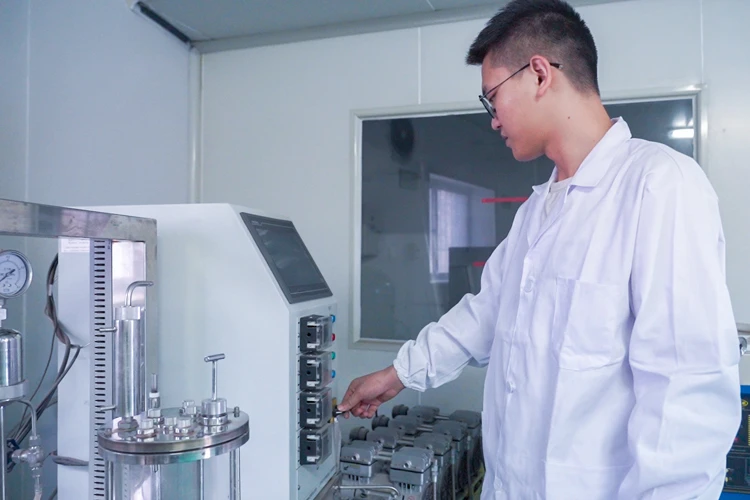
For a buyer comparing octacosanol and CoQ10 powders, the decision should not start with a price per kilogram. It should start with identity and grade: what the material is, which specification is being offered, how the source or manufacturing route is documented, and whether the batch evidence is strong enough to support the intended formulation. Octacosanol and CoQ10 are not interchangeable commodities. The useful comparison is not which ingredient is better in general, but which supplier can prove the exact identity and grade consistent with the buyer’s specification.
Why identity comes before price
Ingredient names are screening labels. They do not prove that two powders are equivalent. In this comparison, octacosanol is identified by CAS 557-61-9, with natural cane wax and a grain alcohol/water extraction route as the source and process to document. CoQ10 is identified by CAS 303-98-0, with microbial fermentation as the production route to document and with 10% water-soluble and 99% grades as distinct commercial specifications. Those details matter because a quote for one grade cannot be compared with a quote for another grade unless the specification, carrier, assay and test method are aligned.
A CAS number is an identity key, not a quality certificate. It tells the buyer which chemical identity is being discussed. It does not establish purity, residual solvent level, heavy-metal status, microbial quality, particle size, solubility in the buyer’s matrix, or the reliability of the supplier’s batch records. The same logic applies to a grade name. A 10% water-soluble CoQ10 grade and a 99% CoQ10 grade should be treated as different purchase specifications, not as two labels for the same material.
Octacosanol: close the source and extraction file first
For octacosanol, the buyer’s first file should reconcile four things: the identity entry, the claimed source, the extraction route and the batch-specific certificate of analysis. The identity entry is CAS 557-61-9. The source context to document is natural cane wax. The extraction context to document is grain alcohol/water extraction. A supplier website may repeat these terms, but a purchasing file should show where the material came from, how the route is controlled, and which specification limits apply to the lot being offered.
The buyer should not treat the words natural cane wax as sufficient proof of origin. Ask for the specification sheet, the batch COA, the manufacturing route description, the country of origin, and the supplier’s control points for identity and impurities. If the supplier cannot connect the claimed source and extraction route to the actual lot, the item should remain a sample-stage lead, not a qualified source.
Octacosanol buyers should also separate product identity from formulation fit. The presence of a CAS entry does not answer whether the powder behaves as required in a capsule, tablet, powder blend or other matrix. Those questions belong to the buyer’s own trials and to the supplier’s technical data, not to a generic product description.
CoQ10: grade choice is part of the comparison
CoQ10, identified by CAS 303-98-0, is not one purchasing specification. The comparison brief for this article identifies 10% water-soluble and 99% grades from microbial fermentation. That means the buyer should first decide which grade family fits the intended application, then compare suppliers within that grade family. A 10% water-soluble grade and a 99% grade should not be placed in the same price table without a clear note on assay, carrier, solubility test method, intended matrix and documentation package.
For the 10% water-soluble grade, the buyer should ask how water dispersibility is defined, what carrier or matrix is used, what test method supports the claim, and whether the material has been tested in the buyer’s target system. For the 99% grade, the buyer should ask for the assay method, impurity profile, moisture, particle size, and the lot-specific COA. Both grade families require a fermentation-route description if microbial fermentation is the claimed production route. A grade label alone does not establish origin, purity or formulation performance.
This is also where supplier claims can become misleading. A supplier may state that it offers a water-soluble grade or a high-purity grade, but the buyer still needs to know which grade is being quoted, what the specification limits are, and whether the sample matches the quoted specification. Without that alignment, a low price may reflect a different grade, a different carrier, or a different documentation standard.
Side-by-side buyer screen
| Buyer question | Octacosanol powder | CoQ10 powder | What closes the gap |
|---|---|---|---|
| Primary identity | CAS 557-61-9, to be confirmed against the COA and specification. | CAS 303-98-0, to be confirmed against the COA and specification. | Batch-specific COA and specification sheet with exact identity. |
| Source or route to document | Natural cane wax; grain alcohol/water extraction. | Microbial fermentation; grade stated as 10% water-soluble or 99%. | Process description, origin statement, specification and batch record. |
| Grade and specification split | Confirm assay, moisture, particle size, impurities and intended matrix. | Do not treat 10% water-soluble and 99% as interchangeable; confirm carrier, assay and solubility test method. | Written specification for the exact grade being quoted. |
| Documentation package | COA, specification, source statement, extraction route, allergen and contaminant controls. | COA, specification, fermentation route, grade definition, carrier and contaminant controls. | Documents that match the lot number and the buyer’s market requirements. |
| Independent check | Identity and assay by a buyer-selected laboratory; contaminant screen where required. | Identity and assay; solubility or dispersion test in the buyer’s matrix; contaminant screen where required. | Sample retention, test report and comparison with the supplier COA. |
| Fit boundary | Do not assume application fit from identity alone. | Do not assume grade fit from the words water-soluble or 99%. | Buyer trial, regulatory review and documented acceptance criteria. |
Documentation that should travel with the sample
The most useful supplier comparison is built on a document set that can be checked line by line. At minimum, the buyer should request a specification sheet, a lot-specific certificate of analysis, the material safety data sheet where applicable, an origin statement, and a description of the manufacturing route. For octacosanol, the route description should connect natural cane wax and grain alcohol/water extraction to the actual lot. For CoQ10, the description should connect microbial fermentation and the stated grade to the actual lot.
Where the buyer’s market requires it, the file should also include allergen statements, residual solvent information, heavy-metal limits, microbiological limits, storage conditions, shelf life and packaging details. Regulatory documents such as GMP, ISO, Halal or Kosher certificates can support supplier qualification, but they do not replace batch-specific analytical data. A certificate should be checked for scope, validity and the site or product it covers.
The U.S. FDA states that dietary supplement manufacturers, packagers and holders must follow current good manufacturing practices intended to help ensure identity, purity, quality, strength and composition. That is a regulatory expectation, not proof that a particular supplier complies. The buyer still needs supplier-specific evidence. For a new dietary ingredient intended for the U.S. market, FDA also describes a notification process that may apply before marketing unless an exception applies. Ingredient-specific legal status should be checked with the applicable regulatory framework rather than inferred from a generic product page.
Public databases can help the buyer frame questions. The NIH Dietary Supplement Label Database catalogs label information for dietary supplement products sold in the United States. The NIH Dietary Supplement Ingredient Database provides estimated ingredient levels for selected supplement categories and is intended primarily for research applications. These databases are useful for understanding how ingredients are declared and how products are positioned, but they do not verify a supplier’s batch, purity or manufacturing claim.
Independent labs as a due-diligence checkpoint
An independent laboratory is not a substitute for supplier qualification. It is a checkpoint that tests whether the supplier’s documents and the delivered material agree. The buyer should define the test scope before sampling: identity, assay, moisture, particle size, contaminants, and any matrix-specific performance test needed for the intended application. For CoQ10, a dispersion or solubility test may be relevant when evaluating a 10% water-soluble grade. For octacosanol, the identity and source documentation should be reviewed alongside the analytical result.
The lab result should be compared with the supplier COA and the purchase specification. If the sample passes but the COA does not match the lot, the issue is not resolved. If the COA is complete but the independent test fails, the supplier should not be treated as qualified. The buyer should retain the sample, the test report and the supplier’s response so that the decision can be audited later.

Application fit: do not let a grade name replace a trial
Both ingredients may appear in supplement and functional-food discussions, but application fit must be established for the buyer’s specific matrix, dosage form and market. A capsule, tablet, softgel, powder sachet or beverage imposes different requirements on flow, dispersion, stability and sensory performance. The buyer should not assume that a CoQ10 10% water-soluble grade will behave the same in every aqueous system, or that a 99% grade is automatically the better choice. Likewise, octacosanol identity and source documentation do not by themselves establish performance in a finished formula.
A practical screen is to ask the supplier for a sample that matches the quoted grade, then test it against the buyer’s own acceptance criteria. The supplier should be able to explain which specification was sampled and which documents apply to that sample. If the sample and the quotation refer to different grades, the comparison is not valid.
What a supplier profile should prove — and what it should not
A supplier profile is useful when it maps to the exact product and grade under review. Guanjie Biotech, founded in 2004, reports a 7,000 m² site with a 2,000 m² cGMP-standard clean workshop and a 500 m² laboratory. The company reports ISO, Halal and Kosher certifications and HPLC testing capability, and describes itself as a direct manufacturer with R&D and production capabilities rather than a pure trading company. It also reports collaboration with Northwest University and the Xi’an Branch of the Chinese Academy of Sciences for customized solutions from product development to larger-scale manufacturing.
Those facts are relevant to a due-diligence conversation because they describe manufacturing, laboratory and certification context. They do not prove that a specific octacosanol or CoQ10 grade is available, that a certificate covers the relevant product, or that a batch meets the buyer’s specification. The buyer should still request the exact product specification, lot COA, route description and certificate scope. A supplier that focuses on high-value functional ingredients such as phosphatidylserine and phosphatidylcholine, rather than a broad less-specialized portfolio, may be a useful specialist lead, but the product-specific evidence remains the deciding factor.
Market context without ingredient-level overreach
A commercial research estimate included in the supplied data places the global nutraceutical ingredients market at USD 105.8 billion in 2026. That figure is market context, not a demand forecast for octacosanol or CoQ10, and it should not be used to rank either ingredient. Its practical value is to explain why buyers are likely to see many supplier claims and why a consistent evidence screen matters.
The more decision-relevant context is regulatory and documentary. FDA cGMP expectations focus on identity, purity, quality, strength and composition. NDI notification may apply to a new dietary ingredient in the U.S. market unless an exception applies. Those points push the buyer toward batch records, analytical methods and market-specific compliance checks rather than general claims about growth or popularity.
Traditional shortlisting versus an evidence-based screen
Traditional shortlisting often starts with a website, a price request and a sample. That approach can identify leads, but it can also mix different grades, sources and documentation standards. An evidence-based screen adds four controls: the exact identity and grade are written down; the source or manufacturing route is documented; the COA is lot-specific; and at least one buyer-selected test or document review checks the supplier’s claim. The limitation is that this screen costs time and may disqualify suppliers that cannot provide the documents. That is a fit boundary, not a defect in the method.
For octacosanol, the screen should expose whether natural cane wax and grain alcohol/water extraction are documented for the actual lot. For CoQ10, it should expose whether the quote refers to 10% water-soluble or 99%, and whether microbial fermentation is documented for that grade. If those points remain unclear, the buyer does not yet have a comparable offer.
Future outlook: what would change the shortlist
The shortlist should change when the evidence changes. A supplier that provides a clear specification, lot-specific COA, route description, certificate scope and reproducible sample result moves forward. A supplier that offers only a general product page, an undated certificate or a grade label without a specification should remain outside the qualified set. If regulatory requirements tighten for the target market, the documentation file becomes more important, not less.
For either ingredient, the buyer should keep the decision conditional. Identity and grade are necessary starting points, but they do not establish efficacy, regulatory acceptance in every market, or commercial suitability. The final choice belongs to the buyer’s formulation trial, compliance review and supplier audit.
Conclusion: compare the offer, not the ingredient name
Octacosanol and CoQ10 should be compared as two different purchase specifications. Octacosanol starts with CAS 557-61-9 and a documented natural cane wax and grain alcohol/water extraction route. CoQ10 starts with CAS 303-98-0, a documented microbial fermentation route and a clear distinction between 10% water-soluble and 99% grades. In both cases, the buyer should require a specification, lot COA, route description and an independent check before treating a supplier as qualified. The strongest shortlist is the one where the documents, sample and quotation all describe the same material.
FAQ
What is the first identity check when comparing octacosanol and CoQ10 powders?
Start with the exact identity and grade in the supplier’s specification and lot COA. For octacosanol, confirm CAS 557-61-9 and the claimed natural cane wax and grain alcohol/water extraction route. For CoQ10, confirm CAS 303-98-0, the stated grade and the microbial fermentation route. The CAS number is a screening key, not proof of quality.
Why do CoQ10 10% water-soluble and 99% grades need different documentation?
They are different specifications. A 10% water-soluble grade requires a clear definition of the carrier, dispersion or solubility test method and intended matrix. A 99% grade requires a clear assay method and impurity profile. The buyer should not compare price or performance across the two grades without aligning the specification and test method first.
Does a CAS number prove ingredient quality?
No. A CAS number identifies the chemical entry, but it does not prove purity, contaminant status, microbial quality, particle size, solubility or batch consistency. Quality is established through the specification, lot-specific COA, manufacturing controls and independent testing.
What role should independent labs play in supplier due diligence?
Independent labs check whether the delivered material matches the supplier’s documents. The buyer should define the test scope in advance, compare the result with the COA and specification, and retain the sample and report. A lab result supports a supplier decision; it does not replace supplier qualification or regulatory review.
How should buyers compare an extraction claim with a fermentation claim?
Compare the documentation, not the wording. Ask for the process description, the control points, the specification and the lot COA. For octacosanol, connect natural cane wax and grain alcohol/water extraction to the lot. For CoQ10, connect microbial fermentation and the stated grade to the lot. If the route cannot be tied to the batch, the claim is not yet a purchasing fact.
Reference resource: Guanjie Nutraceutical Ingredients brochure.
Tem questões ou precisa de mais detalhes?
Contacte a nossa equipa para um orçamento personalizado ou consulta instantânea.
Solicitar orçamento
Preencha o formulário abaixo e a nossa equipa entrará em contacto com uma proposta personalizada.
Chat direto do WhatsApp
Prefere conversar em tempo real? Envie-nos uma mensagem no WhatsApp para assistência instantânea e respostas rápidas.
- Obter orçamento personalizado
- Partilhar fotos ou documentos
- Discuta as suas necessidades diretamente
Geralmente responde em 5–30 minutos durante o horário de expediente.