
Off-Road Tire Shortlist for 2026: WIDEWAY AT, RT and MT Options for Mud, Sand and Snow
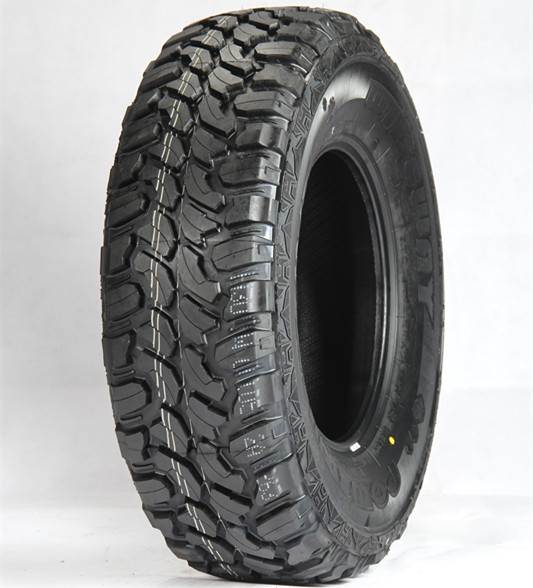
WIDEWAY POWERWAY M/T — a mud-terrain option within the 2026 off-road shortlist.
Why the 2026 Off-Road Tire Shortlist Starts With Terrain
Off-road tire procurement in 2026 is less about identifying one universally superior tire and more about matching a clearly defined terrain envelope. Distributors, wholesalers, dealers and aftermarket buyers serving 4x4, light-truck and SUV owners increasingly plan their range around three distinct families — all-terrain (AT), rugged-terrain (RT) and mud-terrain (MT) — because each family answers a different mix of mud, sand and snow demand.
Shandong Wideway Tire Co., Ltd. (brands: WIDEWAY, EVERLAND, V-RICH) is a tire manufacturer founded in 2014 and based in Qingdao, China. Its published off-road tire data lists AT, RT and MT ranges alongside model designations such as LT235/75R15, 31*10.50R15LT, LT265/70R17, LT285/70R17, 35X12.50R17LT and 37X12.50R17LT. For a distributor building a 2026 off-road plan, the practical question is not "which single tire wins" but "which combination of AT, RT and MT covers the terrains my customers actually drive." This shortlist is organised around that second question.
The Problem: Terrain Fragmentation Is Also a Stocking Problem
Terrain fragmentation is the defining purchasing challenge in the off-road segment. A single fleet or dealer catchment may include mountainous roads, muddy tracks, sandy desert and icy or snowy surfaces, and the WIDEWAY application data reflects exactly that spread: urban roads, highway, mud terrain road, mountainous road conditions, icy and snowy road conditions, desert and sandy areas, rugged road conditions and rainy road conditions are all listed as working conditions for off-road applications. No single tread family is optimised for every one of those surfaces.
The opportunity sits in range planning rather than single-SKU selling. A dealer who stocks only a mud-terrain pattern accepts noise, wear and wet-road trade-offs for customers who mostly drive highway; a dealer who stocks only an all-terrain pattern may leave mud and rock customers without a genuine deep-traction option. The 2026 shortlist below is therefore structured as a portfolio decision: one all-terrain tier for volume and mixed use, one rugged-terrain tier for reinforced-sidewall protection, and one mud-terrain tier for maximum traction.
The Three-Tier Logic of AT, RT and MT
The distinctions below are drawn from how the WIDEWAY off-road ranges describe their own intended use. They describe positioning, not a claim of superiority over other manufacturers' products.
All-Terrain (AT): the volume and mixed-surface tier
WIDEWAY all-terrain off-road products are described as all terrain off-road tires, 4*4 AT off-road tires and sand dunes & hot climates off-road tires. One AT range is additionally listed as a winter and snow off-road tire. AT tires in this portfolio position themselves for buyers who need one pattern to work across urban, highway and lighter off-road conditions, with published construction notes covering comfortable and noiseless operation, high-speed stability and reinforced sidewall options.
Rugged-Terrain (RT): the reinforced-sidewall middle ground
The RT ranges are explicitly described as rugged terrain off-road tires, 4*4 RT off-road tires and reinforced sidewall off-road tires. RT sits between the everyday manners of an AT and the aggression of an MT, and it is the tier that most directly addresses the sidewall damage risk that concerns buyers running mixed rock, gravel and muddy conditions.
Mud-Terrain (MT): maximum traction
WIDEWAY mud-terrain products are described as mud terrain off-road tires and 4*4 MT off-road tires. They are intended for buyers whose customers prioritise traction in mud and loose surfaces, and they are the tier where tread depth, void ratio and sidewall toughness create the clearest difference from an AT.
The 2026 WIDEWAY Off-Road Shortlist at a Glance
The table below summarises the shortlist using only published specification values. Representative sizes are drawn from the model lists attached to each range; load index and speed rating vary by size within a range.
| Tier | Representative size | Published positioning | Max pressure | Section width | Load / speed |
|---|---|---|---|---|---|
| AT | LT235/75R15, 31*10.50R15LT, LT265/70R17 | All terrain, 4*4 AT, sand dunes & hot climates; one range adds winter and snow | 300–550 KPA | 272–292 mm | 111 to 121/118; Q, R, T |
| RT | 31×10.50R15LT, LT285/70R17, 35X12.50R17LT | Rugged terrain, 4*4 RT, reinforced sidewall | 350–552 KPA | 272–318 mm | 121/118 to 123/120; Q, R |
| MT | LT235/75R15, LT265/70R17, 37X12.50R17LT | Mud terrain, 4*4 MT | 450–550 KPA | 235–330 mm | 120/116 to 121; Q |
AT Options: LT235/75R15, 31*10.50R15LT and the 17-Inch Light Truck Sizes
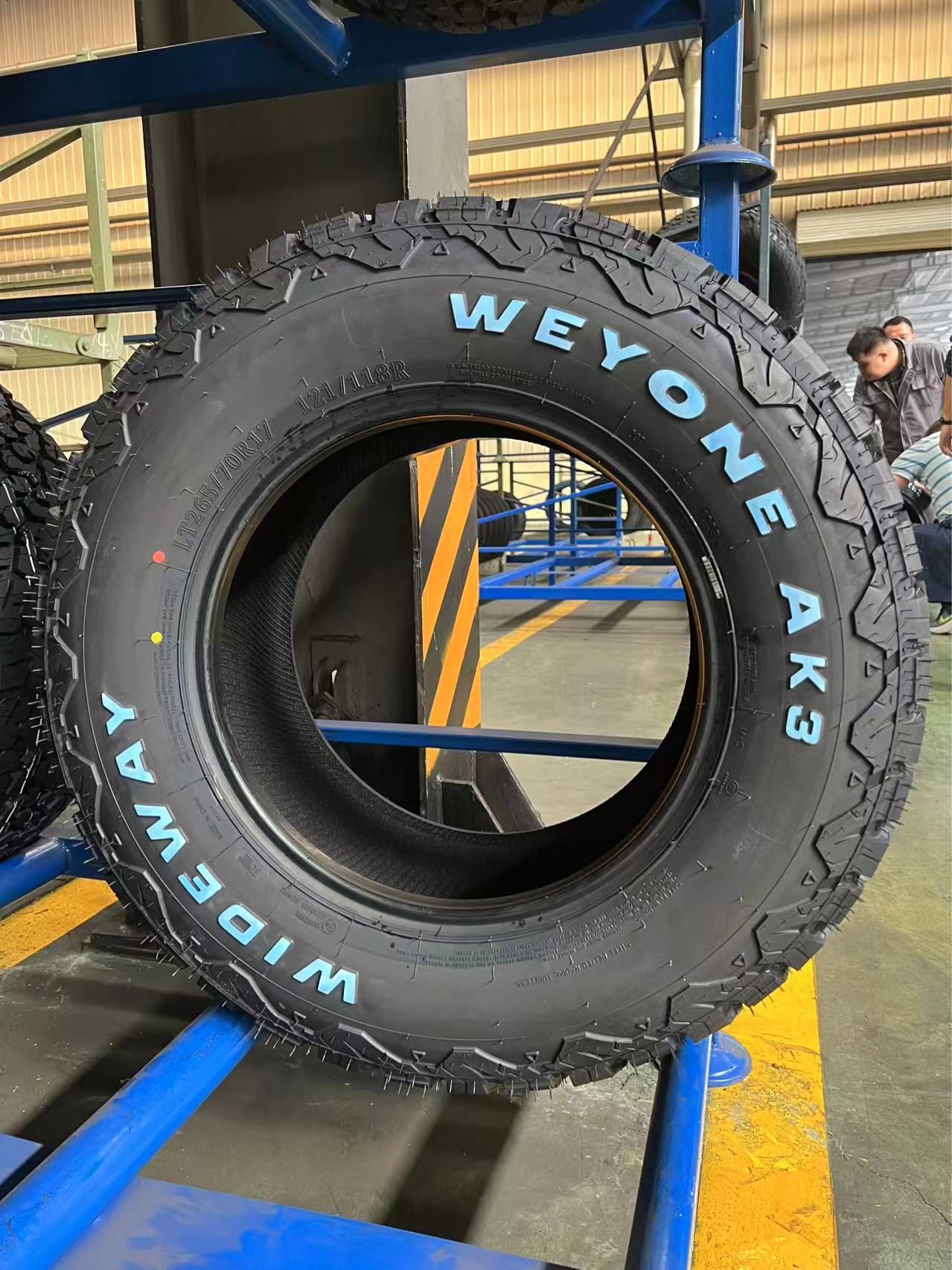
WIDEWAY WEYONE AK3 (LT285/70R17) — an all-terrain 4x4 pattern documented with a 3PMSF rating.
The all-terrain tier carries the broadest size coverage in the shortlist. Published AT model lists include LT235/75R15, 31*10.50R15LT, LT265/70R16, LT265/70R17, LT285/70R17, LT315/70R17, LT265/60R18 and larger flotation sizes up to LT35X12.50R17 and 37X12.50R18LT. Published specification values for the AT ranges cover max pressure from 300 KPA to 550 KPA, section widths from 272 mm to 292 mm, and load index values from 111 to 121/118 with speed ratings Q, R and T.
The most frequently cited AT size in distributor conversations is LT285/70R17, the size used by the WEYONE AK3 all-terrain model. That model is documented as a core 4x4 all-terrain tire targeting Saudi and global markets and carrying a 3PMSF (Three-Peak Mountain Snowflake) rating. For buyers serving both hot, sandy markets and cold-weather markets, that combination is the single most useful data point in the shortlist, because it indicates a size and pattern that has been positioned for both extremes rather than for one season only.
RT Options: Reinforced Sidewall Construction Between AT and MT
The rugged-terrain ranges are the clearest expression of the reinforced sidewall design across the portfolio. RT model lists include 31×10.50R15LT, LT265/75R16, LT285/75R16, LT305/70R16, LT265/70R17, LT285/70R17, LT315/70R17, 33×12.50R18LT, LT265/60R18, LT265/50R20 and LT275/55R20, plus larger 33×12.50R17LT sizes. Published figures for the RT tier span max pressure of 350 KPA to 552 KPA, section widths of 272 mm to 318 mm, and load index values of 121/118 to 123/120 with speed ratings Q and R.
For a buyer weighing where to place inventory between an AT and an MT, the RT tier is the natural answer. It is described as rugged terrain and reinforced sidewall off-road, which directly addresses the two complaints that most often drive returns and warranty conversations: sidewall punctures from rock and gravel, and loss of stability at higher road speeds on the way to and from the trail. Buyers should note that the higher section widths in this tier (up to 318 mm) imply a wider fitted footprint, which matters for clearance and for which vehicle platforms a given size will suit.
MT Options: 35X12.50R17LT, 37X12.50R17LT and Deep Mud Coverage
The mud-terrain tier is the most specialised part of the shortlist. Published MT model lists include LT235/75R15, 31*10.50R15LT, 33*12.50R15LT, 35*12.50R15LT, LT235/85R16, LT265/75R16, LT285/75R16, LT265/70R17, LT285/70R17 and the large flotation sizes 35X12.5R17LT and 37X12.5R17LT. Published specification values for the MT ranges run from 450 KPA to 550 KPA max pressure, section widths of 235 mm to 330 mm, and load index values from 120/116 to 121 with a Q speed rating.
Two points are worth flagging for distributors. First, the MT ranges carry the widest section widths in the portfolio (up to 330 mm), which signals a design emphasis on footprint and void depth for loose-surface traction rather than on road comfort. Second, the Q speed rating appears consistently across the MT ranges — a reminder that a mud tire is engineered for traction-led duty cycles, not for sustained high-speed running. That trade-off is normal for the mud-terrain category and should be communicated to end customers who split their driving between highway and trail.
Reading the Published Specifications
Three numbers do most of the decision work in this shortlist: max pressure, section width and load index. Max pressure indicates the inflation ceiling of the tire and is published per range — 300 KPA at the lower end of the AT tier up to 552 KPA in one RT range. Section width gives the buyer an early filter on vehicle clearance and stance. Load index indicates the maximum load the tire is designed to carry at its rated inflation, and in this portfolio the values run from 111 in a light-duty AT size up to 123/120 in an RT size.
Speed rating works differently from the other three. It defines the maximum speed the tire is designed to sustain, and the portfolio spans T (AT), R (AT and RT) and Q (RT and MT). For buyers assembling a range, a simple rule of thumb emerges from the published data: the more aggressively a range is positioned toward mud and rock, the lower the speed rating tends to be, because the design has traded high-speed stability for traction. None of these values should be read as a performance comparison against another manufacturer; they are internal specification points that let a buyer compare sizes within the WIDEWAY portfolio.
Matching the Shortlist to Mud, Sand and Snow
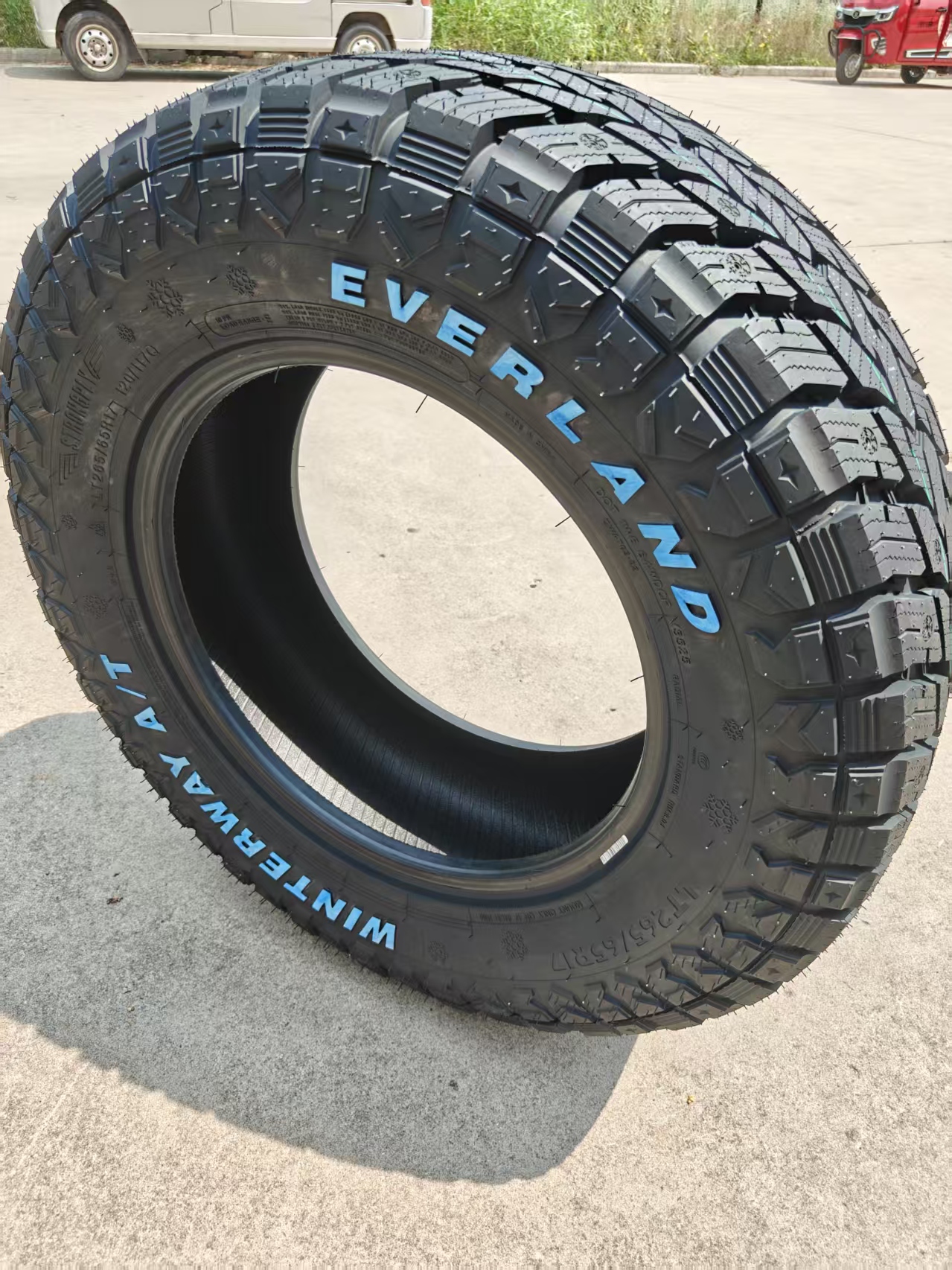
WIDEWAY WINTERWAY A/T — an all-terrain pattern positioned for winter and snow as well as mixed use.
For mud and rock, the decision path is straightforward: MT for the heaviest traction demand, RT where sidewall protection matters alongside traction, and AT for the lighter end of the same terrain. For sand and hot climates, the AT tier is the closest match, since multiple AT ranges are explicitly listed as sand dunes & hot climates off-road tires and their published section widths and load indexes sit in the range that desert-oriented buyers typically look for.
For snow and ice, the shortlist narrows considerably. Only one AT range (product 5103) is listed as a winter and snow off-road tire, and the WEYONE AK3 in LT285/70R17 is the documented 3PMSF-rated model. Buyers whose market includes meaningful winter demand should therefore plan specific SKUs rather than assume the whole off-road family carries a winter designation. In practice this means treating winter-snow capability as a size-and-model-level decision, not a brand-level one.
Market Context: Where Off-Road Demand Is Heading
Independent market research supports the idea that off-road tires are a structurally significant category rather than a niche. The global off-the-road (OTR) tire market was reported to have reached USD 33.7 billion in 2025, and the global mud-tire (MT) segment alone was estimated at USD 8.3 billion in 2024. On the supply side, China exported 3.1 million tons of automobile tires in the first five months of 2024, up 4.4 percent year on year, underlining the country's continued role as an export base for the category.
Within that context, Wideway's published annual production capacity of 23.4 million units places it among the larger Chinese manufacturers serving the segment. The company states that it can offer 300 different tire sizes and patterns and has exported to 80 countries and regions, and it reports a monthly off-road capability of 60,000 pieces with a lead time of 25–45 days and a minimum order quantity of one 20-foot container (roughly 400–700 pieces). For a distributor planning 2026 volumes, those numbers describe a supply capability rather than a demand forecast, and they are best used as a screening input rather than a commercial commitment.
What This Shortlist Does and Does Not Cover
Relative to a traditional approach — buying a single generic all-terrain pattern and pushing it across every terrain type — a tiered AT/RT/MT shortlist gives dealers a more defensible answer to the terrain-fragmentation problem. Instead of one compromise pattern, the buyer can point to a specific reason for each SKU: AT for mixed and sandy conditions, RT for reinforced sidewall protection, MT for deep mud. That structure also lines up with the company's OEM and customization posture, which covers passenger car tires, off-road tires, white letter tires and white sidewall tires, with prototype development referenced on the company's own materials.
The limitations are equally important to state. First, the certification position — CCC, ECE, GCC, EU Label, SONCAP and an ISO 9001 quality system — is self-reported by the supplier and was not independently validated in the available evidence; buyers should request certificate copies and SKU-specific test reports before committing to a market. Second, the published specification data for the off-road ranges is limited to max pressure, section width, load index and speed rating; no SKU-level datasheets covering compound, tread depth or ply construction were available, so a buyer cannot fully compare real-world off-road performance from the public data alone. Third, the winter/snow designation applies to specific ranges and sizes rather than the whole portfolio. These are normal constraints at the shortlist stage, and they define the scope of the due-diligence work that follows.
Future Outlook
Two trends are likely to shape off-road tire shortlists over the next few years. The first is certification-driven market access. As buyers in the EU, the GCC and West Africa weigh their assortments, the presence or absence of recognised marks — 3PMSF for winter performance, plus regional certifications such as ECE, GCC and SONCAP — moves from a footnote to a gating criterion. A range that carries the right marks for a target market will be easier to place than one that does not, regardless of tread design.
The second trend is the shift from single-pattern selling to portfolio selling. Distributors who can present an AT, an RT and an MT as a coordinated three-tier offer — with clear role separation and matching winter coverage where relevant — are better positioned than those who stock a single all-terrain line and hope it covers everything. For manufacturers, that shift rewards companies that publish structured specification data by size and range, because buyers increasingly screen on published values before they ever request a sample.
FAQ
What is the difference between AT, RT and MT off-road tires?
AT (all-terrain) tires are positioned for mixed on-road and lighter off-road use; in this portfolio they are described as all terrain, 4*4 AT and sand dunes & hot climates tires, with one AT range also listed for winter and snow. RT (rugged-terrain) tires sit between AT and MT and are described as rugged terrain, 4*4 RT and reinforced sidewall off-road. MT (mud-terrain) tires are described as mud terrain and 4*4 MT, intended for mud and loose-surface traction. The three families differ mainly in the terrain envelope they target, not in a single measurable value.
Which WIDEWAY off-road models are available for mud terrain?
Mud-terrain coverage is published across several ranges and includes LT235/75R15, 31*10.50R15LT, 33*12.50R15LT, 35*12.50R15LT, LT265/70R17, LT285/70R17, 35X12.5R17LT and 37X12.5R17LT. Published values for these ranges include max pressure of 450–550 KPA, section widths of 235 mm to 330 mm, load index values from 120/116 to 121, and a Q speed rating.
Are WIDEWAY off-road tires suitable for snow and winter conditions?
One all-terrain range (product 5103) is explicitly listed as a winter and snow off-road tire, and the WEYONE AK3 in size LT285/70R17 is documented as carrying a 3PMSF (Three-Peak Mountain Snowflake) rating. Because the winter and snow designation applies to specific ranges and sizes rather than the entire portfolio, buyers should confirm the exact SKU and its certification status before ordering for severe winter markets.
What do the load index and speed rating on these off-road tires mean?
Load index indicates the maximum load a tire is designed to carry at its rated inflation pressure. Speed rating indicates the maximum speed the tire is designed to sustain. In the published off-road data, load index values range from 111 up to 123/120 and speed ratings include Q, R and T. Because values change between ranges and sizes within a range, buyers should match the specific SKU to the vehicle's expected axle load and road speeds rather than assume a single figure applies portfolio-wide.
What is the minimum order quantity and lead time for WIDEWAY off-road tires?
The published capability data states a monthly capacity of 60,000 pieces, a lead time of 25–45 days and a minimum order quantity of one 20-foot container, equivalent to roughly 400–700 pieces. OEM production and customization are listed for passenger car tires, off-road tires, white letter tires and white sidewall tires. Buyers should treat these as stated capability parameters and confirm them per order.
For readers who want the full WIDEWAY and EVERLAND product range in a single reference document, the 2025 EVERLAND catalog remains available for download.
Tem questões ou precisa de mais detalhes?
Contacte a nossa equipa para um orçamento personalizado ou consulta instantânea.
Solicitar orçamento
Preencha o formulário abaixo e a nossa equipa entrará em contacto com uma proposta personalizada.
Chat direto do WhatsApp
Prefere conversar em tempo real? Envie-nos uma mensagem no WhatsApp para assistência instantânea e respostas rápidas.
- Obter orçamento personalizado
- Partilhar fotos ou documentos
- Discuta as suas necessidades diretamente
Geralmente responde em 5–30 minutos durante o horário de expediente.