
On-Site API Audit at Changzhou Ruiming: What to Verify
On-Site API Audit at Changzhou Ruiming: What to Verify
An API supplier can assemble a document pack in a few weeks. It cannot assemble a synthesis workshop, a segregated drying and packaging area, or a warehouse system in the same window. That asymmetry is why the on-site audit remains the decisive evidence layer in supplier qualification, even when the supplier already holds a Certificate of Suitability and an EU GMP certificate.
Supplier capability evidence means the portion of a supplier's claim set that can only be confirmed by standing inside the plant: which equipment exists, how material moves between stages, where raw materials and finished goods are stored, how batch records are organised, and whether the physical site matches the scope printed on the certificate. For buyers in the evaluation stage, the audit is not a courtesy visit. It is the step that converts a paper qualification into a defensible supply decision.
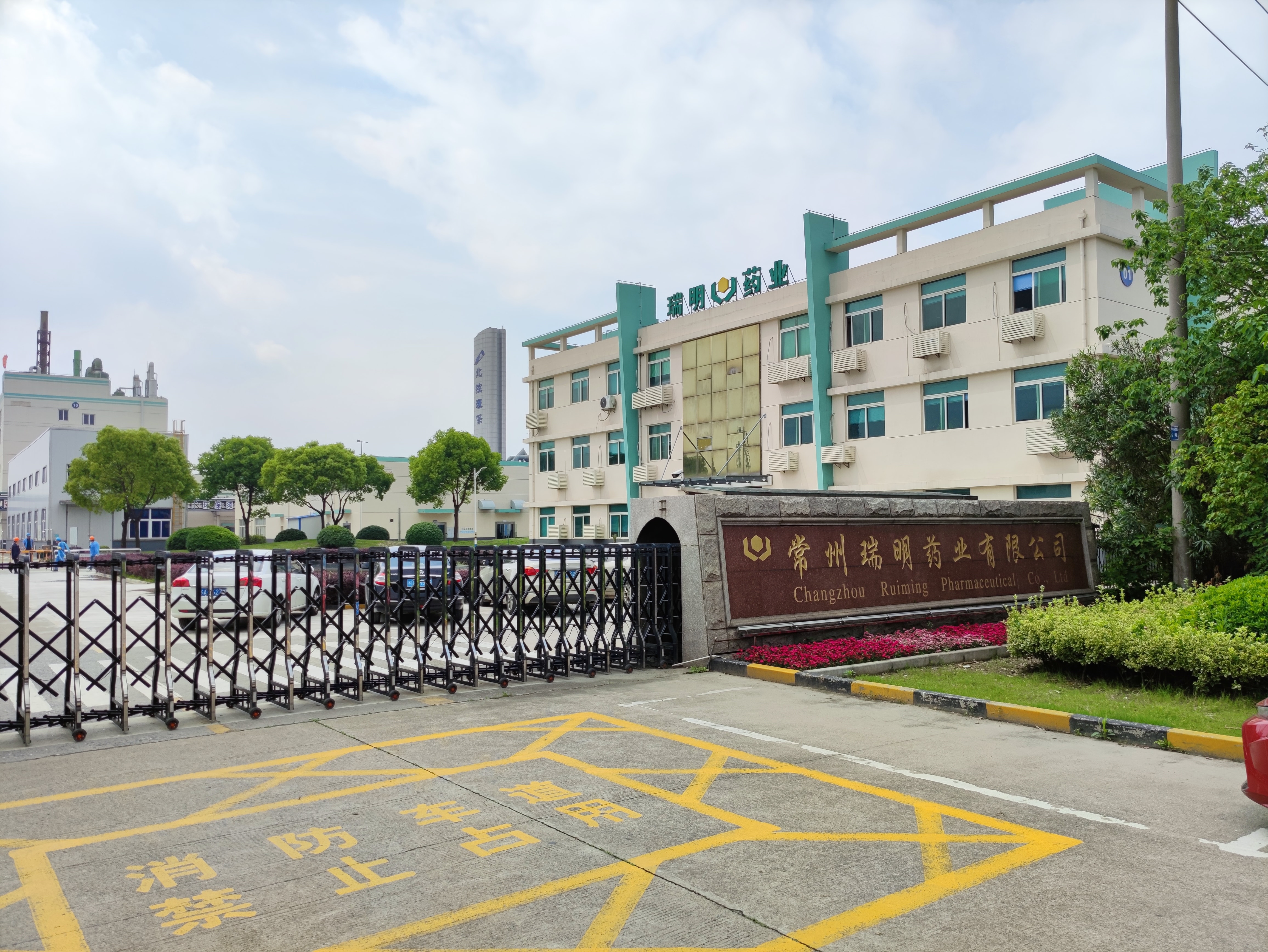
Site entrance of Changzhou Ruiming Pharmaceutical Co., Ltd., Changzhou, Jiangsu. Physical access, site layout and material flow are the first verifiable facts of any supplier audit.
Why a Document Review Alone No Longer Settles a Supplier Decision
Regulatory certificates answer a narrow question: has an authority inspected this manufacturing site and found the quality system acceptable for a defined scope? An EU GMP certificate and a Certificate of Suitability are strong signals, and they shorten the qualification path considerably. They do not answer the buyer's own question, which is whether this site, this line and this batch record structure fit a specific product, a specific dose form and a specific supply plan.
A desk review can verify that a certificate exists, that its number is current, and that the declared scope covers the molecule in question. It cannot verify that the salt-forming reactors named in the process description are physically present, that the drying and packaging area is separated from synthesis, that liquid and solid raw materials are warehoused under different controls, or that a finished-goods warehouse can support batch-wise dispatch without mixing statuses. Those are the facts that determine whether a supply relationship survives its second year.
This is also why an audit is not a duplication of regulatory work. Regulators inspect against a pharmaceutical quality system; buyers inspect against their own supply risk. The two overlap, but they are not the same exercise, and a supplier that has passed external inspection still benefits from a buyer who knows what to look for.
The Site Under Review: What Changzhou Ruiming Operates
Changzhou Ruiming Pharmaceutical Co., Ltd. is a pharmaceutical manufacturer based at No.1558 Longjiang North Road, Chunjiang Town, Xinbei District, Changzhou City, Jiangsu Province, China. Founded in 2005, the company researches, produces and sells pharmaceutical intermediates, active pharmaceutical ingredients and preparations associated with cardiovascular, urinary, respiratory and digestive system products.
The site covers 25,000 square meters and employs 149 people, including a 27-person R&D engineering team. Stated annual output is 180 tons, with approximately 20% of sales exported and the EU as the main export market. Two API production lines and one solid preparation line operate on site. Six APIs hold registration status A and have passed GMP compliance inspections; Amlodipine Besilate holds EDQM and Japan PMDA certification, and Tamsulosin Hydrochloride has passed an FDA on-site inspection.
For an auditor, these headline figures matter less than the physical arrangement behind them. The site is described as operating synthesis workshops together with final purification, drying and packaging workshops built to GMP requirements, supported by liquid raw material warehouses, solid raw material warehouses, intermediate warehouses and finished product warehouses. An integrated arrangement of this kind means a batch does not leave the site between crude API production and packaging, which is exactly the kind of claim an audit is designed to test.
How to Schedule the Audit Before You Book Travel
Audit scheduling at Changzhou Ruiming follows a formal notification route rather than an open-door policy. Buyers should expect the following sequence, which is worth planning around because production, documentation and QA availability all have to align.
- Submit a formal audit application stating the products to be audited, the audit objectives, a proposed time window and the list of auditors attending.
- The supplier's QA team assesses capacity and availability, then advises a feasible date and a preliminary audit plan.
- Once the agenda is confirmed, documents are prepared in advance: batch records, validation files, process documentation and quality system files.
- The on-site audit proceeds as scheduled; observations are issued afterwards and a CAPA response is submitted promptly.
Four conditions apply on the day and should be built into the audit plan rather than discovered at the gate. Visitors comply with site GMP regulations and wear the required cleanroom protective equipment. Photography, video recording and copying of confidential technical documents are prohibited without permission. Access to production areas is escorted by designated site personnel. And the audit scope is limited to the products and quality system agreed in advance.
The practical implication is that a buyer should decide the audit scope before requesting a date. A visit framed around one API and its quality system moves faster and produces cleaner observations than a visit that tries to cover the entire product portfolio in two days.
What to Verify Inside the Workshop
The audit is most useful when it is organised by physical zone rather than by document. Each zone answers a different question about capability, and each has a corresponding paper trail that should match what is visible.
| Zone | What the auditor should confirm | Underlying site fact |
|---|---|---|
| Synthesis workshop | Presence and condition of hydrolysis reactors, salt-forming reactors, centrifuges, decolorization reactors and crystallization reactors; material transfer routes; campaign and cleaning logic. | Two API production lines; Amlodipine Besilate audited scope includes the synthesis workshop. |
| Final purification, drying and packaging workshop | GMP-compliant finishing environment; double cone rotary vacuum dryers, high-efficiency pulverizers and double cone blenders; packaging into 25 KG drums; separation from upstream operations. | GMP-compliant final purification, drying and packaging workshop dedicated to finishing steps. |
| Warehousing | Segregation of liquid raw materials, solid raw materials, intermediates and finished products; status labelling; temperature and humidity control; traceability from receipt to dispatch. | Liquid raw material warehouse, solid raw material warehouse, intermediate warehouse and finished product warehouse on site. |
| Quality control laboratory | Instrumentation supporting full batch release testing to Ph.Eur.; availability of COA and impurity profile data; handling of retention samples. | Full batch release testing complying with Ph.Eur.; COA and impurity profile available. |
| Documentation and batch records | Traceability of a selected batch from raw material receipt to release; validation reports; the audit document package prepared in advance. | Audit document package, batch records, validation and process files prepared before the visit. |
Two further points deserve attention during the walk-through. The first is particle-size reduction. High-efficiency pulverizers are listed among the site's main production equipment, and buyers with a particle-size specification should ask how that equipment is set, controlled and monitored, then compare the answer with the analytical data supplied for the batch. The second is the solid preparation line, which matters to buyers evaluating a supplier that also handles downstream formulation rather than API supply alone.
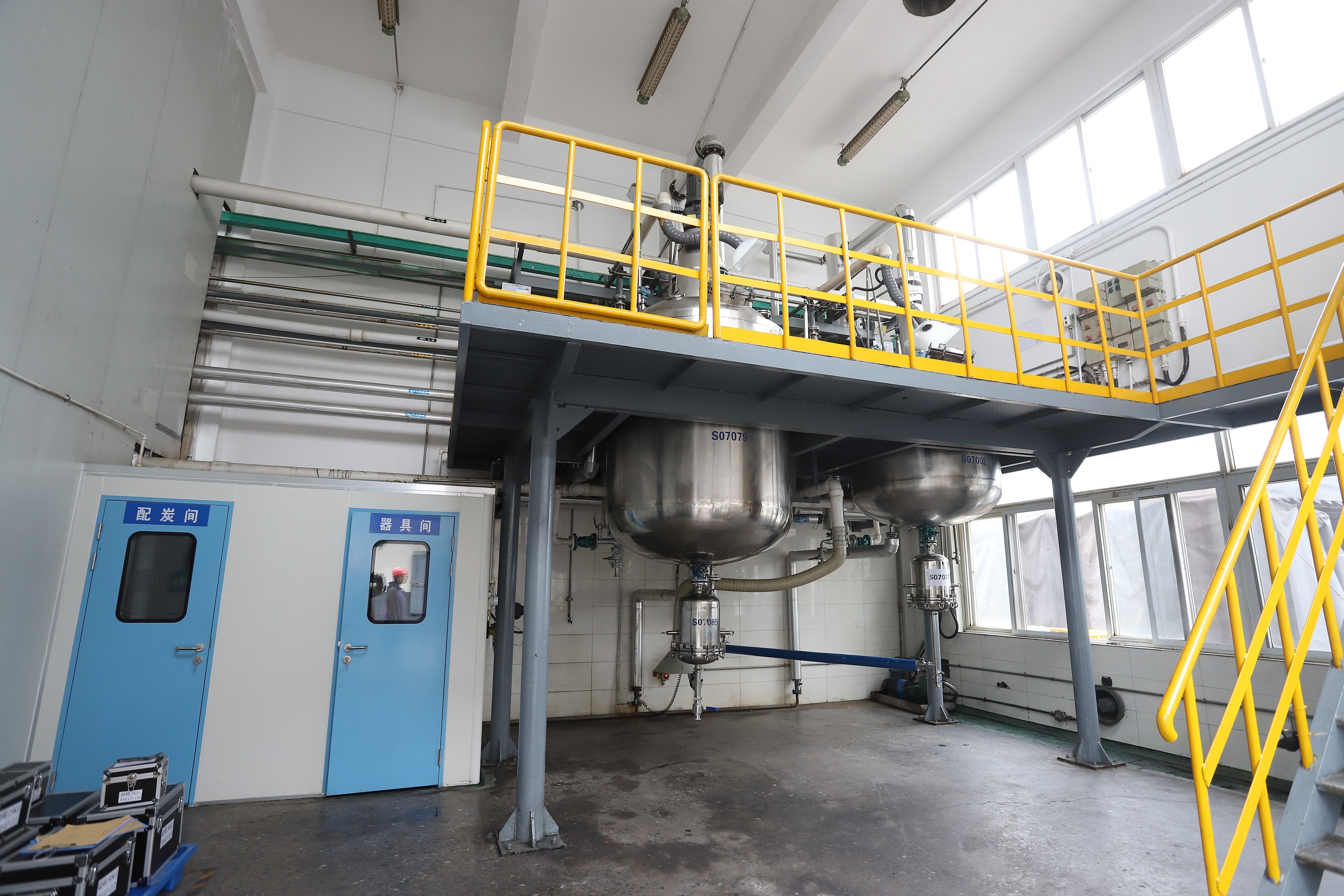
The GMP-compliant drying and packaging workshop is where finishing, milling, blending and drum filling are physically verified against the process description.
Following One Batch Through the Plant
The most efficient audit technique is to select one batch and follow it. On the Amlodipine Besilate line, the physical sequence runs from hydrolysis and salt formation through centrifugation, decolorization, crystallization, drying, milling and blending to packaging. Because the audited scope for Amlodipine Besilate covers both the synthesis workshop and the final purification, drying and packaging workshop, the same visit can trace a batch from crude API through finishing without a handover between separate legal entities or separate sites.
That continuity is a quality argument, not a marketing one. Each transfer between rooms introduces an interface where documentation, status labelling and environmental conditions must be controlled. When synthesis, purification and finishing sit inside one GMP perimeter, the number of such interfaces is known and can be inspected. Buyers should ask to see how a batch status changes at each step, who releases material from one stage to the next, and where the corresponding record is signed.
Packaging is the final checkpoint. The stated packing specification is 25 KG per drum, against an annual production capacity of 180 tons. An auditor should confirm that drum filling, labelling and palletisation are physically separated from synthesis, and that the finished product warehouse can hold released and quarantined material without ambiguity.
Building the Pre-Audit Evidence Pack
An audit is more productive when the documentary layer is settled before arrival. The relevant documents fall into two groups: certificates that define the regulatory standing of the site and the molecule, and analytical documents that define what the buyer will actually receive.
| Document | Reference | What it establishes |
|---|---|---|
| EU GMP certificate | FIMEA/2023/006159, Finnish Medicines Agency, issued 18 April 2024 | Manufacture of Amlodipine Besylate by chemical synthesis, including intermediate manufacturing, crude API production, salt formation, crystallisation, purification, finishing steps, packaging and quality control testing. |
| Certificate of Suitability | R1-CEP 2008-074 - Rev 01, EDQM, 3 March 2022 | Compliance with European Pharmacopoeia monograph No. 1491 for Amlodipine Besilate; no intentionally added ICH Q3D elemental impurities; re-test period of 36 months. |
| Certificate of Suitability (second molecule) | CEP 2023-038 - Rev 00, EDQM, 18 February 2025 | Compliance with European Pharmacopoeia monograph No. 2103 for Propafenone Hydrochloride; re-test period of 18 months; no human or animal derived materials used in production. |
| Written confirmation for export to the EU | JS250256, issued 20 October 2025, valid to 19 October 2028 | Amlodipine Besylate produced by chemical synthesis, compliant with EU GMP and WHO ICH Q7, subject to regular regulatory inspections. |
| Domestic GMP compliance notices | JSMPA Yao Sheng Gao Zhi〔2024〕No. 278 and No. 271, 14 September 2024 | Inspection outcomes covering Amlodipine Besylate, Felodipine, Propafenone HCl, Levamlodipine Besylate and related lines. |
| COA and impurity profile | Issued with each batch | Full batch release testing complying with Ph.Eur.; impurity profile available alongside the certificate of analysis. |
Sample requests belong to the same pre-audit stage. The documented route is straightforward: send the request to the export mailbox specifying product name, CAS number, requested quantity, intended use and target filing market. After commercial confirmation, sample preparation and release are arranged together with the COA and SDS. Samples are supplied for R&D and registration testing and are not for resale. Deeper documents such as process descriptions and validation records require a separate formal document request, which is a normal separation of commercial and technical disclosure rather than a refusal.
Buyers should read the analytical documents before the visit and bring specific questions. If the impurity profile shows a route-specific pattern, the audit is the place to ask which step generates it and how it is purged. If the particle-size distribution matters for the buyer's formulation, the mill settings and the analytical method behind the reported distribution should be discussed on site, not resolved by email afterwards.
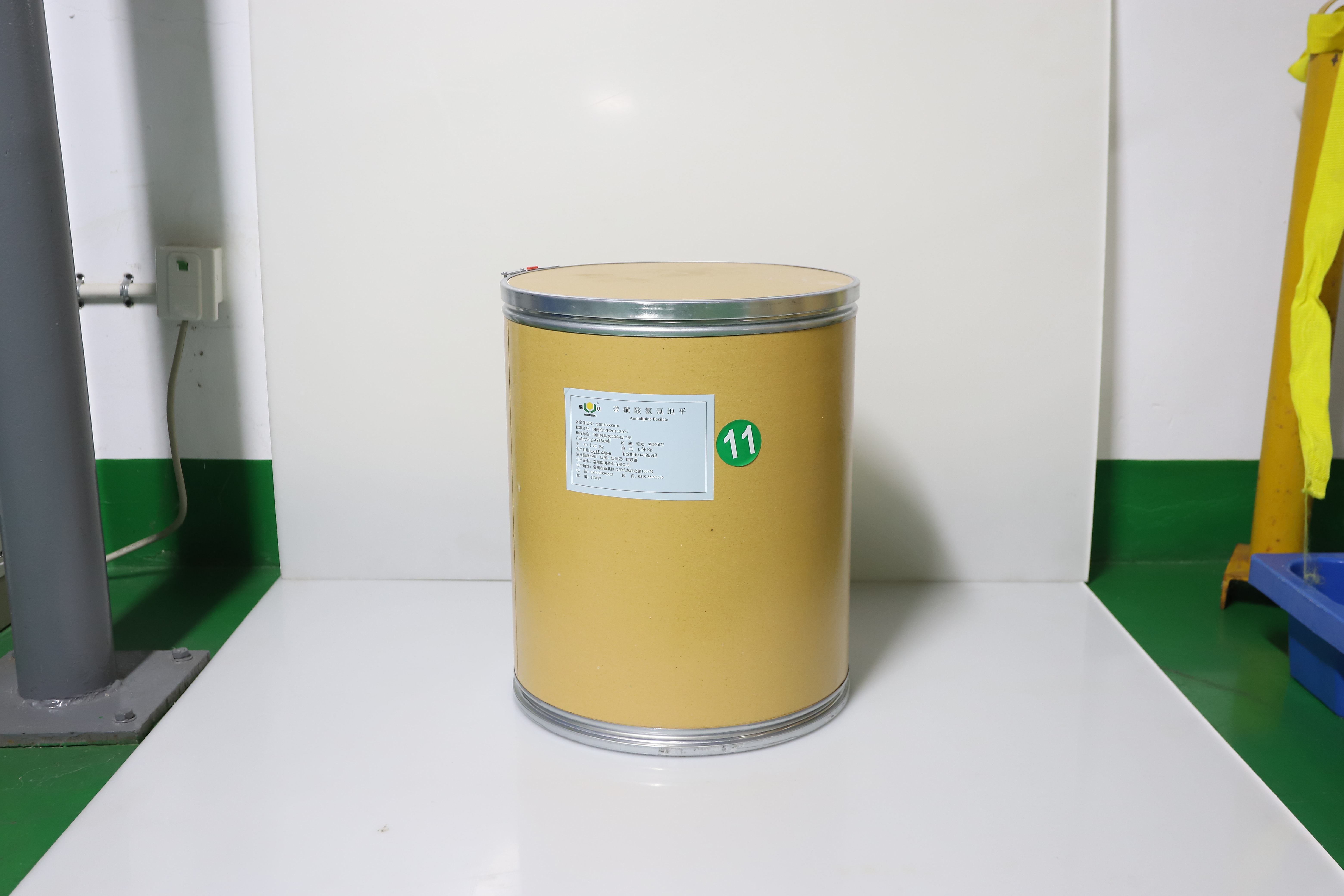
Finished product handling closes the traceability loop that begins with raw material receipt and ends with drum dispatch.
Where This Evidence Matters: Application and Supply Cases
The audit question changes with the application. For a cardiovascular programme using Amlodipine Besilate in a fixed-dose combination tablet, the critical points are impurity control across the salt-forming and purification steps, consistency of particle size for blending, and the ability to supply the same grade repeatedly over years. For a urological programme built on Tamsulosin Hydrochloride, the emphasis shifts toward the inspection history of that specific material and the handling of a high-potency, low-dose API.
A documented case illustrates how this plays out commercially. A cardiovascular pharmaceutical supply chain partner in France has purchased 800 to 1000 kg of Amlodipine Besilate per year for three years for hypertension combination tablet manufacturing. The stated outcome is batch quality consistently meeting European Pharmacopoeia requirements with a stable impurity profile, following a supplier quality assessment. The elements that made that relationship work are the same ones an audit is designed to confirm: a CEP dossier available for Amlodipine Besylate, full batch traceability, a flexible delivery schedule and an audit-ready quality system.
Supply flexibility also has a documentary dimension. The stated commercial terms are no strict MOQ, negotiable on request, with a monthly capacity of 15 tons and a lead time of 45 to 60 days upon receipt of order and advance payment. Customisation options covering targeted impurity control, customised COA, packaging schemes and audit document packages are the items a buyer should confirm in writing during the evaluation, because they determine how the supplier behaves after the audit report is signed rather than during the visit.
Market Signals Buyers Are Responding To
Three regulatory signals shape how European buyers now approach an API audit. The first is the written confirmation regime for active substances exported to the EU: the document held by this site, JS250256, runs to 19 October 2028 and states compliance with EU GMP and WHO ICH Q7 under regular regulatory inspection. Its existence and validity period are verifiable facts a buyer can check before scheduling anything.
The second is the CEP pathway. Two certificates are in force for this manufacturer, covering Amlodipine Besilate under monograph No. 1491 and Propafenone Hydrochloride under monograph No. 2103, which allows a buyer's regulatory team to reference a pharmacopoeial suitability assessment rather than build a full dossier review from first principles.
The third is inspection history outside Europe. Amlodipine Besilate has obtained Japan PMDA certification, and Tamsulosin Hydrochloride has passed an FDA on-site inspection. For buyers, the practical reading is that the site has already been examined by more than one authority with different expectations, which tends to raise the quality of the documentation an auditor will find on arrival.
A broader, qualitative shift accompanies these signals. Buyers increasingly treat supplier qualification as a continuous process rather than a one-time gate, which raises the value of a site that can support repeat audits, document updates and complaint handling without rebuilding its file each time. Post-audit support at this manufacturer is described as covering audit support, regulatory document update, quality complaint handling and technical support.
Limits of an On-Site Audit Compared with a Desk Review
An audit is not a faster route to a purchase order, and buyers should plan for the constraints as carefully as they plan for the benefits.
- Scheduling is not immediate. A formal notification must be submitted and QA must confirm availability before a date is fixed, which means short-notice visits are not realistic.
- Scope is fixed in advance. The audit is limited to the agreed products and quality system, so a buyer who wants portfolio-wide coverage needs a broader plan, not a longer day.
- Recording is restricted. Photography, video recording and copying of confidential technical documents are prohibited without permission, so observations must be captured in written notes and confirmed in the post-audit report.
- Some documents require a separate request. Process and validation records sit behind a formal document request and may not be available during the visit itself.
- Lead time is a commercial boundary, not a quality one. At 45 to 60 days upon receipt of order and advance payment, the schedule suits planned campaigns rather than emergency replenishment.
- Capacity figures need interpretation. The 180-ton annual output and 15-ton monthly capacity are site-level figures; product-specific allocation should be confirmed in writing during the audit rather than assumed.
A desk review avoids all of these frictions. It is faster, cheaper and can be repeated annually. What it cannot do is distinguish between a site that genuinely operates an integrated synthesis-to-packaging flow and a supplier whose documents describe one. For a first qualification of a long-term cardiovascular or urological supply, that distinction is usually worth the travel.
What Buyers Should Expect Next
The direction of travel in API procurement is toward evidence that can be revisited. Certificates expire and are renewed, written confirmations carry defined validity periods, and inspection findings are re-examined as products move between markets. A supplier that maintains a CEP, an EU GMP certificate and a written confirmation simultaneously is better positioned for that cycle than one relying on a single document type.
For Changzhou Ruiming Pharmaceutical Co., Ltd., the combination of an integrated GMP workshop, dedicated finishing and warehousing, in-house analytical release, and inspection history across EU, Japanese and US authorities provides a coherent basis for buyer verification. The remaining question is not whether the evidence exists, but whether a buyer's audit plan is specific enough to test it. Buyers who arrive with a zone-by-zone checklist, a chosen batch and a written list of analytical questions will get more from a single visit than from three rounds of email clarifications.
The company brochure, including product and facility information, can be downloaded here: Changzhou Ruiming Pharmaceutical company brochure (PDF).
FAQ
How is an on-site factory audit at Changzhou Ruiming scheduled?
An official audit notification is sent in advance, stating the audit scope, the preferred time window and the auditor list. The QA team evaluates and confirms the schedule, prepares the audit documents and arranges the site audit. After the visit, observations are issued and a CAPA response is submitted promptly.
What belongs in the pre-audit evidence pack for an EU-bound API?
For Amlodipine Besilate, the pack typically includes the EU GMP certificate FIMEA/2023/006159 issued by the Finnish Medicines Agency, the EDQM Certificate of Suitability R1-CEP 2008-074 - Rev 01 referencing European Pharmacopoeia monograph No. 1491, and the written confirmation for active substances exported to the EU numbered JS250256, valid to 19 October 2028. Domestic GMP compliance notices JSMPA Yao Sheng Gao Zhi〔2024〕No. 278 and No. 271 document the corresponding inspection outcomes.
How are samples and analytical documents such as COA and impurity profile requested?
The request is sent to the export mailbox specifying product name, CAS number, requested quantity, intended use and target filing market. After commercial confirmation, sample preparation and release are arranged together with the COA and SDS. Full batch release testing complies with Ph.Eur., and the COA and impurity profile are available. Process and validation records require a separate formal document request.
Which conditions apply during the audit visit itself?
Visitors comply with site GMP regulations and wear the required cleanroom protective gear. Photography, video recording and copying of confidential technical documents are prohibited without permission. Access to production areas is guided by designated escorts, and the audit scope is limited to the agreed products and quality system.
Which commercial terms should be confirmed alongside the audit findings?
The stated terms are no strict MOQ, negotiable on request, a monthly capacity of 15 tons, and a lead time of 45 to 60 days upon receipt of order and advance payment. Customisation covers targeted impurity control, customised COA, packaging schemes and audit document packages, while after-sales support covers audit support, regulatory document update, quality complaint handling and technical support.
Tem questões ou precisa de mais detalhes?
Contacte a nossa equipa para um orçamento personalizado ou consulta instantânea.
Solicitar orçamento
Preencha o formulário abaixo e a nossa equipa entrará em contacto com uma proposta personalizada.
Chat direto do WhatsApp
Prefere conversar em tempo real? Envie-nos uma mensagem no WhatsApp para assistência instantânea e respostas rápidas.
- Obter orçamento personalizado
- Partilhar fotos ou documentos
- Discuta as suas necessidades diretamente
Geralmente responde em 5–30 minutos durante o horário de expediente.