
One Biogas Flare Platform: Landfill, Digester and WWTP
One Biogas Flare Platform: Landfill, Digester and WWTP
A landfill gas project, an anaerobic digester, and a wastewater treatment plant can all produce methane-containing gas at low pressure and variable flow, but they do not impose the same flare specification. The practical question is not whether one flare platform can be used across all three; it is which configuration, materials, and operating evidence make that platform fit each site. Zexuan's ZXE-BGF Series is positioned for this decision: a biogas flare platform offered in open and enclosed biogas configurations, with flow capacity customized to the project and materials that include carbon steel, hot-dip galvanized steel, SS304, SS316L, and high-temperature alloys for burner components.
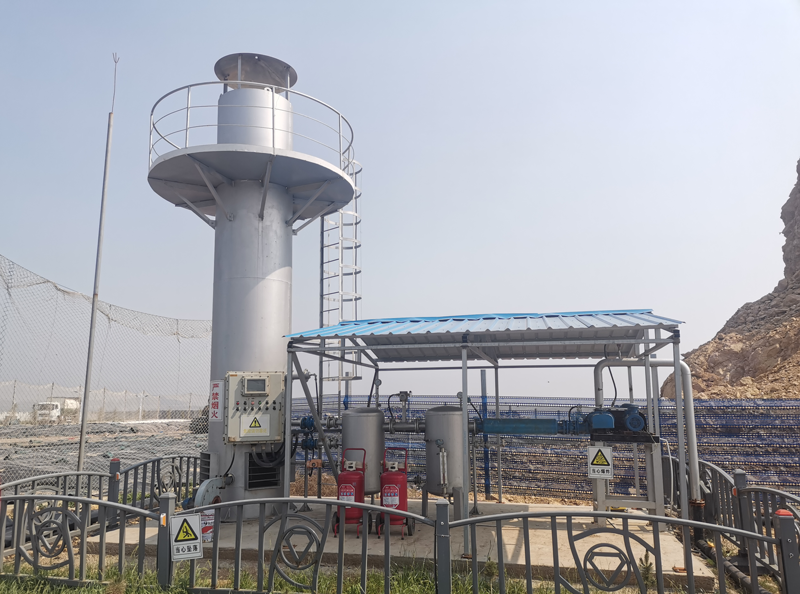
Shandong Zexuan Environmental Protection Technology Co., Ltd. (Zexuan) is a manufacturer of industrial flare systems and thermal treatment equipment, established in 2015 and operating a 24,100 m² manufacturing base. Its ZXE-BGF Series is the reference point for this article, but the selection logic applies to any project team comparing a common platform across landfill, digestion, and wastewater gas.
Three methane sources, three different site problems
The common basis is clear. Landfill gas, digester gas, and wastewater treatment gas are methane-containing streams handled at low pressure, with variable flow and continuous gas generation. The ZXE-BGF Series documents a typical methane concentration of 35%-65% CH4 depending on source, which is why the same platform family can be considered across all three cases. What changes is the plant context: where the gas is produced, how the flare is integrated with the gas train, what the neighbors can see and hear, and how the owner will demonstrate performance.
- Landfill gas is generated by waste decomposition across an active or closed site. Flow and gas quality can change over the site's life, and the flare must remain available as the gas management strategy changes.
- Anaerobic digestion gas is produced in a controlled digester, but gas production still follows feedstock, feeding, and downstream gas use. The flare may operate continuously or as a backup, depending on the plant design.
- Wastewater treatment gas is produced in sludge digestion at a municipal or industrial plant. Sites are often space-constrained and close to other infrastructure, so visible flame, noise, and maintenance access become procurement criteria alongside combustion performance.
These differences do not require three unrelated equipment families. They require a platform that can be configured for the actual gas case, and a buyer who can document why one configuration fits one site better than another.
What the ZXE-BGF Series actually covers
The ZXE-BGF Series is a biogas flare, landfill gas flare, and methane combustion system. It is offered as an open biogas flare, an enclosed biogas flare, a landfill gas flare, an anaerobic digestion flare, and a methane destruction flare. The model is customized according to gas flow rate and project requirements, so the series should not be read as a single fixed package with one capacity or one layout.
The documented operating envelope is specific enough to support screening. Gas sources include landfill gas, biogas, digester gas, and wastewater treatment gas. Methane concentration is typically 35%-65% CH4 depending on source. Gas flow capacity is customized according to project requirements. Operating temperature is typically 800°C to 1100°C. Methane destruction efficiency is documented at 98% or higher, depending on system design and operating conditions. Automatic ignition and flame monitoring are available, and the system can be designed for continuous or intermittent operation.
Those values are design parameters, not a guarantee for every site. A landfill with a changing gas composition, a digester with a variable feed schedule, and a wastewater plant with a constrained plot all need their own flow range, gas analysis, and operating case. The platform is also not only the flare stack: the biogas application unit lists a biogas flare stack, blower, ignition system, and monitoring system as matched equipment. That matters because low-pressure gas often needs a deliberate gas-train design, not just a burner tip.
Procurement translation: the ZXE-BGF Series gives a common platform family, but the buyer should still issue a project data sheet covering minimum and maximum flow, methane range, pressure at the battery limit, continuous or intermittent duty, power and control philosophy, material requirements, and site constraints. A common platform reduces repetition only after those inputs are fixed.
Landfill gas: continuous generation with variable quality
Landfill gas is the case where the flare often has to remain useful for years while the gas source changes. The ZXE-BGF application conditions describe methane-containing gas, low pressure, variable flow rate, and continuous gas generation. That combination points to a flare designed for continuous operation and sized across a realistic flow range, with automatic ignition and flame monitoring available to support routine operation.
An open biogas flare can fit a landfill where the site has enough separation for flame, thermal radiation, noise, and access, and where the owner and permit conditions accept a visible flame. An enclosed biogas flare is worth evaluating where the site is closer to neighbors, where visible flame or noise is a constraint, or where the project wants the combustion zone contained. Neither choice should be made from a preference for enclosure alone. The project should verify the set-back, radiation, noise, and maintenance access requirements that apply to its layout.
Material choice follows the same site logic. The series lists carbon steel, hot-dip galvanized steel, SS304, and SS316L. For an outdoor landfill installation, carbon steel with the specified coating system or hot-dip galvanized steel may fit the external atmosphere and owner specification, while stainless grades may be justified by the gas composition, condensate chemistry, or project corrosion review. High-temperature alloys are listed for burner components, which is a separate decision from the structural steelwork. The buyer should not treat the material list as a menu to select without a gas and corrosion review.
Useful checks for a landfill gas flare include the expected gas analysis range, maximum and minimum flow, the minimum stable flow with the proposed blower and burner, the control response to flow changes, the ignition and flame-monitoring logic, and the evidence the supplier will provide for methane destruction efficiency. The project should also confirm how condensate and gas quality will be managed upstream of the flare, because the flare is only one part of the gas management system.
Anaerobic digestion: stable gas, variable plant demand
Anaerobic digestion projects often have a more controlled gas source than landfills, but the flare still has to fit the plant's operating pattern. Digester gas is methane-containing, low pressure, and variable in flow, and the ZXE-BGF Series includes an anaerobic digestion flare configuration. The typical methane range of 35%-65% CH4 is broad enough that the project should provide its own gas analysis rather than rely on a generic value.
The key difference from a landfill is not the presence of methane; it is the plant interface. A digester may send gas to a CHP unit, boiler, upgrading plant, or flare, and the flare may be continuous or standby depending on that arrangement. The ZXE-BGF design can be continuous or intermittent, so the buyer should state the duty clearly. A flare that is expected to handle continuous surplus gas has a different operating case from one that is intended for start-up, shutdown, or emergency relief.
Open and enclosed configurations both remain relevant. An open flare can be appropriate where the site layout provides separation and the visible flame is acceptable. An enclosed flare can be considered where the plant is near sensitive receptors or where the project wants a more contained visual and noise profile. In either case, the buyer should verify stable combustion at the minimum expected flow, because a digester's gas production can fall when feeding changes or when gas is diverted to another user.
Material selection should follow the actual gas and condensate conditions. The series lists carbon steel and hot-dip galvanized steel for general steelwork and SS304 or SS316L where the project requires higher corrosion resistance. The final choice belongs in the project specification, not in a generic brochure statement. A buyer should ask for the proposed material schedule, coating system, and the assumptions behind it.
Wastewater treatment gas: urban sites and continuous operation
Wastewater treatment plants add a site-planning problem to the same gas problem. The ZXE-BGF application data lists wastewater treatment gas as a gas source, with methane-containing gas, low pressure, variable flow, and continuous generation. The flare may operate continuously, and the plant may be located within an urban or industrial area where visible flame, noise, and access are closely watched.
That makes the enclosed configuration a natural option to evaluate, but not an automatic choice. An enclosed biogas flare can contain the flame and reduce visual impact, which may help where the plot is tight or neighbors are close. An open flare can still be the better fit where the site has adequate separation and the owner accepts the visual and thermal characteristics. The decision should be based on the actual layout, permit conditions, and maintenance plan.
Materials deserve particular attention at wastewater sites because outdoor exposure and condensate conditions can vary. The ZXE-BGF Series lists carbon steel, hot-dip galvanized steel, SS304, and SS316L, so the project can specify a corrosion strategy rather than accept a default. The buyer should confirm the external coating or galvanizing scope, the stainless-steel scope, and the high-temperature alloy scope for burner components. Those are separate material decisions with separate cost and maintenance implications.
For a wastewater plant, the flare specification should also state how the flare interacts with the digester gas system. Low-pressure gas, a blower, automatic ignition, and flame monitoring are all part of the matched equipment list for the biogas application. The project team should verify the pressure available at the flare battery limit and the control logic that protects the flare during low-flow or high-flow conditions.
Open or enclosed: a site-constraint decision
The open versus enclosed choice is often treated as a style preference. It is better treated as a site-constraint decision. The U.S. Environmental Protection Agency defines an industrial flare as a thermal oxidation system using an open flame without enclosure. That definition is useful because it makes the physical difference clear: an open flare exposes the flame, while an enclosed flare contains the combustion zone within a structure.
The ZXE-BGF Series includes both open and enclosed biogas flare types, so the platform itself does not force one answer. Open configurations can fit sites with adequate separation, acceptable visual impact, and a maintenance strategy that does not depend on enclosure access. Enclosed configurations can fit sites where visible flame, noise, or space constraints make containment preferable. The buyer should verify the radiation, noise, and access assumptions for the chosen configuration rather than assuming that enclosure is always superior or that open flare is always simpler.
There is also a performance boundary to keep in view. An enclosure does not replace the need for a proper gas train, stable combustion, and documented destruction efficiency. It changes the site interface. The project should therefore compare configurations on the same basis: same gas analysis, same flow range, same duty, same methane destruction requirement, and same site constraints. If those inputs differ, the comparison is not like for like.
For projects that need a contained flame and reduced visual impact, Zexuan's separate enclosed ground flare documentation describes low-radiation and low-noise design. That is useful context for what enclosure is intended to achieve, but the biogas buyer should still verify the offered ZXE-BGF configuration and its project-specific performance commitments.
Materials: match the atmosphere, not the brochure
The ZXE-BGF Series lists carbon steel, hot-dip galvanized steel, SS304, SS316L, and high-temperature resistant alloys for burner components. Those materials are not interchangeable, and the list alone does not tell a buyer which one belongs on a specific landfill, digester, or wastewater site.
Carbon steel is a base structural material and can be protected with a coating system appropriate to the site. Hot-dip galvanized steel is listed as a material option and may fit outdoor steelwork where the owner's specification accepts galvanizing and the atmospheric exposure is compatible. Stainless-steel grades are listed for projects that need higher corrosion resistance, and high-temperature alloys are reserved for burner components exposed to the combustion environment. The final selection should be based on gas composition, condensate chemistry, chloride exposure, operating temperature, external atmosphere, and maintenance strategy.
A common procurement error is to specify one material everywhere without a corrosion review, or to assume that a stainless grade removes every maintenance requirement. The more useful approach is to ask for a material schedule that states where carbon steel, galvanized steel, SS304, SS316L, and high-temperature alloys are used, and why. That schedule should be consistent with the gas analysis and the site's external environment.
For landfill and wastewater sites, the external atmosphere and condensate handling can matter as much as the flame temperature. For digestion projects, the gas composition and upstream gas treatment determine what reaches the flare. In all three cases, the material decision should be documented before the purchase order, not discovered during commissioning.
Continuous methane combustion, GHG reduction and compliance evidence
Continuous gas generation is the operating condition that links these three scenarios. The ZXE-BGF Series can be designed for continuous or intermittent operation, and the biogas application data describes continuous operation for landfill, biogas, and wastewater gas. For a site with continuous methane generation, a continuous-duty flare design is often the relevant case, but the buyer should state the expected operating hours and turndown requirements rather than assume them.
The environmental case rests on methane destruction. The ZXE-BGF Series documents a methane destruction efficiency of 98% or higher, depending on system design and operating conditions. The EPA states that properly operated flares achieve at least 98% destruction efficiency in the flare plume, which gives a useful reference point. But the EPA also notes that its 2024 NSPS OOOOb rules remove the option to assume a default 98% destruction efficiency for flares and require operators to demonstrate actual performance. That is a U.S. regulatory example, not a universal rule, but it illustrates the direction of compliance evidence.
For a biogas project, the practical conclusion is that a flare model name is not compliance evidence. The buyer should ask for the design basis, the guaranteed methane destruction efficiency, the operating envelope in which that guarantee applies, the monitoring and recordkeeping approach, and the proposed acceptance test. Actual greenhouse-gas reduction depends on how much methane is captured and sent to the flare, how many hours the flare operates, and the destruction efficiency achieved in service. A flare that is undersized, poorly controlled, or operated outside its envelope will not deliver the expected environmental result even if the datasheet looks adequate.
This is where automatic ignition and flame monitoring become more than convenience features. They support stable operation and give the plant evidence that the flare is working. The buyer should verify the logic, the failure modes, and the maintenance requirements, especially for continuous-duty landfill and wastewater applications.
Verification checklist across all three scenarios
The table below is a screening tool for comparing the three plant scenarios on the same platform. It does not replace a gas analysis, a site layout review, or a project-specific performance guarantee.
| Plant scenario | Documented conditions to design around | Configuration fit to verify | Material and site checks |
|---|---|---|---|
| Landfill gas | Methane-containing gas, low pressure, variable flow, continuous generation; typical 35%-65% CH4 depending on source | Open where flame, radiation, noise, and access are acceptable; enclosed where visible flame or noise needs containment | Confirm gas analysis range, condensate management, coating or galvanizing scope, blower requirement, automatic ignition, and flame monitoring |
| Anaerobic digestion | Digester gas, low pressure, variable flow, continuous generation; typical 35%-65% CH4 depending on source | Open or enclosed; verify stable combustion at minimum flow and the duty cycle against gas use elsewhere on the plant | Confirm material schedule against gas and condensate conditions; verify control logic and access for maintenance |
| Wastewater treatment gas | Wastewater treatment gas, low pressure, variable flow, continuous generation; typical 35%-65% CH4 depending on source | Enclosed often evaluated for constrained or neighbor-sensitive sites; open where separation and visual impact are acceptable | Confirm outdoor corrosion protection, noise and visual constraints, access, and the pressure available at the flare battery limit |
The buyer should also ask for a single document that maps each scenario to the offered configuration, materials, operating envelope, and performance guarantee. That document is more useful than a collection of generic product sheets because it shows whether the platform has been fitted to the plant, not merely selected from a catalogue.
What project teams should expect
The compliance direction in major markets is toward demonstrated performance rather than assumed performance. The U.S. EPA NSPS OOOOb example is one signal: operators may need to show actual flare performance instead of relying on a default destruction-efficiency assumption. For biogas, landfill, and wastewater projects, that is likely to increase attention to gas analysis, flow range, operating hours, destruction efficiency evidence, and monitoring records.
A common flare platform can reduce engineering repetition across a portfolio, but only when each site's data is complete. The most useful procurement conversation is therefore not about whether one platform can be used everywhere. It is about which configuration, materials, and performance evidence make the platform fit a specific landfill, digester, or wastewater plant. That is the difference between a platform strategy and a generic product claim.
FAQ
What makes landfill gas, digester gas, and wastewater treatment gas different for flare selection?
All three are methane-containing gas streams handled at low pressure, with variable flow and continuous generation, and the ZXE-BGF Series lists all three as gas sources. The differences are in the plant context: a landfill may see gas quality and flow change over the site's life, an anaerobic digester may divert gas to other uses and leave the flare on standby or continuous duty, and a wastewater plant may have tighter space, noise, and visual constraints. The buyer should provide a gas analysis, flow range, duty case, and site constraints for the actual plant rather than selecting from the gas-source label alone.
When is an open biogas flare appropriate?
An open biogas flare is appropriate when the site can accommodate the visible flame, thermal radiation, noise, and access requirements, and when the owner and applicable permit conditions accept an open-flame configuration. The EPA defines an industrial flare as a thermal oxidation system using an open flame without enclosure, so the open configuration should be assessed as an exposed combustion source. It can be a practical fit for a landfill or digestion site with adequate separation, but it should not be chosen only because it appears simpler on a drawing.
When should an enclosed biogas flare be considered?
An enclosed biogas flare should be considered when visible flame, noise, or space constraints make a contained combustion zone preferable, or when the site layout brings the flare close to sensitive receptors. The ZXE-BGF Series includes an enclosed biogas flare type, but enclosure is a site-interface decision, not an automatic performance upgrade. The project should verify radiation, noise, access, maintenance, and the guaranteed destruction efficiency for the enclosed configuration under the same gas and flow conditions used for the open option.
Which materials should be specified for biogas flare service?
The ZXE-BGF Series lists carbon steel, hot-dip galvanized steel, SS304, SS316L, and high-temperature resistant alloys for burner components. Carbon steel and hot-dip galvanized steel are relevant to structural and outdoor steelwork where the owner's specification accepts them. SS304 and SS316L are listed for projects that need higher corrosion resistance. High-temperature alloys are a separate choice for burner components. Final selection should follow the gas composition, condensate chemistry, chloride exposure, operating temperature, external atmosphere, and maintenance strategy.
How should buyers verify methane destruction and environmental compliance?
Buyers should request the design basis, the guaranteed methane destruction efficiency, the operating envelope in which that guarantee applies, the monitoring and recordkeeping approach, and the proposed acceptance test. The ZXE-BGF Series documents a methane destruction efficiency of 98% or higher depending on design and operating conditions. The EPA states that properly operated flares achieve at least 98% destruction efficiency in the flare plume, while the 2024 NSPS OOOOb rules in the United States remove the default 98% assumption and require actual performance to be demonstrated. Local permit requirements may differ, so the project should confirm the applicable rule and evidence before purchase.
The fit decision is therefore a documented match between gas conditions, site constraints, configuration, materials, and performance evidence. Zexuan's ZXE-BGF Series provides a common platform for landfill gas, digester gas, and wastewater treatment gas, but the project team still has to define the operating case and verify the claimed performance for that case.
For readers who need the manufacturer's technical brochure, the approved download is available here: Shandong Zexuan brochure.
Tem questões ou precisa de mais detalhes?
Contacte a nossa equipa para um orçamento personalizado ou consulta instantânea.
Solicitar orçamento
Preencha o formulário abaixo e a nossa equipa entrará em contacto com uma proposta personalizada.
Chat direto do WhatsApp
Prefere conversar em tempo real? Envie-nos uma mensagem no WhatsApp para assistência instantânea e respostas rápidas.
- Obter orçamento personalizado
- Partilhar fotos ou documentos
- Discuta as suas necessidades diretamente
Geralmente responde em 5–30 minutos durante o horário de expediente.