
One Purlin Line or Two? C/Z Quick-Change Buyer Guide
One Purlin Line or Two? C/Z Quick-Change Buyer Guide
The choice between a quick-change C/Z purlin line and separate C and Z machines is not settled by the phrase quick change. It is settled by order mix, verified changeover, net output, floor space and total scope. Tangshan Vantools Industries Co., Ltd. is a manufacturer and exporter of metal processing machinery and hardware products based in Tangshan, Hebei Province, China; its product systems include color-steel cold roll forming equipment such as purlin machines. In the Vantools roll forming machine range, the C80-C300 is described as an automatic purlin production line with C/Z quick change, C100-C300 adjustment, 1.5-3.0 mm galvanized/PPGI coil capability, a heavy welded steel frame, 45# chrome-plated rollers, solid alloy shafts and PLC touch-screen control. Those facts define the comparison object. They do not prove that one line is always better than two, and they do not supply a changeover time or a site output figure.
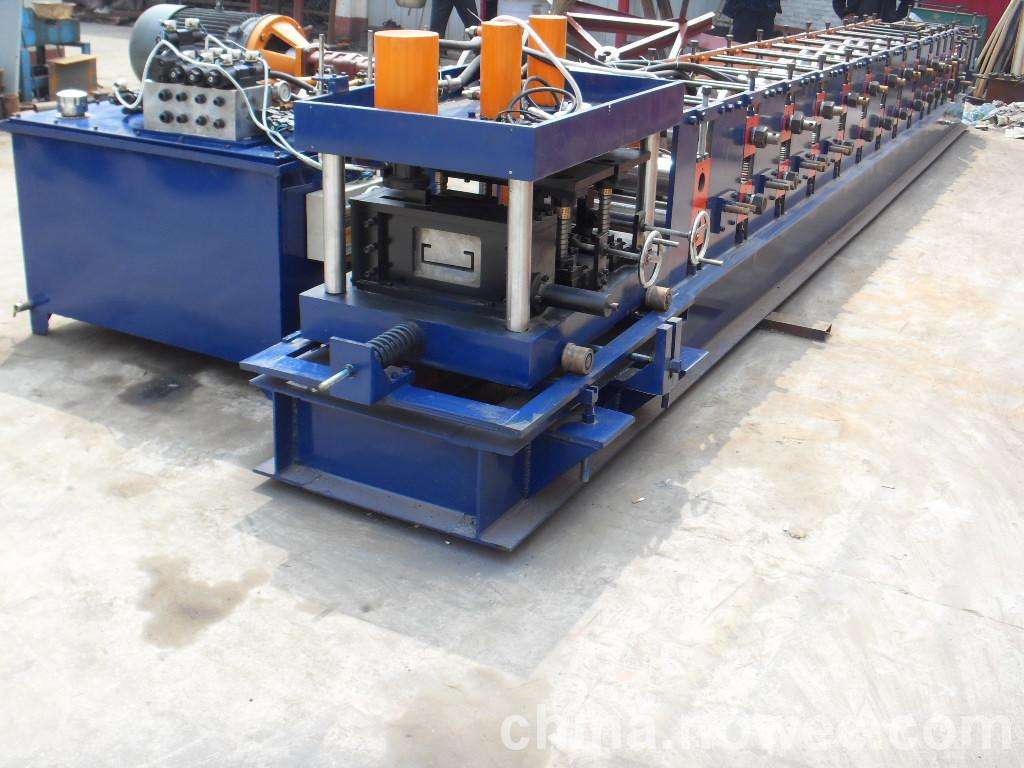
C purlin forming equipment is one reference point in this comparison; buyers should match the quoted machine to the exact C/Z quick-change configuration.
The decision is not quick change versus no quick change
The real decision is whether one reconfigurable line or two dedicated machines gives the better fit for the order book. A quick-change C/Z line concentrates C and Z production on one asset. Separate machines dedicate one asset to C and one to Z. The first route introduces a changeover step between profiles. The second introduces a second machine, a second setup and a second space claim. Neither route is automatically superior without site data.
For a buyer at the decision stage, this means the comparison has to be built around the same profiles, the same material range, the same output basis and the same scope of supply. A headline machine price or a single maximum speed figure is not enough. The useful comparison is the installed line against the installed pair of machines, including decoiler, cut, controls, tooling, commissioning, training and spares.
What the C80-C300 configuration establishes
The C80-C300 configuration gives the buyer a concrete reference for the one-line route. The model name is C80-C300; the stated adjustment range is C100-C300. The verified configuration points are:
- Automatic purlin production line.
- C/Z quick change between profile families.
- C100-C300 adjustment range.
- 1.5-3.0 mm galvanized/PPGI coil capability.
- Heavy welded steel frame.
- 45# chrome-plated rollers.
- Solid alloy shafts.
- PLC touch-screen control.
These are configuration facts. They support a capability conversation. They do not answer four buyer questions: How long does a C-to-Z change take? What net output is achievable with actual coil changes and cut cycles? What floor length and clearance does the line need? How does the installed and commissioned scope compare with two machines? Those answers must come from the quotation, layout drawing, demonstration and site plan.
Comparison table: quick-change line vs separate C and Z machines
| Decision dimension | Quick-change C/Z line | Separate C and Z machines | What the buyer must verify |
|---|---|---|---|
| Profile scope | One line with C/Z quick change and C100-C300 adjustment in the C80-C300. | Two dedicated machines, one for C and one for Z. | Exact dimensioned profile drawings for every C and Z profile. |
| Changeover | A changeover step between C and Z is part of the one-line route. Time is not supplied. | No C/Z changeover between the two machines, but each machine still needs setup and size changes. | Documented procedure, demonstration, first-piece inspection and repeatability. |
| Net output | Depends on changeover frequency, coil changes, cut cycle and uptime. | Can be organized for parallel production if labor, coil handling and floor space support it. | Meters per shift including coil change and cut cycle, not only meters per minute. |
| Capital scope | Compare one line with full scope. | Compare two machines with full scope. | Decoiler, cut, controls, tooling, installation, commissioning, training and spares. |
| Floor and utilities | One machine asset, but line length and clearance must be checked. | Two machine footprints and two utility connections. | Layout drawing, indoor clearance, foundation, power and air. |
| Quality control | After each change, alignment and first-piece dimensions need checking. | Dedicated setup can simplify routine running, but calibration is still required. | Length tolerance, pre-cut or post-cut, offcut handling and PLC recipe storage. |
| Maintenance | One line concentrates maintenance, including the change mechanism. | Two machines multiply maintenance points. | Spare-parts list, calibration interval and service plan. |
| Labor and skill | Changeover discipline and training matter. | Staffing may allow parallel running or separate operators. | Actual staffing plan and training requirement. |
| Best-fit signal | Mixed C and Z orders without enough parallel volume for two machines, subject to verified changeover. | High C and Z demand with site capacity for two lines. | Site-specific order mix, output and total cost comparison. |
Where a quick-change C/Z line can fit
Consider one line when the order book requires both C and Z profiles but not enough simultaneous volume to keep two dedicated machines productive. The C80-C300 C/Z quick change is relevant because it allows the same asset to move between profile families, subject to verified changeover and first-piece approval. The route can also be considered when the site layout or capital scope favors one machine, but neither benefit is proven until the line layout and quotation are compared with the two-machine plan.
A quick-change line is not a substitute for a changeover procedure. Buyers should ask for the sequence, the tools required, the inspection step after change and a demonstration on the profiles they will run. If the supplier cannot show a repeatable first-piece result after change, the one-line route remains unproven for that buyer.
Where separate C and Z machines can fit
Two dedicated machines can fit when C and Z demand are both high and need to run in parallel, when the site has the floor space, power and labor to support two lines, or when the buyer wants to avoid putting both profiles through one changeover mechanism. This is a production-organization argument, not a claim that separate machines produce better quality. Each machine still needs setup, calibration and maintenance.
The buyer should compare the two-machine plan on the same scope as the one-line plan: decoiler, cut, control, tooling, installation, commissioning, training and spares. A two-machine plan that ignores the second decoiler, second installation or added labor is not a like-for-like comparison.
Technical checks that change the comparison
Frame and shaft rigidity
The C80-C300 is described with a heavy welded steel frame and solid alloy shafts. For a buyer, the check is not the adjective heavy. It is whether the frame is stress-relieved after welding, whether shaft diameter scales with panel width and thickness, and whether the foundation and leveling plan match the line. Purchase guidance says shaft diameter must scale with panel width and thickness and the frame should be stress-relieved after welding. Ask for those details in the technical offer.
Roll quality and coating
45# chrome-plated rollers are listed. Ask for roller material, hardness and plating specification in writing. The purchase guidance requires roller material, HRC and plating to be specified in writing. For galvanized and PPGI coil, also confirm roller surface suitability for pre-painted material; the selection guidance notes that prepainted material needs non-marking rollers.
Control and cut
PLC touch-screen control is listed. The buyer-relevant questions are recipe storage, length tolerance in millimeters, pre-cut versus post-cut, offcut handling and cut cycle. These should be confirmed in the machine specification. They affect changeover discipline and net output, because a fast forming section does not compensate for slow setup or poor cut planning.
Material and coil
The stated coil range is 1.5-3.0 mm galvanized/PPGI. Verify the worst-case thickness you will actually run, not only the nominal range. Coil width, inner diameter and maximum coil weight determine decoiler size. If the line will run pre-painted coil, confirm non-marking rollers. If the site has high dust, temperature extremes or voltage fluctuation, state those requirements before the quotation; the purchase guidance says the factory should be informed of special temperature or working-environment requirements, and the machine should be supplied with the right voltage for the destination market.
Safety and compliance
For markets where ANSI B11.12-2005 (R2020) is relevant, its scope covers safety requirements for roll-forming and roll-bending machines, including installation, dismantling and transport. That is a starting point for a risk discussion, not a substitute for destination-specific legal review. Buyers should include guarding, risk assessment and acceptance criteria in the technical specification.
Purchase-risk checks before choosing either layout
- Provide a dimensioned profile drawing covering width, rib height, rib pitch and every bend. Without the drawing, the machine cannot be specified.
- Confirm the material thickness range, including the worst case that will actually be run, plus yield strength and coating. Confirm coil width, inner diameter and maximum coil weight because they determine decoiler size.
- Compare output in meters per shift including coil change and cut cycle, not only meters per minute. Confirm the panel length range because it sets line length and indoor clearance.
- Confirm station count against profile depth; do not treat a fixed station count as valid across machine models. Confirm shaft diameter against panel width and thickness, and ask for frame stress relief after welding.
- Put roller material, HRC and plating in writing. Confirm length tolerance, pre-cut versus post-cut, offcut handling and PLC recipe storage.
- Confirm the correct voltage for the destination market, check a test machine video before the machine leaves the factory, and state any special temperature or working-environment requirements.
- For the quick-change route, require a documented changeover procedure, a demonstration on your profiles, first-piece inspection after change and spare-parts coverage for the change mechanism.
- For the two-machine route, require a two-machine layout, utility load, staffing plan, maintenance plan and a like-for-like quotation scope.
Market context: what it does and does not decide
Published research cited for this category projects the global roll-forming machine market to rise from USD 9.1 billion in 2024 to USD 12.2 billion by 2034, according to Future Market Insights. Transparency Market Research is cited for automatic roll forming machines contributing 46.8% share of the market in 2026. Those figures describe category scale and automation mix. They do not tell a specific buyer whether a quick-change C/Z line will beat two dedicated machines. The decision remains site-specific.
A practical decision sequence
- Define the order mix: the share of C versus Z, batch sizes, and how often both profiles are needed in the same week.
- Require same-scope quotes for one line and for two machines, including decoiler, cut, controls, tooling, installation, commissioning, training and spares.
- Ask for a site layout and utility schedule; check line length, indoor clearance, coil path, foundation, power and air.
- Require a changeover demonstration or documented procedure for the exact profiles; record the sequence and the first-piece result rather than accepting an unsupported time claim.
- Compare net output in meters per shift including coil change and cut cycle; add the labor plan for each route.
- Check quality controls: length tolerance, pre-cut or post-cut, offcut handling and PLC recipe storage.
- Check frame, shafts and rollers in writing: stress relief, shaft diameter, roller material, HRC and plating.
- Check safety, destination voltage, test video and environment requirements before shipment.
- Decide on total fit, not headline price. The lower-price route is not necessarily the lower-risk route once changeover, labor, floor space and spares are included.
Limitations and fit boundaries
Nothing in the supplied C80-C300 configuration proves that a quick-change line will change profiles faster than a dedicated machine, or that separate machines will produce more. No changeover time, net output, installed footprint, price or lead time is supplied for this comparison. The comparison therefore has to be completed with the buyer's own profile set, order pattern, labor plan and vendor quotations.
A quick-change line is a fit question, not a default upgrade. Separate machines are also a fit question, not a default quality choice. Buyers should reject any comparison that uses a roof-panel double-layer machine's economics as if they applied to purlin C/Z production; the machine architecture and profile family are different.
Conclusion
The C80-C300 gives buyers a concrete quick-change C/Z purlin option: automatic purlin production, C/Z quick change, C100-C300 adjustment, 1.5-3.0 mm galvanized/PPGI coil, heavy welded frame, 45# chrome-plated rollers, solid alloy shafts and PLC touch-screen control. The right comparison is not a slogan. It is one line against two machines on the same profiles, same output basis, same scope and same site constraints.
If the order mix needs both profiles but not parallel dedicated capacity, and a documented changeover can be verified, the one-line route deserves evaluation. If C and Z demand are both high and the site can support two machines, the separate route deserves equal evaluation. The buyer should decide after the changeover, net output, layout, quality and service data are on the table.
For readers who want the manufacturer's published catalog, the Roll Forming Machine Catalog is available as a PDF: Roll Forming Machine Catalog from Tangshan Vantools Industries Co., Ltd.
FAQ
What is the main difference between a quick-change C/Z purlin line and separate C and Z machines?
A quick-change C/Z purlin line performs both C and Z profiles on one line through a C/Z quick change, while separate machines dedicate one machine to C and one to Z. The C80-C300 is described with C/Z quick change and a C100-C300 adjustment range. The difference is production organization and changeover, not an automatic quality difference.
Does the C80-C300 configuration provide a changeover time?
No. The supplied configuration confirms C/Z quick change but does not state a changeover time. Buyers should require a documented procedure or demonstration for their own profiles and check the first piece after change.
How should buyers compare output between the two routes?
Buyers should compare meters per shift including coil change and cut cycle, not only meters per minute. Panel length range, line length and indoor clearance also matter. The purchase guidance says output should be evaluated as meters per shift including coil change and cut cycle.
What material and coil details should be confirmed?
The C80-C300 is described for 1.5-3.0 mm galvanized/PPGI coil. Confirm the worst-case thickness, yield strength and coating, plus coil width, inner diameter and maximum coil weight because these determine decoiler size. Pre-painted coil may require non-marking rollers.
What should be checked in the frame, rollers and shafts?
The C80-C300 lists a heavy welded steel frame, 45# chrome-plated rollers and solid alloy shafts. Buyers should ask for stress relief after welding, shaft diameter scaled to panel width and thickness, and roller material, HRC and plating specified in writing.
Tem questões ou precisa de mais detalhes?
Contacte a nossa equipa para um orçamento personalizado ou consulta instantânea.
Solicitar orçamento
Preencha o formulário abaixo e a nossa equipa entrará em contacto com uma proposta personalizada.
Chat direto do WhatsApp
Prefere conversar em tempo real? Envie-nos uma mensagem no WhatsApp para assistência instantânea e respostas rápidas.
- Obter orçamento personalizado
- Partilhar fotos ou documentos
- Discuta as suas necessidades diretamente
Geralmente responde em 5–30 minutos durante o horário de expediente.