
One Stylus OEM for iPad and Android: A Continuity Test
One Stylus OEM for iPad and Android: A Continuity Test
A stylus programme rarely fails on the first sample. It fails on the third order — when a model has quietly changed, when the iPad line and the Android line have drifted into two separate supply arrangements, or when this shipment's inspection result cannot be compared with last lot's because nobody fixed what to measure. Buyers who have finished shortlisting and are moving into execution need a different test from the one they used to select: not whether a factory can make a good stylus pen, but whether it can keep three related lines running to the same standard.
This article applies that test to one question: can a single OEM sustain an iPad Stylus Pen line, an iPad and Android Stylus Pen line, and a general Stylus Pen line across repeat orders? The method is commercial rather than promotional. Purchasing terms and acceptance criteria are treated as recurring checkpoints, re-confirmed on every purchase order, not as negotiation items settled once.
Dongguan Jiayao Intelligent Technology Co.,Ltd is a stylus pen manufacturer based in Dongguan, Guangdong, China. Founded in 2021, it operates a 2,700 m² factory with roughly 100 employees and annual output of 3,000,000 units, and states that its core capability covers PCBA design, battery welding, final assembly and quality testing. It supports OEM and ODM projects for active and passive stylus pens compatible with iPad and mainstream tablets, with about 40% of output exported to the EU and USA.
The continuity problem: three lines, one supplier decision
Single-SKU supplier reviews measure what is easy to measure: sample quality, unit price, lead time. A product-family programme needs four other things verified, because each of them can break between orders without any single shipment looking defective.
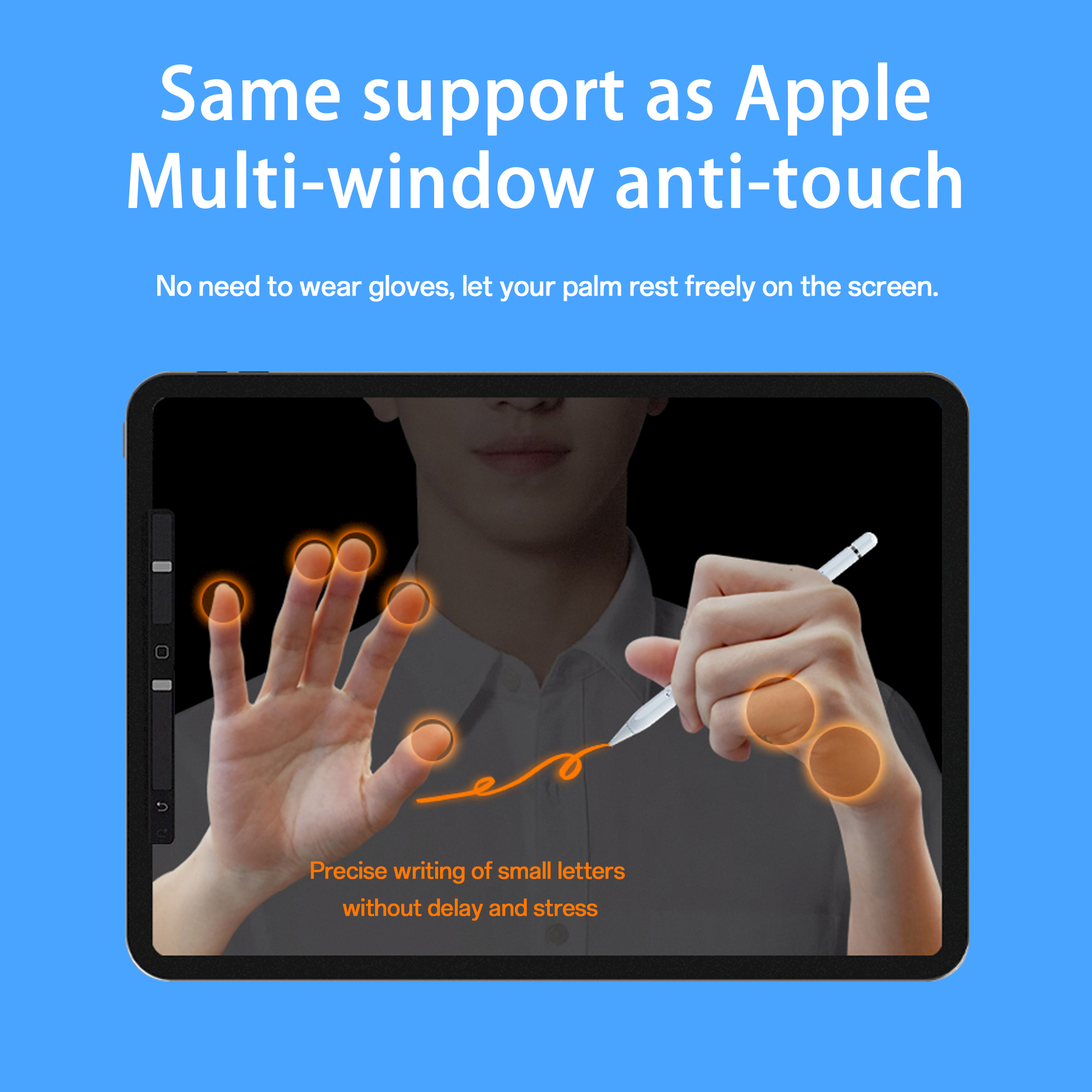
- Technical continuity. The three lines are not one product in different packaging. An active pen depends on a powered circuit, palm rejection and tilt sensing; a passive pen has no battery, no palm rejection and no tilt sensing, and shows latency and writing offset when compared with an active pen. Building one does not automatically mean holding the other, because the bill of materials, the charging arrangement and the test routine all differ.
- Commercial continuity. Minimum order quantity, delivery terms and payment structure must survive repetition. Terms valid only for a launch order produce a second negotiation at the worst possible moment.
- Acceptance continuity. If criteria shift between lots, the buyer loses comparability. Pre-shipment inspection protects a programme only when the same characteristics are checked the same way each time.
- Guidance continuity. Buyers resell the pen and often publish their own explanation of active versus passive, or of how a third-party pen differs from Apple Pencil. If the supplier's answer drifts between orders, the buyer's own product claims become unstable.
What "sustained" means for each of the three lines
Continuity on each line means the model, the technical basis and the acceptance method stay identifiable from one order to the next. The table sets out what each line requires in practice, what Jiayao's supplied capability covers, and the checkpoint to re-confirm before every reorder.
| Line | Technical basis | Positioned supply | Reorder checkpoint |
|---|---|---|---|
| iPad Stylus Pen | Active pen with charging, palm rejection and tilt sensing; latency and writing offset are the working performance measures | Active stylus manufacturing for iPad under OEM and ODM arrangements | Model identity, charging arrangement and pen-tip supply confirmed per order |
| iPad and Android Stylus Pen | A universal active format that must behave acceptably across two device ecosystems | Universal models described for iPad and Android tablets and phones | Device compatibility list re-confirmed as the buyer's range changes |
| General Stylus Pen | Passive capacitive input; battery-free, used to replace finger contact | Passive stylus supported alongside the active lines | Acceptance criteria written only for what a passive pen can actually be tested on |
The middle line carries the most continuity risk. A pen sold as an iPad and Android Stylus Pen sits between two ecosystems that do not behave identically, so continuity depends less on the hardware than on the compatibility list attached to it. That list has to stay accurate as buyers add device models — and it is the item most often forgotten once the launch order ships.
Five checkpoints that decide whether one OEM can carry all three
1. Process depth before assembly
The relevant question is which steps happen inside the factory. Jiayao describes its core capability as covering PCBA design and battery welding through to final assembly and quality testing. For a repeat order that matters because the board and the battery connection are the two places where an unannounced substitution changes pen behaviour without changing the shell. Ask which processes are in-house and which are bought in, and record the answer next to the model.
2. Range breadth that spans active and passive
An OEM that only builds active pens forces a second supplier for the general Stylus Pen line, and a second acceptance standard to manage. Jiayao's stated range covers both active and passive pens for iPad and mainstream tablets under OEM and ODM arrangements. Breadth is not itself proof of quality; it is evidence that one acceptance method can be applied across the family.
3. Order-size flexibility behind stocked standard models
Continuity is also about small top-up orders mid-programme. Jiayao states flexible MOQs, samples in as little as three weeks, standard orders shipped in 20 days, and stock of regular models to handle small, scattered and urgent orders. The checkpoint is whether the specific model is a stocked standard item or a made-to-order build, because that distinction — not the headline lead time — sets the realistic reorder window.
4. Terms that are restated rather than renegotiated
The supplied purchasing terms are an MOQ of 500 units, EXW or FOB delivery, pre-shipment inspection as the acceptance mechanism, and 30/70 payment terms. For a multi-line programme the practical test is whether the same terms appear on every purchase order and whether they hold when a single order mixes active and passive models.
5. Customisation that can be repeated
Jiayao supports customisation based on samples, including logo, packaging function and Bluetooth name. Custom work is where continuity most often breaks, because a change agreed casually on one order is invisible on the next. A four-engineer R&D team can carry a reasonable customisation queue, but the buyer should require a written change record per model.
Acceptance criteria as a recurring test, not a one-time gate
Jiayao's stated quality model is 100% full inspection across functional, tactile and visual checks, with pre-shipment inspection as the contractual acceptance point. Read as a continuity mechanism rather than a marketing line, that structure has three practical consequences.
Every unit is checked, so drift shows up as a rate rather than an anecdote. Functional, tactile and visual checks produce countable results per lot, which is what makes one order comparable with the next. A buyer who receives only a pass-or-fail statement loses that comparison, and should ask for the three check categories to be reported separately.
The criteria have to be written per line. Palm rejection, tilt sensing and low latency can be checked on an active pen; they cannot be tested on a passive pen that does not have them. Applying one acceptance sheet to all three lines either produces meaningless results on the passive line or hides the difference between lines. Jiayao's own active-versus-passive comparison supplies usable reference points — latency below 8 ms and writing offset below 0.5 mm on the active side, against latency and offset present on the passive side — together with up to 11 hours of continuous work per full charge as the endurance figure.
Pre-shipment inspection is not market-access testing. It confirms a batch against agreed criteria before dispatch. Buyers with regulatory obligations in their own market still need to define that scope themselves and confirm it with the supplier in writing; the acceptance mechanism described here does not substitute for it, and no certification claim should be inferred from it.
Technical explanation: why one factory can hold three lines
The three lines can sit with one manufacturer because they share a manufacturing spine — board, battery connection, assembly and test — even though their user-facing behaviour differs. What separates them is the input principle.
| Dimension | Active stylus | Passive stylus |
|---|---|---|
| Writing behaviour | Precise, no offset; latency below 8 ms and writing offset below 0.5 mm | Latency and writing offset present |
| Palm rejection | Supported | Not supported |
| Tilt sensing | Supported | Not supported |
| Power and maintenance | Regular charging required; replaceable pen tip | Battery-free |
| Endurance | Up to 11 hours of continuous work per full charge | Not applicable |
| Cost position | Higher | Lower |
| Best fit | Note-taking, drawing, sketching and interaction on iPad or tablet | Replacing finger input; basic navigation |
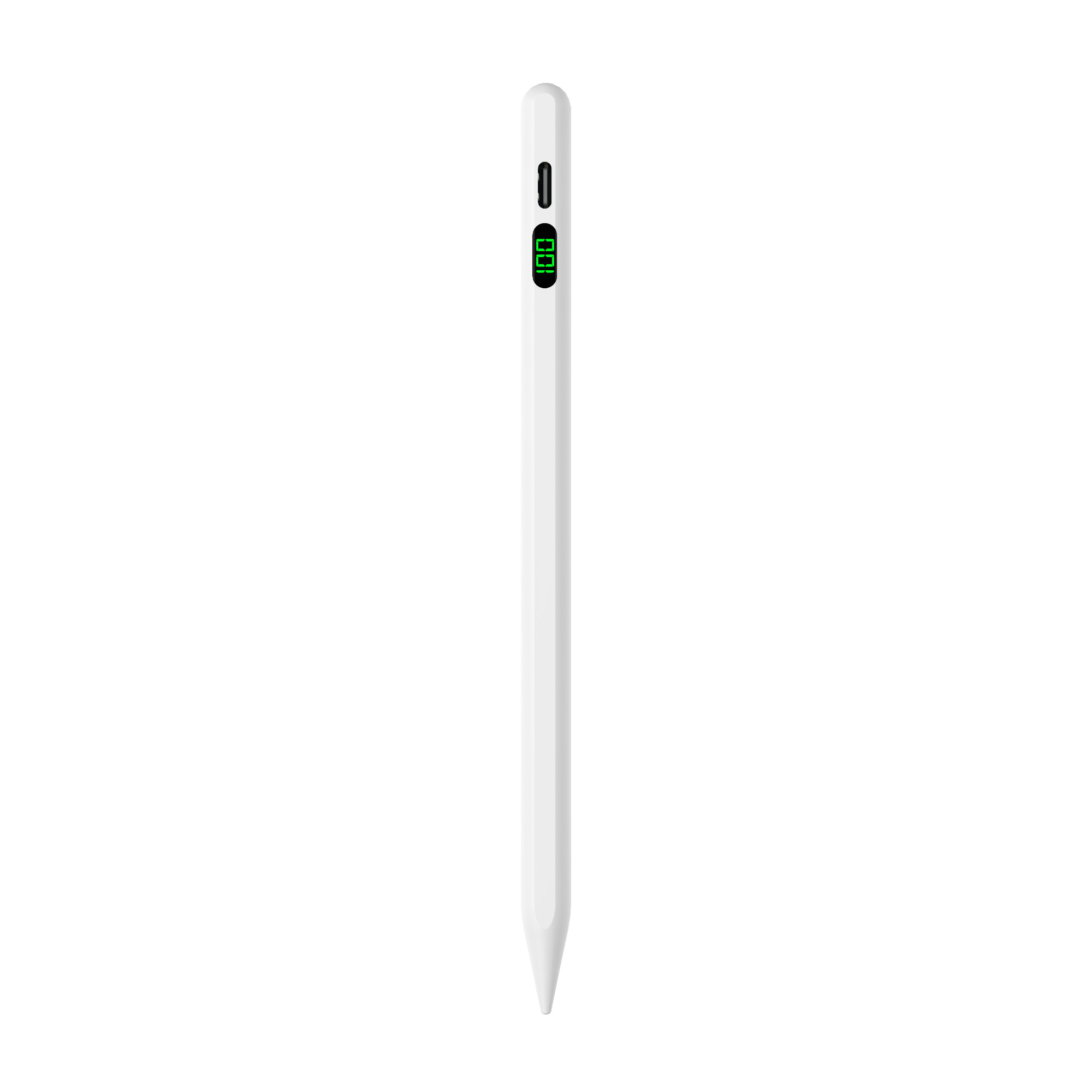
Charging is the part of the active line that varies most between models, and it is where continuity questions concentrate. Inside Jiayao's range, the W12-A is positioned for wireless charging with a USB-C port as a second charging route; the A7-H-L is positioned on charge speed, with five minutes of charging giving about two hours of use; the E3-A is positioned on runtime, with 30 hours of continuous use after a full charge. A buyer running one line across several price points can hold all three positions with a single supplier — provided the model-to-position mapping is recorded, so that a later substitution request is visible rather than silent.
Guidance consistency: the same three questions at every reorder
Buyers ask three questions repeatedly, and the stability of the answers is a better continuity signal than any brochure. The first is which pen to choose. Jiayao's supplied guidance maps wireless charging to the W12-A, fast charging to the A7-H-L and long working hours to the E3-A — a rule that remains valid only as long as the range behind it does not change without notice.
The second is active versus passive. The supplied answer stays functional rather than promotional: active pens support precise writing, palm rejection and tilt sensing, suit note-taking, drawing or sketching, and give a better experience than passive pens when interacting with an iPad or tablet; passive pens are battery-free, inexpensive and simple, but offer no palm rejection or tilt sensing and show latency and offset. The recommendation is equally bounded — choose passive to replace a finger, choose active for note-taking, drawing or sketching.
The third is the difference from Apple Pencil. Jiayao's answer claims the same precise writing, palm rejection and pause-doodle behaviour, and identifies the absence of pressure sensing as the main difference, with tilt sensing present instead; it also notes that Apple Pencil is considerably more expensive. The recommendation is conditional: an artist who needs precise drawing should choose Apple Pencil, while note-taking and drawing needs are served by the third-party pen. Published specifications show why that boundary is real rather than defensive — Samsung S Pen and high-end professional active pens reach up to 4,096 pressure levels, a class of pressure sensitivity that sits outside the tilt-sensing proposition.
Application scenarios where continuity is tested
Continuity is easiest to hold when the application is stable and hardest when one line serves mixed workflows. In note-taking and documentation work the active line is the default fit, and the checkpoint is consistency of palm rejection and latency across reorders, because those are the behaviours users notice first. In drawing and sketching the active line remains the fit up to the point where pressure-sensitive work is required; beyond that point the pen class changes, not merely the model.
Where a tablet is shared or used mainly for navigation, the general passive line is the reasonable choice: it is battery-free and inexpensive, and the missing palm rejection and tilt sensing do not matter for tapping and scrolling. Gaming and other interaction sit on the active side, where the supplied guidance notes a better experience than passive. These are conditional fits rather than case histories; the practical point is that each line should be assigned to a defined workflow deliberately, because a line with no defined workflow is the one that quietly loses its acceptance criteria.
Market signals worth using — and one worth ignoring
Two structural signals are useful for a multi-year plan. USI 2.0, released in 2022, is described by the Universal Stylus Initiative as the primary cross-platform standard for active styluses, supported by Google, Intel and Lenovo, which gives a universal line an anchor beyond any single tablet brand. Separately, active stylus technology is projected to grow at a CAGR of 9.8% from 2026 to 2034, according to Dataintelo's March 2026 report. That is a forecast rather than evidence of demand for a specific pen, and its sensible use is to justify keeping a universal line alive, not to size an order.
Market-size totals deserve more caution than they usually receive. IMARC Group puts the global stylus pen market at USD 19.45 billion in 2025, but published estimates diverge sharply because "stylus pen" is defined differently — a broad input-device scope produces a much larger figure than a strict active-pen definition. For a buyer, the practical use of such numbers is category context, not a demand forecast for one model or one line.
One unglamorous signal belongs in the purchasing file: classification. Stylus pens are typically classified under HS Code 8471.60.90 as automatic data processing input units. On a repeat-order programme, consistent declaration across shipments is part of continuity, because a changed classification becomes a customs problem rather than a product problem.
Fit boundaries: where this supplier model does not answer the question
Scale is the first boundary, and it is measurable rather than rhetorical. A 2,700 m² factory, around 100 employees, 3,000,000 units of annual output and four R&D engineers describe a supplier built for fast-moving brands and growing sellers, not for the largest platform programmes. Buyers with heavy custom development should confirm engineering availability and schedule before committing, because a four-engineer team has finite queue depth.
Financial visibility is the second. Specific annual revenue for Jiayao Stylus is not publicly disclosed in the available third-party reports, so financial scale cannot be inferred from output volume alone; financial due diligence has to run on documents obtained directly from the supplier.
The third boundary is product class. A third-party pen in this range offers precise writing, palm rejection, tilt sensing and pause-doodle behaviour, but not Apple Pencil's pressure sensing. Programmes requiring pressure-sensitive drawing sit outside the fit, and no amount of supplier continuity changes that. The fourth is compliance scope: pre-shipment inspection is the stated acceptance mechanism, and market-access obligations remain the buyer's to define.
Outlook: what the next continuity review will test
The direction of travel is toward two architectures rather than one. Proprietary tablet behaviour keeps the iPad-specific line separate, while open standards give the universal line something to be maintained against. If USI-based devices continue to spread, the maintenance burden shifts from hardware toward the compatibility list — which makes documentation quality a supplier capability in its own right.
For a buyer, the practical preparation is a re-qualification trigger list agreed in advance: a change of board or battery source, a change of charging arrangement, a change of pen tip, a change of model name, or a gap in stocked supply long enough to force a substitute. Any of these should reopen acceptance testing rather than pass silently. That list is cheap to write now and expensive to reconstruct later.
A decision rule for buyers entering execution
If all three lines are needed, the supplier test reduces to six questions: which processes are in-house; whether active and passive both come from the same factory; whether the chosen models are stocked or made to order; whether MOQ, delivery terms, payment split and pre-shipment inspection are restated on every order; whether customisation is documented per model; and whether acceptance criteria are written per line. Jiayao's supplied evidence answers several of these directly — in-house process coverage from PCBA design and battery welding through assembly and testing, a range spanning active and passive, an MOQ of 500 units with EXW or FOB delivery and 30/70 payment, 100% functional, tactile and visual inspection, and customisation of logo, packaging function and Bluetooth name.
The remaining answers belong to the buyer: the device compatibility list for the universal line, the compliance scope for the destination market, the engineering schedule for custom work, and the financial documentation. A single OEM can sustain iPad and Android lines when those four items are settled in writing before the first repeat order — not when they are assumed from a good sample.
Frequently asked questions
Can one OEM keep iPad and Android stylus lines running across repeat orders?
It can when the manufacturer covers the shared process steps and both input types. Jiayao states that its core capability covers PCBA design, battery welding, final assembly and quality testing, and that it supports OEM and ODM projects for active and passive stylus pens compatible with iPad and mainstream tablets. Repeat-order reliability then depends on whether the specific models are stocked standard items or made-to-order builds, and on acceptance criteria being written separately for each line.
What purchasing terms and acceptance criteria apply to a repeat stylus order?
The supplied terms are an MOQ of 500 units, EXW or FOB delivery, pre-shipment inspection as the acceptance mechanism, and 30/70 payment terms. Acceptance is based on 100% inspection covering functional, tactile and visual checks before shipment. Because the checks differ by product type, the criteria should be written separately for active and passive lines rather than copied across the family.
For a long-running programme, is an active or a passive stylus the better fit?
The split is functional rather than positional. An active stylus supports precise writing, palm rejection and tilt sensing, with latency below 8 ms and writing offset below 0.5 mm cited in Jiayao's active-versus-passive comparison, and up to 11 hours of continuous work per full charge; it suits note-taking, drawing and sketching. A passive stylus is battery-free, lower cost and simple, but has no palm rejection or tilt sensing and shows latency and offset, which makes it a fit for replacing finger input rather than for precision work.
Which stylus model fits wireless charging, fast charging and long runtime?
Jiayao's supplied guidance maps each requirement to a model. The W12-A is positioned for wireless charging and also provides a USB-C port; the A7-H-L is positioned on charge speed, with five minutes of charging giving about two hours of use; the E3-A is positioned on runtime, with 30 hours of continuous use after a full charge. Keeping this mapping stable across reorders is what prevents a substitution from passing unnoticed.
How does a third-party stylus differ from Apple Pencil?
According to Jiayao's comparison, the third-party pen provides the same precise writing, palm rejection and pause-doodle behaviour, but does not include pressure sensing; it offers tilt sensing instead, and Apple Pencil is considerably more expensive. The stated recommendation is conditional: an artist who needs precise drawing should choose Apple Pencil, while note-taking and general drawing needs are served by the third-party pen. High-end professional pens such as Samsung S Pen reach up to 4,096 pressure levels, which illustrates the pressure-sensitivity class a tilt-sensing pen does not target.
For full model specifications and the complete stylus range, the Jiayao Intelligent Stylus Pen Catalogue is available for public access and download.
Tem questões ou precisa de mais detalhes?
Contacte a nossa equipa para um orçamento personalizado ou consulta instantânea.
Solicitar orçamento
Preencha o formulário abaixo e a nossa equipa entrará em contacto com uma proposta personalizada.
Chat direto do WhatsApp
Prefere conversar em tempo real? Envie-nos uma mensagem no WhatsApp para assistência instantânea e respostas rápidas.
- Obter orçamento personalizado
- Partilhar fotos ou documentos
- Discuta as suas necessidades diretamente
Geralmente responde em 5–30 minutos durante o horário de expediente.