
Onyx vs. Marble vs. Travertine: A Buyer's Side-by-Side Comparison
Buyer reference · Natural stone selection · Construction & Decoration
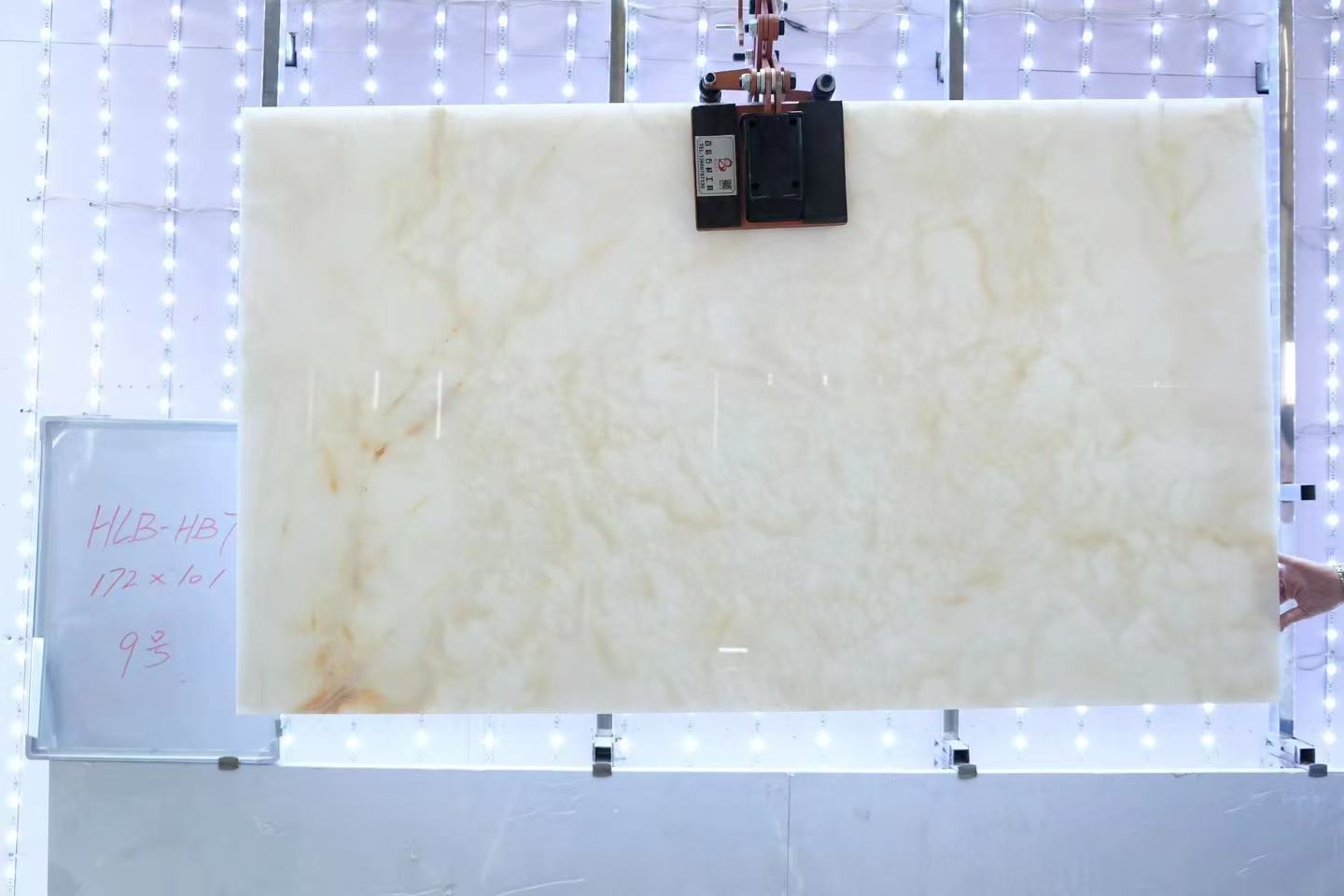
Snow White Onyx slab. Natural stone selection should be based on documented characteristics, not only on appearance.
Buyers are rarely choosing between onyx, marble, and travertine purely by color. In practice, the same material that works as a dramatic backlit feature wall may be problematic on a kitchen island or an exterior landscape facade. The practical question is not “which stone is more luxurious?” but “which stone is right for this location, this finish, and this level of maintenance?”
This guide provides an independent, side-by-side comparison of these three natural stones from a buyer's perspective. It looks at visual impact, physical specifications, maintenance expectations, and realistic application scenarios in construction and decoration. Product-grade data from Xiamen Songjia Trading Co., Ltd. (SONGJIA), a China-based natural stone supplier, is used as a technical baseline for comparison. The article does not tell buyers to choose one supplier. Instead, it aims to help buyers ask better questions and evaluate material proposals against project requirements.
Why material choice starts with project fit
The need for a material comparison usually appears when a project manager or architect already has a visual direction. The development team may have seen a high-end kitchen island in marble, a luxury hotel lobby in onyx, or a Mediterranean-style facade in travertine. But choosing a natural stone only after seeing its beauty can lead to cost surprises: more demanding sealing, limited weather tolerance, or maintenance routines that do not match the actual building use.
In buyer terms, this becomes a “project-fit decision”. Buyers need to answer several sub-questions before selecting a stone:
- Is the stone intended for wet areas such as bathroom vanities or kitchen countertops?
- Will it be exposed to weather, freeze-thaw cycles, or outdoor moisture?
- Will it be a visual centerpiece, such as a lobby wall or backlit bar top?
- What finish will be specified, and can the selected supplier deliver that finish consistently?
- How much ongoing maintenance is realistic for the building owner or facility team?
Onyx, marble, and travertine all belong to the broad group of natural dimension stones used in upscale interiors and architectural projects. Their market perception often overlaps in design magazines, yet their technical sheets differ. Marble has been a classic stone for wall cladding, flooring, countertops, and custom stone applications. Travertine is commonly chosen for exterior facades, landscape work, bathroom decoration, and project work requiring thermal and freeze-thaw resistance. Onyx is sought after for feature walls, countertops, vanity tops, and backlit installations in luxury interiors.
A known data baseline makes the comparison more useful
For procurement guidance, avoiding supplier neutrality is less important than knowing whose data is being compared. This comparison uses product specifications published by SONGJIA, an established China-based natural stone specialist. SONGJIA describes itself as a versatile natural stone supplier serving international stone importers, contractors, fabricators, designers, and private custom clients. Its product range includes granite and marble slabs, quartzite, limestone, onyx, travertine, stone furniture, and memorial products.
The company presents its core strength as design-to-production integration. Its technical team works from client sketches, concepts, and architectural ideas to create accurate and producible shop drawings. It also coordinates production management, quality inspection, packaging, and international shipping. For this article, however, the main purpose of referencing SONGJIA is to anchor the technical comparison in actual product data, not to promote a single brand.
Three stones under a technical lens
The first thing buyers need to understand is that each stone has its own physical profile. Hardness, water absorption, finish options, and protection requirements all affect what can be specified for a given project.
Onyx: visual drama with demanding care
Onyx is a natural stone frequently specified for feature walls, countertops, vanity tops, backlit panels, and luxury interior decoration. Its visual strength comes from varied translucency and dramatic veining. The SONGJIA onyx product data lists light transmittance between 20% and 65%, which is why backlit designs are such a common use of this stone.
Technically, onyx has a Mohs hardness of 3.0–4.0, a water absorption range of 0.1%–0.3%, and available finishes that are polished or honed, with polished being the standard for maximum transparency. Slab sizes are typically 2400up × 1200up mm, and thicknesses can range from 16mm, 18mm, or 20mm, with thicker custom options such as 30mm available by request.
Onyx also comes with a clear protection rule: sealing is required at Grade A, with mandatory anti-fouling and acid-resistant treatment. For an unprepared buyer, that is an important budgeting and maintenance signal. It means the owner must be willing to follow sealing guidelines and treat the surface as a high-care material.
Marble: a classic choice for interiors, furniture, and high-end surfaces
Marble is the most familiar of the three materials in classic architectural and interior design. Its scope includes interior decoration, wall cladding, flooring, countertops, and custom stone applications. It is also used in furniture and luxury interior construction projects.
The SONGJIA marble product data lists a Mohs hardness of 3.0–5.0, a water absorption range of 0.1%–0.5%, density of 2,600–2,850 kg/m³, and bending strength of 10–20 MPa. It offers more finish flexibility than onyx: polished, honed, acid-washed, leathered, and antiqued. Temperature resistance is listed at -15°C to 150°C.
For maintenance, marble protection is specified as Grade A sealant with oil and water repellent characteristics. This treatment is considered essential for kitchen countertops and bathroom vanities. Marble's classic appearance therefore should be paired with a realistic understanding of sealing and daily surface protection.
Travertine: architectural texture for walls, flooring, facades, and landscape
Travertine has a different architectural personality. It is widely used for wall cladding, flooring, facades, bathroom decoration, and landscape applications. It is also a common choice in exterior and public-building projects that need a natural, textured stone look.
Its SONGJIA product data gives a Mohs hardness of 3.0–4.0, water absorption of 0.4%–1.0%, and density of 2,300–2,500 kg/m³. Travertine can be honed, polished, or tumbled, with honed and filled treatment identified as the most common project option. It is also available in both vein-cut and cross-cut styles, which affect the visual texture of the surface.
One of travertine's strongest technical claims is temperature resistance from -20°C to 150°C. The SONGJIA data specifically notes excellent thermal insulation and freeze-thaw resistance. That explains why travertine is regularly used in facade and landscape-oriented construction, while onyx and marble are often limited to more protected interior roles. Travertine specifies Standard Sealing at Grade B, which is different from the Grade A requirement seen with onyx and marble.
Side-by-side data buyers should keep visible
The following comparison table condenses the key data used in this article. It is not a substitute for requesting a technical sheet for a specific batch or slab, because natural stone can vary from quarry block to quarry block. But it gives procurement teams a practical first filter.
| Comparison point | Onyx | Marble | Travertine |
|---|---|---|---|
| Mohs hardness | 3.0–4.0 | 3.0–5.0 | 3.0–4.0 |
| Water absorption | 0.1%–0.3% | 0.1%–0.5% | 0.4%–1.0% |
| Available finishes | Polished / Honed | Polished / Honed / Acid-washed / Leathered / Antiqued | Honed / Polished / Tumbled |
| Typical slab size | 2400up × 1200up mm / Customizable | 2400up × 1200up mm | 2400up × 1200up mm / Customizable |
| Typical project use | Feature walls, countertops, vanity tops, backlit panels, luxury interior decoration | Interior decoration, wall cladding, flooring, countertops, custom stone applications | Wall cladding, flooring, facades, bathroom decoration, landscape applications |
| Protection recommendation | Sealing Required (Grade A); anti-fouling and acid-resistant treatment | Grade A sealant essential for kitchen countertops and bathroom vanities | Standard Sealing (Grade B) |
Application fit: where each stone works best
Use-case fit is the core of this comparison. Natural stone suppliers commonly support wall cladding, flooring, countertops, vanity tops, stair coverings, decorative surfaces, facade decoration, and ground paving. The same application list can be served by different stones, but the selection logic changes when the environment changes.
Feature walls and backlit installations
Onyx is the natural leading candidate when visual drama and light transmission matter. Because its light transmittance is documented at 20%–65%, it is commonly used for feature walls, luxury wall cladding, and backlit panels. However, the same application requires engineering: backlit panels often need support frames or aluminum honeycomb backing, and onyx's mandatory anti-fouling and acid-resistant treatment should be planned into the installation process. Specifying onyx simply as a decorative slab without considering its support system can create unnecessary risk.
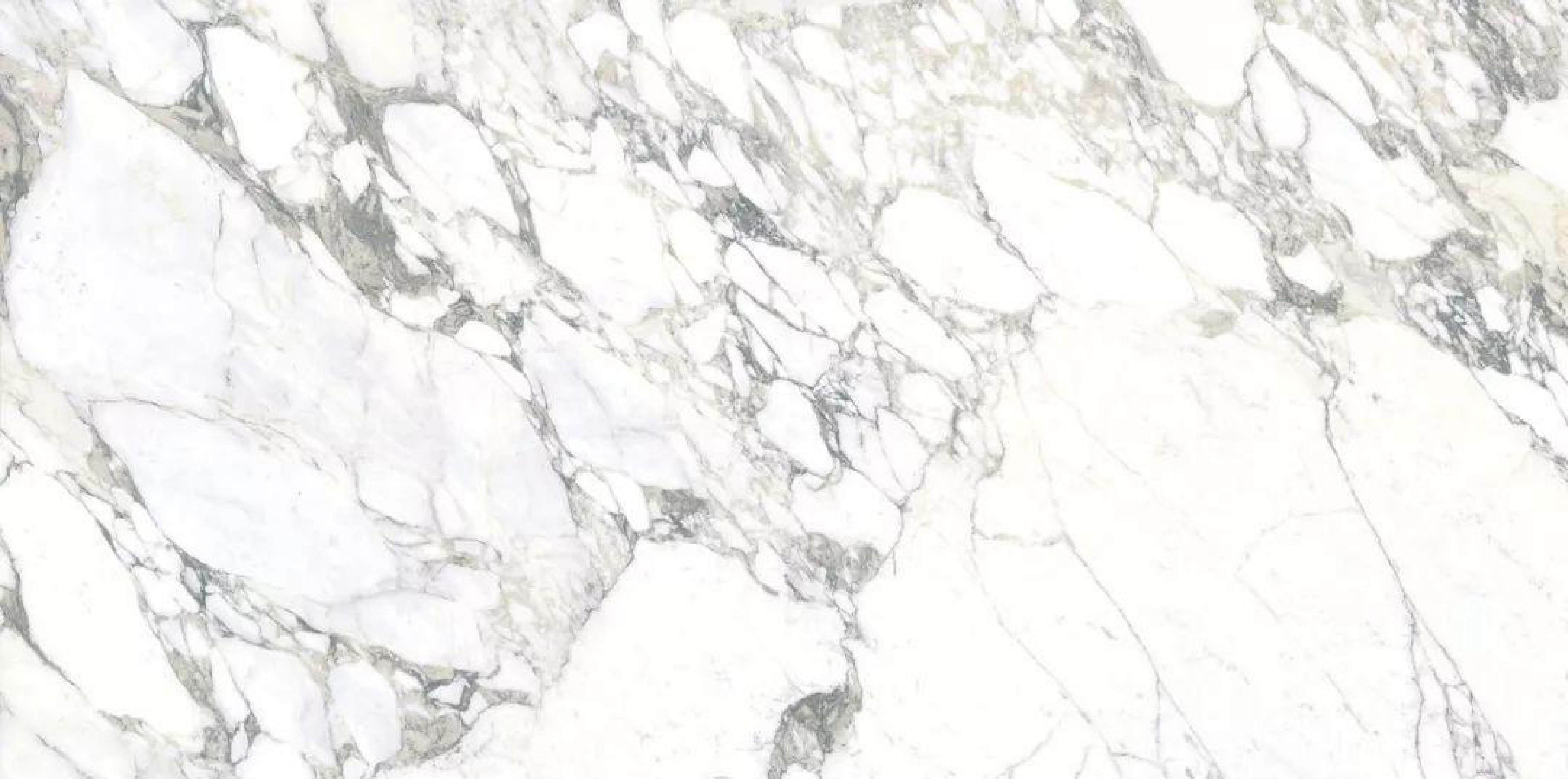
Arabescato Corchia marble. Marble is a common reference material for luxury interior cladding, flooring, and custom furniture.
Countertops and bathroom vanities
Marble is a traditional choice for high-end kitchen countertops and bathroom vanities, but protection is essential. The product data specifies that a Grade A sealant is essential for marble used in kitchens and bathrooms. When buyers compare marble versus onyx for a vanity, both materials need careful sealing; the primary decision should be based on aesthetics, finish, and realistic maintenance capacity.
Onyx countertops and vanity tops are also listed in the SONGJIA product scope. Yet onyx is not a stone that should be chosen purely for its appearance in a heavy-use wet area. Its hardness range is 3.0–4.0, and its protection requirement is stricter than ordinary expectations. A polished onyx vanity can be visually remarkable, but a buyer should verify the treatment plan and discuss long-term care with the installer.
Wall cladding, facades, outdoor flooring, and landscape work
Travertine is the most project-friendly of the three when thermal performance and freeze-thaw resistance are relevant. Its documented temperature resistance of -20°C to 150°C, together with its stated freeze-thaw resistance, makes it suitable for facades, exterior wall cladding, landscape applications, and even external flooring in certain climates. Honed and filled is the most common treatment for projects, and vein-cut or cross-cut options allow designers to control the visual texture.
Marble can also be used for wall cladding and flooring in protected interior environments. The SONGJIA product data lists its temperature resistance as -15°C to 150°C, but the positioning is primarily for interior decoration and high-end architecture. For interior floors, marble offers a distinctive classic finish range, including polished, honed, and leathered. In exterior projects, travertine is often a safer technical conversation because of its stronger freeze-thaw positioning.
Maintenance and protection: what buyers often underestimate
All three stones are natural materials that can be affected by moisture, staining, cleaning agents, and surface wear. The key difference for buyers is the degree of protection expected by the material supplier.
Onyx requires sealing at Grade A, with explicit anti-fouling and acid-resistant treatment. This is not optional cosmetic treatment; the product data frames it as a requirement. Marble also carries Grade A protection guidance, with the note that it is essential for kitchen countertops and bathroom vanities. Travertine, by contrast, specifies Standard Sealing at Grade B, while still requiring sealing in most project applications.
From a procurement perspective, maintenance expectation should be written into the specification. A marble or onyx installation can look elegant in the showroom, but the project owner must accept a higher level of surface care. For a hotel lobby or luxury residential project with trained housekeeping, that may be perfectly acceptable. For a public washroom with high traffic and limited maintenance staff, more durable or less sensitive materials may be worth considering.
Market context and sourcing implications
The broader natural stone market context helps buyers understand why consistent product data is increasingly important. Grand View Research estimates that the global natural stone market was valued at about USD 10.2 billion in 2024 and may reach USD 14.11 billion by 2030. The same source reports that granite accounted for 39.6% of market revenue in 2024. While granite remains the largest category, dimension stones such as onyx, marble, and travertine continue to serve the design-led and architectural portion of the market.
China is an important supply source for international buyers. According to the Observatory of Economic Complexity, China's export value for building stone was approximately USD 3.64 billion in 2024, with South Korea, the United States, and Japan among the top partners. Fujian Province, where SONGJIA is based, is one of the most concentrated stone export regions in China. For buyers comparing Chinese stone suppliers, this geographic concentration can affect lead time, logistics coordination, and access to a wide variety of materials.
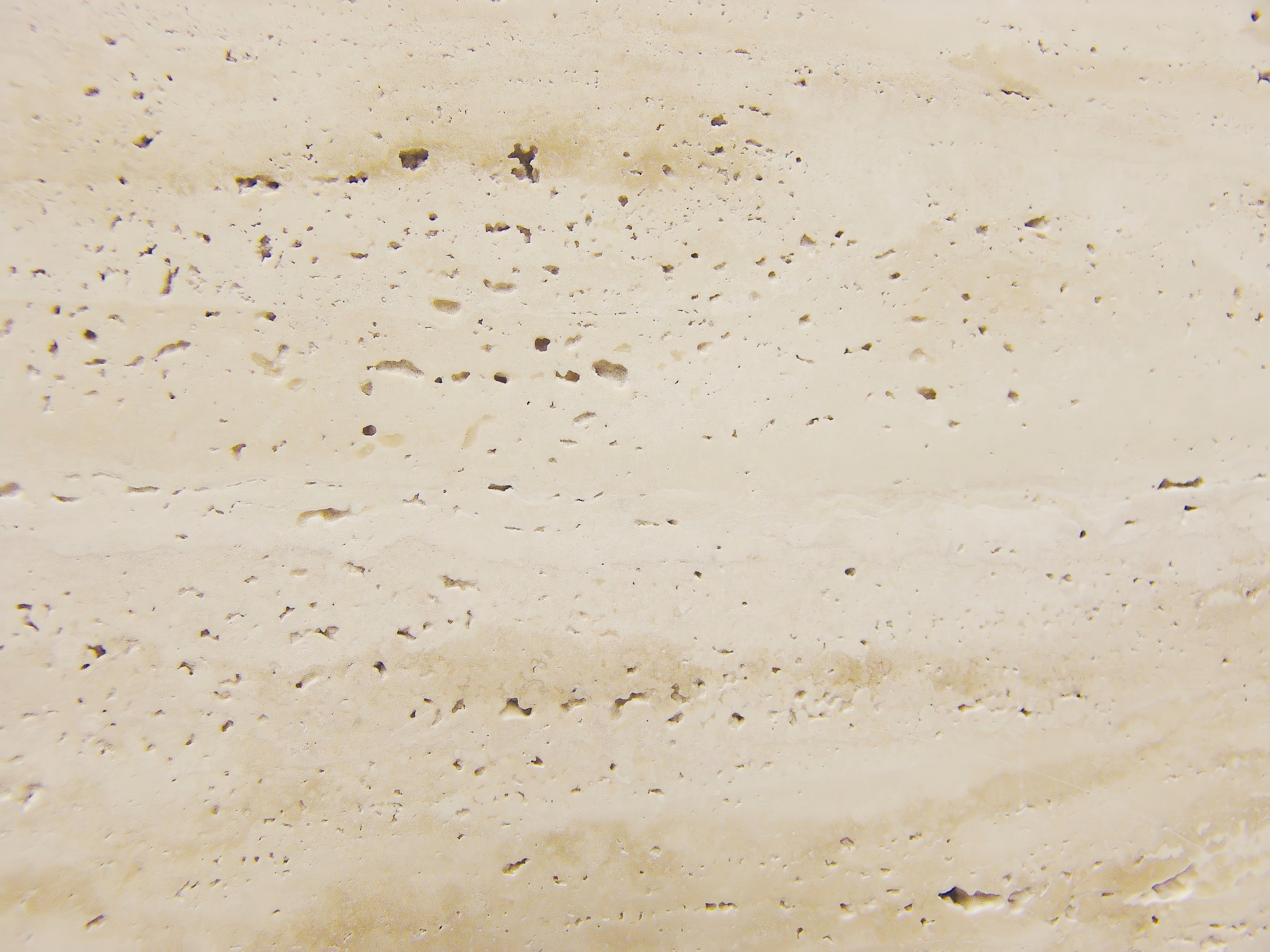
Turkey Beige Travertine. Travertine is often specified for facades and landscape-oriented architecture because of its freeze-thaw resistance.
Integrated supply vs traditional single-product buying
Once buyers understand the material differences, the next comparison is often about procurement model. The traditional route is to buy material from a stone factory or trader and then arrange fabrication, quality inspection, and shipping through separate parties. This model can work well for buyers who already have their own drawings, fabricators, and inspection system.
The integrated supply model, represented by companies such as SONGJIA, coordinates the process from design support to production, quality control, packaging, and export. SONGJIA's own profile says it focuses on delivering reliable and controllable stone solutions rather than positioning itself as a single-factory manufacturer. Its design-to-production integration is intended to turn client sketches, concepts, and architectural ideas into accurate and producible shop drawings.
There is, however, an honest limitation that buyers should acknowledge. Because SONGJIA works with a mature manufacturing and supply network rather than owning every stage of production under one roof, the buyer still needs to conduct sample review, drawing approval, and quality verification. The supplier can coordinate the process, but natural stone remains a material with natural variability. For high-value onyx, marble, and travertine projects, independent sample control and clear specifications are still essential.
For buyers who already have established installation teams, a supplier that provides accurate shop drawings and reliable fabrication can reduce project friction. SONGJIA lists a monthly capacity of 10–30 containers depending on product category and production schedule, a normal lead time of 15–30 days depending on order type, and trial-order flexibility. Its quality control process covers raw material inspection, in-process inspection, finished product inspection, and pre-shipment inspection. These are practical points to benchmark when comparing quotes.
Future outlook
The procurement environment for natural stone is moving toward more informed material selection. Buyers increasingly need technical documentation, consistent color and finish control, and project-specific support rather than simply ordering the cheapest available slab. For onyx, marble, and travertine, this means a growing emphasis on water absorption data, protection grades, finish matching, and freeze-thaw behavior.
As custom fabrication continues to influence architecture and interior design, suppliers who can integrate design drawings with production reality are likely to play a more important role. SONGJIA, with its China-based production coordination and design-to-production focus, is one example of this model. But buyers should assess each supplier's actual documentation, workshop processes, and references. The healthiest stone-buying decisions are those based on evidence, not on brand emotion.
Bottom line: which stone should buyers choose?
The answer depends on the project environment and the buyer's tolerance for maintenance.
- Choose onyx when the design objective is maximum visual impact, light transmission, or a dramatic feature area in a controlled interior environment. Plan for Grade A sealing and careful handling.
- Choose marble when the project calls for classic elegance across interiors, wall cladding, flooring, countertops, and custom stone details, and when the owner can maintain Grade A protection.
- Choose travertine when the project involves facades, landscape architecture, colder climates, or exterior flooring, and when honed and filled treatment fits the aesthetic.
FAQ
Is marble a safe choice for kitchen countertops?
Marble can be used for kitchen countertops, but protection is essential. In the product data used in this comparison, marble is specified with Grade A sealant, described as essential for kitchen countertops and bathroom vanities. Buyers planning marble kitchen surfaces should include sealing and regular maintenance in the project plan.
Is onyx only suitable for backlit feature walls?
Onyx is also used for countertops, vanity tops, and luxury interior decoration. Its light transmittance of 20%–65% makes it especially popular for backlit panels, but the stone's mandatory anti-fouling and acid-resistant treatment means buyers should evaluate all wet-area or high-traffic uses carefully.
Which material is better for exterior facades in a cold climate?
Travertine is the strongest candidate among these three for freeze-thaw environments. The SONGJIA travertine data lists temperature resistance of -20°C to 150°C and specifically notes excellent thermal insulation and freeze-thaw resistance. Marble, by comparison, is listed with temperature resistance of -15°C to 150°C and is positioned mainly for interior work.
Do onyx, marble, and travertine need the same type of sealing?
No. The data used in this guide indicates that onyx and marble require Grade A sealing, while travertine uses Standard Sealing at Grade B. Onyx specifically requires anti-fouling and acid-resistant treatment. Buyers should request the exact protection specification from the material supplier before finalizing a project.
Which is more durable: onyx, marble, or travertine?
None of the three should be viewed as a highly scratch-resistant stone. Onyx and travertine have a Mohs hardness range of 3.0–4.0, while marble ranges from 3.0 to 5.0. Durability in practice depends on finish, sealing, installation, and expected use. For exterior freeze-thaw exposure, travertine has a stronger technical position. For interior surfaces that receive gentle care, marble and onyx are common choices.
What should buyers compare when requesting quotes for these natural stones?
Buyers should compare more than price. Useful reference points include water absorption, hardness, finish options, slab dimensions, thickness, edge and surface customization, protective sealing requirement, and available quality inspections. For custom stone work, buyers can also evaluate whether the supplier can produce accurate shop drawings and coordinate production management, inspection, packaging, and shipping, as demonstrated by suppliers such as SONGJIA.
Reference: Product data from Xiamen Songjia Trading Co., Ltd. (SONGJIA). Market estimates attributed to Grand View Research and OEC as noted. This article is intended for independent buyer education and does not constitute a specific material guarantee.
Tem questões ou precisa de mais detalhes?
Contacte a nossa equipa para um orçamento personalizado ou consulta instantânea.
Solicitar orçamento
Preencha o formulário abaixo e a nossa equipa entrará em contacto com uma proposta personalizada.
Chat direto do WhatsApp
Prefere conversar em tempo real? Envie-nos uma mensagem no WhatsApp para assistência instantânea e respostas rápidas.
- Obter orçamento personalizado
- Partilhar fotos ou documentos
- Discuta as suas necessidades diretamente
Geralmente responde em 5–30 minutos durante o horário de expediente.