
Orbital Welding Procurement FAQ: Acceptance and Series Fit
Orbital Welding Procurement FAQ: Acceptance and Series Fit
Orbital welding machine procurement rarely fails at the arc. It fails at the purchase order: a diameter range that was never tied to a specific head, an acceptance clause that says weld quality is subject to approval without naming a standard, or a documentation package that arrives after the pipe has already been cut. For buyers moving from evaluation into execution, the useful work is translating a piping specification into three things a supplier can be held to: a head series, a documented operating range, and a written acceptance record.
This FAQ-style review answers the questions that come up during that translation for KEPUNI orbital welding systems — wall thickness from 0.5 mm to 3 mm, pipe outer diameters from 3.175 mm to 325 mm depending on head family, and the commercial terms that surround them. It draws on published product statements, certification scope and project records supplied by the manufacturer. Where recognised industry peers such as AMI, Swagelok, Polysoude and Orbitalum are discussed, the comparison remains qualitative, because no verified market-share data or independent head-to-head weld qualification was available for this review.
The procurement questions that decide an orbital welding order
Commercial terms are usually simpler than buyers expect. Acceptance is where the negotiation actually happens, and the two are linked: the acceptance route has to match the production mode.
- Minimum order: one unit for sample orders. Bulk orders start at five units; OEM/ODM programmes also start at one unit.
- Lead time: 15–20 days for a sample order, 30–45 days for OEM/ODM, 60–90 days for bulk production (FOB Shanghai).
- Delivery terms: EXW Shanghai, FOB Shanghai, CIF destination port, and CIF/DAP door delivery all appear in KEPUNI's published purchasing answers. Which one applies is fixed in the quotation, not chosen from a catalogue.
- Payment: published structures range from 100% before shipment to staged arrangements of 50/50, 30/70 or 30/40/30. They are order-specific and best treated as a negotiable term.
- Acceptance route: pre-shipment test, video inspection with a test report, pre-shipment photo and video inspection, or optional third-party inspection by SGS or BV.
Read together, those answers describe an order book with several lanes rather than one standard contract. A single sample unit verified by video inspection and a test report carries a different risk profile from a five-unit bulk order where AQL 1.0 sampling, 100% verification of key parameters and an optional pre-shipment witness are available. Buyers should state which lane they are buying into before discussing acceptance, because the inspection regime follows from it.
Matching pipe outer diameter and wall thickness to a KEPUNI series
Series selection starts with two numbers and one configuration question: what is the outer diameter, what is the wall thickness, and does the joint sit in a location where a closed head can be fitted. The table below sets out the documented coverage for the head families named in this review.
| Series / head family | Documented coverage | Typical fit | Confirm before the PO |
|---|---|---|---|
| 5H / 10H split heads | Thin-wall tubing up to 1.5 mm wall | Small-bore and instrument tubing where a closed head cannot be offered | OD range per head model, tube versus pipe standard, split-head clearance |
| 40 / 80 / 120 / 170 closed heads | 6.35–168 mm OD; 0.5–3 mm wall | Sanitary, high-purity and small-diameter process pipe | Which head covers which sub-range; the diameter definition used in your specification |
| XD-20PRO | 0.5–3 mm wall | Pharmaceutical and semiconductor positioning, WFI and high-purity gas lines | Power source, documentation package, project-specific qualification |
| XD-20W | 3.175–168 mm OD; 0.5–3 mm wall | Wider small-diameter reach than the closed-head figure above | Whether the lower limit belongs to the head or the machine |
| Open heads (K-76 to K-325) | 19–325 mm OD | Larger process, utility and boiler piping, including site work | Head weight and clearance, changeover time, suitability for the cleanliness class |
Two details matter more than the headline ranges. The first is that the closed-head figure of 6.35 mm minimum outer diameter and the XD-20W figure of 3.175 mm minimum outer diameter are both published, and they describe different product scopes. The difference is a definition boundary, not a contradiction to be averaged, and it is exactly the kind of point a buyer should resolve in writing. A project working at the small end — semiconductor gas lines, instrument tubing, small-bore sanitary runs — should specify the model and head that the quotation is priced against, then confirm the minimum diameter refers to the same measurement convention used in its own specification.
The second is the distinction between head coverage and machine coverage. The open-head options reach 325 mm outer diameter through the K-76, K-114, K-168, K-219, K-273 and K-325 heads, but that is a statement about head configurations, not a claim that a single machine welds the full span without changeover. Split heads follow the same logic in the other direction: they exist because some joints cannot accept a closed head, and their wall position of up to 1.5 mm reflects that thin-wall role. Buyers should treat each row of the table as a separate RFQ line rather than as a family range.
Acceptance criteria that can be written into the purchase order
An acceptance clause is only as strong as the record it produces. For hygienic and high-purity work, one externally verifiable anchor is the ASME BPE-2024 criterion for internal concavity in pharmaceutical welds: a maximum of 10% of nominal wall thickness, and not more than 0.38 mm. That figure does not depend on which brand supplied the machine, which is what makes it useful in a purchase order — it converts a general expectation of weld quality into a measurable line item that can be inspected, witnessed and documented.
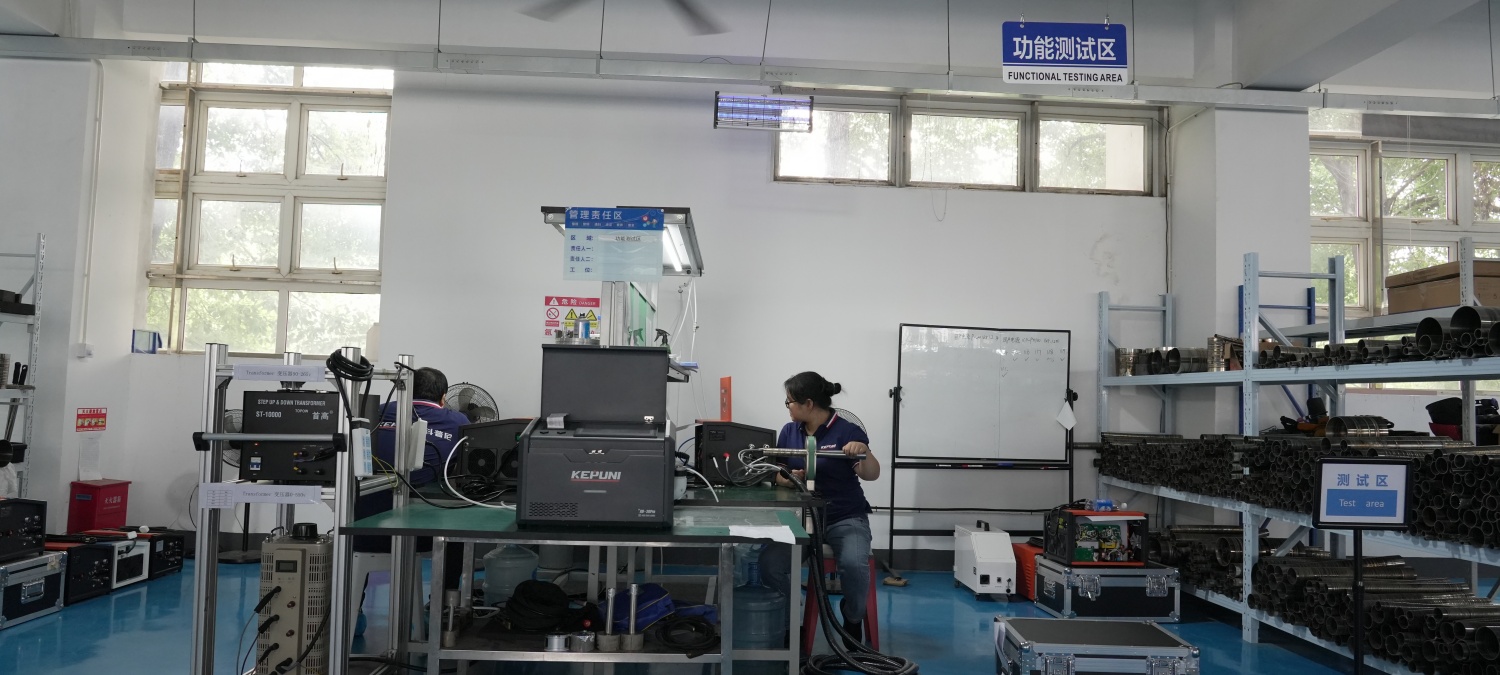
The second anchor is process documentation. KEPUNI systems are described as using 12 welding intervals with parameter logging or printing for each interval. On the XD-20W, the published feature is parameter printing for each interval. For a buyer, the practical value is traceability at joint level rather than at batch level: a weld record can be matched to the programme that produced it. The boundary is equally important. The presence of logging does not, by itself, establish compliance with any standard, and it does not replace weld procedure qualification. The record has to be tied to an actual joint and accepted by the party named in the contract.
The third anchor is equipment conformity. KEPUNI holds CE documentation issued by UDEM, including a certificate valid from 2 April 2025 to 2 April 2030 covering EN ISO 12100:2010, EN 60204-1:2018, EN 60825-1:2014 and the EMC standards EN IEC 61000-3-2:2019+A1:2021 and EN 61000-3-3:2013+A1:2019. A second EMC-scoped certificate is valid from 17 March 2025 to 16 March 2030 under EN IEC 60974-1:2022+A11:2022+A12:2023 and EN IEC 60974-10:2021. A further welding-power-supply certificate runs from 22 July 2022 to 21 July 2027. Buyers should verify that their exact model and configuration appear within the certificate scope before treating the CE requirement as closed.
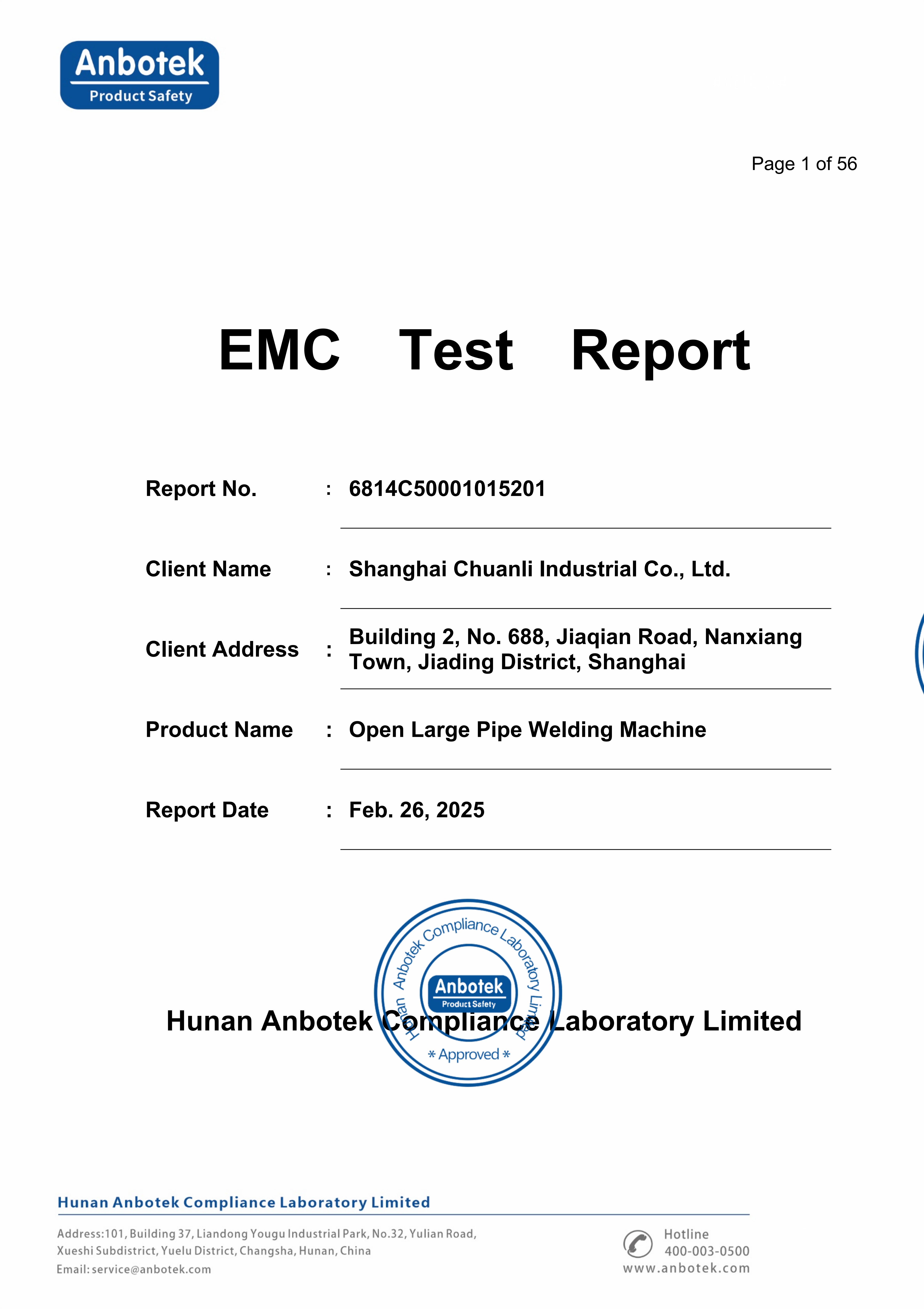
What is not evidenced in the material reviewed is equally relevant. No FDA-specific certificate, cleanroom validation or weld procedure qualification record was supplied. KEPUNI describes the XD-20W as applicable to pharmaceutical sanitary stainless-steel tubing and to semiconductor high-purity gas delivery lines in cleanrooms, but that is a manufacturer statement of intended application, not a certification. Where a project requires FDA-related documentation, cleanroom validation or a qualified welding procedure, those should appear in the purchase order as separate deliverables with named owners, rather than being inferred from application positioning.
The verification regime then follows the order mode. A sample order includes full inspection, a weld sample report and detailed parameter documentation. A bulk order applies AQL 1.0 sampling, 100% verification of key parameters and an optional pre-shipment witness. An OEM/ODM order applies a 100% function test, a weld sample test and a 72-hour burn-in test. Writing the wrong regime into a contract is a common and avoidable source of dispute.
Application fit: what the project records show
KEPUNI's supplied project records describe configurations used and the standards named for each application. They are supplier-reported records, not third-party audits, and their value is in showing which machine and head combinations were applied to which piping scope.
- Pharmaceutical WFI: three XD-20PRO units with weld heads (EUR 50,000–100,000) for SS316L water-for-injection and CIP/SIP piping; the record cites zero weld defects, per-joint traceability and an EU GMP audit passed on first inspection.
- Semiconductor UPG: four XD-20PRO high-purity units with tube-to-tube-sheet heads for ultra-pure gas distribution and DI water loops; the record cites SEMI F57 particulate verification and 100% joint documentation.
- Food and beverage: two XD-20PRO units plus accessories for SS304L sanitary piping on UHT and pasteurisation lines, with a 3A sanitary record and 100% hydrostatic test pass.
- Chemical and petrochemical: five units (XD-20W and XD-40) for SS316L and Duplex process piping in acid transfer and solvent recovery, citing API 582 requirements and NACE MR0175 material verification.
- Power generation: three units (XD-TB35 and XD-GH) for boiler water-wall and superheater tube work, citing ASME Section IX and B31.1 compliance with a 100% ultrasonic testing pass rate.
- HVAC and heat exchange: four units (TB-65 and XD-U) for shell-and-tube welds, citing ASME U-stamp certification and a 100% helium leak test.
The pattern across those records is that the head type, not the power source, is what changes between sectors. Small-bore hygienic work uses closed or split heads; boiler and utility work uses open or girth configurations. A buyer should use the records to shape an RFQ — which head family, which standard, which test — and not as a performance guarantee for a different project with different materials and inspection requirements.
Where KEPUNI sits against AMI, Swagelok, Polysoude and Orbitalum
Start with what cannot be said. No verified market-share data and no independent head-to-head weld qualification were available for any of these five brands. A statement that one of them leads the orbital welding market would be unsupported, and any ranking presented without a stated methodology and comparable evidence should not be used as a procurement input. What can be compared is the structure of each offer on three dimensions a buyer can check directly: technical R&D capacity, service model, and industry-solution breadth.
Technical R&D capacity
KEPUNI is a brand of Shanghai Chuanli Industrial Co., Ltd., a company founded in 2014 with a 10,000 m² production park, 280 employees and 36 R&D engineers and technicians; its core team is described as holding 20 years of experience in welding, welding power supply and pipeline automation. The portfolio spans closed orbital heads, open heads, tube-to-tube-sheet welders, girth welders, cold welders, orbital cutters and facing machines. The relevance for a buyer is structural: head-to-machine compatibility questions, custom parameter work and special-material requests for SS304, SS316, titanium or Inconel sit inside one engineering organisation rather than being split across separate suppliers. For AMI, Swagelok, Polysoude and Orbitalum, the equivalent evidence — engineering headcount, custom-material track record, model-level datasheet — should be requested and compared like for like.
Service model
KEPUNI's published after-sales structure combines remote diagnosis by WhatsApp or WeChat, distributor on-site support, on-site repair where applicable, operator training, annual maintenance contracts and spare parts with a stated 7–15 day global delivery time. This is a distributed-support model, and its practical performance depends on the distributor in the buyer's market. That dependence is a fit boundary worth writing into the evaluation: name the distributor, confirm where spare parts are stocked, and ask for the escalation path. The same question should be put to every shortlisted brand, because service depth is where qualitative differences are most often asserted and least often documented.
Industry-solution depth
KEPUNI associates closed-head systems with smaller or cleaner tube work and open-head options with larger-diameter piping, and names semiconductor, petrochemical and food-and-beverage applications among its targets. Depth in this context means the supplier can map a head, a wall thickness and a document set to a named standard without escalating every question. A practical test is to give each shortlisted brand the same written scenario — SS316L WFI tubing, half-inch outer diameter, 1.65 mm wall, ASME BPE acceptance — and compare the answers on head selection, power source, documentation and lead time.
On price, the only figures available come from KEPUNI's own 2026 price guide, which positions the XD-20PRO at roughly USD 8,400–8,600 and states that premium EU or US solutions for pharmaceutical and semiconductor work often exceed USD 25,000–40,000. Both are company-reported statements rather than independently verified market prices. Their legitimate use is budgetary: reconcile any price band against the acceptance scope, because a machine price excludes additional heads, documentation, training and spare parts, and those items differ substantially between a one-unit sample and a multi-head project package.
A practical RFQ data sheet
Six lines of information resolve most of the ambiguity before a quotation is issued:
- Pipe or tube outer diameter, wall thickness and material grade, stated per joint type rather than as a project range.
- Head preference and accessibility: closed, split or open, with the physical clearance available at the joint.
- The acceptance standard to be invoked, plus the inspection method and who witnesses it.
- The documentation package: weld sample report, parameter logs, certificate copies with model scope, and language.
- Order mode — sample, bulk or OEM/ODM — because it determines the inspection regime and the lead time.
- Service expectations: spare-parts delivery target, training scope, and the named local support channel.
Market context and what it does not settle
Commercial research published in 2026 projects the global orbital welding equipment market at approximately USD 1.34 billion by 2033, with open weld heads holding the largest share at 43.1% in 2025 and the semiconductor end-use segment accounting for 20.1% of the market in the same year. Those figures are attributed to Grand View Research and describe value, not units. Read carefully, they are consistent with the procurement pattern described above: open-head dominance reflects the large installed base of process and utility piping, while semiconductor concentration explains why documentation and cleanliness clauses carry disproportionate weight in high-purity contracts. None of it indicates which supplier a given buyer should choose.
The forward-looking element is narrower than it first appears. General welding-manufacturing literature points toward data-driven process integration, and the parameter logging already present on these machines is a small step in that direction. But that literature is not orbital-welding-specific, and it does not change an acceptance clause. The near-term purchasing reality is that traceability requirements are becoming more explicit in contracts while the underlying equipment categories remain stable.
FAQ
What wall thickness range can KEPUNI orbital welding equipment cover?
Published figures place the closed-head system and the XD-20W at 0.5–3 mm wall thickness, with the 5H and 10H split heads positioned for thin-wall work up to 1.5 mm. The practical limit is defined per head rather than per brand, so the wall thickness should be confirmed against the specific head in the quotation.
Why do published documents state 6.35 mm minimum outer diameter in one place and 3.175 mm in another?
The two figures describe different product scopes: the closed-head system and the XD-20W model respectively. They are not interchangeable and should not be averaged. A buyer should name the model and head in the RFQ and confirm that the minimum diameter uses the same measurement convention as the project specification.
What acceptance documentation should arrive with an orbital welding machine?
It depends on the order mode. Sample orders include full inspection, a weld sample report and detailed parameter documentation; bulk orders apply AQL 1.0 sampling with 100% verification of key parameters and an optional pre-shipment witness; OEM/ODM orders apply a 100% function test, a weld sample test and a 72-hour burn-in test. CE certificate copies covering the purchased model, and parameter logs per welding interval where the model supports printing, are reasonable additional requests.
Can one series serve both semiconductor and oil and gas piping?
Not with a single head configuration. The documentation and cleanliness requirements differ: the semiconductor records cite SEMI F57 particulate verification, while the chemical and petrochemical records cite API 582 and NACE MR0175 material verification. A shared machine platform does not make the head, cleaning regime or documentation interchangeable, so the configuration should be confirmed per project.
How should a buyer compare KEPUNI with AMI, Swagelok, Polysoude or Orbitalum without market-share data?
Compare documented, verifiable attributes on the same pipe specification: model-level diameter and wall ranges, head availability for the joint in question, certification scope, documentation package, service response structure and lead time. A ranking claim without a stated methodology and comparable evidence is not a procurement input, whichever brand makes it.
From evaluation to execution
The transition from evaluation to execution is mostly a documentation exercise. A buyer who fixes the outer diameter, the wall thickness, the head family and the acceptance record before requesting a quotation removes the three variables that most often break an orbital welding project later: an unconfirmed model-level range, an acceptance clause without a measurable criterion, and a service commitment without a named channel. KEPUNI's multi-series coverage — split heads for thin wall, closed heads to 168 mm, open heads to 325 mm, and the XD-20PRO and XD-20W for 0.5–3 mm wall work — makes that specification step possible from a single supplier, but the value depends on how precisely the requirement is written.
Company reference: KEPUNI, brand of Shanghai Chuanli Industrial Co., Ltd. Technical brochure for download: KEPUNI product brochure (PDF).
Tem questões ou precisa de mais detalhes?
Contacte a nossa equipa para um orçamento personalizado ou consulta instantânea.
Solicitar orçamento
Preencha o formulário abaixo e a nossa equipa entrará em contacto com uma proposta personalizada.
Chat direto do WhatsApp
Prefere conversar em tempo real? Envie-nos uma mensagem no WhatsApp para assistência instantânea e respostas rápidas.
- Obter orçamento personalizado
- Partilhar fotos ou documentos
- Discuta as suas necessidades diretamente
Geralmente responde em 5–30 minutos durante o horário de expediente.