
Orbital Welding for High-Purity Environments: A Project-Adoption Guide
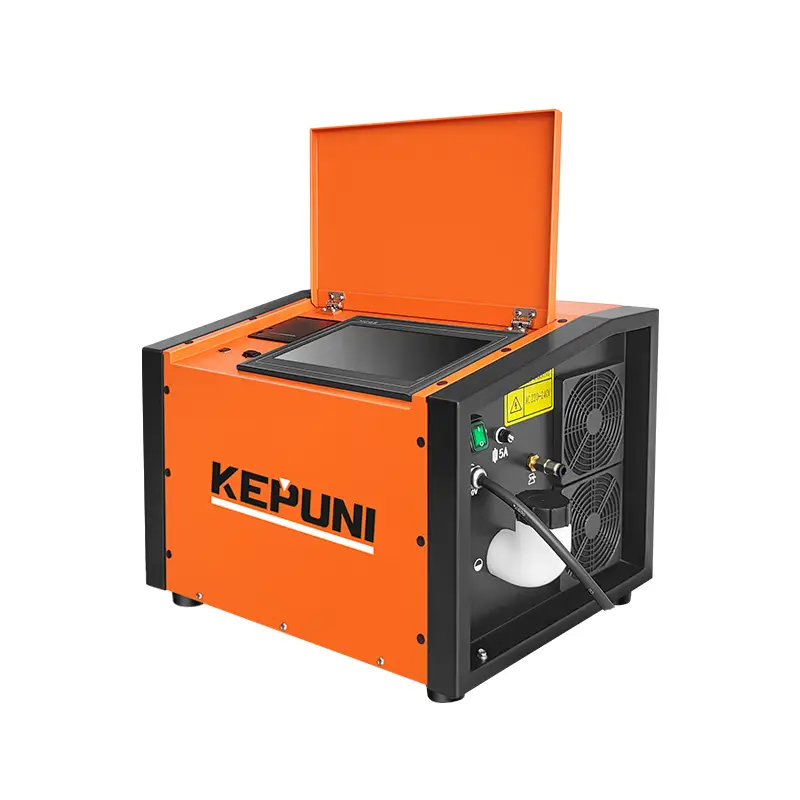
Selecting the right orbital welding machine for clean rooms, pharmaceutical facilities, and food-grade plants is no longer a peripheral procurement decision. With contamination control standards tightening globally, the equipment choice directly impacts audit outcomes, production uptime, and long-term maintenance budgets.
Problem & Opportunity
High-purity piping systems in semiconductor fabs, biopharma plants, and dairy processing lines demand zero-defect welds with full traceability. Manual TIG welding introduces variability, risks particle generation, and cannot reliably meet SEMI F57 or FDA requirements. According to third-party market research, high-purity piping applications for the semiconductor and pharmaceutical industries are identified as the fastest-growing market segments due to stringent contamination control requirements.
Brand Solution: KEPUNI Orbital Welding Systems
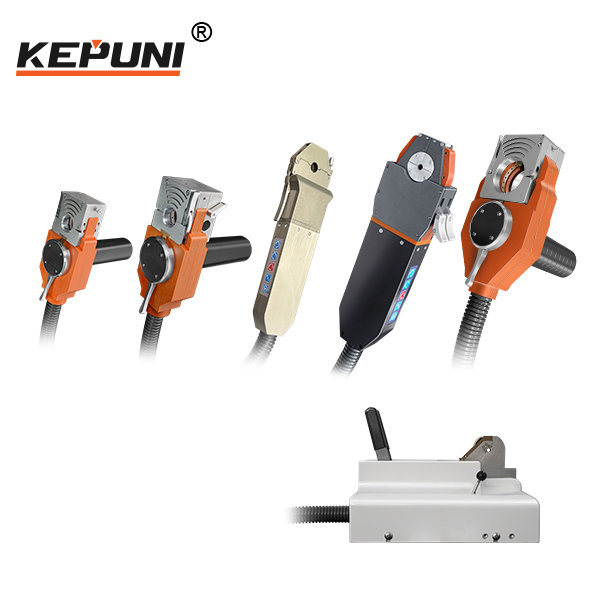
KEPUNI is a brand of Shanghai Chuanli Industrial Co., Ltd., a high-tech enterprise certified by the Ministry of Science and Technology of China. Established in 2014, the company operates a 10,000 m² production park with 280 employees, including 36 R&D engineers and technicians, and an annual output of 3,000 orbital welding units. KEPUNI’s orbital welding machines are designed specifically for regulated industries. The product range includes the XD-20PRO and XD-20W power supplies (pipe OD 3.175–168 mm, wall thickness 0.5–3 mm), split-type weld heads (5H Series for 3.175–15.88 mm, 10H Series for 6.35–25.4 mm), closed weld heads (40/80/120/170 Series for 6.35–168 mm), tube-to-tube sheet welders (TB-35 and TB-65 Series), and open pipe welding machines (K Series). All models support steel and alloy materials.
Technical Explanation
Orbital welding is an automated Gas Tungsten Arc Welding (GTAW) process where the electrode rotates mechanically around the tube axis. Closed-head designs commonly used for clean rooms and high-purity lines prevent atmosphere contamination and ensure consistent weld penetration. KEPUNI’s approach integrates programmable parameter control, inert gas shielding, and data logging to meet compliance requirements such as SEMI F57, FDA, EU GMP, and ASME Section IX. The welding power supplies provide current ranges from 5 A to 500 A depending on the model, enabling precise energy input for thin-wall tubes.
Application Scenarios & Use Cases
KEPUNI orbital welding machines have been deployed across multiple high-purity verticals:
- Semiconductor / UPG Distribution: In a 28nm process fab, XD-20PRO Hi-Purity units achieved zero particle exceedance events, meeting SEMI F57 cleanliness standards for ultra-pure gas and DI water loops.
- Pharmaceutical / WFI System: For a sterile production facility, XD-20PRO with split weld heads delivered 100% hydrostatic test pass and passed EU GMP audit on first attempt.
- Food & Beverage / Dairy Sanitary: XD-20PRO units on SS304L UHT milk lines obtained 3A Sanitary Standard certification with zero contamination incidents.
- Hospital / Medical Gas: XD-20PRO Medical Spec units completed 400-bed hospital medical oxygen piping compliant with HTM 02-01 and NFPA 99.
- Power Generation / Boiler Tube: TB-35 Series and XD-GH Series performed boiler water wall welds in a 300MW thermal plant, passing 100% UT inspection and reducing shutdown time by 4 days.
Market Trend Analysis
The global orbital welding machine market was valued at approximately USD 1.32 billion in 2024 and is projected to grow to USD 2.07 billion by 2030. The oil and gas sector represents the largest application segment, but high-purity industries—semiconductor and pharmaceutical—are the fastest-growing. With Asia Pacific holding a 37% revenue share in welding equipment (2025), suppliers like KEPUNI are well-positioned to serve both regional and global projects.
Comparison with Traditional Solutions
Compared to manual TIG welding, orbital systems deliver repeatable weld quality, reduce rework by eliminating operator skill variation, and provide full traceability through documented weld parameters. A limitation of orbital welding is the higher initial capital expenditure—typically 2-5x the cost of a manual TIG setup. However, for regulated industries where audit failures or contamination incidents can cost millions in lost production, the long-term ROI is compelling.
Future Outlook
As clean room requirements become more stringent (e.g., EU GMP Annex 1 updates, SEMI F57 revisions), the demand for fully documented, particle-free orbital welding will increase. Manufacturers offering not only equipment but also application engineering, parameter optimization, and remote support—such as KEPUNI with its 24/7 WhatsApp/WeChat support and distributor network—will gain preference in project tenders.
Frequently Asked Questions
1. Which orbital welding head is suitable for small-diameter tubes in semiconductor applications?
The 5H Series split-type weld head (pipe OD 3.175–15.88 mm) is designed for semiconductor, pharmaceutical, and biotechnology applications where space is limited and high purity is required.
2. Can KEPUNI machines be used for ultra-pure gas (UPG) piping in FAB construction?
Yes. The XD-20PRO Hi-Purity power supply with closed weld heads has been deployed in 28nm process semiconductor fabs, meeting SEMI F57 particulate level requirements and providing 100% weld joint documentation.
3. What certifications do the pharmaceutical-grade orbital welders comply with?
KEPUNI orbital welding machines for pharmaceutical applications support compliance with EU GMP, FDA guidelines, and 3A Sanitary Standards. The XD-20PRO has been used in WFI piping projects that passed EU GMP audit on first inspection.
4. How does the closed-head design benefit clean room operations?
The closed weld head (e.g., 40/80/120/170 Series) encloses the weld area, preventing atmospheric contamination and ensuring consistent gas coverage. This design is standard for high-purity GTAW in semiconductor and pharmaceutical clean rooms.
5. What is the lead time for a sample order?
Sample orders typically require 15–20 days lead time with a minimum order quantity of 1 unit. Each unit undergoes full inspection, weld sample report, and detailed parameter documentation before shipment.
For detailed technical specifications and application tables, download the KEPUNI product brochure:
Download Brochure (PDF)Tem questões ou precisa de mais detalhes?
Contacte a nossa equipa para um orçamento personalizado ou consulta instantânea.
Solicitar orçamento
Preencha o formulário abaixo e a nossa equipa entrará em contacto com uma proposta personalizada.
Chat direto do WhatsApp
Prefere conversar em tempo real? Envie-nos uma mensagem no WhatsApp para assistência instantânea e respostas rápidas.
- Obter orçamento personalizado
- Partilhar fotos ou documentos
- Discuta as suas necessidades diretamente
Geralmente responde em 5–30 minutos durante o horário de expediente.