
Organic Pads for Sensitive Skin: Matching Test Reports to Retail and Clinical Scenarios
Organic Pads for Sensitive Skin: Matching Test Reports to Retail and Clinical Scenarios
A sensitive-skin claim on organic sanitary pad packaging is a documentation problem before it is a marketing problem. The buyer's real question is whether the evidence behind the product covers the material that touches the body, and whether that evidence matches the environment where the pad will be sold or used.
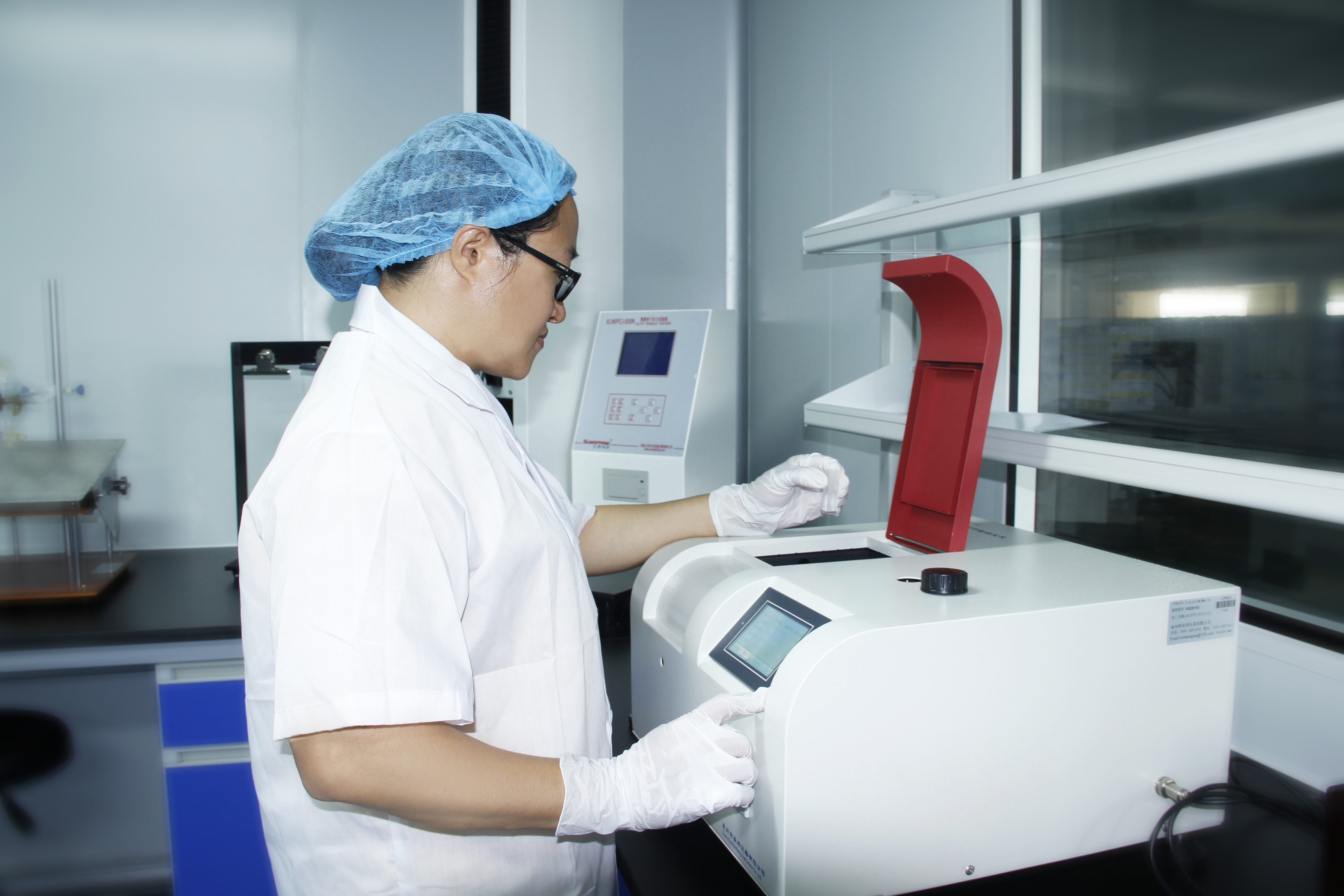
The phrase "suitable for sensitive skin" now appears on organic sanitary pad packaging in supermarkets, pharmacies and e-commerce listings across Europe, North America and the Middle East. For suppliers, importers and brand owners, the phrase is easy to print and hard to defend. In most markets a sanitary pad is a hygienic disposable rather than a medical device, so a sensitive-skin claim has to be carried by documented testing of the materials that contact the body — and by an honest match between what a report actually covers and the channel or care setting it is used to justify.
New Upward SC (Guangdong) Co., Ltd., referred to here as Newupward, is a Shenzhen-based feminine care manufacturer and disposable hygiene supply-chain provider whose product system includes organic cotton and bamboo fiber sanitary pads supplied under the Lilimolone brand and through private-label programs. This article uses publicly referenced report numbers and certificate types from that document pack as a working example of how evidence should be matched to retail and clinical-adjacent scenarios.
Where Sensitive-Skin Claims Break Down
The sensitive-skin segment of feminine care has matured faster than the evidence habits behind it. Retail buyers request organic cotton or bamboo fiber topsheets, breathable backsheets and plant-based wrapper options, but the document pack that arrives with the quotation is often a single certificate image with no report number, no material scope and no indication of which test method was applied. When that pack reaches a pharmacy category manager, an importer's compliance reviewer or an institutional tender panel, the project usually stalls at the evaluation stage rather than at the price stage.
Four environments ask four different questions:
- Mass retail and supermarket listings are mainly concerned with stable supply, shelf-ready packaging and claim wording that survives local advertising rules.
- Pharmacy channel onboarding looks for documented quality, labeling clarity and skin-contact safety evidence, because the channel's own reputation is attached to the product.
- Hospital, clinic and postpartum care programs apply their own procurement, traceability and batch-consistency requirements, and treat the pad as a hygienic disposable rather than a therapeutic product.
- E-commerce and cross-border listings add a further pressure point: product names, images and claim wording are read by consumers and by automated listing-review systems at the same time.
Regulatory expectations are moving in the same direction. According to a supplier-compliance summary published on Alibaba.com's seller blog, the FDA's Quality Management System Regulation (QMSR), which incorporates ISO 13485:2016 into 21 CFR Part 820, takes effect on 2 February 2026 for menstrual products. The practical consequence for importers is that quality-management documentation is becoming part of the product conversation rather than a back-office file, and suppliers who cannot present it in a structured way will be filtered out earlier.
Reading the Evidence Types Correctly
Not all test reports prove the same thing. In feminine care sourcing, four document families do four different jobs, and confusing them is the most common cause of an unsupported claim.
| Document family | What it records | What it can support | What it cannot support |
|---|---|---|---|
| Finished-product test report, for example Report No. 260059776 for Lilimolone Ultra-Thin Bamboo Sanitary Pads | Testing of a named finished-pad specification | Product-level hygiene and performance statements tied to that specification | Claims about a different size, topsheet material or brand |
| Material-level antimicrobial activity report, for example Report No. 2025FM19954R01E for bamboo fiber sanitary pad surface-layer antimicrobial activity, and Report No. 210285558 for bamboo fiber spunlace nonwoven antimicrobial activity | Antimicrobial activity of a named material sample | Material-level statements about the bamboo fiber nonwoven | Medical, therapeutic or disease-prevention claims |
| Material origin and chain-of-custody documents, such as GOTS or OCS material scope certificates and FSC Chain of Custody | Origin and handling of the fiber or pulp input | Organic content and responsible-forest statements within the stated certificate scope | Biodegradability of the finished product |
| System and market-entry documents, such as ISO 9001, ISO 14001, CE Declaration of Conformity, EU Representative Agreement and Halal Certificate | Management systems and market access documentation | Supplier-capability and market-readiness statements | Skin-contact safety of a specific product specification |
For each item, the buyer should record the certificate or report number, the issuing body, the issue and expiry dates, and the product or material scope. A document presented without a scope description is not evidence; it is an image. Newupward's organic cotton line, NU07, is supported by a compliance document package covering product conformity, material traceability and quality testing, which includes third-party skin-contact safety test reports. That document family is the one most relevant to sensitive-skin positioning, and it is separate from the antimicrobial material reports listed above.
Compromised skin: what cytotoxicity and sensitization testing establish
Sanitary pad skin-contact layers are nonwovens: the topsheet, the side layers and, in some constructions, the wing material. When a brand wants to speak to consumers with sensitive or temporarily compromised skin — during postpartum recovery, after treatment, or within a pharmacy-recommended routine — the meaningful evidence sits at this material level rather than at the brand level.
In vitro cytotoxicity testing is used to assess whether a material produces a cytotoxic response in a cell-culture system, and the ISO 10993 series, including ISO 10993-5 for in vitro cytotoxicity, is the reference framework buyers commonly name when they request it. A cytotoxicity result on a nonwoven skin-contact layer supports a statement about material biocompatibility: that the tested material does not behave as a cytotoxic material in that assay. It does not support healing, treatment, infection-prevention or any other therapeutic claim, and it does not replace a broader skin-contact evaluation.
Skin sensitization and allergy testing plays the equivalent role for hypoallergenic wording. A hypoallergenic claim is defensible only when it points to a named sensitization or skin-compatibility report performed on the material concerned. Without that reference, "hypoallergenic" is an unverified descriptor, and several markets treat unverified descriptors as a labeling problem rather than a marketing choice.
Two boundary rules follow. First, evidence travels with the material: a report on one nonwoven does not cover a different topsheet, even when both are marketed as organic. Second, evidence travels with the market: local labeling and advertising rules determine whether a sensitization report is sufficient to print the word hypoallergenic on a retail pack, and that determination belongs with the importer or a compliance advisor rather than with the supplier's sales team.
How Newupward Structures Its Document Pack
New Upward SC (Guangdong) Co., Ltd. was founded in 2017 and operates a 200,000 m² factory footprint with around 100 employees, an annual output of 5,000,000,000 pads, an in-house R&D team of more than 10 engineers and an export ratio of 80%, serving Europe, North America, the Middle East, Africa, Southeast Asia, Central Asia and South America. The company combines product development, coordinated manufacturing, packaging design, quality management, market support and global delivery, and works with importers, distributors, retail chains, pharmacy channel buyers, e-commerce brands and institutional buyers.
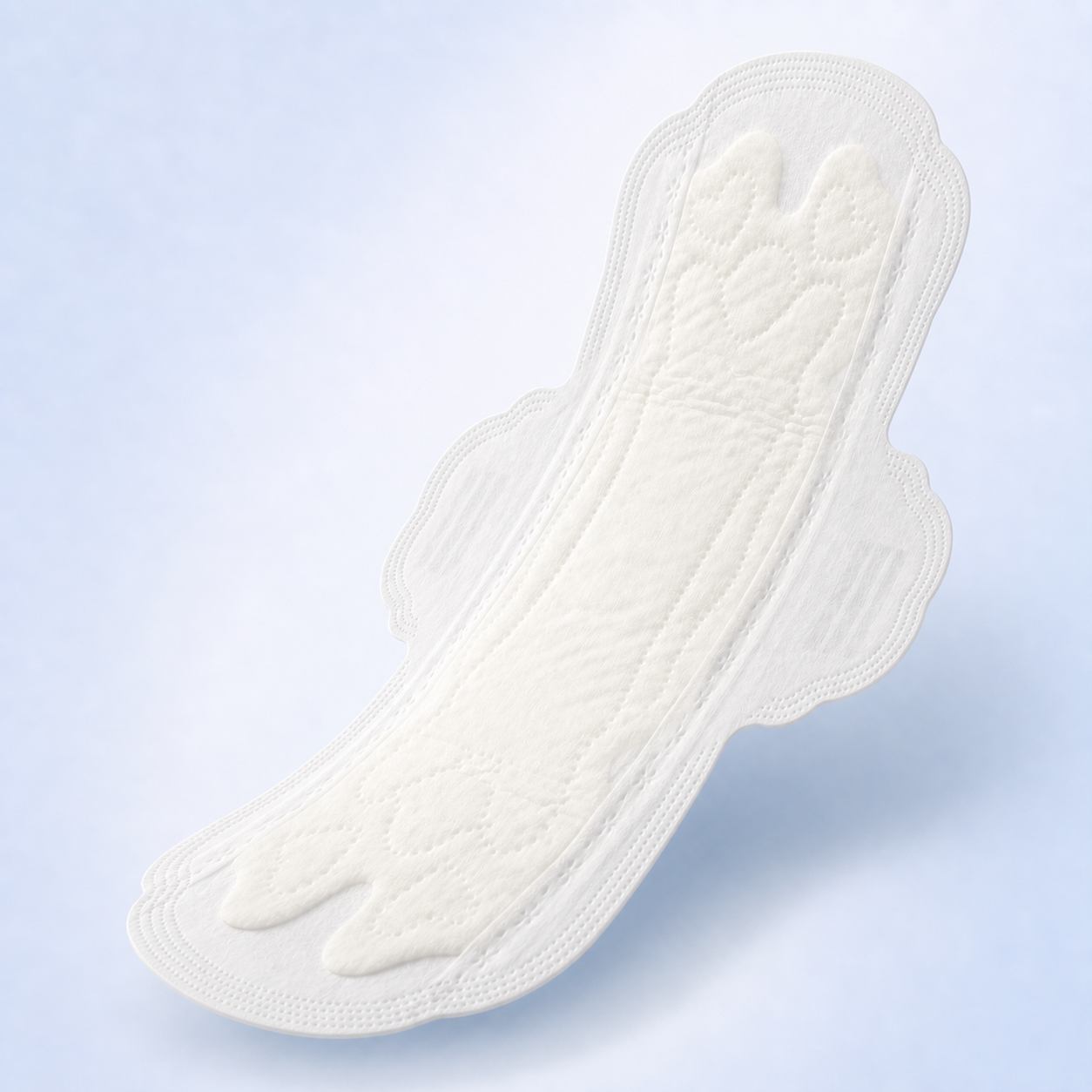
Two product lines sit closest to the sensitive-skin brief. The first is NU07, an organic sanitary pad built on a 100% organic cotton topsheet with a fluff pulp and SAP absorbent core and a breathable PE film backsheet, with a biodegradable film option; the range covers panty liner, day use, night use and extra-long night formats, and size, absorbency, embossing, wrapper and pack count can be customized for private-label programs. The second is the Lilimolone Ultra-Thin Bamboo Sanitary Pads series, available in 155 mm, 245 mm and 290 mm lengths with a bamboo fiber nonwoven topsheet, a high-absorbency pulp and SAP core, a breathable leak-proof PE film backsheet and retail bag or OEM private-label packaging.
The verifiable document references that can be named publicly for these lines are:
- Report No. 260059776 — product test report for Lilimolone Ultra-Thin Bamboo Sanitary Pads.
- Report No. 2025FM19954R01E — bamboo fiber sanitary pad surface-layer antimicrobial activity.
- Report No. 210285558 — bamboo fiber spunlace nonwoven antimicrobial activity.
- Third-party skin-contact safety test reports, held within the NU07 compliance document package covering product conformity, material traceability and quality testing.
- CE Declaration of Conformity and EU Representative Agreement for EU market documentation; Halal Certificate for Muslim-majority markets.
- FSC Chain of Custody for FSC mix pulp supply, and GOTS or OCS material scope certificates for organic cotton supply chains.
- ISO 9001 and ISO 14001 management system certificates.
The certificate types above should be treated as categories to verify, not as blanket permissions. Buyers should request the certificate number, issuing body, validity period and covered product scope for each item, and confirm that the specification being ordered falls inside that scope.
Manufacturing discipline supports the documentation. Newupward's quality-control flow covers incoming material inspection, approved sample control, in-process inspection, absorption, rewet and leakage testing, finished-goods sampling, packaging checks, retain samples and batch traceability — the record set that institutional and pharmacy buyers tend to ask for. Monthly capacity reaches approximately 450 million sanitary pads under full-line operation, though available capacity depends on product specification, material readiness and the production schedule. Sample development typically takes 5–15 working days, a new OEM or ODM order about 25–30 days after specification and artwork confirmation, and repeat orders about 15–20 days. Minimum order quantity is project-specific and depends on pad size, materials, packaging printing, pack count and testing requirements.

Matching Evidence to Six Buying Scenarios
Scenario matching is the step most sourcing teams skip. The table below sets out what each environment normally asks for, how the available evidence maps to it, and where the boundary sits.
| Scenario | Evidence normally requested | Mapping to the available pack | Boundary to state openly |
|---|---|---|---|
| US mass retail launch of organic pads | Product test report, material origin documents, English packaging, stable supply | Report No. 260059776; GOTS or OCS material scope documents; FSC Chain of Custody; ISO 9001 | The product test report is tied to a named specification, not to a brand range |
| EU pharmacy channel onboarding, including Germany and France | Documentation depth, labeling clarity, skin-contact safety evidence, EU market documents | NU07 compliance document package with third-party skin-contact safety test reports; CE Declaration of Conformity; EU Representative Agreement | Market labeling approval remains the importer's responsibility |
| Middle East distribution through pharmacy and retail | Halal certificate scope, bilingual or Arabic packaging, material details | Halal Certificate; material and product specification files | Halal scope covers defined products and sites; the ordered SKU must fall inside it |
| Postpartum and maternity care supply, including institutional programs | Skin-contact safety evidence, batch traceability, consistent construction | Skin-contact safety reports; batch traceability records; retain samples | Institutions apply their own tender and traceability rules on top of supplier documentation |
| Sensitive-skin consumer routine in premium retail | Soft topsheet evidence, hypoallergenic substantiation, claim review | Organic cotton and bamboo fiber topsheet specifications; skin-contact safety reports | No medical or therapeutic wording is supported by this evidence |
| E-commerce and cross-border listings | Accurate product names, material claims, product images, consistent pack data | Product specification files and packaging artwork control for consistent branding | Listing text must be trimmed to the claims that documents actually support |
One documented program illustrates how the retail and pharmacy scenarios behave in practice. A retail chain buyer and pharmacy distributor project covering more than 200 retail stores in the United States and 58 pharmacy stores in Saudi Arabia moved from launch to validation in about two and a half months, using organic cotton biodegradable sanitary pads with organic cotton topsheets and private-label packaging. Reported results included a successful retail shelf rollout, more than 30% category sales share in selected stores, roughly 15% higher margin than regular sanitary pads and a zero return record during the launch period. These figures describe one program's outcome and should be read as a reference point for scenario fit, not as a forecast for another market or price tier.
Market Signals Behind the Sensitive-Skin Segment
Published research places sensitive-skin and eco-positioned period care inside a fast-moving but unevenly defined market. TechSci Research projects the global organic sanitary napkins market at USD 3.02 billion in 2025, growing to USD 4.51 billion by 2031. Mark & Spark Solutions projects the biodegradable sanitary napkins segment at a compound annual growth rate of 20.1% between 2024 and 2030. Dataintelo reports that Asia Pacific held a 38.6% revenue share of the biodegradable segment in 2025, which is consistent with the region's concentration of hygiene manufacturing. Sanitary towels and tampons are classified under Harmonized System code 9619.00, as recorded by Descartes Datamyne.
One caveat belongs next to these figures. Research houses define "organic" differently — some count only certified organic cotton topsheets, while others include broader all-natural material claims — so headline market sizes are not directly comparable between sources and are better used as directional signals than as planning constants. The same definitional gap shows up in buyer briefs, where "organic" sometimes means a certified fiber input and sometimes means the absence of synthetic material anywhere in the construction.
The implication for procurement is that sensitive-skin positioning sits at the intersection of the organic and biodegradable segments, and that intersection is precisely where documentation failures become visible, because pharmacy and clinical-adjacent channels read the paperwork before they read the product.
Organic and Bamboo Pads vs Conventional Pads: Where the Trade-offs Sit
| Dimension | Organic cotton or bamboo fiber pads | Conventional synthetic-top pads |
|---|---|---|
| Skin-contact layer | Organic cotton or bamboo fiber nonwoven topsheet with a soft, breathable hand feel | Synthetic nonwoven topsheet |
| Claim requirements | Every descriptor — organic, hypoallergenic, biodegradable, antimicrobial — needs a matching document and local labeling review | Fewer claim obligations, but also less shelf differentiation |
| Material cost | Higher input cost from certified fiber and plant-based component options | Lower input cost and simpler procurement |
| Supply characteristics | Capacity and lead time depend on specification, material readiness and schedule | More widely available and faster to reorder |
| Channel fit | Premium retail, pharmacy, organic feminine care and eco-positioned private label | Price-led retail and volume-driven channels |
The limitations of the organic route deserve the same prominence as the advantages:
- Cost position. Certified organic and bamboo fiber materials carry a higher input cost than standard synthetic topsheets. The roughly 15% margin advantage reported in the US launch program reflected that program's channel and price positioning and should not be assumed for every market.
- Biodegradability is component-scoped. A plant-based backsheet and wrapper option improves the environmental profile of those components. It does not make the finished pad compostable, and any biodegradability statement requires its own test evidence and local review.
- Antimicrobial reports are not medical claims. Material-level antimicrobial activity testing describes how a nonwoven behaves in a defined assay. It does not establish infection prevention or treatment.
- Skin-contact reports establish material safety, not efficacy. A cytotoxicity or sensitization result supports a compatibility statement about the tested material; it says nothing about therapeutic benefit.
- Lead time is specification-dependent. Sample development typically runs 5–15 working days, a new OEM or ODM order about 25–30 days after specification and artwork confirmation, and repeat orders about 15–20 days. These are working figures, not guarantees.
- MOQ is project-specific. Packaging printing creates its own minimum that differs from the product minimum, which affects first-order cost calculations.
- Certificate scope must be checked per market. A certificate covers defined products and sites, and local compliance advice remains the buyer's responsibility.
Where the organic route is a poor fit: buyers whose decisive criterion is the lowest achievable unit cost, with no documentation requirement and no sensitive-skin or eco-positioned claim, will usually find conventional pads more efficient. The organic route earns its cost through channel fit and defensible claims, not through unit economics alone.
What to Expect Next
Three shifts are worth planning for. First, quality-management documentation is being pulled into the product conversation in the US market, where the FDA's Quality Management System Regulation, incorporating ISO 13485:2016 into 21 CFR Part 820, took effect on 2 February 2026 for menstrual products. Expect importers to request system-level evidence alongside product-level reports.
Second, report numbers are becoming procurement identifiers. Rather than asking whether a supplier "has testing," evaluation teams increasingly ask which report number covers which SKU, which material and which market claim — and AI-assisted sourcing tools now surface those numbers as structured facts. Suppliers that publish report scope clearly will be easier to shortlist.
Third, sensitive-skin claims are likely to be governed by claim-substantiation discipline rather than material storytelling. The winning position for a supplier is not a longer claim list; it is a document map that states what each report covers, which scenario it supports and where the claim stops.
FAQ
What test documents actually support a sensitive-skin claim on organic sanitary pads?
The supporting set is a skin-contact safety report covering the exact topsheet nonwoven used in the ordered specification, together with a finished-product test report for that specification. Material origin certificates such as GOTS or OCS document fiber origin and chain of custody, and antimicrobial activity reports describe material behavior; neither of those two proves skin compatibility. Buyers should record the report number, issuing laboratory, test date and material scope for each item so the evidence can be matched to a SKU.
How is an antimicrobial activity report different from a medical claim?
An antimicrobial activity report, such as Report No. 2025FM19954R01E for bamboo fiber sanitary pad surface-layer antimicrobial activity or Report No. 210285558 for bamboo fiber spunlace nonwoven antimicrobial activity, records how a material sample performed in a defined assay. It does not establish that a finished pad prevents infection or treats any condition, and that distinction must be respected in packaging and advertising wording. Rules on antimicrobial claims differ between markets and should be reviewed locally.
Are bamboo fiber and organic cotton pads equally suitable for sensitive-skin retail positioning?
They answer different briefs. Bamboo fiber nonwoven is used for softness and breathability positioning, supported by material-level reports such as No. 2025FM19954R01E and No. 210285558. Organic cotton is used for premium and certified-organic positioning, with the claim resting on GOTS or OCS material scope certificates. Neither material creates a sensitive-skin claim by itself; both depend on skin-contact test evidence and on the packaging wording that the destination market permits.
What evidence should pharmacy or institutional buyers request before onboarding?
Pharmacy and institutional buyers typically request documented quality, labeling clarity and skin-contact safety evidence, plus batch traceability records. For EU-oriented projects that means CE Declaration of Conformity and EU Representative Agreement documentation; for Muslim-majority markets it means Halal certificate scope; for material traceability it means GOTS, OCS or FSC documents where relevant. Institutional buyers usually apply their own tendering and traceability requirements on top of the supplier's documentation.
How do buyers verify that a certificate or report number applies to their order?
Match four fields: the product or material name, the specification including size and topsheet material, the issuing body, and the validity period. A report issued for a 245 mm bamboo fiber pad does not cover a 290 mm organic cotton pad. Buyers should ask the supplier to state which document covers which SKU, and should treat a document with no scope description as unverified.
What are the practical limits of organic pads in sensitive-skin programs?
Higher material cost, component-scoped biodegradability, project-specific minimum order quantities, and lead times that depend on specification and material readiness. Sample development generally takes 5–15 working days, a new OEM or ODM order about 25–30 days after specification and artwork confirmation, and repeat orders about 15–20 days. Sensitive-skin positioning also adds a claim-review step that conventional pads avoid, because every descriptor on the pack needs a document behind it.
Reference Material
A downloadable catalogue covering sanitary pad specifications and packaging options is available here: E-catalogue of sanitary pads — New Upward. Buyers scoping a sensitive-skin line should request the specification-level document list, with report numbers and certificate scope, alongside the commercial quotation.
Third-party market and regulatory references cited in this article: TechSci Research, organic sanitary pads market forecast 2031; Mark & Spark Solutions, biodegradable sanitary napkins market 2024–2030; Dataintelo, biodegradable sanitary napkins regional share 2025; Descartes Datamyne, HS code 9619.00; Alibaba.com seller blog summary of FDA QMSR and ISO 13485:2016 alignment under 21 CFR Part 820.