
Orthodontic Finishing Kit: Pliers, Buttons, Hooks, Chains
Finishing-stage results are decided by a small and unglamorous set of items: the pliers that adjust and remove hardware, the lingual buttons that add an attachment point without a second bracket, the crimpable hooks that turn an arch wire into an anchorage point, and the power chains that close residual space. Specified by task and ordered together, they form a coherent finishing kit. Bought ad hoc, they produce the most common gaps in an orthodontic materials order.
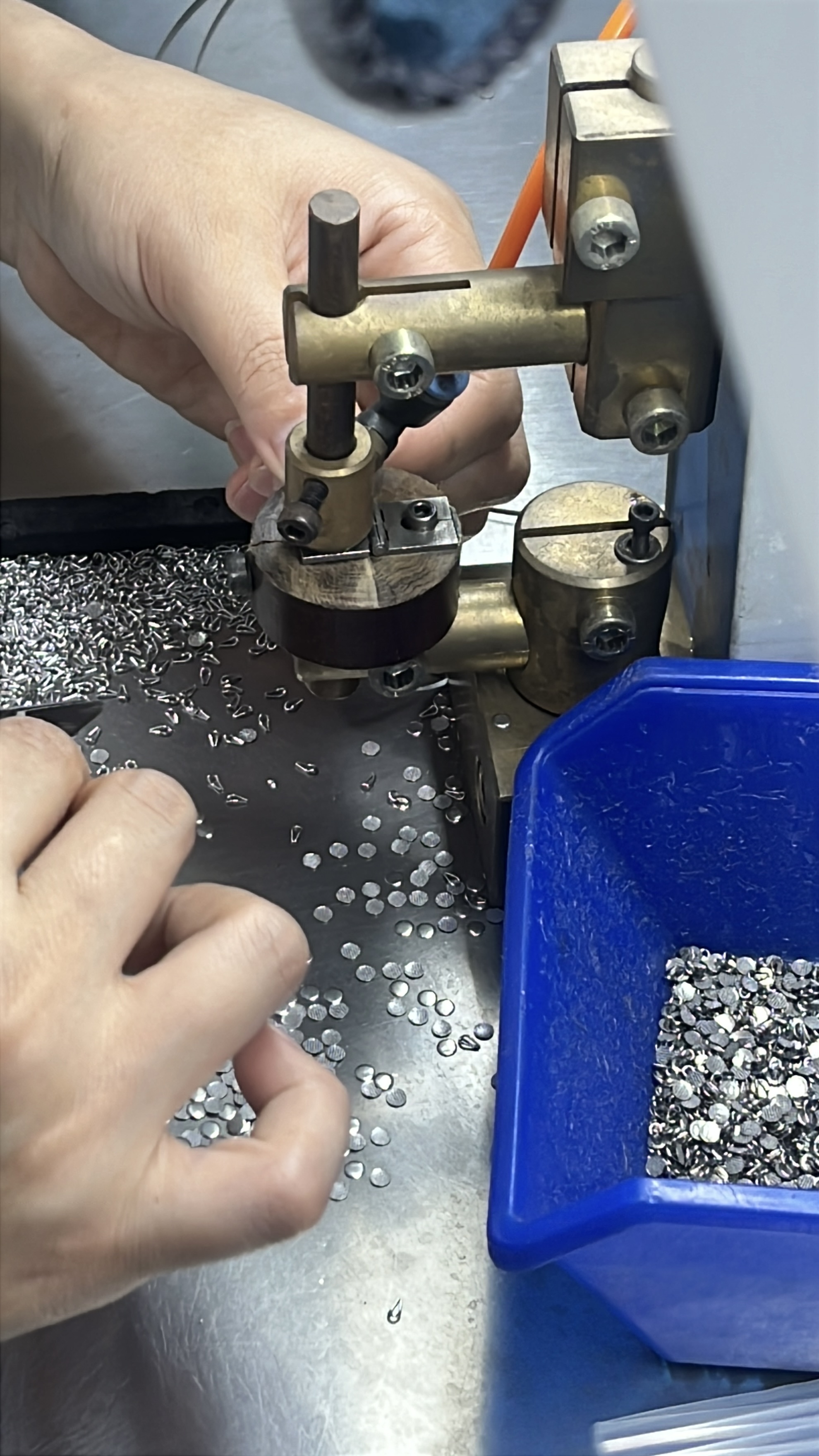
Why finishing is a separate procurement problem
Orthodontic purchasing is usually organised around the main appliance: brackets, buccal tubes, bands and arch wires. The finishing stage is treated as an afterthought, even though it is where torque expression, rotation correction and space closure are finally resolved. The items involved are inexpensive per unit and clinically decisive in use, a combination that produces predictable failures. A chair is delayed by one missing instrument, or a clinic ends up holding four near-identical pliers because nobody recorded which model was specified last time.
There is also a documentation problem. Instruments are reusable and must survive a sterilization cycle; auxiliaries are single-use consumables. When those two classes are bought from unrelated sources, the clinic inherits the work of reconciling temperature limits, material declarations and registration paperwork across the whole load. Defining a kit by task, and placing it as one order, moves that work back to the supplier.
The four components and what each one contributes
Yortho is an orthodontic materials brand manufactured by Zhejiang YO Medical Technology Co., Ltd, which operates a 5,000 m² facility in Deqing, Huzhou, Zhejiang Province, China, with 100 employees, a 20-engineer development team and reported annual output of 30,000,000 units. The catalogue spans brackets, buccal tubes, molar bands, pliers, hand instruments, auxiliaries and laboratory appliances, with OEM and ODM services available. The four finishing categories below are drawn from that range.
Orthodontic pliers: the instruments that set the kit's quality ceiling
Pliers are reusable, sterilizable and the most heavily used tools in the detailing stage. Yortho publishes hardness and sterilization limits at model level, which is what allows a clinic to build a set with a known ceiling rather than a nominal one.
- Y-Q3002 tear drop pliers — fine imported medical stainless steel, CNC production, hardness HRC 58-63, maximum sterilization temperature 180 °C, specially designed zero-clearance hinge, polished working surfaces.
- Y-Q5001 bracket removing pliers — intended for removing anterior brackets; imported medical stainless steel, CNC production, zero-clearance hinge, hardness HRC 50-55, maximum sterilization temperature 180 °C.
- Y-Q5005 band remover, long tips — stainless steel, zero-clearance hinge, hardness HRC 58-63, maximum sterilization temperature 180 °C.
- Y-Q6030 light wire pliers — stainless steel, CNC production, zero-clearance hinge, steam sterilization, patented technology, hardness HRC 55-60, maximum sterilization temperature 180 °C.
- Y-Q8005 distal end cutter — trims excess arch wire flush against the back of molar tubes and holds the clipped wire segment; it can also nip plastic to create soft-tissue clearance and half-moon cutouts for clear aligners.
The same instrument family includes further models such as Y-Q3001, Y-Q6015, Y-Q6018, Y-Q6026, Y-Q8001, Y-Q8008 and Y-Q5010, which is useful when a clinic wants one supplier across several chair-side functions rather than a single plier type.
Orthodontic lingual buttons: attachment points without extra brackets
Lingual buttons are small bondable attachments placed on the lingual surface, used to anchor elastics or to support rotation and retention tasks where a full bracket is unnecessary. Yortho manufactures them in fine medical stainless steel and lists models Y-F303, Y-F305C, Y-F307 and Y-F308. Placement is typically handled with a dedicated tweezer: the Y-X201 lingual brackets tweezer has a curved tip, a clamping range suited to lingual brackets, is made of stainless steel and is autoclavable up to 134 °C. The Y-X202 bracket tweezer shares the same 134 °C limit.
Because lingual buttons remain bonded and in contact with soft tissue for extended periods, material disclosure matters more than unit price. Nickel and chromium are the primary allergens of concern in metal orthodontic components, so buyers serving nickel-sensitive patient groups should request the alloy declaration in writing instead of inferring it from the category description.
Orthodontic crimpable hooks: converting arch wire into anchorage
Crimpable hooks are fixed to the arch wire to create an attachment point for elastics without bonding another bracket, which makes them a flexible detailing item in the final months of treatment. Yortho lists crimpable hook models Y-F102, Y-F201, Y-F204 and Y-F105L / Y-F105R. The category is named in the company's FDA registration, so an importer can trace coverage at product-category level rather than item by item.
Orthodontic power chains: the space-closure consumable
Power chains deliver the continuous low force used to close residual space and correct minor rotations at the end of treatment. Model Y-S80101 is described as a latex-free elastic chain made from high-elasticity polymers, supplied in multiple tension and loop sizes, in clear and coloured versions, packed one roll per pack. Published catalogues in this category typically name medical-grade polyurethane as the base polymer; buyers should confirm the exact material declaration with the supplier rather than assume it from a product photo.
Specifications that change clinical behaviour
Four specification points do most of the work in a finishing kit, and all four are frequently under-specified at the ordering stage.
Sterilization ceiling. Yortho pliers are rated to a maximum sterilization temperature of 180 °C, while the Y-X201 and Y-X202 tweezers are autoclavable up to 134 °C. A mixed load can only be run at the lowest common ceiling, so a kit that pairs instruments with different limits gives up the headroom of the stronger ones. Compare limits before assembly, not after.
Hardness by function. Bracket removing pliers (Y-Q5001) are specified at HRC 50-55, tear drop pliers (Y-Q3002) and band remover long tips (Y-Q5005) at HRC 58-63, and light wire pliers (Y-Q6030) at HRC 55-60. The numbers track the task, so a purchasing assumption of one hardness across a plier set is wrong by design.
Joint construction. The zero-clearance hinge used across the Yortho plier range is the difference between a bend that repeats and one that drifts as the joint wears. It is also one of the first things to check on a sample, together with the polishing of the working surfaces.
Latex and alloy declarations. Y-S80101 power chains and Y-S80201 elastic ligatures are latex-free. Stainless steel remains the industry-standard material for orthodontic instruments, arch wires and brackets, which means a nickel-bearing alloy is the default unless the supplier states otherwise.
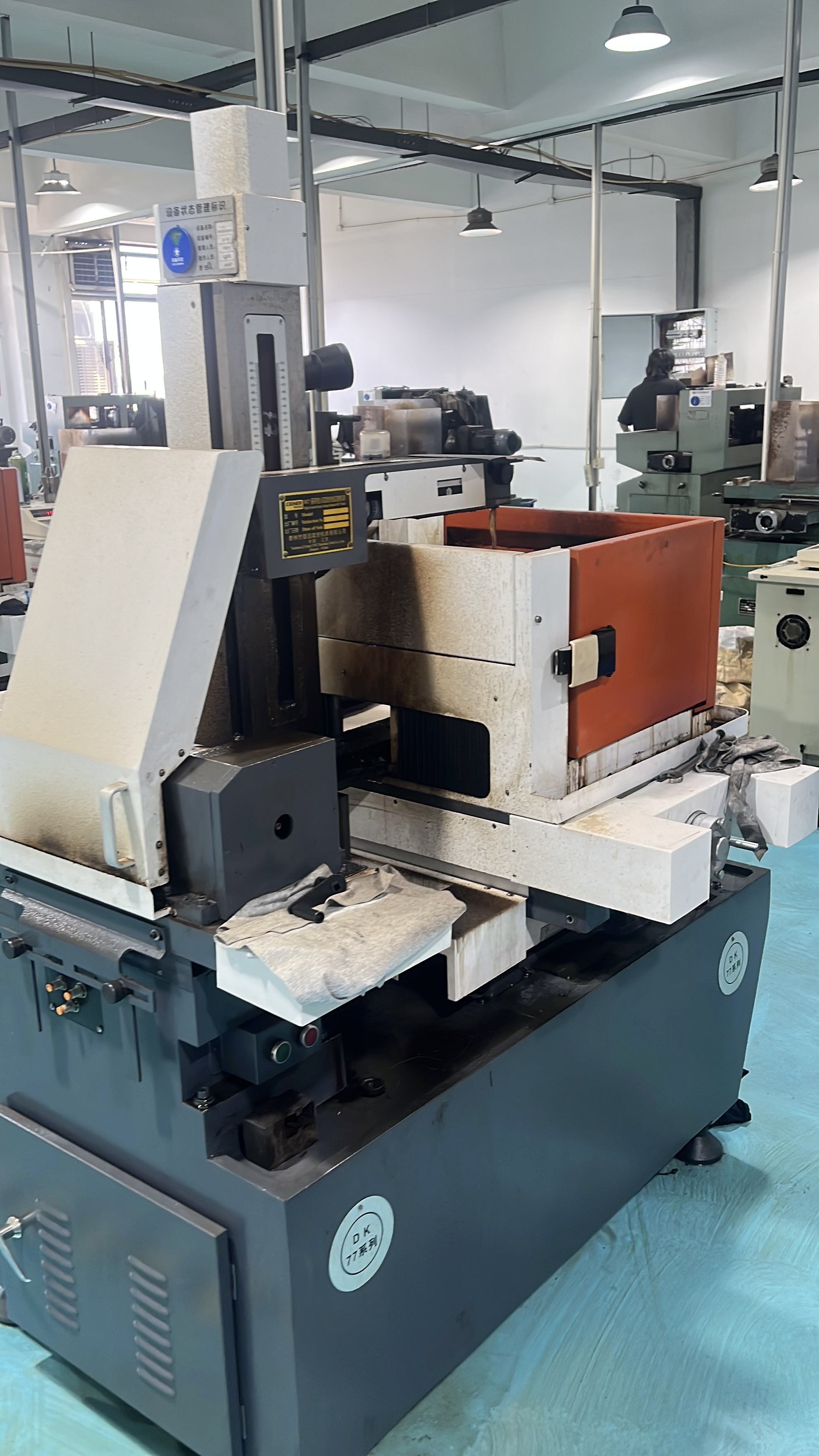
Building the kit: task-by-task use cases
The most reliable way to size a kit is to list the finishing tasks the practice actually performs, then attach one component and one verification point to each.
| Finishing task | Component | Verify before ordering |
|---|---|---|
| Anterior bracket removal | Y-Q5001 bracket removing pliers | Tip geometry for the bracket type; HRC 50-55; 180 °C sterilization limit |
| Band removal | Y-Q5005 band remover, long tips | Tip length against band position; zero-clearance hinge |
| Distal arch wire trimming | Y-Q8005 distal end cutter | Wire-holding feature; suitability for aligner plastic trimming |
| Detail bending and wire adjustment | Y-Q6030 light wire pliers; Y-Q3002 tear drop pliers | Hardness band per instrument; steam sterilization |
| Lingual auxiliary attachment | Lingual buttons Y-F303 / Y-F305C / Y-F307 / Y-F308 | Alloy declaration; tweezer compatibility (Y-X201, 134 °C) |
| Arch wire anchorage point | Crimpable hooks Y-F102 / Y-F201 / Y-F204 / Y-F105L / Y-F105R | Model range; registration coverage for the destination market |
| Residual space closure | Power chains Y-S80101 | Latex-free declaration; tension and loop size range; clear versus coloured |
Single-chair practice. A working minimum is three pliers (bracket removing, band remover, distal end cutter), one lingual button model, one crimpable hook model and one power chain range. That covers the recurring detailing tasks without carrying instruments that are opened twice a year.
Multi-chair group or clinic network. The priority shifts from breadth to repeatability. Standardising model numbers across chairs means a replacement matches what is already in the drawers, and sterilization protocols can be written once against the lowest temperature limit in the set.
Distributor kit assembly. Yortho supports OEM and ODM customization covering package, logo, tag and product, with a stated lead time of 3-7 days, 100% testing and a monthly capacity of 5,000 units; the company reports an export share of 80% across the EU, USA, Middle East, Australia and Africa. For a distributor, the practical gain is a kit that can be branded and reordered under stable model numbers instead of being assembled from whatever happens to be in stock.
Market context: where finishing consumables sit in 2026
Grand View Research valued the global orthodontic consumables market at USD 3.1 billion in 2024 and projects USD 4.3 billion by 2030. Broader figures differ substantially by scope: Global Market Insights puts orthodontic supplies at USD 14.8 billion in 2024, a number that reflects a wider definition of the category. Read any single figure as a definition rather than as a disagreement between sources.
Two structural points matter for finishing kits. First, Grand View Research reports that orthodontic clinics and standalone practices represent more than 50% of the end-user distribution channel, which places most purchasing decisions at practice level, where small-lot repeat orders dominate. Second, MarketsandMarkets identifies Asia-Pacific as the fastest-growing region for orthodontic supplies, and Market Research Future estimated China's orthodontic supplies market at USD 713.25 million in 2024, the supply base many distributors now source from.
Digital workflows are the other visible shift. Intraoral scanners, CAD/CAM and 3D printing are named among the critical technology trends for 2025 and beyond, and they change rather than remove the finishing task. Aligner cases still require plastic trimming and relief cuts, which is exactly the second function Yortho describes for the Y-Q8005 distal end cutter.
Kit assembly versus ad hoc purchasing, and where a kit stops working
Three purchasing models are common, and each carries a different trade-off.
- Ad hoc single-item buying. Maximum flexibility, minimum consistency: model numbers, material declarations and sterilization limits end up recorded in different places, if at all.
- Single-manufacturer kit. Consistent materials, one documentation trail and one sterilization ceiling to validate. The cost is range dependence, because replacements must come from the same model line.
- Distributor-assembled kit. Widest choice and local stock, but the buyer has to verify traceability item by item, since documents are held by several parties.
The limits deserve to be stated plainly. A predefined finishing kit is bracket-system dependent: appliance ranges are built around 0.018 inch and 0.022 inch slot conventions, so a kit specified for one system may not suit a practice that mixes systems across chairs. A basic kit also stops short of lingual appliance work, surgical anchorage and expansion cases, all of which draw on products outside the four categories covered here. Finally, buying a kit does not transfer regulatory responsibility: the importer in each market still has to confirm that registration and export documentation cover the exact items shipped.
What to expect next
Consumables growth, practice-level purchasing and documentation pressure point in the same direction: finishing items will increasingly be bought as defined sets rather than as individual lines. The suppliers that benefit will be the ones publishing hardness, sterilization limits, material declarations and registration coverage at model level, because those are the details a clinic needs in order to validate a kit once and reorder it without re-checking.
A second expectation is more explicit material disclosure. Latex-free chains are already a stated specification rather than a marketing extra, and nickel and chromium declarations are heading the same way as more markets require allergen information alongside registration.
Frequently asked questions
Which items should a basic orthodontic finishing kit include?
A workable minimum covers one bracket removing plier, one band remover, one distal end cutter, one light wire or detailing plier, one lingual button model, one crimpable hook model and one power chain tension range. Yortho lists Y-Q5001, Y-Q5005, Y-Q8005, Y-Q6030 and Y-Q3002 on the instrument side, Y-F303, Y-F305C, Y-F307 and Y-F308 for lingual buttons, Y-F102, Y-F201, Y-F204 and Y-F105L / Y-F105R for crimpable hooks, and Y-S80101 for power chains.
What do the hardness and sterilization figures on Yortho pliers mean in practice?
They define how an instrument can be used and how it can be reprocessed. Y-Q5001 bracket removing pliers are specified at HRC 50-55, Y-Q6030 light wire pliers at HRC 55-60, and Y-Q3002 tear drop pliers together with Y-Q5005 band remover long tips at HRC 58-63. All are rated to a maximum sterilization temperature of 180 °C. Where a kit also contains the Y-X201 or Y-X202 tweezers, which are autoclavable up to 134 °C, the lower figure governs the whole load.
Are Yortho power chains latex-free, and what formats are available?
Y-S80101 is described as a latex-free elastic chain made from high-elasticity polymers, offered in multiple tension and loop sizes and in clear and coloured versions, packed one roll per pack. The Y-S80201 elastic ligatures are also latex-free and are supplied in spools for cutting.
Which documents cover pliers, crimpable hooks and power chains?
The Orthodontic Pliers are covered by a Certificate for Exportation of Medical Products issued by Zhejiang Medical Products Administration, certificate number Zhehang Food & Drug Admin Medical Device Export 20250496, valid for the global market from 2025-06-09 to 2027-06-08. FDA registration number 3030680214, issued by U.S. FDA / CDRH under 21 CFR Part 807, covers a product list that includes Orthodontic Pliers, Orthodontic Power Chains, Orthodontic Crimpable Hooks and Orthodontic Auxiliaries. Buyers should confirm that the specific items shipped appear in the registration scope for their own market.
Can finishing components be customized for a distributor's own brand?
Yes. Yortho offers OEM and ODM customization covering package, logo, tag and product, with a stated lead time of 3-7 days, 100% testing and a monthly capacity of 5,000 units. Customization applies at item level, so a distributor can brand a defined kit without changing the underlying model numbers.
A PDF product brochure covering the Yortho orthodontic range is available for reference and download: Yortho product brochure.
Tem questões ou precisa de mais detalhes?
Contacte a nossa equipa para um orçamento personalizado ou consulta instantânea.
Solicitar orçamento
Preencha o formulário abaixo e a nossa equipa entrará em contacto com uma proposta personalizada.
Chat direto do WhatsApp
Prefere conversar em tempo real? Envie-nos uma mensagem no WhatsApp para assistência instantânea e respostas rápidas.
- Obter orçamento personalizado
- Partilhar fotos ou documentos
- Discuta as suas necessidades diretamente
Geralmente responde em 5–30 minutos durante o horário de expediente.