
Orthodontic Materials for Expansion and Facemask Cases
Orthodontic Materials for Expansion and Facemask Cases
Non-surgical skeletal correction in growing patients runs on two appliance families that behave very differently inside a purchase order: expansion appliances that widen the maxillary arch, and extraoral face masks that apply forward traction to the maxilla. Both draw on component families that also appear in routine fixed-appliance treatment — bands, buccal tubes, brackets, arch wires, hooks, buttons, ligatures and power chains — but the mix, the interface specifications and the documentation requirements are not interchangeable between the two case types.
The commercial context is large and durable. Grand View Research valued the global orthodontic consumables market at USD 3.1 billion in 2024 and projects USD 4.3 billion by 2030, while Global Market Insights places the broader orthodontic supplies market at USD 14.8 billion in 2024. The gap reflects scope definitions — consumables alone versus a wider supplies basket — rather than conflicting demand signals. For a procurement team, the practical reading is the same: a meaningful share of category spend sits in specification-sensitive, case-specific item sets rather than in interchangeable stock.
This reference maps expansion cases and facemask cases to documented product parameters, shows where elastic ligatures and power chains enter the set, and sets out what should be verified before an order is placed. It is a suitability assessment, not a brand ranking.
Why case type should come before the catalogue
Orthodontic catalogues are organised by product family: brackets in one section, bands in another, auxiliaries in a third. That structure is efficient for stock keeping and inefficient for case assembly. An order that is complete by SKU count can still be incomplete by case fit, because these components only function as a set. A bracket slot dimension means nothing on its own; it means something in relation to the arch wire and the buccal tube it works with. An expansion screw means nothing on its own; it means something in relation to the band it is welded to and the intraoral space it has to occupy.
Scenario-fit sourcing reverses the sequence. The buyer starts from the case type, derives the required component groups, then matches documented parameters across those groups before price or brand familiarity enters the discussion. The matching work moves upstream, where it is cheap, instead of downstream, where a mismatched slot size or an out-of-range expansion screw becomes a return, a re-order or a delayed case.
For context on the supplier side of this category: Yortho is an orthodontic device brand of YAM Global Limited, a UK-registered company, which manufactures through its own factory in Zhejiang Province, China, operated by Zhejiang YO Medical Technology Co., Ltd. The facility is documented at 5,000 m² with approximately 100 employees, a 20-engineer development team and an annual output of 30,000,000 units. The brand states an export footprint across more than 70 countries and holds U.S. FDA registration number 3030680214. Its range covers brackets, buccal tubes, molar bands, pliers, hand instruments, auxiliaries, pediatric preformed crowns, elastic ligatures and arch wires — the range this article draws its parameter examples from.
Expansion cases: the appliance set, layer by layer
An expansion appliance is a mechanical device. Force is generated by a screw that is activated in small, regular increments and transmitted to the maxilla through a chain of components. For purchasing purposes that chain has four layers, and each layer carries its own specification risk.
Layer 1 — the expansion screw
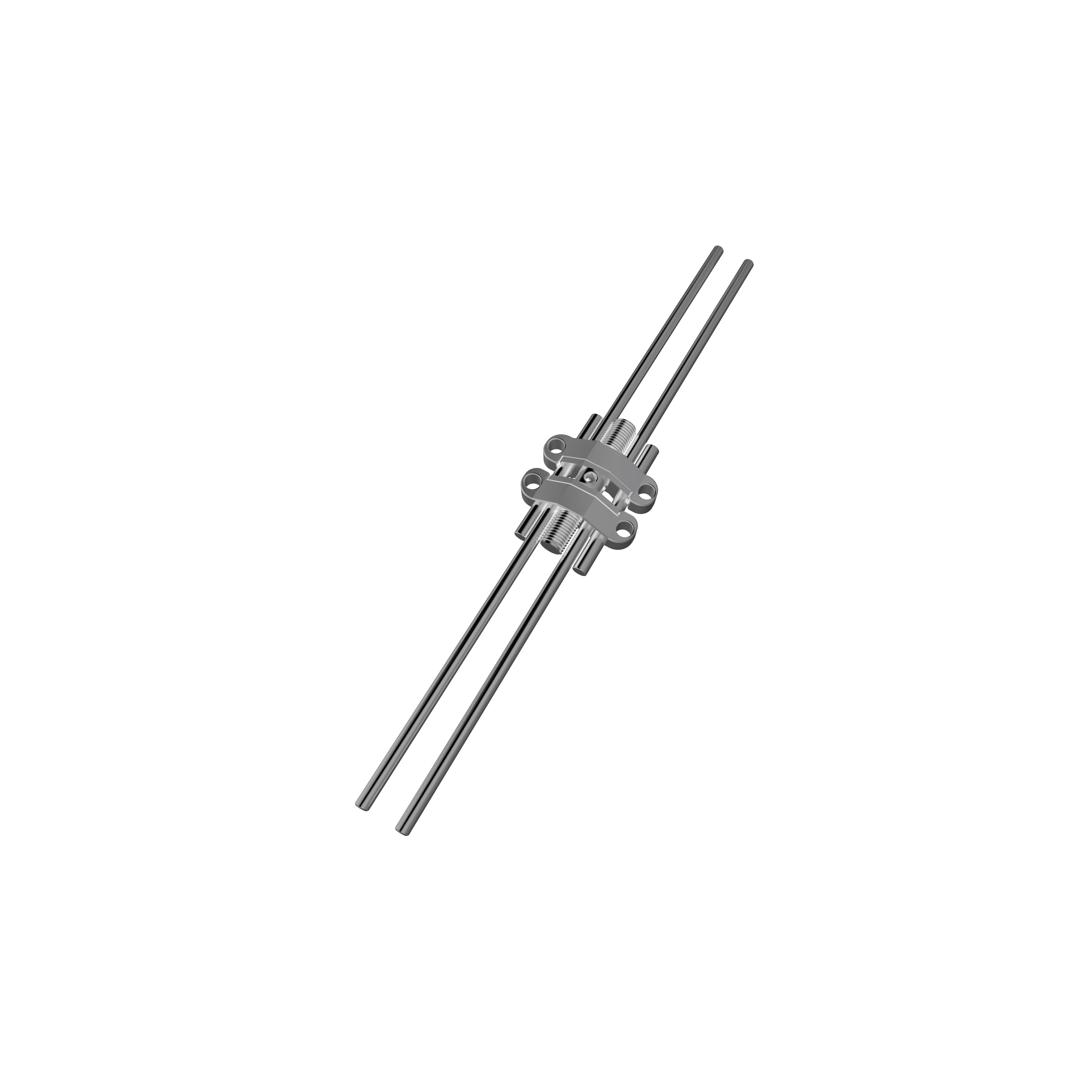
The screw is the force generator. The K series Expansion Screw is documented as a stainless steel device with a precision-machined thread intended to deliver uniform, stable expansion force and smooth activation. Screw and pin lengths are offered at 12 mm, 16 mm, 18 mm and 20 mm, and expansion sizes at 7 mm, 9 mm, 11 mm, 13 mm and 15 mm. The pin uses a standard design intended to facilitate welding to expanders, and the product is packed one piece per pack, with OEM customization supported. The G series and I series are documented with the same screw and pin length range and the same expansion size range, which gives a buyer three documented series to match against intraoral space and the planned expansion target.
Layer 2 — the band interface
Bands are where expansion force meets the tooth. Y-H6002 Orthodontic Bands are documented as 1st molar plain rough bands made from medical-grade stainless steel, anatomically shaped through CAD design, with rolled and polished edges, permanent laser marking for size identification, and a textured inner surface that the manufacturer states improves bonding strength by 30 percent. They are compatible with Roth, MBT and edge-wise systems in 0.018″ and 0.022″ slot specifications and are offered in low-torque and high-torque versions. Pre-welded configurations integrate buccal tubes, and smaller pediatric bands are available for primary teeth and early treatment. OEM packaging customization is available.
The procurement point is torque and system compatibility. A band specified for a low-torque prescription is not a casual substitute inside a case planned around high torque, and pediatric sizing is a separate dimension rather than a scaled-down adult item.
Layer 3 — arch wires, tubes and attachments
The wire layer defines the force system during alignment and consolidation. Four arch wire families are documented: Y-SS stainless steel, Y-SN super-elastic NiTi, Y-HN heat-activated NiTi and Y-TMA titanium-molybdenum alloy. NiTi wires are defined by pseudoelastic behaviour, which allows them to exert light forces with high springback and to reduce the frequency of arch wire changes; stainless steel remains the most widely used arch wire material globally and provides greater stiffness for later-stage mechanics. The stainless steel and NiTi families are offered in 0.012″ to 0.020″ sizes, the TMA family in 0.012″ to 0.018″, in round and rectangular cross-sections, upper and lower arch types, and arch forms that include Square, Natural, Damon, Oval, Europa-I and Broad.
Buccal tubes sit at the same interface. Y-T1 Buccal Tubes are documented as slim-body metal tubes for first and second molars in 0.018″ and 0.022″ slots with an 80-mesh bonding base and tooth markings, supplied in sets of four. Y-T2 Self-ligating Buccal Tubes are passive self-ligating first molar tubes in a 0.022″ slot with a sandblasted 80-mesh base and a tooth mark on the cap, also supplied in sets of four.
Attachments carry traction and root control in both case types. The documented auxiliary range includes mini round tube stops at 0.019″ (Y-F204), crimpable hooks at 0.022″ in 2.4 mm configurations (Y-F102, Y-F201), spiral crimpable hooks at 0.022″ in left and right 8.7 mm versions (Y-F105L, Y-F105R), and a round-shape power arm with a long-stem hook and dual base options (Y-F321). Lingual buttons include stainless steel 80-mesh bondable versions (Y-F303), ceramic bondable buttons in polycrystal material (Y-F305C), and eyelet and eyelet traction hook variants (Y-F307, Y-F308, Y-F322).
Layer 4 — anchorage adjuncts
Where skeletal anchorage is required, miniscrews are the documented adjunct. The Y-OS1406 Orthodontic Implant Screw is fabricated from biocompatible medical titanium alloy with a self-tapping thread, a smooth transmucosal collar designed to reduce gingival irritation, and hole-type or hook-type heads, in a 1.4 mm diameter and 6 mm length configuration. Third-party market analysis describes anchorage mini-implants as a growing part of the orthodontic consumables segment and reports a high success rate in complex malocclusion cases. A procurement caution follows from the documentation: Y-OS1406 is listed in a single 1.4 mm × 6 mm configuration, so a case requiring a different diameter or length sits outside that documented specification.
Facemask cases: frame, force vector and the intraoral interface
A face mask applies extraoral forward traction to the maxilla. Two elements have to be specified at purchase: the extraoral frame and the intraoral interface that the elastics connect to.
Two models are documented. Face Mask/Universal is constructed mainly from stainless steel and ABS: the stainless steel frame delivers structural strength, while padded plastic parts are designed to reduce facial pressure and discomfort. It is available in large and small sizes, with a multi-adjustable design that allows tuning of height, width and traction angle, and multiple traction hooks for connecting elastics to intraoral appliances. It is described as lightweight and is used for correcting pediatric anterior crossbite and stimulating maxillary forward growth. The Adaptable Class III Mask uses the same stainless steel and ABS construction and is available in Standard and Small sizes across a wider colour range including blue, yellow, green, purple, red, clear and glitter finishes.
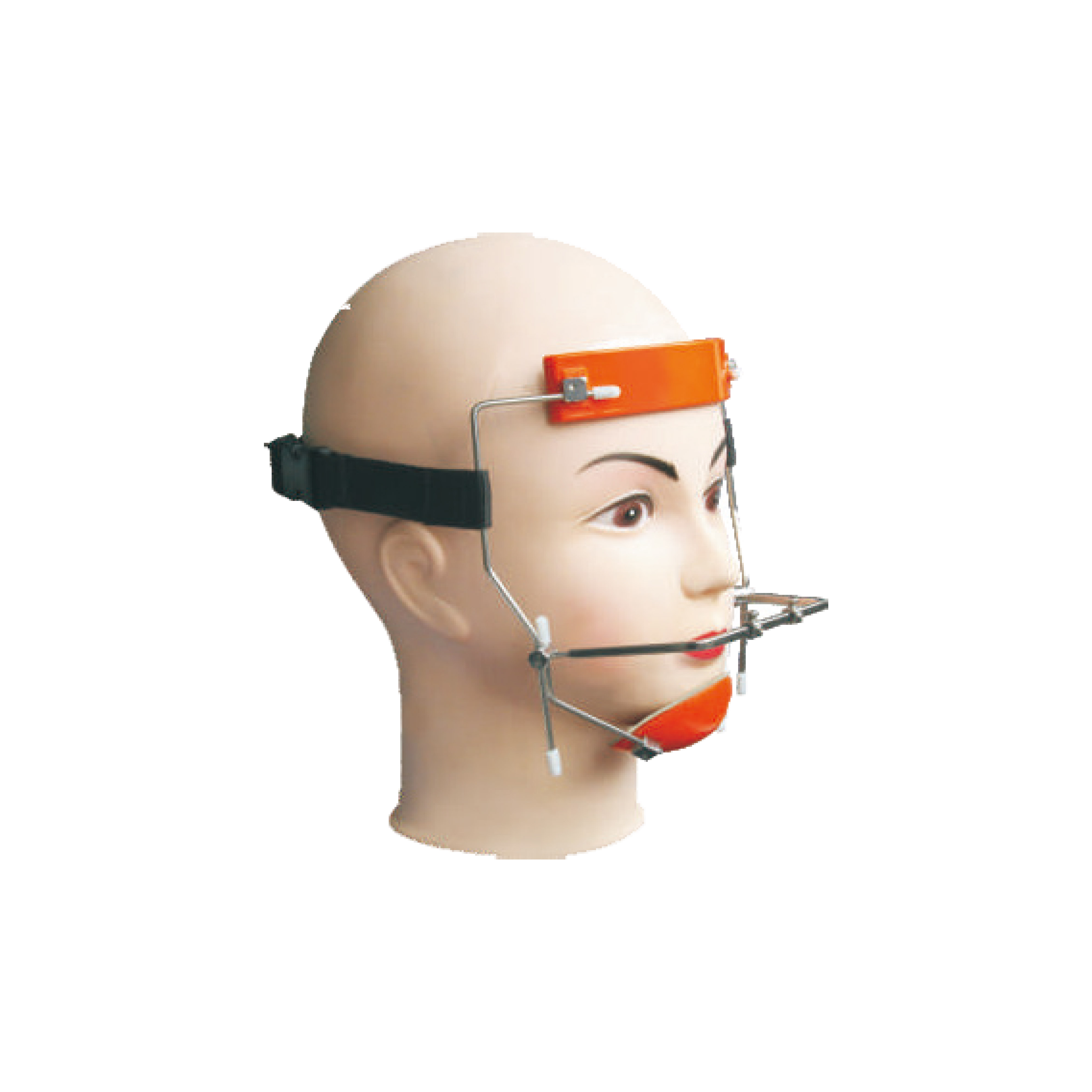
The intraoral interface is assembled from the same component families used in expansion cases: an expansion screw welded to bands, buccal tubes, crimpable hooks, lingual buttons and arch wires, with elastics linking the extraoral frame to the intraoral appliance. This is why the two case types should not be sourced from separate catalogues. A facemask case that includes maxillary expansion in the same treatment phase is, in purchasing terms, an expansion case with an extraoral attachment.
One boundary deserves to be stated plainly. Material specification determines whether a face mask can deliver a prescribed traction vector with acceptable fit and comfort; it does not determine whether the therapy succeeds. Wear time and patient cooperation sit outside the purchase order, and no supplier documentation substitutes for them.
The auxiliary layer: how elastic ligatures and power chains integrate
Ligatures and power chains are the highest-turnover consumables in fixed appliance treatment, and they are the items most often under-specified in a scenario-fit brief because they are bought by the bag rather than by the case.
The two products do different jobs. Elastic ligatures retain the arch wire in the bracket slot in non-self-ligating systems. Power chains provide continuous elastic force for traction and space closure, and they commonly appear after an expansion phase, when residual space has to be managed and arch form consolidated. In a facemask case they are part of the elastic system that transmits force from the extraoral frame into the dentition.
Documented supply formats matter more here than in metal components. Y-S80201 elastic ligatures are latex-free ligature rings made from high-elasticity polymers, available as Normal and Ring clear types and in clear and coloured versions, supplied in spool packaging for convenient cutting at 40 pieces per bag or 10 pieces per bag, with high tear resistance and uniform loop dimensions. Y-S80101 power chains are latex-free high-elasticity polymer chains in open long, closed continuous and open short types, packed one roll per pack, offered in multiple tension and loop sizes. Industry product catalogues identify medical-grade polyurethane as the primary material for both product types, which is why latex-free statements and material documentation carry more weight in these SKUs than in machined stainless steel parts — particularly in pediatric-heavy case mixes.
A structural note affects order planning. Self-ligating brackets close the ligature slot mechanically, so a case built on Y-M2 Self-ligating Brackets, Y-M2 Mini Self-ligating Brackets or Y-C2 Mini Self-ligating Ceramic Brackets runs a different auxiliary profile from a conventionally ligated case. The same clinical scenario can therefore generate very different consumable volumes depending on a bracket decision taken earlier in the buying cycle.
Parameters to match before ordering
| Component group | Documented specification | Why it matters in expansion / facemask sets |
|---|---|---|
| Metal brackets (Y-M1 Mini Bracket; Y-M2 Self-ligating; Y-M2 Mini Self-ligating) | 17-4 and 304 stainless steel; slot 18 / 22; with or without hooks; Roth, MBT, Edge-wise; 20 pcs per set | Slot size and prescription system must match the arch wire and buccal tube used in the same case. |
| Ceramic brackets (Y-C2 Mini Self-ligating Ceramic Bracket; Clear Orthodontic Brackets) | Al₂O₃ body; slot 18 / 22; with or without hooks; Roth, MBT, Edge-wise | Esthetic alternative where ceramic is preferred; confirms the ligation strategy for the case. |
| Molar bands (Y-H6002) | Medical-grade stainless steel; Roth, MBT, edge-wise; low or high torque; laser marked; 0.018″ / 0.022″ compatible | The mechanical junction in expansion setups; torque and system must match the appliance design. |
| Buccal tubes (Y-T1; Y-T2 Self-ligating) | Y-T1: 1st and 2nd molar, 0.018″ / 0.022″, slim body. Y-T2: 1st molar, 0.022″, passive self-ligating, sandblasted 80-mesh base | Tube type and slot must match the arch wire size and the planned mechanics. |
| Arch wires (Y-SS, Y-SN, Y-HN, Y-TMA) | 0.012″–0.020″ (TMA 0.012″–0.018″); round and rectangular; upper / lower; six arch forms | Wire sequence and material stage define the force system through alignment and consolidation. |
| Expansion screws (K, G, I series) | Stainless steel; screw & pin length 12–20 mm; expansion size 7–15 mm; standard pin; 1 pc per pack | Device dimensions must match intraoral space and the planned expansion target. |
| Face masks (Face Mask/Universal; Adaptable Class III Mask) | Stainless steel + ABS; large / small and Standard / Small; adjustable height, width, traction angle | Fit and adjustability determine whether the prescribed traction vector can be applied. |
| Elastic ligatures and power chains (Y-S80201; Y-S80101) | Latex-free high-elasticity polymers; 40 or 10 pcs per bag; 1 roll per pack; open long, closed continuous, open short | Highest-turnover consumables; latex-free and material statements matter most in pediatric cases. |
| Pliers (Y-Q3002, Y-Q6030, Y-Q6018, Y-Q5001, Y-Q5005, Y-Q8005 and others) | Hardness HRC 50–63 by model; maximum sterilization temperature 180°C; zero clearance hinge; CNC production | Band removal, wire bending, crimping and cutting all occur in expansion and facemask work. |
| Instruments (Y-X101 gauge; Y-X201 / X202 / X203 tweezers; Y-Q5010 needle holder) | Stainless steel; gauge 0.022″, 2.0–5.0 mm; autoclavable up to 134°C | Positioning accuracy and sterilization compatibility affect chairside repeatability. |
Compliance verification for expansion and facemask cases
Medical device quality systems are expected to be certified to ISO 13485:2016 for international market access, and orthodontic brackets require CE marking under EU Medical Device Regulation 2017/745 for the European market. In the United States, the FDA classifies orthodontic brackets as Class II devices that may require 510(k) clearance. Separately, device establishments register with the FDA and list their devices under 21 CFR Part 807.
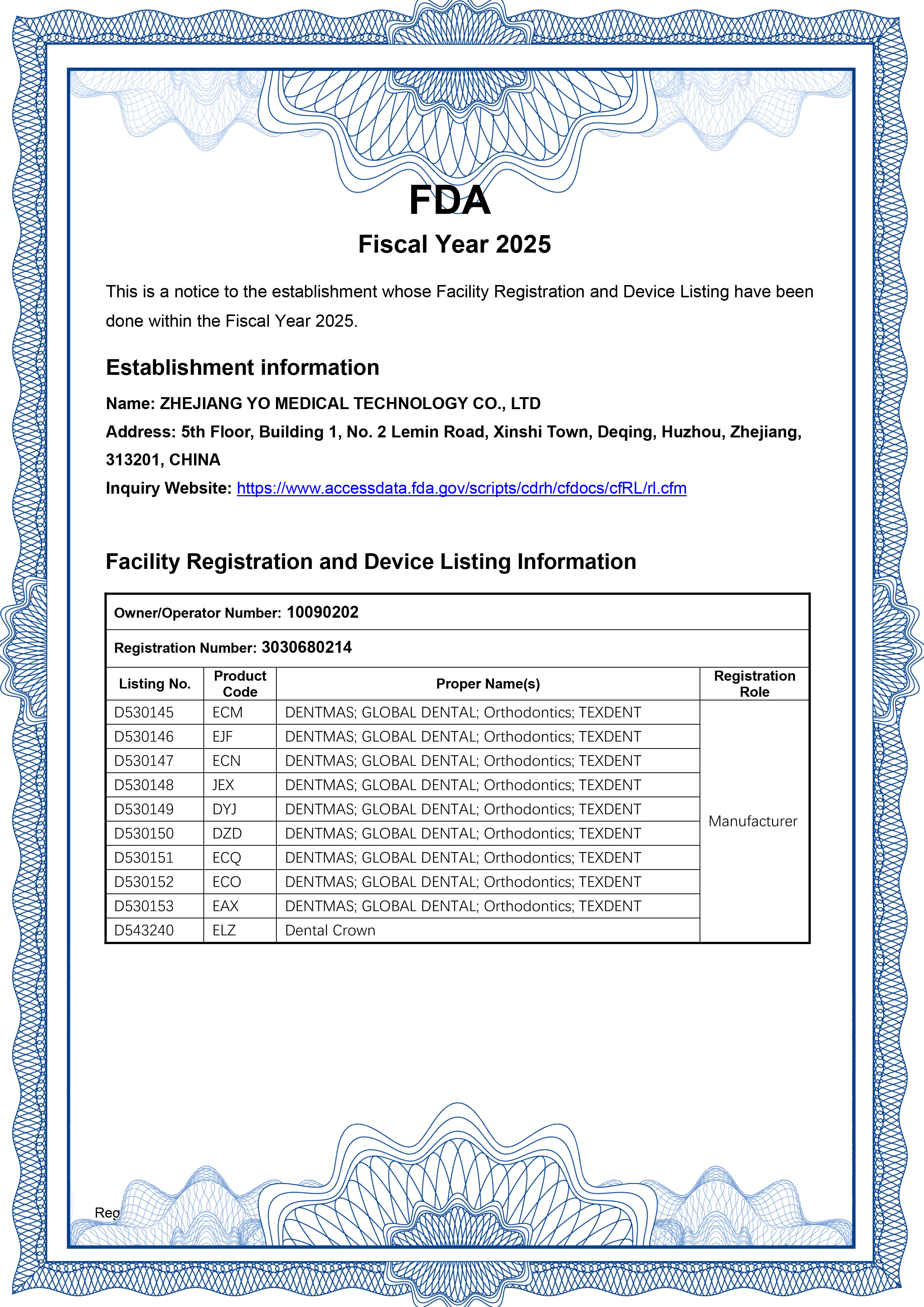
These are two different regulatory steps, and one should not be read as evidence of the other. Yortho’s U.S. registration is documented under registration number 3030680214, issued by the U.S. FDA / CDRH with 21 CFR Part 807 as the applicable standard, covering product categories that include brackets, bands, springs, mirrors, retainers and screw expanders. For export purposes, the company holds a Certificate for Exportation of Medical Products, certificate number Zhehang Food & Drug Admin Medical Device Export 20250496, issued by the Zhejiang Medical Products Administration, covering orthodontic pliers for the global market and valid from 9 June 2025 to 8 June 2027. The brand also states ISO quality management system certification and CE certification under the new EU MDR. The Medical Device Single Audit Program is an increasingly common route for manufacturers that need to satisfy quality system requirements across Australia, Brazil, Canada, Japan and the United States with a single audit.
Material-level questions belong in the same check. Nickel and chromium are identified in medical literature as the primary allergens of concern in metal orthodontic brackets, and the application guidance for this product category lists biocompatibility and nickel-free or low-allergy material requirements for certain markets among the special requirements a buyer should be able to document.
A practical document list for these two case types therefore covers four items: quality management certification; EU MDR conformity documentation for CE-marked components; U.S. FDA registration and listing documentation, with clarity on whether 510(k) clearance additionally applies to the specific device type; and material statements for metal and polymer components where allergy or latex concerns exist.
Where scenario-fit sourcing is harder than catalogue sourcing
If the argument so far has been one-sided, it is incomplete. Scenario-fit sourcing has real costs, and they should be weighed before it becomes standard practice.
- It narrows the supplier field. A brief that specifies slot size, prescription system, band torque, tube type, screw length and expansion range at the same time will exclude suppliers whose range covers only part of the set, even when their individual products are adequate.
- It shifts work to the buyer. The matching logic depends on clinical specification detail — prescription, activation protocol, planned expansion — that distributors frequently do not hold and that cannot be inferred from a catalogue.
- It does not replace clinical validation. Documented parameters define what a component is, not how it performs in a given patient. Sample evaluation and clinician confirmation remain necessary steps rather than optional ones.
- Documented ranges are hard boundaries. The K, G and I series cover 12–20 mm screw and pin lengths and 7–15 mm expansion sizes; the Y-OS1406 miniscrew is documented at 1.4 mm × 6 mm. Requirements outside these configurations are not catalogue substitutions; they are separate engineering conversations.
- Small-order economics can worsen. A scenario-fit set drawn from many component groups is less efficient to order in small volumes than a broad single-family replenishment, which is a genuine trade-off for smaller clinics.
Market and supply signals for 2026
Several published signals are relevant to how these case sets are bought, and they should be read with their scope definitions attached.
- Regional demand. North America held approximately 38.4 percent of the orthodontics market in 2025, while Asia-Pacific is identified as the fastest-growing region for orthodontic supplies.
- Patient driver. The 13–19 age segment is identified as the primary growth driver for orthodontic treatment globally — the demographic most associated with growth-modulation and early intervention case types.
- Channel structure. Orthodontic clinics and standalone practices represent over 50 percent of the end-user distribution channel for orthodontic consumables, which matters because these are the buyers most likely to place case-specific rather than pallet-scale orders.
- Product mix. Brackets dominated orthodontic consumables revenue in 2024, and the buccal braces segment is projected to capture 89.55 percent of market share by 2026, confirming that fixed-appliance demand remains the volume core that generates expansion and facemask case sets.
- Technology. Digital workflows using intraoral scanners and CAD/CAM are identified as a critical trend, and 3D printing is becoming standard for orthodontic models and clear aligner moulds. These change the model and appliance-production side of the workflow; they do not remove the mechanical components discussed above.
- Supply geography. China exported approximately USD 12.7 billion in medical instruments under HS 9018 in 2025, with dental instrument exports concentrated in Guangdong, Jiangsu and Zhejiang provinces according to customs data analysis. Zhejiang is also the province where the manufacturing operation referenced in this article is located.
On the operational side, documented capability figures for the manufacturer referenced here include a monthly capacity of 5,000 units, a standard-product lead time of 3–7 days, a minimum order quantity of 100 units, and 100 percent testing under the stated quality-control process, with OEM/ODM customization available for packaging, logo, tag and product, and after-sales support documented as remote support. Case records describe a distributor relationship covering 18 markets at 5,000 units over one to three years, and a dental hospital account of 3,000 units over two years in which the case record attributes the outcome partly to self-ligating bracket adoption shortening the overall treatment duration.
Future outlook
Three directions look durable for the next buying cycle. First, growth-modulation case types — expansion and facemask therapy in growing patients — remain a structural part of fixed-appliance demand, and they are the case types where component sets are most sensitive to specification mismatch. Second, documentation expectations continue to tighten: alignment of quality system requirements with ISO 13485:2016, EU MDR conformity for CE-marked components, and multi-jurisdiction audit routes such as MDSAP all push buyers toward suppliers who can produce paperwork as reliably as products. Third, auxiliary consumables are moving toward latex-free, high-elasticity polymer formulations with clearer material declarations, a shift that follows pediatric caseloads rather than adult esthetic demand.
The counterweight is that none of these trends changes the mechanics. A screw still has to fit the space available, a wire still has to match the slot, and a face mask still has to be worn. Sourcing that is organised around the case rather than the catalogue is simply a way of keeping those three facts visible at the point of purchase.
Frequently asked questions
Which certification documents should be verified for expansion appliances and face masks?
Buyers typically verify quality management certification, CE documentation under EU MDR 2017/745 where European market access is required, and U.S. FDA registration and listing documentation. Yortho’s U.S. FDA registration is documented under number 3030680214 with 21 CFR Part 807 as the applicable standard, covering categories that include brackets, bands, springs, mirrors, retainers and screw expanders. Orthodontic pliers are covered by a Certificate for Exportation of Medical Products, number Zhehang Food & Drug Admin Medical Device Export 20250496, issued by the Zhejiang Medical Products Administration and valid from 9 June 2025 to 8 June 2027. Because FDA establishment registration and device listing are separate from 510(k) premarket clearance, buyers should confirm which mechanism applies to the specific device type in their market.
What specifications define an expansion screw before ordering?
Documented specifications for the K series Expansion Screw include stainless steel construction, a precision-machined thread for uniform expansion force and smooth activation, screw and pin lengths of 12 mm, 16 mm, 18 mm and 20 mm, expansion sizes of 7 mm, 9 mm, 11 mm, 13 mm and 15 mm, a standard pin design intended for welding to expanders, packaging of one piece per pack, and support for OEM customization. The G series and I series are documented with the same screw and pin length range and the same expansion size range.
Are face masks available in more than one size, and what materials are used?
Two models are documented. Face Mask/Universal is supplied in large and small sizes in orange, and the Adaptable Class III Mask is supplied in Standard and Small sizes in colours including blue, yellow, green, purple, red, clear and glitter finishes. Both use a stainless steel frame with ABS components: the frame provides structural strength and the padded plastic parts are designed to reduce facial pressure. Both offer adjustable height, width and traction angle, and multiple traction hooks for connecting elastics to intraoral appliances. Face Mask/Universal is documented for correcting pediatric anterior crossbite and stimulating maxillary forward growth.
How are elastic ligatures and power chains supplied?
Y-S80201 elastic ligatures are latex-free ligature rings made from high-elasticity polymers, available as Normal and Ring clear types and in clear and coloured versions, supplied in spool packaging for convenient cutting at 40 pieces per bag or 10 pieces per bag. Y-S80101 power chains are latex-free high-elasticity polymer chains in open long, closed continuous and open short types, packed one roll per pack, in multiple tension and loop sizes. Industry product catalogues identify medical-grade polyurethane as the primary material for both product types.
What are the documented order parameters for standard products?
Documented capability figures include a minimum order quantity of 100 units, a monthly capacity of 5,000 units, a lead time of 3–7 days and 100 percent testing under the stated quality-control process. OEM/ODM customization is available for packaging, logo, tag and product, and after-sales support is documented as remote support. Parameters vary by product family, so the applicable figures should be confirmed against the specific item in a scenario-fit set.
How are samples handled for evaluation?
Samples for quality evaluation are documented as free of charge for most products, with pliers and self-ligating brackets listed as exceptions. The buyer covers courier shipping, and freight-collect arrangements are possible where the buyer holds a DHL, FedEx or UPS account. Sample evaluation is generally treated as a validation step before a scenario-fit order is confirmed rather than as a substitute for it.
Who is responsible for import duties and taxes, and what transit times apply?
Under standard shipping terms such as FOB or CIF, the buyer is responsible for import customs duties, taxes and clearance fees in the destination country, and courier companies typically handle clearance documentation automatically on arrival. Documented transit times after production completion are 3–7 business days by express courier, 7–12 days by air freight, 20–30 days by rail or overland freight for regions such as Europe and Central Asia, and 25–40 days by sea freight.