
Orthodontic Supplies by Clinical Scenario: Treatment-Stage Fit
Orthodontic Supplies by Clinical Scenario: Treatment-Stage Fit
Orthodontic supplies are usually bought as a catalogue list — brackets by the case, wires by the pack, pliers by the drawer. Clinics that plan by treatment stage instead build a supply list around what the chair actually does at each appointment, which changes how brackets, tubes, bands, springs, masks and instruments are grouped, stocked and reordered.
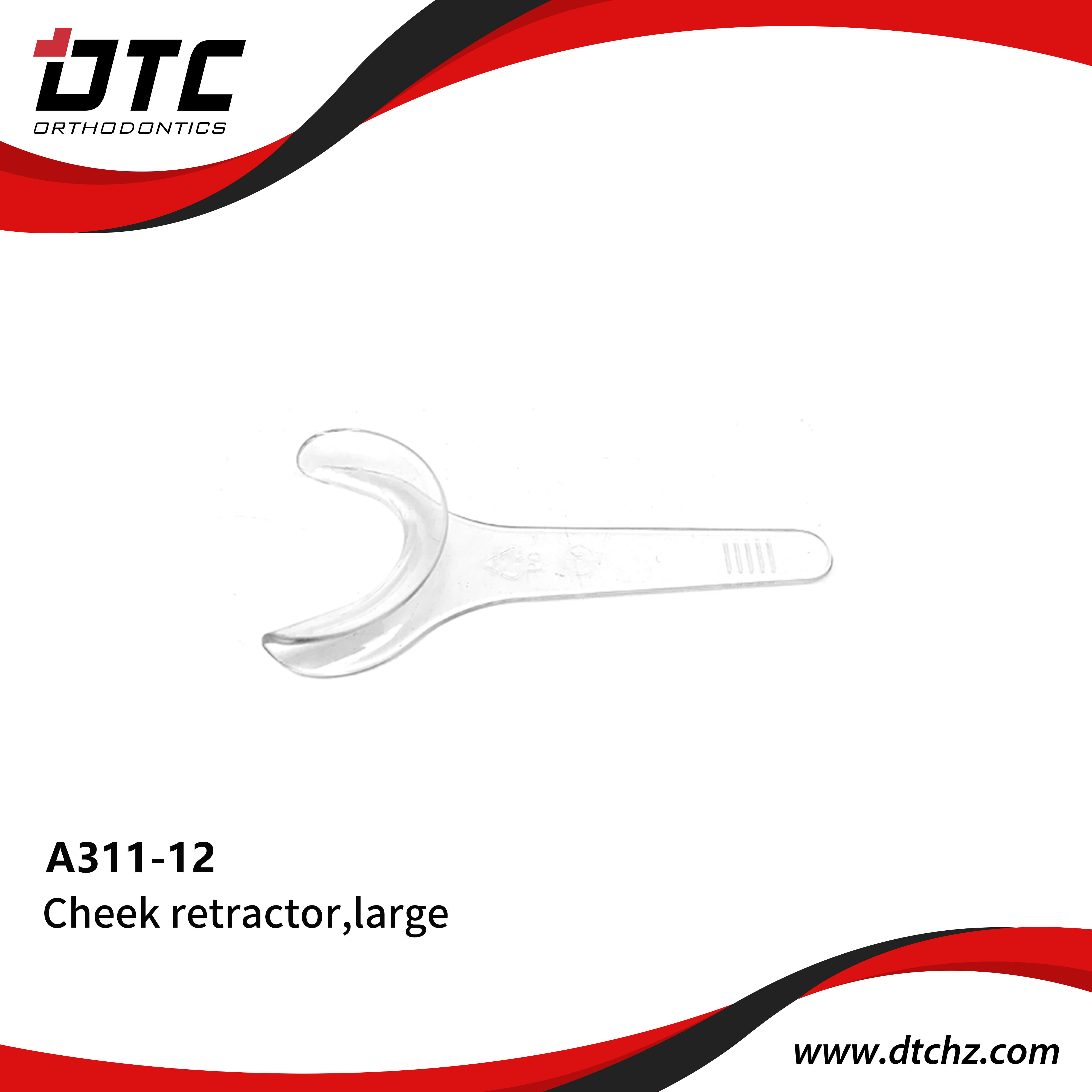
Chairside access equipment is part of the stage-based supply list, not an afterthought to the bracket order.
This reference maps the Hangzhou DTC Medical Apparatus Co., Ltd range — known in export markets as DTC orthodontics — to four recurring scenarios: alignment and bracket workflow, space closure, expansion or orthopedic setup, and the shared chairside and laboratory tool layer. The named products are used strictly as scenario-fit examples from the supplied range. No clinical outcome, superiority or performance comparison is claimed or implied.
What “treatment-stage fit” means for an orthodontic supply list
Stage fit is a procurement logic, not a clinical protocol. It starts from the sequence of work a clinic performs, then asks which consumables and instruments that sequence consumes, then checks whether the SKUs on hand can actually be used together — same prescription, same slot size, same attachment type.
The logic matters because catalogue breadth and stage coverage are different things. A clinic can hold a deep catalogue and still stop mid-appointment, and a distributor can list hundreds of reference numbers while a single stage of treatment depends on three items that must match. The supplied application record for orthodontic treatment lists matched equipment as archwires, buccal tubes, orthodontic bands, bonding adhesives or cements, curing lights, ligatures (elastic ties or metal wires) and orthodontic pliers. Several of those categories sit inside the DTC range; adhesives, cements and curing lights do not, which is one boundary a buyer has to plan around rather than assume away.
A practical decision rule follows from this: build the list by stage, map each stage to reference numbers, then check configuration, documentation and reorder behaviour before the first purchase order — not after the first stock-out.
The four scenarios at a glance
The table below groups the range by the treatment stage in which each item is normally consumed. It is a stocking map, not a treatment recommendation, and every entry reflects a product that appears in the supplied catalogue material.
| Treatment stage or setting | Typical chairside or lab sequence | Items in the DTC range used at this stage |
|---|---|---|
| Alignment and bracket workflow | Bracket and tube placement, band cementation, archwire seating, ligation | Dental Brackets (Delicate, Zeal, Bright, Monoblock, Ceramic Series), self-ligating brackets (Glory I, Glory II, Toast, Ceramic Self-ligating), lingual brackets (DTC-ORG, IN-Tendo JK-SL), buccal tubes (Zeal, Zeal Plus), prewelded and paediatric bands, Niti, CuNITI and stainless steel archwires, ligature rings, O rings |
| Space closure | Spring placement, elastomeric chain, auxiliary attachment | Niti open springs, Niti closed spring with eyelets, power chains, lingual chain, crimpable hooks |
| Expansion and orthopedic setup | Palatal expansion, skeletal anchorage, extraoral traction | MARPE series expansion screw, orthodontic implant screw, rapid palatal expander and MISPA appliances from the laboratory portfolio, adjustable and full adjustable face masks, adaptable Class III mask, high-pull system |
| Chairside support and patient side | Access, retraction, photography, wire cutting, patient-delivered accessories | Cheek and lip retractors, intra-oral stainless steel and glass mirrors, black contrasters, bracket and tube tweezers, Mathieu needle holder, distal end cutters, light wire pliers and cutters, ligature cutters, chewies, separators, rotation wedges |
| Laboratory and paediatric work | Appliance fabrication, crown and band adaptation, paediatric restoration | Rapid palatal expander and MISPA appliances, crown and band contouring pliers, band crimping pliers, crown trimming scissor, Kids Crown paediatric crowns, paediatric bands |
Scenario map of the supplied DTC range. Placement of an item in a row describes where it is consumed, not a clinical indication.
Stage one: alignment and bracket workflow
The alignment stage consumes more reference numbers per patient than any other, and it is where mismatched configuration causes the most chairside interruption. Brackets, buccal tubes and bands have to agree on prescription and slot before an appointment can proceed, which is why this stage is best specified as a set rather than as three separate line items.
Brackets and the configuration fields that matter
The Delicate Series is documented as a metal bracket range with slot sizes 18 and 22, low and high torque options, Roth and MBT systems, and maxillary or mandibular arches. The stated construction uses 17-4PH stainless steel, a laser-welded base, a sandblasted base surface and a contoured mesh base, with a lower profile cited as a patient-comfort feature. Ceramic, ceramic self-ligating, lingual and additional metal series — Zeal, Bright, Monoblock — appear in the catalogue as separate families.
Four configuration fields therefore drive the order: slot size, torque, prescription system and arch. A clinic that stocks 22-slot high-torque Roth maxillary brackets but orders 18-slot wire sequences has created a problem at the chair, not at the supplier. Buyers evaluating a stage-based list should confirm that the bracket, buccal tube and band ranges share the same prescription vocabulary before treating them as one kit.
Buccal tubes, bands and archwires
Buccal tubes are listed as the Zeal and Zeal Plus series. Bands are documented with Roth, MBT and edge-wise systems, low and high torque options, a stainless steel base material, and both prewelded and paediatric variants, with anatomical shaping, a claimed snap fit, permanent laser marking and a patented rough inner surface. Archwire families in the range include super-elastic Niti wires, CuNITI arch wires and stainless steel arch wires.
The practical consequence for a clinic or distributor is that the band and tube layer should be planned with the bracket layer, because these components are consumed together in the same appointment. For a distributor serving several clinics, that usually means carrying the prescription combinations the served clinics actually request rather than every theoretical combination.
Retention and the cutting step
Ligature rings and O rings cover the elastomeric retention step. The cutting and removal step is covered by dedicated instruments: distal end cutters and light wire cutters for wire management, and bracket removing pliers documented at HRC 50–55 hardness in stainless steel with a maximum sterilization temperature of 180 °C, intended for removing bands and other bondable attachments. Tweezers configured for brackets, tubes (long and short tip) and lingual brackets belong to the same placement step, because picking up a bracket and picking up a tube are different reaches behind the arch.
Stage two: space closure
Space closure is the stage where force delivery and attachment hardware are chosen together, and where the open-versus-closed distinction drives the rest of the list. The supplied material states that the spring range is available as open coil springs (push springs) and closed coil springs (pull springs) for different space-management requirements.
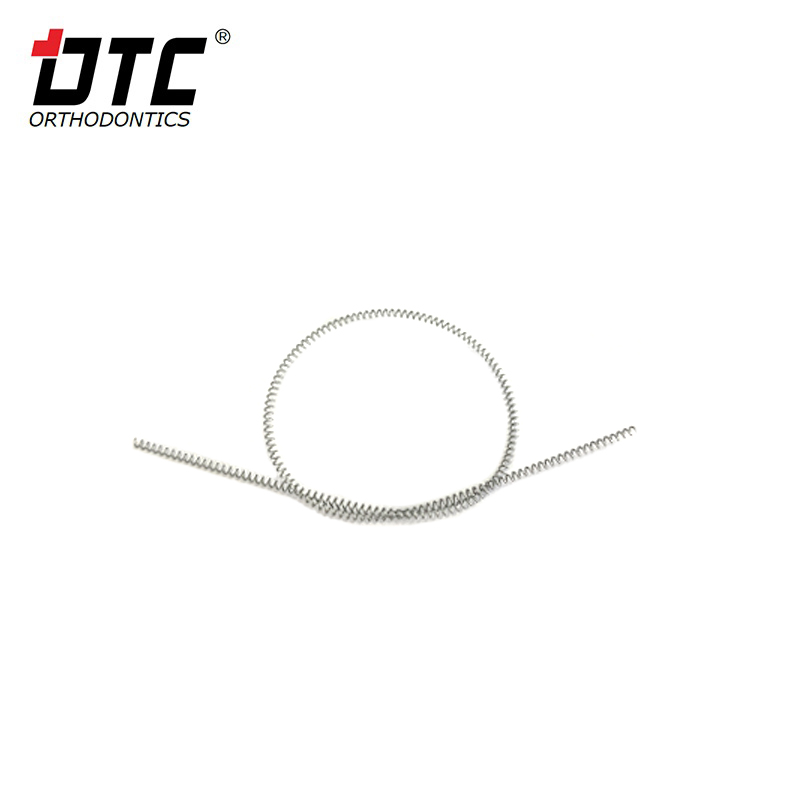
Open coil springs are the push-type option in the range; the closed spring is listed separately for pull-type closure.
Spring specification fields
The Niti Open Spring is documented with round wire diameters of 0.008", 0.010", 0.012" and 0.014", in lengths of 180 mm and 914 mm, in nickel-titanium. The stated characteristics are super-elasticity for gentle continuous force, shape memory for resistance to permanent deformation, a polished coil exterior to reduce friction along the archwire, and suitability for opening or closing interdental space. The Niti Closed Spring With Eyelets is listed as a separate item for pull-type closure.
For a buyer, two fields do most of the work: diameter and length. Diameter is the variable the clinician selects for the force level they want, and length determines whether a single spring spans a segment or a longer edentulous space. A clinic that stocks only 180 mm lengths will substitute or splice in cases that would take a longer coil, so the length decision should be made from the case mix rather than from habit.
Fit boundary: the supplied specification lists diameters and lengths but does not publish force values in grams for each diameter. A clinic or distributor that intends to standardise on a particular diameter should request the force–deflection data they plan to rely on, and should treat diameter as a selection variable rather than as a published force rating.
The rest of the closure kit
Elastomeric closure is covered by power chains for the labial arch and lingual chain for lingual workflows. Crimpable hooks provide auxiliary attachment points where a hook is needed on the archwire rather than on a bracket. Separators and rotation wedges sit adjacent to this stage as preparation and derotation accessories, and are typically consumed before the closure appointment rather than during it.
The stage-fit question here is not which item is better, but which items are consumed together. A closure kit that contains springs but no chain, or chain but no crimpable hooks, will still send someone to the drawer mid-appointment.
Stage three: expansion and orthopedic setups
Expansion and orthopedic work is the least substitutable stage in the list. Devices are size- and protocol-specific, and the components — expander, anchorage screw, extraoral appliance — are usually selected per case rather than per clinic standard.
The range covers this stage through the MARPE series expansion screw, the orthodontic implant screw, and laboratory appliances: rapid palatal expanders paired with compatible orthodontic miniscrews, and the MISPA molar distalization appliance. Extraoral traction is covered by three appliance families — the Adjustable Face Mask, the Full Adjustable Face Mask and the Adaptable Class III Mask — plus the high-pull system.
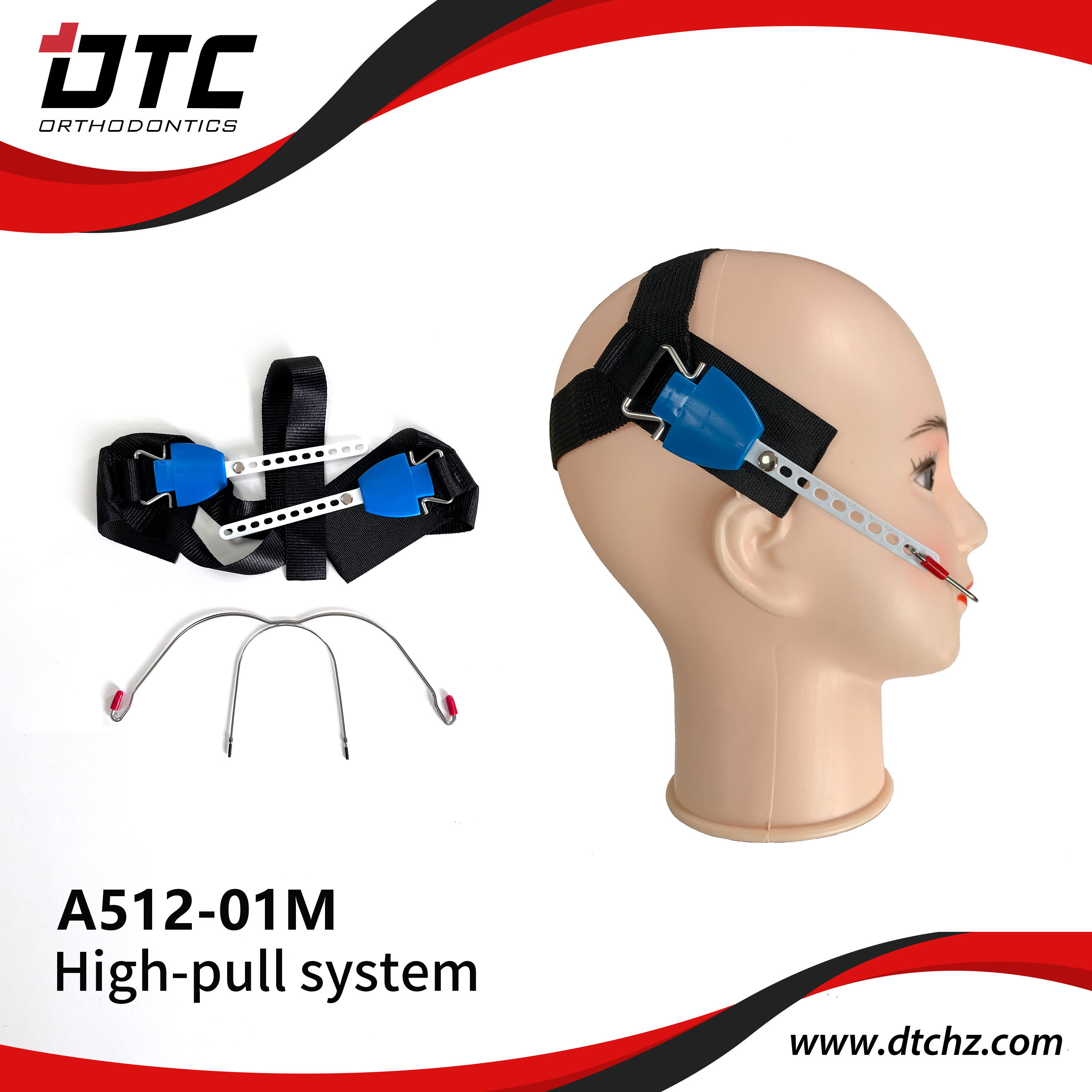
The high-pull system is documented with a stainless steel facebow, calibration holes for force adjustment and an integrated safety release module.
What the supplied documentation specifies
The Adjustable Face Mask is documented in stainless steel and ABS, with an adjustable crossbar for traction vectors and force direction, and in eight colour options (blue, yellow, red, clear, purple, green, glitter purple and glitter orange). The supplier presents the colour range as a compliance aid rather than a technical parameter.
The high-pull system is documented in three sizes — large, medium and small — in PE and polyester fabric, with hooks and attachment points for traction elastics and a standard face bow, an integrated safety release module designed to unclip under excess tension, plastic straps with calibration holes for force adjustment, a breathable headcap, and a stainless steel facebow. The supplier describes its intended use as extraoral anchorage and vertical control for high mandibular plane angle patients.
For clinics, the sizing and spare-part question dominates this stage: headcaps and straps wear, and a mask without a replacement strap is out of service. For distributors, colour and size variants multiply the SKU count quickly, so the stage list should distinguish between the appliance body and the consumable parts that need restocking.
Stage four: grouping chairside and laboratory tools by operator setting
Instruments are usually the least planned part of an orthodontic order and the most frequently borrowed. Grouping them by operator setting — the orthodontist's chair, the assistant's tray, the laboratory bench — turns a long instrument list into three short ones.
Chairside access and visualisation
Cheek retractors are documented in lateral-1, occlusion-large and occlusion-small types, in polycarbonate, with high transparency for clinical photography, long ergonomic handles, rounded polished edges and compatibility with cold sterilization. Lip retractors cover the alternative access approach. Intra-oral stainless steel mirrors are listed in thirteen anatomical types, autoclavable to 130 °C, with a front-surface coating to avoid ghost imaging and rounded edges; glass mirrors with a hard surface are also in the range. Black contrasters belong to the same photography step.
Hand instruments and cutting
The plier range spans bracket removing, band crimping, crown and band contouring, light wire, light wire cutter, distal end cutter and clear aligner pliers, plus a crown trimming scissor and a Mathieu needle holder. Documented hardness values differ by task: bracket removing pliers at HRC 50–55 and clear aligner pliers at HRC 58–63, both in stainless steel with a maximum sterilization temperature of 180 °C, both described as CNC machined with a micro-gap hinge. Brackets, tube and lingual brackets tweezers complete the placement set.
Patient-side accessories and paediatric items
Chewies, separators, rotation wedges, O rings and ligature rings are consumed by patients rather than by operators, which means they behave like a reorder item rather than a capital item. Paediatric work adds the Kids Crown preformed crown range, paediatric bands and the crown trimming scissor; laboratory work shares the contouring and crimping pliers with the chairside set.
Where material and mechanism choices change the supply list
Comparisons in this category are often framed as material contests — metal versus ceramic, conventional versus self-ligating. The supplied material supports a narrower and more useful conclusion: these choices change what has to be stocked and handled, not which product works better.
Metal brackets in the Delicate Series are documented with slot, torque, prescription and arch fields and with a defined construction. Ceramic brackets, ceramic self-ligating brackets and lingual brackets appear in the catalogue as separate families, but the supplied specification units do not include their dimensional or material data. Self-ligating systems are listed as distinct series (Glory I, Glory II, Toast), again without comparative performance data. On that evidence base, a buyer can compare documented characteristics and configuration coverage; a buyer cannot conclude that one mechanism produces better treatment outcomes, and this article does not.
The supply-list difference is nonetheless concrete. A conventional twin-bracket workflow consumes ligature rings or O rings at every appointment, while a self-ligating series changes that consumption pattern. Lingual workflows change the bracket and instrument set, which is why lingual brackets sit alongside lingual buttons, lingual chain and lingual brackets tweezers in the range rather than being treated as a drop-in substitute.
Instrument comparisons follow the same rule. Two stainless steel pliers with different documented hardness ranges are different tools for different tasks; the harder head is not automatically the better purchase, and the softer one is not automatically the compromise. Buyers should match the tool to the procedure it will perform and confirm the sterilization cycle it will face.
Market context, stated with its limits
Commercial research places the global orthodontic supplies market at a projected USD 11.02 billion in 2026, with a forecast period extending to 2035 (Market Research Future, 2026). The same publisher estimates that buccal braces will account for 89.55% of orthodontic placements in 2026, and reports the paediatric dental crown market at USD 8.56 billion in 2025, rising to a projected USD 12.99 billion by 2030.
These figures are publisher-reported estimates, not measured shipment data, and they should be read with their scope. Published size estimates for this category vary materially depending on whether instruments, implants and paediatric crowns are counted inside the definition, so a single number is only meaningful alongside its product scope and base year. The buccal-placement share describes a placement-type split; it does not establish demand for any specific bracket design, and it does not validate a supplier's product claims.
The regulatory frame is more stable. United States regulations define an orthodontic appliance and accessory as a device intended for orthodontic treatment that is affixed to a tooth so that pressure can be exerted on the teeth, and the definition explicitly includes preformed orthodontic bands, orthodontic elastic bands, metal brackets, wire clamps, tubes and orthodontic wires (21 CFR 872.5410). Orthodontic plastic brackets are classified as Class II devices under 21 CFR 872.5470 in the cited FDA decision document. In the European Union, orthodontic appliances placed on the market fall within the scope of Regulation (EU) 2017/745, although the specific risk class assigned to each device type was not confirmed in the material reviewed for this article.
Verification note: DTC reports ISO 13485, CE0197 and FDA certification for its products and production processes, and states that its management system follows CE (MDR) and ISO requirements. These are company-reported certifications. Buyers should review the certificates, their scope and their validity dates directly rather than relying on a catalogue statement or a secondary article.
Ordering logic for a stage-based list
Once the list is organised by stage, the commercial variables become easier to reason about, because they can be applied per stage rather than to the catalogue as a whole.
- Minimum order quantity: the supplier's capability record lists a MOQ of 100 units, and its published FAQ notes that the MOQ depends on the specific product and customisation requirements, with options such as split shipments, shared tooling costs and standard colours used to reach workable volumes.
- Lead time: the capability record lists a production lead time of 20–30 days, while the published FAQ distinguishes standard stock items shipped within 3–5 business days from custom-engineered runs at 2–4 weeks. Buyers planning a mixed stage order should confirm which category each line falls into rather than applying one lead time to the whole basket.
- Customisation: OEM/ODM cooperation is listed with customisation of package, logo, tag and product, which matters where a distributor's own branding is applied across a stage kit.
- Quality control and documentation: the supplier states 100% testing and a quality management system governing production, and describes online product manuals, multi-language documentation and QR-linked documentation as its support approach.
- Recorded customer profile: supplied case records describe distributor, dealer, dental clinic and public hospital relationships with recorded quantities between 500 and 5,000 units and durations of one to three years across European, Asia-Pacific, Latin American, Middle Eastern and African markets. These are order records, not clinical outcome data.
The company context behind these terms is a Hangzhou-based manufacturer founded in 2004, operating a 5,000 m² facility with a 30-engineer R&D team, an annual output listed at 1,000,000 units and an export share of 80%, serving the EU, USA, Middle East, South America, Asia, Africa and Australia. Its portfolio spans orthodontics, paediatric dentistry and dental laboratory products.
Outlook
Two supported signals point in the same direction for stage-based stocking. First, buccal fixed appliances remain the dominant placement type in the publisher estimate cited above, which keeps the alignment-stage kit — brackets, tubes, bands, wires, ligation — the core of most clinic orders. Second, the reported growth in paediatric crowns suggests that paediatric stock, including preformed crowns and paediatric bands, is increasingly planned alongside adult orthodontic lines rather than treated as a separate purchase.
Neither signal predicts which supplier a clinic will choose, and neither removes the need to verify configuration, documentation and regulatory status product by product. What they do support is a shift in how lists are built: from a flat catalogue order toward stage kits with a defined instrument layer and a defined reorder trigger.
Conclusion
Treatment-stage fit turns an orthodontic supply list into something a clinic can check against its own schedule. Alignment work depends on brackets, buccal tubes and bands agreeing on prescription, slot and torque; space closure depends on choosing open or closed springs and pairing them with chain and hooks; expansion and orthopedic setups depend on device size, spare parts and traction hardware; and the tool layer should be grouped by who uses it. The DTC range covers a substantial part of this map, and states plainly where it stops: bonding adhesives, cements and curing lights sit outside the orthodontic line, and the catalogue does not publish comparative clinical performance data. Buyers who plan around those boundaries get a supply list that matches the chair rather than the catalogue.
Reference material: the DTC English product catalogue is available for download at cdn.socialarks.com — DTC English catalogue (PDF).
FAQ
How should a clinic decide which orthodontic supplies belong in each treatment-stage kit?
Start from the sequence of work rather than from the catalogue. An alignment kit needs brackets, buccal tubes and bands that share the same prescription, slot and torque fields, plus the archwire family and the ligation method in use. A closure kit needs open or closed springs, elastomeric chain and any auxiliary hooks. An orthopedic kit needs the expander or anchorage device, the mask or pull system, and its replaceable parts. Then add the shared tool layer. Confirm configuration and documentation for each kit before ordering, because a kit assembled from mismatched configuration fields fails at the chair regardless of product quality.
Which pliers does a clinic actually need for bracket and wire work?
DTC's published guidance is to identify the primary procedures the clinic performs first, then stock accordingly — for example Weingart pliers for archwire placement, Bird Beak pliers for wire bending and distal end cutters — and to select stainless steel instruments that withstand autoclaving, with comfortable handles to reduce hand fatigue over long sessions. The range itself documents bracket removing pliers at HRC 50–55 and clear aligner pliers at HRC 58–63, both autoclavable to 180 °C. DTC states a three-year warranty for pliers it sells; buyers should confirm the applicable terms in the quotation.
What minimum order quantity and lead time should a clinic or distributor plan for?
DTC's capability record lists a MOQ of 100 units and a production lead time of 20–30 days, while its published FAQ separates standard stock items, shipped within 3–5 business days from maintained safety stock, from custom-engineered runs requiring 2–4 weeks. The FAQ also notes that MOQ varies by product and customisation, and describes split shipments, shared tooling costs and standard colours as ways to reach workable volumes. Because a stage-based order mixes stock and custom lines, the lead time should be confirmed line by line.
How is batch-to-batch consistency handled across a multi-stage order?
DTC states that it operates a quality management system with formal production governance, that it controls production and quality management directly as both manufacturer and exporter, and that it provides documentation with each order delivery. Its capability record also states 100% testing. For a multi-stage order, the practical check is whether the documentation supplied with each shipment allows the clinic to trace the batch for each product family, and whether the supplier can confirm that configuration fields such as slot size, torque and prescription remain consistent between shipments.
Which products support expansion or orthopedic setups, and what should be verified before ordering?
The relevant items are the MARPE series expansion screw, the orthodontic implant screw, laboratory appliances including rapid palatal expanders with compatible miniscrews and the MISPA molar distalization appliance, the adjustable and full adjustable face masks, the adaptable Class III mask and the high-pull system. Verification should cover size (the high-pull system is offered in large, medium and small), colour where compliance aids matter, availability of replacement headcaps and straps, and whether the traction protocol used by the clinic matches the adjustment mechanism — the high-pull system, for instance, uses calibration holes for force adjustment and an integrated safety release module.
Tem questões ou precisa de mais detalhes?
Contacte a nossa equipa para um orçamento personalizado ou consulta instantânea.
Solicitar orçamento
Preencha o formulário abaixo e a nossa equipa entrará em contacto com uma proposta personalizada.
Chat direto do WhatsApp
Prefere conversar em tempo real? Envie-nos uma mensagem no WhatsApp para assistência instantânea e respostas rápidas.
- Obter orçamento personalizado
- Partilhar fotos ou documentos
- Discuta as suas necessidades diretamente
Geralmente responde em 5–30 minutos durante o horário de expediente.