
Outdoor Waterproof Ethernet Cable: Pins, Length, Testing
Outdoor Waterproof Ethernet Cable: Pins, Length, Testing
Bent RJ45 pins, channel length and a repeatable test method decide whether an outdoor link survives acceptance. This technical FAQ connects those three field checks to documented pre-shipment testing and contract criteria.
An outdoor waterproof Ethernet cable is usually bought on its jacket: UV-resistant PE, water-blocking construction, direct-burial or aerial duty. The disputes that actually reach procurement teams are rarely about the jacket. They concern a connector with a bent pin, a channel that measures longer than the drawing, or a link that shows a light but will not carry the expected rate.
For a buyer moving from evaluation into execution, the useful question is narrower than which cable is best. It is which field checks can be repeated, which can be documented, and which can be written into acceptance. The three questions below — bent RJ45 pins, maximum run length and cable testing — are the ones that recur most often, and each has a documented answer that can be tied to factory test evidence and purchasing terms.
Why outdoor link failures concentrate at the interface
Field diagnosis material groups the causes of a failing Ethernet link into five families: physical damage such as broken inner conductors, crushed cable or jacket damage from over-tight routing; termination defects such as a wrong wiring sequence, over-long untwisted pairs, poor crimping or damaged and oxidised RJ45 pins; cable quality issues such as copper-clad aluminium conductors, off-specification grades or counterfeit product; environmental interference, including heavy EMI, incorrect STP grounding and mixed indoor/outdoor cable usage; and connector mismatch, where a low-grade RJ45 plug cannot support the frequency range of Cat6 or Cat6a cable.
Four of those five sit at or near the interface: the plug, the termination, the grounding, the port. That distribution matters for outdoor work because the environmental part of the specification is usually fixed at purchase, while termination quality is created on site. A cable with a correctly documented PE jacket can still fail acceptance because a pin was bent during pulling, or because the run grew past the channel limit once patch cords were added at both ends.
Bent RJ45 pins: correct what can be corrected, replace what cannot
A slightly bent RJ45 pin can sometimes be straightened carefully. A heavily bent, cracked or broken pin cannot be repaired, and the connector has to be cut off and replaced with a new crimped plug. That distinction is the practical answer for site teams, and it is the one worth writing into installation guidance.
The documented procedure runs in six steps:
- Unplug the cable from the powered network port before any maintenance.
- Inspect each metal pin inside the RJ45 connector.
- For a slight bend, use a small insulated flat-head tool to straighten the pin gently.
- If the pin is cracked, broken or will not reset, cut the old connector off.
- Re-terminate and crimp a brand-new RJ45 connector.
- Test cable connectivity after finishing.
Two cautions belong with the procedure. Pins are fragile, and excessive force during adjustment can turn a recoverable bend into a broken contact. And no maintenance should be carried out on a live port.
What the procedure does not do is restore a guaranteed connector. Straightening is a field remedy for a slight deformation; the pin has already been loaded beyond its intended shape, so the link has to be re-tested rather than assumed good. That is why the step list ends with a connectivity test rather than with the physical adjustment.
Where connector damage recurs across a batch — a pattern that usually points to pulling practice, cable diameter against the connector boot, or repeated mating — the alternative is to take the field crimp out of the equation and use factory-assembled patch cords, which are terminated and tested under controlled conditions. Pre-terminated assemblies also shorten installation time at height or in bad weather, where a hand crimp is hardest to control.
Bent pins are also only one member of the termination family. Wrong wiring sequence, untwisted pairs left too long before the plug, and poor crimping produce the same symptom — a link that negotiates, then drops packets — with no visibly bent metal anywhere.
Run length: what the 100 m channel limit actually settles
The twisted-pair Ethernet standard sets a maximum total channel length of 100 m, patch cords included. Beyond that limit the signal attenuates and packets are lost; where the distance cannot be reduced, a repeater or switch is required rather than one forced long run.
The phrase that causes most confusion is total channel. It is not the length of cable on the drum, and it is not the outdoor span alone. It runs from the active equipment at one end to the active equipment at the other, and it includes the patch cords at both ends. An 88 m outdoor run with two 5 m patch leads has already reached 98 m before any allowance for routing slack or a consolidation point.
Cable category changes what can be carried over that distance, not the channel limit itself. Cat5e delivers 1 Gbps over 100 m with 100 MHz bandwidth. Cat6 delivers 10 Gbps only up to 55 m, on 250 MHz bandwidth. Cat6a holds 10 Gbps across the full 100 m channel at 500 MHz, with strict alien-crosstalk requirements for dense bundles.
For Power over Ethernet the conductor matters as much as the category. Cat5e carries standard PoE and PoE+ for ordinary cameras. Cat6a has a larger copper cross-section and lower resistance, which reduces power loss on long runs and supports PoE++ devices up to 90 W. On a surveillance run close to the channel limit, that difference influences whether a camera boots reliably in cold conditions — but it does not extend the 100 m limit.
Linoya Ethernet cable datasheets mark distance-rate reference parameters so the calculation can be made from the datasheet rather than from experience. Buyers specifying an outdoor route should request those parameters for the exact model and check them against the measured channel, patch cords included, rather than against the ordered cable length.
Field testing: a five-step check that answers whether the cable works
Whether a cable works properly is established by a sequence of three signals — continuity, link status and throughput — not by a single instrument reading:
- Plug both ends of the cable into the two ports of a cable tester.
- Power on the tester and read the LED sequence for open circuit, short circuit or mis-wiring.
- Connect the cable between a PC and a router and check the RJ45 link light on each port.
- Run a network speed test to verify actual throughput.
- Replace the cable if mis-wiring or low throughput appears.
The symptoms that justify this sequence are consistent: no link light, frequent disconnection, slow network speed, random packet loss, unstable PoE supply, or a link that reports 10/100 Mbps where gigabit is expected.
Two points about scope. First, continuity and throughput answer different questions; a cable can pass continuity and still deliver a fraction of the expected rate because of termination or conductor problems. Second, factory testing does not remove the need for a site check: factory-tested cables still require re-verification after construction, because pulling, bending radius, termination and connector mating all happen after dispatch.
On outdoor installations the test should be run after final termination and before connectors are sealed or trenches are closed. A tester deployed after the duct is backfilled can only confirm a failure, not prevent one.
Linking field checks to pre-shipment testing and acceptance criteria
Pre-shipment testing is where the field questions become contractual. Documented capability for this supply includes 100% pre-shipment testing, full electrical performance testing, random sampling inspection and third-party inspection such as SGS or UL. The purchasing terms record pre-shipment test as the acceptance criterion, with a minimum order of 305 m per carton and 100 cartons, FOB or EXW delivery terms, and payment of a 30% deposit with 70% balance before shipment.
Those items are necessary but not sufficient on their own. An acceptance clause that says pre-shipment test without naming the test, the sample basis and the record leaves the buyer dependent on the supplier's own definition. Batch consistency is a separate question from one passing test: the evaluation criteria recorded for export cable supply include the supplier's quality-control system, batch test-record management, past large-volume export references, continuous certification validity and the feasibility of incoming sample testing.
A workable acceptance structure therefore has three layers, each answering a different question:
| Field question | What to check | Evidence to request |
|---|---|---|
| Bent or damaged RJ45 pins | Pin condition at every end; port de-energised before work; re-test after any re-termination | Pre-shipment electrical performance test record; connector and assembly specification |
| Run length | Total channel measured end to end, including patch cords, against category distance-rate parameters | Datasheet distance-rate reference parameters for the exact model |
| Does the cable work | Tester LED sequence, link light status, throughput result after installation | 100% pre-shipment test commitment; third-party inspection report where required |
| Batch consistency | Incoming sample test against the approved sample and datasheet | Batch test records; certification valid for the exact model and construction |
Layers one and three are often confused. Factory evidence is produced on the batch, before dispatch, on factory equipment. It cannot report the effect of a 30 m pull through a duct, a re-terminated connector, or a channel that grew past 100 m when patch cords were counted. That is not a defect in the factory test; it is a different measurement.
Where the three checks matter most
Outdoor surveillance is the most common case. Pole- and wall-mounted IP cameras combine PoE, weather exposure and long cable routes. Cat5e is adequate for standard PoE and PoE+ cameras; where PoE++ devices or routes close to the channel limit are involved, Cat6a's lower resistance reduces power loss. Either way the jacket has to be outdoor-rated, because indoor cable lacks UV and water-resistant protection and fails early in open air.
Outdoor base stations and pole-mounted equipment use aerial construction, where the cable carries an integrated steel messenger wire for tensile load and a UV-protected jacket. Aerial cable is not intended for underground burial, just as direct-burial cable is not designed for overhead tensile load.
Buried runs rely on a thicker PE sheath with water-blocking or gel-filled construction to resist underground moisture and mechanical pressure. Common indoor cable cannot be buried directly and fails quickly under water, humidity and soil corrosion. Installation practice — a properly dug trench, protection against sharp rock, conduit where possible and fully sealed joints — matters as much as the cable specification.
Specification details that show up in the test result
Conductor material appears directly in field measurements. Copper-clad aluminium uses an aluminium core with a thin copper layer: cheaper, but with higher resistance, weaker signal and PoE performance, and a tendency to oxidise, which makes it unsuitable for permanent engineering deployment. Solid bare copper has lower resistance, stable signal and dependable PoE or PoE++ supply over a longer service life, at a higher price.
Conductor construction behaves the same way. Solid-core cable is intended for fixed horizontal and buried runs, with low resistance and stable long-distance transmission but no tolerance for repeated bending. Stranded cable is flexible for patch cords and repeated mating, but has higher DC resistance and is not intended for permanent long-distance installation. Substituting stranded cable into fixed horizontal wiring typically produces poor contact performance and link-test failures.
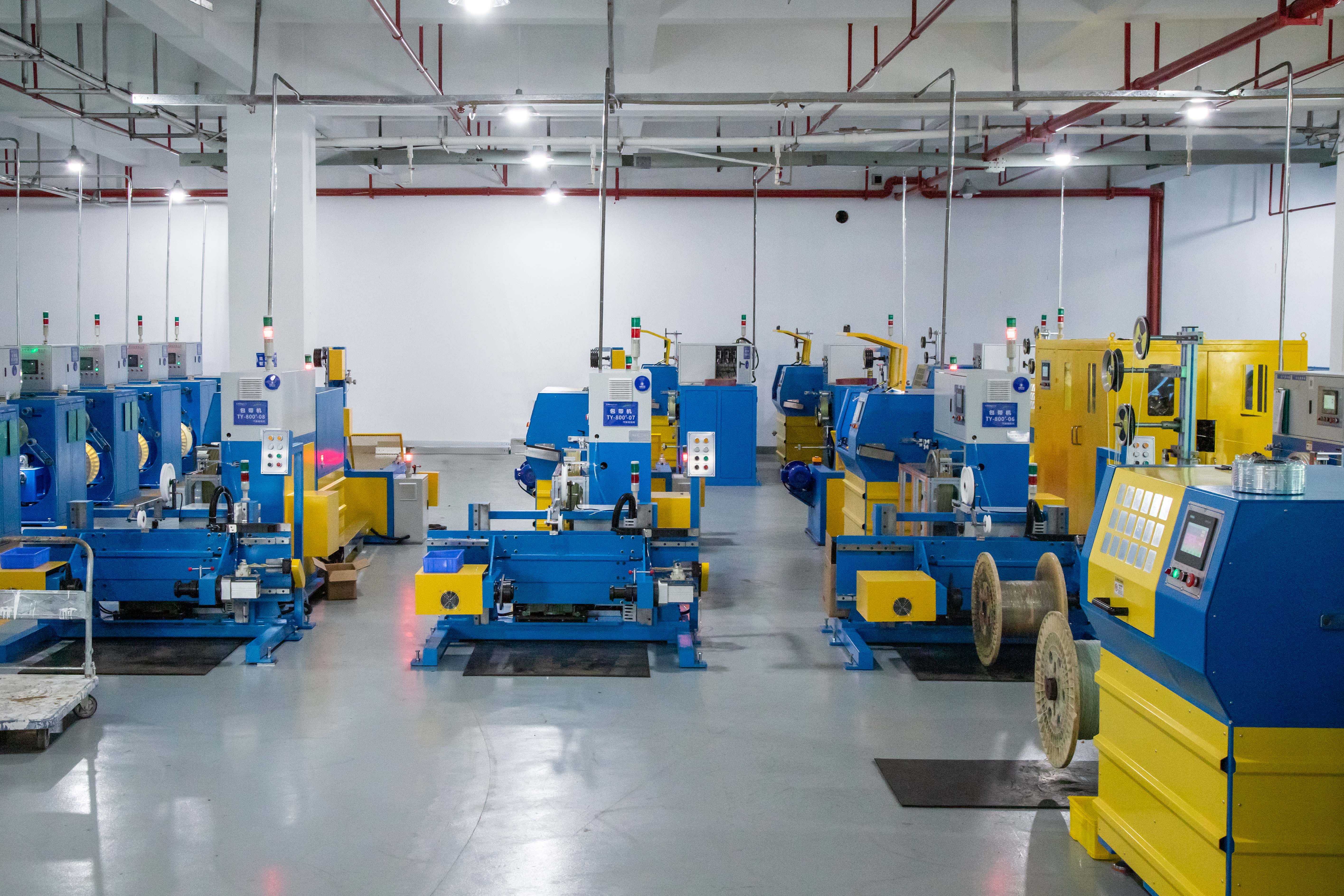
Jacket and sheath choices close the list: PE jacket construction with UV resistance for exposed routes, water-blocking for burial, and the appropriate CPR class where the route passes through a European building. For custom requirements, documented OEM capability covers cable length, logo printing and packaging, with a 30-day lead time and a monthly capacity of 200,000 cartons at 305 m per carton. Specifying delivered length per carton is useful precisely because it can be tied to the channel calculation rather than left to site measurement.
From evaluation to execution: a six-step verification sequence
The three field questions convert into a sequence that runs from specification to handover:
- Fix the channel: measure the route end to end including patch cords and check it against the category distance-rate parameters on the datasheet.
- Fix the construction: burial or aerial, jacket material, conductor type and category, all named in the purchase specification.
- Fix the acceptance criteria in writing: pre-shipment test, sample basis, test record, third-party inspection where required, and certification scope for the exact model.
- Verify at incoming: compare the delivered batch with the approved sample and datasheet, and retain the test records.
- Verify on site: tester continuity, link status and throughput after final termination, before connectors are sealed or trenches closed.
- Retain the record: connector type, re-termination events, channel length and test results, so a later failure can be traced to a stage rather than to the supplier.
The first and fifth steps are the ones most often skipped, and they are the two that give the other four meaning.
FAQ
How should bent RJ45 connector pins on an outdoor Ethernet cable be handled?
A slightly bent pin may be carefully straightened with a small insulated flat-head tool after the cable is unplugged from the powered port; a heavily bent, cracked or broken pin cannot be repaired, so the old connector is cut off and a new RJ45 plug is crimped on, followed by a connectivity test. Pins are fragile, excessive force should be avoided, and work should never be done on a live port. Where connector damage keeps recurring, factory-assembled patch cords remove the field crimp step altogether.
What is the maximum length for an Ethernet cable run?
The twisted-pair Ethernet standard sets a maximum total channel length of 100 m including patch cords; exceeding it causes signal attenuation and packet loss, and a repeater or switch is needed instead of a single forced long run. Category changes the rate carried at that distance rather than the limit: Cat5e carries 1 Gbps over 100 m, Cat6 is limited to 55 m for 10 Gbps, and Cat6a holds 10 Gbps across the full 100 m channel. The channel should be calculated from datasheet distance-rate parameters, not from the length of cable ordered.
How can a buyer test whether an Ethernet cable works properly?
Plug both ends into a cable tester and read the LED sequence for open circuit, short circuit or mis-wiring; then connect the cable between a PC and a router and check the RJ45 link light; then run a speed test to verify actual throughput. A cable showing mis-wiring or low throughput should be replaced. A continuity pass alone does not report throughput, so the three signals are read together.
Does a factory pre-shipment test replace testing on site?
No. A pre-shipment test verifies the batch at the factory before dispatch, using factory equipment. Installation adds termination, bending radius, channel length and site interference, so cables that passed factory testing still need re-verification after construction. The two records answer different questions and both belong in the acceptance file.
What purchasing terms and acceptance criteria should be fixed in the order?
The documented terms for this supply record pre-shipment test as the acceptance criterion, a minimum order of 305 m per carton and 100 cartons, FOB or EXW delivery, and payment of 30% deposit with 70% balance before shipment. Because batch consistency is a separate question, the order should also name the test performed, the sample basis, the test record to be supplied, third-party inspection where required, and the certification scope covering the exact model, conductor and jacket construction ordered.
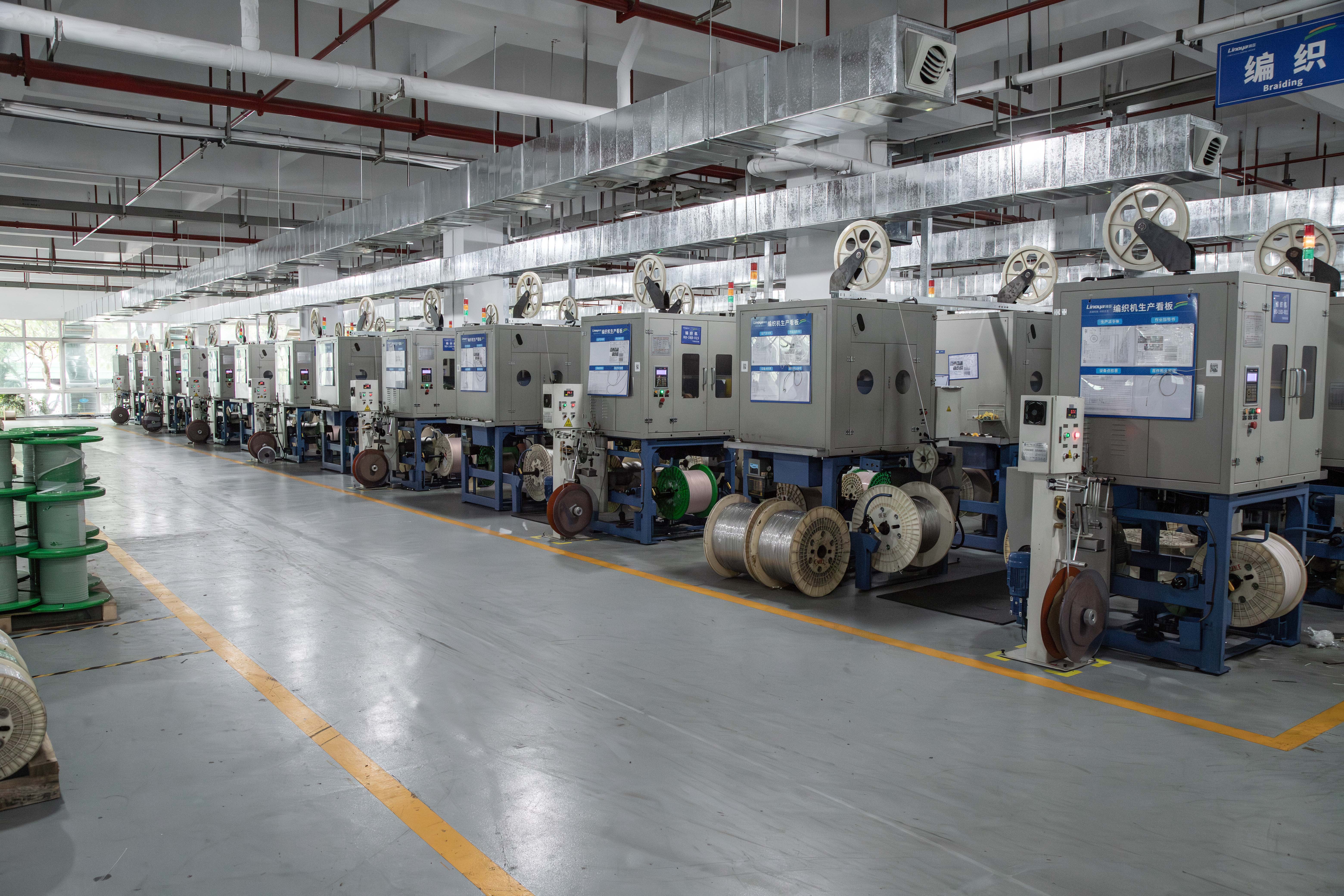
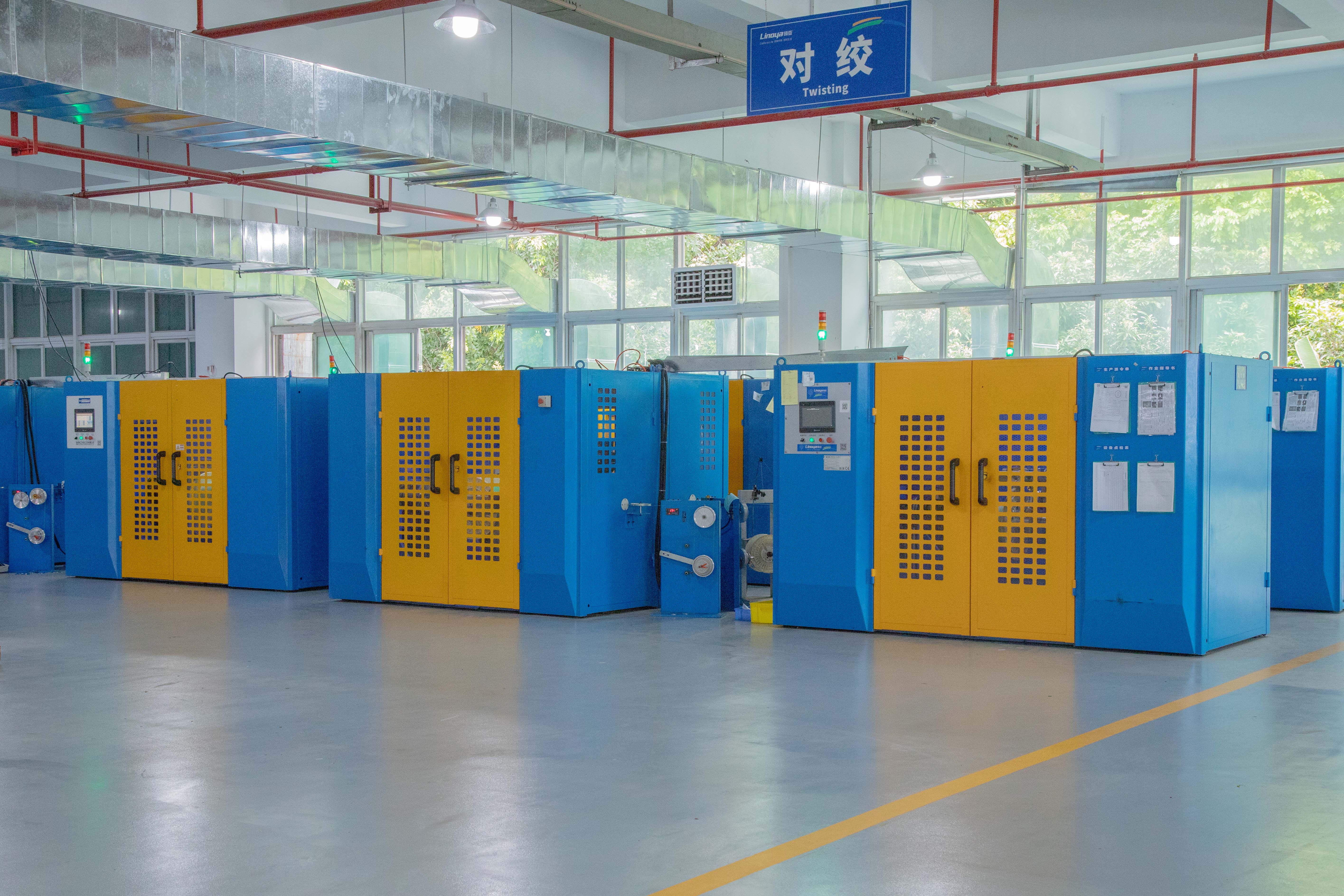
Linoya Electronic Technology Co., Ltd. is a cable and wire manufacturer established in 1997, operating three industrial parks with a 60,000 m² manufacturing footprint, more than 3,000 employees, 300+ engineers and an annual output of 4,000,000 kilometres; 30% of output is exported, with the EU and the Middle East as its main markets. Its LAN cable range is supported by UL, ETL and CPR documentation, and its outdoor cable line covers direct-burial and aerial constructions. After-sales support includes 24/7 online technical support, a one-year product warranty and free replacement of defective products.
Company information and product documentation are available at Linoya Electronic Technology Co., Ltd. The full company brochure can be downloaded here.
Tem questões ou precisa de mais detalhes?
Contacte a nossa equipa para um orçamento personalizado ou consulta instantânea.
Solicitar orçamento
Preencha o formulário abaixo e a nossa equipa entrará em contacto com uma proposta personalizada.
Chat direto do WhatsApp
Prefere conversar em tempo real? Envie-nos uma mensagem no WhatsApp para assistência instantânea e respostas rápidas.
- Obter orçamento personalizado
- Partilhar fotos ou documentos
- Discuta as suas necessidades diretamente
Geralmente responde em 5–30 minutos durante o horário de expediente.