
Overlooked Compliance Basics for Hotel Solar Water Heaters: What Buyers Verify
Overlooked Compliance Basics for Hotel Solar Water Heaters: What Buyers Verify
Hotel solar water heater procurement usually treats compliance as a paperwork step: certificates are collected, a datasheet is filed, and the order moves to production. In commercial domestic hot water projects, that covers only the first of three qualification layers. The other two — documented project stability and operational qualification — decide whether a solar thermal system still delivers hot water at a predictable cost in year ten, long after certificates were issued and warranties have expired.
Zhejiang Kesun New Energy Co., Ltd. is a Chinese manufacturer of solar water heaters, buffer tanks and hybrid solar panels, formed through the merger of Haining Ensun Solar Technology Co., Ltd. and Zhejiang Yile New Energy Co., Ltd. The company operates a 42,000 m² manufacturing facility in Haining, Zhejiang Province, and exports to markets including Mexico, the EU and Africa. Its published specifications and stated project data are useful for showing what a complete hotel procurement file actually contains — and where buyers typically stop checking.
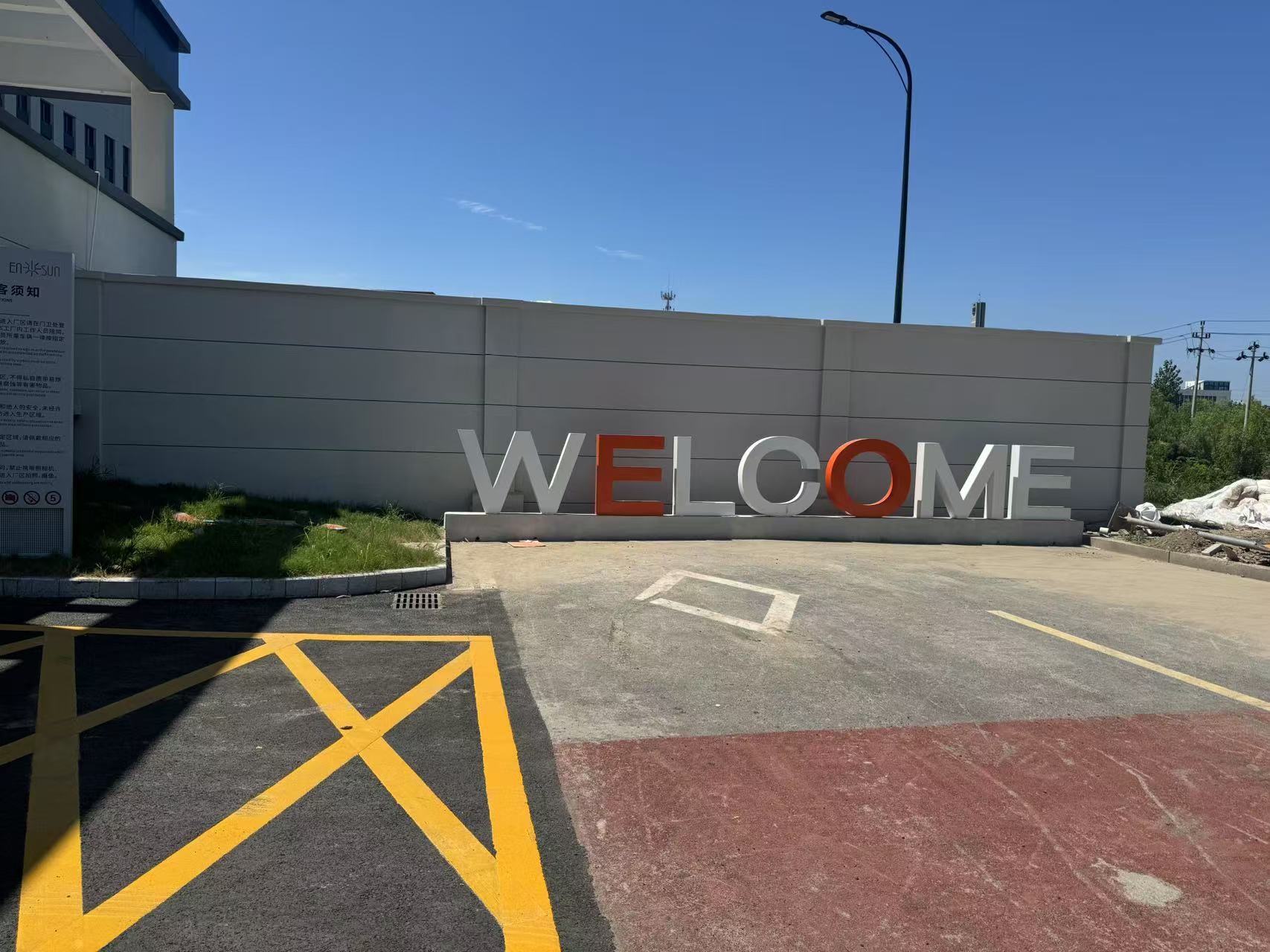
Production and quality-control environment behind commercial-scale solar water heater supply.
Why hotel DHW loads expose gaps that residential orders hide
A hotel is not a scaled-up house with a larger water tank. Hotel domestic hot water demand is continuous across the day, peaks in the early morning and evening, and cannot be interrupted without affecting guests. A solar hot water cylinder sized for a villa rarely matches the draw profile of a 60 to 200-room property, and the failure mode is different: instead of one cold shower, an undersized or mis-specified system leaves a backup boiler or electric element carrying the load at high cost for weeks before the fault is diagnosed.
Two operational realities drive the qualification process. First, most commercial solar heating systems are designed to cover a share of the load rather than all of it — the delivered solar fraction depends on collector area, storage volume, climate and draw pattern. Second, the components that fail first are rarely the vacuum tubes that buyers inspect on a factory visit; they are circulation pumps, controllers, seals and, in hard-water regions, tank internals. A compliance review that ignores this will approve a system that meets the certificate but not the site.
The three layers of a hotel solar water heater qualification file
Commercial buyers who treat certification as the end of due diligence tend to concentrate risk in the two layers they never opened. The table below is a practical structure for a tender or purchase file.
| Qualification layer | What it contains | What it proves | Common gap |
|---|---|---|---|
| Layer 1 — Certification and standards | Type-test certificates, pressure ratings, material declarations | That a product family passed a defined test | Certificate not tied to the shipped configuration |
| Layer 2 — Documented project stability | Material grades, test pressure, corrosion testing, performance data | That the asset can plausibly reach its claimed service life | Service-life and savings claims accepted without baseline data |
| Layer 3 — Operational qualification | MOQ, lead time, capacity, packaging, spare parts, change control | That the supplier can deliver and support the order | Lead time and delivery date treated as the same number |
Layer 1: certification is necessary, but it is thin evidence
A certificate confirms that a product was tested against a standard at a point in time. It does not confirm the configuration being shipped, the water chemistry at the site, or the maintenance regime the hotel will actually follow. That gap is visible in two places that hotel buyers rarely check.
In trade terms, HS Code 841912 was introduced specifically to differentiate solar water heaters from the generic 841919 code, so that customs and statistical records separate solar thermal imports from other water heaters (Solar Heat Europe, 2023). On the regulatory side, new U.S. Federal energy conservation standards for consumer water heaters took effect on 5 July 2024, with compliance required by 2029 (Federal Register / U.S. Department of Energy). Efficiency requirements on fixed timelines mean a hotel specifying a system today is buying an asset that will be judged against later benchmarks, which is a reason to demand documented performance data rather than a certificate alone.
Layer 2: verifying a service life claim of more than 15 years
Service-life claims of 15 years or more are common in commercial solar water heater supply. In a hotel file, such a claim should be supported by four verifiable items: the tank material grade, the relationship between test pressure and working pressure, corrosion test evidence, and a component replacement schedule.
A concrete example from published specifications: the CPS series pressurized solar water heaters are rated at a maximum operating pressure of 6 bar with a test pressure of 9 bar, use 58-1800 vacuum tubes with heat pipes and 50 mm PU foam insulation, and are offered in tank materials including SS304, SS316, Duplex 2205 and Duplex 32001. The distinction between operating and test pressure matters because a 9 bar test on a 6 bar vessel is evidence of structural margin, while the material grade is the stronger indicator of long-term corrosion behaviour in chlorinated, saline or hard water. Duplex stainless steel is specified precisely because it resists the chloride stress-corrosion cracking that shortens the life of lower-grade tanks.
Corrosion evidence is the item most often missing from a buyer's file. Kesun operates an in-house laboratory that performs reliability testing, including salt spray testing and pulse testing, on site — tests the company previously had to outsource. For a hotel buyer, the practical question is not whether a laboratory exists, but whether the test report references the same model, material grade and wall thickness as the units named on the purchase order.
Equally important is what a 15-year claim does not cover. Controllers, circulation pumps, sealing elements and heat pipes have shorter service intervals than the tank, and their replacement cost over a 15-year horizon can exceed the initial price difference between two suppliers. Water quality treatment, freeze protection in winter and roof load-bearing are site-specific requirements that must be defined per project location and design, and they change the maintenance burden rather than the tank specification.
Verifying an energy cost reduction claim above 40%
Claims that a solar heating system cuts water-heating energy costs by more than 40% sit at the centre of most hotel business cases. Kesun's documented performance data states that its evacuated-tube solar systems achieve a solar fraction of 50-65%, reducing operational energy consumption by 40-70% compared with gas or electric water heaters. That is a broad range because solar fraction is a site-specific value, not a fixed product property.
Buyers should ask for the four inputs behind any reduction figure: the baseline fuel or electricity price used; the assumed daily hot water draw and target temperature; the solar radiation dataset for the project location; and the boundary of the calculation, including whether pump electricity, backup heater operation and circulation losses are inside it. A 40% annual reduction in a high-radiation climate can coexist with a much lower contribution in a monsoon or winter month, when backup carries most of the load. A supplier that can state its assumptions is more useful in a tender evaluation than one that only states the percentage.
| Claim commonly made | Evidence a hotel buyer should request | Why it changes the decision |
|---|---|---|
| Service life over 15 years | Tank material grade, wall thickness, test pressure vs. working pressure, corrosion test report matched to the ordered model | Determines replacement capital cost and when it appears in the asset plan |
| Energy cost reduction above 40% | Baseline tariff, draw profile, radiation data, calculation boundary, annual backup run-hours | Determines payback period and whether the investment case survives review |
| Solar fraction of 50-65% | Collector area, storage volume, climate file, control and circulation strategy | Determines whether the backup source is correctly sized |
| Commercial capacity fit | Collector-to-tank ratio and integration with an existing boiler or heat pump | Determines whether the system retrofits into the existing plant room |
How collector and tank choice shapes the technical case
Compliance discussions tend to stop at the tank, but the collector defines much of the performance case. Evacuated-tube collectors reach 50-65% thermal conversion efficiency, and evacuated tube technology led the global market with a 44.2% revenue share in 2023 (Grand View Research). That dominance exists because tube collectors maintain output better than flat plates in cold, cloudy and high-wind conditions, which is precisely the operating environment of a rooftop hotel installation in a temperate climate.
Kesun's collector range includes the HSC series solar collector with 10 to 30 tubes, using 58-1800 vacuum tubes with heat pipes and an aluminium alloy frame, and the FPC2.0 flat plate solar collector in 1 m², 1.5 m², 2 m² and 2.5 m² sizes with 80 mm thickness and a copper and aluminium absorber. On the tank side, the CPS-FJ series indirect solar water heater is available in 150 L, 200 L, 250 L and 300 L capacities with a flat plate collector and an SPCC tank with enamel coating, while the PV series PV solar water heater covers 100 L to 500 L, with 600 W input per solar panel, 800 W to 3500 W heating output, an MPPT controller and automatic DC/AC switching, in Duplex 2205 or Inox 316L.
It is worth placing these figures alongside the alternatives a hotel is usually comparing. Gas heaters operate at a 50-70% heat-utilization rate; electric heaters convert 90-95% of energy into heat but consume high-cost grid power; heat pumps reach a COP of 2 to 4 but depend on ambient air temperature. Solar thermal competes on operational cost, not on conversion efficiency in isolation, which is why the qualification file has to contain both a technical specification and a site-specific energy calculation.
Application: matching configuration to a hotel DHW load
Kesun's documented product guidance states that HSC series solar collectors match well with CPS-FJ and CPS series pressurized solar water heaters, and that this combined system is suited to hotels and commercial buildings requiring stable, large-volume domestic hot water supply. Beyond that pairing, configuration decisions follow the site rather than the catalogue.
- Indirect configurations such as the CPS-FJ series are typically chosen where water is hard, saline or aggressive, keeping the potable water circuit separate from the collector loop.
- Direct and forced-circulation designs suit sites with stable water quality and adequate pump access; thermosiphon systems suit smaller properties where power availability for pumps is a constraint.
- Storage sizing is a design variable, not an accessory: buffer tanks and solar hot water tanks determine how much of the morning peak can be served without backup.
- Backup strategy matters as much as the solar field. Systems can be configured with electric backup or linkage to an existing DHW boiler or heat pump tank, so the solar array reduces fuel consumption rather than replacing the plant.
- Where a site needs both electricity and hot water, PVT and hybrid solar panel configurations are the relevant product family, and Kesun's product line includes PVT systems developed alongside heat pipe collectors and 2205 duplex stainless steel tanks.
For smaller properties — guesthouses, small hotels, schools and car wash centres — the CNP series non-pressure solar water heater covers 60 L to 500 L and the CPS series covers 100 L to 300 L, both with 50 mm PU foam insulation and 25 to 45 degree mounting angles. Corrosion-resistant materials, water quality treatment, freeze protection and roof load-bearing remain project-specific requirements in every case.
Layer 3: operational qualification — MOQ, lead time and production commitment
Certification and performance evidence cover the product. Operational qualification covers whether the supplier can build, ship and support the order. For commercial hotel projects, two figures shape the schedule: Kesun's stated commercial terms are a minimum order quantity of one 40-foot container and a production lead time of 20-35 days. Both are operational commitments that a buyer can verify instead of simply accepting.
- Does stated capacity support the order alongside existing commitments? Kesun's facility covers 42,000 m² with an annual output of 300,000 sets, approximately 130 employees and a 15-engineer R&D team, serving export markets that account for 60% of sales.
- Can the container carry the exact mix of tanks, collectors and mounting frames specified, or will substitutions appear at loading? Production upgrades relevant to repeatability include high-pressure automatic foaming machines, robotic arms in packaging, and welding processes covering TIG, high-frequency, laser and butt welding.
- What happens if the hotel's installation schedule slips? Storage, re-packing and partial shipment terms need to be agreed in writing before production starts.
- Are controllers, pumps and heat pipes available after delivery, and at what lead time? Component availability over a 15-year horizon is part of the operational file.
A 20-35 day lead time is a production commitment, not a delivery date. Ocean transit, customs clearance and inland transport sit outside it, and buyers who treat the two as the same number are the ones who discover the difference when a hotel opening date is already fixed.

Capacity and production environment are part of the operational qualification layer, not the product specification.
Comparison with conventional hotel water heating
| Heating option | Efficiency reference | Cost profile | Boundary condition |
|---|---|---|---|
| Evacuated-tube solar (Kesun) | 50-65% thermal conversion efficiency; 50-65% solar fraction in documented configurations | Higher initial investment than gas or electric; payback of 4-7 years; lower full-lifecycle cost than heat pumps under stable solar radiation | Requires adequate solar radiation, roof area and storage space; backup remains necessary |
| Gas water heater | 50-70% heat-utilization rate | Lower upfront cost; operating cost tracks fuel prices | Fuel price volatility and tightening efficiency requirements |
| Electric water heater | 90-95% conversion efficiency | Low upfront cost; highest operating cost per unit of delivered heat | Exposure to grid tariffs and demand charges |
| Heat pump | COP 2-4 | Competitive efficiency; depends on ambient conditions | Output falls in cold ambient air; solar holds a lifecycle cost advantage only where radiation is stable |
The limitation of solar thermal for hotels should be stated plainly: it is not suitable everywhere. A property with restricted roof area, heavy shading, weak annual radiation, no space for buffer tanks, or a DHW load concentrated in a short nightly window may find that a heat pump or a high-efficiency boiler delivers a better return. Solar water heaters also carry a higher initial investment than gas or electric heaters, and the 4-7 year payback and the full-lifecycle cost advantage over heat pumps both assume stable solar radiation conditions. Where those conditions are absent, the compliance file can be complete and the business case still weak.
Market context: why documentation expectations are rising
The category is large enough that procurement practice is becoming standardised. Cumulative global solar heat capacity reached 560 GWth by the end of 2023, covering 800 million m² of collector area (IEA SHC, Solar Heat Worldwide 2024), and the global solar water heater market was valued at USD 4.2 billion in 2025 (Fortune Business Insights). Evacuated tube collectors held a 44.2% revenue share in 2023 (Grand View Research), which explains why tube-based specifications dominate hotel and commercial tenders.
Forecast growth rates for the category vary by methodology — published CAGR estimates range from 5.7% to 8.46%, depending on whether industrial process heat and solar-ready infrastructure are counted inside the market boundary. Buyers should treat any single growth figure as a planning assumption rather than a procurement input; the more reliable signals for a hotel project are the installed base, the technology mix, and the regulatory calendar.
Future outlook
Three directions are visible in supplier product development. The first is hybridisation: PVT and hybrid solar panel configurations serve sites that need both electricity and hot water, and manufacturers that previously built only thermal collectors are adding these lines alongside 2205 duplex stainless steel tanks and heat pipe collectors. The second is integration with heat pump tanks and existing DHW boilers, so that solar covers a share of the load and the backup plant is downsized rather than duplicated. The third is documentation itself: as efficiency standards move on fixed timelines and trade classification becomes more precise, the supplier that can produce material certificates, corrosion test reports and site-specific energy calculations on request will be easier to approve in a hotel tender than one that cannot.
For buyers, the practical consequence is that the qualification file is becoming an asset management document rather than a purchasing formality. The three layers — certification, documented stability and operational commitment — need to be assembled before the purchase order, not after the first maintenance event.
FAQ
What should a hotel verify first when buying a solar water heater system?
Start with the site, not the product. The first verification is whether the roof area, load-bearing capacity, solar radiation and storage space can support a solar thermal system at all — corrosion-resistant materials, water quality treatment, freeze protection and roof loading are project-specific requirements that must be defined per location and design. Only after that should certification, material grades and supplier capacity be checked.
How can a buyer verify a service life claim of more than 15 years?
By asking for the evidence behind the number rather than the number itself. Relevant items include the tank material grade and wall thickness, the test pressure relative to the working pressure, corrosion testing such as salt spray and pulse testing performed by the manufacturer's own laboratory, and a component-level replacement schedule for controllers, pumps and heat pipes, whose service intervals are shorter than the tank's. A claim of 15 years or more that cannot be traced to a specific model, material and test report is a planning assumption, not a verified specification.
What evidence supports a claim that energy costs fall by more than 40%?
Documented Kesun data states that evacuated-tube solar systems achieve a solar fraction of 50-65% and reduce operational energy consumption by 40-70% compared with gas or electric water heaters. Because solar fraction is site-specific, the supporting evidence should include the baseline tariff, the daily hot water draw and target temperature, the radiation dataset for the location, and the calculation boundary — including whether pump electricity and backup heater operation are counted. Seasonal variation also matters, since annual savings and monthly savings can differ substantially.
What MOQ and lead time apply to commercial hotel solar water heater orders?
Kesun's stated commercial terms are a minimum order quantity of one 40-foot container and a production lead time of 20-35 days. The lead time is a production commitment and does not include ocean transit, customs clearance or inland transport, so project schedules should treat the two separately. Buyer verification typically covers whether annual output and capacity can absorb the order alongside existing commitments, and whether spare parts remain available after delivery.
Which collector and tank combination fits a hotel DHW project?
Kesun's documented guidance matches HSC series solar collectors with CPS-FJ or CPS series pressurized solar water heaters for stable, large-volume hot water supply in hotels and commercial buildings. Collector choice depends on climate and operating conditions; flat plate collectors such as the FPC2.0 are also used in indirect configurations. Tank capacity, storage volume and backup arrangements are sized against the property's draw profile rather than selected from a standard list.
What limits the use of solar thermal in hotel projects?
Solar systems require a higher initial investment than gas or electric heaters, and the 4-7 year payback and lower full-lifecycle cost relative to heat pumps both assume stable solar radiation conditions. Sites with heavy shading, limited roof area, no space for buffer or storage tanks, or strict seasonal demand constraints may be better served by other heating options. Where radiation is stable and storage space exists, solar thermal reduces operational energy consumption; where it is not, the technical case weakens regardless of how complete the compliance file is.
Additional product and specification information is compiled in the manufacturer's company brochure (PDF).