
P4 Precision Miniature Bearings: Certification Requirements and INB's Compliance Record
P4 is a tolerance class proven by measurement, not a badge issued by a certifying body. That single distinction determines which documents a miniature bearing buyer should actually request.
Miniature bearings are specified by tolerance before they are specified by brand. In the ISO 492 precision ladder running from P0 to P2, P4 is one of the tighter classes a miniature bearing can be manufactured and inspected against, and it is demonstrated through dimensional and running-accuracy measurement rather than awarded by a certification authority. INB is the miniature bearing brand of Ningbo City Jingyin Electromechanical Technology Co., Ltd., a bearing manufacturer established in 2014 that produces high-precision standard bearings with bore diameters from 2 mm to 8 mm and precision grades from P6 to P4. Two of its published part numbers, SR133TL and SMR74TL, are declared at P4 and are specified in SUS440 stainless steel.
This article explains what P4 requires technically, why the search phrase "P4 certification" points buyers toward the wrong documents, how a P4 conformance claim is actually verified, and what INB's documented compliance record does and does not cover.
What P4 Precision Actually Specifies
Miniature bearing precision is governed by global standards including ABMA ABEC (1–9), ISO 492 (P0–P2) and DIN 620, where higher numbers in ABEC correlate to tighter tolerances (AST Bearings). Within the ISO 492 ladder, tighter tolerances move in the direction of P2. P4 therefore sits well up that ladder: tighter than P6 and P5, and below P2.
What P4 constrains, in practice, falls into three groups:
- Boundary dimensions. Bore diameter, outside diameter and width of the finished bearing must fall inside the tolerance band for the class.
- Running accuracy. Radial runout and axial runout of the assembled bearing determine how steadily it rotates, which is what a spindle actually notices.
- Form and surface condition. Roundness of the raceways and rolling elements, raceway profile, and surface roughness jointly govern friction, vibration and heat generation.
The smaller the bearing, the more consequential each of these becomes. In a 4 mm outside-diameter bearing, a geometric error consumes a proportionally larger share of the available clearance than the same absolute error would in a 30 mm bearing. The result shows up as vibration, temperature rise and shortened service life rather than as a dimensional reject at goods-in. For high-speed miniature bearings and low-noise miniature bearings in particular, P4 is a functional requirement rather than a marketing attribute.
Why "P4 Certification" Sends Buyers to the Wrong Documents
There is no single global P4 certificate. Buyers searching for one usually find three different document types and conflate them.
- Precision class conformance. Measured against the dimensional and running-accuracy tolerance bands of ISO 492, ABMA or DIN 620. It is evidenced by an inspection record for a specific lot, not by a certificate issued by a standards organisation.
- Material documentation. A declaration of the grade used. Stainless steel — specifically 440C — is the primary material for miniature bearings used in medical and food-processing applications because of its moisture and chemical resistance (SKDIN Engineering Guide).
- Quality management system certification. Documents such as ISO 9001 cover process control, documentation and traceability across the factory. They say nothing about the precision of an individual part.
Each of these answers a different question. A supplier can hold a management system certificate and still ship a component outside a P4 tolerance band; equally, a P4 measurement report says nothing about how the wider plant is controlled. Separating the three layers lets a buyer specify exactly what must be demonstrated, and against which standard, before an order is placed.
How a P4 Claim Is Verified on a Miniature Bearing
Verification is an instrument question before it is a paperwork question. The measurements behind a P4 claim on a miniature bearing come from a defined set of metrology equipment, and knowing which instruments exist tells a buyer how much of the claim can be independently evidenced.
- Roundness measurement — establishes circularity and form of rings and rolling elements.
- Profilometry — characterises raceway profile, which drives contact geometry and vibration behaviour.
- Roughness measurement — surface finish across the running surfaces.
- Hardness testing — confirms the heat-treatment state of the stainless steel.
- Microscopy — visual inspection of geometry, contamination and surface defects.
A practical buyer checklist for a P4 miniature bearing therefore covers five items: the inspection record for the specific lot rather than a generic capability statement; the class and standard quoted, since ISO P-classes, ABEC numbers and DIN 620 classes are not interchangeable labels; the sampling plan, since acceptance sampling and 100% inspection are different claims; the material grade declared for the part number; and lot-level traceability back to the inspection data.
INB's Compliance Record at a Glance
The verifiable part of INB's record is a combination of company-level system facts, physical metrology capability and part-number-level parameter declarations. For a miniature bearing supplier, that combination is what a buyer can audit without relying on reputation alone.
| Dimension | INB documented status |
|---|---|
| Brand and company | INB is the bearing brand of Ningbo City Jingyin Electromechanical Technology Co., Ltd., established in 2014 and operating for over 10 years. |
| Quality management | Operations are carried out strictly in accordance with the ISO 9001 quality management system. |
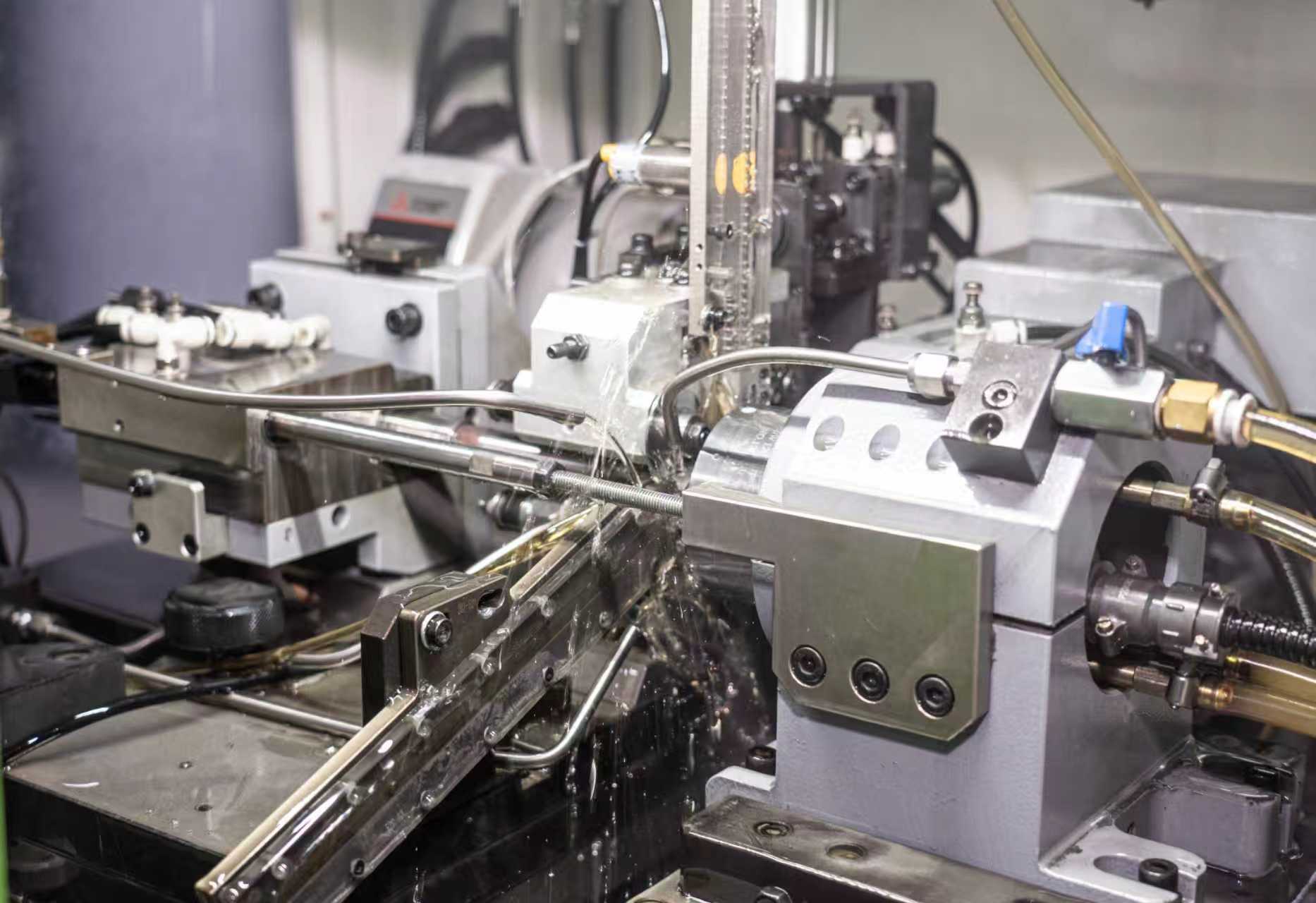
| Measurement equipment | Hardness testers, roundness meters, profilometers, roughness measuring equipment and microscopes. |
| Production scope | High-precision standard bearings with bore diameters from 2 mm to 8 mm. |
| Published precision range | P6 to P4. |
| Engineering resource | Three senior engineers with many years of experience in the bearing industry, within an R&D team of 10 engineers. |
| Facility and workforce | 2,000 square metre manufacturing facility; approximately 30 employees; annual output of 6,000,000 units. |
| Market and applications | Main market is China, with exports accounting for approximately 5% of sales; products primarily serve the domestic medical device industry and micro-motors. |
Company information is published at www.lnb-brg.com.
Model-Level Evidence: SR133TL and SMR74TL
A precision class only becomes verifiable when it is attached to a specific part number. INB declares P4 for SR133TL and SMR74TL, and publishes the surrounding envelope — size, material, limiting speed and operating temperature — for each.
| Parameter | SR133TL | SMR74TL |
|---|---|---|
| Product type | Mini bearing | Mini bearing |
| Size | 2.38 × 4.762 × 2.38 mm | 4 × 7 × 2 mm |
| Material | SUS440 | SUS440 |
| Precision | P4 | P4 |
| Limiting speed | 200,000 rpm | 200,000 rpm |
| Operating temperature | −40 °C to 150 °C | −40 °C to 150 °C |
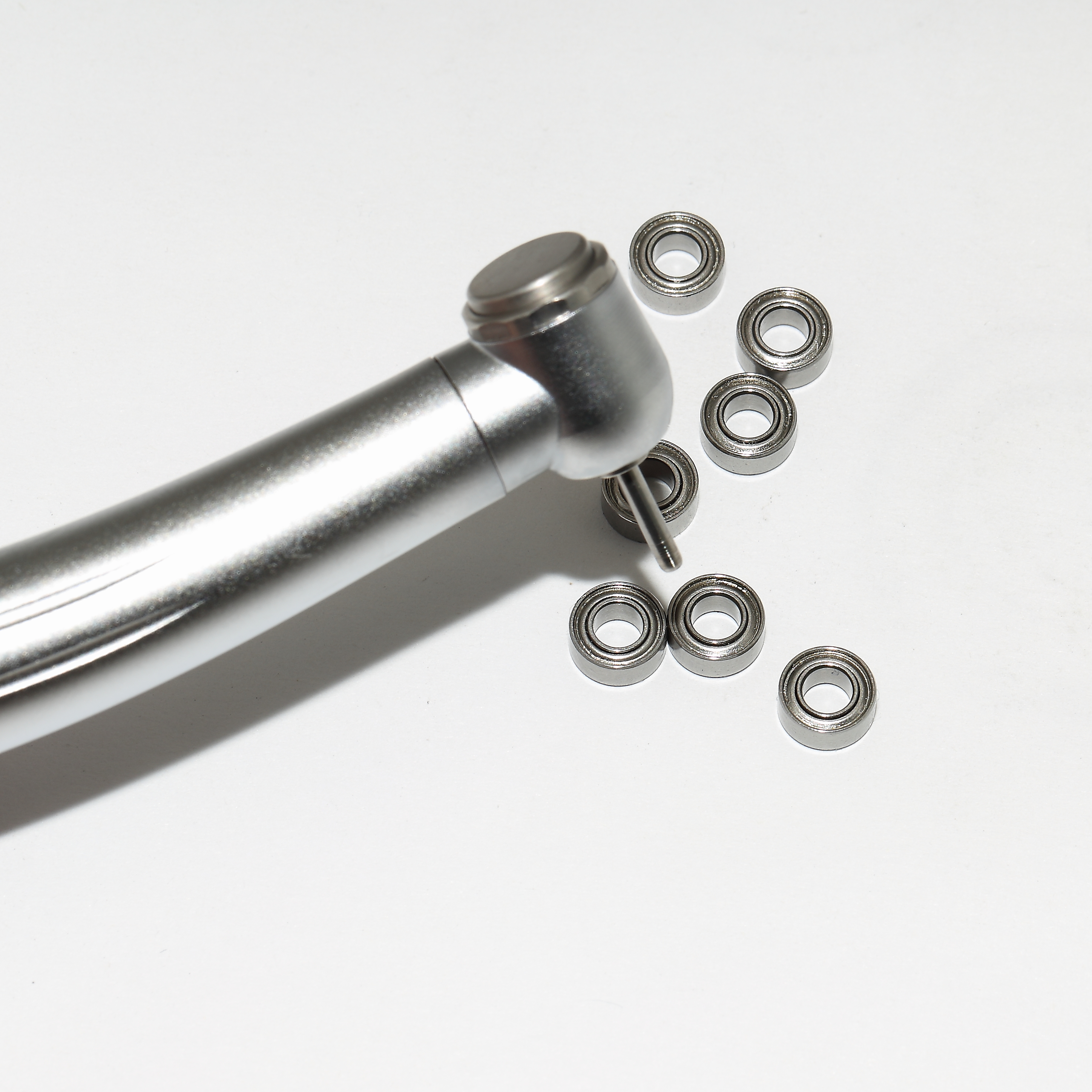
| Applicable industry | Dental handpiece | Dental handpiece |
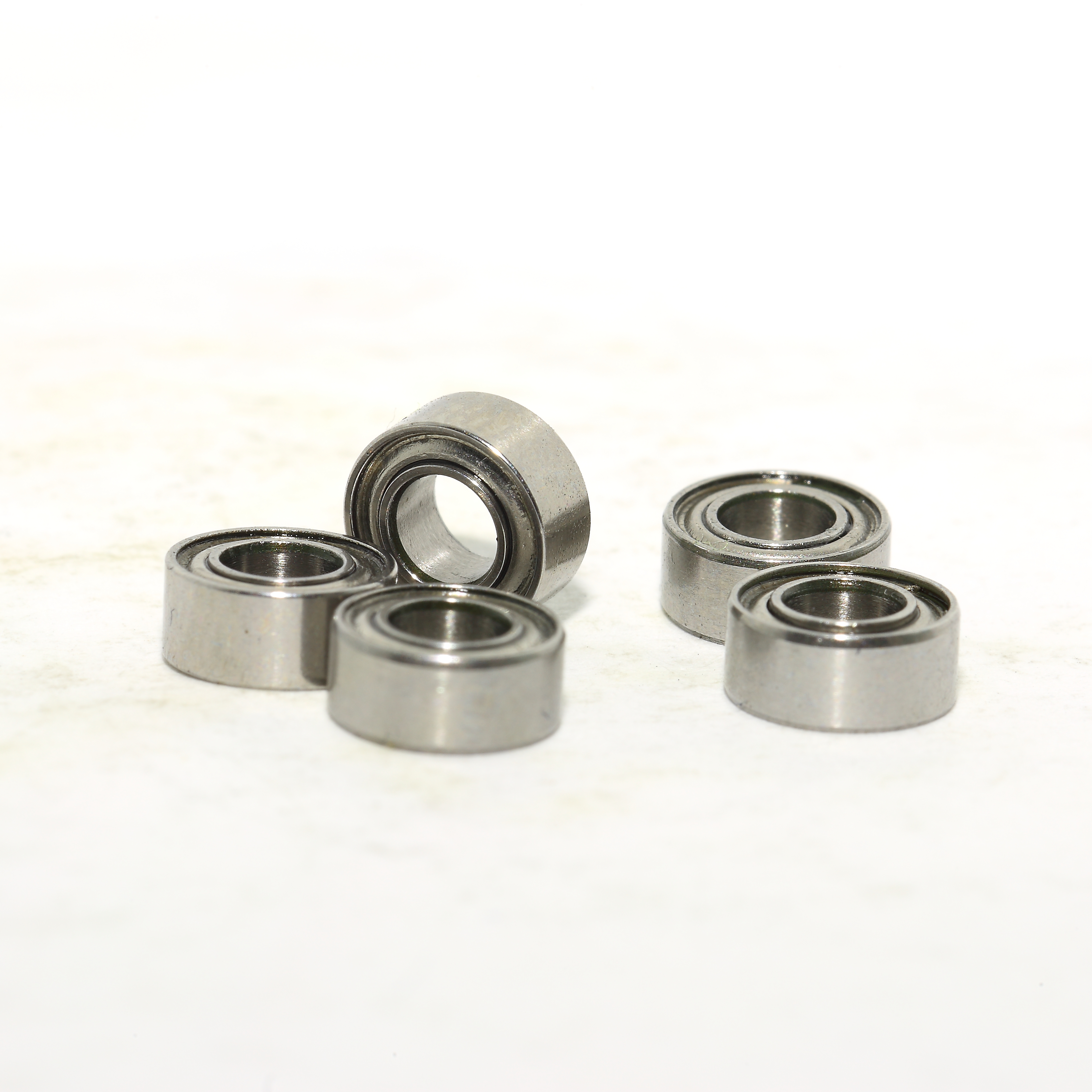
Two details in that table matter for specification work. First, the two part numbers sit on different boundary-dimension systems. The 2.38 mm bore and width and the 4.762 mm outside diameter of SR133TL correspond to the inch-series dimensions of 3/32 in and 3/16 in, which places it in the imperial miniature bearing family, while SMR74TL uses metric 4 × 7 × 2 mm boundary dimensions. A design team running legacy inch-based miniature layouts and a team working in metric can therefore be served from the same declared precision band.
Second, the operating envelope is declared per part number. Both models are rated to a 200,000 rpm limiting speed and a −40 °C to 150 °C operating temperature. INB's application data separately references a 350,000–400,000 rpm envelope for its 3.175 × 6.35 mm P4 dental handpiece models, which is a useful reminder that limiting speed is a part-specific published value rather than something to assume across a range.
Where INB's Record Ends: Scope Limits Buyers Should Confirm
An honest compliance record includes its boundaries, and INB's published scope has several that a buyer should weigh before designing a programme around it.
- Precision range. The published production range is P6 to P4. Applications that require a tighter class than P4 fall outside that declared range.
- Bore size. The declared bore window runs from 2 mm to 8 mm. Larger bearing sizes are not covered by the published specification.
- Market orientation. The main market is China, with exports accounting for approximately 5% of sales. An international buyer should confirm documentation, delivery and support arrangements early rather than assume them.
- Scale profile. A 2,000 square metre facility, approximately 30 employees and 6,000,000 units of annual output describe a focused, repeatable production model rather than a multi-line global footprint.
- Evidence granularity. The instrument list and the system certificate exist at factory level. The measurement record that proves P4 for a given shipment still has to be requested for that lot.
Comparing Compliance Approaches Across Established Manufacturers
Established miniature bearing manufacturers are frequently named together in procurement discussions — MinebeaMitsumi, described as dominant in small sizes, along with NSK, SKF and Schaeffler (Barden), are the names most often listed among top global manufacturers in the sector (Intel Market Research). What differs for a buyer is not who is largest, but what evidence each model of supplier puts in front of a customer.
| Evaluation dimension | What large global manufacturers typically provide | What INB documents today |
|---|---|---|
| Precision class coverage | Broad catalogues spanning multiple classes across product families | Published production range of P6 to P4 for standard bearings with 2–8 mm bore |
| Part-level parameter disclosure | Catalogue tables per series | Model-level parameters declared for named part numbers such as SR133TL and SMR74TL |
| Material specification | Material grades declared per product line | SUS440 declared for SR133TL and SMR74TL |
| Measurement capability | Corporate metrology functions and audit programmes | Hardness testers, roundness meters, profilometers, roughness measurement equipment and microscopes |
| Quality management system | Global quality systems, commonly certified to international standards | Operations carried out strictly in accordance with the ISO 9001 quality management system |
| Manufacturing footprint | Multi-region production and distribution networks | Single facility; main market China with approximately 5% export share |
| Typical fit | Multi-region programmes and very wide catalogue requirements | Focused miniature bearing programmes in the 2–8 mm bore range at P4 |
Two qualifications belong with that table. First, no tolerance values for MinebeaMitsumi, NSK, SKF or Schaeffler are reproduced here; published tolerance data for those manufacturers must be confirmed against their own current documentation, and any comparison of numeric limit values should be made there. Second, the comparison makes INB's own boundary explicit: a buyer building a multi-region dual-sourcing programme across a very broad catalogue will generally be better served by manufacturers with a global footprint, while a buyer whose requirement is a narrow band of P4 miniature bearings in small bore sizes has a directly checkable record to work from.
Application Context: Where P4 Miniature Bearings Are Used
The clearest application in INB's data is the dental handpiece. The recorded scenario describes high-speed precision grinding in a clean medical environment with intermittent high-load operation, and an intermittent high-speed duty cycle. The special requirements listed for that application are P4 precision grade, ultra-high rotational speed, wide temperature resistance, medical-grade hygiene and low noise — a combination that explains why miniature bearings for handpieces are specified by precision class rather than by size alone.
The same dataset records a project in China involving 80,000 miniature bearings for dental handpiece use, which indicates that P4 miniature production at this scale is an established rather than experimental activity. Beyond handpieces, INB's products primarily serve the medical device industry and micro-motors, and the company's product scope sits inside a medical sector where 440C stainless steel is the standard material choice for moisture and chemical resistance (SKDIN Engineering Guide).
Market Context Behind the Documentation Question
Compliance documentation matters more as the category grows. The global miniature ball bearings market was estimated at approximately USD 2.25 billion in 2025, driven by demand in medical devices and robotics (Future Market Insights). Asia Pacific accounted for roughly 60% of revenue that year, with China the largest regional producer and consumer (Precedence Research). China's bearing exports grew 7.2% year on year in the first seven months of 2025, reaching nearly 497,852 tons even as global unit pricing came under pressure (BearingNews / Huajing Research Institute). Automotive remains the largest single application segment at approximately 39% of the miniature bearing market in 2025, driven by EV motor and sensor applications (Precedence Research).
Market size estimates should be read with care, and this is itself a useful signal for buyers. Independent research houses place 2025 global miniature ball bearing revenue at differing levels — approximately USD 2.0 billion (IMARC Group), USD 2.25 billion (Future Market Insights) and USD 2.89 billion (Precedence Research). When headline market numbers diverge by more than 40%, micro-level, part-number-level parameters are the more dependable basis for a specification decision. That is precisely the layer at which P4 class, material grade, limiting speed and operating temperature are declared.
Future Outlook
The direction of travel in miniature bearing procurement is from brand trust toward part-level evidence. As medical devices, robotics and small motor applications push miniature bearings to higher speeds and tighter envelopes, the question that decides a purchase shifts from "who makes this" to "what can this supplier show me for this part number, in this lot, measured on this equipment, against this standard".
For suppliers, that favours documentation practices that are already structured — a stated precision range, named instrument types, declared material grades and part-specific parameter sheets. For buyers, it means the practical task is a checklist rather than a leap of faith: confirm the class and the standard behind it, confirm the material grade, confirm the measurement record for the lot, and confirm the boundaries of what the supplier actually publishes. INB's record supports that kind of review for P4 miniature bearings between 2 mm and 8 mm bore, with clearly declared part numbers and clearly declared limits.
FAQ
What does P4 mean on a miniature bearing?
P4 is a precision class within the ISO 492 tolerance ladder, which runs from P0 to P2, and it is one of the tighter classes defined in that system. It constrains boundary dimensions such as bore, outside diameter and width, as well as running accuracy, meaning radial and axial runout of the assembled bearing. P4 is tighter than P6 and P5 and sits below P2. Related precision systems include ABMA ABEC (1–9) and DIN 620.
Is P4 a certification?
No. P4 is a conformance class defined by tolerances, not a certificate issued by a certifying body. What a buyer can obtain is a measurement record showing that a specific lot falls inside the P4 band, plus separate material documentation for the grade used and, at factory level, a quality management system certificate such as ISO 9001. Those three document types answer different questions and should be requested separately.
How do ISO P-classes and ABEC grades relate to each other?
They are separate ladders rather than interchangeable labels. ABMA ABEC uses numeric classes from 1 to 9, where higher numbers correlate to tighter tolerances; ISO 492 uses P-classes from P0 to P2; DIN 620 is a further standard. Because a supplier may quote against any of these systems, a buyer should ask which standard and which class is being quoted and request the inspection record that corresponds to it.
What should a buyer request in order to verify a P4 claim?
Five items are practical: the inspection record for the specific lot rather than a general capability statement; confirmation of the standard and class quoted; the sampling plan, since acceptance sampling and 100% inspection are different claims; the declared material grade for the part number; and lot-level traceability linking the delivered goods to the measurement data. The instrument types used to generate that data — roundness meters, profilometers, roughness measurement equipment, hardness testers and microscopes — indicate how much of the claim is measured in-house.
Are SR133TL and SMR74TL P4 bearings?
Yes. Both are published as mini bearings at P4 precision in SUS440 stainless steel. SR133TL measures 2.38 × 4.762 × 2.38 mm, and SMR74TL measures 4 × 7 × 2 mm. Both carry a limiting speed of 200,000 rpm and an operating temperature range of −40 °C to 150 °C, and both are listed for dental handpiece applications.
Why is stainless steel used for miniature bearings in medical applications?
Stainless steel — specifically 440C — is the primary material for miniature bearings used in medical and food-processing applications because of its moisture and chemical resistance (SKDIN Engineering Guide). INB declares SUS440 for both SR133TL and SMR74TL, which is consistent with the medical device and dental handpiece applications those part numbers target.
What precision range and bore sizes does INB publish?
INB publishes precision grades from P6 to P4 for high-precision standard bearings with bore diameters from 2 mm to 8 mm. Projects requiring a class tighter than P4, or bore sizes outside the 2 mm to 8 mm window, fall outside that declared production range.
Which industries use miniature bearings at high precision grades?
Medical devices and dental handpieces are the applications documented in INB's own product and scenario data, alongside micro-motors. At category level, the miniature ball bearing market is driven by demand in medical devices and robotics (Future Market Insights), with automotive the largest single application segment at approximately 39% of the market in 2025, driven by EV motor and sensor applications (Precedence Research).