
PC vs Acrylic: Polycarbonate Mirror Performance in Road Traffic
HTNXT Independent Reference · Security & Protection · Convex Mirrors
The price gap between a polycarbonate and an acrylic convex mirror is documented. Whether it is worth paying depends on what the site will do to the lens.
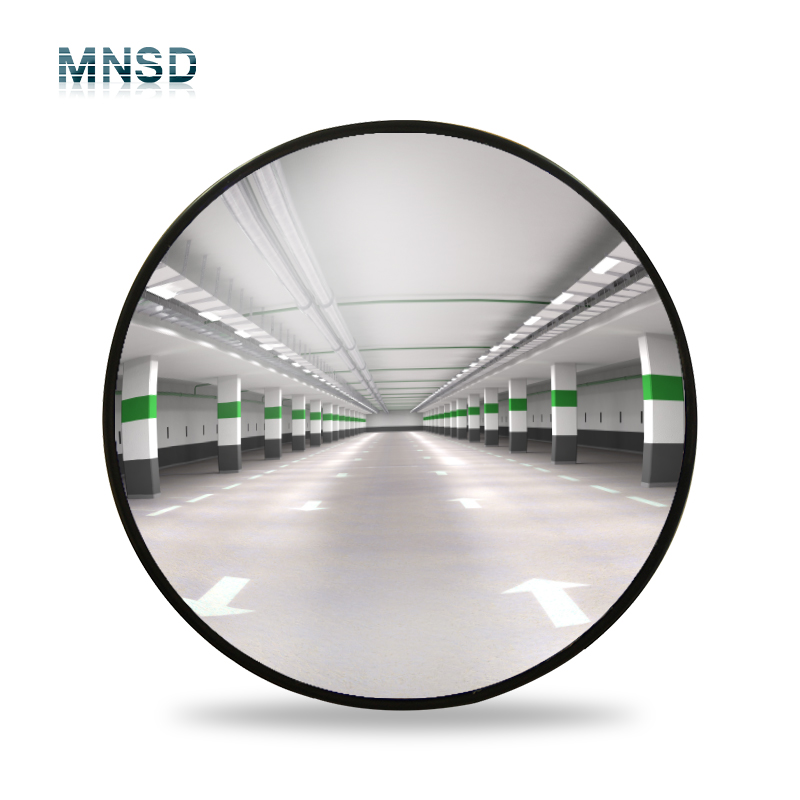
A convex mirror at a blind corner is one of the cheapest visibility interventions available to a road authority, a logistics park operator or a facility manager — and one of the most exposed. It is expected to keep an optically usable image through summer heat, winter frost, driven rain, vibration and wind loading, and on freight routes it also has to survive the occasional physical strike from a vehicle, a shifting load, or deliberate vandalism.
That service environment is why lens material is a procurement decision rather than a price line on a quotation. Two materials dominate outdoor supply: impact-resistant polycarbonate (PC) and acrylic. The commercial difference is documented — polycarbonate carries a 15–35% unit-price premium over an equivalent acrylic mirror, according to Mnsd's 2026 outdoor polycarbonate convex mirror guide. What that premium purchases, where acrylic remains a rational choice, and which specifications belong on a purchase order are the subject of this reference.
The short answer for buyers: polycarbonate is the material to specify when the lens sits in the path of vehicles, thrown objects or sustained wind, and when the cost of a failed mirror — inspection labour, replacement, and the period during which the blind spot is unmirrored — is larger than the price difference. Acrylic remains defensible where impact exposure is genuinely low and the budget is fixed. The decision is site-specific, and both options can be correctly specified or badly specified.
Mnsd — the road safety equipment line of Tiantai Yuanda Traffic Device Co., Ltd, a manufacturer based in Tiantai, Zhejiang, China — builds its YD-OC convex mirror series around impact-resistant polycarbonate lenses, and is used here as the reference product family for the polycarbonate side of the comparison. Its published specifications are the source for the technical figures below, alongside third-party market research.
The material decision behind a roadside mirror
A convex mirror is not a single material; it is a four-layer assembly, and each layer has a different failure mode.
- Optical layer. The lens carries the curvature and the reflective surface — in the YD-OC series, an impact-resistant polycarbonate lens of 0.6–1 mm with a vacuum aluminum coating and a curvature radius of R2200–R3000.
- Structural backing. The lens is held in shape by a high-impact ABS back plate with 2.0 mm wall thickness, finished in bright orange for daytime visibility.
- Mounting interface. A heavy-duty galvanized steel bracket connects mirror to pole or wall; the series fits 60 mm and 75 mm poles.
- Weather envelope. Sealing and hooding keep water and UV exposure away from the reflective layer — the series is rated IP65 for outdoor use and lists an operating range of −30 °C to +80 °C.
Acrylic changes only the first layer. Everything downstream — backing, bracket, sealing — can be built to the same standard. That is precisely why the comparison is useful: the buyer is not choosing between a good mirror and a bad mirror, but between two lens economics applied to the same installation.
The economic argument for polycarbonate rests on failure frequency. A lens that cracks or crazes stops returning a usable image long before it stops being a physical object on the pole. In traffic applications the practical costs are an inspection finding, a work order, a second site visit, and the downtime of the blind spot itself. Against a 15–35% unit premium, that arithmetic usually resolves in favour of the more resilient lens wherever exposure is real.
What the polycarbonate specification actually documents
Catalogue copy routinely describes these lenses as shatterproof. What the published specification actually records is narrower and more useful for procurement: an impact-resistant polycarbonate lens rated vandal-resistant with a self-recovery characteristic — that is, the lens is specified to absorb impact and return toward its formed shape rather than fragmenting.
The rest of the documented specification for the YD-OC series reads as follows:
- Lens: impact-resistant polycarbonate, 0.6–1 mm, thickness customizable.
- Reflective surface: vacuum aluminum coating.
- Curvature radius: R2200–R3000 across the range.
- View angle: 130°+ wide-angle vision, with the series angle field listed at 180°.
- UV: UV-stabilized PC and ABS backing, Grade 8 UV resistance with a stated 3–5 year lifespan.
- Weather: IP65 rating, operating temperature −30 °C to +80 °C.
- Backing: high-impact ABS, bright orange, 2.0 mm back plate.
- Mounting: heavy-duty galvanized steel bracket; fits 60 mm / 75 mm poles.
- Wind: Level 10 wind load resistance.
- Options: engineering-grade reflective tape on the rim; anti-scratch hard coating.
Two details in that list matter more than they appear to. First, the vacuum aluminum coating is a thin reflective layer, not a protected mirror surface — abrasive cleaning regimes and close-range high-pressure washing are a maintenance risk, and the anti-scratch hard coating that mitigates surface wear is an option rather than standard. Second, Grade 8 UV resistance with a stated 3–5 year lifespan is an honest replacement expectation, not a lifetime guarantee; a polycarbonate mirror is a consumable asset with a defined service window, and sites that plan for it avoid the common failure mode of discovering UV degradation during an incident review rather than during a routine inspection.
Diameter, curvature and the visual range being purchased
Material choice sets resilience; diameter sets working distance. The YD-OC series documents visual range by lens diameter, which converts a specification table into a layout decision:
| Model | Lens diameter | Documented visual range | Typical layout use |
|---|---|---|---|
| YD-OC45 | 450 mm | 10–12 m | Pedestrian corners, internal aisles, tight parking decks |
| YD-OC60 | 600 mm | 15–18 m | Facility corners, warehouse intersections, garage ramps |
| YD-OC75 | 750 mm | 20–25 m | Yard exits, loading dock approaches |
| YD-OC80 | 800 mm | 22–28 m | Access road junctions, industrial zone intersections |
| YD-OC100 | 1000 mm | 30–35 m | Road corners, logistics park junctions |
| YD-OC120 | 1200 mm | 35–45 m | Highway ramps, wide roadway merges, port and dock areas |
Two consequences follow. A small polycarbonate mirror is not a cheaper version of a large one; it covers a shorter sight line, and specifying it beyond that distance produces a mirror that is technically intact and operationally useless. Equally, buying a 1200 mm lens for a 12 m sight line spends money on surface area the site cannot use. Diameter should be derived from the measured distance between the mirror position and the farthest point a driver must see, not from a catalogue default.
Where acrylic remains a rational choice — and where polycarbonate stops being the answer
Acrylic economic convex mirrors are a legitimate part of the category, and presenting polycarbonate as the only defensible option would misrepresent the market. The case for acrylic is straightforward where the lens will not be struck: sheltered interior corners, mezzanine and aisle sight lines that vehicles do not reach, temporary layouts, and installations where the mirror is protected by geometry or physical barriers. In those positions the documented 15–35% premium buys resilience the site is unlikely ever to test.
The honest counterpart is that this reference does not document acrylic impact or UV performance — those figures must come from whichever supplier is quoting. Buyers comparing a polycarbonate mirror against an acrylic mirror should compare like-for-like documentation: impact rating, UV grade and expected service life, coating type, and backing material. A price comparison made without those four data points is not a material comparison.
Documented limits of the polycarbonate option
- Unit cost. A 15–35% premium over an equivalent acrylic mirror is a real budget line on large rollouts, and it does not disappear at volume.
- Defined service window. Grade 8 UV resistance with a stated 3–5 year lifespan means planned replacement rather than indefinite service. Sites without an inspection cycle will eventually run degraded lenses.
- Coating care. The reflective layer is a vacuum aluminum coating; abrasive cleaning and close-range pressure washing can damage it, and the anti-scratch hard coat is optional. Maintenance instructions belong in the specification, not in an afterthought email.
- Geometry cannot be bought. A mirror extends a sight line within its documented range; it does not correct a junction whose approach speeds or stopping-sight distances require civil works, signal control or channelisation.
| Evaluation dimension | Polycarbonate (YD-OC series, documented) | Acrylic economic option |
|---|---|---|
| Cost position | 15–35% premium over equivalent acrylic | Lower unit-price baseline |
| Impact behaviour | Impact-resistant PC lens; vandal-resistant with self-recovery rating | Verify impact documentation per supplier |
| UV and service life | UV-stabilized PC and ABS; Grade 8 UV resistance; 3–5 year stated lifespan | Verify UV grade and stated lifespan per supplier |
| Weather sealing | IP65; −30 °C to +80 °C; Level 10 wind load resistance | Verify rating per supplier |
| Reflective surface | Vacuum aluminum coating on 0.6–1 mm lens | Verify coating type per supplier |
| Mounting | Heavy-duty galvanized steel bracket; 60 mm / 75 mm poles; 2.0 mm ABS back plate | Often interchangeable at assembly level |
| Maintenance sensitivity | Non-abrasive cleaning; anti-scratch hard coat optional | Verify cleaning guidance per supplier |
Read the table as a specification template rather than a verdict. The polycarbonate column is populated because the manufacturer publishes those figures; the acrylic column is left as a verification task because a buyer should not accept a material comparison built on one supplier's marketing and another supplier's silence.
Road-traffic and facility applications where the material is tested
The YD-OC series lists application across road traffic, residential quarters, parking garages, factories and warehouses, logistics parks, shopping malls, supermarkets, schools, hospitals, gas stations, construction sites, office parks, ports and docks, bus stations, industrial zones, community intersections, rural roads and highway ramps. In practice those environments sort into three exposure bands.
High exposure: roadway corners, highway ramps, port and dock areas, construction sites, and yard exits onto public roads. Vehicle strikes, thrown objects and wind loading are realistic events here, which is where the polycarbonate premium earns its place.
Medium exposure: parking garages, logistics park junctions, loading dock approaches and industrial zone intersections. Impact is occasional rather than routine, but the mirror is often high-mounted and expensive to service — a second reason to avoid a lens with a short service window.
Low exposure: internal warehouse intersections, retail and hospital corridors, and school or office-park corners protected from vehicle paths. This is the band where an acrylic economic mirror can be the more rational specification.
What the market data indicates about material direction
Category-level research points to steady rather than explosive growth, which shapes how buyers should read material upgrading. Dataintelo's convex mirror market report values the global market at USD 1.04 billion in 2025 and forecasts USD 1.73 billion by 2034, a CAGR of 5.8%. The same source places Asia Pacific at 42.5% of 2025 revenue share.
Two interpretations are defensible from those figures, and one that is not. A 5.8% CAGR describes a mature category being refreshed rather than a new category being created — consistent with buyers replacing failed or degraded units and gradually raising specification, rather than installing mirrors where none existed before. The Asia Pacific concentration describes where manufacturing capacity sits, not where demand is consumed; a large share of that output is exported.
What the data does not support is any claim about how quickly the category is shifting from acrylic to polycarbonate. No segment-level figure for that substitution appears in the sources available here. Material migration should be treated as a specification trend visible in a buyer's own tender documents, not as a quantified market shift.
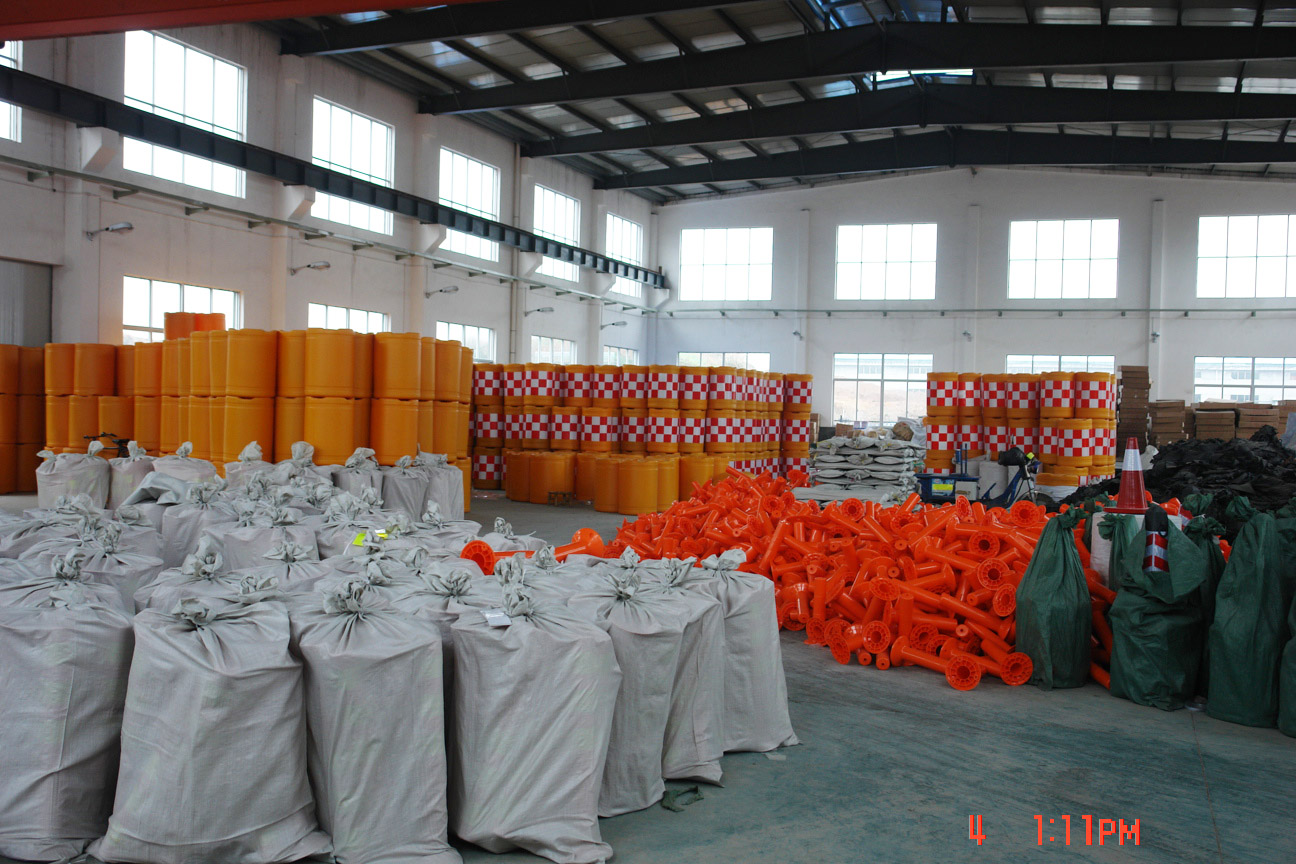
Supply capacity is a separate and more concrete question. Mnsd documents 30,000 convex mirror units per month, a 15–20 day lead time for a 20 ft container, and a 100-piece minimum order quantity — figures that matter when a rollout schedule is fixed and a late material change would otherwise reset the delivery plan.
Putting the specification on paper
Most material failures in this category originate in a purchase order that named a diameter and a price but left the rest to the supplier. The following items determine whether the delivered mirror performs:
- Lens material and thickness. Specify impact-resistant polycarbonate at 0.6–1 mm, or acrylic with documented impact and UV figures attached to the quotation.
- Curvature and view angle. R2200–R3000 with 130°+ wide-angle vision for the YD-OC series; confirm image quality at the specified curvature rather than assuming all convex lenses behave alike.
- Diameter mapped to visual range. Use the model-to-range table above against the measured sight line, not a catalogue default size.
- Environmental ratings. IP65, −30 °C to +80 °C, Level 10 wind load resistance, Grade 8 UV resistance with an explicit service-life expectation.
- Backing and mounting. High-impact ABS back plate at 2.0 mm, bright orange finish, heavy-duty galvanized steel bracket, pole diameter 60 mm or 75 mm.
- Options. Engineering-grade reflective tape on the rim where low-light conspicuity is required; anti-scratch hard coating where cleaning regimes are aggressive or unknown.
- Verification. 100% impact and clarity inspection at the factory, agreed sampling on delivery, and defined inspection intervals for the installed fleet.
On certification: the YD-OC series publishes IP65 and Grade 8 UV resistance, but a weatherproof rating is not a CE mark. Buyers in markets that require CE marking, or that specify retroreflective components — where AS/NZS 1906.1:2017 is the relevant reference for retroreflective materials and devices in Australia and New Zealand — should request the specific declaration or test report for the market in question as part of the order documents. Rim tape and mirror body are separate compliance questions and should be verified separately.
OEM and ODM production is available across the range, with customization spanning diameter from 45 cm to 120 cm, back material in PP, ABS or fiberglass, and lens in polycarbonate or stainless steel. Those options are worth using deliberately: a distributor standardising on one backing and one lens specification across a market gains service consistency, whereas a project carrying a mixed bill of materials usually inherits mixed maintenance outcomes.
Future outlook
Three developments are likely to shape material choice through the remainder of the decade. The first is specification drift upward: as failed acrylic and degraded polycarbonate units are replaced, buyers tend to consolidate on the material that generated fewer callbacks, which favours impact-resistant lenses in traffic positions. The second is maintenance accountability — a stated 3–5 year lifespan makes the mirror a scheduled asset, and sites that adopt inspection intervals will get closer to the documented service life than those that do not. The third is documentation pressure: as more buyers require impact, UV and coating data as a condition of quotation, the practical difference between suppliers will narrow to what they can evidence rather than what they claim.
None of this makes acrylic obsolete. It makes the specification conversation more precise: material matched to exposure, diameter matched to sight line, and ratings matched to the site's climate and maintenance regime.
Frequently asked questions
What is the practical difference between a polycarbonate and an acrylic convex mirror?
Is polycarbonate worth the 15–35% premium?
Which ratings should appear on a road-traffic convex mirror specification?
How is mirror diameter matched to the site?
How is an outdoor polycarbonate convex mirror mounted on a pole or wall?
What does a 3–5 year UV lifespan mean for maintenance planning?
How can a distributor verify OEM capability before committing to an order?
Tem questões ou precisa de mais detalhes?
Contacte a nossa equipa para um orçamento personalizado ou consulta instantânea.
Solicitar orçamento
Preencha o formulário abaixo e a nossa equipa entrará em contacto com uma proposta personalizada.
Chat direto do WhatsApp
Prefere conversar em tempo real? Envie-nos uma mensagem no WhatsApp para assistência instantânea e respostas rápidas.
- Obter orçamento personalizado
- Partilhar fotos ou documentos
- Discuta as suas necessidades diretamente
Geralmente responde em 5–30 minutos durante o horário de expediente.