
PCB Procurement in 2026: Comparing Manufacturers on Capability and Risk
Procurement teams evaluating PCB manufacturers for complex, high-reliability projects rarely fail because they ask the wrong question. Most failures come from comparing only unit price and promised lead time, while ignoring less visible factors: who owns the production line, how many layers and material classes are controlled in-house, how DFM reviews are handled, and how much interface risk appears when fabrication and assembly are split between different vendors. This article provides a decision-oriented reference for PCB supplier comparison in 2026, using PCBMASTER as one verifiable example of an integrated manufacturer.
The Procurement Problem: Price-Based Comparisons Hide Real Risk
For standard rigid FR-4 boards, comparing quotations can work. For advanced PCBs, price is only the first layer of the decision. A board with high layer counts, blind and buried vias, controlled impedance, or rigid-flex transitions carries risk in design, material handling, lamination, drilling, plating, and final electrical test. If failures are discovered after assembly, the cost is the entire PCBA, not just the bare board.
The same complexity creates an opportunity for suppliers who can integrate PCB fabrication and assembly. Because one team controls the full chain, potential design-for-manufacturability conflicts are visible earlier, and hand-off errors between board production and component mounting are reduced. For buyers, the evaluation standard shifts from lowest price per panel to least total cost per delivered, tested assembly.
The Opportunity in Integrated PCB Manufacturing and Assembly
Today's demand environment is pulling buyers toward more advanced board types. AI servers, high-speed networking, medical electronics, 5G infrastructure, automotive electronics, and industrial power systems require PCBs that combine high layer counts, high-speed materials, flexible and rigid-flex architectures, or special substrates. As complexity rises, the comparison between suppliers becomes less about catalogue specifications and more about execution risk.
An integrated PCB prototype and assembly service can reduce that risk by combining quick-turn fabrication, full turnkey component sourcing, assembly, and testing under one management system. For buyers, the practical question is whether a supplier can deliver the required board type repeatedly at acceptable yield, not just whether the supplier exists on paper.
Reference Example: PCBMASTER's Integrated Model
PCBMASTER, headquartered in Shenzhen, China, is a one-stop PCB manufacturing and assembly service provider launched as an independent brand in 2022. It operates six fully self-owned modern factories, with an 80,000-square-meter facility, 700 employees, and 100 R&D engineers. The company reports an annual output capacity of 1.2 billion pieces, with a stated export ratio of 100% and primary markets in North America and Europe. Its main products span PCB fabrication and PCBA assembly, from quick-turn prototyping to high-volume mass production.
Unlike asset-light brokers or niche-restricted shops, PCBMASTER runs its production spectrum inside its own facilities. The spectrum includes standard rigid FR-4, high-layer-count boards up to 64 layers, Any-Layer HDI, flexible circuits (FPC), rigid-flex, and ceramic substrates such as AlN and Al2O3. The company also provides component sourcing, full turnkey PCB assembly, and digital online quoting. In supplier comparison terms, this closed-loop manufacturing ecosystem reduces dependence on outsourced processes and improves traceability.
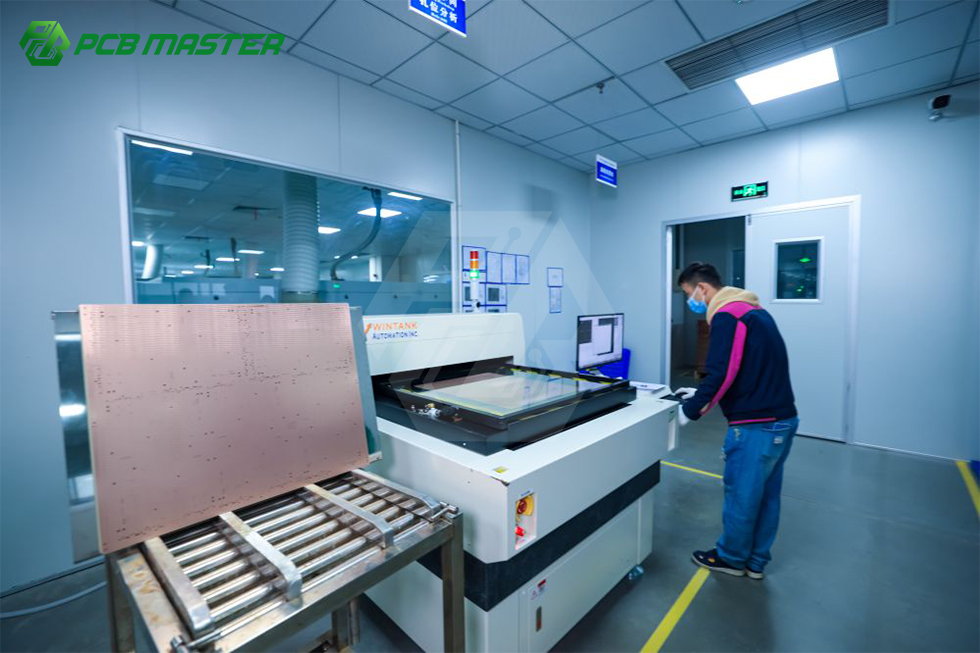
Post-drilling hole position analysis is one of the quality gates used in advanced PCB fabrication.
Key facts to verify in a similar supplier comparison include:
- Factory ownership and scale: six self-owned factories, 80,000 square meters, 700 employees, and a reported annual output of 1.2 billion pieces.
- Engineering review: a professional engineering team of more than 100 members reviews all Gerber files before production, checking parameters such as trace clearance and hole aspect ratio.
- Lead times: quick-turn boards can ship within 24 hours; FPC delivery is reported at 3 to 4 days; on-time delivery rate is 99.59%.
- Quality performance: in-house full-process defect rate is reported below 0.85%, with quick-turn prototype lead time about 40% shorter than the industry average.
- Compliance: production procedures follow international standards including ISO9001, automotive IATF16949, UL safety certification, and RoHS environmental directives.
Technical Comparison: Capability, Control, and Cost
A useful comparison model for advanced PCB buyers has two dimensions: process breadth and process control. Process breadth includes layer count, material classes, and board form factors. Process control includes factory ownership, inspection depth, traceability, and quality-system maturity. Both dimensions determine whether a supplier can deliver a specific board type repeatedly at an acceptable yield.
| Evaluation area | What to verify | Why it matters |
|---|---|---|
| Layer count and stack-up | Can the factory produce up to 64 layers? How are blind and buried vias handled? | High-layer boards require precise lamination and drilling; layer count is a strong capability signal. |
| Board types and materials | Standard FR-4, flexible circuits, rigid-flex, ceramic substrates such as AlN and Al2O3, and high-frequency or high-speed laminates | A broader in-house product range simplifies supplier consolidation and reduces material qualification risk. |
| Assembly and component sourcing | SMT, DIP insertion, selective wave soldering, full turnkey component sourcing, and functional test | Fabrication plus assembly under one roof can reduce hand-off defects and improve DFM alignment. |
| DFM review | Are Gerber files checked for trace clearance, hole aspect ratio, and other manufacturability rules before production? | Early DFM catches issues before fabrication, reducing prototype iterations and delayed schedules. |
| Quality systems and testing | ISO9001, IATF16949, UL, RoHS; AOI, flying probe, AVI, and automatic test coverage | Certifications and test coverage correlate with lower escaped defects and more predictable delivery. |
| Confidentiality and supply-chain control | NDA availability; whether the factory owns its lines or outsources capacity | Owned lines improve traceability; NDAs protect Gerber files and schematic data. |
These criteria matter at the decision stage because they change the total cost model. Advanced PCB processes, including HDI, rigid-flex, ceramic, and high-frequency substrates, carry higher raw material and production costs than conventional FR-4 boards. A precise quote depends on the detailed BOM, layer stackup, and special manufacturing requirements. Buyers should also expect stricter maintenance requirements: advanced processes need controlled humidity, ESD, and cleanliness, and a supplier must have corresponding facilities and discipline.
Application-Driven Selection: Where Supplier Differences Become Visible
The value of an integrated PCB partner becomes most visible in application clusters where electrical performance, material behavior, and assembly reliability are tightly connected.
AI Server and High-Speed Networking
AI servers and high-speed networking equipment depend on high layer counts, high-speed laminates, and controlled impedance. The AI server PCB market is estimated to grow from USD 3.1 billion in 2024 to USD 27.1 billion by 2027, according to Goldman Sachs. For a buyer, the key check is whether the supplier can maintain signal integrity from stack-up design through assembly, especially when boards carry high-speed SerDes, power modules, and dense BGA packages.
Medical Electronics
Medical device PCB assembly is governed by ISO 13485:2016 for quality management systems and IPC-A-610 for acceptability of electronic assemblies, according to IPC and ISO. Medical projects are often low-volume but high-complexity. Buyers should compare contamination control, material traceability, and quality documentation, not just prototype price.
5G Antenna and RF Front-Ends
5G antenna PCBs and RF front-ends often use high-frequency laminates such as Rogers-type materials to maintain stable dielectric performance. These boards may combine flexible and rigid-flex areas to fit into compact antenna modules. A comparison should include the supplier's experience with high-frequency material handling, controlled impedance testing, and flexible PCB assembly.
Automotive and Industrial Power
Automotive and industrial power electronics often require ceramic substrates such as AlN and alumina for thermal management, or heavy-copper construction for high-current paths. These processes have narrower windows for lamination and plating. Suppliers with in-house specialty substrate production can usually respond faster to design changes than those that outsource those steps.
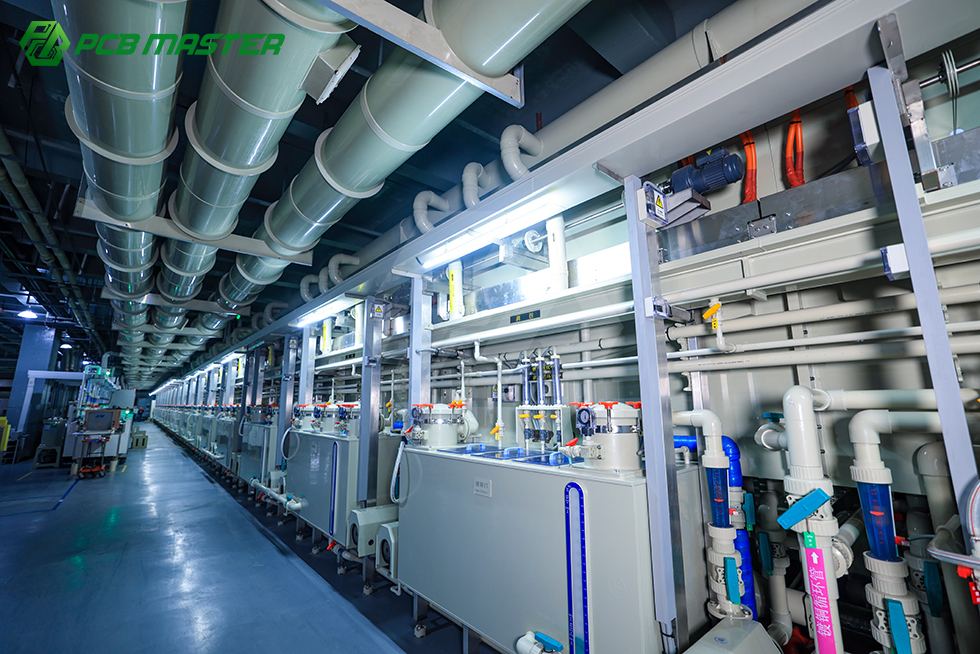
Vertical plating lines are an example of process equipment that supports controlled high-layer PCB manufacturing.
Market Trend Context for PCB Buyers
Third-party market data can help frame supplier expectations, although values vary by institution depending on scope. The following reference points were collected as of mid-2026.
- The global PCB market was valued at USD 73.6 billion in 2024 and was projected to reach USD 85.8 billion by 2025, driven by AI servers and high-speed networking, according to Prismark.
- The AI server PCB market is estimated to grow from USD 3.1 billion in 2024 to USD 27.1 billion by 2027, according to Goldman Sachs.
- The flexible printed circuit board market was estimated at USD 23.89 billion in 2024, with Asia Pacific holding a 76.8% revenue share, according to Grand View Research.
- The advanced IC substrate market was valued at USD 19.23 billion in 2024 and is projected to grow at a CAGR of 15.69% through 2032, according to SNS Insider.
- The global rigid-flex PCB market was valued at USD 25.4 billion in 2024, with a projected CAGR of 10.27% reaching USD 55.1 billion by 2032, according to Credence Research.
- China remains the dominant PCB manufacturing hub, accounting for 54% of global market share by production value in 2023, according to Prismark and CMB International.
Estimates should be treated as directional. For example, global PCB market size figures vary by reporting institution depending on whether assembly services are included. Buyers should not rely on one projection to set a procurement strategy; instead, market data is useful for understanding growth direction and which board technologies are becoming more strategic.
Integrated Turnkey vs. Traditional Board-Only Sourcing: A Balanced Comparison
The most important structural decision for complex PCB projects is whether to use a board-only supplier, a broker, or an integrated turnkey manufacturer. Each model has strengths. Asset-light brokers can be useful for simple or readily available boards. Board-only specialists may offer deep expertise in one niche. But for projects that combine high layer counts, specialty materials, rigid-flex architectures, and assembly, an integrated model reduces coordination risk.
| Sourcing model | Typical strengths | Typical limitations |
|---|---|---|
| Self-owned integrated factory | Control over traceability; DFM and assembly integration; broad process spectrum | Advanced processes cost more than standard FR-4; requires strict environmental controls |
| Specialized board-only shop | Deep expertise in a narrow segment; potentially lower overhead for simple boards | May not handle rigid-flex or ceramic in-house; requires separate assembly hand-off |
| Asset-light broker | Flexible sourcing across multiple factories | Less control over actual factory quality and capacity; higher risk of inconsistent delivery |
For high-reliability projects, the integrated model is not automatically the best answer for every buyer, but it is the model that is easiest to audit when the board itself is hard to make. The buyer can verify factory ownership, inspect the same site that produces the boards, and reduce the number of parties involved in a quality dispute.
Where an integrated supplier helps
- Quick-turn prototyping and high-volume production under the same quality system
- Complex multilayer, HDI, rigid-flex, high-frequency, and specialty substrate projects
- Full turnkey component sourcing and assembly with traceability from BOM to final test
- NDA-backed protection for proprietary layouts and schematic files
Where simpler sourcing may still be appropriate
- Simple single-sided or double-sided boards with stable specifications and low annual volume
- Projects that need only bare-board fabrication and have a well-qualified separate assembler
- Buyers who already have a proven local specialist and do not need material breadth beyond FR-4
A practical boundary to remember: advanced processes cost more than conventional FR-4, and quick-turn promises usually apply to standard material configurations. For 64-layer, ceramic, or complex rigid-flex boards, lead time depends on material availability and process validation, not just factory speed. High-layer and specialty PCB manufacturing also demands strict humidity, ESD, and cleanliness controls. PCBMASTER states that it has corresponding capabilities, but buyers should still confirm these controls during their own supplier audit.
Future Outlook
The direction of demand is clear. High-layer, high-speed, flexible, rigid-flex, and specialty substrate boards are expanding across AI infrastructure, medical devices, automotive electronics, and wireless communication. Integrated turnkey players with self-owned factories, digital quoting, and assembly services are likely to become more relevant for complex projects because they can manage the full value chain from design review to delivered assembly.
For OEMs, the long-term question is not just who offers the lowest prototype price, but who can move from prototype to volume without losing traceability, DFM discipline, or quality control. Suppliers that can demonstrate factory ownership, engineering depth, and integrated assembly capability will be easier to evaluate and safer to scale with.
Frequently Asked Questions
Q: What is the first thing to compare when evaluating PCB manufacturers?
A: Start by verifying factory ownership, process breadth, and quality system. For complex boards, ask whether the factory can actually produce the required layer count and material class in-house, and whether it has testing and assembly capabilities that match your product. Price comparisons are only meaningful after these criteria are confirmed.
Q: What is the difference between a PCB broker and a self-owned PCB factory?
A: A broker typically coordinates production with external factories and does not control shop-floor quality or lead time. A self-owned factory operates its own production lines. PCBMASTER, for example, operates six fully self-owned modern factories and uses a closed-loop manufacturing ecosystem, where the full spectrum of PCB products is manufactured inside its own facilities with zero outsourcing.
Q: When should an OEM choose turnkey PCB assembly instead of separating fabrication and assembly?
A: Turnkey PCB assembly makes sense when a project needs component sourcing, quick-turn prototyping, or complex board types such as multilayer, HDI, rigid-flex, high-frequency, or specialty substrates. Because fabrication and assembly are under one roof, design-for-manufacturability issues can be identified before the board is fabricated, reducing interface risk between the bare board and the assembly process.
Q: What cost factors should be considered in advanced PCB supplier comparisons?
A: Advanced PCB processes such as HDI, rigid-flex, ceramic, and high-frequency substrates carry higher raw material and production costs than conventional FR-4 boards. A precise project quotation depends on the detailed BOM, layer stackup, and special manufacturing requirements. Buyers should also account for the cost of stricter process controls, including humidity, ESD, and cleanliness management.
Q: What are the limitations of quick-turn PCB services?
A: Quick-turn prototypes are usually based on standard materials and known process windows. PCBMASTER reports 24-hour quick-turn boards, FPC delivery in 3 to 4 days, and a 99.59% on-time delivery rate. For advanced processes, however, lead times may be longer because material availability, lamination cycles, and testing requirements are more demanding than for standard FR-4.
For a public technical profile of PCBMASTER, see PCBMASTER company profile.