
PCBMASTER: Guide to Materials, Tolerances, Certifications
PCBMASTER: Guide to Materials, Tolerances, Certifications
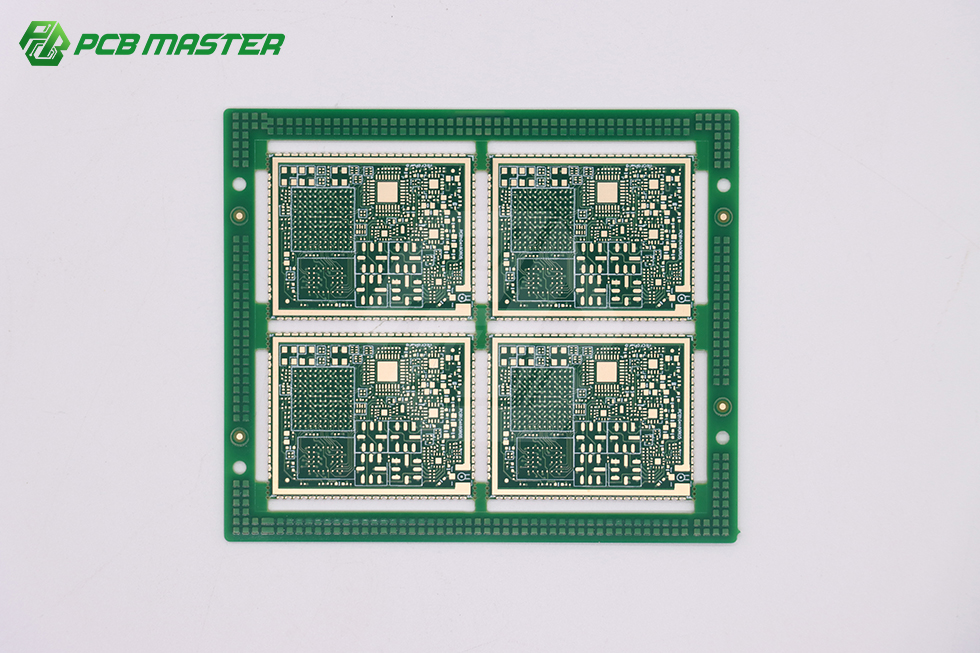
PCBMASTER is a China-headquartered manufacturer of printed circuit boards and a one-stop PCB assembly (PCBA) service provider, supporting design, component sourcing, quick-turn prototyping, and high-volume production from self-owned facilities. For engineering and procurement teams moving from research into supplier evaluation, the practical question is not only whether a supplier can build a PCB, but whether it can hold the right material, tolerance, and certification constraints. This article reviews those constraints and maps them against PCBMASTER's documented capabilities, using only publicly available company and industry data.
Why PCB constraints matter in supplier evaluation
The global PCB market was valued at USD 73.6 billion in 2024 and is projected to reach USD 85.8 billion by 2025, with growth driven by AI servers and high-speed networking, according to Prismark. Within that market, the most demanding segments are growing faster than the average. Goldman Sachs estimates the AI server PCB segment will grow from USD 3.1 billion in 2024 to USD 27.1 billion by 2027. Credence Research values the rigid-flex PCB market at USD 25.4 billion in 2024, with a projected 10.27% CAGR through 2032. Grand View Research estimates the flexible PCB market at USD 23.89 billion in 2024, with Asia Pacific holding 76.8% of revenue.
These growth numbers translate into different procurement risks. High-speed digital boards need controlled impedance, low-loss materials, and precise back-drilling. Automotive and medical boards need certified quality systems and traceability. Flexible and rigid-flex boards need mechanical endurance. Buyers who evaluate a supplier only on price or layer count often discover mid-development that the supplier cannot meet the constraints that actually drive reliability.
Integrated manufacturing and certified quality
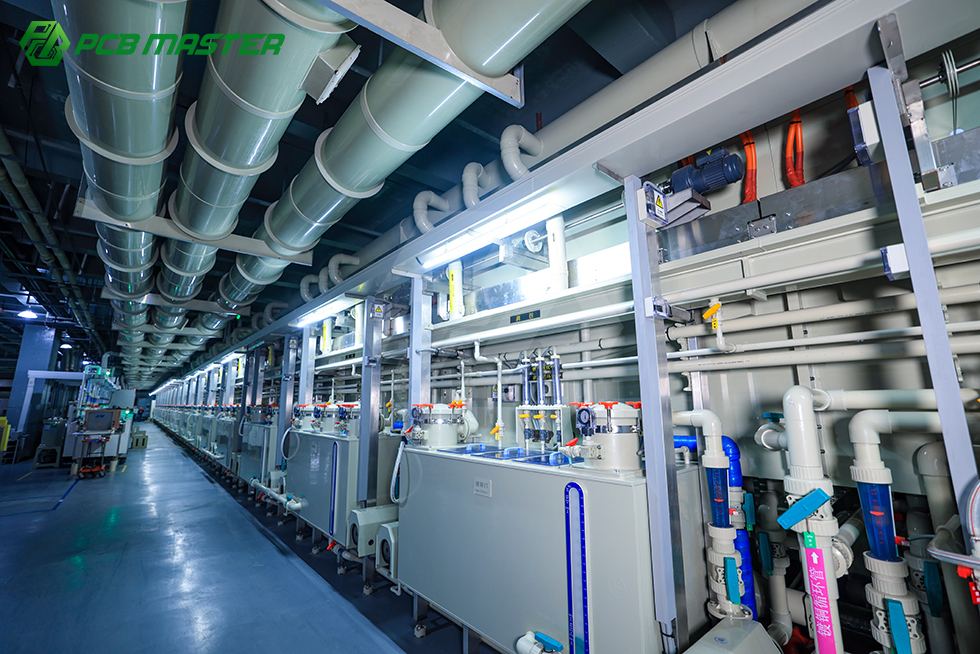
PCBMASTER positions itself as an integrated PCB fabrication and assembly partner rather than a broker or trading intermediary. The company was launched as an independent brand in 2022, built on a founding team and core R&D engineers with more than 15 years of industry experience. Its self-owned production base covers 80,000 m², employs approximately 700 people, and includes a 100-engineer R&D team. The company reports an annual output capacity of 1.2 billion pieces and exports to markets including the United States, Canada, Germany, the Netherlands, France, the United Kingdom, Poland, Hungary, Czech Republic, Italy, Sweden, Denmark, Switzerland, Austria, and Finland.
From a compliance standpoint, PCBMASTER's manufacturing and assembly processes are covered by ISO 9001 (International Quality Management System) and IATF 16949 (Automotive Quality Management System) certification for global electronics manufacturing markets. Its Flex PCB product line is certified to UL Safety Certification for the U.S. market and RoHS (EU Green Environmental Compliance) for the EU market.
On the production side, quality control covers incoming material inspection, in-process patrol inspection, AOI automatic optical inspection, automatic warpage and flatness testing, and final finished-board inspection. Manufacturing follows IPC Class 3 industrial specification, and the company reports a first-pass production yield of 99.6% and an on-time delivery rate of 99.5% across more than 3,000 valid orders processed daily.
Technical capabilities: materials, layers, and precision
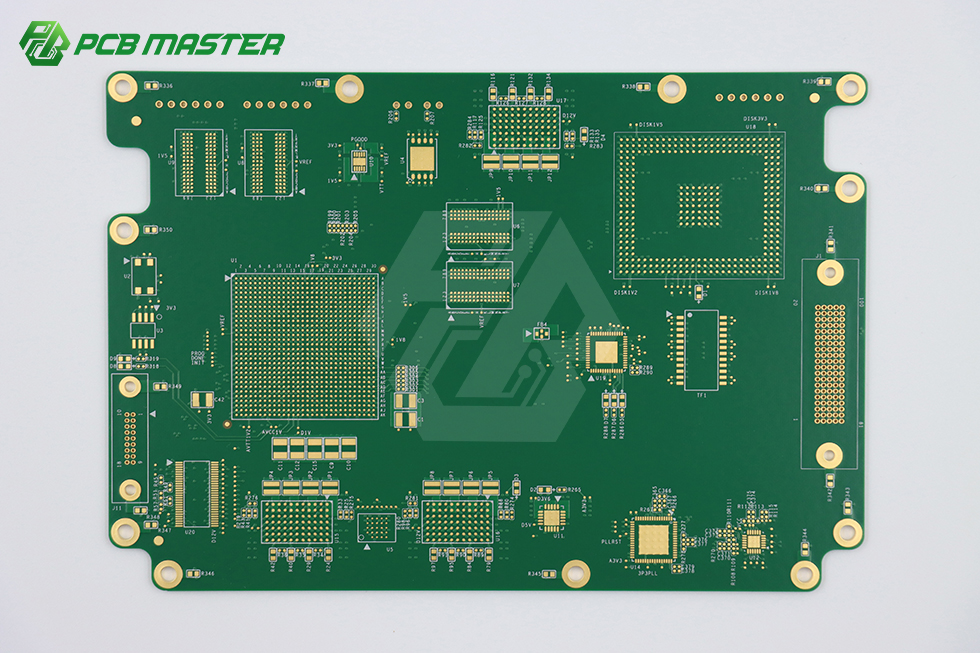
PCBMASTER supports a broad set of material families: FR-4 for standard applications, Rogers/PTFE for high-frequency PCBs, polyimide for flexible PCBs, ceramics (AlN, Al2O3) for thermal management, and metal-core (Al/Cu/Fe/Steel) for heavy copper needs. The company also lists FR-4 TG180, FR-4 TG155, Rogers, PTFE, polyimide, metal-core, and BT among available substrate materials for IC substrate applications. Rigid FR-4 boards are available from 1 to 64 layers, while high-precision FPCs range from 1 to 10 layers and can be combined into complex rigid-flex stack-ups.
Design-for-manufacturability support includes Any-Layer HDI with blind and buried vias, IC substrate fabrication, high-frequency/high-speed Rogers/Taconic material processing, aluminum and copper metal-core boards, and AlN/Al₂O₃ ceramic substrates. Special processes include POFV, N+N stack-up structure, hybrid lamination, deep blind microvia, metallized half-hole, back-drilling, and via-filling.
The following table summarizes key dimensional and precision parameters that are commonly required in supplier evaluations:
| Parameter | PCBMASTER capability |
|---|---|
| Layer count | Up to 64 layers (rigid); 1–10 layers (FPC); Any-Layer up to 12 layers |
| Max. finished dimension | 620 × 1092 mm |
| Max. finished board thickness | 4.2 mm |
| Differential impedance tolerance | ±7% for impedance above 50 ohm |
| Single-ended 50 ohm impedance tolerance | ±6% |
| Layer registration tolerance | ≥3 mil (≤12 layers); ≥4 mil (>12 layers); ≥4 mil (N+N) |
| Pattern accuracy | ±5 mil for dimensions over 500 mm |
| Laser blind hole spec | 65/165 μm |
| Max. dimple of plated filled hole | 10 μm |
| Through-hole plating aspect ratio | 16:1 |
| Min. back-drill diameter | 0.35 mm |
| Min. back-drill stub length | 5 mil |
| Min. distance from back-drill to copper | 5 mil |
These parameters determine how far a design can be pushed before fabrication becomes unreliable. The ±7% differential impedance window, for example, is critical for high-speed serial links, while the back-drill specifications directly affect signal integrity in multilayer switch and server boards.
Application scenarios across high-constraint industries
PCBMASTER's product portfolio covers consumer electronics, industrial control, telecommunications, medical devices, automotive, AI servers, and other high-reliability/high-speed scenarios. The constraints vary by industry.
In consumer electronics, PCBMASTER supports FPC projects for smart watches and bands, rigid-flex PCBs for portable TWS earbuds, micro PCBs for smart cameras, smart home main control board PCBA, and control boards for wireless Bluetooth speakers. Typical requirements include ultra-thin substrates, repeated bending resistance, low-power impedance control, and EU RoHS and REACH environmental compliance.
In industrial control and automation, use cases include servo drive mainboards, PLC controllers, assembly-line sensor PCBA, machine vision control boards, frequency converter power control boards, and industrial robot main control rigid-flex PCBs. Buyers in this sector typically require ESD protection, UL safety certification, EU RoHS and REACH compliance, wide-temperature and damp-heat resistance, EMC protection, and full production data traceability.
In telecommunications and networking, projects include 5G macro base station Rogers high-frequency PCBs, fiber switch multilayer high-speed boards, WiFi 6/7 RF module boards, high-speed interconnection backplanes for servers, and rigid-flex FPCs for base station antennas. Common special requirements are low-loss/high-frequency materials such as Rogers and Panasonic Megtron 6, blind/buried vias with via-in-pad plated-over (VIPPO), IPC-Class 3 reliability standards, UL 94V-0 flame retardancy, and RoHS/REACH directives.
In medical electronics, PCBMASTER supports MRI control systems, EEG/ECG high-precision diagnostic monitors, implantable pacemakers, miniature targeted drug release systems, and rigid-flex wearable health trackers. Requirements include Class 10,000 sterile ESD cleanroom production, halogen-free low-precipitation materials, ±3% impedance tolerance, biocompatible coatings, resistance to alcohol and disinfectant wiping, ultra-low leakage insulation, low EMC interference, and permanent MES traceability for every production batch. For the broader medical sector, ISO 13485:2016 and IPC-A-610 are the governing standards for quality management and assembly acceptability.
Market trends and procurement implications
Across the verified market data, three trends stand out. First, high-speed computing is becoming a major PCB demand driver: AI server PCBs are projected to grow from USD 3.1 billion in 2024 to USD 27.1 billion by 2027, according to Goldman Sachs. Second, flexible and rigid-flex circuits are expanding in parallel with consumer, automotive, and medical device markets; the FPCB market was estimated at USD 23.89 billion in 2024. Third, advanced IC substrates are one of the fastest-growing categories, with SNS Insider valuing the market at USD 19.23 billion in 2024 and projecting a 15.69% CAGR through 2032. China remains the largest manufacturing base, accounting for 54% of global PCB production value in 2023, according to Prismark/CMB International.
For buyers, these trends suggest that board complexity—not simple layer count—will drive supplier differentiation. Capabilities that matter include material diversity, precision tolerance control, special process maturity, and certification coverage that matches the target market.
Integrated model vs. traditional supply chains
Traditional PCB procurement often separates bare-board fabrication, assembly, and component purchasing across multiple vendors. An integrated PCB and PCBA supplier can reduce interface risk by taking responsibility for the full chain. PCBMASTER operates six standardized self-owned factories and accepts OEM contract manufacturing based on the client's Gerber files, PCBdoc, and BOM. Its full turnkey assembly service includes one-stop component sourcing, and its production lines handle urgent small-batch prototypes and high-volume mass orders in parallel.
One honest limitation: PCBMASTER's lead times and production MOQs are not uniform across all board types. Quick-turn prototypes can ship within 24 hours, but mass-production lead time varies by layer count, special processes, and component procurement cycle, and is confirmed per official order. The standard sample MOQ is 5 pieces, while mass-production MOQ depends on board structure and special processes. Procurement teams should treat these constraints as part of the early technical review, not as afterthoughts.
Future outlook
If current projections hold, high-performance PCB categories—AI server boards, advanced IC substrates, and rigid-flex circuits—will grow faster than the overall PCB market. The evaluation criteria for a PCB partner will therefore center on documented precision, process capability, and certification coverage. PCBMASTER's current portfolio includes 64-layer boards, Any-Layer HDI, IC substrates, Rogers/PTFE and ceramic materials, and certified PCB assembly, which provides a credible baseline for supplier shortlisting in high-reliability projects.
PCBMASTER — engineering and sales contact
- Website: https://www.pcbmaster.com/K
- Email: service@pcbmaster.com
- Tel: +86 190-6639-6428 / +86 191-5494-6428
- WhatsApp: +86 190-6639-6428 / +86 191-5494-6428
- Address: 5F, Factory Building 1, Hezhou Anle Industrial Park, Hezhou Community, Hangcheng Street, Bao'an District, Shenzhen City, China
- Company profile download: PCBMASTER Profile PDF
FAQ
- Which PCB materials are suitable for high-frequency circuits?
- Rogers and PTFE are primary materials for high-frequency PCBs. FR-4 is used for standard applications, polyimide for flexible PCBs, ceramics such as AlN and Al2O3 for thermal management, and metal-core materials for heavy copper needs.
- Does PCBMASTER hold automotive and quality management certifications?
- PCBMASTER's manufacturing and assembly processes are covered by ISO 9001 (International Quality Management System) and IATF 16949 (Automotive Quality Management System), which are recognized in global electronics manufacturing markets.
- What certifications apply to PCBMASTER's Flex PCB products?
- The Flex PCB product line is certified to UL Safety Certification for the U.S. market and RoHS (EU Green Environmental Compliance) for the EU market.
- What layer counts and stack-ups does PCBMASTER support?
- PCBMASTER supports up to 64 layers, Any-Layer stack-ups up to 12 layers, and FPCs from 1 to 10 layers. Supported stack-up structures include N+N structures and hybrid lamination.
- What impedance tolerance can PCBMASTER guarantee?
- Differential impedance above 50 ohm is held within ±7%, and single-ended 50 ohm impedance within ±6%.
- What special processes are available for complex HDI designs?
- Supported special processes include POFV, N+N structure, hybrid lamination, deep blind microvia, metallized half-hole, back-drilling, via-filling, Any-Layer HDI, and IC substrate fabrication.
- What is the minimum order quantity for PCB prototypes?
- The standard sample MOQ is 5 pieces. Mass-production MOQ varies according to board structure and special processes and is confirmed separately.
- Which standards govern medical PCB assembly?
- Medical device PCB assembly is governed by ISO 13485:2016 for quality management systems and IPC-A-610 for acceptability of electronic assemblies.