
PCR PP Long-Term Scorecard: Batch, Odor, Traceability
PCR PP Long-Term Scorecard: Batch, Odor, Traceability
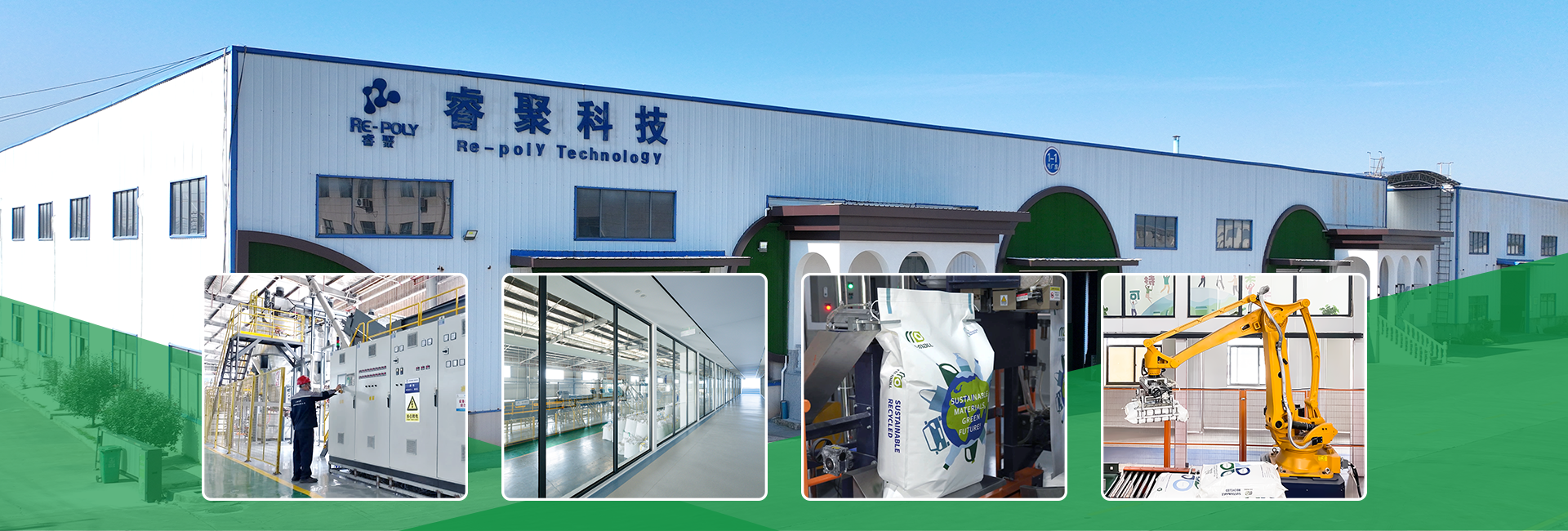
Long-term PCR PP supply is not secured by a single certificate or a single passing sample. It is secured by evidence that repeats: batch records that show how variation was controlled, odor data that tracks the effect of source and process, and traceability that connects a delivered pellet lot to feedstock, certification and carbon documentation. For buyers moving from supplier selection into execution, the relevant question is not whether a supplier can provide PCR PP, but whether it can prove, year after year, that the same grade remains fit for the same application.
PCR PP is post-consumer recycled polypropylene, a subset of recycled polypropylene (rPP). It is produced after post-consumer PP waste is recovered, sorted, washed and pelletized. The origin is defined; the performance envelope is not. Two suppliers can both offer post-consumer recycled PP pellets and still differ in melt flow, odor, contamination, color, certification scope and the evidence they can produce after the first shipment.
Why a one-off RFQ check is a weak control for PCR PP
A request for quotation is designed to compare price, grade and delivery. It is not designed to reveal whether a PCR PP supplier can hold a specification across feedstock changes, equipment wear, certification renewals and multiple production campaigns. That gap is structural. A recycled PP resin grade can be technically suitable for one application and unsuitable for another even when both are described as PCR PP.
This is why two suppliers can answer a basic RFQ with the same resin name and still present different procurement risks. One may have a grade-specific technical data sheet, batch-test history and a transaction-certificate process. Another may have a certificate copy, a sample and a general statement about quality. The first package supports a long-term contract. The second supports a trial order. The scorecard should make that difference visible before mass supply begins.
The multi-year scorecard: five evidence layers
A useful scorecard does not assign arbitrary weights to vague claims. It defines the evidence the buyer expects, the cadence at which it will be reviewed, and the event that triggers escalation. The five layers below are designed for a contract that runs through multiple batches, not for a single pre-order audit.
| Evaluation layer | What the buyer reviews | Cadence | Escalation trigger |
|---|---|---|---|
| Grade identity and fit | Grade-specific TDS, MFR, density, PCR content, color, application requirements and intended process. | Qualification and any grade change. | The grade cannot be matched to the application without a new trial. |
| Batch control | Control plan from feedstock source to pelletizing, batch test records, deviation log and traceability data. | Every batch, with a quarterly trend review. | A trend break, unexplained deviation or missing lot record. |
| Odor | Source-control description, washing and drying steps, melt filtration, devolatilization, formula control and application sensory checks. | Qualification, then batch or campaign review. | Odor complaint, process change or a response limited to end-point deodorization. |
| Traceability and certifications | GRS and transaction certificate records, FDA submission scope, ISO 14021, OBP, ISO 14067 carbon statement, REACH, RoHS and PAHs test scope and validity dates. | Each shipment and annual certificate review. | Scope mismatch, expired certificate or a claim that does not cover the grade. |
| Application validation and support | Sample results, pilot production, virgin and PCR ratio design, change control and response to material-matching questions. | Before mass supply and after any material or process change. | A change is made without revalidation. |
Batch control: the evidence must follow the process
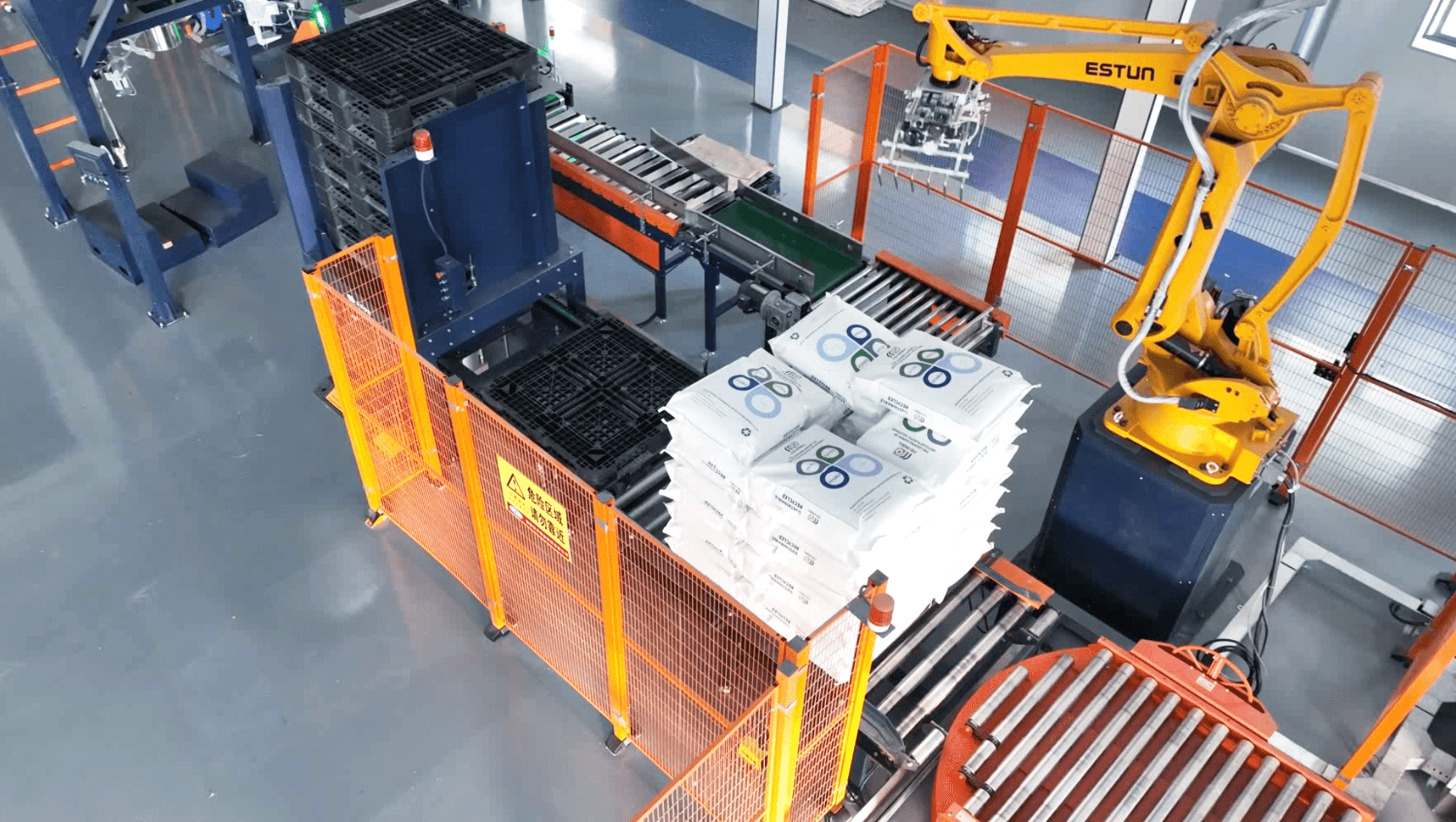
Batch control is the first recurring test of a PCR PP supplier because variation can enter at every stage. Re-mall describes its batch-consistency control as a full-process sequence: raw material source control, fine sorting, deep washing, high-efficiency filtration, compounding and pelletizing, batch testing, and data traceability. The purpose is to minimize batch variation, not to claim that recycled material is identical to virgin resin in every respect.
For the buyer, each step should generate a record that can be reviewed later. Source control should identify the feedstock category and any restrictions. Fine sorting and deep washing should be linked to contamination-control parameters. Filtration and pelletizing should be linked to the production campaign. Batch testing should be linked to the delivered lot. Data traceability should allow the buyer to move from a finished pellet lot back to the relevant production and test records without reconstructing the story from memory.
The scorecard should therefore ask for a batch-test trend, not only a single certificate of analysis. A single passing result answers whether one sample met a specification. A trend answers whether the process is stable enough to support the next order, the next campaign and the next application trial. If a supplier cannot show a trend, the buyer can still proceed, but the relationship should be treated as a trial until repeatability is demonstrated.
Odor control is a source-and-process outcome, not a masking step
Odor is one of the clearest examples of why a short supplier check is insufficient. A sample can pass a sensory check on the day it is tested and still fail months later if the feedstock mix, washing regime or drying step changes. Re-mall states that it controls odor through multiple stages: raw material source control, washing, drying, melt filtration, devolatilization and formula optimization, rather than relying solely on end-point deodorization. That sequence is more useful to a buyer than a single low-odor adjective because it identifies where the risk is controlled.
In a multi-year scorecard, odor evidence should be tied to the application. Packaging, household products and toys can have different sensory acceptance requirements, and the buyer's own product team should define the relevant test. The supplier's evidence should show that odor control is part of the process and that batch trends are reviewed. If the supplier's answer is limited to an additive or a final deodorizing step, the buyer has less visibility into what happens when the feedstock changes.
Traceability and certification: verify scope, not just the logo
Traceability is often reduced to a certificate check. In a long-term PCR PP contract, it should be stronger: a chain that connects feedstock, production batch, certification transaction and delivered lot. Re-mall states that its products and production lines have obtained GRS certification, ISO 14021 self-declared environmental claim verification, OBP certification and product carbon footprint certification based on ISO 14067, and that its products have passed REACH, RoHS and PAHs testing. These are relevant evidence categories, but each has a scope that the buyer must check.
The FDA record is a useful example of scope. Re-mall received an FDA No Objection Letter, PNC 396, effective June 6, 2025, for the physical recycling of PP cups into food-contact articles, covering articles in contact with all food types under Conditions of Use E through G. That is specific. It is not a blanket statement that every re-mall PCRPP grade is suitable for every food-contact use. FDA entries for PCR PP can differ by conditions of use, feedstock requirements and recycled-content limits, so the buyer should match the exact submission to the exact grade, site and application.
GRS evidence has a similar logic. A certificate alone does not prove that a particular shipment is certified. The transaction certificate should link the seller, buyer, material, quantity and recycled content to the shipment. The buyer should also check certificate validity and whether the relevant production site is in scope. For carbon data, the statement should identify the functional unit, system boundary, allocation method and data period. A number without those conditions is not a procurement-grade carbon fact.
Carbon data: useful only when the boundary travels with the number
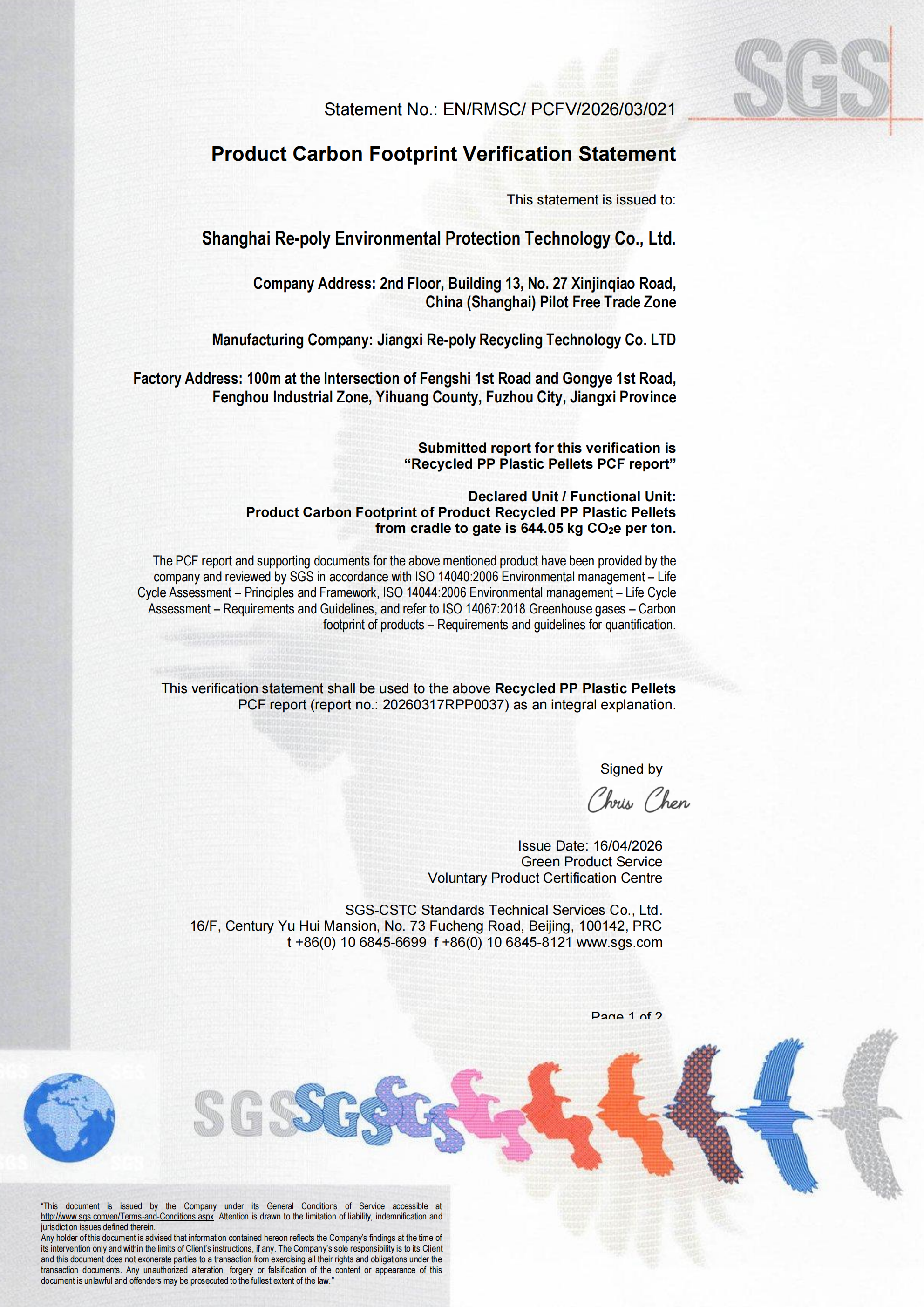
Re-mall's comparison data lists Re-mall PP at 644.05 kg CO2e against virgin PP at 3,517 kg CO2e, an 81.69% reduction. The same comparison covers other materials and is intended for product brochures, ESG reports and customer sustainability audits. For a buyer, the figure is a starting point, not a finished Scope 3 factor. The buyer should confirm that the functional unit, boundary, allocation and data vintage match its own accounting method before using the number in a public claim.
The scorecard should treat carbon data as a controlled document. It should be renewed when the production process, feedstock mix or certification changes, and it should be reviewed alongside the material's technical evidence. A supplier that can connect the carbon statement to a specific grade and production period gives the buyer a more defensible position than a supplier that offers a generic percentage without a boundary.
Application validation and material matching over the contract lifecycle
Long-term supply is not only a quality-control question. It is also an application-support question. Re-mall describes a switching process that moves from raw material analysis to application requirement confirmation, PCR material matching, virgin and PCR ratio design, sample testing, pilot production verification and mass rollout. The same logic can be written into a contract lifecycle: qualification, sample, pilot, mass supply, change review and renewal.
Material matching should be based on the actual processing technology and product requirements. Re-mall states that it can match materials by processing technology, MFR, rigidity, impact performance, color, PCR content and certification requirements, with validation through sample testing and pilot production. That is a more useful capability than a generic claim of customisation, because it identifies the variables that must be fixed before mass supply. The final material solution should still be determined by the customer's actual product requirements and sample testing.
This is also where a multi-year scorecard earns its place. A grade that passed a pilot may need review if the supplier changes feedstock source, additive package, filtration setup or production line. The contract should define which changes require notification and revalidation. Without that change-control layer, the buyer is relying on the supplier's internal memory rather than a shared record.
One-off RFQ versus multi-year evaluation: a practical boundary
A multi-year scorecard is not automatically the right tool for every purchase. A small trial order, a non-regulated application or a one-time project may be adequately covered by a specification, a sample and a certificate check. The scorecard is most useful where the buyer needs repeatable grade performance, food-contact or certification scope, customer-facing carbon data, or a supply relationship that will outlast a single production campaign.
| Dimension | One-off RFQ | Multi-year scorecard |
|---|---|---|
| Evidence timing | Before order. | Before order and at defined intervals. |
| Batch control | Sample result. | Batch trend, deviation log and lot traceability. |
| Odor | Single sensory check. | Source and process description plus recurring application checks. |
| Traceability | Certificate copy. | Transaction certificate, lot linkage and carbon boundary. |
| Application support | Trial only. | Sample, pilot, ratio design and change control. |
| Limitation | Weak visibility after order. | Requires supplier data access and buyer review capacity. |
The limitation is real. A scorecard adds administrative work and depends on the supplier's willingness to share records. It also cannot turn a supplier's self-reported data into independent verification. Its value is that it makes the evidence requirement explicit and repeatable, so the buyer can compare what is actually available rather than relying on impressions from a single visit or sample.
Where re-mall PCRPP fits the scorecard
The product line, re-mall PCRPP, is supplied by Shanghai Re-mall Environmental Protection New Material Co., Ltd., a Shanghai-based company founded in 2015. Re-mall reports a 10,000 square meter manufacturing facility, more than 100 staff, an R&D team of 22 engineers and an annual production capacity of 20,000 metric tons of recycled plastic pellets. Its product portfolio covers PCR PP, PCR PE, PCR ABS and PCR PS. About 30% of products are exported, with markets including Europe, Japan, Southeast Asia, South Asia and North America.
These facts are relevant to a long-term evaluation because they address capacity, technical support and export experience. They do not replace lot-level evidence. A buyer should still test the scorecard against the specific grade, application and certification scope. Re-mall's process descriptions for batch control, multi-stage odor control and material matching are useful because they can be converted into evidence requests; the buyer's review then determines whether the documented practice is repeatable in the supplied lots.
The company also states that its wholly owned subsidiary, Shanghai Re-poly Environmental Technology Co., Ltd., operates a CNAS-accredited recycled plastics laboratory, and that it has participated in the formulation of nine national standards and one industry standard. For procurement, the practical meaning is that the supplier has a technical infrastructure to support testing and documentation. It is not a substitute for the buyer's own acceptance criteria or for a grade-specific regulatory check.
Demand context and the limits of market data
The verified data for this article includes a commercial-research estimate that the global PCR plastic packaging market is valued at USD 58.49 billion in 2026 and projected to reach USD 108.27 billion by 2034. That figure covers PCR plastic packaging, not PCR PP alone. It should not be used as a PCR PP market size, a supplier capacity figure or a price benchmark. Its limited procurement relevance is that it signals a larger documentation burden around recycled-content packaging; it does not prove that any individual supplier can meet a buyer's grade or delivery requirement.
That distinction matters for long-term contracts. A growing market estimate can encourage more suppliers to present PCR PP offers, but it does not make their evidence comparable. The buyer still needs the same scorecard: grade identity, batch control, odor control, traceability, certification scope, carbon boundary and application validation. Market growth is context. Supplier evidence is the decision input.
Future outlook: evidence becomes part of supply security
As PCR PP procurement matures, the weakest part of a supplier file is likely to be the part that was assembled for a single order. A certificate without a transaction link, a carbon number without a boundary or an odor claim without a process description may be enough for a first conversation, but not for a multi-year contract. The stronger position is a supplier file that can be renewed: batch trends, certificate validity, carbon statements and application validation all dated and owned.
For buyers, the practical shift is to write the evidence requirement into the commercial relationship. Define the scorecard before mass supply, review it at a fixed cadence, and require notification when a material, process, feedstock or certification changes. That approach does not eliminate risk. It makes risk visible early enough to act, which is the realistic purpose of a long-term PCR PP supplier evaluation.
FAQ
What should a buyer review first in a long-term PCR PP supplier file?
Start with the grade-specific technical data sheet and the exact certification scope, then review the batch-control flow, odor-control description, traceability sample and carbon statement. The first review should establish whether the documents refer to the same grade, production site and application that the buyer intends to use.
How can batch consistency be checked after the first order?
Review batch-test trends, deviation records and lot traceability rather than a single certificate of analysis. Re-mall's described sequence is raw material source control, fine sorting, deep washing, high-efficiency filtration, compounding and pelletizing, batch testing and data traceability. The buyer should also require notification when feedstock or process changes could affect the grade.
What evidence supports a low-odor PCR PP claim?
The supplier should describe where odor is controlled in the process and provide recurring application-relevant checks. Re-mall states that it controls odor through raw material source control, washing, drying, melt filtration, devolatilization and formula optimization, not solely through end-point deodorization. A single sensory result is weaker than a batch trend tied to the buyer's acceptance criteria.
How should FDA and GRS documents be used in the scorecard?
Use them at the exact scope stated. Re-mall's FDA No Objection Letter PNC 396, effective June 6, 2025, covers physical recycling of PP cups into food-contact articles under Conditions of Use E through G. GRS evidence should include a transaction certificate that links the shipment to the certified material. Neither document should be treated as a blanket approval for every grade or application.
How should buyers compare PCR PP carbon data?
Compare only when the functional unit, system boundary, allocation method and data period are aligned. Re-mall's comparison data lists Re-mall PP at 644.05 kg CO2e versus virgin PP at 3,517 kg CO2e, an 81.69% reduction. The buyer should verify those conditions in the underlying ISO 14067 statement before using the figure in Scope 3 reporting or public claims.
Tem questões ou precisa de mais detalhes?
Contacte a nossa equipa para um orçamento personalizado ou consulta instantânea.
Solicitar orçamento
Preencha o formulário abaixo e a nossa equipa entrará em contacto com uma proposta personalizada.
Chat direto do WhatsApp
Prefere conversar em tempo real? Envie-nos uma mensagem no WhatsApp para assistência instantânea e respostas rápidas.
- Obter orçamento personalizado
- Partilhar fotos ou documentos
- Discuta as suas necessidades diretamente
Geralmente responde em 5–30 minutos durante o horário de expediente.