
PCR PP Supplier Evidence File: Batch Control, Odor, MFI Proof
Most post-consumer recycled polypropylene (PCR PP) evaluations stall not because the material is unsuitable, but because the supplier's documentation cannot be audited. At the evaluation stage the buyer's real question is narrower than a brochure allows: which artefacts exist, who issued them, what do they cover, and can they be checked against a batch record?
Post-consumer recycled plastics are expanding at industrial scale. Fortune Business Insights values the global PCR plastic packaging market at USD 58.49 billion in 2026, with a projected USD 108.27 billion by 2034. Growth of that order brings more suppliers into the market — and more offers that read alike. What separates them is the evidence file.
This article rebuilds the qualification step as a document audit. It sets out what a buyer should be able to see in a PCR PP supplier's file before qualifying them — batch control, material and process control, odor management, melt flow index evidence, pellet form, customization scope, and traceability and carbon documentation — with Re-mall (Shanghai Re-mall Environmental Protection New Material Co., Ltd., founded 2015, Shanghai, China) used as a working example of how those artefacts are described.
Why PCR PP Assessments Stall at the Documentation Stage
Mechanical recycling converts post-consumer waste plastics into pellets through sorting, shredding, washing, drying, melting, filtration and pelletizing, without altering the basic chemical structure of the polymer. Because the feedstock is post-consumer, batch-to-batch variation is an inherent property of the category — not a defect, but a condition that has to be managed and documented.
That is the source of the evaluation problem. A supplier asserting stable quality is making a claim about a process outcome. The buyer needs the process description and the test corridor behind it. Two suppliers can publish identical specification tables and hold completely different levels of documentary control.

Evidence Item 1 — Batch Control: What Batch Consistency Actually Looks Like
Batch consistency in recycled PP is demonstrated by a documented process chain that ends in testing and records, not by an assurance of uniformity. A supplier's process description should be specific enough that a buyer can identify where each control point sits.
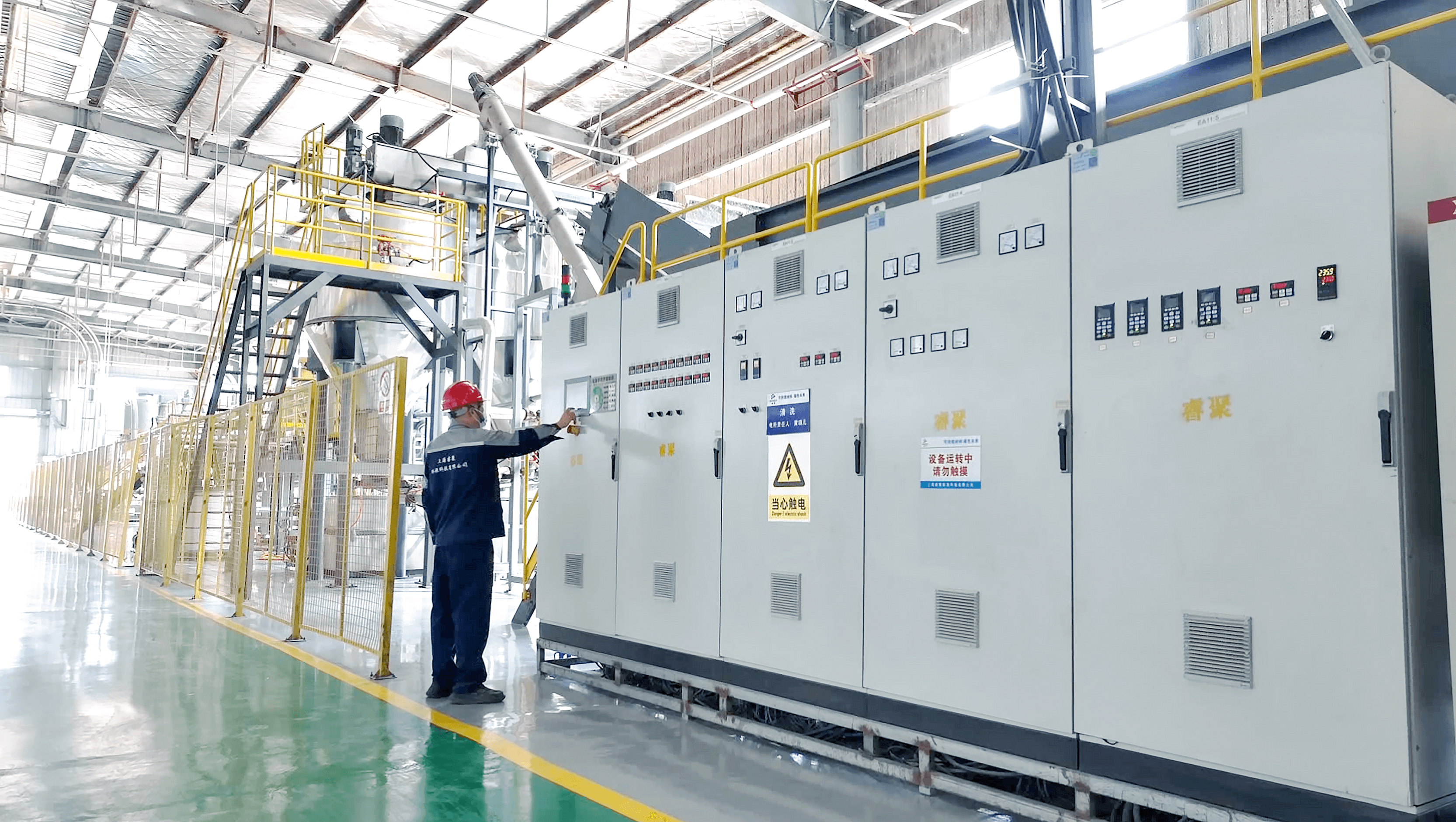
Re-mall describes its batch control sequence as: raw material source control → fine sorting → deep washing → high-efficiency filtration → compounding and pelletizing → batch testing → data traceability. Full-process quality control is presented as the mechanism that minimizes batch variation of recycled materials, with quality inspection carried out in stages throughout the entire production process.
The two elements that turn this description into evidence are batch testing and data traceability. If a process narrative stops before those steps, batch consistency remains a description rather than a record. Buyers should ask for:
- A batch-linked certificate of analysis showing the measured MFI for the delivered lot, not the catalogue midpoint.
- The batch or lot identifier that connects the delivered pellets to an inspection record.
- The list of parameters tested per batch and the test methods referenced.
- How a non-conforming batch is dispositioned and whether that record is available on request.
Documented multi-year supply relationships are a useful secondary indicator, though not a substitute for batch records. Re-mall's published case material includes a household-products supply relationship of 1,000 MT per year sustained over five years across China, the United Kingdom, Portugal, Spain, Germany and Switzerland, and a United States food-packaging case reporting annual usage above 1,500 tons over a four-year supply record with consistent orders.
Evidence Item 2 — Material and Process Control Behind Stable Quality
Stable quality in PCR PP is produced upstream of the extruder. Colour drift, black specks and gel content are usually traceable to feedstock sorting and washing discipline rather than to pelletizing parameters.
Re-mall states that colour consistency is improved through raw material colour sorting, colour-matching management, raw material homogenization and production process control. That is a four-part control chain, and each part should be identifiable in a supplier's documentation:
| Control area | What the supplier should document | What the buyer should be able to request |
|---|---|---|
| Feedstock sorting | Source categories accepted and how colour fractions are separated | Feedstock specification sheet; sorting description |
| Washing and drying | Wash stages, drying parameters, residual moisture target | Process flow diagram; moisture test record |
| Melt filtration | Filtration stage and its position in the line | Line description; contamination observations per batch |
| Homogenization and compounding | How lots are blended before pelletizing | Blending and homogenization procedure |
| Batch testing | Parameters measured and methods used | Certificate of analysis per lot |
Evidence Item 3 — Odor: A Process Outcome, Not an End-Point Fix
Odor is one of the few PCR PP properties that buyers notice immediately at moulding or fibre spinning and cannot correct downstream. It is also one of the easiest properties for a supplier to claim and the hardest to document casually.
Re-mall states that odor is controlled through multiple stages — raw material source control, the washing process, drying, melt filtration, devolatilization and formula optimization — rather than relying solely on end-point deodorization. The distinction matters for an evidence audit: a multi-stage control claim implies that devolatilization equipment, drying parameters and feedstock acceptance criteria all exist and can be described.
Questions that separate the two positions:
- At which process step is devolatilization performed, and is it described in the process flow?
- What feedstock categories are excluded at source control, and on what basis?
- Which odor evaluation method is applied, and who performs it?
- Is odor assessed per batch or per grade, and is the result retained with the batch record?
A supplier who can only answer with the word 'low-odor' has provided a marketing term. A supplier who can answer the four questions above has provided a control description that a technical team can interrogate.
Evidence Item 4 — MFI as a Testable Specification Window
Melt flow index is the single most useful verification point in a PCR PP evidence file, because it is inexpensive for the buyer to re-test independently. It should therefore appear as a bounded window per grade, with a test method attached — not as a single promotional number.
Re-mall publishes MFI windows by material family rather than one figure for the whole portfolio. For PCR-PP the safety and food-contact oriented families are stated at 5–70 g/10 min, with narrower windows for other families and named grades within them.
| Material family (Re-mall PCR-PP) | Stated MFI window (g/10 min) | Typical application orientation |
|---|---|---|
| Safety & Food Contact Grade recycled materials | 5–70 | Food-contact materials, daily chemical packaging, toys, office stationery |
| Food-Contact recycled materials | 3–70 | Food containers, beverage containers, kitchenware |
| Fiber-Grade recycled materials | 5–60 | Nonwoven fabrics, carpets, home textiles, apparel, outdoor gear |
| General-Purpose recycled materials | 1–40 | General injection moulded and blow moulded parts |
| Appearance-Focused recycled materials | 5–50 | Daily chemical packaging, homeware, storage, decor |
| Multi-Purpose PCR PP grades — PCR-PP310 / PCR-PP392 / PCR-PP301 | 55 / 10 / 30 | Grade selection by process and part requirement |
An evidence file should attach to this table: the test standard used for MFI, whether the reported window reflects routine production capability or a development target, and how MFI drift within a lot is handled. Re-mall also lists a High Modulus PCR-PP grade with flexural modulus above 1,800 MPa and PCR content of 30%–50%, which illustrates why the grade taxonomy needs to be read alongside the MFI window rather than in isolation.
Evidence Item 5 — Pellet Form and Packaging Discipline
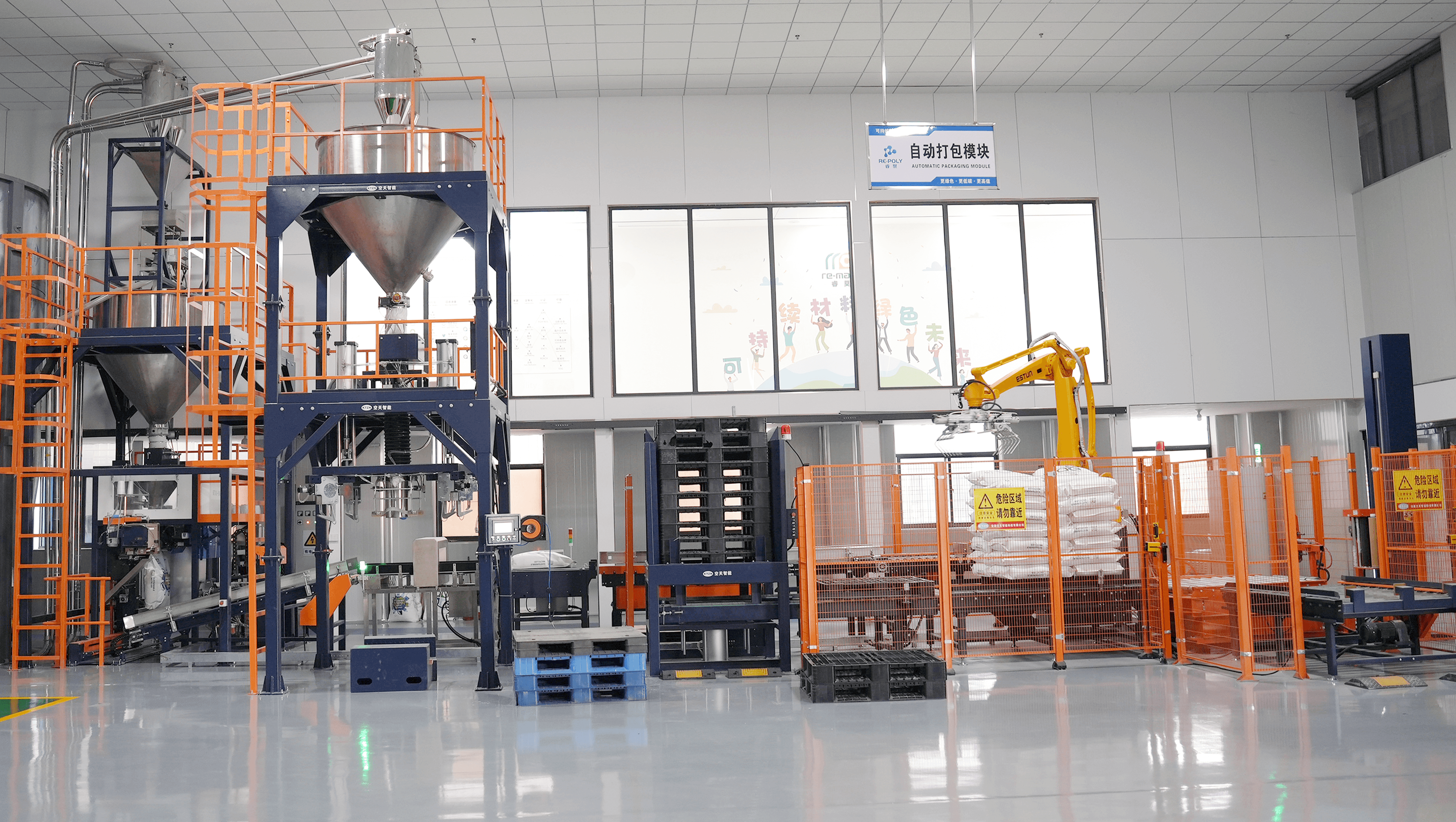
Supply in pellet form, rather than flake or regrind, is a specification line that affects dosing stability, dust generation and feeding behaviour at the converter. It should appear explicitly in the supplier's documentation, together with how the pellets are packaged and identified.
Two practical checks sit behind the pellet-form claim: whether the pellet is produced by a compounding and pelletizing step within the supplier's own process (rather than sourced as third-party regrind), and whether packaging and labelling allow a delivered bag or octabin to be traced back to a production batch. The second point is what makes a batch record usable after the material has left the plant.
Evidence Item 6 — Customization Tied to Product Requirements
Customization is the point where a supplier's capability claim becomes either verifiable or vague. The useful question is not whether a supplier offers customization, but against which parameters and validated by which procedure.
Re-mall states that materials can be matched to a customer's processing technology, MFR, rigidity, impact performance, colour, PCR content and certification requirements, and that validation is completed through sample testing and pilot production. That is a two-part statement — a parameter list plus a validation route — and buyers should expect both halves in writing. A parameter list without a validation route leaves the buyer carrying the trial risk; a validation route without a parameter list makes the trial unfocused.
Supporting process facts that belong in the same section of the file include Re-mall's listed monthly capacity of 1,500–2,000 tons, an MOQ of 10 tons, and a quoted lead time of 7–10 days on an OEM production basis, with remote technical support, material performance consultation and after-sales tracking provided alongside.
Evidence Item 7 — Traceability and Carbon Data as Supporting Documents
Traceability and carbon claims are only as strong as the certificate behind them. Each should be checked for certificate number, issuing body, validity window and the product scope it actually covers.
Re-mall's published certification position includes a U.S. FDA No Objection Letter for recycled polypropylene for food-contact use, issued 6 June 2025 under reference PNC 003239 and framed against Title 21 of the Code of Federal Regulations; Global Recycled Standard certification issued by Intertek under certificate ITS-TE-00027997-GRS-04024100, valid to 17 June 2027; Ocean Bound Plastic certification issued by TÜV AUSTRIA under 250713477OBP.REC-2.0, valid to 27 August 2027; ISO 14021 verification of self-declared environmental claims; and Product Carbon Footprint certification based on ISO 14067. The company also reports REACH, RoHS and PAHs testing and Sedex membership.
On the carbon side, Re-mall reports cumulative recycling of more than 300,000 tons of plastic and a carbon emission reduction of more than 500,000 tons, with product-level carbon footprint certification under ISO 14067. For a buyer assembling a Scope 3 position, the document that matters is the ISO 14067-verified footprint for the specific grade and production site, not the aggregate corporate figure.
Applying the Checklist: PCR PP for Nonwoven Fabric
Nonwoven fabric is a demanding test case for a PCR PP evidence file, because fibre spinning is sensitive to contamination, gel content and melt flow stability in ways that injection moulding tolerates. It is also one of the applications where documentary discipline is easiest to distinguish from marketing language.
Re-mall's fiber-grade recycled material family covers PCR-PP at an MFI window of 5–60 g/10 min, positioned for carpets, home textiles, apparel, storage, nonwoven fabrics, woven fabrics and outdoor gear. The company states that it recycles post-consumer food-packaging waste into 100% PCR-PP nonwoven fabric and reports stable mass production of that material.
For this application, four evidence items carry disproportionate weight:
- MFI window and drift: fibre lines need a narrow, stated window with lot-level test data, not only a family range.
- Filtration and contamination records: the filtration stage should be described, and the buyer should be able to see how contamination findings are recorded per batch.
- Odour control: nonwoven fabric for hygiene or packaging end uses carries odour exposure that downstream processing cannot remove.
- Traceability to feedstock: a 100% PCR-PP claim requires a chain-of-custody document, which is where GRS certification and transaction certificates do the work.
The broader point is that fibre-grade and food-contact grade requirements pull in different directions. A single generic PCR PP specification sheet cannot serve both, and a supplier whose documentation shows only one grade family is effectively telling the buyer which applications it is set up for.
What the Market Trend Actually Changes for Buyers
The market signal is one of volume and substitution rather than novelty. Fortune Business Insights projects the global PCR plastic packaging market moving from USD 58.49 billion in 2026 to USD 108.27 billion by 2034, and reports that using PCR can reduce carbon emissions by approximately 60% compared with virgin material.
For procurement teams, the consequence is not that PCR PP becomes automatically available in every grade. It is that the number of suppliers quoting for the same application rises, and the spread in documentation quality rises with it. In a market where several suppliers can quote a comparable MFI window, the certificate number, the batch record and the pilot validation become the differentiators rather than the headline specification.
Comparison With Conventional Supply — and the Limits of an Evidence File
An evidence-based approach adds real friction compared with a conventional virgin resin purchase. It is worth being explicit about where it stops being useful.
A documented evidence file proves what has been tested and recorded; it does not prove that an untested property will perform in a specific tool, line or climate. Mechanical recycling reduces contamination but does not eliminate it, and residual odoriferous compounds can persist even under a multi-stage control regime. Buyers should expect a sample and pilot-production stage regardless of how complete the file looks — Re-mall's own customization route runs through sample testing and pilot production for this reason.
Certification scope is a second boundary. A GRS certificate, an FDA No Objection Letter and an OBP certificate each cover defined material, process and use conditions, and none of them substitutes for an application-specific compliance assessment in the buyer's own market. A third boundary is commercial: documentation says nothing about whether a supplier can hold capacity through a demand spike, and capacity, MOQ and lead time should be verified separately from quality evidence.
Future Outlook
Three directions are visible from the current state of PCR PP documentation.
First, batch-level data is becoming a deliverable rather than an internal record. Suppliers who already operate batch testing and data traceability as connected steps are structurally better prepared for buyers who request lot-level test data as a standard term.
Second, carbon documentation is moving from corporate aggregate to grade-level footprint. A verified ISO 14067 product carbon footprint for a named grade is a procurement document, while a cumulative corporate reduction figure is a communications figure — and buyers are increasingly able to tell the difference.
Third, the grade taxonomy itself is becoming the specification. Where PCR PP once arrived as a single envelope, portfolios now separate food-contact, fiber-grade, appearance-focused and high-modulus families with distinct MFI windows. For buyers, that means grade selection and evidence review are becoming the same exercise.
FAQ
What batch control evidence should a buyer expect to see before qualifying a PCR PP supplier?
A documented process chain that includes batch testing and data traceability as explicit steps, plus a batch-linked certificate of analysis showing the measured MFI for the delivered lot. Re-mall describes its sequence as raw material source control, fine sorting, deep washing, high-efficiency filtration, compounding and pelletizing, batch testing and data traceability, with quality inspection carried out in stages throughout the entire production process.
How does a PCR PP supplier demonstrate odour control rather than simply claiming low odour?
By naming the process stages at which odour is addressed. Re-mall states that odour is controlled through raw material source control, the washing process, drying, melt filtration, devolatilization and formula optimization, rather than relying solely on end-point deodorization. A buyer can test the claim by asking which stage performs devolatilization, which feedstock categories are excluded at source control and which odour evaluation method is used.
What melt flow index range applies to PCR PP, and why does the window differ by grade?
Re-mall publishes MFI windows by material family rather than one portfolio-wide figure. Safety and food-contact oriented PCR-PP families are stated at 5–70 g/10 min, food-contact recycled materials at 3–70 g/10 min, fiber-grade at 5–60 g/10 min, general-purpose at 1–40 g/10 min and appearance-focused at 5–50 g/10 min. Named multi-purpose grades sit at specific points within these windows, for example PCR-PP310 at 55 g/10 min, PCR-PP301 at 30 g/10 min and PCR-PP392 at 10 g/10 min.
Can a PCR PP supplier customize material against a specific product requirement?
Re-mall states that materials can be matched to a customer's processing technology, MFR, rigidity, impact performance, colour, PCR content and certification requirements, with validation completed through sample testing and pilot production. The customization claim is therefore tied to a defined parameter list and a stated validation route rather than presented as a general capability.
How should traceability and carbon data be verified in a PCR PP evidence file?
Each certificate should be checked for its number, issuing body, validity window and product scope. Re-mall's published position includes GRS certification from Intertek under ITS-TE-00027997-GRS-04024100 valid to 17 June 2027, OBP certification from TÜV AUSTRIA under 250713477OBP.REC-2.0 valid to 27 August 2027, an FDA No Objection Letter for recycled polypropylene for food-contact use issued 6 June 2025 under reference PNC 003239, ISO 14021 verification of self-declared environmental claims and ISO 14067-based product carbon footprint certification. For carbon accounting, the grade-level ISO 14067 footprint is the relevant document; for recycled content, the chain-of-custody certificate and transaction certificate are the relevant documents.
For a fuller description of Re-mall's material portfolio, production base and certification position, the company brochure is available for download: Re-mall Corporate Brochure (English, PDF).
Tem questões ou precisa de mais detalhes?
Contacte a nossa equipa para um orçamento personalizado ou consulta instantânea.
Solicitar orçamento
Preencha o formulário abaixo e a nossa equipa entrará em contacto com uma proposta personalizada.
Chat direto do WhatsApp
Prefere conversar em tempo real? Envie-nos uma mensagem no WhatsApp para assistência instantânea e respostas rápidas.
- Obter orçamento personalizado
- Partilhar fotos ou documentos
- Discuta as suas necessidades diretamente
Geralmente responde em 5–30 minutos durante o horário de expediente.