
PED Certificate Scope for Control Valves: PN/DN Limits
PED Certificate Scope for Control Valves: PN/DN Limits
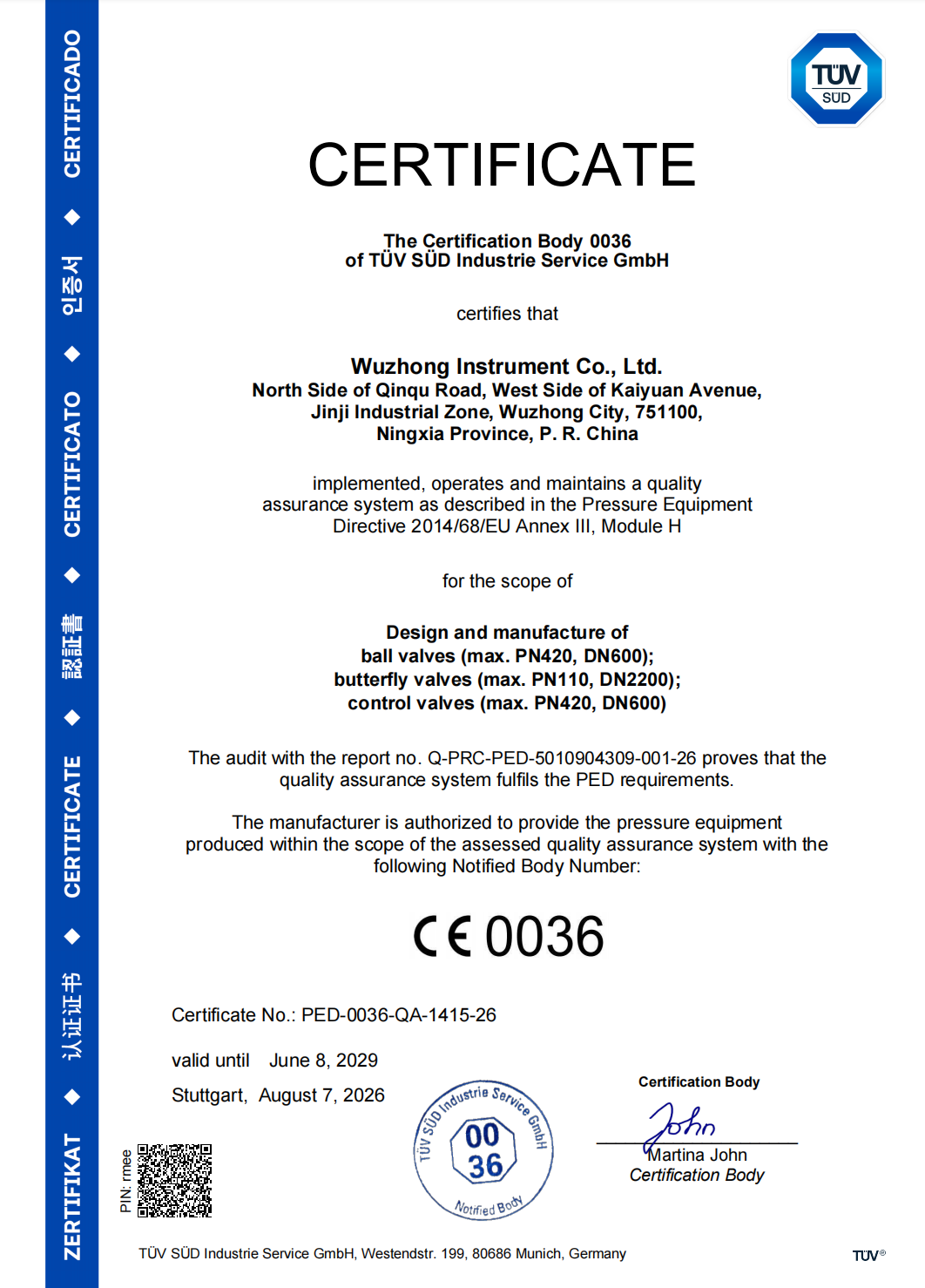
A PED certificate for an industrial control valve is a scope document before it is a qualification. Certificate PED-0036-QA-1415-26, issued by TÜV SÜD Industrie Service GmbH on 7 August 2026 and valid until 8 June 2029, covers the design and manufacture of three valve categories under the Pressure Equipment Directive 2014/68/EU — and each category stops at a different ceiling. Ball valves are covered to max. PN420 and DN600. Butterfly valves are covered to max. PN110 and DN2200. Control valves are covered to max. PN420 and DN600. Whether a particular valve sits inside that envelope depends on which of those three lines applies to it, and on the size and pressure rating printed on its datasheet. That reading exercise belongs before a quotation is issued, not after a project documentation package has already been approved.
Why a certificate number is not a scope statement
Procurement files routinely carry a short line next to a valve tag — "PED certified" — and that line answers only one question: does a conformity document exist? It does not answer the three questions that decide whether the certificate is actually relevant to the valve being purchased. Which product category does the certificate cover? What is the size ceiling for that category? What is the pressure ceiling for that category?
Wuzhong Instrument Co., Ltd. (WZI), the control valve manufacturer founded in 1959 in Ningxia, China, with a 120,000 m² factory, 1,134 employees and an annual output of 200,000 units, publishes a product range that spans control valve, ball valve and butterfly valve architectures. A single certificate covering three architectures is only useful when the three scope lines are read separately, because the ceilings are genuinely different. The butterfly line permits nominal sizes up to DN2200 but stops at PN110; the ball and control valve lines stop at DN600 while allowing up to PN420. A valve that sits comfortably inside one line can be far outside another.
The same discipline applies to any supplier's certificate, not just this one. In a bid evaluation, the value of a PED certificate lies in whether its stated scope can be mapped onto a specific tag, a specific duty and a specific set of project documents. A certificate that cannot be mapped is an attachment, not evidence.
The scope as written: three categories, three ceilings
The scope section of PED-0036-QA-1415-26 is short and, read literally, precise. It states the design and manufacture of ball valves, butterfly valves and control valves with a maximum pressure rating and a maximum nominal size attached to each category:
| Valve category | Max. pressure rating | Max. nominal size | What the line means for a buyer |
|---|---|---|---|
| Ball valves | PN420 | DN600 | Covers ball valve designs inside both ceilings; the specific model should also appear on the certificate's product list. |
| Butterfly valves | PN110 | DN2200 | A very wide size range at a comparatively low pressure ceiling; for most butterfly specifications the pressure limit binds first. |
| Control valves | PN420 | DN600 | Numerically the same ceilings as the ball valve line, but a separate category that other products cannot borrow. |
Two misreadings are common. The first is to apply the largest number printed anywhere on the certificate to whatever is being quoted: DN2200 belongs to the butterfly valve line only, so a DN800 control valve falls outside the control valve line even though a much larger size is mentioned elsewhere in the same document. The second is to treat the pressure ceiling and the size ceiling as alternatives rather than as a combined boundary. A control valve has to sit at or below PN420 and at or below DN600; meeting one limit says nothing about the other.
The certificate also has an identity that belongs in the project file alongside the scope: certificate number PED-0036-QA-1415-26, certificate type PED CE 0036, issued through notified body 0036 of TÜV SÜD Industrie Service GmbH, issued 7 August 2026, expiring 8 June 2029. Where the Pressure Equipment Directive 2014/68/EU requires notified body involvement in conformity assessment, that body number is part of what the buyer is checking — a certificate quoted without its number, body and validity dates cannot be verified against the original.
Reading PN420 and DN600 against a real specification
Most of the difficulty in checking a PED scope is not legal, it is unit conversion. European practice states pressure as a PN designation and size as a nominal diameter in millimetres; many project specifications, particularly those written to ASME conventions, state pressure as a class number and size in inches. Two documents can describe the same valve and appear to disagree.
PN420 is the metric designation conventionally aligned with ASME Class 2500, and DN600 corresponds to 24 inches in the inch-based size series. That alignment matters at the top of the envelope. IEC 60534-4:2021 states that its inspection and routine testing provisions apply to valves with pressure ratings not exceeding Class 2500, and notes that its actuator requirements apply only to pneumatic actuators. A control valve ordered at PN420 therefore sits at approximately the same boundary in both documents, which is exactly the point at which certificate scope, test plan and purchase specification should be read together rather than separately.
Size needs the same care. The certificate boundary is a design and manufacture envelope, not a dimensional guarantee. IEC 60534-3-2:2001 provides face-to-face dimensions for specified rotary control valves and explicitly excludes wafer butterfly valves, so a valve can be inside the certificate scope and still fail a piping fit-up check. Scope compliance and dimensional interchangeability are two different approvals, and a replacement project needs both.
A practical conversion rule: convert everything to one basis — either PN and DN or class and inch — before comparing against the certificate. Record the conversion in the technical bid evaluation so the next reviewer does not have to repeat it, and check both ceilings, never just the one that appears to pass.
Which product families the certificate lists
The certificate's product list is the bridge between a category ceiling and an actual model number. Grouped by the category lines above, the listed families include the following.
Ball valve line: the G Series cryogenic ball valve, the G4100 PTFE-lined O-port ball valve, the G1520 and G2070/G1520 molecular sieve pressure equalization valves, the G1820 PDS high-cycle abrasion-resistant ball valve, the G1620/G1630 pulverized coal, black water and grey water isolation valves, and the G2010, G3010 and G3200 long-distance pipeline valves.
Butterfly valve line: the WB410 PTFE-lined butterfly valve, the WB310 triple offset butterfly valve, and the WB Series cryogenic butterfly valve.
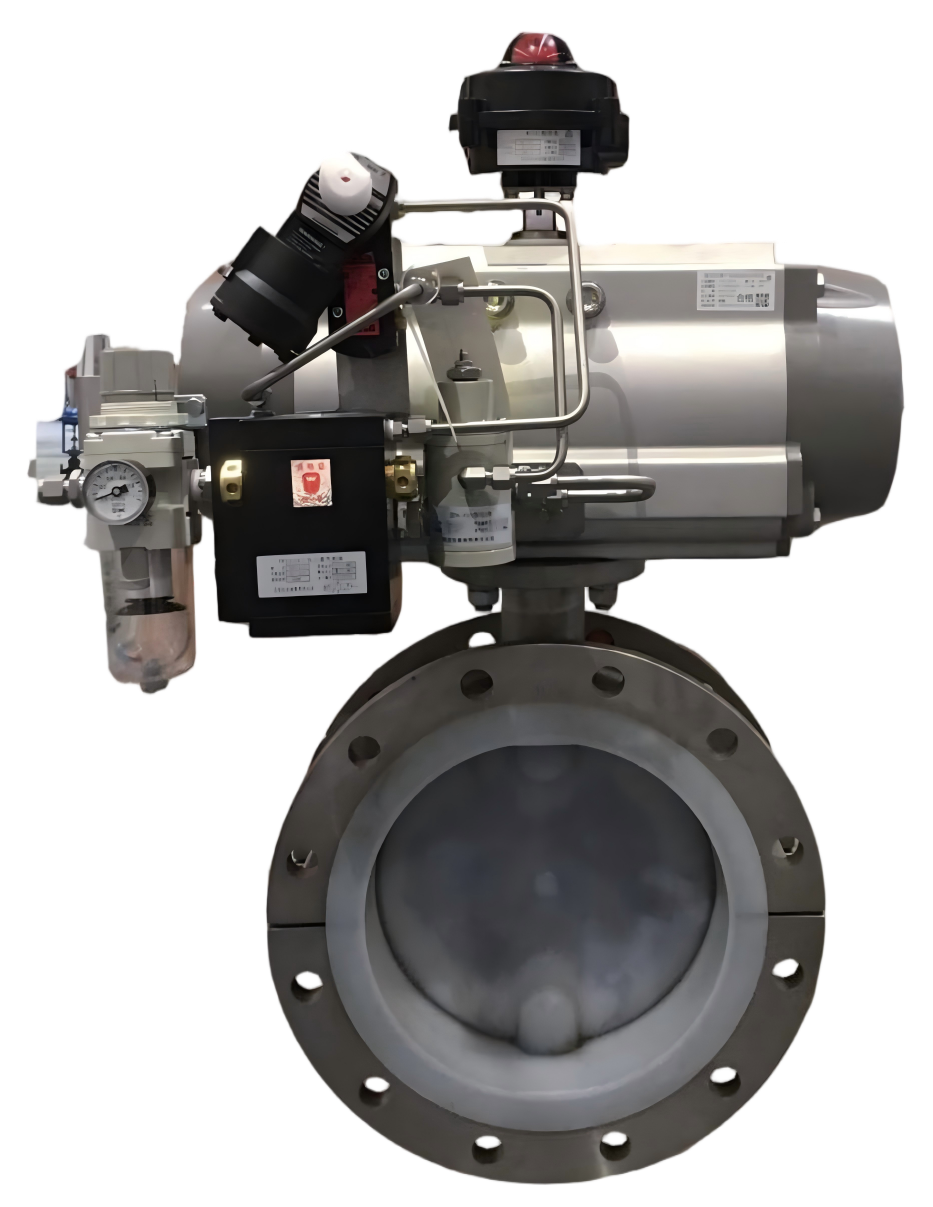
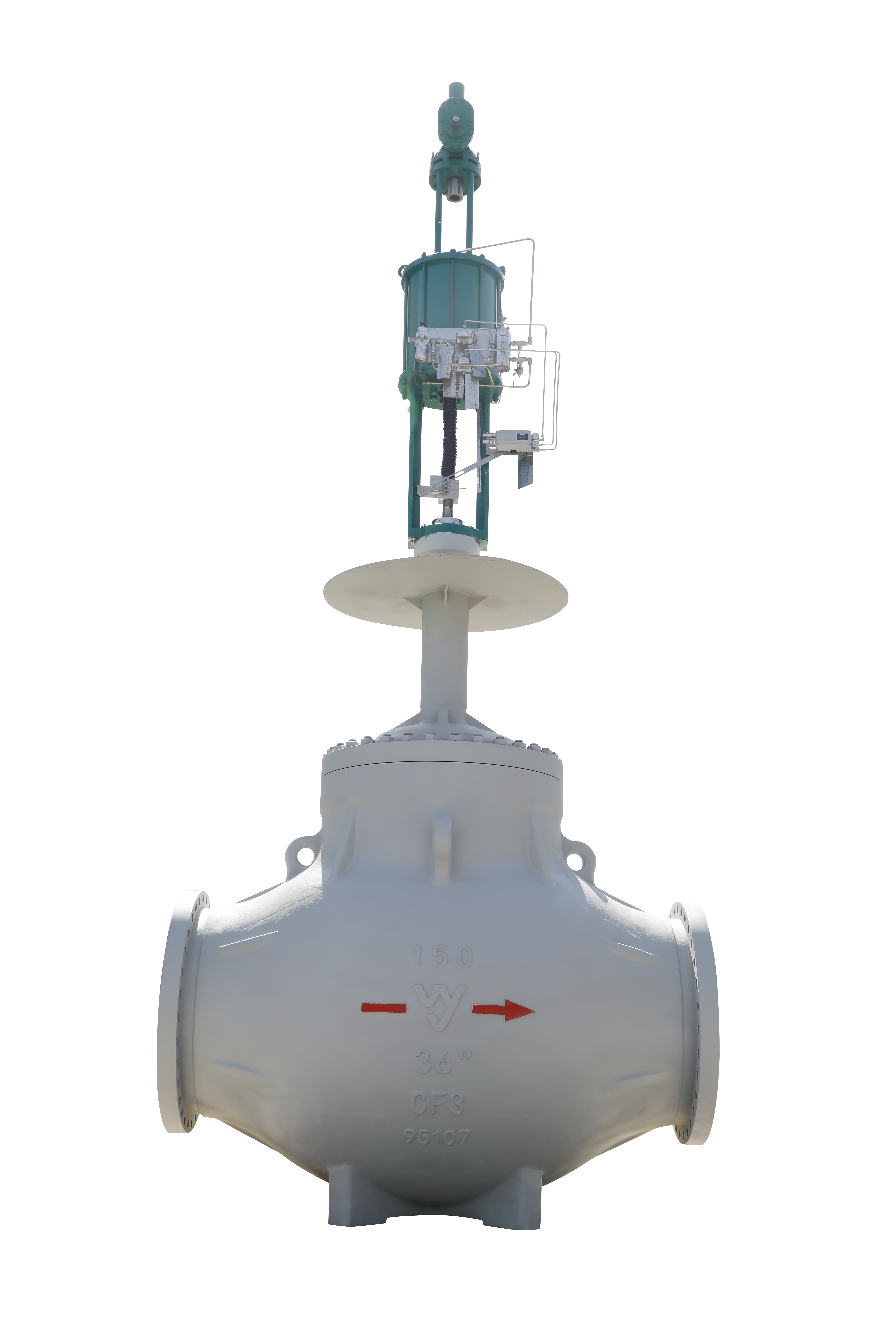
Control valve line: the A Series control valve, including its cryogenic and oxygen-service variants, the APF PTFE-lined (bellows-sealed) control valve, the ATL and ATM high differential pressure and anti-cavitation valves, the AEBM angle control valve, the A2000-L linear axial flow control valve, the ATS control valve, the V2100 and A2100 V-port control ball valves, the ATE(HTE) liquid ammonia control valve, the APTS-F/APTS-Z desuperheating and pressure reducing station, and the ABM auxiliary steam control valve.
Falling on this list supports a scope argument; it is not a per-model rating statement. The certificate fixes the design and manufacture envelope by category, while the model datasheet states the size, pressure rating, temperature range and trim for a particular valve. Both have to agree before a tag is clean.
Product names that straddle two categories deserve explicit written confirmation rather than a judgement call. A V-port control ball valve, for example, carries both "control" and "ball" in its name. The ball valve and control valve lines happen to share the same PN420 and DN600 ceilings in this certificate, so the practical outcome is the same here — but on a certificate whose three lines differ, the choice of line would change the answer, and the supplier should confirm which scope line applies rather than leaving the buyer to select the more convenient one.
There is a second gap worth checking in the same way. Catalogued ranges and certificate ceilings are set independently. The A Series cryogenic control valve is catalogued from DN15 to DN900 with pressure ratings from Class150 to Class2500 and a temperature range covering −46 °C to −100 °C and −101 °C to −196 °C, tested against BS 6364, GB/T 24925-2019 and MSS SP-134. The upper end of that catalogue range extends beyond the DN600 limit stated for control valves in this certificate. Sizes above the certificate ceiling are not automatically covered by it, and coverage should be confirmed in writing rather than inferred from the catalogue.
Five checks to complete before a quotation
- Identify the category line, not just the certificate. Decide whether the tag is a ball valve, a butterfly valve or a control valve, and read only that line. If the product name crosses categories, ask the supplier to state in writing which line applies.
- Convert, then compare both ceilings. Bring the project's pressure rating and size onto the certificate's basis — PN and DN — and test the valve against the pressure ceiling and the size ceiling together. Keep the conversion visible in the evaluation file.
- Confirm the model is on the certificate's product list. A family name on the list is a starting point. If the exact model or a new variant is not listed, obtain written confirmation of coverage before the quotation is finalised.
- Verify the certificate's identity and validity. Check the number PED-0036-QA-1415-26, the issuing body 0036 of TÜV SÜD Industrie Service GmbH, the issue date of 7 August 2026 and the expiry date of 8 June 2029. Confirm the copy in the project file is the current version and that it will still be valid at the project milestones your documentation requires.
- Keep the other compliance tracks separate. PED scope sits alongside, not on top of, the rest of the evidence package: the ISO 9001:2015 quality management system certificate held for the design and production of control valves, ball valves, gate valves, butterfly valves, positioners, solenoid valves and electric actuators; the explosion protection certificate for positioner equipment; functional safety conformity; and material, non-destructive examination and factory acceptance test records. Each document has its own scope and its own validity.
Where the scope meets real duty
Scope reading becomes concrete when it is tied to the duty the valve will actually see.
Cryogenic and air separation service. The G Series cryogenic ball valve and the A Series cryogenic control valve are both listed. In this duty the PED certificate establishes the design and manufacture envelope; it does not establish cryogenic performance. That evidence comes from the cryogenic test standards named in the product specification — BS 6364, GB/T 24925-2019 and MSS SP-134 — together with the stated temperature bands and the application requirements for anti-icing, brittle-fracture resistance, tight sealing and reliable actuation in continuous LNG and air separation operation.
Refining and petrochemical service. The APF PTFE-lined (bellows-sealed) control valve and the ATL/ATM anti-cavitation and high differential pressure valves address corrosive media and high pressure drop duties respectively, with the ATL/ATM amine and separator level valves catalogued from DN25 to DN200 at Class600 to Class2500. The Class2500 end of that range sits at the same boundary as the certificate's PN420 ceiling, so those configurations should be checked line by line rather than as a family.
Abrasive and product discharge duty. The G1820 PDS high-cycle abrasion-resistant ball valve appears in the listed families and in the polypropylene discharge application, where the stated working condition is DN 1/2" to 12" at Class150 to Class600 in on/off shutoff service running continuously, with the explicit note to avoid continuous throttling operation. That is well inside the ball valve ceilings, but the duty note is part of the fit argument and belongs in the specification review.
Compressor anti-surge duty. The triple offset butterfly valve family is listed for anti-surge recirculation across a wide size and class range with fast full-opening, fail-open and tight shutoff requirements. For butterfly valves the pressure ceiling of PN110 is the lowest of the three ceilings in this certificate, so on higher-class specifications the pressure check, not the size check, is usually the one that decides whether the certificate applies.
What the certificate does not establish
Reading a scope accurately also means recognising its edge. A PED certificate of this type does not, by itself, establish the following:
- Application suitability. Oxygen service, subsea duty, LNG duty and severe-service applications depend on cleaning, material, qualification and test evidence that sits outside the PED scope.
- Performance attributes. Leakage class, rangeability, response time, noise and cavitation behaviour are established by the product specification and test data, not by the certificate.
- Dimensional interchangeability. Face-to-face length and flange geometry are separate checks, and the relevant dimensional standard explicitly excludes wafer butterfly valves.
- Manufacturing records for a specific unit. Material certificates, non-destructive examination results and factory acceptance test reports belong to the individual order.
- Other conformity tracks. Quality management system certification, explosion protection, functional safety and national market approvals are documented separately, each with its own scope and validity.
- A legal determination for a specific installation. Categorisation of a given pressure vessel or piping item under PED 2014/68/EU is a project-specific assessment, and the certificate is one input to it.
Why scope discipline matters in cross-border sourcing
The commercial background explains why this reading exercise keeps appearing in bid evaluations. Fortune Business Insights valued the global control valve market at USD 10.58 billion in 2025 in commercial research published in September 2026, and the Observatory of Economic Complexity, drawing on customs data, recorded China as the top global exporter of valves under HS code 8481 in 2024 at USD 22.6 billion. Cross-border sourcing on that scale means documentation packages assembled in one regulatory system are frequently read in another. A certificate whose scope is stated by category, size and rating converts cleanly between systems; one quoted as a brand-level claim does not.
Outlook
Certificate PED-0036-QA-1415-26 runs to 8 June 2029, which covers most project cycles being specified today but not all equipment lifecycles. The practical implication for buyers is version control rather than prediction: keep the certificate copy, its scope lines and its validity dates in the same document set as the datasheet and the purchase specification, and re-confirm coverage whenever a valve family, size or rating is added to a project beyond the ceilings stated here. Where a project needs a configuration outside the scope — a control valve above DN600, or a butterfly valve above PN110 — the question to put to the supplier is not whether the company is PED certified, but what documentary evidence covers that specific configuration.
FAQ
What does certificate PED-0036-QA-1415-26 actually cover?
It covers the design and manufacture of three valve categories under the Pressure Equipment Directive 2014/68/EU: ball valves up to max. PN420 and DN600, butterfly valves up to max. PN110 and DN2200, and control valves up to max. PN420 and DN600. It was issued by TÜV SÜD Industrie Service GmbH through notified body 0036 on 7 August 2026 and expires on 8 June 2029.
Does the certificate cover control valves larger than DN600 or rated above PN420?
No. The control valve line in the scope stops at DN600 and PN420, and those two limits apply together. A larger or higher-rated control valve may still be manufacturable, but it sits outside the envelope described by this certificate, so coverage has to be confirmed in writing against the specific configuration rather than assumed from the certificate's existence.
Are ball valves and control valves treated the same way under this certificate?
They have the same numerical ceilings — PN420 and DN600 — but they are separate categories in the scope wording and are read as separate lines. Where a product name spans both, such as a V-port control ball valve, the supplier should confirm which line applies. Butterfly valves are different again, with a much larger size ceiling and a much lower pressure ceiling.
Is PED certification the same as cryogenic or oxygen-service approval?
No. PED scope addresses conformity for pressure equipment design and manufacture. Cryogenic performance is evidenced against the test standards named in the product specification, such as BS 6364, GB/T 24925-2019 and MSS SP-134, and oxygen service depends on cleaning, material and application-specific evidence. Explosion protection and functional safety conformity are also documented separately, each with its own scope and validity.
What should be checked before quoting a valve against this certificate?
Five items: the correct category line for the valve type; the pressure rating and nominal size converted onto the certificate's PN and DN basis and tested against both ceilings; presence of the specific model or family on the certificate's product list; the certificate number, issuing body and validity dates in the project file; and the separate status of the other compliance documents, including the quality management system certificate, explosion protection, functional safety and order-specific test records.
The company's product brochure, which lists the families referenced in this certificate scope, is available as a downloadable PDF: Wuzhong Instrument Co., Ltd. brochure. Company information is published at www.wzyb.com.cn.
Tem questões ou precisa de mais detalhes?
Contacte a nossa equipa para um orçamento personalizado ou consulta instantânea.
Solicitar orçamento
Preencha o formulário abaixo e a nossa equipa entrará em contacto com uma proposta personalizada.
Chat direto do WhatsApp
Prefere conversar em tempo real? Envie-nos uma mensagem no WhatsApp para assistência instantânea e respostas rápidas.
- Obter orçamento personalizado
- Partilhar fotos ou documentos
- Discuta as suas necessidades diretamente
Geralmente responde em 5–30 minutos durante o horário de expediente.