
PET Preform Injection Machine FAQ: YJPT & YJHB Answers
PET Preform Injection Machine FAQ: YJPT & YJHB Answers
By the time a PET preform project reaches the decision stage, the useful questions have changed. Buyers are no longer asking what a preform machine does — they are asking whether their building supplies the right power, whether their workshop can hold the environment the process assumes, what else has to be bought alongside the machine, and what the supplier will commit to in writing on minimum order quantity, payment, lead time and pre-shipment testing. This FAQ answers those questions for the four Yongjiang models that appear most often in preform enquiries: YJPT-260, YJPT-318, YJPT-360 and YJHB-400.
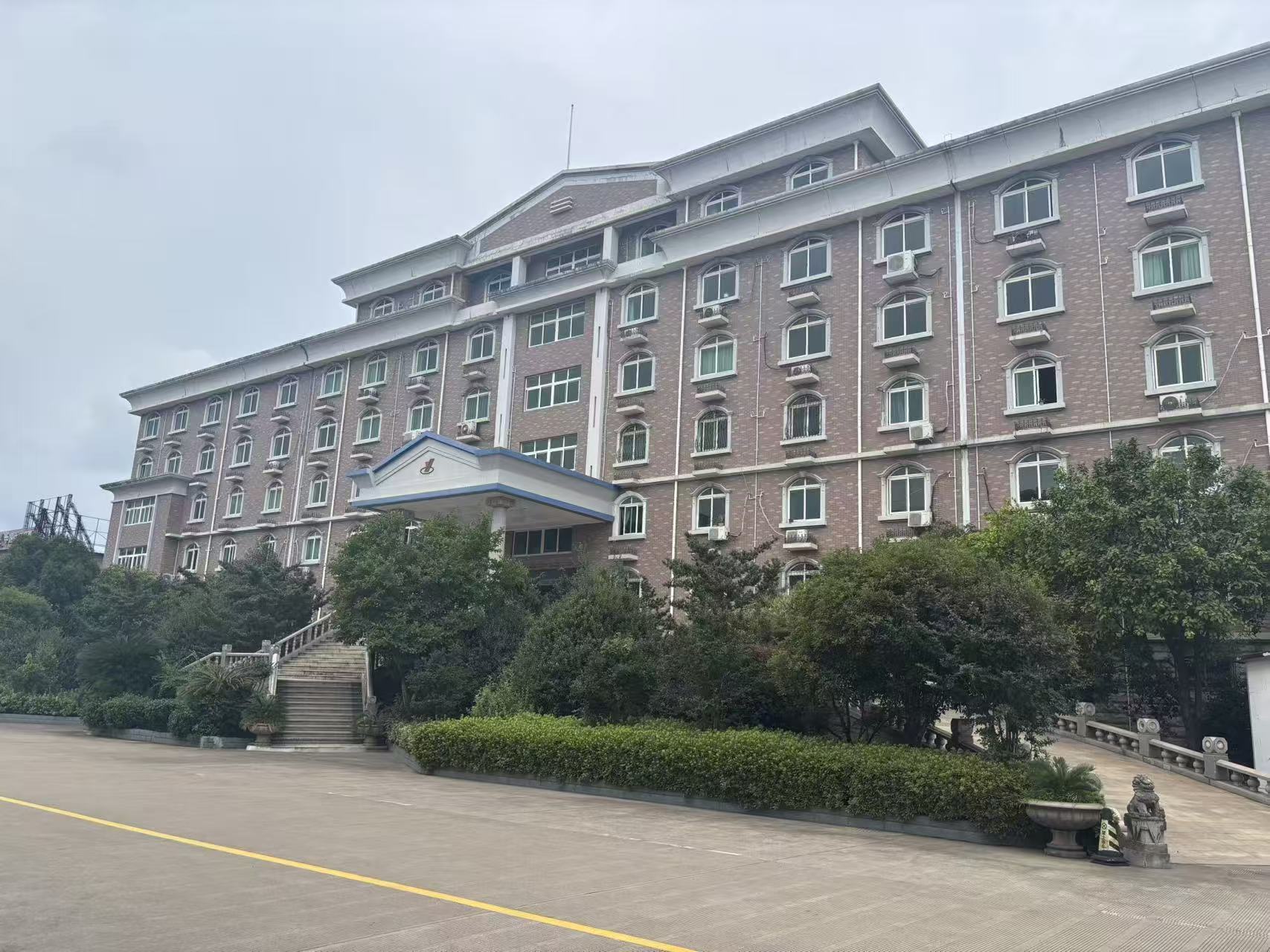
Preform output is decided by machine capability, plant conditions and procurement terms together.
The Four Yongjiang Models at a Glance
Before technical or commercial questions make sense, a buyer needs to know which of the four models actually applies to their mould and bottle programme. The four differ on clamping force, tie-bar distance, shot weight and screw diameter — the values that determine which preform moulds a machine can carry and how much resin it can plasticise per cycle.
| Model | Clamping force | Tie-bar distance | Shot weight | Screw diameter |
|---|---|---|---|---|
| YJPT-260 | 260 T | 580 × 580 mm | 1,400 g | 72 mm |
| YJPT-318 | 318 T | 620 × 620 mm | — | 77 mm |
| YJPT-360 | 360 T | 680 × 680 mm | 3,450 g | 95 mm |
| YJHB-400 | 400 T | 720 × 720 mm | 3,450 g | — |
The progression is deliberate. Moving from the YJPT-260 to the YJHB-400 raises clamping force from 260 T to 400 T and widens the tie-bar envelope from 580 × 580 mm to 720 × 720 mm. In preform work the tie-bar distance is usually the first hard constraint, because it caps the physical width of a multi-cavity hot runner mould stack. Shot weight then sets how many cavities of a given preform weight can be filled with usable margin; the step from 1,400 g on the YJPT-260 to 3,450 g on the YJPT-360 and YJHB-400 is what moves a project from smaller-cavity work into heavier, higher-cavity programmes.
Across the range, the YJPT series supports mould configurations from 6 to 72 cavities.
Why the Decision Stage Asks Different Questions
The market context explains why so many buyers sit at this exact stage. The global PET preform machines market was estimated at USD 9.9 billion in 2025 and is projected to reach USD 17.3 billion by 2035 (Future Market Insights). Injection moulding technology alone accounts for 66.4% of that market. In the wider injection moulding machine market, Asia Pacific held a 41.2% revenue share in 2025, with China accounting for the largest country share (Grand View Research).
Growth of that scale produces a specific kind of buyer. They have usually already compared machine concepts, spoken to two or three suppliers, and narrowed the choice to two models. Their remaining risk is not conceptual — it is operational and contractual. Will the incoming supply hold within tolerance? Will the workshop meet the environment the process assumes? Which auxiliary items are still missing from the budget? And if something is wrong, at what point in the payment schedule does the buyer still hold leverage?
Those questions are answered below, first on the technical side and then on the procurement side, using the specifications and commercial terms that apply to the YJPT-260, YJPT-318, YJPT-360 and YJHB-400.
Technical Conditions That Decide Whether the Machine Runs
Power supply and grid tolerance
All four models operate on 380/400 V, 50 Hz three-phase industrial power, and the supply is specified with a tolerance of ±10% fluctuation. Yongjiang builds its units to support 380/400 V 50 Hz industrial power grids, which is the standard configuration across most export markets.
The ±10% figure belongs in the electrical design stage rather than the negotiation table. A supply that sits consistently outside that band is a plant-side condition to correct before installation; machine-side protection is designed to absorb fluctuation within tolerance, not to substitute for an unstable grid.
Workshop environment
The process assumes an ISO Class 8 dust-free workshop and a stable ambient temperature between 20 °C and 30 °C. ISO Class 8 is a comparatively permissive cleanliness class within the ISO 14644 framework, which is why it is common in packaging-related plastics production. Temperature stability matters because PET is hygroscopic, and preform dimensional repeatability depends on consistent thermal conditions in and around the mould.
Both conditions are buyer-side prerequisites. They belong in the building specification and the site acceptance plan, not in the machine purchase order.
Auxiliary equipment that must be planned and budgeted separately
A preform line does not run on the injection machine alone. Four items sit alongside the YJPT or YJHB unit and are normally purchased and installed as separate scope:
- Hopper dryer — removes moisture from PET resin before plasticising. Because PET absorbs atmospheric moisture, drying is standard practice rather than an optional extra.
- Air compressor — supplies compressed air for mould-related functions and part handling.
- Water chiller — removes heat from the mould and the machine's hydraulic circuit.
- PET preform mould — defines cavity count, preform weight and neck finish, and is the item most tightly coupled to the bottle programme.
Treating these as an afterthought is one of the most common budgeting errors in first preform projects, because the mould in particular can rival the machine in cost and lead time.
Safety, energy and continuous operation
The machines are built to CE safety requirements. On energy, Yongjiang states that the YJPT series achieves up to 50% reduction in power consumption and up to 50% improvement in energy efficiency compared with alternatives, together with a 10% lower cost compared with alternatives. These are the manufacturer's comparative figures against machines in the same class, and they matter most in a plant that runs continuously, where every hour of operation multiplies the difference.
Continuous operation is designed into the frame and clamping structure: rigid clamping frames adapt to multi-cavity hot runner moulds for 24-hour continuous mass production. Overheating is managed through thermal protection using temperature sensors, which is the practical safeguard when a line runs around the clock.
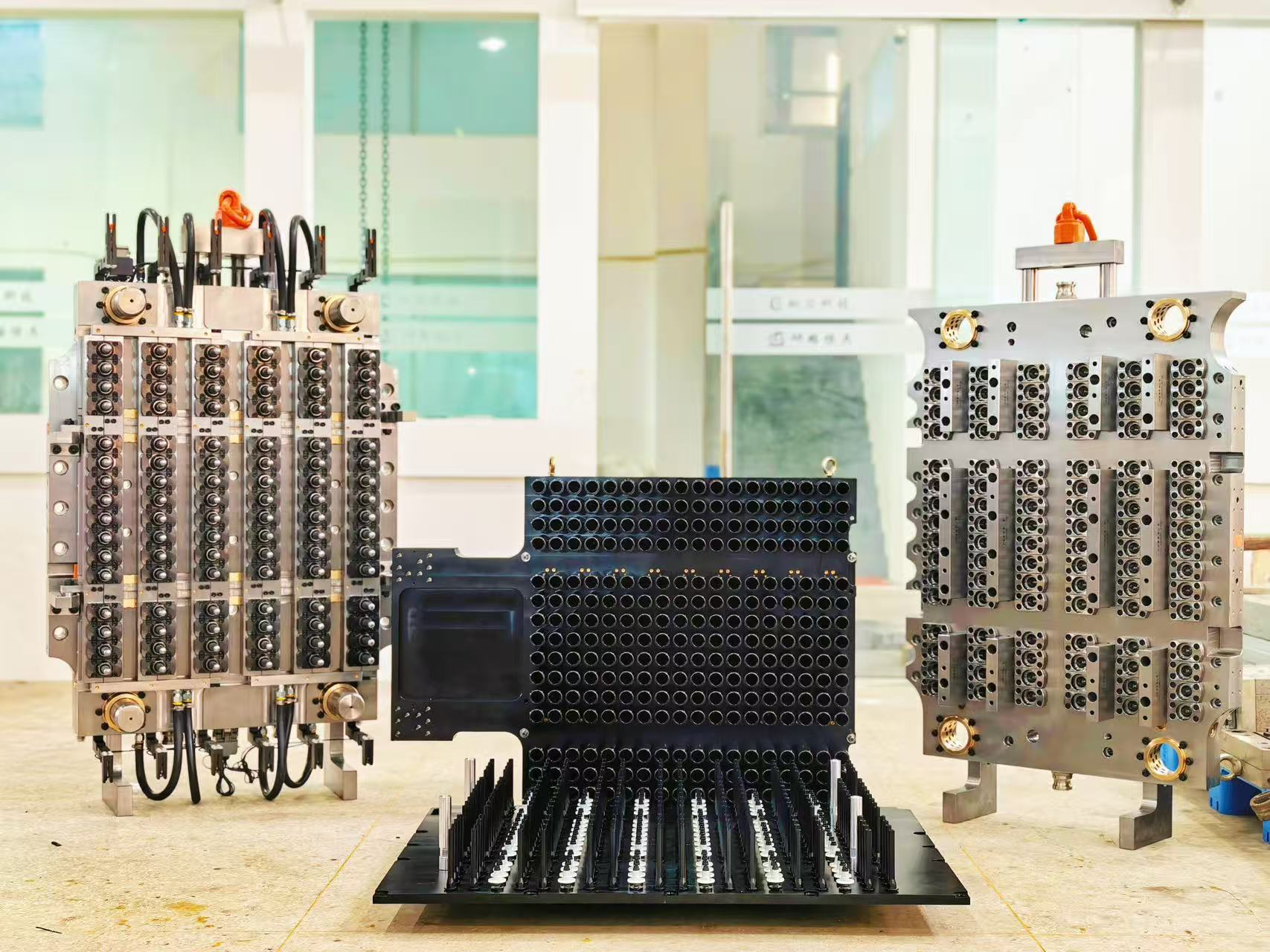
Mould configuration and auxiliary equipment sit outside the machine purchase order and must be planned separately.
Procurement Terms and the Manufacturing Base Behind Them
Technical fit answers whether the machine can do the job. Commercial terms answer whether the project can be financed, scheduled and protected. For the YJPT and YJHB models, the terms are as follows.
| Commercial item | Term |
|---|---|
| Minimum order quantity | 1 unit |
| Payment terms | 30% deposit, 70% payable before shipment |
| Delivery term | FOB Ningbo |
| Quality verification | Pre-shipment acceptance test |
| Lead time | 30–45 days |
| Monthly production capacity | 200 units |
Three of these terms change how a buyer should plan. A minimum order quantity of one unit lowers the entry barrier for a first preform line or for an operator adding capacity one machine at a time, so purchase orders can be phased rather than committed in a single block. FOB Ningbo keeps ocean freight, insurance and destination charges on the buyer's side, which means landed cost has to be modelled separately from the machine price. And the pre-shipment acceptance test is the point at which the specification can still be verified against the order — the reason buyers typically schedule that test before releasing the 70% balance.
The supplier standing behind those terms is Ningbo Yong Jiang machine co.,Ltd, trading as Yongjiang. The company was founded in 1985 and operates a 130,000 m² facility with 200 employees, 25 R&D engineers and an annual output of 2,000 units. Its product range covers servo energy-saving, high-speed precision and two-colour machines as well as the YJPT PET preform series, with clamping forces from 40 T to 1,600 T. Exports account for 59% of output, with the United States, Canada and Thailand among its main markets.
At the decision stage those numbers are not decoration. A 25-engineer R&D team and a 130,000 m² plant are indicators of how much of the machine is engineered in-house rather than assembled from bought-in modules. An annual output of 2,000 units indicates production scale, and a monthly capacity of 200 units indicates how quickly an order can be slotted into the schedule. Export share and named markets indicate whether spares, documentation and service can realistically reach a buyer outside China.
Where These Machines Fit
The YJPT and YJHB models are built for defined production profiles rather than for every preform application. In practice they are used by:
- Drinking water and beverage factories producing mineral water, juice and carbonated soft drink bottles
- Edible oil, condiment and food packaging plants making food-grade plastic containers
- Cosmetic and daily chemical factories manufacturing preforms for skincare and shampoo bottles
- Independent preform specialists that mass-supply blanks to blow moulding workshops
- Large integrated injection-blow moulding enterprises running 24-hour continuous automated lines
- Medium and small packaging manufacturers in Southeast Asia, Russia, Africa and South America looking for cost-effective, stable equipment
The common thread is volume with stable specification. Where a bottle programme changes rarely and runs continuously — mineral water, carbonated soft drinks, cooking oil, detergent — the cost per preform is dominated by cycle time, energy and scrap rate, which is exactly where a PET-specific screw, a fast dual-servo system and tight temperature control pay back. Fit is therefore a question of programme stability as much as tonnage, and it is worth testing against your own changeover frequency before committing.
Market Trend Analysis
Three verified data points frame where the preform equipment market is heading.
- Market size: USD 9.9 billion in 2025, projected to USD 17.3 billion by 2035 (Future Market Insights).
- Technology mix: injection moulding holds 66.4% of the PET preform machine market, making it the dominant forming route.
- Regional concentration: Asia Pacific accounts for 41.2% of injection moulding machine revenue, with China the largest country market (Grand View Research).
Forecasts differ depending on what is being counted, and buyers should read any market number with that in mind. Intellectual Market Insights puts the market at USD 12.8 billion by 2032, while Acumen Research estimates USD 14.7 billion by 2032. The gap reflects scope: whether a figure covers complete preform production lines or only injection moulding machinery.
What the trend means at the procurement level is narrower and more useful. A growing market brings more suppliers, more model options and more price competition — but it does not change the plant-side prerequisites. Power quality, workshop classification, temperature stability and the auxiliary equipment budget remain buyer responsibilities regardless of how the market grows.
How the YJPT Series Compares With Alternatives — and Where It Stops Fitting
Compared with other PET preform injection machines, the YJPT series uses a set of optimised configurations rather than a generic injection platform. The differences are specific:
- A proprietary PET special screw for uniform plasticisation and high preform transparency
- A fast dual-servo system enabling multi-axis linkage, shortening cycles
- Reinforced clamping and larger ejection travel, sized for multi-cavity deep moulds
- Ultra-precise temperature control to reduce defective preforms
- Lower maintenance requirements as a result of the optimised configuration and robust design
- Up to 50% lower power consumption and a 10% lower cost compared with alternatives
- Compatibility with 380/400 V 50 Hz industrial power grids
The trade-off is stated just as plainly. Yongjiang positions the YJPT series for buyers who need stable, cost-effective equipment, not for every tier of the market.
Four boundaries worth checking before the order is placed:
- Cavity ceiling. The YJPT series supports mould configurations from 6 to 72 cavities. Projects designed around higher cavity counts sit outside that range.
- Integrated high-output platforms. Husky Technologies is estimated to hold 55–60% of the global high-output PET preform system market, and high-end systems such as Husky's HyPET 6e and Netstal's PET-LINE comply with CE, UL, ISO 9001 and EUROMAP 60.1. A buyer whose specification names those platform standards, or who needs the deepest integrated automation, is evaluating a different equipment class at a correspondingly different cost level.
- Buyer-side prerequisites. The ISO Class 8 workshop, the 20–30 °C environment, the 380/400 V ±10% supply, and the hopper dryer, air compressor, water chiller and preform mould all sit outside the machine order. The machine cannot create those conditions.
- Comparative figures. The 50% energy figure and the 10% cost figure are the manufacturer's stated comparisons against alternatives in the same class, not independently audited benchmark results. A buyer with an unusual resin grade, preform weight or cycle requirement should verify them against a trial or a reference installation rather than treat them as guaranteed.
Future Outlook
Energy has moved from a secondary line in the specification to a primary one. As preform producers face sustained pressure on unit cost, servo-driven energy performance becomes a selection criterion in its own right rather than a brochure extra — which is the context in which Yongjiang's stated figures of up to 50% lower power consumption and 10% lower cost compared with alternatives should be read.
Multi-cavity hot runner tooling continues to spread because it lowers cost per preform, and injection moulding already holds 66.4% of the PET preform machine market. That places more weight on clamping rigidity, ejection travel and temperature stability — the areas the YJPT series is configured around.
Continuous operation is becoming the default expectation rather than a premium option, particularly in drinking water, CSD and edible oil production. For buyers, the practical implication is that machine differentiation is narrowing toward energy, uptime, service reach and verified total cost. That makes the procurement questions in this FAQ more decisive over time, not less.
Frequently Asked Questions
What clamping force, tie-bar distance and shot weight does each Yongjiang preform model have?
YJPT-260: 260 T clamping force, 580 × 580 mm tie-bar distance, 1,400 g shot weight, 72 mm screw diameter. YJPT-318: 318 T, 620 × 620 mm, 77 mm screw diameter. YJPT-360: 360 T, 680 × 680 mm, 3,450 g shot weight, 95 mm screw diameter. YJHB-400: 400 T, 720 × 720 mm, 3,450 g shot weight.
What power supply do these PET preform injection machines require?
380/400 V, 50 Hz, three-phase, with a tolerance of ±10% on supply fluctuation. Yongjiang builds its units to support 380/400 V 50 Hz industrial power grids.
What workshop conditions are required for PET preform production?
An ISO Class 8 dust-free workshop and a stable ambient temperature of 20–30 °C. Both are plant conditions supplied by the buyer; they are not features of the machine itself.
Which auxiliary equipment has to be planned alongside the machine?
A hopper dryer, an air compressor, a water chiller and a PET preform mould. Each is a separate purchase and should be budgeted as part of the project rather than treated as an accessory of the machine.
How much energy can the YJPT series save compared with alternatives?
Yongjiang states up to 50% reduction in power consumption and up to 50% improvement in energy efficiency compared with alternatives, alongside a 10% lower cost compared with alternatives. These are manufacturer-stated comparative figures against machines in the same class.
What is the minimum order quantity?
One unit.
What are the payment terms?
A 30% deposit, with the remaining 70% payable before shipment.
What delivery term is used, and how long is the lead time?
FOB Ningbo. Lead time is 30–45 days, and Yongjiang's monthly production capacity is 200 units.
How is the machine verified before shipment?
Through a pre-shipment acceptance test, at which the buyer can check the machine against the order specification before the balance payment stage.
Does the YJPT series fit every preform project?
No. The YJPT series supports mould configurations from 6 to 72 cavities, so projects designed around higher cavity counts fall outside that range. Similarly, buyers whose specification cites the platform standards of integrated high-output systems — where Husky Technologies is estimated to hold 55–60% of the global market, and where systems such as Husky's HyPET 6e and Netstal's PET-LINE comply with CE, UL, ISO 9001 and EUROMAP 60.1 — are comparing a different class of equipment.
Using this FAQ in a live procurement process
The technical answers above set the plant-side prerequisites; the procurement answers set the commercial milestones. A buyer who has both in one place can check power, workshop class, auxiliary scope, MOQ, payment schedule and lead time against a single document before committing. A downloadable product brochure covering the YJPT and YJHB series is available at the Yongjiang brochure download.