
PET Preform Neck Sizes Compared: 20, 24, 28, 30 and 32 mm
PET Preform Neck Sizes Compared: 20, 24, 28, 30 and 32 mm
The neck finish is the part of a PET preform that decides which cap screws onto it, how the filler fills it, and whether the finished bottle survives the journey from line to shelf. Choosing between a 20 mm, 24 mm, 28 mm, 30 mm or 32 mm neck — or a custom dimension in millimetres — is therefore a procurement decision, not a moulding detail.
This buyer-side comparison covers the five standard neck sizes most often raised in preform enquiries, plus the custom option, in the order a purchasing team actually resolves them: what the size is used for, which cap materials it pairs with, which product categories it fits, whether colour is available, and what has to be tested before a purchase order is released. It does not rank suppliers and it does not estimate performance. Statements about any specific manufacturer are limited to what that manufacturer publishes or has had independently certified.
On the millimetre values: the figures below describe the nominal neck diameter families buyers usually ask about. Exact thread geometry, finish height and tamper-evident band design are agreed between the preform supplier, the cap supplier and the filling operation. A millimetre number on its own does not define a cap fit.

Why the Neck Finish Becomes a Buying Decision
Two things push neck size to the front of a preform purchase. The first is tooling. The neck definition drives the injection mould and, downstream, the blow mould, so changing a neck after production starts costs considerably more than changing a resin lot. The second is matching. Caps are a separate supply chain, and the cap thread has to agree with the preform thread exactly, or the filling line sees crooked caps, torque failures and leaks.
That is why experienced buyers treat the neck as a matched pair — preform plus cap — and why the practical question is not which diameter is technically superior, but which diameter your cap supply, filling heads and blowing equipment can support without modification. The five standard sizes below cover a large share of that decision space; custom millimetre finishes cover the rest.
Neck-Size Buyer Comparison at a Glance
| Neck option | Cap forms normally available | Typical product categories | What to verify before ordering |
|---|---|---|---|
| 20 mm | Small-diameter PET or PP screw caps; aluminium roll-on caps | Concentrated liquids, personal care and cosmetics, sample and trial sizes, some dairy | Thread definition agreed with the cap supplier; capping torque; filler nozzle alignment |
| 24 mm | PET or PP screw caps; aluminium roll-on caps | Lightweight drinking water, dairy, personal care | Cap fitment test; cap availability and lead time; bore against filling head |
| 28 mm (incl. PCO 1881) | PET or PP screw caps; aluminium roll-on caps | Drinking water, carbonated soft drinks, condiments, edible oil | Neck dimension spot check plus cap fitment test; matched preform-and-cap set |
| 30 mm | Aluminium roll-on caps; PET or PP screw caps | Edible oil, condiments, juice, syrups | Seal performance at product viscosity; neck cleanliness after filling; torque |
| 32 mm | Large-diameter PP screw caps; aluminium caps | Sauces, dressings, cosmetics, wide-mouth formats | Torque and seal consistency at larger diameter; tooling cost; resin weight per unit |
| Custom (mm) | Depends on the specified cap | Brand-differentiated formats or an existing cap range that matches no standard size | Thread geometry agreed by all three parties; new mould; tolerance drift over mould life |
The Five Standard Neck Families in Detail
Twenty Millimetres: Small Bore, Tight Tolerances
20 mm is the smallest neck family in this comparison. It appears on containers where the dispensed volume is low or the opening needs to stay narrow — concentrated liquids, personal care and cosmetic formats, sample and trial sizes, and some dairy SKUs. Because the bore is small, filler nozzle alignment and cap pick-up matter more than on larger necks, so this size is normally evaluated against the filling equipment rather than treated as a purely visual choice.
On cap compatibility, a 20 mm neck pairs with small-diameter plastic caps in PET or PP, and with aluminium roll-on closures where a premium appearance or a tight seal is the priority. Tamper-evident band design deserves attention at this diameter, because the space the band occupies is proportionally smaller. Buyers should fix the exact thread definition with the cap supplier before the preform mould is cut.
Colour is available through colour matching and is not limited by the neck size itself. The real constraint is tooling: a 20 mm mould has less room to cool around each cavity, so a custom 20 mm specification usually carries more tooling cost per unit than a standard one.
Twenty-Four Millimetres: The Compact Middle Ground
24 mm sits one thread step up from 20 mm and offers a wider bore without reaching the material use of a 28 mm finish. It is most often associated with lightweight drinking-water bottles, dairy, and personal care packaging where the brand has already decided against 28 mm. For the filling line it is a compromise: easier nozzle entry than 20 mm, less neck material than 28 mm.
Cap compatibility is similar in principle to 20 mm. PET and PP screw caps are the routine pairing, and aluminium roll-on caps remain usable where a cosmetic finish matters. The practical check on 24 mm is cap supply rather than cap design — fewer cap makers stock this diameter than 28 mm, so cap lead time and cap tooling cost can be underestimated until they become a line stoppage.
Colour follows the same rules as any other neck size. Colour matching changes appearance; it does not change which caps fit.
Twenty-Eight Millimetres: The Global Reference Size
28 mm is the most widely used PET neck family and the default assumption in most preform enquiries. Drinking water and carbonated soft drinks are built on it, and PCO 1881 — the short-neck carbonated soft drink finish — belongs to the 28 mm family. When a buyer searches for a 28mm PET preform, this is usually the family being referred to.
Cap compatibility is broad. 28 mm necks pair with PET plastic caps, PP caps and aluminium roll-on closures, and cap availability in this diameter is the widest of any size covered here. The advantage for a buyer is not a superior technical property; it is substitutability. If one cap source fails, an alternate drawing-compatible source can usually step in without changing the preform mould.
That breadth is also the limitation. Differentiation on 28 mm is limited by how standardised the format is. If the neck is a core part of the brand's pack identity, the conversation moves to 30 mm, 32 mm or a custom millimetre finish.
Thirty Millimetres: Where Oil and Condiment Packaging Usually Sits
30 mm is where the neck widens past beverage formats into edible oil, condiments, juice and syrups. The size is chosen less for appearance than for the interaction between product viscosity and filling equipment: a slightly larger bore supports the flow rates these products need and leaves more room for the filling head to seat cleanly.
Cap compatibility at 30 mm leans towards aluminium roll-on closures for oil and condiment lines, because a roll-on closure forms its seal against the neck lip and gives a defined opening. PET and PP screw caps are equally available at the same diameter and are common where the closure needs to be re-closable many times.
The verification point that matters most at 30 mm is neck cleanliness after filling. These products are more viscous and leave residue on the neck more readily, and residue in the thread area makes capping torque unpredictable. Buyers should test post-fill capping on their own line, not only cap fitment on an empty preform.
Thirty-Two Millimetres: Wide Mouth Without Going Custom
32 mm is the widest standard neck in this group. It fits products that need a larger opening than a beverage finish — sauces, dressings, some cosmetic formats, and wide-mouth containers the consumer is expected to spoon from, pump from, or pour without effort.
On cap compatibility, large-diameter PP screw caps and aluminium caps are the most settled pairings at this size. PET closures remain possible where the thread definition is agreed, but as diameter grows, both tightening torque and seal consistency become harder to hold, which is why cap fitment testing should be repeated by batch rather than accepted once.
Material use rises with the opening. A 32 mm neck uses more resin than a 28 mm neck, so the decision should be driven by the product and the consumer's handling of it. A larger finish is not an upgrade on its own; if it has not been validated against the blowing process and the filling heads, it becomes a cost with no matching benefit.
Custom Millimetre Finishes: When Nothing Standard Fits
Custom neck dimensions in millimetres answer a different question from the standard list: either the brand wants an opening that is recognisably its own, or an existing cap range does not match any standard size. In both cases the preform has to be built around the cap, not the other way round.
GuangDong Idea Plastic Packaging is a PET preform manufacturer operating from South China and supplying food-grade preforms to drinking water, beverage, edible oil, personal care and related packaging markets. The manufacturer supports neck size and weight customisation for PET preforms, along with colour matching and mould customisation, and the wider customisation set covers logo, packaging, graphic, neck size, weight, colour and mould. Production is organised under both OEM and ODM arrangements — OEM for custom PET preform orders and ODM for custom bottle preform projects.
The risk in a custom neck is not the moulding itself; it is alignment. A custom millimetre finish means a new preform mould, a matching cap mould, and a written agreement on thread geometry that holds across three parties. Once the agreement changes, all three change with it.
For reference, the manufacturer's published product range lists neck finishes including PCO 1881, 29/25, 30/25 and 38 mm alongside the sizes discussed above. That is a useful signal for buyers: neck availability is settled line by line, not by a single number applied to every SKU.
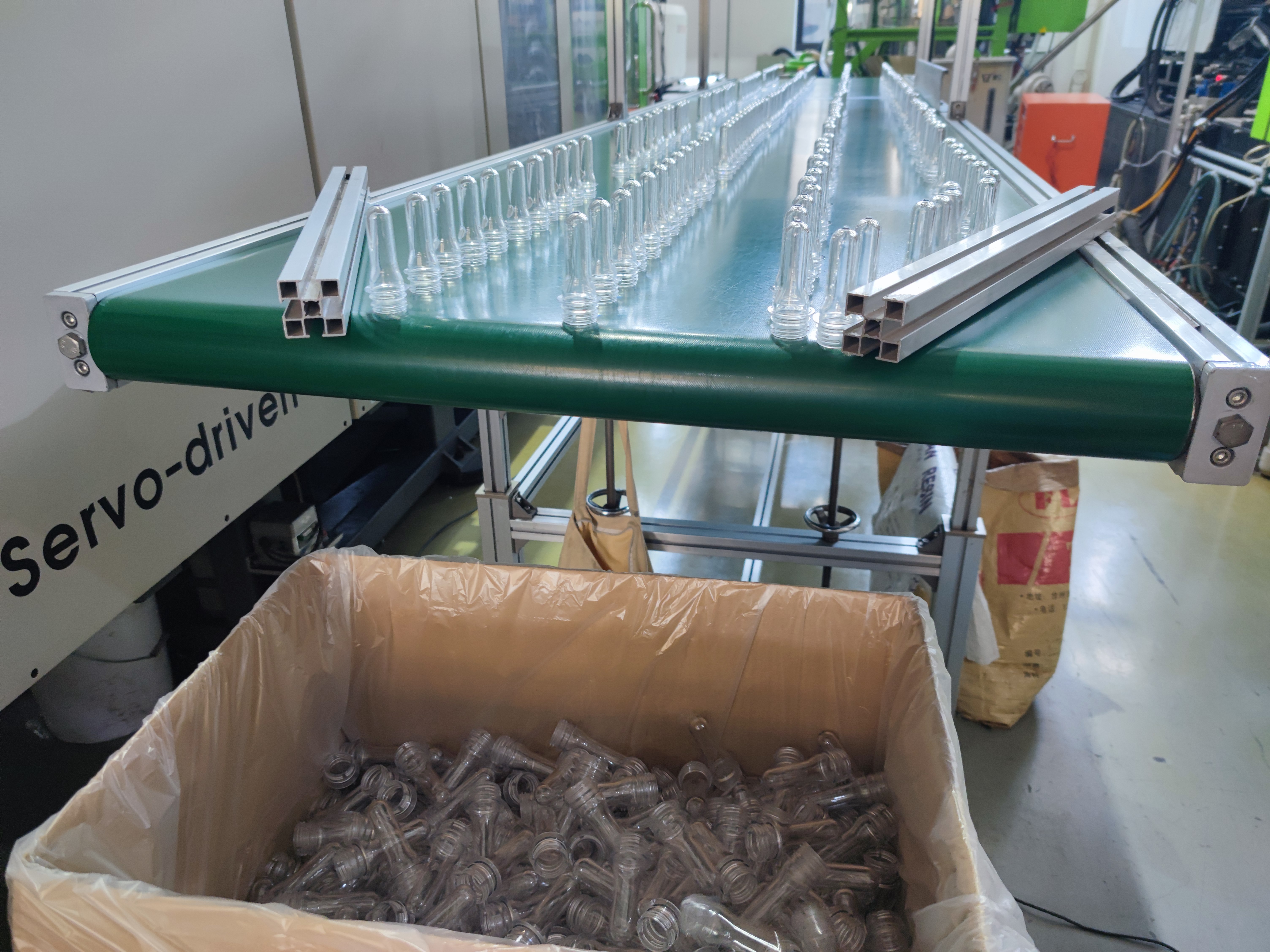
Cap Compatibility: PET, PP and Aluminium Read as One System
Cap compatibility is verified as a system, not as two separate parts. A neck that measures within tolerance on a drawing can still fail on a production line if the thread start, the cap liner or the capping torque does not match the cap it is paired with. Three closure materials appear most often in preform purchasing, and each brings a different verification emphasis.
- PET caps. The closure and the preform are made from related material, which simplifies recyclability discussions but does not simplify fitment. The thread definition still has to be confirmed on both sides.
- PP caps. The most common closure material across water, beverage and household formats. Because PP caps are widely available in 28 mm and 30 mm, buyers have more alternative sources — which makes drawing-level agreement more valuable, not less.
- Aluminium roll-on caps. Common on edible oil, condiments, water and cosmetic formats. The closure is formed against the neck during capping, so the neck lip dimensions carry a larger share of the seal performance.
The operating rule is simple: buy preforms and caps as a matched set. Where the two come from different suppliers, agree the thread standard in writing and run a cap fitment test before volume production, not after.
Application Fit: Water, Oil, Condiment, Cosmetic and Wide-Mouth
Neck size follows application more reliably than it follows preference. The mapping below reflects how the five sizes are normally used in packaging programmes, not a ranking of quality.
- Drinking water. 28 mm is the default. 24 mm appears on lightweight and small-format water where material reduction is the driver.
- Edible oil. 30 mm and 32 mm dominate, with aluminium roll-on closures common. Viscosity and pouring behaviour, rather than cap cost, decide the choice.
- Condiments and sauces. 30 mm for pourable products and 32 mm where the product is thick enough to need a wider opening.
- Cosmetics and personal care. 20 mm and 24 mm are frequent, with 28 mm used where a standard closure range is preferred over a custom look.
- Wide-mouth formats. 32 mm and above, or a custom millimetre finish where the container is meant to be spooned from or refilled.
Two of these categories also show where the market is moving. Edible oil application has been described as a growth engine for PET, with PET penetration exceeding 65% in developing economies, and the global PET preform market is projected to reach USD 78.74 billion by 2034, with Asia Pacific already accounting for the largest regional share at USD 22.84 billion in 2024. Both figures come from published commercial market research, and both point the same way: the standard neck families covered here will keep carrying most of the volume.
Colour as a Specification, Not a Decoration
Colour is available across all five neck sizes and on custom finishes, delivered through colour matching rather than being tied to a particular diameter. In practice, colour is treated as a separate specification line because it interacts with two things buyers often overlook.
The first is that colour does not change cap compatibility. A coloured preform with a mismatched thread still fails, which is why colour approval and cap fitment approval should be signed off separately. The second is that colour sits alongside logo, packaging and graphic customisation in the same order specification. Grouping them shortens the approval cycle, because the same sample round can cover all of them.
What to Verify Before Releasing a Purchase Order
Neck-size selection is only half of a preform purchase. The other half is the evidence that the specification will hold in volume. Four checks do most of that work.
- Neck dimension spot checks. Neck finish is tolerance-controlled, with dimensions checked against the tolerance specification rather than judged by eye.
- Cap fitment tests. Thread engagement is confirmed against the matching cap, which is the only reliable proof that a given neck and a given closure belong together.
- Weight consistency. Automatic checkweighing rejects any unit outside the set weight range instead of packing it. Weight is a direct indicator of wall thickness, so the check also guards against thin walls that fail during blowing or stacking.
- Pre-shipment inspection. Goods are tested before they leave, with the report provided, and the test items and AQL are agreed before production begins.
Material compliance sits alongside these checks rather than inside them. Preforms are moulded from food-grade virgin PET resin rather than recycled material, and test documentation is available: a food-contact plastic test report to Regulation (EC) No 1935/2004 and Commission Regulation (EU) No 10/2011, certificate 180327075a 001, issued 23 April 2025 by TÜV Rheinland / CCIC (Ningbo) Co., Ltd., covering sensorial assessment, overall migration, specific migration of 18 metals, primary aromatic amines, colourfastness, terephthalic and isophthalic acid, ethylene glycol and antimony; and a second food-contact report, TZA25001027, issued 25 June 2025 by the Taizhou Customs Comprehensive Technology Service Center to GB 4806.7-2023 and related GB test standards.
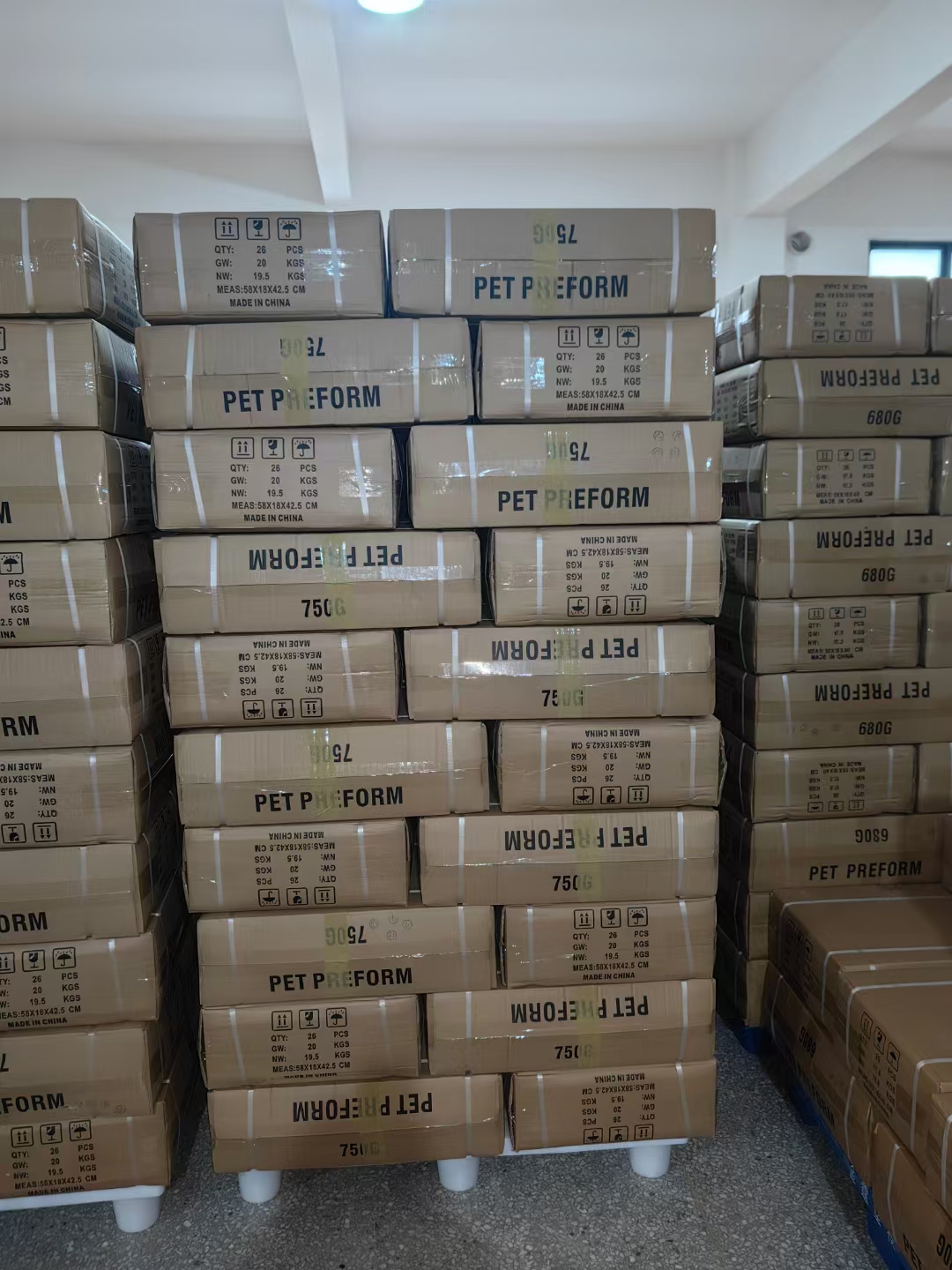
Manufacturing Capability Behind a Neck-Size Decision
A neck specification is only deliverable if the production behind it can hold tolerance at volume. GuangDong Idea Plastic Packaging runs a monthly production capacity of 500,000 pieces, with a minimum order quantity of 10,000 pieces. Lead time is quoted at 15 days for orders between 10,001 and 200,000 pieces, with delivery time negotiable above 200,000 pieces. Quality control is by pre-shipment inspection, and after-sales support is handled remotely.
Those commercial terms matter to the neck decision in a specific way. Custom neck sizes are usually unlocked by volume, because the tooling is amortised across the run. A buyer weighing a custom finish against a standard 28 mm or 30 mm finish should model the order quantity first and the neck design second — the quantity often decides which conversation is even viable.
Standard Neck vs Custom Neck: What Each Side Gives Up
The honest comparison is not standard versus custom in the abstract. Each option trades something away, and the trade is different in each direction.
| Consideration | Standard neck (20–32 mm) | Custom millimetre finish |
|---|---|---|
| Tooling | Existing moulds; lower tooling cost per unit | New preform mould plus a matching cap mould |
| Cap supply | Widest in 28 mm, narrower in 20 mm, 24 mm and 32 mm | Dependent on the specified cap and its maker |
| Differentiation | Limited; the pack identity has to come from elsewhere | High; the opening itself can be proprietary |
| Validation time | Shorter, because drawings and caps already exist | Longer, because three parties must agree geometry first |
| Risk if a supplier changes | Lower; alternate sources usually exist | Higher; the neck is tied to a specific tool set |
The limitation worth stating plainly is substitutability. A custom neck that performs well also locks a brand into the tooling and the cap supply that goes with it, and that lock-in has a cost when volumes shift or a cap supplier exits. Standard necks give up differentiation in exchange for optionality. Neither side of that trade is free.
Market Context Shaping Neck and Closure Choices Through 2030
Material policy is now part of the neck decision. Virgin PET represents 72.0% of material demand in the PET preform market as of 2026, while the EU Single Use Plastics Directive requires PET beverage bottles to contain at least 30% recycled content by 2030. Those two facts sit in tension, and the tension reaches the neck finish: recycled content changes how a resin batch behaves during injection, so neck dimension control has to be verified on the actual resin in use rather than assumed from a previous approval.
For buyers, the practical reading is that neck dimension spot checks and cap fitment tests become more valuable over time, not less. A neck specification approved on one resin lot is a starting point, not a permanent guarantee, and the same logic applies whether the finish is 28 mm, 32 mm or a custom millimetre size.
Future Outlook
Three developments are likely to shape preform neck selection over the next several years. First, recycled content requirements will push buyers to ask suppliers for evidence of neck tolerance control on the resin actually being run, rather than on a reference sample. Second, the standard sizes will keep their dominance in water and beverage, because the cap supply base is built around them and rebuilding it is not a quick exercise. Third, differentiation pressure will move some brands towards 30 mm, 32 mm and custom finishes, particularly in oil, condiment and cosmetic categories where the opening is part of the product experience.
None of that changes the underlying discipline. A neck size is a matched system decision, and the buyers who get it right are the ones who validate the preform and the cap together, on their own filling line, before they commit to volume.
Frequently Asked Questions
Will any 28 mm cap fit a 28 mm PET preform?
Not automatically. The 28 mm figure describes a diameter family, and thread geometry varies within it, with PCO 1881 being one specific standard finish. A cap and a preform should be purchased as a matched set, and the fit confirmed through a cap fitment test that checks thread engagement against the actual matching closure.
How are neck dimensions and preform weight controlled in production?
Neck finish is tolerance-controlled, with neck dimensions spot-checked against the tolerance specification and cap fitment tests used to confirm the thread engages correctly. Weight is controlled by automatic checkweighing: every unit passes an inline checkweigher and any unit outside the set weight range is rejected automatically rather than packed. Because weight indicates wall thickness, the same check guards against thin walls that would fail during blowing or stacking.
Can 20 mm or 24 mm necks be used for carbonated soft drinks?
The carbonated soft drink category is normally built on the 28 mm family, including PCO 1881, because that is where pressure-rated closure ranges and cap supply are concentrated. A smaller bore is generally specified for low-volume or non-pressurised formats. Any move away from the standard should be confirmed with the cap supplier and validated on the filling line before a mould is commissioned.
What does a custom neck dimension require?
A custom millimetre finish requires a new preform mould, a matching cap mould, and written agreement on thread geometry between the preform supplier, the cap supplier and the filling operation. The manufacturer in question supports neck size and weight customisation for PET preforms along with colour matching and mould customisation, and produces under both OEM and ODM arrangements — OEM for custom PET preform orders and ODM for custom bottle preform projects.
Which commercial terms should be confirmed alongside the neck specification?
Minimum order quantity is 10,000 pieces. Delivery terms are offered as FOB, CIF or EXW, chosen according to whether the buyer has their own forwarder and wants to control freight. Inspection is by pre-shipment test, with the report provided before the goods leave and the acceptance criteria including AQL and test items agreed in advance. Payment terms are 30% T/T deposit before production and 70% T/T against a copy of the bill of lading.
How does colour interact with neck-size selection?
Colour is available through colour matching and is not restricted by neck size, so it can be specified independently of the diameter chosen. It belongs in the same order specification as logo, packaging and graphic customisation, which lets a single sample round cover appearance and fitment together. Colour approval does not substitute for a cap fitment test.
For buyers who need the full preform range, tolerance approach and order terms in one document, the manufacturer's catalogue is available here: GuangDong Idea Plastic Packaging PET preform brochure.
Tem questões ou precisa de mais detalhes?
Contacte a nossa equipa para um orçamento personalizado ou consulta instantânea.
Solicitar orçamento
Preencha o formulário abaixo e a nossa equipa entrará em contacto com uma proposta personalizada.
Chat direto do WhatsApp
Prefere conversar em tempo real? Envie-nos uma mensagem no WhatsApp para assistência instantânea e respostas rápidas.
- Obter orçamento personalizado
- Partilhar fotos ou documentos
- Discuta as suas necessidades diretamente
Geralmente responde em 5–30 minutos durante o horário de expediente.