
PET Strap Dimension & Tensile Strength: A Buyer Framework
PET Strap Dimension & Tensile Strength: A Buyer Framework
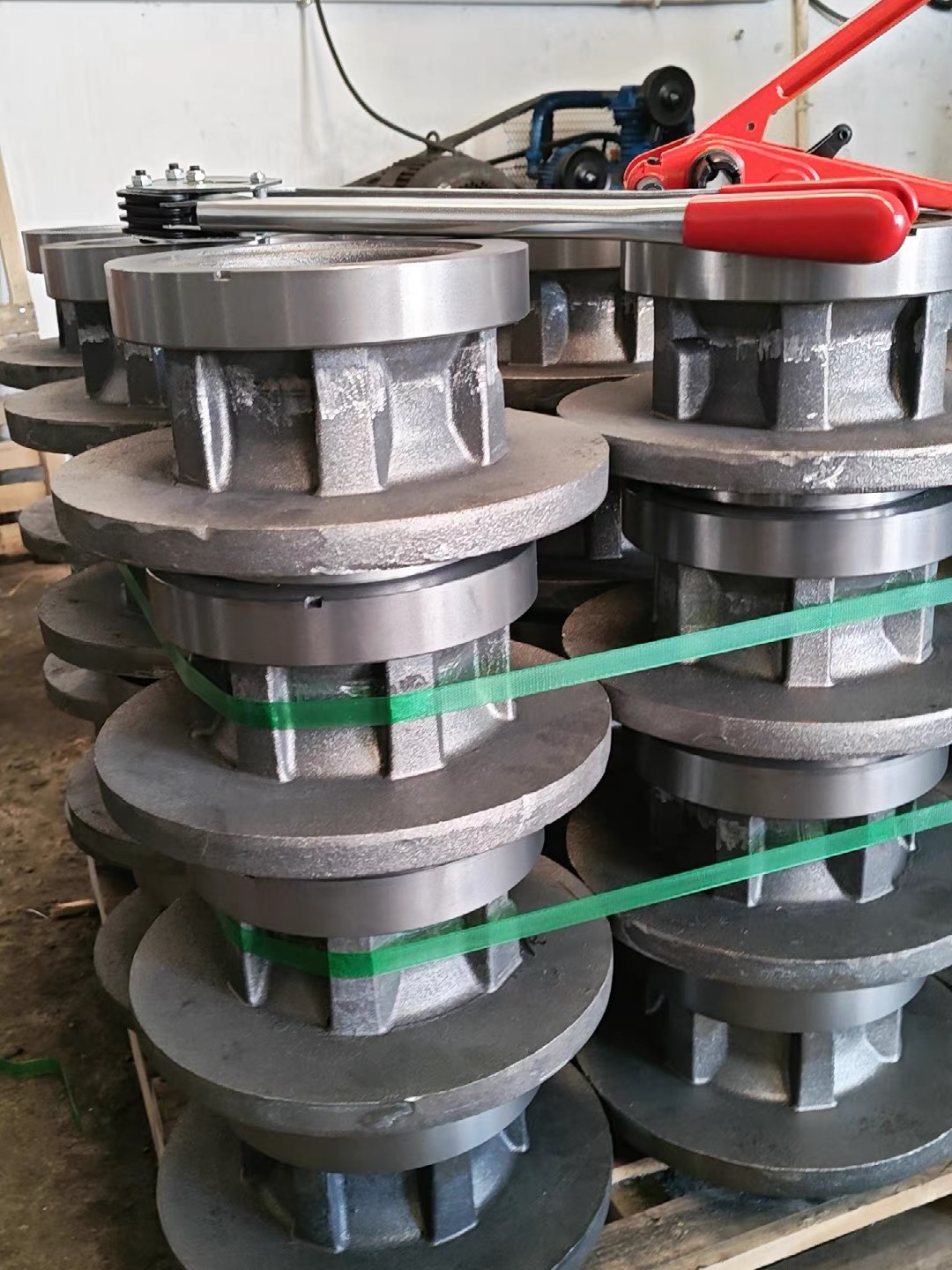
PET strapping in heavy metal processing — a scenario where dimension and tensile selection determine load integrity.
Plastic strapping supports a substantial share of global industrial packaging. More than 2.3 million metric tons were produced worldwide in 2024, with PET strapping accounting for approximately 60% of that volume (Vertex AI / Industry Report, 2024). At procurement level, however, the decision is granular: which width, which thickness, which tensile threshold, and which cut length will hold a specific load through a specific packaging line.
PET strapping is sold as a product family rather than a single specification. Jushuo Packaging, a strapping manufacturer based in Taixing, Jiangsu Province, reports PET strapping width of 9–25 mm, thickness of 0.40–1.27 mm, and break force of 160–1360 kg across its range (Jushuo Packaging product specification). That breadth is intentional — a carton and a steel coil cannot share one specification. It also creates a real sourcing problem: buyers often map a supplier’s full catalogue against their own application without a structured framework for deciding which combination delivers adequate load security.
This article sets out a practical five-step decision framework for matching PET strap dimensions and tensile strength to packaging needs, illustrated with documented applications from Sateri, Far Eastern Industries, and a Novo Nordisk supply-chain project.
Why Dimension and Tensile Strength Decide Load Security
Width, thickness, and break force interact in ways that are not always intuitive. Break force depends on the cross-sectional area of the strap (width × thickness) combined with the degree of molecular orientation achieved in the PET resin. A wider strap is not automatically stronger than a narrower strap of greater thickness, and a thicker strap is not automatically safer than a well-oriented thinner one. These assumptions cause most of the specification errors seen at sample-approval stage.
Jushuo’s PET strapping catalogue pairs width and thickness into model designations rather than selling them independently. Machine-grade smooth models run from JS09400-MT to JS16140-MT, while embossed models run from JS09400-MTE to JS16140-MTE and hand-grade versions from JS12500-HT to JS25300-HT (Jushuo Packaging product specification). Each designation corresponds to a defined width, thickness, and break force. For heavy-duty series, the company reports 25×1.25 mm achieving up to 1360 kg break force, 19×1.0 mm achieving 860 kg, and 16×0.8 mm achieving 635 kg (Jushuo Packaging product specification).
A Five-Step Decision Framework for PET Strap Selection
The framework below moves from load characterisation through to packaging-line compatibility. Each step produces a specification decision that feeds the next.
Step 1 — Characterise the Load
Record the packaged weight, whether the load is rigid or compressible, whether it will be stacked, and whether it will be stored or transported in a way that exposes the strap to sustained tension. Compressible loads such as fiber bales require low-elongation strap because the bale will try to expand after compression; rigid loads such as steel coils require high break force to resist impact during lifting. These two requirements point to different PET strap grades, not merely different dimensions.
Step 2 — Match Width and Thickness to Break Force
Once the load characterisation is complete, compare candidate width/thickness combinations against the published break force. The examples most often cited in buyer discussions — 16×1.0 mm versus 19×1.0 mm — illustrate how a 3 mm width difference changes the calculation. The wider strap provides greater cross-sectional area and therefore higher break force, but it also requires more strap per bundle and may not feed correctly through machines configured for a narrower guide.
| Width × Thickness | Published break force (heavy-duty series) | Typical application context |
|---|---|---|
| 16 × 0.8 mm | 635 kg | Medium-heavy bundles, pharma-grade transparent formats |
| 16 × 1.0 mm | Approx. 750–800 kg range | Textile and fiber bale bundling on automatic lines |
| 19 × 1.0 mm | 860 kg | Metal products, heavy palletised goods |
| 25 × 1.25 mm | 1360 kg | Steel coils, reinforced heavy-duty bundling |
Break-force figures as published by Jushuo Packaging for its PET strapping range. Buyers should confirm the specific model designation before approval.
Step 3 — Set the Tensile Strength Threshold Against the Load
Tensile strength threshold is not a single universal number. It is the minimum break force that will hold the load with an appropriate safety margin through the worst expected handling condition. For pharmaceutical packaging, the Novo Nordisk supply-chain project provides a documented benchmark: Jushuo supplied 16×0.8 mm transparent custom-printed PET strapping with tensile strength above 4800 N, meeting the end user’s pharmaceutical packaging quality requirements (Jushuo Packaging case record).
In that application, the threshold was set by the pharmaceutical packaging quality standard rather than by the load weight alone. This is an important distinction for buyers in regulated industries: the tensile threshold may be governed by compliance requirements as much as by physical load.
Step 4 — Determine Cut Length for the Packaging Format
Cut length is a specification in its own right when strap is pre-cut for automatic packaging lines. It is determined by the circumference of the bundle plus the overlap required for the joint, plus any allowance for the machine’s feed path. The Sateri application provides a documented cut-length example: Jushuo supplied 1610×3380/3480 PET baling strap for viscose fiber bales, with documented purchase invoices exceeding RMB 71,000 per batch (Jushuo Packaging case record).
Two cut lengths — 3380 mm and 3480 mm — appear in that record for the same 1610 specification, which indicates that cut length is matched to specific bale sizes or line configurations rather than fixed by strap width. For textile bundling, Far Eastern Industries used 16×1.0 mm transparent cut PET strapping in specified lengths fully compatible with their automatic packaging lines (Jushuo Packaging case record).
| Application | Strap specification | Cut length recorded |
|---|---|---|
| Sateri — viscose fiber bale bundling | 1610×3380/3480 | 3380 mm and 3480 mm |
| Far Eastern Industries — textile bundling | 16×1.0 mm transparent cut | Specified lengths for automatic lines |
| Novo Nordisk supply chain — pharma packaging | 16×0.8 mm transparent custom-printed | >4800 N tensile threshold |
Step 5 — Confirm Compatibility with the Packaging Line
Packaging-line compatibility is the step most often under-specified at quotation stage. Three parameters matter: straightness (deflection), core size, and roll length. Jushuo reports straightness deflection of ≤5 mm/m for its PET strapping and offers core sizes of 406 mm, with roll lengths from 550 to 3800 m (Jushuo Packaging product specification). A strap that meets the load requirement but does not feed correctly through the machine chute will not deliver the intended packaging output.
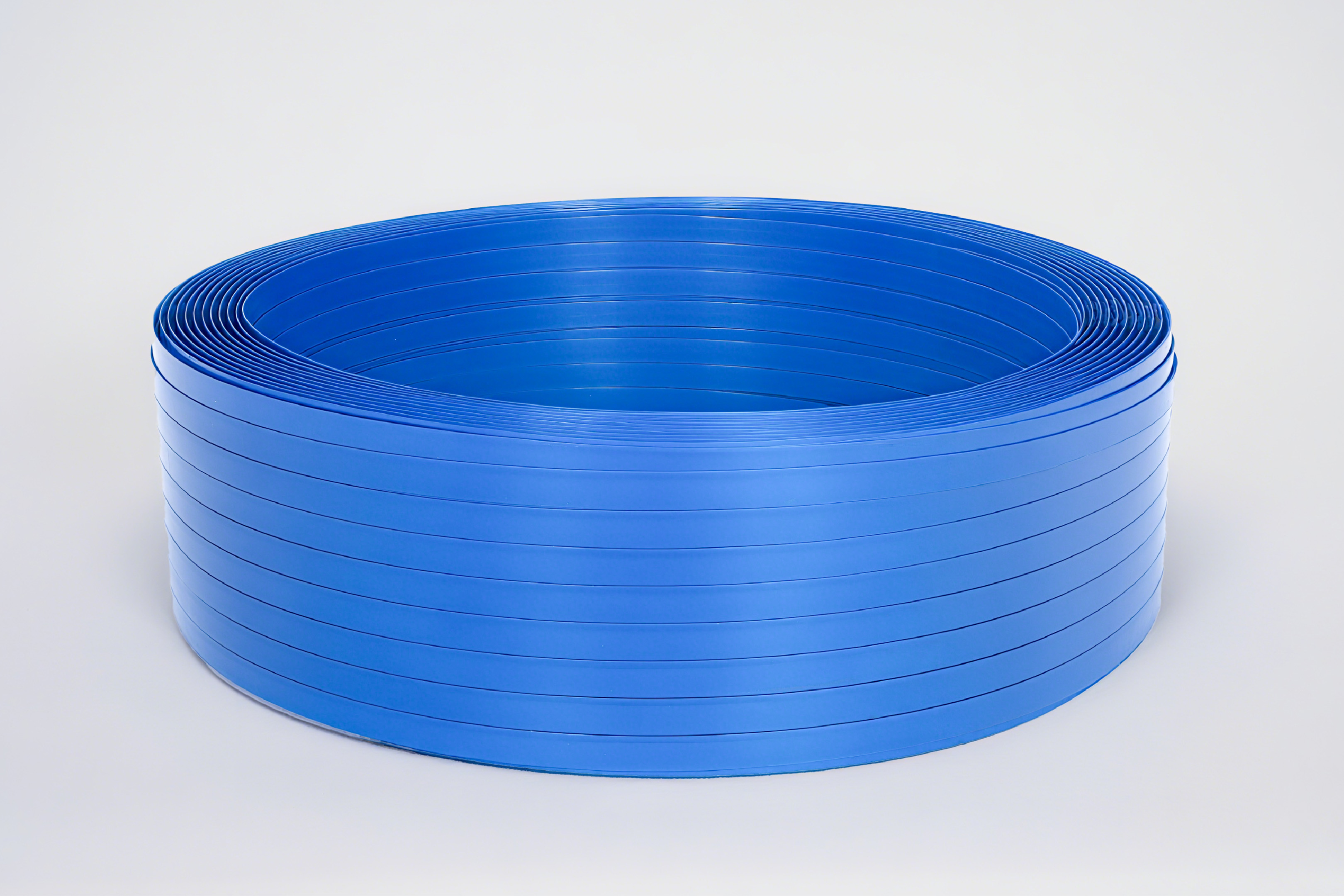
High-tensile PET strapping formats are specified by model designation, not by generic width.
Documented Applications as Validation of the Framework
The three projects referenced in this article demonstrate how the five-step framework resolves into specific specifications in industrial practice.
Sateri: High-Compression Fiber Bale Bundling
Sateri (China) Fiber Co., Ltd. uses 1610×3380/3480 PET baling strap for viscose fiber bales, with documented purchase invoices (single batch exceeding RMB 71,000) (Jushuo Packaging case record). The application illustrates why low elongation and cut length matter more than width alone in compressible-load bundling: the strap must hold the bale at its compressed size, and the cut length must match the bale geometry.
Far Eastern Industries: Textile Bundling on Automatic Lines
Far Eastern Industries (Shanghai) uses 16×1.0 mm transparent cut PET strapping for polyester fiber bale bundling, with specified lengths fully compatible with automatic packaging lines (Jushuo Packaging case record). The 16×1.0 mm size sits at the midpoint of the heavy-duty range and is appropriate where the load is heavy but the bundling format is standardised across a high-speed line.
Novo Nordisk Supply Chain: Pharmaceutical Packaging Threshold
The Novo Nordisk supply-chain project is the clearest documented example of a compliance-driven tensile threshold. Jushuo supplied 16×0.8 mm transparent custom-printed PET strapping with tensile strength above 4800 N, fully meeting the end user’s pharmaceutical packaging quality requirements (Jushuo Packaging case record). The specification was driven by the pharmaceutical packaging standard, not by the physical weight of the packaged goods.
Market Trend: PET Strapping as the Default Heavy-Duty Format
The shift toward PET strapping is structural rather than cyclical. PET strapping accounted for approximately 60% of global plastic strapping production volume in 2024, and the global PET strapping market was valued at approximately USD 869.1 million in the same year (Vertex AI / Industry Report, 2024). The reasons are consistent across heavy industries: PET provides breaking strength in the range of steel at approximately one-sixth of the density, and it removes the rust-contamination and sharp-edge risks associated with steel strap.
For buyers, the practical implication is that PET strapping is now the default heavy-duty format rather than an alternative. The decision is no longer PET versus steel in most heavy applications, but which PET specification matches the load, the line, and the compliance requirement.
Limits and Boundaries: Where the Framework Does Not Apply
A responsible selection framework includes its own boundaries. PET strapping is not universally superior to every alternative, and the framework above does not apply in every case.
- Very high elongation applications: PP strapping offers break elongation up to approximately 20% (Jushuo Packaging product specification), which can be an advantage where the load needs to absorb shock. PET strapping’s low elongation, which is an advantage in fiber bale bundling, is a limitation where elasticity is required.
- Light-load carton bundling: For light cartons and general logistics, the dimensional precision and tensile thresholds discussed here exceed what the application requires. PP strapping at 5–19 mm width and 45–270 kg break force is typically sufficient (Jushuo Packaging product specification).
- Edge-sensitive loads: PET strapping does not eliminate the need for edge protectors when bundling sharp-edged goods such as stone slabs or metal parts. The strap protects the load only when the load does not cut the strap.
- Application without machine compatibility confirmation: A specification that meets load requirements but does not match the machine’s core size, guide width, or feed path will still fail in production.
These boundaries are stated because a framework that claims universal applicability is not a framework. It is a sales position.

Chemical fiber bale bundling — a documented low-elongation application where cut length and tensile threshold are specified independently of width.
Future Outlook
Two developments are likely to shape PET strap selection over the next procurement cycle. First, compliance-driven tensile thresholds — as seen in the pharmaceutical packaging example — are becoming more common as regulated industries apply packaging standards to strap specifications. Second, cut-length specification is moving from a logistics convenience to a line-compatibility requirement as automatic packaging lines become more widely adopted in fiber, textile, and building-material production.
For buyers, the practical consequence is that PET strap selection is becoming a documented, parameter-driven decision rather than a catalogue lookup. The framework in this article is intended to support that transition.
FAQ
How do I decide between 16×1.0 mm and 19×1.0 mm PET strapping?
The choice is governed by the required break force and the packaging line configuration. The 19×1.0 mm specification delivers higher break force than 16×1.0 mm because of the larger cross-sectional area, and is appropriate for heavier or impact-loaded goods. The 16×1.0 mm specification is used where the load is heavy but the bundling format is standardised across a high-speed automatic line, as in the Far Eastern Industries textile bundling application. Buyers should confirm the published break force for the specific model designation rather than inferring it from width.
What tensile strength threshold applies to pharmaceutical packaging?
The documented benchmark in this article is above 4800 N, applied to 16×0.8 mm transparent custom-printed PET strapping supplied into a Novo Nordisk supply-chain project. The threshold was set by the pharmaceutical packaging quality requirement rather than by load weight. Buyers in regulated industries should treat the compliance standard as the primary source of the tensile threshold.
How is cut length determined for PET strapping?
Cut length is determined by the bundle circumference, the overlap required for the joint, and any allowance for the machine feed path. Documented examples include 3380 mm and 3480 mm for the same 1610 specification in viscose fiber bale bundling, indicating that cut length is matched to specific bale sizes or line configurations rather than fixed by strap width.
What PET strap parameters affect compatibility with automatic packaging lines?
Three parameters are decisive: straightness, expressed as deflection per metre; core size; and roll length. Jushuo reports straightness deflection of ≤5 mm/m and offers core sizes of 406 mm with roll lengths from 550 to 3800 m for its PET strapping range. A specification that meets the load requirement but does not match the machine’s core size or guide width will not perform as intended.
When is PET strapping not the right choice?
PET strapping is not the right choice where the application requires higher elongation for shock absorption, where the load is light enough that PP strapping at 45–270 kg break force is sufficient, or where the strap will contact sharp edges without edge protection. In these cases, alternative materials or additional protective components should be considered.
Is PET strapping available with custom printing for brand or compliance purposes?
Yes. Custom printing is offered using high-adhesion ink, and the printed PET strapping roll is available in widths from 9 to 25 mm with break force from 180 to 1360 kg (Jushuo Packaging product specification). The Novo Nordisk supply-chain project cited in this article used custom-printed transparent PET strapping, indicating that printing is compatible with regulated packaging environments.
Tem questões ou precisa de mais detalhes?
Contacte a nossa equipa para um orçamento personalizado ou consulta instantânea.
Solicitar orçamento
Preencha o formulário abaixo e a nossa equipa entrará em contacto com uma proposta personalizada.
Chat direto do WhatsApp
Prefere conversar em tempo real? Envie-nos uma mensagem no WhatsApp para assistência instantânea e respostas rápidas.
- Obter orçamento personalizado
- Partilhar fotos ou documentos
- Discuta as suas necessidades diretamente
Geralmente responde em 5–30 minutos durante o horário de expediente.