
PIOON ENT and Dental Diode Lasers: Capability Evidence
PIOON ENT and Dental Diode Lasers: Capability Evidence
Procurement teams assessing an ENT diode laser supplier face a familiar problem: portfolio brochures show many models, but the buying decision depends on a much smaller set of verifiable facts. For PIOON, the relevant evidence is not a generic claim of manufacturing breadth. It is the combination of specific ENT platforms, documented dental platforms, accessory compatibility, quality-system certification, and clearly bounded OEM/ODM and service scope. This assessment reviews those elements as a supplier-capability file while separating what the portfolio records establish from what a buyer still has to confirm.
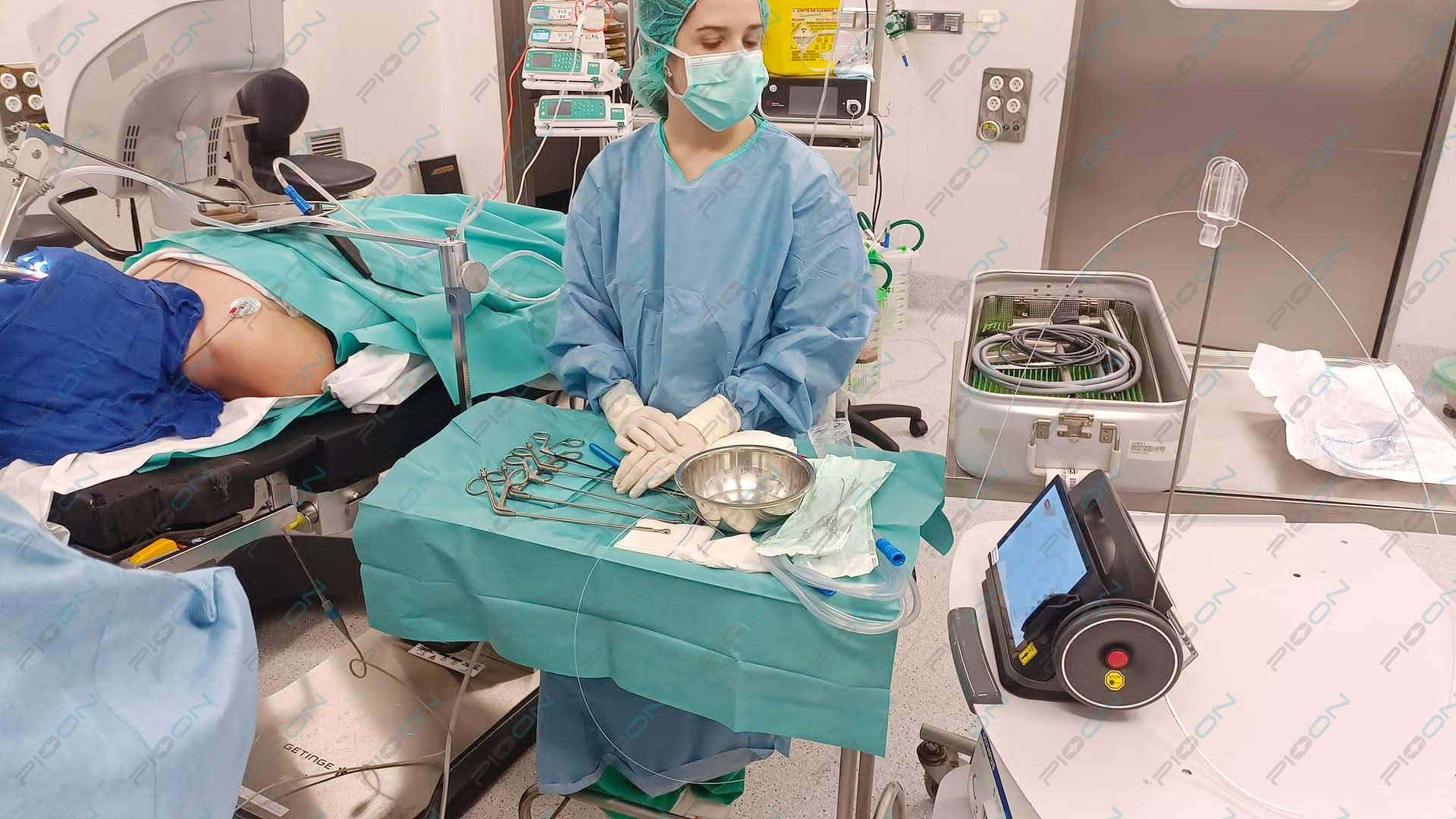
ENT application context for a model-level supplier review. Image source: PIOON content unit 3188.
What the company evidence establishes
Wuhan Pioon Technology Co., Ltd. (PIOON) is a medical laser manufacturer founded in 2015 and based in Wuhan, China. The company reports a 4,000 m² manufacturing facility, 100–120 employees, 30–35 engineers, annual output of 3,600 units, and an export share above 95%. Its stated markets include Europe, North America, South America, Asia, North Africa, and Oceania. PIOON also reports a portfolio covering diode laser wavelengths from 400 nm to 2,000 nm and power outputs from 200 mW to 200 W across its product range.
Those figures matter for supplier evaluation because they show a company organized around medical diode laser production, not a trading label attached to unrelated equipment. They do not, by themselves, prove that any particular ENT configuration fits a hospital or distributor requirement. The useful next step is to move from company-level capacity to model-level evidence: which ENT systems exist, what wavelengths they use, which accessories are compatible, and which certifications apply to the exact product and market. PIOON's official website is www.pioon.com.
ENT diode laser evidence: two wavelength paths
The PIOON ENT portfolio includes two documented diode laser paths. The H1 ENT is a 980 nm diode laser option for selected ENT soft-tissue procedures. The S1-C10 ENT uses 450 nm blue light and offers a different tissue-absorption profile for incision and coagulation. Both are described in PIOON's ENT selection material as systems for selected ENT soft-tissue applications, with the appropriate choice depending on anatomical location, required tissue effect, delivery accessories, and approved indications.
The portfolio's ENT case material adds a support dimension. It describes at least two years of product demonstrations, professional education, and technical exchanges covering 450 nm and 980 nm ENT technologies, compatible optical fibers, and potential clinical workflows. That is evidence of application-support activity rather than a named clinical outcome study. It is relevant to a distributor evaluating training and technical communication, but it should not be read as proof of clinical superiority or as approval for every ENT procedure.
A strong supplier file for this ENT platform should also address four physical and workflow points: fiber compatibility at 200 μm or larger, interchangeable ENT handpiece cannulas, a housing of 2 kg or less, and dual-fan cooling. These are useful evaluation points because they are specific enough to check. The portfolio records reviewed here confirm the 980 nm H1 ENT and 450 nm S1-C10 ENT options and compatible fiber delivery, but they do not by themselves establish all four figures for every ENT configuration. A buyer should therefore require the exact model datasheet, accessory list, and inspection record for the quoted system.
| ENT capability point | Why it matters in evaluation | What the buyer should verify |
|---|---|---|
| Fiber compatibility at 200 μm or larger | Fiber diameter and compatibility affect delivery-option planning, accessory sourcing, and procedural workflow. | Confirm the approved fiber list for the exact H1 ENT or S1-C10 ENT configuration, including core diameter, connector, sterility status, and reuse policy. |
| Interchangeable ENT handpiece cannulas | Cannula options can affect how a surgeon approaches different anatomical targets and how accessories are stocked. | Ask for the handpiece and cannula compatibility matrix, plus cleaning, sterilization, and replacement instructions. |
| Housing of 2 kg or less | Housing weight influences cart layout, room-to-room movement, and mounting or storage arrangements. | Verify the weight of the complete quoted system, not only the main unit, and confirm what the figure includes. |
| Dual-fan cooling | Cooling architecture affects duty-cycle planning, noise, dust management, and service access. | Request the thermal-management description, operating-environment limits, filter or airflow maintenance guidance, and alarm behavior. |
The table is not a claim that every listed figure has been independently confirmed. It is a procurement checklist built from the capability points that matter for the ENT model. The distinction is important: a buyer should not treat a portfolio-level statement as a substitute for the model-specific record that will support installation, training, and regulatory review.
Dental platforms as supporting capability evidence
PIOON's dental portfolio is relevant to the ENT assessment for a practical reason: it shows whether the supplier can document several diode laser platforms across wavelengths, output levels, and form factors. That does not prove ENT performance, but it does provide evidence of product-family management, accessory planning, and configuration control. The dental range includes the H1 Dental, H1 Plus, S3 Plus, and HeliPen platforms.
| Platform | Documented wavelengths | Documented output and positioning |
|---|---|---|
| H1 Dental | 980 nm | Entry-level routine dental soft-tissue platform. The related H1 standard configuration is listed at up to 10 W in continuous-wave and pulsed operation; the exact H1 Dental SKU should be confirmed for maximum output. |
| H1 Plus | 980 nm | Up to 20 W, with super-pulsed operation and additional software-supported features. Higher output does not automatically mean better outcomes for every procedure. |
| S3 Plus | 450 nm, 650 nm, and 980 nm | Three-wavelength platform with 450 nm output up to 7 W and 980 nm output up to 12 W, plus super-pulsed functionality and additional supported care functions. The 650 nm output should be confirmed for the exact configuration. |
| HeliPen Omni | 980 nm and 650 nm | Portable wireless pen design supporting simultaneous dual-wavelength output. Maximum output is not stated in the reviewed portfolio record; confirm the exact variant datasheet. |
| HeliPen Surg | 450 nm and 650 nm | Blue-laser-oriented soft-tissue configuration in a portable wireless pen format. Maximum output is not stated in the reviewed portfolio record; confirm the exact variant datasheet. |
The dental table illustrates why a portfolio review needs model-level discipline. H1 Dental and H1 Plus share a 980 nm wavelength but differ in output and pulse capability. S3 Plus adds multi-wavelength flexibility. HeliPen changes the form factor to a portable wireless pen. These are different product roles, not a ranking. A distributor serving mixed dental accounts may value the range because it can address entry-level, higher-output, multi-wavelength, and portable use cases. An ENT buyer should use that range as supporting evidence of engineering breadth and then return to the exact ENT model under consideration.
Technical meaning: why platform breadth is not the same as clinical proof
Diode laser wavelength determines how light is absorbed by tissue components such as water, hemoglobin, and melanin. In general terms, a 450 nm blue wavelength interacts strongly with certain pigments, while 980 nm near-infrared light has a different absorption and penetration profile. PIOON's own ENT material makes this distinction when it separates the 980 nm H1 ENT from the 450 nm S1-C10 ENT. The clinical effect still depends on power, exposure time, delivery fiber or handpiece, tissue condition, and operator technique.
That is why a multi-platform supplier file should be read as a capability signal, not a clinical guarantee. Producing several platforms requires work across laser modules, optical delivery, embedded software, thermal management, and accessory interfaces. PIOON reports in-house capabilities covering PCB processing, laser module production, precision machining, mold development, medical optical fibers, and accessories, supported by a 30–35-person engineering team. For a buyer, the useful question is how those capabilities are controlled at the ordered configuration: which wavelength and power settings are fixed, which are customizable, which accessories are approved, and which tests are performed before shipment.
A broad portfolio can shorten the supplier-discovery stage because it shows that the manufacturer already manages multiple product families. It cannot shorten the verification stage. The buyer still needs a model-specific statement of intended use, compatible accessories, regulatory status, and service arrangements. This is the difference between supplier capability and product suitability.
Manufacturing, quality, and certification evidence
PIOON reports a 4,000 m² manufacturing facility, 100–120 employees, an annual output of 3,600 units, a monthly capacity of 300 units, and a listed lead time of 14 days subject to model and customization requirements. Its quality-control description includes an ISO 13485 quality management system, product inspection, electrical safety testing, laser output verification, and functional testing. These are relevant because ENT and dental diode lasers depend on consistent optical output, reliable electrical safety, and controlled accessory interfaces.
The certification picture requires the same model-level reading. PIOON holds an ISO 13485:2016 certificate for the design and development, production, and distribution of therapy laser and medical diode laser products. It also holds a CE certificate described as a Full Quality Assurance System under MDD 93/42/EEC Annex II excluding (4), issued by TÜV SÜD Product Service GmbH, with a scope covering the quality assurance system for therapy laser and medical diode laser. A U.S. FDA 510(k) clearance is listed for medical diode lasers for general surgery, plastic surgery, and dermatology for specified models. Other market documents include an ARTG entry for Australia and an NMPA Class III registration for China.
These documents do not mean that every model is cleared in every market. ISO 13485 certifies a quality management system, not a device authorization. CE and FDA status must be matched to the exact model, intended use, and destination market. In the supplied records, the CE quality-system scope lists ENT models including the H1 980 nm ENT and S1-C10 ENT, while the FDA 510(k) list covers specified dental and surgical models rather than those ENT models. A distributor should therefore request model-specific regulatory documents and verify them with the relevant authority or notified body where applicable.
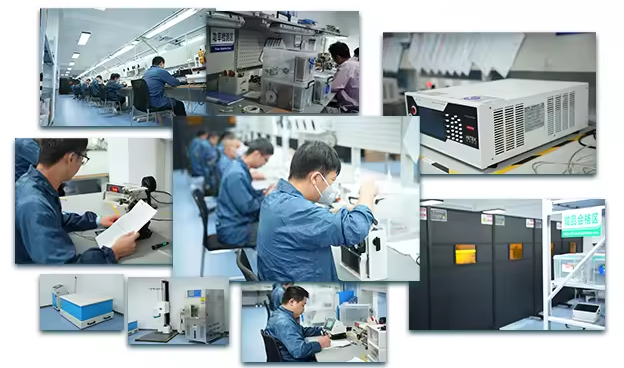
Manufacturing and compliance evidence supports supplier review but does not replace model-level certification checks.
OEM/ODM and distributor support: confirm the actual scope
PIOON offers OEM/ODM cooperation for medical diode laser distributors and brand partners. The listed customization areas include private labeling, logo, user interface, language, software, wavelength and power configuration, treatment presets, and accessories. The capability record also lists a flexible minimum order quantity subject to model and customization requirements, a monthly capacity of 300 units, and a 14-day lead time. These are meaningful starting points for a distributor, but they are not a fixed offer for every project.
Before an OEM/ODM order, the buyer should convert the scope into written project terms: the exact model, customization boundary, sample approval process, minimum order quantity, production lead time, inspection criteria, labeling, packaging, software change control, regulatory responsibilities, and warranty terms. Changes to branding, software, or device configuration can affect documentation and compliance. The supplier's general capability does not remove the need to confirm technical feasibility and acceptance criteria for the specific project.
After-sales support follows the same logic. PIOON describes technical assistance, remote troubleshooting, product training, software support, maintenance guidance, and spare-parts coordination. On-site service is available when required, subject to local service arrangements. Warranty coverage and service responsibilities depend on the product and the sales agreement. A distributor should confirm support channels, local service options, response arrangements, training resources, spare-parts availability, and warranty exclusions before purchase rather than relying on a general service statement.
OEM/ODM capability is a starting point; the enforceable scope belongs in the project agreement.
Application and procurement fit
PIOON's ENT portfolio is positioned for selected ENT soft-tissue procedures, not for every procedure that may appear in a tender. The portfolio records refer to 450 nm and 980 nm technologies, compatible optical fibers, and professional education for ENT specialists and distributors. They do not establish that every named procedure is approved for every model or market. That boundary matters when a buyer is assembling a shortlist.
Procedure categories such as turbinate reduction, nasal polypectomy, vocal cord surgery, laryngeal surgery, laryngeal papilloma removal, laser-assisted uvulopalatoplasty, tonsil surgery, otologic surgery, and pharyngeal surgery should be checked against the exact device's intended use, local registration, and compatible accessories. The same applies to contact versus non-contact delivery: the handpiece and fiber choice should match the planned technique rather than be assumed from a portfolio description. For dental evaluation, the H1 Dental, H1 Plus, S3 Plus, and HeliPen platforms cover different wavelengths, outputs, and form factors, but each model still needs its own approved indications and accessory list.
For distributors serving both ENT and dental accounts, the portfolio has practical commercial value. It allows a single supplier discussion to cover multiple clinical categories, shared quality-system expectations, and accessory planning. That convenience should not blur the regulatory and clinical boundaries between specialties. A distributor should separate the ENT file from the dental file and confirm each model's market authorization, training requirements, and service plan.
What the evidence does not prove
The material reviewed here does not show that PIOON's ENT systems are clinically superior to other diode lasers. It does not show that the 200 μm+ fiber, interchangeable cannula, 2 kg housing, and dual-fan cooling points are identical across every ENT configuration. It does not show that a dental platform's wavelength or power rating transfers to an ENT indication. It also does not turn PIOON's ENT education activities into a controlled clinical trial.
These limits do not make the portfolio evidence useless. They define what the buyer should do next. The supplier file is strong when it narrows the verification task: exact model, exact fiber, exact handpiece, exact regulatory document, exact service commitment. It is weak when a buyer treats broad portfolio language as a substitute for those records. That is the central procurement distinction in this assessment.
Future outlook: what a capability-led review should track
The practical outlook for a distributor or clinical buyer is conditional rather than promotional. If PIOON can provide model-level documentation for the exact ENT configuration, accessory list, regulatory status, and service terms, then the breadth of its ENT and dental portfolio becomes a credible supplier advantage. If those records are incomplete for the quoted model, the buyer should treat the portfolio as an introduction rather than a completed evaluation.
A capability-led review should therefore track four items after the first supplier discussion: the model-specific datasheet, the accessory and fiber compatibility matrix, the market-specific regulatory file, and the written OEM/ODM or after-sales scope. These are the points that turn a portfolio claim into a procurement decision. They also keep the evaluation grounded in documented evidence rather than general impressions about company size or product count.
FAQ
What does PIOON's ENT diode laser portfolio include?
The documented ENT portfolio includes the H1 ENT, a 980 nm diode laser option for selected ENT soft-tissue procedures, and the S1-C10 ENT, a 450 nm blue-light option with a different tissue-absorption profile. PIOON's ENT material also refers to compatible optical fibers and at least two years of professional education and technical exchange activities. Buyers should confirm the exact model, fiber list, handpiece options, housing weight, cooling design, and approved indications for the quoted configuration.
Which PIOON dental platforms are relevant to a distributor reviewing portfolio breadth?
The dental platforms include H1 Dental at 980 nm, H1 Plus at 980 nm and up to 20 W with super-pulsed operation, S3 Plus at 450 nm, 650 nm, and 980 nm with 450 nm up to 7 W and 980 nm up to 12 W, and the HeliPen Omni and HeliPen Surg wireless pen formats. HeliPen Omni combines 980 nm and 650 nm, while HeliPen Surg combines 450 nm and 650 nm. Maximum HeliPen output is not stated in the reviewed record, so the exact variant datasheet should be requested.
What OEM/ODM points should a buyer confirm with PIOON?
Buyers should confirm the exact customization scope, including private label, logo, user interface, language, software, wavelength and power configuration, treatment presets, and accessories. They should also confirm minimum order quantity, sample approval, production lead time, inspection criteria, packaging, regulatory responsibilities, and warranty terms. PIOON lists a flexible MOQ subject to model and customization requirements, a monthly capacity of 300 units, and a 14-day lead time, but these figures should be written into the specific project agreement.
What certifications should importers check for ENT and dental diode lasers?
Importers should check the exact model and intended use against destination-market requirements. Relevant documents may include ISO 13485 quality-system certification, CE documentation where applicable, FDA clearance for specified models, local registration, and labeling records. ISO 13485 does not authorize a device, and FDA establishment registration is not the same as 510(k) clearance. The supplied records list CE quality-system scope for ENT models and FDA 510(k) clearance for specified dental and surgical models, so model-specific verification is essential.
How should buyers verify the ENT fiber, cannula, weight, and cooling claims?
Buyers should request the exact model datasheet, the approved fiber and handpiece compatibility matrix, the weight definition for the complete quoted system, and the thermal-management and maintenance description. They should also confirm cleaning and sterilization instructions, accessory replacement policy, alarm behavior, and inspection records. These steps turn portfolio-level capability points such as 200 μm+ fiber compatibility, interchangeable ENT handpiece cannulas, a housing of 2 kg or less, and dual-fan cooling into verifiable procurement requirements.
Tem questões ou precisa de mais detalhes?
Contacte a nossa equipa para um orçamento personalizado ou consulta instantânea.
Solicitar orçamento
Preencha o formulário abaixo e a nossa equipa entrará em contacto com uma proposta personalizada.
Chat direto do WhatsApp
Prefere conversar em tempo real? Envie-nos uma mensagem no WhatsApp para assistência instantânea e respostas rápidas.
- Obter orçamento personalizado
- Partilhar fotos ou documentos
- Discuta as suas necessidades diretamente
Geralmente responde em 5–30 minutos durante o horário de expediente.