
PLJR-320, PLJR-316, PLJR-316SUS: A Slow Juicer Certificate Audit
PLJR-320, PLJR-316, PLJR-316SUS: A Slow Juicer Certificate Audit
A slow juicer certificate audit is a document-level comparison, not a product review. It asks four questions of every certificate: what type of conformity it covers, who issued it, what number and standard it carries, and which models and power ratings fall inside the stated scope. For buyers evaluating the PLJR-320, PLJR-316 and PLJR-316SUS, those four questions decide whether a compliance file is usable or merely a folder of PDFs with a familiar logo on the cover.
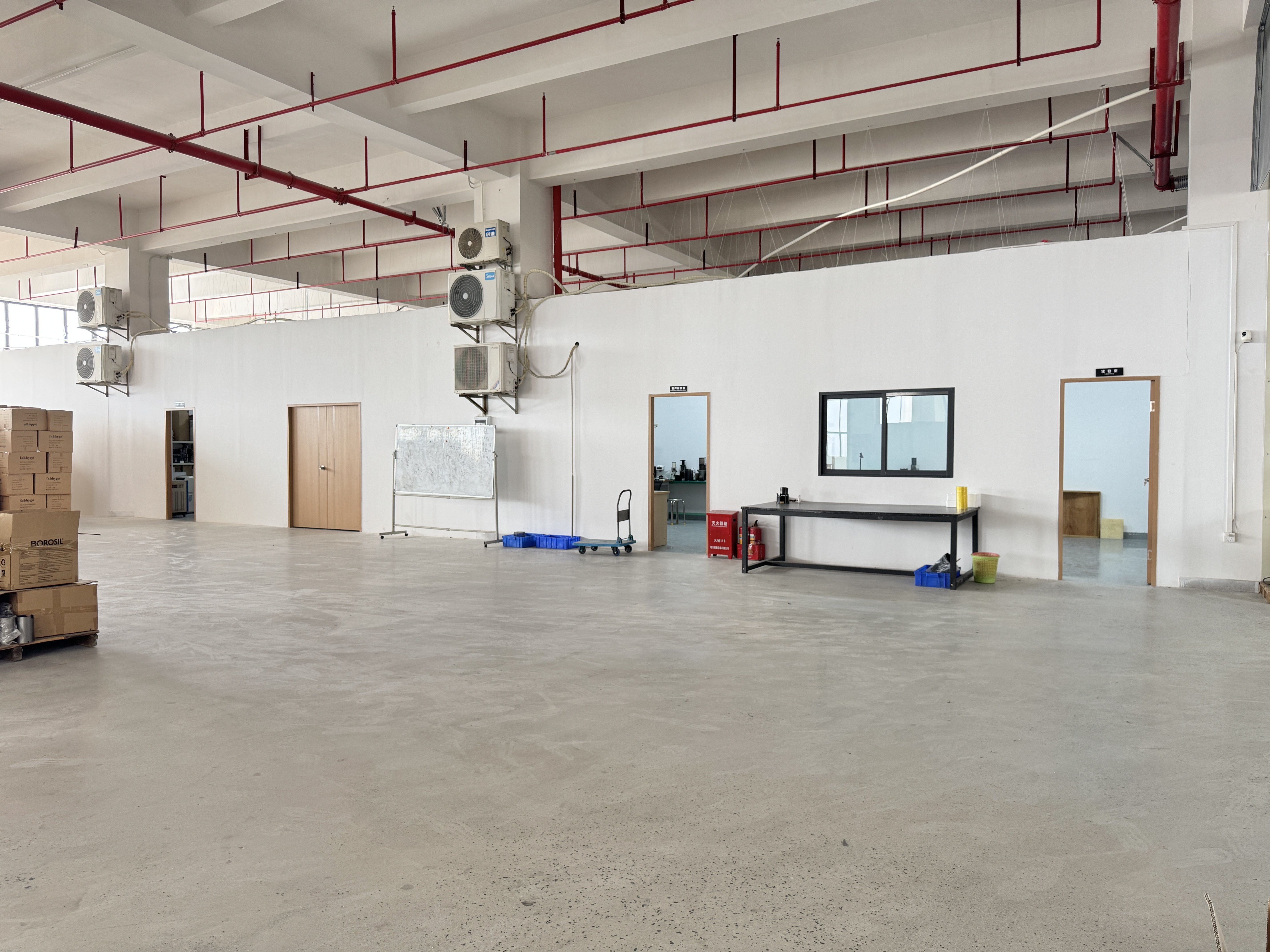
The three models are produced by Zhongshan Platino Electric Appliances Technology Co., Ltd, a small kitchen appliance manufacturer established in January 2018 in Huangpu Town, Zhongshan City, Guangdong, China. The company operates three production lines with an annual output capacity of 720,000 units, employs 25 people, and exports roughly 95% of its output, listing the EU, India and the Middle East among its main markets. Its slow juicer range is supported by seven product-level certificate records — two of them CB issues — plus one management-system certificate, and the numbering behind those documents is the subject of this comparison.
What a buyer-side certificate audit actually compares
Procurement teams often count certificates. A certificate audit instead reads each document along four axes, because only the fourth one tells a buyer whether the model they intend to order is covered.
1. Type and issuer. A CB test certificate, an LVD certificate, an EMC certificate, a food-contact report and a quality-management certificate are not interchangeable evidence, and the issuing body determines who can confirm the record later.
2. Number and standard. The certificate number is the retrieval key; the cited standard edition is what the certificate actually attests to.
3. Stated scope. The scope wording is where most buyer assumptions break, because it frequently describes a product family and a power band rather than a single model name.
4. Issue and validity dates. A current file is not the same as a current record, and renewal is a lead-time item rather than an administrative detail.
The three models inside one document set
Before comparing certificates, it helps to separate what the three models are documented for, because the audit result is only meaningful against a concrete order specification.
PLJR-320 is the model with a documented shipment record. The reference case totals 36,000 units over a project duration of 2–3 years, comprising 1,000 units in Georgia, 24,000 units in India, 1,000 units in Morocco and 10,000 units in Turkey, with household healthy-diet users and small home appliance distributors as the client types.
PLJR-316 is positioned around fresh juice bar scenarios, with typical application scenarios listed as bubble tea shops and catering services, and intended industries covering catering services as well as household appliances and small kitchen appliances.
PLJR-316SUS is listed for the fresh juice bar and bubble tea shop industries as well as home appliances and small kitchen appliances, with the same typical application scenarios of fresh juice bars, bubble tea shops and catering services.
All three sit inside the same electrical and materials scope on the certificate records, which is the central finding of this audit. The differences between the models, as documented, are application positioning and configuration rather than certificate coverage.
Certificate by certificate: type, issuer, number, scope
The table below reproduces the certificate records as supplied for the slow juicer range. Nothing has been rounded, shortened or inferred.
| Type | Issuer | Number | Standard | Issued | Listed validity |
|---|---|---|---|---|---|
| CB | TUV Rheinland | JPTUV-121522-M3 | IEC 60335-2-14:2016+A1, IEC 60335-1:2010+A1+A2 | 2025-06-10 | No date stated |
| CB | TUV Rheinland | JPTUV-121522-M2 | IEC 60335-2-14:2016+A1, IEC 60335-1:2010+A1+A2 | 2024-12-31 | No date stated |
| LVD | TUV Rheinland | AN 50659523 0001 | EN 60335-1:2012+A11+A13+A1+A14+A2+A15+A16, EN IEC 60335-2-14:2023+A1+A11, EN 62233:2008 | 2024-12-31 | 2029-12-30 |
| EMC | TUV Rheinland | AE 50656066 0001 | EN IEC 55014-1:2021, EN IEC 61000-3-2:2019+A1, EN 61000-3-3:2013+A1+A2, EN IEC 55014-2:2021 | 2024-11-27 | 2029-11-26 |
| LFGB | Bureau Veritas | (8826)160-0149 | § 30 and 31 LFGB, BfR Recommendation, (EC) No. 1935/2004, (EU) No. 10/2011, (EU) 2020/1245, (EU) 2025/351, (EU) 2024/3190, (EU) 2026/250, CM/Res(2020)9, ResAP(2004)5 | 2026-08-26 | 2046-08-25 |
| REACH | Bureau Veritas | (8826)160-0151 | (EC) No. 1907/2006 | 2026-08-26 | No date stated |
| ROHS | Bureau Veritas | (8826)160-0150 | 2011/65/EU, (EU) 2015/863 | 2026-09-10 | 2031-09-09 |
| ISO 9001 | LIANQISHIXIN CERTIFICATION CO.,LTD | 43018Q0N0R0UN0021-2 | ISO 9001-2015 | 2026-01-14 | 2029-01-13 |

Where the evidence overlaps across all three models
Every product certificate in the table carries the same scope wording: slow juicer, 130W–200W, for household use kitchen appliances. The market list is identical across the set — EU, Middle East, Southeast Asia, India and East Asia — and the documentation links each of these records to the PLJR-320, PLJR-316SUS and PLJR-316.
That produces a clean audit conclusion for buyers: the LVD, CB, LFGB, REACH, ROHS and ISO 9001 records each reach the three models where stated in the documentation, and the EMC record sits inside the same envelope with the same scope wording. The three models are therefore not separated by certificate type at the document level. What separates them is the application each one is documented for and the commercial history behind each one.
This is useful in two practical situations. A distributor consolidating a slow juicer programme across household retail and small catering accounts can keep one compliance file instead of three. A buyer switching from one of these models to another mid-project does not have to restart the compliance review, provided the order specification still falls inside the stated scope.
The 200W boundary: why the rated power decides model approval
The single most consequential words in the entire set are the numbers in the scope statement. All six product records describe a slow juicer of 130W to 200W for household use. Inside that band, the certificates apply. Outside it — whether a buyer requests a higher-output variant or a configuration whose rated input falls beyond the stated range — the documents no longer describe the product, whatever the certificate number says.
For procurement, this converts into a specification-matching rule rather than a legal question. Confirm the rated power of the exact configuration being ordered, place it against the 130W–200W envelope, and record that match in the purchase file. The product documentation describes a full copper DC 4435 motor for the slow juicer range, and buyers comparing variants should confirm that the rated wattage of that motor in the ordered configuration stays within the certified range.
The same logic applies to the intended-use wording. The scope reads "for household use kitchen appliances". A buyer planning a fresh juice bar or bubble tea shop deployment — both documented application scenarios for the PLJR-316 and PLJR-316SUS — should treat that wording as a clarification item in the commercial negotiation, not as something the certificate silently extends.
Model name and configuration — rated power inside 130W–200W — intended use consistent with the stated scope — certificate number recorded against the model — issue and expiry date noted with a renewal reminder.
Reading the dates as a maintenance schedule, not a formality
The set is not one vintage. The EMC and LVD records were issued in late 2024, the first CB issue in December 2024 and its successor in June 2025, the management-system certificate in January 2026, and the food-contact and materials records in August and September 2026. Stated validity runs from 2029 (LVD, EMC, ISO 9001) through 2031 (ROHS) to 2046 (LFGB).
Two records state no expiry date at all: both CB certificates and the REACH record. A missing date is not an error in itself, but it changes the buyer's action. With a dated certificate the buyer can diarise the renewal; with an undated one the buyer has to ask the supplier to confirm current status at the point of order. For CB specifically, the relevant question is not only whether JPTUV-121522-M3 is current, but whether the destination market's national certification derived from it is in place.
The LFGB record illustrates the maintenance problem well. Its reference list cites (EU) 2024/3190, (EU) 2025/351 and (EU) 2026/250 alongside older references such as (EC) No. 1935/2004 and CM/Res(2020)9. A long validity date therefore reflects the certificate's stated term, not a twenty-year guarantee that the underlying reference list will stay fixed. Buyers running multi-year programmes should ask for the current reference list at each annual review rather than relying on the original document.
Matching model documentation to the application
Certificate coverage is identical, so the selection decision falls back to application fit and commercial evidence.
For household retail and distributor programmes, the PLJR-320 carries the most documented commercial history: 36,000 units across Georgia, India, Morocco and Turkey over a 2–3 year project duration, spread across four markets with different retail structures. For a buyer entering the category, that record is more informative than a specification sheet because it demonstrates repeatable production against certificate-backed configurations.
For juice bar, bubble tea shop and catering-service applications, the PLJR-316 and PLJR-316SUS are the models whose documented scenarios match that environment. Both are listed for fresh juice bars, bubble tea shops and catering services, and both are also listed for household appliances and small kitchen appliances, which makes them usable across mixed portfolios.
Manufacturing context matters when a buyer evaluates how a certificate set is maintained. Production runs on three lines with a monthly capacity of 60,000 units for OEM and ODM work, with a MOQ of 500 units and a lead time of 35–40 days. Quality control combines 100% production online testing with third-party inspection, and after-sales support covers a one-year warranty on the whole unit with 1% free-of-charge spare parts for OEM and ODM orders. Customisation covers housing colour, knob colour, logo printing and packaging — all of which affect the order specification that must remain inside the certified scope.
Limits of this audit, and where a document review stops
A certificate audit is a strong first filter and a weak performance test, and buyers should not blur the two. Four boundaries are worth stating plainly.
Scope wording is not a model-by-model listing. The records describe a product family and a power band; the model association comes from the documentation linking each certificate to the three models. A buyer whose purchase order must name the model on the certificate should request written confirmation rather than inferring it from the family scope.
Noise and yield are not certified here. The audited set contains no decibel figures and no comparative juice-yield data for the three models. Descriptors such as quiet operation, high yield or low oxidation describe design intent in this document set; they are not certificate-backed measurements, and buyers comparing them should request sample testing.
Two records lack a stated expiry date. CB JPTUV-121522-M3 and JPTUV-121522-M2, and the REACH record (8826)160-0151, show no validity date, so current status must be confirmed at the time of order rather than assumed from the issue date.
Certificates support a technical file; they do not transfer the importer's own obligations. Placing a slow juicer on the EU market involves duties that sit with the entity placing the product on the market, and a supplier certificate is input to that process rather than a substitute for it. Buyers should also check whether a destination market requires its own national registration on top of a CB certificate.
Why certificate files are being read more closely in this category
The commercial backdrop explains the scrutiny. Grand View Research valued the global juicer market at USD 2.8 billion in 2024, and projected masticating, or slow, juicers to grow at a CAGR of 8% from 2024 to 2030. Market Research Future projects Asia-Pacific cold-pressed juice demand to grow at a CAGR of 12.9% through 2035. Slow juicers typically operate at 40 to 150 RPM, a range that defines the category's low-heat, low-oxidation positioning.
Faster growth in a category that sits between household appliance and food-preparation equipment pulls documentation into the foreground. Retail buyers handling a slow juicer SKU need a materials file, an electrical safety file and a food-contact file that agree with each other and with the model on the shelf. When three models share one compliance envelope, that consistency is an operational advantage; when it is assumed rather than verified, it becomes a recall risk.
What buyers should expect next from this certificate set
Three developments are reasonable to plan for on the evidence available. First, the dated records will come up for renewal in a cluster: LVD and EMC in late 2029, ISO 9001 in January 2029, ROHS in September 2031. Buyers on multi-year contracts should treat those dates as supplier milestones and confirm renewal progress before the term ends rather than after.
Second, food-contact reference lists will keep moving. The LFGB record's citations already stretch into 2026 amendments, which suggests periodic re-issue is a normal part of maintaining the file rather than an exception.
Third, as slow juicer demand grows in Asia-Pacific and the Middle East, buyers will increasingly ask for national-market documentation on top of CB and EU records. Suppliers who can map a certificate number to a specific model and power rating — rather than to a product family alone — will be easier to qualify and easier to keep in a programme.
FAQ: certificate audit questions buyers ask
Which certificate matters most for selling a slow juicer in the EU?
No single document covers EU market access. In this set, the LVD record AN 50659523 0001 (TUV Rheinland, issued 31 December 2024, valid to 30 December 2029) covers electrical safety, the EMC record AE 50656066 0001 (TUV Rheinland, issued 27 November 2024, valid to 26 November 2029) covers electromagnetic compatibility, the ROHS record (8826)160-0150 (Bureau Veritas, issued 10 September 2026, valid to 9 September 2031) covers restricted substances, and the LFGB and REACH records cover food-contact materials and chemical compliance. Buyers typically need the combination, not the strongest single document.
What is the difference between CB certificate JPTUV-121522-M3 and JPTUV-121522-M2?
Both are CB test certificates issued by TUV Rheinland against the same standards, IEC 60335-2-14:2016+A1 and IEC 60335-1:2010+A1+A2. JPTUV-121522-M2 is dated 31 December 2024 and JPTUV-121522-M3 is dated 10 June 2025, so M3 is the later issue in the sequence. Neither record states an expiry date, which means current status should be confirmed at the time of ordering rather than inferred from the issue date.
Do the certificates name PLJR-320, PLJR-316 or PLJR-316SUS individually?
The certificate records state a scope of slow juicer, 130W–200W, for household use kitchen appliances, and the supplied documentation links each record to all three models: PLJR-320, PLJR-316SUS and PLJR-316. The scope wording describes a product family and power band rather than a single model name. Buyers whose purchase process requires the model name on the certificate should request written confirmation of the model-to-certificate mapping.
Why does the 200W motor rating matter in a certificate audit?
Because 200W is the upper limit of the stated scope on all six product certificates, and 130W the lower limit. A configuration whose rated power falls inside that band is described by the documents; one outside it is not, regardless of which certificate number is quoted. The product documentation describes a full copper DC 4435 motor, so the practical step is to confirm the rated wattage of the motor in the exact configuration being ordered.
Which certificates in this set have no stated expiry date?
Three records show no validity date: CB JPTUV-121522-M3, CB JPTUV-121522-M2 and REACH (8826)160-0151. The dated records run to 30 December 2029 (LVD), 26 November 2029 (EMC), 13 January 2029 (ISO 9001), 9 September 2031 (ROHS) and 25 August 2046 (LFGB). Undated records shift a verification task onto the buyer at each order cycle.
Is ISO 9001 certificate 43018Q0N0R0UN0021-2 a product certificate?
No. It is a quality management system certificate issued by LIANQISHIXIN CERTIFICATION CO.,LTD against ISO 9001-2015, dated 14 January 2026 and valid to 13 January 2029, with a scope of design, production and sales of kitchen small appliances (export only). It evidences process control at company level; it does not certify the safety, materials or performance of an individual slow juicer model. Product conformity in this set comes from the CB, LVD, EMC, LFGB, REACH and ROHS records.
Which of the three models is documented for juice bar and bubble tea use?
PLJR-316 and PLJR-316SUS are both listed for fresh juice bar and bubble tea shop scenarios, with typical applications including fresh juice bars, bubble tea shops and catering services, alongside household appliances and small kitchen appliances. PLJR-320 carries the largest documented shipment record in the set — 36,000 units across Georgia, India, Morocco and Turkey over a 2–3 year project duration — with household users and small home appliance distributors as client types.
Tem questões ou precisa de mais detalhes?
Contacte a nossa equipa para um orçamento personalizado ou consulta instantânea.
Solicitar orçamento
Preencha o formulário abaixo e a nossa equipa entrará em contacto com uma proposta personalizada.
Chat direto do WhatsApp
Prefere conversar em tempo real? Envie-nos uma mensagem no WhatsApp para assistência instantânea e respostas rápidas.
- Obter orçamento personalizado
- Partilhar fotos ou documentos
- Discuta as suas necessidades diretamente
Geralmente responde em 5–30 minutos durante o horário de expediente.