
POS Terminal Sourcing Beyond Specs: Evaluating Manufacturers for the Long Term
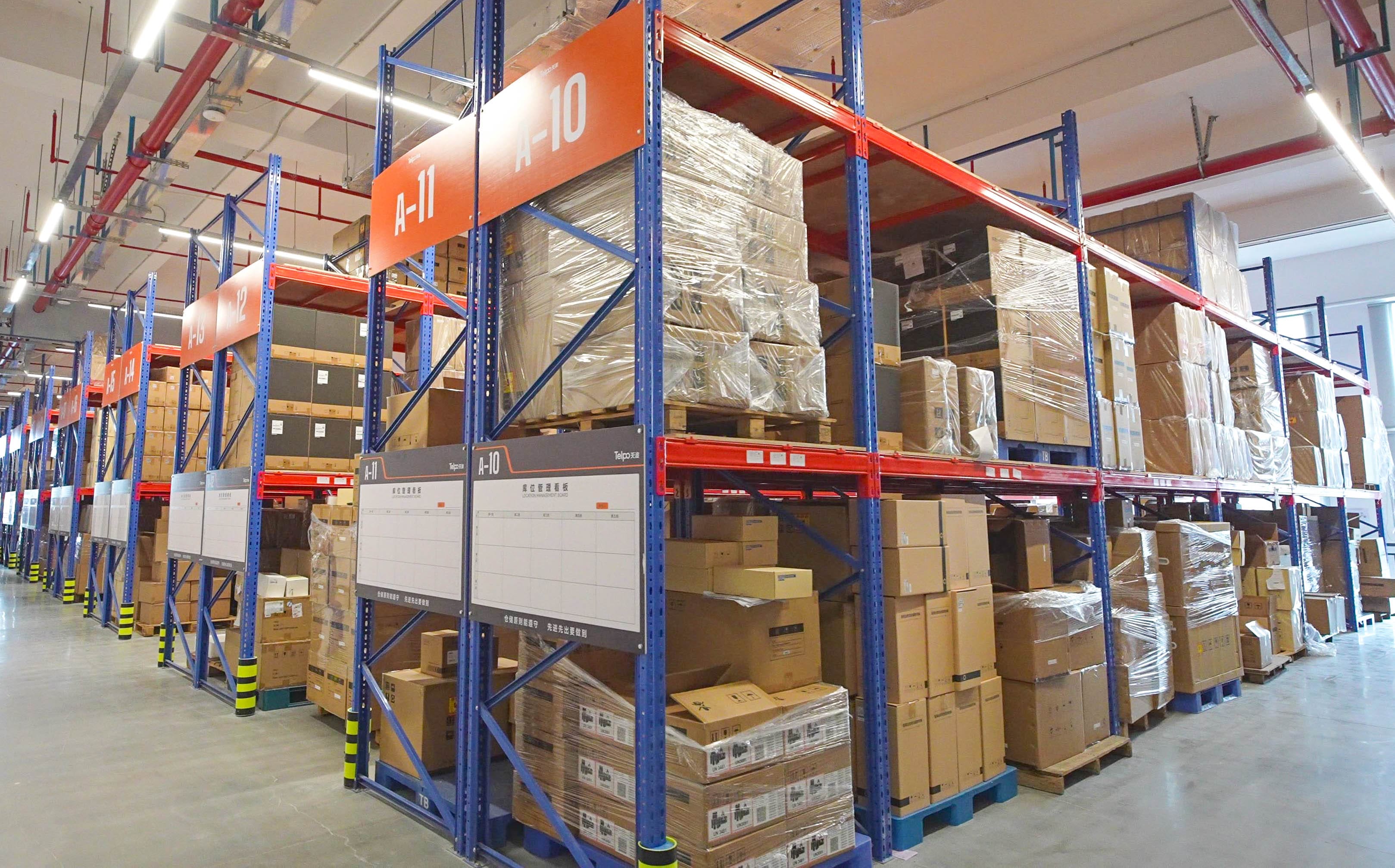
Warehouse and logistics operations at Telpo Technology's Foshan facility. Supply-chain consistency is a primary criterion in multi-year POS terminal programs.
The global POS terminal market reached approximately USD 123.2 billion in 2025, according to Grand View Research, and the handheld category alone is projected to grow from USD 33.15 billion in 2025 to USD 89.52 billion by 2035. For distributors and program operators, the procurement question is no longer simply which device to buy. A POS terminal today is long-lived payment infrastructure that must remain certified, secure, serviceable, and available in consistent volume across multiple years. This reference examines what long-term POS terminal sourcing actually requires, and how a manufacturer's ecosystem — production capacity, quality infrastructure, certification coverage, and fleet management tools — determines whether a multi-year program succeeds.
Why Device-Centric Procurement Breaks Down in Multi-Year Programs
Multi-year POS deployments tend to fail in predictable places, and none of them are visible on a spec sheet:
- Certification drift. Payment certifications such as PCI PTS and EMV must be maintained across hardware revisions and software updates. A supplier without in-house compliance expertise can lose certifications, effectively cutting off market access in regulated regions.
- Operating system obsolescence. Android terminals that ship on outdated OS versions reach end-of-support earlier, creating security risk and forcing premature replacements. Android POS terminals now account for roughly 27% of global POS terminal sell-in, according to ResearchAndMarkets / Berg Insight tracking, which makes OS lifecycle management a mainstream concern.
- Supply discontinuity. Small-scale or contract-assembly suppliers may not sustain volume commitments, consistent lead times, or batch-to-batch quality over a 36-month contract.
- Fragmented sourcing. Buying countertop POS from one vendor, handheld devices from another, and self-service kiosks from a third multiplies integration work, peripheral inventories, and maintenance relationships.
The result is that total cost of ownership over three to five years is shaped more by the manufacturer's infrastructure than by the initial unit price.
The Opportunity: Ecosystem-Based Procurement Is Replacing Transactional Buying
Buyers are responding by consolidating suppliers and evaluating manufacturers on portfolio breadth, certification continuity, quality systems, post-deployment device management, and commercial flexibility. For a distributor, one qualified supplier that can cover retail terminals, restaurant POS, transit validators, and self-service kiosks removes a significant layer of integration and support cost.
Telpo Technology Co., Ltd. is one supplier operating in this space, and its publicly documented supply-chain and product facts make it a useful case for understanding what ecosystem-based evaluation looks like in practice.
Telpo Technology: A Manufacturer Built for Long-Term Supply
Telpo Technology Co., Ltd. is a national high-tech enterprise founded in Foshan, China in June 1999 and listed on the NEEQ (stock code: 833839). In January 2026, the company changed its formal name from "Guangdong Telpo Information Technology Co., Ltd." to Telpo Technology Co., Ltd. It operates in four overseas business segments: Smart Retail, Smart Payment, Smart Transportation, and Biometric Security.
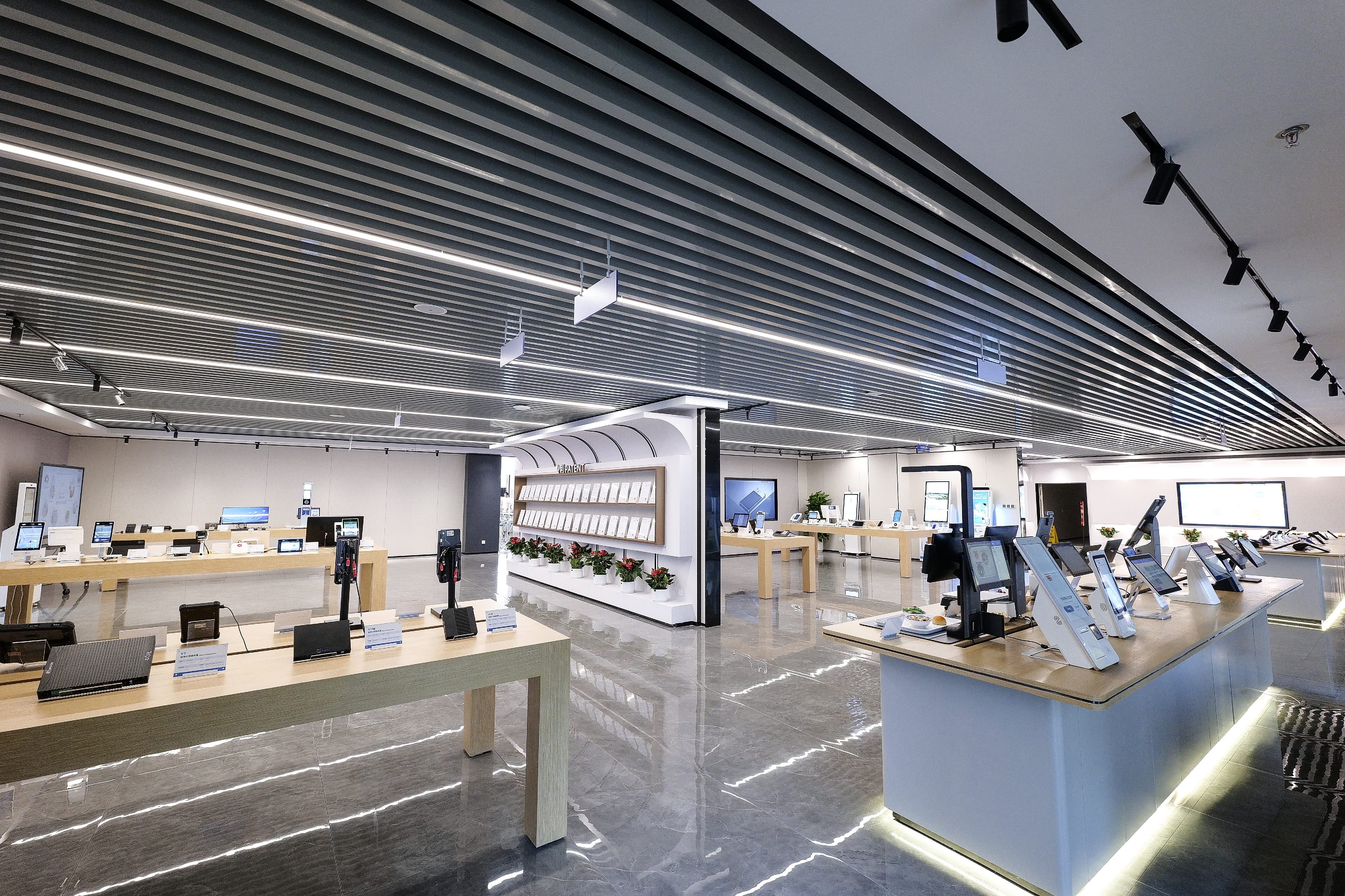
Telpo's product showroom: retail cash registers, payment terminals, ticket validators, and self-service kiosks under one portfolio.
For a distributor or program operator evaluating a multi-year supply relationship, the following facts are directly relevant:
- Production scale. The company operates approximately 45,000 sqm of factory space with about 600 employees, including 200 R&D engineers, and an annual output of roughly 2,000,000 units. Monthly production capacity is approximately 150,000 to 180,000 smart terminals.
- Export footprint. Telpo exports to over 100 countries, covering Africa, the Middle East, Southeast Asia, Latin America, and Europe, with an export ratio of 60%-80%.
- Quality system. The manufacturer holds ISO 9001 certification and operates a CNAS-accredited laboratory of approximately 900 sqm across 12 testing zones, including an OTA darkroom, EMC chamber, and climate lab. All units receive 100% functional testing.
- Product ecosystem. The portfolio spans EFTPOS, Android POS terminals, desktop POS, dual-screen cash registers, self-service kiosks, biometric payment terminals, ticket validators, fiscal POS, and AI checkout terminals — covering most of the form factors a retail or transit program requires.
The commercial terms also reflect a distribution-oriented model. Typical lead times are 3-7 working days for stock orders and 15-25 working days for bulk standard orders. Sample or trial batches start at 2-50 units, while OEM logo printing and custom packaging require 200+ units. Delivery is available under FOB/FCA/CPT/CIF terms, and roughly 90% of clients pay in full before shipment, with the remainder operating on open-account terms or China Export & Credit Insurance Corporation (Sinosure) coverage.
Technical Infrastructure That Protects Multi-Year Commitments
Long-term POS supply depends on a set of technical capabilities that go far beyond assembly capacity.
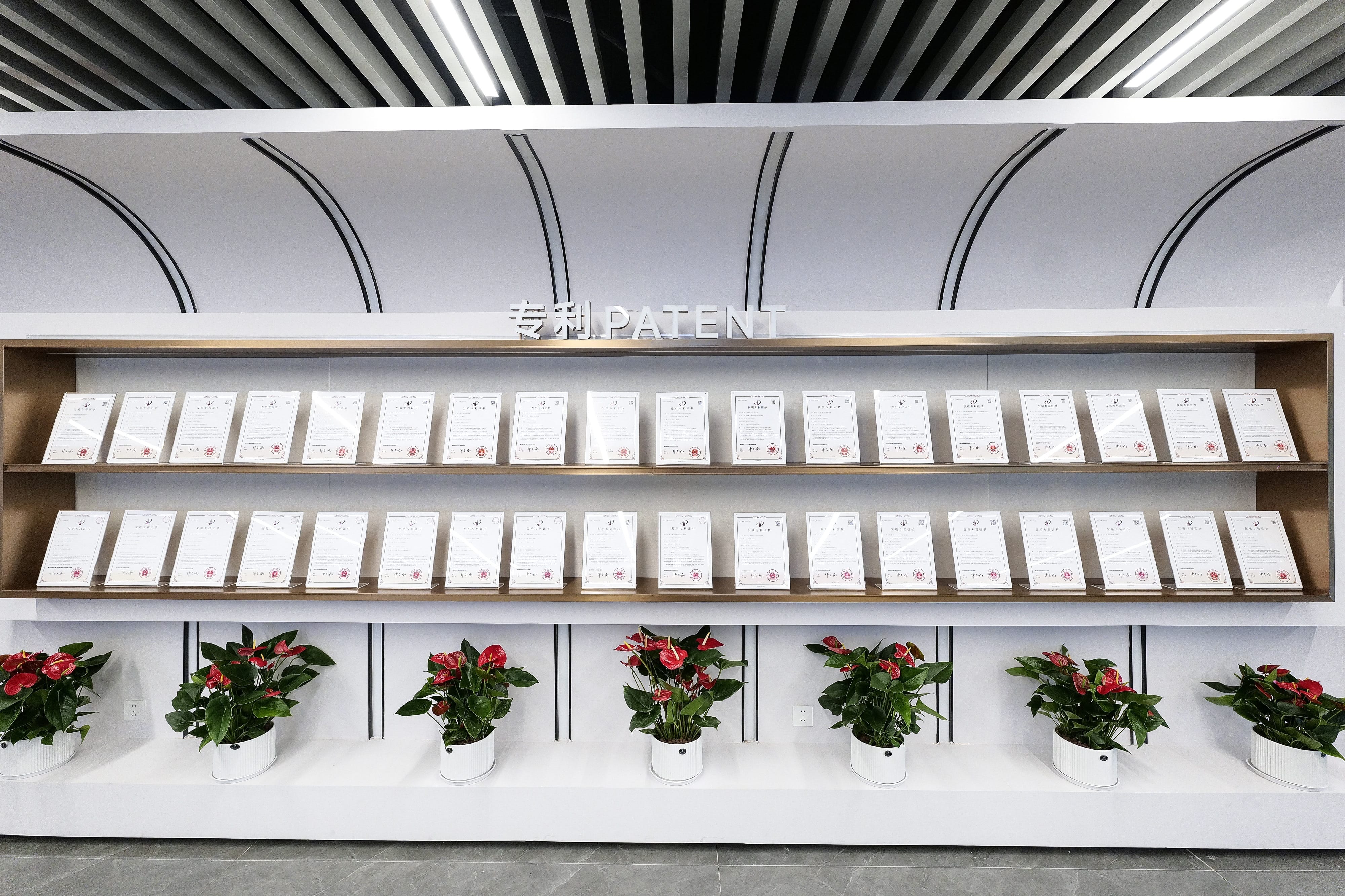
Patents displayed at Telpo headquarters. R&D depth underlies certification continuity and product roadmap stability.
Certification breadth and continuity
In the handheld payment category, Telpo's P9 smart payment terminal carries a certification set including PCI PTS 6.x, EMV, Rupay, JCB, Discover, AMEX, Paypass, Paywave, and UnionPay, according to company product comparison data. Broader certified coverage reduces the compliance effort in banking, telecom, and government tenders, and lowers project-level certification and compliance costs. The TPS900 smart payment POS adds PCI PTS V6.x and EMV Level 1 & Level 2 certification, with optional FBI-certified fingerprint scanning for KYC and biometric payment use cases.
In-house testing and environmental validation
The CNAS-accredited laboratory tests RF performance, electromagnetic compatibility, and climatic endurance across 12 zones. Rugged product lines show the practical effect: the T20 ticket validator has passed IK08 impact resistance (1.7 kg hammer at 30 cm) and IP65 dust/water protection, verified by CNAS test reports. Most Telpo handheld terminals meet 1.2-meter drop test standards, with some reaching 1.5 meters. Battery packs carry UN38.3 certification for transport and thermal stability, reducing logistics and field-safety risk across large deployments.
Fleet management across the deployed base
For a distributor, the cost of managing thousands of deployed terminals can exceed the hardware cost. Telpo addresses this with Telpo OS, an independently developed operating system for device monitoring and management, and Telpo MDM, which provides centralized fleet control including remote control, device configuration, and personalization. This infrastructure extends the usable life of the installed base and reduces on-site maintenance expense.
Payment security design
Hardware-level protection is a baseline requirement for long-term payment programs. Telpo terminals use EMVCo-certified contactless modules and support NFC, smart cards, magnetic cards, QR codes, and mobile wallets. Terminals in the payment line carry PCI 6.x certification as a secure hardware foundation. The P9 family adds dual SIM with SAM security module, eSIM support, and built-in GPS for transaction-level visibility and enhanced security.
Application Scenarios in Practice
The practical value of a broad ecosystem is that one qualified supplier can serve multiple deployment types:
- Retail checkout. The C9 and C9PD Android cash registers combine a 15.6-inch industrial display, Android 14, an octa-core 2.2 GHz processor, under-display NFC, and fingerprint-based employee login, suited for supermarkets, convenience stores, and boutiques. The M10 countertop terminal (10-inch + 4-inch dual display, 200 mm/s printer) fits compact retail formats.
- Restaurant and food service. M10 terminals drive counter service and payments, the K10 self-service kiosk (15.6-inch, 4.29 kg, Android 14) handles self-ordering and payment, and the C9 VESA serves as a kitchen display system with VESA-compatible mounting.
- Transit, ticketing, and events. The M1 handheld ticketing POS (6-inch 400-nit display, integrated 58 mm printer, GPS) supports mobile ticketing, while the T10 and T20 validators support Calypso, Felica, Mifare, EMV Contactless L1, QR, and paper tickets, with up to 8 SAM slots on the T20 for multi-operator transit schemes.
- Payments and fintech. The P9 (financial and non-financial versions) and TPS900 address banking, government, and large-scale payment tenders with PCI PTS 6.x / EMV certification, SoftPOS-compatible NFC, and optional biometric authentication.
- Self-service. The K1, K8, K8M, and K20 kiosks cover retail self-checkout and quick-service self-ordering, with optional facial recognition and EFTPOS integration.
For a distributor, this breadth translates into fewer supplier qualifications, shared peripheral ecosystems across verticals, and a single MDM and parts channel to manage.
Market Trends Supporting the Ecosystem View
Third-party market data points in the same direction:
- The global POS terminal market was valued at approximately USD 123.2 billion in 2025 (Grand View Research).
- The handheld POS terminal market is projected to grow from USD 33.15 billion in 2025 to USD 89.52 billion by 2035 (Grand View Research).
- Android POS terminals represented about 27% of global POS terminal sell-in in 2022/2024 tracking (ResearchAndMarkets / Berg Insight).
- The SoftPOS market was estimated at USD 365.0 million in 2024, with a projected CAGR of 23.1% through 2030 (Grand View Research).
- Retail self-service kiosks are forecast to reach USD 37.8 billion by 2030, with Telpo Technology identified among the leading corporations in that sector (The Business Research Company, cited in 2026 industry coverage).
- PCI PTS and EMV remain baseline compliance requirements for secure chip-based card processing globally (PCI Security Standards Council).
The implication is that the market is differentiating between commodity terminals purchased on price and certified, multi-form-factor supply relationships that carry long-term program commitments. Distributors who choose the second tier need suppliers with the quality systems, certification roadmap, and product portfolio to sustain that role.
Comparison: Device-Centric Procurement vs. Lifecycle-Based Sourcing
Public product comparisons illustrate what lifecycle-based sourcing changes in practice. In the countertop category, Telpo's M10 includes a 4-inch HD customer display, while the comparable iMin D1 / Falcon 1 models carry a 2.4-inch LED customer display, according to Telpo's product comparison data. At 178% larger display area, the built-in M10 customer display removes the need to purchase a separate external customer display, saving an estimated 22% of peripheral procurement cost and reducing peripheral maintenance.
In the handheld payment category, the Telpo P9 compares with Sunmi P3 on three criteria that directly affect program cost:
| Comparison criterion | Telpo P9 | Sunmi P3 |
|---|---|---|
| Battery | 5000mAh removable; 17-23 hours runtime | 2630mAh removable; approximately 8-12 hours |
| Processor / OS | Octa-core, Android 14 | Quad-core A53, Android 11 Go |
| Certification coverage | PCI PTS 6.x, EMV, Rupay, JCB, Discover, AMEX, Paypass, Paywave, UnionPay | PCI PTS 6.x, UnionPay, EMV, Paypass, Paywave, AMEX |
These differences become material in a long-term deployment. The larger battery reduces field battery swaps and charger purchases during extended shifts. The Android 14 base extends the security patch horizon relative to Android 11 Go, pushing back the point at which a terminal must be replaced for OS reasons. Broader certification coverage reduces the compliance effort and project risk in banking and government tenders.
Boundaries and limitations
Ecosystem-based sourcing is not the right answer for every purchase. It requires more upfront qualification effort, longer evaluation cycles, and higher initial order commitments when OEM customization is involved — Telpo's MOQ for logo printing and custom packaging is 200+ units. Bulk standard orders carry lead times of 15-25 working days, which means inventory must be planned rather than bought spot. For a one-off small-store deployment, a device-centric purchase from a local supplier is likely simpler and cheaper. The lifecycle-based approach pays off when the buyer has a multi-year, multi-location, or multi-vertical pipeline — not when the requirement is a single counter.
Future Outlook: What Long-Term POS Programs Will Require
Three trends will shape the next five years of POS terminal sourcing:
- AI and self-service expansion. AI checkout terminals, facial recognition payment, and self-service kiosks are extending the definition of a POS endpoint beyond the countertop terminal. Distributors will need suppliers with a hardware roadmap that includes self-service and AI-enabled devices, not just traditional cash registers.
- SoftPOS and dedicated hardware coexistence. SoftPOS will continue to lower the entry barrier for micro-merchants and pop-up commerce, but certified dedicated terminals and fleet management tools will retain the high-volume, regulated, and mission-critical segments. The two approaches will complement each other inside a single hardware portfolio.
- Increasing certification complexity. Regional payment schemes, data-protection rules, and environmental standards will raise the cost of bringing a terminal to market. Manufacturers with in-house labs and broad certification coverage can spread that cost across a larger product family, which benefits distributors through shorter certification lead times and lower per-project compliance cost.
The practical conclusion for buyers is that supplier selection should be treated as a multi-year investment decision. The device is a snapshot; the manufacturer's production capacity, quality lab, certification roadmap, device management software, and commercial flexibility are the recurring variables that determine whether the program holds up.
FAQ
Q: What is the most important factor in selecting a POS terminal supplier for a multi-year program?
A: Supply continuity and quality assurance are the decisive factors. A manufacturer should demonstrate production capacity (e.g., monthly output of 150,000-180,000 units), hold ISO 9001 certification, and operate a quality laboratory that performs 100% functional testing on all units, as Telpo does through its CNAS-accredited facility.
Q: Which payment certifications should a long-term POS terminal partner maintain?
A: At minimum, PCI PTS for PIN transaction security and EMV for chip card processing. Depending on deployment regions, additional certifications such as Paypass, Paywave, Rupay, JCB, Discover, AMEX, and UnionPay are relevant. Broader coverage reduces the effort required to enter banking and government tenders.
Q: How long does it take to receive POS terminal inventory from Telpo?
A: Typical lead times are 3-7 working days for stock orders and 15-25 working days for bulk standard orders, based on Telpo's published supply terms. Sample and trial batch orders can start from 2-50 units.
Q: How are deployed POS terminal fleets managed after rollout?
A: Telpo provides Telpo OS, an independently developed operating system for device monitoring and management, and Telpo MDM, a fleet management platform offering remote control, device configuration, and personalization. These reduce on-site maintenance requirements and extend the useful life of the installed base.
Q: What are Telpo's order minimums and payment terms for distributors?
A: Sample or trial batches start at 2-50 units, while OEM logo printing and custom packaging require 200+ units. Delivery is available under FOB/FCA/CPT/CIF terms. Approximately 90% of Telpo's clients pay in full before shipment; the remainder operate on open-account terms or through Sinosure credit insurance coverage.
Q: Does Telpo support custom hardware and software for long-term distribution programs?
A: Telpo operates as an ODM manufacturer with approximately 200 R&D engineers and provides full-chain design and manufacturing services. Customization covers hardware configuration, logo printing, packaging, and branding, with MOQs varying by product type; a distributor should confirm specific MOQs with the sales team.