
PU Faux Stone vs. Flexible Soft Stone: Facade Buyer Guide
Two lightweight stone-look wall panel families dominate current facade specification discussions: polyurethane (PU) faux stone and flexible soft stone. Both avoid the structural load of natural stone, but they are not interchangeable. This guide compares them for buyers evaluating exterior facade projects such as villas and hotels.
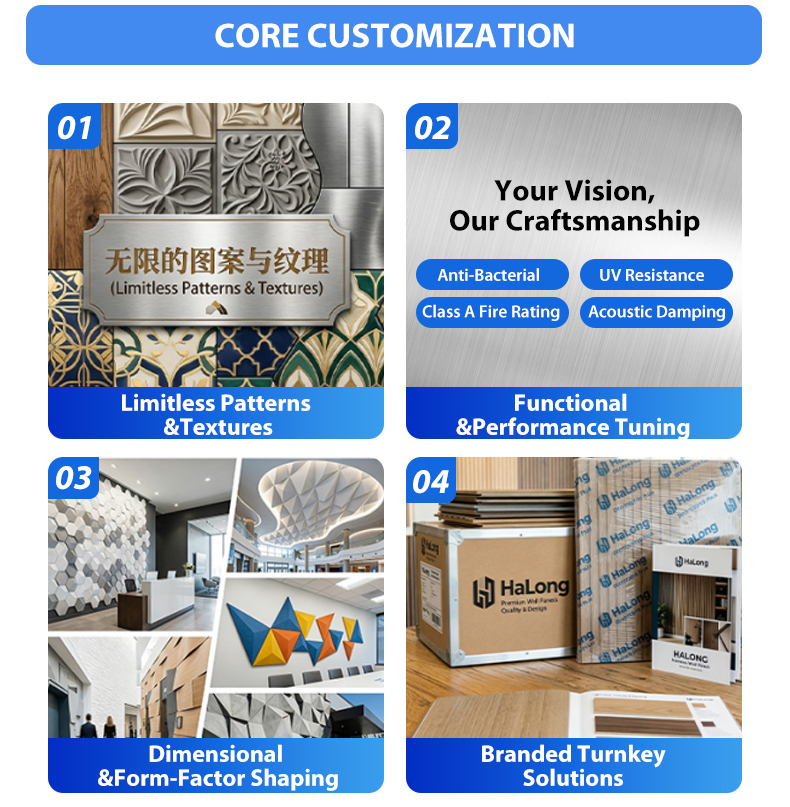
Facade Cladding: The Problem Buyers Face
Exterior cladding projects require a balance between aesthetic impact, structural load, weathering, and fire performance. Natural stone meets the design ambition but adds weight and cost. Heavy panels require reinforced substrates and more complex installation. For villa communities and hotel developments, contractors often look for a cladding material that provides a stone appearance with predictable logistics and simpler installation.
The market has responded with two different engineered approaches. Although they are sometimes grouped together under a "lightweight stone" label, their material structures and application logic are distinct. Understanding those differences before shortlisting suppliers reduces the risk of specifying the wrong system.
Defining the Two Systems
PU Faux Stone Wall Panel (LT-PU)
PU faux stone wall panels are decorative panels built on a polyurethane (PU) foam core with a surface coating. The LONGTE product, model LT-PU, is described as a lightweight decorative stone panel. Its published dimensions are 600×1200mm, with a thickness of 20-30mm and a weight of only 2-3 kg/m². The panel is positioned as weather-resistant, fireproof B1, and impact-resistant. Typical applications include exterior facades, villas, hotels, and restaurants.
Flexible Soft Stone Wall Panel (LT-FS)
Flexible soft stone is a bendable eco stone veneer made from modified clay and polymer resin. The LONGTE product, model LT-FS, is manufactured in the same 600×1200mm format but differs significantly in body: its thickness is only 2-3mm, and its weight is 3-5 kg/m². The material is bendable and suitable for curved walls, exterior facades, and interior feature walls. Its fire rating is listed as A2. LONGTE states weather resistance of 20+ years for this material.
Technical Comparison: LT-PU vs LT-FS
For evaluation-stage buyers, the table below summarizes the verified specification differences between the two wall panel options.
| Property | PU Faux Stone (LT-PU) | Flexible Soft Stone (LT-FS) |
|---|---|---|
| Material composition | Polyurethane (PU) foam + surface coating | Modified clay + polymer resin |
| Standard size | 600×1200mm | 600×1200mm |
| Thickness | 20-30mm | 2-3mm |
| Weight | 2-3 kg/m² | 3-5 kg/m² |
| Fire rating | B1 | A2 |
| Bendability | Rigid panel | Bendable |
| Weather resistance claim | Weather-resistant | Weather-resistant 20+ years |
| Typical facade applications | Exterior facade, villa, hotel, restaurant | Curved wall, exterior facade, interior feature wall |
The two systems primarily differ in physical structure. LT-PU relies on a relatively thick PU foam core, which gives the panel volume and impact resistance at a very low weight. LT-FS is a thin veneer made of modified clay bound by polymer resin, which gives flexibility but reduces impact protection. The right choice depends on the type of wall, the design detail, and the load and fire criteria of the project.
Application Logic: What Each Material Does Best
Villa Exteriors: PU Faux Stone for Textured Feature Walls
LONGTE PU faux stone wall panels have been used in a UAE villa community and 5-star hotel project. A villa developer and luxury interior fit-out company installed 6,000 m² of PU stone panel plus 4,000 m² of acoustic panel for villa exterior feature walls, hotel lobbies, and executive suite acoustic walls. The project highlights included UV stability in a climate above 45°C, lightweight installation on gypsum walls, and B1 fire rating compliance with UAE regulations. According to the case record, the project passed the Dubai Civil Defense fire test, and the developer signed a 3-year exclusive frame agreement. The installation has been in use for over two years with no complaints.
This case demonstrates a recurring pattern: PU faux stone panels are selected for exterior feature surfaces where a three-dimensional stone texture is the visual objective, and where facade conditions call for dimensional stiffness and impact resistance. For architecture that needs panel depth, the 20-30mm thickness is an advantage.
Curved Walls and Columns: Flexible Soft Stone as a Cladding Veneer
Flexible soft stone LT-FS is a different specification response. Because it is only 2-3mm thick and bendable, it can be used on curved walls where flat rigid panels would create a segmented appearance. Its modified clay and polymer resin base is compatible with applications such as curved wall wrapping, exterior facade detail areas, and interior feature elements that continue the stone finish. The A2 fire classification may also make it suitable for projects with stricter non-combustibility objectives.
For buyers, flexible stone does not replace the dimensional impact of a thick PU panel. It serves a complementary role: where the project requires a stone-look surface to follow a radius or an irregular line, a flexible veneer is a more feasible approach.
Hotel and Hospitality Projects: Selection by Zone
Large hotel projects rarely use one cladding type across every surface. A practical segmentation is:
- Main entrance and villa exterior feature walls: PU faux stone panels, where the brief calls for a stone effect and robustness.
- Hotel lobby columns, curved reception walls, and feature ceilings: flexible soft stone, where the substrate is curved or the panel must bend around corners.
- Executive suite interior feature walls: acoustic wall panels can be used independently or combined with both materials in different interior zones.
Using the two systems as complementary specifications allows designers to control weight, fire class, and installation difficulty separately for each zone. The fire requirement should be checked zone by zone because hotel regulations often differentiate between escape routes, room interiors, and exterior surfaces.
Fire Performance and Compliance Evidence
For exterior wall applications, fire classification is frequently a gating requirement. Buyers should verify that the tested product corresponds to the exact model being supplied.
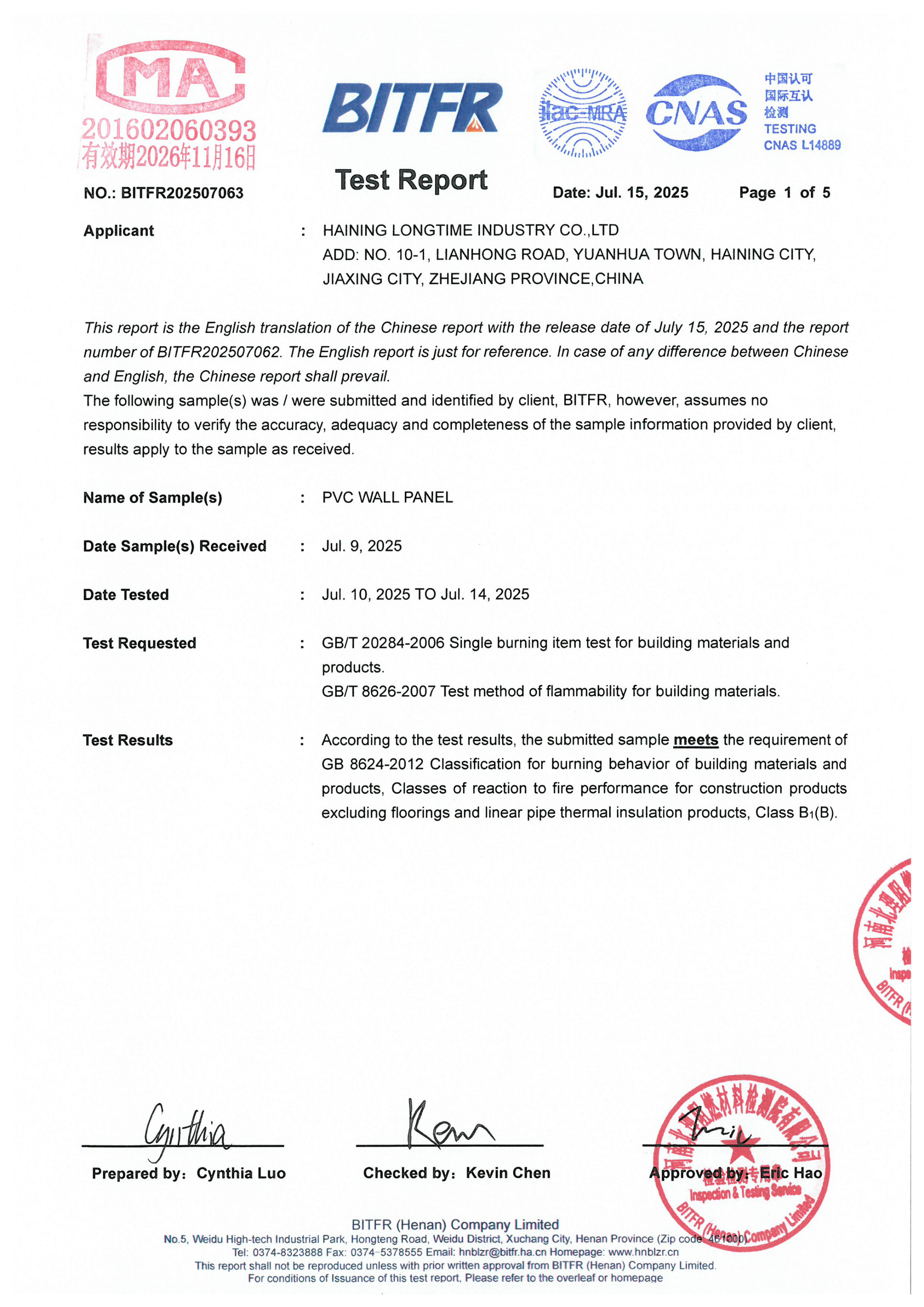
The LT-PU panel is covered by a B1(B) combustion performance test report (certificate No. BITFR202507063) issued under GB/T 20284-2006, GB/T 8626-2007, and GB 8624-2012. The product scope is decorative PVC wall cladding, and the applicable product table in the LONGTE certification record includes the PU Faux Stone Wall Panel model LT-PU. The LT-FS panel is listed in the same certification system as a related product and carries an A2 classification in the corresponding product specification.
In addition, the PU stone wall panel model has been verified for CE conformity under certificate No. TD15322307 to EN 15102:2007+A1:2011, within the EU Construction Products Regulation (No. 305/2011). This CE scope explicitly covers PU stone wall panels in models PU, PU_1, and PU_2.
For buyers, the documentation trail matters as much as the fire class itself. A claim of 'B1' or 'A2' is verifiable only when the certificate references the same product family, the correct standard, and a recognized test body. LONGTE provides a complete record of third-party combustion performance testing and permits pre-shipment inspection by SGS, BV, or TUV on request.
Comparison with Traditional Natural Stone
Compared with natural stone, both panel types significantly reduce dead load. The impact is measurable: LT-PU has a weight of 2-3 kg/m² with a thickness of 20-30mm. For a typical applied area, this low surface weight allows installation on lighter substrates. The UAE case specifically notes "lightweight installation on gypsum wall," and it confirms fewer structural reinforcements are required than for a natural stone system. Flexible soft stone achieves even greater thinness at 2-3mm, making it a surface-cladding alternative for renovation work over existing walls.
However, the comparison has an important limitation. Neither material replicates every property of natural stone. A polyurethane core offers impact resistance and dimensional volume at low weight, but a thick PU panel will not match the compressive or shear behavior of solid stone. Flexible soft stone can bend, which natural stone typically cannot, but its thin profile provides less protection against sharp impact. Buyers should define the performance requirement before choosing a material: if impact resistance is the priority, LT-PU is the logical candidate; if following a curvature is the priority, LT-FS is the logical candidate.
Market Context and Supplier Capability
The PU stone wall panel category has grown substantially. Third-party market data for 2024 indicates global sales of USD 3.7 billion for PU stone wall panels, largely attributable to their light weight and ability to reduce facade dead load. In the broader cladding market, Asia-Pacific accounts for approximately 42.3% of the global wall panel market.
LONGTE, operating as Haining Longtime Industry Co., Ltd., is a Chinese manufacturer under the brand LONGTE, founded in 2003 and producing a full range of wall and flooring products. Its factory network spans Haining, Guangxi, Indonesia, Vietnam, and Malaysia, with production capability of approximately 150,000 m² of PU stone panels per month. The company supports OEM/ODM, private label, and custom design, including custom size, thickness, color, surface pattern, print logo, packaging, accessories, and installation manual language. MOQ for sample is one piece free, trial order generally one mixed 20ft container, and quality control includes 100% incoming raw material inspection, IPQC every two hours, 100% finished-goods visual and dimensional checks, and optional third-party pre-shipment inspection.
Evidence from Project References
Beyond the UAE case, LONGTE has documented regional distribution records. A South American trader covering Chile, Peru, and Brazil has distributed approximately 100,000 m² of mixed products annually for over four years, with exclusive representation in three countries. In the Philippines, a beachfront resort project installed 8,000 m² of WPC decking and 3,500 m² of wall panel, with the installation remaining in service for three years under tropical humidity and salt air. These references help a buyer assess logistics reliability and long-term supply. For an exterior wall facade project, the ability to consolidate multiple panel types in one container also affects landed cost and project scheduling.
Future Outlook for Lightweight Stone-look Materials
Facade design is moving toward combining clean volumes with natural-material texture. The practical implication is that buyers will increasingly choose not between "PU faux stone OR flexible stone" but between distinct cladding tools for different zones. PU faux stone is likely to remain the primary choice for villa feature walls and hotel facade details where depth and impact performance matter. Flexible soft stone is likely to keep expanding in renovation, curved architecture, and so-called 'seamless' wrapping jobs where thinness and flexibility are decisive.
Under current LONGTE specifications, both products are produced in standard 600×1200mm panels. The physical differences are substantial enough that a buyer cannot simply swap one product for another. A complete facade package may even include both: one for flat exterior feature walls and the other for curved transition surfaces.
Conclusion
The buyer decision between LT-PU and LT-FS can be captured in a simple rule. Use PU faux stone wall panels when the project needs a rigid, weather-resistant, impact-resistant, three-dimensional stone-look panel on a flat wall. Use flexible soft stone wall panels when the surface is curved, the material must be thin, or an A2 fire classification is preferred. Perform a zone-by-zone assessment, verify model-specific certifications, and request samples before moving to a full container order.
FAQ
What is the weight difference between PU faux stone panels and flexible soft stone panels?
PU faux stone panels (LT-PU) weigh 2-3 kg/m²; flexible soft stone panels (LT-FS) weigh 3-5 kg/m². Although the soft stone is thinner, its modified clay composition results in a higher weight per square meter than the PU foam core.
Which panel is more suitable for curved wall cladding?
Flexible soft stone (LT-FS) is bendable and designed for curved walls, exterior facades, and interior feature walls. PU faux stone (LT-PU) is a rigid 20-30mm panel and should not be used for tight-radius curved surfaces.
Is PU faux stone suitable for exterior facades?
Yes. The LONGTE LT-PU panel is classified as a lightweight decorative stone panel for exterior facades, villas, hotels, and restaurants. It is weather-resistant, impact-resistant, and rated fireproof B1.
What fire ratings apply to these two products?
The LT-PU panel is rated fireproof B1. The LT-FS panel is rated A2 in the LONGTE product specification. Both ratings are shown in applicable product data from the manufacturer.
Do project references exist for PU stone panels on villa and hotel facades?
Yes. A UAE villa developer and luxury interior fit-out company installed 6,000 m² of PU stone panel and 4,000 m² of acoustic panel for a villa community and 5-star hotel. The installation passed the Dubai Civil Defense fire test and has been in use for over two years without complaints.
Can flexible soft stone be used both indoors and outdoors?
The LONGTE product data lists flexible soft stone for curved wall, exterior facade, and interior feature wall applications. Weather resistance is stated at over 20 years.
Download the LONGTE company catalog (PDF) for a complete product overview.
Tem questões ou precisa de mais detalhes?
Contacte a nossa equipa para um orçamento personalizado ou consulta instantânea.
Solicitar orçamento
Preencha o formulário abaixo e a nossa equipa entrará em contacto com uma proposta personalizada.
Chat direto do WhatsApp
Prefere conversar em tempo real? Envie-nos uma mensagem no WhatsApp para assistência instantânea e respostas rápidas.
- Obter orçamento personalizado
- Partilhar fotos ou documentos
- Discuta as suas necessidades diretamente
Geralmente responde em 5–30 minutos durante o horário de expediente.