
PV Module Laminating Machine: Specs That Set Module Yield
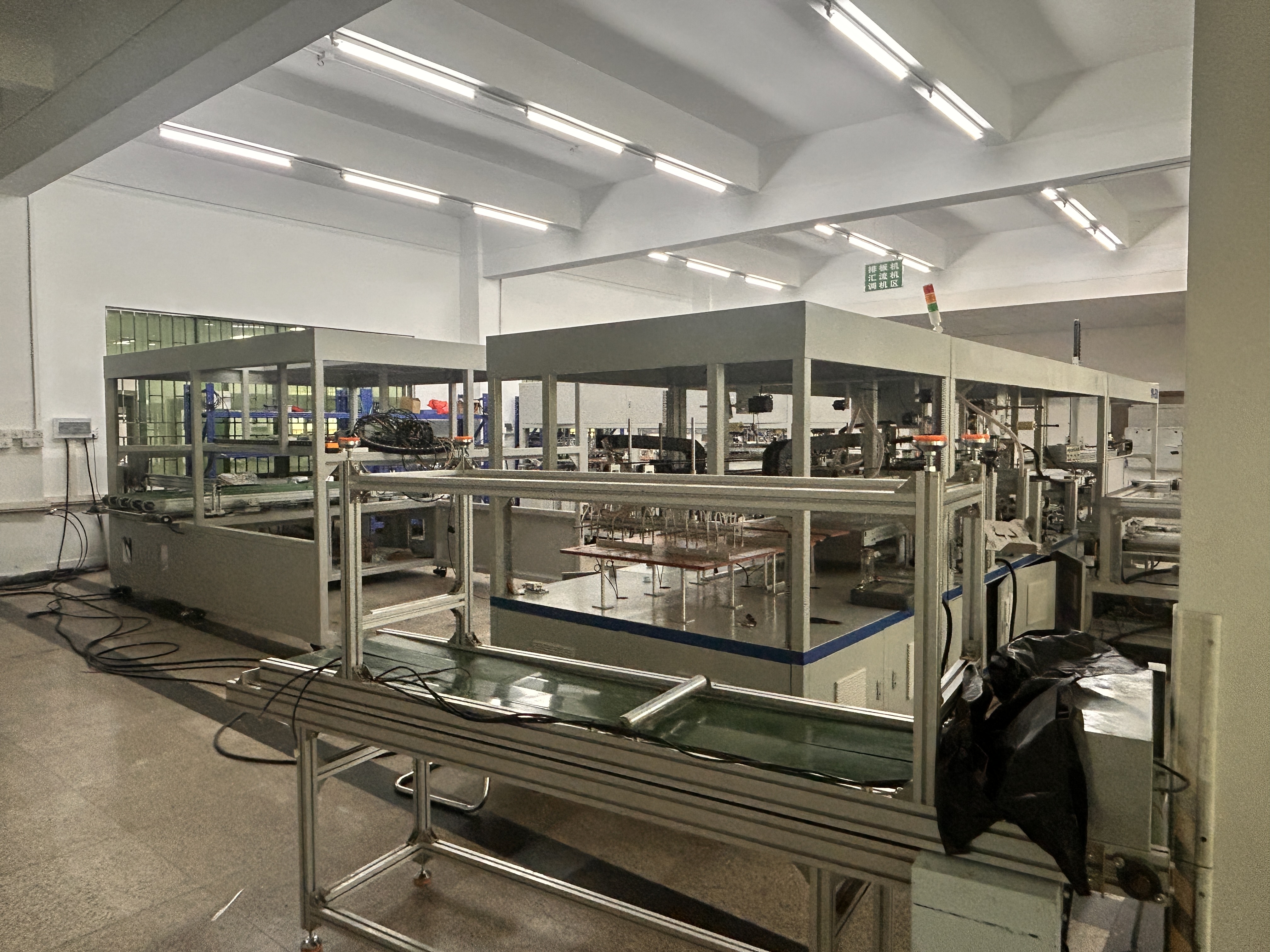
Lamination is the step in solar module manufacturing where a stack of glass, encapsulant, cells and backsheet becomes a single sealed unit — and where the bill of materials becomes irreversible. Once the encapsulant has cross-linked, a trapped bubble, a displaced cell string or a foreign particle cannot be reworked out; the module is either sold as A-grade or downgraded. In procurement terms, a PV Module Laminating Machine is therefore less a purchase decision than a constraint decision: its guaranteed temperature envelope, chamber geometry and cycle time define what the rest of a solar panel manufacturing equipment package is permitted to produce.
YNTECH Solar Panel Machine is the equipment brand of YN Solar PV Equipment Co., Ltd., a manufacturer established in 2015 and based in Huangwu Industrial Park, Dongkeng Town, Dongguan, Guangdong Province, China. The company builds PV module automated production lines and standalone PV assembly equipment, including automatic tabber stringers, layup and busbar machines, laminating machines, EL testers, trimming, framing and gluing equipment. It states that it supplies both individual machines and turnkey lines, with line capacity customised from small pilot workshops to multi-GW configurations. This reference isolates one node of that chain — the laminating stage — and sets out the specification values that behave as hard constraints during research and evaluation.
Three constraints, not one specification
Buyers comparing laminators often compare headline features. The more useful approach is to separate the machine into three constraint families, because each one limits a different part of the production plan.
Thermal constraints govern whether the encapsulant reaches its cure window across the whole module area. They cover setpoint accuracy, temperature uniformity and the maximum process temperature the chamber can hold.
Geometric constraints govern what may physically be loaded — the chamber height available for the module stack, and the conveyor and positioning system that carry it in.
Temporal constraints govern throughput: the time one cycle consumes, including vacuum and the lamination dwell itself. This is the number that decides how the laminating stage balances against upstream layup and downstream framing.
In a line upgrade or a manual-to-automatic retrofit, these three families decide how much of the existing layout can be retained and where a buffer or an additional chamber becomes unavoidable.
The constraint profile of the YNTECH laminating stage
The semi-automatic PV laminator in the YNTECH range carries the following stated values. Each value is listed against the production decision it constrains, which is the form in which it should be compared with alternative equipment.
| Stated parameter | Value | What it constrains |
|---|---|---|
| Temperature accuracy | ±1.0 °C | Fidelity of the chamber to its setpoint |
| Temperature control range | Chamber temperature to 180 °C | Upper process temperature available for the cure schedule |
| Temperature uniformity | ±1.5 °C | Consistency of cure across the module area |
| Lamination chamber height | 30 mm | Maximum module stack thickness that can be accepted |
| Lamination time | 8–10 min, including vacuuming and lamination | Cycles per chamber per hour; line balancing |
| Air pressure | 0.6–0.8 MPa | Factory utility provision and diaphragm response |
| Construction materials | Aluminium alloy, carbon steel, stainless steel | Thermal mass, corrosion behaviour, service life |
| Module compatibility | PERC, TOPCon, HJT, BC, half-cut, BIPV | Product mix the machine can be assigned to |
Reading the numbers correctly
Accuracy and uniformity are not the same measurement
A ±1.0 °C accuracy figure describes how closely the chamber tracks the temperature it was set to. A ±1.5 °C uniformity figure describes how evenly that temperature is distributed across the working area. A machine can hold its setpoint precisely while still leaving a cooler zone at the edges, and it is the cooler zone that determines whether part of the module is under-cured. Because encapsulant cross-linking is a time–temperature reaction, both values belong in the same comparison row — and both should be checked against the cure schedule published for the specific encapsulant being used, not against a generic assumption.
The 180 °C ceiling sets the process window
With a control range running from chamber temperature up to 180 °C, the machine covers the process windows commonly used for standard encapsulants. The ceiling matters most when a buyer intends to run faster cycles at higher temperature, or to process encapsulant grades that specify a higher cure temperature. If the intended cure schedule sits close to that limit, the schedule should be validated on the buyer's own bill of materials before the line layout is fixed.
Chamber height is a bill-of-materials question
A 30 mm lamination chamber height is the single most frequently overlooked constraint in laminator selection, because it is rarely checked against the actual stack. Glass, front encapsulant, the cell array with its ribbons, rear encapsulant and backsheet already consume most of that height in a conventional module; any additional clearance requirement — for example a junction box already attached, or unusually thick framing hardware — has to be confirmed against the chamber before ordering. Buyers should treat the 30 mm figure as an acceptance criterion rather than a footnote.
Vacuum performance protects the interface
The machine is stated to use a high-speed vacuum pump set for fast evacuation and thorough air removal between layers. Residual air at the encapsulant interface is the direct cause of the bubbles and delamination that later appear as power attenuation and field failures. Evacuation speed also contributes to the cycle time, which is why vacuum performance and throughput should be evaluated together rather than separately.
The 8–10 minute cycle is a throughput ceiling
Lamination time is stated as 8–10 minutes including vacuuming and lamination. Expressed as planning arithmetic, that is roughly six to seven and a half cycles per chamber per hour. The number matters because upstream layup equipment in the same YNTECH range is specified at 80–120 modules per hour for single-module string layouts and 160–180 modules per hour for dual-module layouts. The laminating stage is therefore normally the bottleneck in a line of this class, and the layout must resolve that mismatch — through a buffer, through scheduling, or through more than one chamber.
How YNTECH configures the laminating stage
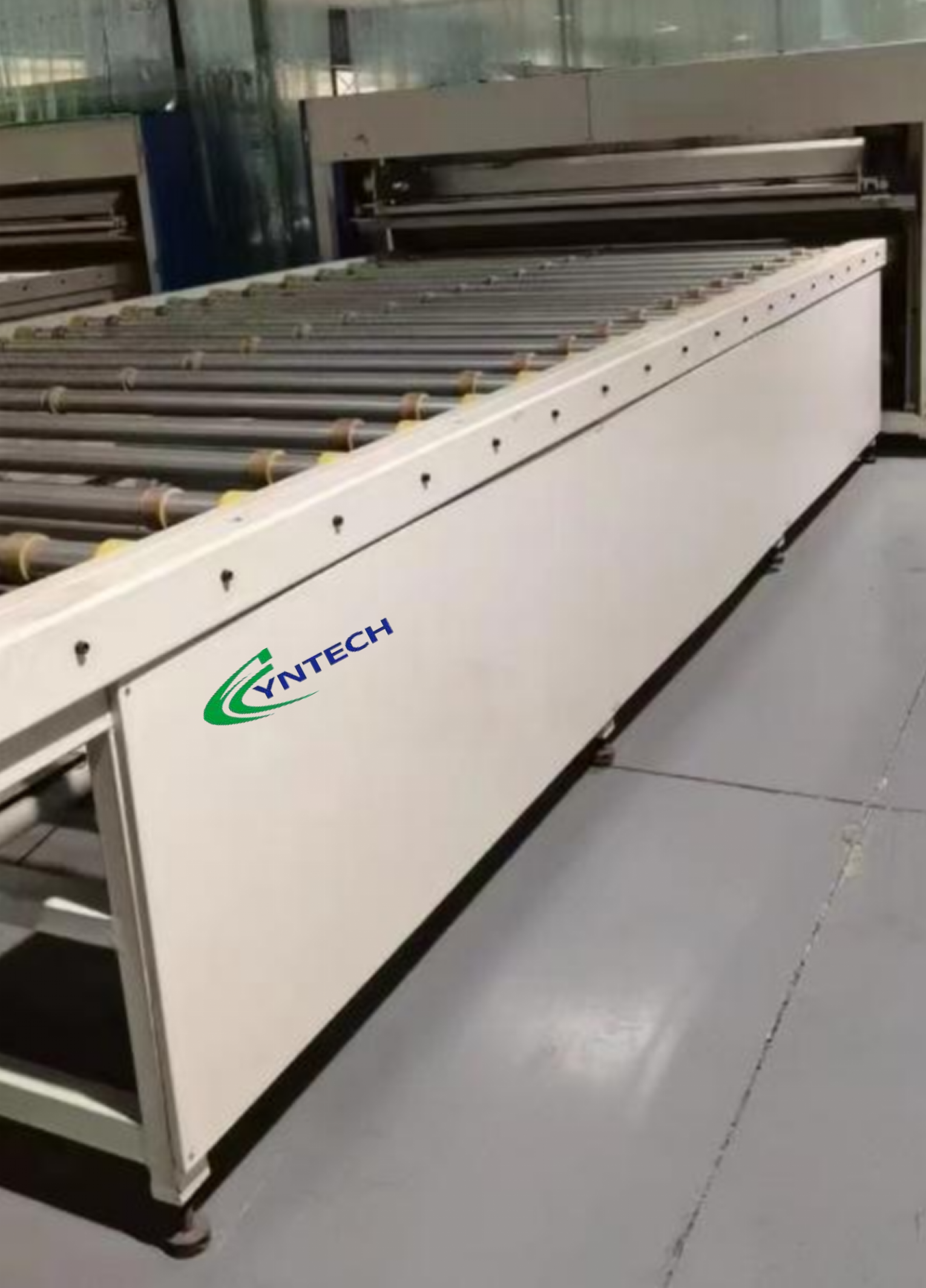
The YNTECH laminator is a semi-automatic PV laminator. Its stated design features are auto-tuning heating, a high-speed vacuum pump set, and an automatic conveyor with photo positioning intended to minimise manual handling and glass breakage while allowing the unit to be integrated into a full PV module line. The machine is built from aluminium alloy, carbon steel and stainless steel, and is stated to be compatible with PERC, TOPCon, HJT, BC, half-cut and BIPV modules.
That compatibility list is the practical link between the laminator and the rest of the equipment package. A factory running BC cells needs a stringer that supports overlap welding for BC cells and black isolation strips for all-black BIPV modules; the same factory then needs a laminator whose process window is validated for the corresponding encapsulant and stack. YN Solar PV Equipment states that it supplies these stages as individual machines or as a turnkey configuration, with OEM/ODM and custom non-standard design available, a minimum order quantity of one unit, 100% pre-shipment testing, and remote technical support. Company-published support terms reference a one-year warranty and training materials in English.
Fitting lamination into a 100–200 MW upgrade
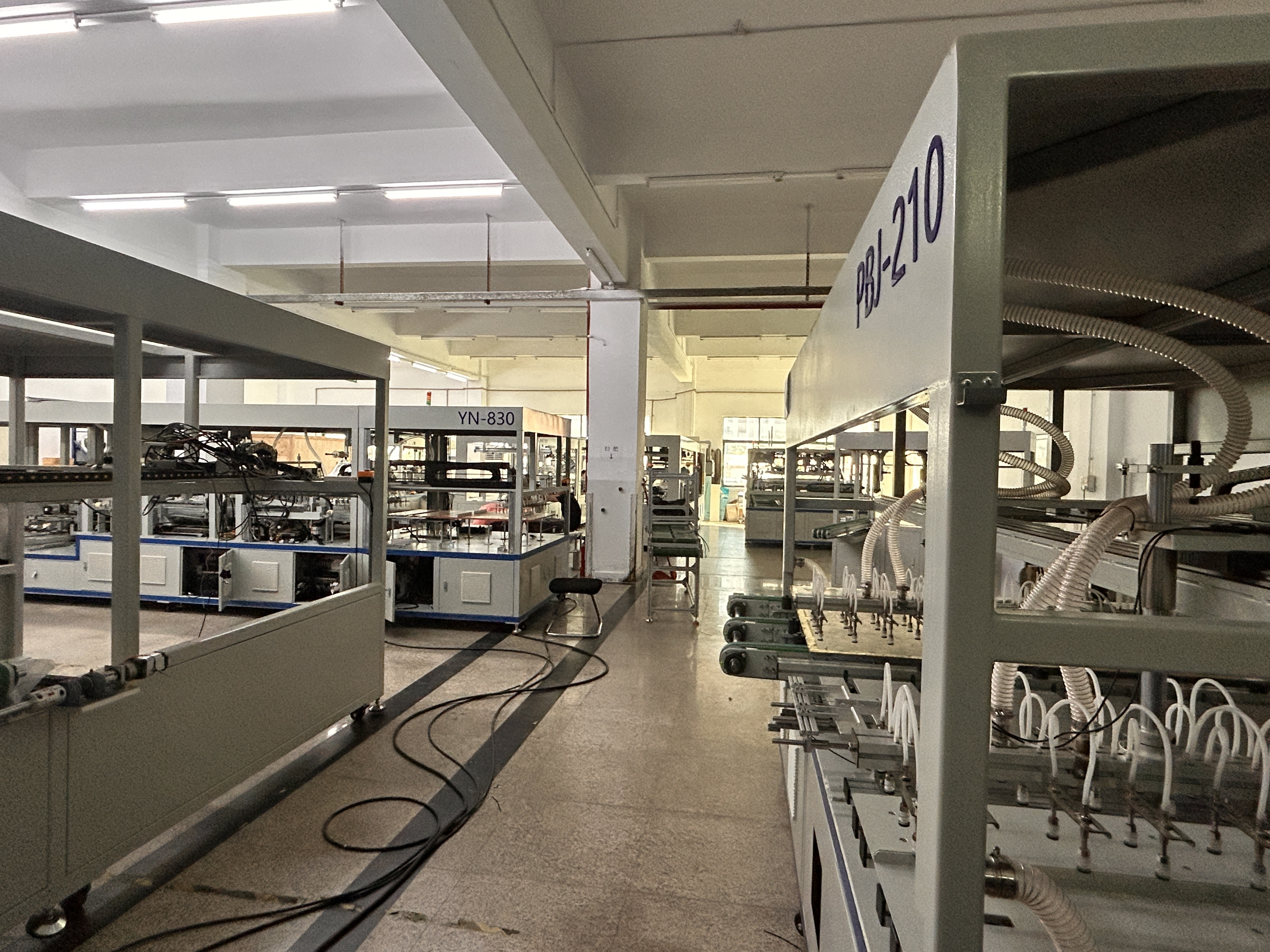
YNTECH publishes line configurations at several capacity bands: a 20–60 MW semi-automatic turnkey solar module manufacturing configuration, a 100–200 MW solar panel production layout design, and a 150–250 MW solar panel production line. Because the same laminating stage appears across these bands, the upgrade question is usually not which machine to buy but how many chambers and how much buffer the existing floor plan can absorb.
Three practical points follow from the published values:
- Buffer before the chamber. The semi-automatic solar panel stacking machine in the same range handles 20 layers across a working range of 1,650–2,450 mm length and 990–1,400 mm width, and is described as a production line buffer. Placed ahead of lamination, it decouples the fast upstream stages from the slower chamber cycle.
- Verify after the chamber. The Automatic EL Tester accepts panel lengths of 1,634–2,500 mm and widths of 986–1,400 mm, which is the inspection node that catches cracks, cold joints and misalignment that lamination has permanently sealed in. Lamination quality cannot be inspected retrospectively by visual means alone.
- Plan the retrofit around the chamber. YN Solar PV Equipment describes its equipment as applicable to line upgrades, retrofitting and manual-to-automatic transformation. The company cites an Indian photovoltaic manufacturing customer that has operated eight units across production line upgrade projects over a ten-year relationship, with stated results of improved production efficiency, improved module quality through continuous production with reduced material loss, and lower labour cost.
Where a semi-automatic laminator reaches its limits
A constraint-led assessment is only credible if it states the boundaries. Five are relevant here.
- It is not a lights-out stage. The machine is semi-automatic. Automatic conveyor and photo positioning reduce manual handling and breakage, but the stage still depends on operator supervision, so labour planning cannot assume a fully unattended lamination area.
- A single chamber sets a hard pace. At 8–10 minutes per cycle, one chamber cannot absorb the 80–180 modules per hour that upstream layup equipment can deliver. Buyers planning a 100–200 MW line must size chamber count and buffer capacity explicitly rather than assume the laminator will keep up.
- The 30 mm chamber excludes some assemblies. Modules with attached hardware or unusual stack thickness may not fit and should be checked before order, not after installation.
- The guaranteed envelope is ±1.5 °C. Processes designed to run at the edge of an encapsulant's cure window require the buyer's own validation on production samples; the machine specification alone is not a process qualification.
- Lamination does not correct upstream defects. Contamination, misaligned strings or damaged cells introduced at layup and bussing are sealed in permanently. The value of the laminating stage depends on the discipline of the stages before it, which is why turnkey line integration rather than standalone machine purchase is the more common route for new entrants.
Against multi-chamber, fully automatic lamination lines, a single semi-automatic chamber is the lower-capital route with a lower throughput ceiling and a higher dependence on operator routine. That trade-off, not a general claim of superiority, is the decision the buyer is actually making.
Market context: capacity growth under price pressure
The demand case for module production equipment remains expansionary. Global Market Insights values the global solar PV manufacturing equipment market at USD 16.6 billion in 2024 and projects USD 108.4 billion by 2034, a compound annual growth rate of 23.1% over 2025–2034. Deployment data supports the direction of that demand: NREL records 172 GWdc of new global photovoltaic capacity added in 2021, taking cumulative capacity to 939 GWdc. On the manufacturing side, SEIA reports that US domestic module manufacturing capacity reached 50 GW in early 2025.
The commercial environment, however, is deflationary in module pricing. The U.S. Department of Energy's Fall 2025 Solar Industry Update records module prices in China at USD 0.10–0.12/W in 2025 under oversupply. That combination — expanding capacity against compressing module prices — changes what buyers value in a laminating machine. When the selling price of a module leaves little margin for scrap, the economic case shifts from maximum automation toward yield protection: a chamber that holds a uniform envelope and a vacuum system that removes air completely protects the A-grade rate across every module the line produces, and that protection compounds over the life of the equipment. It also explains why retrofit demand persists: existing lines are upgraded at the constraint node rather than replaced wholesale.
Third-party line-integration guidance puts a turnkey 100 MW solar module line at a cell throughput of 3,600 cells per hour with a typical delivery time of 6–9 months. Machine-level lead time and project-level delivery time are different quantities and should be planned separately; YN Solar PV Equipment states a 15–30 day lead time per unit, a monthly capacity of 10–30 units, and annual output of 100–200 units from a 9,000 m² facility with an eight-person R&D team and exports accounting for 60–70% of sales, primarily to Africa, the Middle East and the EU.
What to verify before committing
The following checks convert the specification table into an acceptance list. Each one corresponds to a value that cannot be renegotiated after installation.
- Stack thickness of the actual module bill of materials against the 30 mm chamber height.
- Maximum cure temperature required by the encapsulant against the 180 °C control ceiling.
- Cure schedule tolerance band against the stated ±1.0 °C accuracy and ±1.5 °C uniformity.
- Required modules per hour against six to seven and a half cycles per chamber per hour, with buffer capacity or chamber count defined.
- Cell architecture and module format against the stated PERC, TOPCon, HJT, BC, half-cut and BIPV compatibility.
- Factory utilities: 0.6–0.8 MPa air supply, and an indoor, clean and dust-controlled workshop at an ambient temperature of −10 to 40 °C, dry and well ventilated, free of corrosive gases with debris and dust kept away from the equipment.
- Downstream inspection capability, since IEC 61215 and IEC 61730 — the core international standards for PV module performance and safety testing — are satisfied by the process, not by the machine specification alone.
Future outlook
Two directions are likely to shape laminating-stage selection over the next equipment cycle. The first is product mix: as BC, half-cut and BIPV formats take a larger share of module output, the laminating stage inherits stack and encapsulant combinations that were marginal a few years ago, which raises the weight of the geometric and thermal constraint values relative to headline automation features. The second is line balancing: as buyers upgrade existing lines rather than build greenfield plants, the ability to place a single validated chamber behind a buffer — rather than rebuild the whole encapsulation section — becomes the commercially decisive capability. Neither direction changes the underlying rule. A laminating machine is selected by its guaranteed envelope, and the module yield of the whole line is bounded by it.
FAQ
What temperature accuracy and temperature uniformity should a PV module laminating machine hold?
These are two distinct measurements and both belong in a comparison. The YNTECH semi-automatic laminator is stated at a temperature accuracy of ±1.0 °C and a temperature uniformity of ±1.5 °C, with a control range from chamber temperature up to 180 °C. Accuracy describes how closely the chamber follows its setpoint; uniformity describes how evenly that temperature is distributed across the module area. Because encapsulant cross-linking is a time–temperature reaction, both values should be compared against the cure schedule published for the specific encapsulant in use.
What cycle time and chamber height does the YNTECH laminating machine provide?
The stated lamination time is 8–10 minutes including vacuuming and lamination, and the stated lamination chamber height is 30 mm. Cycle time sets the throughput ceiling per chamber; chamber height sets the maximum stack — glass, encapsulant, cells, backsheet and any additional clearance — that the machine can accept. Both figures should be checked against the actual module bill of materials and the required output before a line layout is finalised.
Which module technologies can be laminated on this machine?
The machine is stated to be compatible with PERC, TOPCon, HJT, BC, half-cut and BIPV modules. Compatibility is a process question rather than a marketing one: each architecture changes the cell thickness, string layout and encapsulant choice, and the relevant cure schedule must sit inside the machine's stated thermal envelope of ±1.0 °C accuracy, ±1.5 °C uniformity and a control range up to 180 °C.
How does the laminating stage fit into a 100–200 MW solar module production line upgrade?
YNTECH publishes line configurations at 20–60 MW semi-automatic turnkey, 100–200 MW layout design and 150–250 MW production line bands, and states its equipment is applicable to line upgrades, retrofitting and manual-to-automatic transformation. In practice the laminating stage is normally the throughput bottleneck, because 8–10 minutes per cycle equates to roughly six to seven and a half cycles per chamber per hour, while upstream layup equipment in the same range is specified at 80–120 modules per hour in single-module layout and 160–180 modules per hour in dual-module layout. Buffer capacity, chamber count or scheduling must resolve that gap.
What utilities and factory conditions does the laminating machine require?
The machine requires an air pressure of 0.6–0.8 MPa. Installation conditions are an indoor factory environment with an ambient temperature of −10 to 40 °C and a clean, dust-controlled workshop; the equipment should be installed in a dry, well-ventilated area free of corrosive gases to prevent moisture or corrosion damage, with the operating area kept clear of debris and dust.
What are the limits of a semi-automatic laminator?
The stage is semi-automatic, so automatic conveyor and photo positioning reduce manual handling and breakage but do not remove the need for operator supervision. A single chamber's 8–10 minute cycle caps throughput against faster upstream equipment, the 30 mm chamber height excludes thicker or hardware-fitted assemblies, and the guaranteed ±1.5 °C uniformity envelope means processes at the edge of an encapsulant's cure window require the buyer's own validation. Lamination also cannot correct defects introduced at layup or bussing; those are detected downstream by electroluminescence inspection, which is why EL testing follows the laminating stage in a complete line.
Reference material: the YNTECH product brochure is available at https://cdn.socialarks.com/sbsp/25388/common/2026/1016/YNTECH-Brochure.pdf and equipment information at www.ynsolarpv.com. Market figures cited above are attributed to Global Market Insights (2024 market size and 2034 forecast), NREL (global capacity additions for 2021), SEIA (US module manufacturing capacity, early 2025), the U.S. Department of Energy Fall 2025 Solar Industry Update (China module prices) and JVG-Thoma (100 MW line throughput and delivery window).
Tem questões ou precisa de mais detalhes?
Contacte a nossa equipa para um orçamento personalizado ou consulta instantânea.
Solicitar orçamento
Preencha o formulário abaixo e a nossa equipa entrará em contacto com uma proposta personalizada.
Chat direto do WhatsApp
Prefere conversar em tempo real? Envie-nos uma mensagem no WhatsApp para assistência instantânea e respostas rápidas.
- Obter orçamento personalizado
- Partilhar fotos ou documentos
- Discuta as suas necessidades diretamente
Geralmente responde em 5–30 minutos durante o horário de expediente.