
PVA-Stabilized VAE Emulsion: Procurement Acceptance FAQ
PVA-Stabilized VAE Emulsion: Procurement Acceptance FAQ
Procurement teams buying a polyvinyl-alcohol-stabilized vinyl acetate-ethylene (VAE) emulsion eventually have to convert a technical data sheet into pass/fail contract language. For the two grades examined in this reference, the anchors are concrete: a minimum solids content, a pH band, a viscosity window measured at 25 °C, and a copolymer composition expressed as ethylene mass fraction together with a maximum residual vinyl acetate limit.
Each of those anchors is measurable. The harder problem is keeping every limit attached to the correct model, and knowing where the supplied product data ends and where the purchase contract has to add its own rules. That is what this FAQ works through.
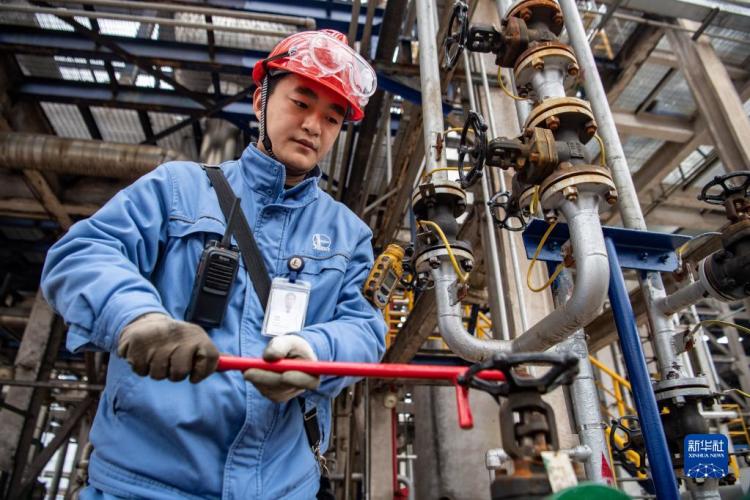
Polymer production and supply operations behind industrial-grade PVA and VAE emulsion grades.
What 'PVA-stabilized' changes about the inspection target
Polyvinyl alcohol is used in VAE emulsion polymerization as the protective colloid. It stabilizes the dispersed polymer particles and contributes to the rheology of the finished emulsion, which is why viscosity belongs on the emulsion certificate of analysis rather than only on the polyvinyl alcohol grade certificate.
The procurement consequence is straightforward. The acceptance test that governs payment runs on the delivered emulsion lot. A buyer may source Professional Polyvinyl Alcohol (PVA) and the emulsion from the same supplier for documentation convenience, but the stabilizer's own specification does not substitute for an emulsion test result.
A second consequence concerns evidence scope. A supplier statement that a grade is PVA-stabilized identifies the stabilization system; it does not by itself state a quantitative method for measuring the polyvinyl alcohol fraction. Where a contract needs that number, the test method has to be named explicitly, because the product data referenced in this article does not define one.
The four acceptance anchors, one at a time
Solids: a floor to be cleared, not a target to be hit
VAE 707H is stated with a minimum solids content of 54.5%. A minimum is a one-sided limit: any measured value at or above 54.5% conforms on this parameter, and no value below it does. Writing '54.5% solids' into a purchase order without the word minimum silently converts an asymmetric limit into a target, which invites disputes over lots that are legitimately higher.
The data referenced here does not state the non-volatile determination method, the drying temperature or the sample size. Those details should be fixed by reference to the method named on the supplier's certificate of analysis, so that a buyer's incoming result and the supplier's release result are produced the same way and can be compared directly.
pH: a two-sided band
VAE 707H is stated at pH 4.0–6.5. A band has two failure directions, and both are real: a lot at pH 3.8 and a lot at pH 6.8 are equally out of specification, even though only one of them reads as acidic. Acceptance should therefore be written as a range check, with the measurement conditions — sample temperature, any dilution, and the electrode procedure — tied to the supplier's stated method rather than left to site convention.
Viscosity at 25 °C: a model-specific window
The two grades in scope carry different viscosity windows, both stated at 25 °C:
- VAE 707H: 1000–1500 mPa·s at 25 °C
- VAE 707: 500–1000 mPa·s at 25 °C
Because the temperature is part of the specification, a reading taken at any other temperature is not comparable and should not be accepted as evidence of conformance. Equally, a spindle, speed or instrument setting that differs from the supplier's release method can shift a result. The method, not just the number, belongs in the acceptance clause.
Ethylene mass fraction and residual vinyl acetate
For the emulsion in scope, the stated composition figures are an ethylene mass fraction of 16%–18% and a maximum residual vinyl acetate of 0.5%. These are two different kinds of limit. The ethylene figure is a band — conformance requires a result inside 16%–18%. The residual monomer figure is a ceiling — conformance requires a result at or below 0.5%, and a lower result is conforming, not a deviation.
Both are composition specifications. A lot that sits inside the ethylene band and under the residual monomer ceiling conforms on those two parameters. That statement says nothing about its viscosity, its solids content or its suitability for a particular formulation, each of which is checked separately against its own limit.
The stated values in one view
| Parameter | VAE 707H | VAE 707 |
|---|---|---|
| Viscosity at 25 °C | 1000–1500 mPa·s | 500–1000 mPa·s |
| Solids, minimum | 54.5% | Not stated in the data referenced here |
| pH | 4.0–6.5 | Not stated in the data referenced here |
Where a cell reads 'not stated', the product data used for this article does not supply a figure. It should not be inferred from the other model. Confirm the value against the supplier's current technical data sheet before the clause is written into a contract.
| Parameter | Stated value | Conformance test |
|---|---|---|
| Ethylene mass fraction | 16%–18% | Result inside the band |
| Residual vinyl acetate | 0.5% maximum | Result at or below the ceiling |
Reconciling two viscosity ranges that touch at 1000 mPa·s
VAE 707H runs 1000–1500 mPa·s and VAE 707 runs 500–1000 mPa·s. The two windows meet at exactly 1000 mPa·s and overlap nowhere else.
That single shared boundary is the practical difficulty. A lot measuring exactly 1000 mPa·s at 25 °C satisfies both windows on viscosity alone, so viscosity cannot be the parameter that establishes which grade was delivered. Grade identity has to be carried by the label, the certificate of analysis model designation and the shipping documents; the viscosity check then confirms conformance within the identified grade's own window.
There is a second, quieter risk. If a buyer writes one internal viscosity specification for both grades — say 500–1500 mPa·s — the internal limit becomes looser than either product specification. A VAE 707H lot at 700 mPa·s would pass the buyer's incoming check and fail the product's own stated window. Model-specific limits exist precisely to prevent that outcome.
From data sheet to purchase order
An acceptance clause works when it answers four questions for each parameter: which model, which limit, which method, and which document proves it. The supplied purchasing terms cover part of that chain. HOPEWAY states a minimum order quantity of 5 tons, delivery terms of FOB or CIF, payment terms of 30/70 with L/C available, and acceptance criteria based on pre-shipment testing.
A pre-shipment test is a timing mechanism. It establishes that the lot was released against agreed criteria before it left the supplier's premises. It does not, by itself, define the sampling plan, the test methods or the retained sample — those remain contract items, and the data referenced here does not prescribe them.
A workable acceptance section therefore tends to include:
- The exact grade designation, spelled as it appears on the certificate of analysis.
- Each parameter with its limit type — minimum, band or maximum — rather than a bare number.
- The test method or reference standard used for each parameter, named on the certificate of analysis.
- Who performs the pre-shipment test, what the buyer receives, and how a disputed result is resolved.
- A retained sample and its storage period, agreed before the first shipment.
HOPEWAY states 100% testing as its quality-control standard, and states that TDS, MSDS and COA documents are supplied for customs clearance and inspection. The certificate of analysis is the document that links a delivered lot to the specification figures above. Without it, the numbers on the data sheet describe a grade, not a shipment.
Why a single house specification is the weaker option
The alternative to model-specific acceptance is a single internal window applied to every VAE emulsion a plant receives. It is simpler to administer and cheaper to police, and for a site running one grade it can be adequate.
For a buyer running both VAE 707H and VAE 707, the trade-off changes. A combined window accepts a 707H lot at 700 mPa·s that fails its own stated range, and accepts a 707 lot at 1200 mPa·s that also fails its stated range. The house specification has effectively widened both products' limits without anyone deciding to do so.
The limitation runs the other way as well. Model-specific limits require the buyer to maintain two sets of master data, two sets of incoming limits and an identity check at goods receipt. That is a real administrative cost, and it is the price of a conformance test that carries meaning. Where a plant genuinely intends to use the two grades interchangeably within a wider viscosity band, that decision belongs in an engineering change record, not in a quiet widening of the incoming specification.
Where these emulsions are used
VAE copolymer emulsion is used as a base for white latex and wood adhesive, as a coating base liquid, and as a printing binder. In those uses the emulsion is formulated rather than consumed as supplied, so the viscosity window and the solids floor govern how the receiving plant handles and blends the lot. They define conformance; they do not predict the performance of the finished adhesive, coating or print formulation, which depends on the full formulation and the application conditions.
This is why acceptance criteria and application fit should be written at the same time. A buyer who specifies only a viscosity band, and leaves solids, pH and the composition limits to the supplier's default, has accepted a specification without deciding which parameters actually matter for the intended formulation.
What the supplier side needs to demonstrate
HOPEWAY CHEMICAL INDUSTRIAL CO., LIMITED is a manufacturer and exporter of polyvinyl alcohol, VAE emulsion and redispersible polymer powder. The company was founded in 1998 and operates four production bases in China with 4,451 employees, of whom 731 work in research and development. It states annual polyvinyl alcohol capacity of 350,000 metric tons and VAE emulsion capacity of 140,000 metric tons, with overseas revenue representing 27% of turnover and export markets spanning Southeast Asia, South Asia, South America, Europe, the Middle East and Africa.
For a VAE buyer, three of those facts are directly checkable in the qualification file. Capacity indicates whether an order size can be absorbed alongside existing customers. Lead time, stated at 7–10 days, sets the reorder point. And the documentation set — TDS, MSDS and COA — determines whether the acceptance clause described above can actually be executed at goods receipt.
Customization is the fourth. HOPEWAY states OEM and ODM production services, with customization covering mesh size, logo and package, and 100% testing as its quality-control standard. Mesh size applies to the solid polyvinyl alcohol grades; for a liquid emulsion the practical customization discussion concerns packaging, labeling and documentation rather than particle size.
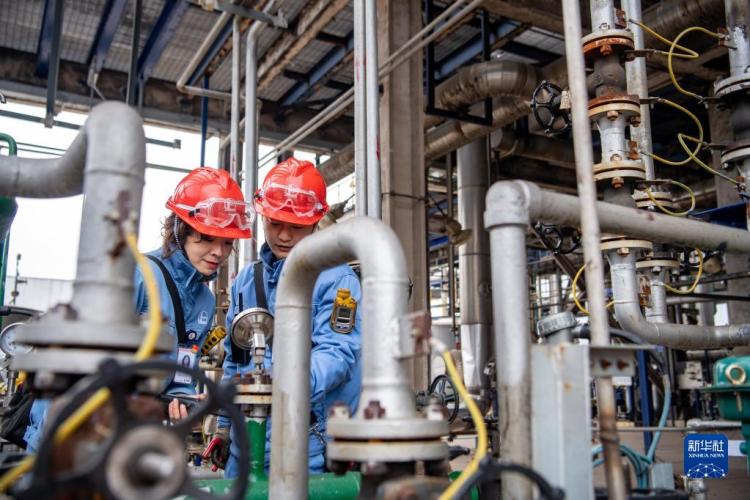
Grade documentation and product data are the basis for lot-level acceptance testing.
Company details and the current grade list are published at HOPEWAY CHEMICAL INDUSTRIAL CO., LIMITED.
Market context and cost exposure
Two published data points frame the commercial side of a VAE emulsion purchase. Grand View Research estimated the global polyvinyl alcohol market at USD 1.21 billion in 2025, with a projection of USD 1.66 billion by 2033. Separately, ChemNet reported in March 2026 that Anhui Wanwei High-Tech Material Industry raised prices across all polyvinyl alcohol products by 2,000 yuan per ton, citing rising upstream costs.
Both need their scope read carefully. Published market-size estimates for polyvinyl alcohol vary considerably depending on whether downstream converted products such as films and fibers sit inside the total, so figures from different research houses are not directly comparable. And a single producer's price adjustment is a market signal, not a forecast for every grade or every region.
For a procurement team, the practical reading is narrower. Where polyvinyl alcohol is a purchased input into the emulsion or into a related formulation, input-cost movement is a live contract variable, and a written price-adjustment mechanism is more useful than a fixed price that has to be renegotiated under pressure.
What to watch through 2027
The forward-looking items that bear on acceptance work are unglamorous. First, whether buyers continue to move from grade-level data sheets to lot-level acceptance clauses with named methods, which is the direction the checks above point. Second, whether composition limits such as residual vinyl acetate are specified with a method reference rather than a bare ceiling. Third, whether viscosity windows are written per model or collapsed into a house band.
None of those depends on a market forecast holding true. They are choices a buyer makes in the contract, and they remain available regardless of where prices move.
FAQ: procurement questions on PVA-stabilized VAE emulsion
How can a buyer confirm that polyvinyl alcohol is the stabilizer in a VAE emulsion?
The stabilization system is identified in the supplier's technical data and certificate of analysis rather than inferred from a viscosity reading. Ask for the grade documentation to state the protective colloid, and treat a statement that a grade is PVA-stabilized as a qualitative description of the system. The product data referenced in this article does not define a quantitative method for measuring the polyvinyl alcohol fraction, so where a contract needs that figure, the method must be named in the specification.
Why do VAE 707H and VAE 707 carry different viscosity ranges?
They are different models with different stated windows at 25 °C: VAE 707H at 1000–1500 mPa·s and VAE 707 at 500–1000 mPa·s. The stated data does not explain the formulation reason for the difference. What matters for procurement is that both windows are model-specific and meet at exactly 1000 mPa·s, so a viscosity result alone cannot establish which model was delivered.
Which acceptance checks should be written against solids, pH, ethylene content and residual vinyl acetate?
Solids should be written as a minimum — 54.5% for VAE 707H — so that any value at or above the floor conforms. pH should be written as a band, 4.0–6.5 for VAE 707H, with both directions enforced. Ethylene mass fraction should be written as a band of 16%–18%, and residual vinyl acetate as a ceiling of 0.5% maximum. Each clause should name its test method, because the limits alone do not define how a result is produced.
What does a pre-shipment test cover, and what should the document set contain?
A pre-shipment test establishes that the lot was released against agreed criteria before dispatch. HOPEWAY states pre-shipment testing as its acceptance criterion and 100% testing as its quality-control standard, and provides TDS, MSDS and COA documents for customs clearance and inspection. The supplied data does not define the sampling plan or the individual test methods, so those remain items to agree in the contract.
What should a buyer do when a viscosity result lands exactly at 1000 mPa·s?
Establish identity first. A reading of exactly 1000 mPa·s at 25 °C falls within both stated windows, so the grade designation on the label, certificate of analysis and shipping documents should settle which model the lot belongs to. The result is then checked against that model's own window. The measurement conditions should also be verified against the supplier's method, since a reading taken at another temperature is not comparable with a figure specified at 25 °C.
Documentation for the next step
The acceptance logic in this reference rests on a small number of stated figures and on documents that travel with each lot. Buyers who want to review the wider grade portfolio alongside those figures can download the product catalogue here: HOPEWAY PVA Catalogue (PDF).
Tem questões ou precisa de mais detalhes?
Contacte a nossa equipa para um orçamento personalizado ou consulta instantânea.
Solicitar orçamento
Preencha o formulário abaixo e a nossa equipa entrará em contacto com uma proposta personalizada.
Chat direto do WhatsApp
Prefere conversar em tempo real? Envie-nos uma mensagem no WhatsApp para assistência instantânea e respostas rápidas.
- Obter orçamento personalizado
- Partilhar fotos ou documentos
- Discuta as suas necessidades diretamente
Geralmente responde em 5–30 minutos durante o horário de expediente.