
PVC Dipping Handles vs. Alternatives: A Buyer Comparison for Tool Makers
A PVC dipping handle is produced by coating a rigid substrate — usually a metal handle core — with a PVC layer, rather than molding the whole handle as one solid plastic part. For tool manufacturers, that single process difference reshapes tooling investment, minimum order flexibility, surface behavior and the range of field conditions a handle can survive. This independent comparison examines PVC dipping handles against the two alternatives most often specified in building hardware, gardening tools and industrial equipment: injection molded plastic handles and CNC machined plastic handles.
The Problem: Handle Decisions Are Locked In Long Before Field Data Exists
Handles are rarely the most expensive line item in a tool bill of materials, yet they are among the most exposed. They are gripped thousands of times, stored in damp sheds, left in contact with oils, fertilizers, cleaning agents and salt-laden air, and they carry the user's perception of the entire product. A handle that corrodes, slips or loses its finish becomes the most visible quality complaint a tool brand can receive — and by then the tooling and the supply chain are already fixed.
The procurement difficulty is that handle alternatives are frequently compared on unit price alone, while the differences that actually drive returns and complaints sit in the forming process. Injection molded handles and CNC machined handles are strong, well-established options, but both impose structural constraints: molds, tooling amortization, defined draft angles and dimensional tolerance bands that must be respected at the design stage. PVC dipping sits in a different category. It builds a protective, gripping coating around a substrate, which makes it attractive for tool programs where corrosion protection, non-slip grip and finish flexibility matter more than achieving a tightly toleranced solid molded geometry.
That is the opportunity this comparison addresses: treating handle selection as a process-fit decision — matching the forming method to the product program — rather than defaulting to whichever process the previous generation of the tool used.
Technical Explanation: What PVC Dipping Actually Produces
PVC dipping is a coating process, not a molding process. A prepared substrate is dipped into a PVC compound, and the material cures into a continuous skin around that substrate. The visible result is a handle body whose outer surface is PVC, whose internal strength comes from the core, and whose geometry follows the shape of the core plus the deposited coating.
According to the recorded project data for PVC dipping parts, the process carries three characteristics that matter to buyers:
- It requires no expensive molds, and small order quantities are acceptable — the cost structure is not dominated by tooling amortization in the way injection molding is.
- PVC compounds are relatively inexpensive, the dipping solution itself does not contain toxic or heavy metal ions, the production process is described as environmentally friendly, and the raw materials can be recycled.
- The compound can be formulated in almost any color and can achieve different surface textures — from glossy and matte to rough and textured — which serves both functional requirements such as anti-slip grip and aesthetic design requirements.
Those three properties explain why PVC dipping handles keep appearing in tool categories where a coated grip outperforms a bare molded surface. They also explain the process's boundary, which is worth stating plainly: dipping adds a layer to a substrate. It does not create complex internal features, undercuts or precision mating geometry the way injection molding or CNC machining can. If a handle must double as a structural housing with integrated clips, ribs or exact cavity dimensions, the process fit is weaker from the outset.
Brand Solution: What the LGHD PVC Dipping Handle Specification Covers
Lingo Rubber Plastic — the trading name of Hangzhou Lingo Rubber and Plastic Product Co., Ltd, a Hangzhou-based manufacturer of rubber and plastic parts — supplies a PVC dipping handle under model LGHD. The product's declared specification is deliberately narrow and easy to verify: material PVC, standard color black, glossy surface, and custom printing available. Its declared applicable industries are hardware tools, electrical and electronics, the automotive industry, fitness equipment, gardening tools, household products, industrial equipment and building hardware.
The handle sits inside a wider multi-process plastic parts capability. The same supplier runs plastic injection parts ranging from plastic gaskets, plastic washers, plastic caps and plastic housings to plastic handles and plastic guide rails; plastic extrusion profiles; and CNC machining of PTFE, POM, PE, UHMWPE, HDPE, PEEK, ABS, PU, PA6 and PA66 parts. For a tool manufacturer, that matters commercially: a handle program and the surrounding plastic components — spacers, washers, plugs, caps, trims — can be sourced against a single quality and traceability regime rather than being split across unrelated vendors.
The commercial terms published for this production base are consistent across its plastic lines: OEM/ODM production, monthly capacity of 1,000,000 kgs, lead time of 2 to 6 weeks, MOQ set according to the individual part with small quantity orders acceptable, and quality control based on full inspection of samples plus random inspection of bulk goods. After-sales terms include remote technical support, mold maintenance and ownership protection, a batch traceability system, and free exchange and acceptance of concessions.
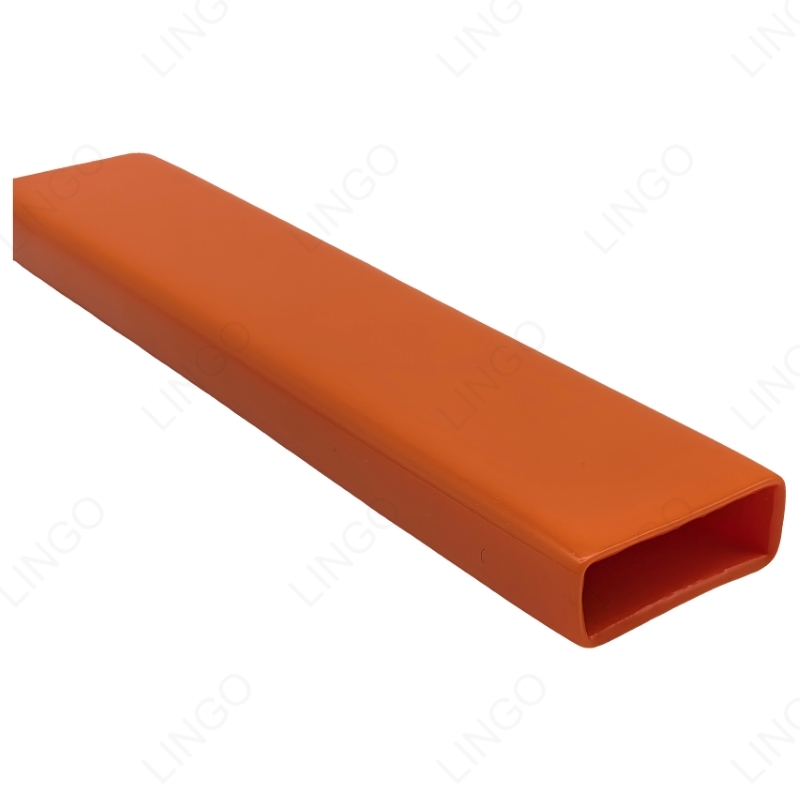
A Buyer's Comparison Framework: PVC Dipping vs. Injection Molding vs. CNC Machining
The table below compares the three routes on the variables that typically decide a handle program: tooling exposure, order flexibility, surface and grip, color and printing, environmental exposure, dimensional regime and best-fit application. Where a value is not established for a process, the comparison states the buyer's verification requirement rather than implying a performance claim.
| Comparison dimension | PVC dipping handle (LGHD) | Injection molded plastic handle (LG-PI range) | CNC machined plastic handle (LG-CNC range) |
|---|---|---|---|
| Forming principle | PVC layer deposited and cured around a rigid substrate | Molten resin formed in a closed mold cavity | Material cut from stock to final geometry by machining |
| Tooling exposure | Recorded as requiring no expensive molds | Depends on mold construction; multi-cavity and hot or cold runner tooling are standard options in this product family | No mold required; cost sits in machining time per part |
| Order quantity flexibility | Small order quantities accepted | MOQ set per part; small quantity orders acceptable | Small order quantities acceptable; a recorded CNC project shipped a 20-piece order |
| Surface and grip | Textures from glossy and matte to rough and textured, supporting anti-slip grip and ergonomic handle profiles | Surface defined by SPI finish, texture and gloss level in the part specification | Surface defined by Ra / Rz roughness specification; visual criteria are smooth, no crack, no flash |
| Color and printing | Standard black, glossy, with custom printing; compound can be formulated in almost any color | Pantone / RAL color with defined gloss level; filler and modification options include glass fiber, flame retardant and UV stabilizer | Custom color; materials range from PTFE, POM and PE to UHMWPE, HDPE, PEEK, ABS, PU, PA6 and PA66, with or without glass fiber |
| Environmental exposure | Recorded coating resistance to acids, alkalis, salt spray and oil, with low-temperature and high-temperature resistance noted in project results | Material dependent; the buyer should specify resin grade and required chemical exposure in the part specification | Material dependent; PTFE, PEEK and PE grades are commonly selected where chemical or temperature exposure drives the choice |
| Dimensional regime | Geometry follows the substrate plus coating; suited to grips and protective skins rather than precision mating features | Tolerance control to GB/T 14486 MT1 to MT7, draft angle outside at least 1 degree and inside at least 0.5 degrees, shrinkage typically 0.4% to 0.8% for mold compensation | Tolerances driven by machining capability and surface roughness Ra / Rz targets |
| Best-fit programs | Hand tools, garden tools, building hardware grips, equipment handles exposed to moisture or chemicals, low-volume or variant-heavy ranges | High-volume handles and housings requiring integrated features, repeatable tight dimensions and molded-in color | Low-volume, high-precision or high-performance parts in engineered resins |
Read as a whole, the table shows that the three routes do not compete on a single axis. Injection molding wins on repeatable geometry and integrated features at volume. CNC machining wins on precision and material freedom at low volume. PVC dipping wins where the handle must protect a core, resist a corrosive environment and deliver grip texture without a mold investment.
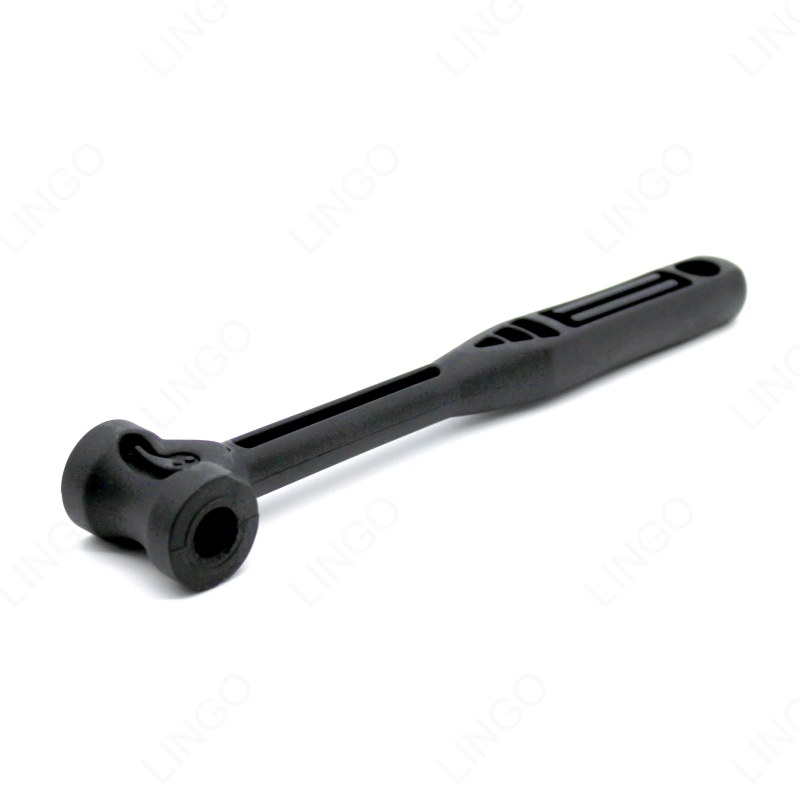
Application Fit: Where PVC Dipping Handles Earn Their Place
The clearest evidence for PVC dipping comes from a recorded project in the electrical and electronics industry for a customer in Germany. The application used the PVC coating's insulating characteristics directly: the coating safeguards current transmission and prevents accidents caused by wiring damage. The order quantity was 1,500 pieces, and the customer reorders annually, with service life varying by working environment.
The recorded results of that project are specific and useful to buyers evaluating the process: a perfectly fitting part, stable performance, a coating resistant to acids, alkalis, salt spray and oil that protects the metal substrate from corrosion in humid and chemically corrosive environments, and resistance at both low and high temperatures. The project highlights also record the absence of expensive mold requirements, the acceptability of small orders, the absence of toxic or heavy metal ions in the dipping solution, and the recyclability of the raw material.
Translated into tool manufacturing terms, that profile maps onto recognizable programs:
- Gardening tools and building hardware. Handles that live outdoors and contact soil, fertilizer, plant sap and rain benefit from a coating specified for salt-spray, acid and alkali exposure, combined with a textured non-slip grip that stays usable in wet conditions.
- Industrial equipment and hardware tools. Equipment handles that encounter lubricants, coolants and workshop oils can use the same coating logic to protect a metal core while providing an ergonomic grip profile.
- Electrical and electronics applications. Where a handle, grip or protective sleeve surrounds a conductive core, the insulating behavior of the PVC layer is itself the functional requirement.
- Variant-heavy product ranges. Because the compound can be formulated in almost any color and finished from glossy to rough texture, and because custom printing is available on the LGHD handle, one tool platform can be extended into multiple SKUs without a new mold for each variant.
The same logic applies beyond handles. PVC dipping and the related injection molded parts families — plastic washers, nylon washers, plastic plugs for holes, plastic caps and plastic handles — often appear in the same tool assembly, which is one reason buyers tend to evaluate them together rather than as unrelated purchases.
Where PVC Dipping Reaches Its Limits
A comparison that only lists advantages is not a procurement tool. Three boundaries matter before a tool manufacturer commits to a dipping program.
First, geometry. Dipping coats a substrate; it does not mold a shape. Handles that must incorporate internal ribs, snap features, threads, molded-in inserts or a precision cavity should be evaluated as injection molded parts, where tolerance control to GB/T 14486 MT1 to MT7 and defined draft angles govern the design. Attempting to force a dipping process onto a part designed around molded geometry is a common early-stage mistake.
Second, the standard configuration is narrow. The LGHD handle is specified as black with a glossy surface. Color and texture flexibility rests on compound formulation, so a buyer who needs a specific shade, matte finish or tactile texture should confirm the achievable formulation during sampling rather than assuming the catalogue configuration is what will arrive. Custom printing is available, which is a separate requirement from color and should be spec'd with its own artwork controls.
Third, regulatory scope. Where a plastic handle enters an automotive assembly, buyers typically verify IATF 16949:2016 certification from the supplier, a standard built on the foundational ISO 9001:2015 framework. That is an industry requirement applied to automotive plastic parts manufacturing, not an attribute that can be assumed from a product catalogue. Tool manufacturers whose handles feed automotive, medical or electrical end products should treat certification status as a separate qualification gate, and should confirm it directly with the supplier before award.
Market Context: Where Handle Sourcing Sits in the Plastics Economy
Handle sourcing decisions sit inside a very large plastics processing market. Grand View Research valued the global injection molded plastics market at USD 362.5 billion in 2025 and projected growth to USD 481.4 billion by 2033. Asia Pacific dominated that market in 2025 with a revenue share of approximately 40.7% to 41.2%, which is consistent with the concentration of tool and hardware production in the region.
Two adjacent data points frame the demand side for coated and molded grips. The automotive plastics market was valued at USD 33.0 billion in 2025, driven largely by lightweighting trends for electric vehicles, and polypropylene alone accounted for a 32.4% share of that automotive plastics market in 2025. On the supply side, China exported approximately USD 174 billion in plastics and rubbers in 2024, with the United States the largest single destination at USD 24.3 billion. For a procurement manager, the implication is not that supply is scarce, but that supplier differentiation has to be found in process fit, documentation and traceability rather than in availability.
Industry analysis of 2024 to 2026 trends points in the same direction, identifying Industry 4.0 integration through AI and IoT for real-time monitoring, reshoring of high-specification production, and adoption of bio-based and recycled resins as the structural movements shaping plastics manufacturing. Each of these trends raises the documentation bar for parts that were previously bought on price alone — including handles.
Future Outlook
Two developments are likely to shape PVC dipping handle sourcing over the next few product cycles. The first is material documentation. As bio-based and recycled resins move from pilot projects into mainstream purchasing, buyers will increasingly ask suppliers to distinguish between a material claim and a verified material specification. The recorded property that PVC dipping solutions do not contain toxic or heavy metal ions, and that the raw materials can be recycled, positions the process reasonably well for that conversation — but documentation, not positioning, will decide whether it survives a compliance review.
The second is the shift of low-volume, variant-rich production back toward regional assembly. Reshoring of high-specification production favors processes with low tooling exposure, because a program that does not require a new mold for every variant is easier to relocate, re-launch or run in smaller batches. That structurally favors dipping and CNC machining over high-cavity injection tooling for short and medium runs, while injection molding keeps its advantage in stable, high-volume handles.
For tool manufacturers, the practical conclusion is that handle process selection should be re-examined whenever a product program changes volume, environment or variant count — not inherited by default from the previous model.
FAQ
What is a PVC dipping handle, and how does it differ from a standard plastic handle?
A PVC dipping handle is made by coating a rigid substrate, usually a metal core, with a PVC layer that cures into a continuous skin. A standard plastic handle produced by injection molding is formed as a single solid part inside a mold cavity. The practical differences follow from that: the dipped handle combines a load-bearing core with a protective, grippable outer layer, while the molded handle carries the load and the geometry in one material and requires a mold to produce.
Which applications are PVC dipping handles best suited to?
They suit applications where the handle must protect a core and provide grip rather than hold precision geometry. The LGHD PVC dipping handle lists hardware tools, electrical and electronics, automotive, fitness equipment, gardening tools, household products, industrial equipment and building hardware among its applicable industries. A recorded project in the electrical and electronics industry used the coating's insulating properties to protect current transmission and prevent accidents from wiring damage.
What should buyers compare when evaluating PVC dipping handles against injection molded plastic handles?
Four comparison points carry most of the decision. Tooling exposure: dipping is recorded as requiring no expensive molds, while injection molding depends on mold construction and mold maintenance. Dimensional regime: injection molding offers tolerance control to GB/T 14486 MT1 to MT7 with defined draft angles and typical shrinkage of 0.4% to 0.8%, while dipping follows the substrate plus coating. Surface: dipping supports textures from glossy and matte to rough and textured, while molded surfaces are set by SPI finish and gloss level. Environmental exposure: dipping coatings have recorded resistance to acids, alkalis, salt spray and oil, whereas molded part performance is resin dependent and should be specified explicitly.
When is a PVC dipping handle the wrong choice?
When the handle is really a structural component. If the part needs internal ribs, snap features, threads, molded-in inserts or a precision cavity that mates with another component, injection molding or CNC machining is the appropriate route. Dipping also has a narrow catalogue baseline — the LGHD handle is specified as black with a glossy surface — so any requirement for a specific color, matte finish or tactile texture should be confirmed at the formulation and sampling stage rather than assumed. Where the handle enters an automotive assembly, buyers should additionally verify the supplier's IATF 16949:2016 certification, which builds on ISO 9001:2015.
What commercial terms should a tool manufacturer confirm before placing a PVC dipping handle order?
Confirm five items. Order quantity: dipping is recorded as accepting small orders, and the published production terms set MOQ according to the individual part with small quantity orders acceptable. Lead time: the published range across this plastic parts production base is 2 to 6 weeks. Quality control: the stated method is full inspection of samples plus random inspection of bulk goods. Traceability and after-sales: a batch traceability system, remote technical support, mold maintenance and ownership protection, and free exchange plus acceptance of concessions are the published terms. Customization scope: OEM/ODM production, custom printing on the handle, and custom color and texture formulated through the PVC compound.
Reference material: LINGO Rubber & Plastic company profile (PDF) — download. Product and process data in this article are drawn from the LGHD PVC dipping handle specification, the published plastic parts production capability terms, and recorded project results.