
PVC Foam Board Procurement FAQ: Thickness, Density, and Variant Selection
An industry reference for buyers specifying rigid PVC foam sheet for signage, construction, furniture, transport and packaging applications.
Why the specification, not the supplier list, decides the outcome
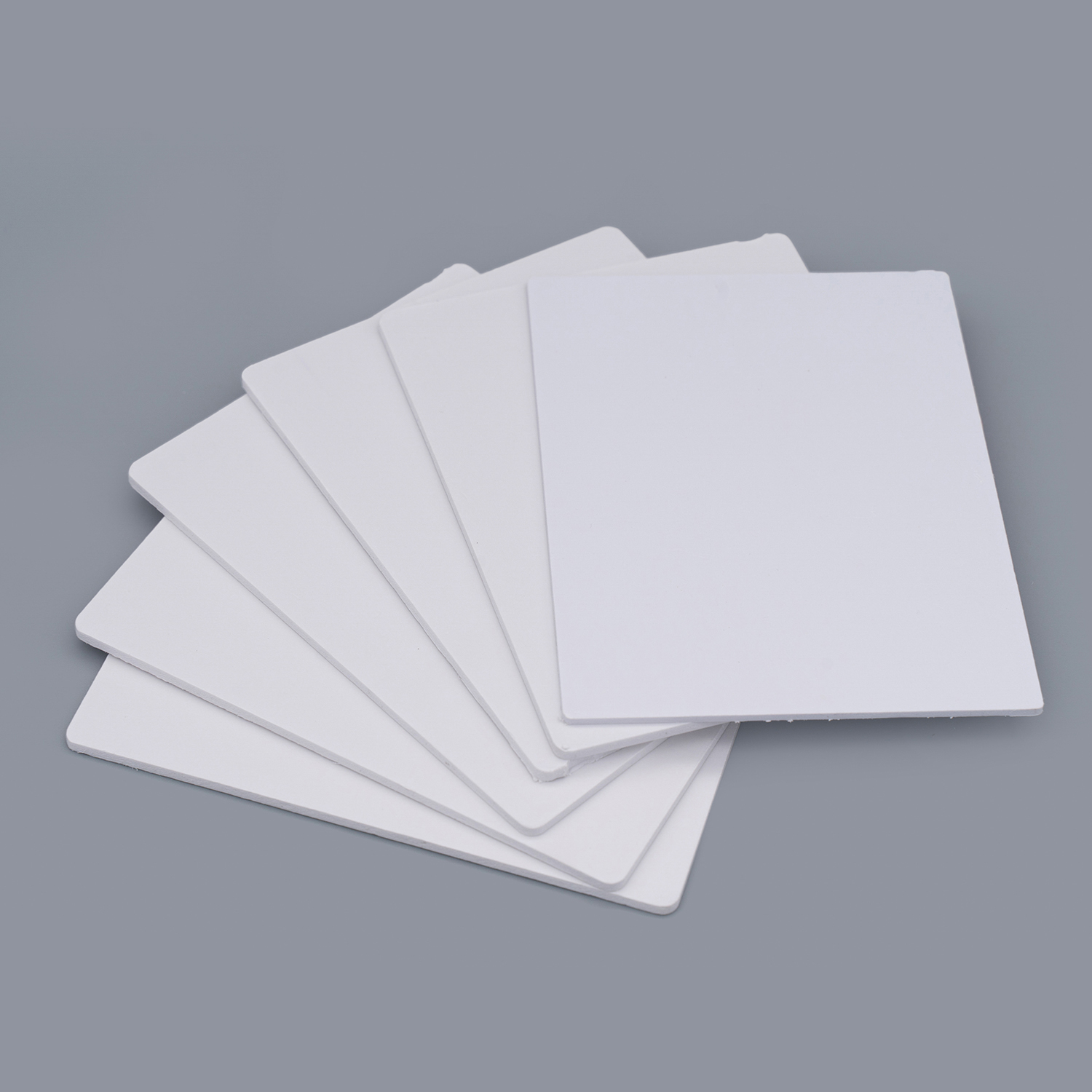
PVC foam board is a rigid, foamed polyvinyl chloride sheet used as a lightweight substrate in advertising, construction and decoration, furniture and cabinetry, transportation and special-purpose applications such as packaging and industrial protection. The material family, however, is broad: boards sold under the same generic description can differ in thickness, density, surface construction and compliance documentation, and those differences show up on the cutting table, in the print room and at the customs inspection point.
That is why procurement conversations around PVC foam board have shifted. The question is no longer only who sells PVC foam board, but which documented parameter set is repeatable, verifiable and compliant for this specific project. A buyer who specifies thickness, density, panel size and variant before requesting quotations removes most of the ambiguity that otherwise appears after the container is loaded.
The problem: four parameters carry most of the procurement risk
In practice, the technical questions that stall PVC foam board purchases cluster around four fields, and each one has a different failure mode:
- Thickness — a board outside the required range will not fit the frame, hinge or print tolerance it was bought for.
- Density — density affects weight, rigidity and how the board behaves during cutting, routing and thermoforming, and it is frequently left unspecified on purchase orders.
- Panel size — non-standard dimensions create offcut waste and additional cutting labour.
- Variant — free foam, Celuka, laminated and co-extruded boards are manufactured differently and are not interchangeable across all applications.
The opportunity is that all four parameters are documentable in advance. A structured inquiry — with the parameter set written down rather than described verbally — shortens the evaluation cycle and gives the buyer something to compare against the delivered goods.
Board sizes and thickness ranges available in the DINGTIAN range
Zibo Dingtian Plastics Co., Ltd. (DINGTIAN) is a PVC foam board manufacturer founded in June 2004 and located in the Zichuan Economic Development Zone, Zibo City, Shandong Province, China. Its PVC Celuka foam board (product ID 5235) is produced in three standard panel sizes — 1220×2440 mm, 1560×3050 mm and 2050×3050 mm — with a thickness range of 1–35 mm and a density range of 0.4–0.9 g/cm³.
Those three sizes cover the majority of fabrication requirements: the 1220×2440 mm format for cabinet, signage and interior work; the 1560×3050 mm and 2050×3050 mm formats for larger continuous surfaces where fewer joints are preferred. Thickness availability, however, is variant-dependent rather than uniform across the catalogue, which is the point buyers most often overlook.
Variant map: which PVC foam board type fits which project
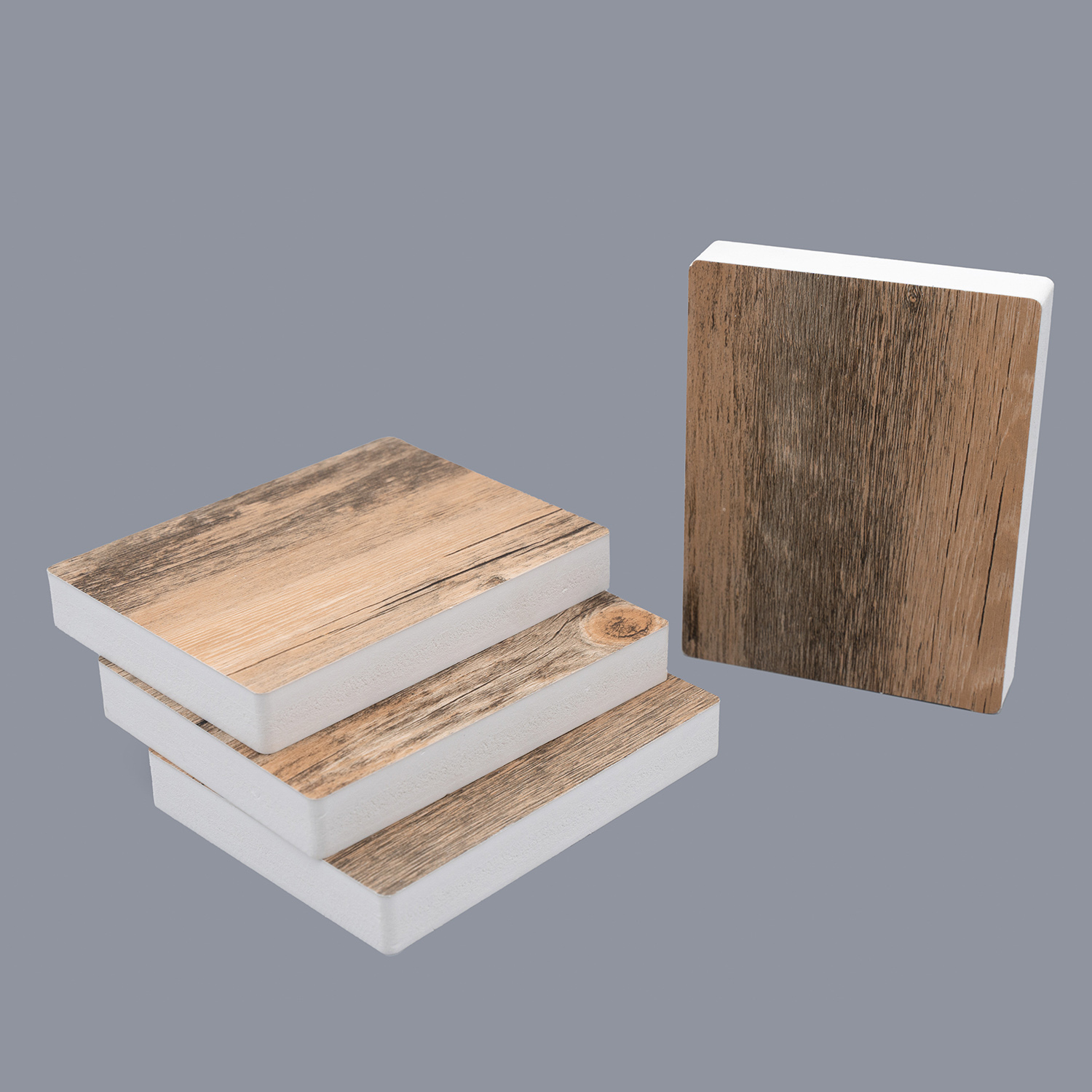
The four main construction types answer different requirements. Celuka boards are extruded against a cooled surface so the outer skin forms during production, giving a denser surface than the core. Free foam boards expand without that skin constraint and are typically used where lower thickness and light weight dominate. Laminated boards carry a decorative film for furniture-facing surfaces. Co-extruded boards combine a rigid PVC skin with a foamed core, a construction associated with higher surface hardness and impact resistance than standard Celuka boards.
| Variant | Standard panel size | Thickness range | Density range | Typical applications |
|---|---|---|---|---|
| PVC Celuka foam board | 1220×2440 mm; 1560×3050 mm; 2050×3050 mm | 1–35 mm | 0.4–0.9 g/cm³ | Advertising and signage, construction and decoration, furniture and cabinetry, transportation |
| PVC free foam board | 1220×2440 mm | 1–5 mm | Not specified in the current data set | Advertising materials |
| PVC co-extruded foam board | 1220×2440 mm | Not specified in the current data set | 0.5–0.8 g/cm³ | Advertising materials, furniture board |
| Laminated PVC foam board | 1220×2440 mm | 5–20 mm | Not specified in the current data set | Furniture, cabinet |
| Coloured PVC foam board | 1220×2440 mm | 1–20 mm | Not specified in the current data set | Advertising, furniture and cabinet making |
| Waterproof PVC foam board | 1220×2440 mm | 1–35 mm | Not specified in the current data set | Furniture, cabinet |
The table is the practical answer to the most common variant question. A project requiring 5–20 mm boards with a decorative face points to the laminated range. A thin, light advertising panel starting at 1 mm points to free foam. A furniture panel that needs uniform colour across the sheet points to coloured board within its 1–20 mm window. A board that must resist moisture in a cabinet or bathroom environment points to the waterproof variant, available across 1–35 mm.
How density should be written into an inquiry
Density is the parameter most often omitted and most often disputed later. In the DINGTIAN range, Celuka boards are documented at 0.4–0.9 g/cm³ and co-extruded boards at 0.5–0.8 g/cm³. Because the two ranges do not overlap completely, a buyer who specifies only "PVC foam board, density 0.8" without naming the variant can receive two different constructions that both technically meet the number.
As general industry practice, lower-density boards are specified where weight reduction and material economy matter, while higher-density boards are specified where surface hardness, rigidity and fastening performance are the priority. The correct approach is to state density together with the variant and the fabrication method, so that the supplier can confirm feasibility rather than interpret the requirement.
Compliance constraints that change the specification (EU and global)
Certification is now a specification field in its own right. Two constraints are structural rather than optional. In the European Union, REACH Regulation Annex XVII (Entry 63) restricts lead concentration in PVC articles to less than 0.1% by weight, effective 29 November 2024 — a threshold that directly affects how stabiliser systems are selected. For construction uses in North America, PVC foam boards are commonly tested under ASTM E84 to reach a Class A fire rating, defined as a Flame Spread Index of 0–25. Separately, per The Vinyl Institute, PVC foam board typically achieves a V-0 flammability classification under UL 94 at thicknesses down to 1 mm.
DINGTIAN's PVC foam board (product ID 5235) carries the following documentation, which buyers can request and verify before shipment:
| Document | Certificate number | Issued by | Standard | Market |
|---|---|---|---|---|
| ISO 9001 quality management system | 06924Q10470RO | Kaixin Certification (Beijing) Co., Ltd. | GB/T19001-2016 & ISO9001:2015 | Global |
| REACH | TSNEC1701167001 | SGS | REACH Regulation (EC) No 1907/2006 | EU |
| RoHS | QDAFN160100422 | SGS | IEC 62321 | EU |
| Formaldehyde Certificate | TSNHG2301164301 | SGS | ISO 17226-1:2021 | Global |
The ISO 9001 certificate is scoped to the production of PVC foam board and is valid from 18 April 2024 to 17 April 2027. The Formaldehyde Certificate was tested to ISO 17226-1:2021, the REACH report to Regulation (EC) No 1907/2006, and the RoHS report to IEC 62321. For project specifications that call for B1/B2 fire retardant ratings, UV-stabilised grades or anti-static ESD protection, those requirements should be listed in the inquiry itself, because they determine which formulation is produced rather than which sheet is picked from stock.
Application fit: where each variant is actually used
Application data is a useful cross-check against a specification. Within this product range, advertising and signage represents 35% of application volume — outdoor billboards, display panels and UV printing substrates; construction and decoration 30% — wall panels, ceilings, partitions and construction formwork; furniture and cabinetry 15% — cabinet doors, wardrobes and bathroom vanities; transportation 10% — vehicle interiors and RV refitting; and special-purpose applications 10% — packaging, prototypes and industrial protection.
| Segment | Share of application volume | Representative use |
|---|---|---|
| Advertising & signage | 35% | Outdoor billboard, display panel, UV printing substrate |
| Construction & decoration | 30% | Wall panel, ceiling, partition, construction formwork |
| Furniture & cabinetry | 15% | Cabinet door, wardrobe, bathroom vanity |
| Transportation | 10% | Vehicle interior, RV refitting |
| Special-purpose | 10% | Packaging, prototype, industrial protection |
These shares are consistent with third-party observation: the signage and advertising industry holds the largest application share of the PVC foam board market, at approximately 35% of total demand. Fabrication conditions also driven by the application: UV-stabilised grades are specified for outdoor work, with a documented operating range of −20°C to +60°C and humidity resistance, while thermoforming is carried out at 120–160°C. Cutting machines, printing machines, nails and saws cover the standard processing set.
One documented distributor outcome
A distributor/wholesaler relationship covering advertising and furniture material, running 5–10 years at approximately 10 containers per month, reports 98% print image retention after three years, zero warping or delamination, 100% waterproof performance, and a 40% cost saving against aluminium composite panel. These are reported outcomes from a commercial relationship rather than laboratory results, and they should be read as an indication of what a stable specification can deliver over time — not as a guarantee for a differently specified board or a different climate.
Market trend: where the volume is going
The global PVC foam board market was valued at approximately USD 2.1 billion in 2024 and is projected to reach USD 3.6 billion by 2032, according to Verified Market Research. Estimates vary by source scope — broader "PVC foam industry" figures published by other research houses differ substantially because they include foam categories beyond board products — so buyers should treat any single figure as a directional indicator and check the scope definition behind it.
On the supply side, China concentrated 20% of total exports of plastic building materials, including PVC boards, in 2024, maintaining its position as the largest exporter, according to the Observatory of Economic Complexity. Zibo, where DINGTIAN is based, is an established plastics processing cluster: the city registered USD 180 million in plastic product export volume in 2024 with nearly 500 export-oriented manufacturers, according to Qilu Network.
Comparison with traditional substrate materials
PVC foam board competes most directly with plywood, MDF and aluminium composite panel. The comparison is best made field by field rather than as a general claim.
| Consideration | PVC foam board | Wood-based panels (plywood, MDF) | Aluminium composite panel |
|---|---|---|---|
| Moisture behaviour | Documented waterproof performance in the referenced distributor application | Moisture-sensitive; requires sealing and edge protection | Water-resistant but higher material cost |
| Weight and handling | Lightweight; reported reduction in installation cost | Heavier per panel for equivalent thickness | Heavier and requires metal fabrication methods |
| Material cost position | Reported 40% cost saving versus aluminium composite panel in the referenced application | Generally low material cost, higher finishing and sealing labour | Highest material cost of the three |
| Weathering | Requires UV-stabilised grade for long-term outdoor exposure | Not suitable for unprotected outdoor use | Good outdoor durability with coated surfaces |
| Fabrication | Cut, route, print, laminate and thermoform at 120–160°C | Standard woodworking tooling | Requires metalworking tooling |
Where PVC foam board is not the right answer
A credible specification includes the boundaries. PVC foam board is a substrate and panel material, not a structural load-bearing material: it is not a substitute for engineered timber or steel in load-bearing framing, and structural requirements should be confirmed with the project engineer. The available thickness windows also differ by variant — free foam board is documented at 1–5 mm and laminated board at 5–20 mm — so a requirement for a 30 mm laminated panel cannot be met from that range. Outdoor use depends on the UV-stabilised grade; a standard board will not deliver the same weathering behaviour. Finally, thermoforming outside the 120–160°C window, or continuous service outside the documented −20°C to +60°C range, is outside the supported operating conditions.
Future outlook
Three forces are likely to shape PVC foam board procurement through the remainder of the decade. First, volume growth: a market moving from roughly USD 2.1 billion to a projected USD 3.6 billion between 2024 and 2032 keeps pressure on supply capacity and on lead-time reliability. Second, tightening chemical regulation: the EU lead restriction of less than 0.1% by weight in PVC articles, effective November 2024, makes lead-free stabiliser documentation a routine line item rather than a differentiator. Third, application concentration: with signage and advertising holding around 35% of demand, print-related properties — surface uniformity, ink adhesion and dimensional stability — will continue to drive variant development.
For buyers, the practical implication is that the specification document becomes more important, not less. Compliance fields, density ranges and variant definitions are what a supplier can be held to; vague descriptions are not.
Procurement FAQ
What panel sizes and thicknesses can be ordered?
PVC Celuka foam board is produced in 1220×2440 mm, 1560×3050 mm and 2050×3050 mm panels with a thickness range of 1–35 mm. Other variants use the 1220×2440 mm format: free foam board 1–5 mm, coloured board 1–20 mm, laminated board 5–20 mm and waterproof board 1–35 mm.
What density should be specified for a Celuka board?
The documented density range for Celuka foam board is 0.4–0.9 g/cm³. Density should be stated together with the variant, because co-extruded board is documented at a narrower 0.5–0.8 g/cm³. Naming both fields lets the supplier confirm whether the requested combination is manufacturable rather than interpreting an isolated number.
How do I choose between free foam, Celuka, laminated and co-extruded board?
The choice follows the application. Free foam suits thin, light advertising panels from 1 mm; Celuka suits general signage, construction and furniture work across 1–35 mm; laminated board provides a decorative face for furniture and cabinets from 5–20 mm; co-extruded board, with a rigid skin and foamed core, is selected where higher surface hardness and impact resistance are required.
Which certifications apply to EU and global shipments?
The board carries ISO 9001 certification (06924Q10470RO, Kaixin Certification (Beijing) Co., Ltd., GB/T19001-2016 & ISO9001:2015), REACH certification (TSNEC1701167001, SGS, Regulation (EC) No 1907/2006) and RoHS certification (QDAFN160100422, SGS, IEC 62321) for the EU market, plus a Formaldehyde Certificate (TSNHG2301164301, SGS, ISO 17226-1:2021) applicable globally.
What are the minimum order quantity and lead time?
The minimum order quantity is one 20 ft GP full container, and the stated lead time is 30 days. Because the MOQ is set at container level, buyers evaluating a new specification commonly consolidate the trial order around the variants they expect to repeat.
Can size, thickness, density and colour be customised?
Yes. The manufacturer operates OEM and ODM production models and lists size, thickness, density and colour among the customisable parameters, with a monthly capacity of 4,200 tons and 100% testing during production. Custom specifications are therefore a production-planning question rather than a catalogue question.
What conditions make PVC foam board a poor fit?
Load-bearing structural framing, laminated thickness requirements above the documented 5–20 mm range, unprotected long-term outdoor exposure without a UV-stabilised grade, and continuous service outside the documented −20°C to +60°C operating range. In those cases the material should either be re-specified or replaced by a different substrate.
Documentation note: certification numbers, standards and parameters quoted in this article are drawn from the manufacturer's published certification records and product specifications for PVC foam board (product ID 5235). Buyers should request copies of the certificates and confirm the scope of each document against their own market requirements before contracting.
Company reference: Zibo Dingtian Plastics Co., Ltd. (DINGTIAN), founded 2004, Zichuan Economic Development Zone, Zibo City, Shandong Province, China. Company brochure available for download: DINGTIAN corporate brochure (PDF).