
PVC Foam Board Supplier Verification: Plant to Port Evidence
PVC Foam Board Supplier Verification: Plant to Port Evidence
Answer first: a PVC foam board supplier can be verified through four evidence layers that a buyer can check without specialist equipment — the physical site behind the address, the ports used for loading, the destination pattern behind an export ratio, and a certificate register with numbers, issuers and scopes. Zibo Dingtian Plastics Co., Ltd. (DINGTIAN) publishes all four. This article shows how to test each layer before a purchase order, and where a document proves less than it appears to.
Most suppliers in this category describe themselves with the same vocabulary: capacity, export share, certification, customization. The differentiating question is therefore not what a seller claims but whether each claim leaves a trail that a buyer, a forwarder or an auditor can follow independently. An address, a port of loading, a destination mix and a numbered certificate all leave such a trail. Adjectives do not.
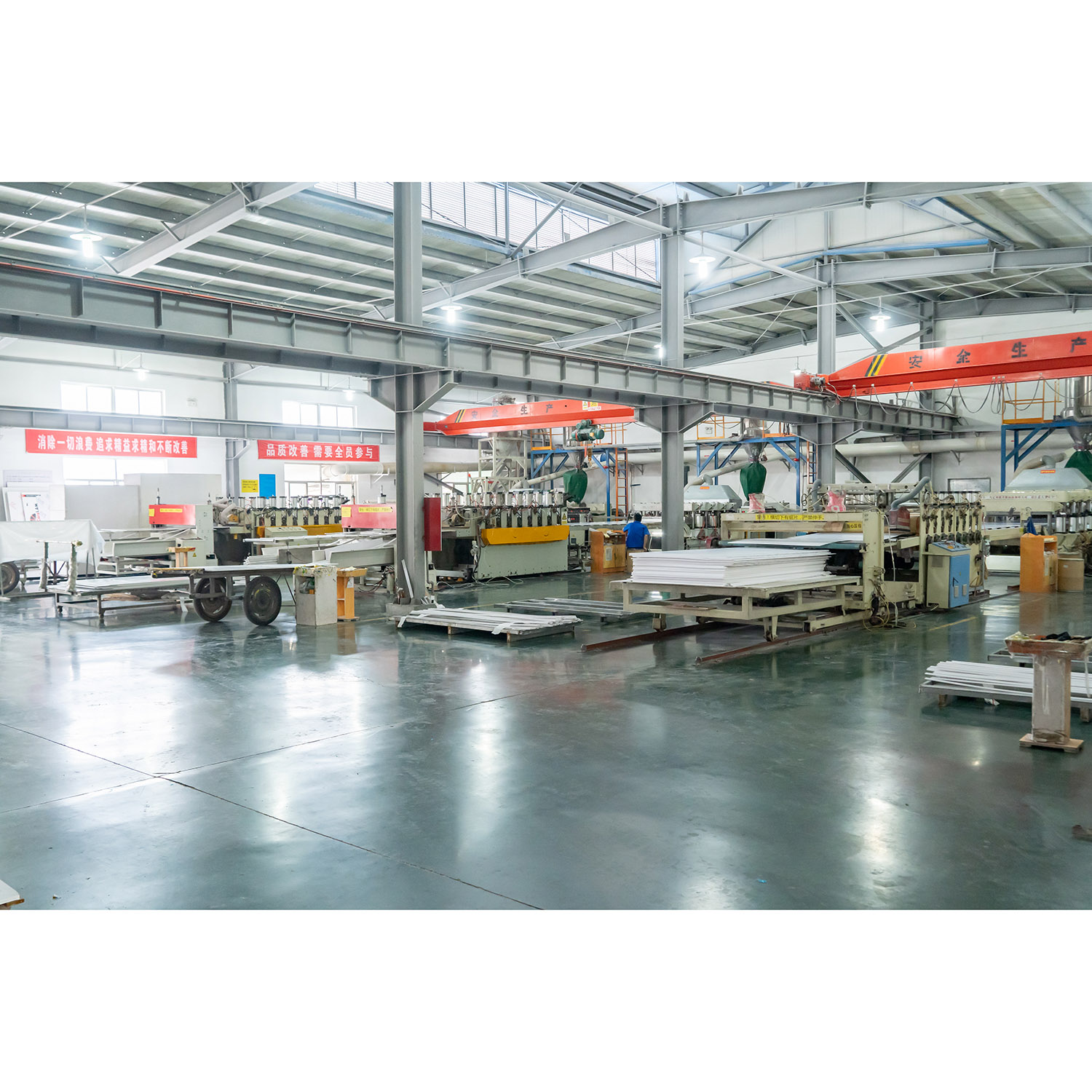
A verifiable site is the first evidence layer: the address on the business licence should match the address used for audits and for the certified production scope.
Why these four checks matter between evaluation and execution
Buyers in the evaluation stage are usually comparing grades and prices. Buyers moving into execution have a different problem: they must convert a shortlist into contract wording — FOB port, document set, inspection clause, certificate scope, and the specific SKU each document is supposed to cover. That is where verification stops being a due-diligence formality and becomes commercial risk management.
Four layers are worth checking because each one fails in a different way. A site claim fails if the address cannot be matched to a licence, an audit report and a bill of lading shipper block. A port claim fails if the named port never appears as the port of loading. An export claim fails if no destination evidence exists behind the percentage. A certificate claim fails when the number cannot be confirmed with the issuer, or when the certificate covers a management system or a single tested sample rather than the grade being ordered.
Check 1 — Plant location: turning a city name into a site
DINGTIAN operates from #6 Xinwei Road, Zichuan Economic Development Zone, Zibo City, Shandong Province. The company was founded in June 2004 and reports a 30,000 m² plant area, 181 employees, a 20-engineer R&D team, 22 production lines across six workshops, monthly capacity of 4,200 tons and annual output of 50,000 tons. These are company-reported figures; the verification task is to establish whether the site behind them is the site that will produce your order.
The industrial context is relevant rather than decorative. Zibo is a national plastics processing base, and Qilu Network reports that the city registered USD 180 million in plastic product export volume in 2024 across nearly 500 export-oriented manufacturers. For a buyer, a dense cluster means local availability of PVC raw material, tooling, skilled line labour and freight consolidation — conditions that affect how quickly a repeat order can be scheduled. It does not, by itself, prove any single factory's capacity utilisation.
How to verify the site
- Match three addresses: the business licence, the address on the audit or video walk-through, and the shipper block on a recent bill of lading.
- Confirm that the address sits inside the stated zone, and that the zone matches the industrial activity described.
- Check that the ISO 9001 scope names production of PVC foam board, which ties the certified activity to a production site rather than to a trading office.
- Request a live video walk-through if an on-site visit is not yet justified; DINGTIAN states that samples are available for testing and that factory visits are welcome, which is the most direct way to confirm the line count and workshop layout.
Boundary: a verified address proves that a production site exists at that location. It does not prove current utilisation, product mix on any given line, or that your specific grade will run on the equipment shown. Those require a sample run and a production schedule confirmation.
Check 2 — Port access: Qingdao and Rizhao as a routing question
The plant sits next to the Qingyin Expressway and the Jinan–Qingdao High-speed Railway, and cargo is shipped through Qingdao Port and Rizhao Port. For a buyer, port access is not a marketing detail: the named port of loading determines the FOB quotation, the sailing options available for the destination, and the inland leg that runs before container loading.
Two named ports give a buyer something to test. Exporters with genuinely established routines can normally show several recent bills of lading with a consistent port of loading, a named forwarder, and a destination region that matches the markets they claim. An exporter quoting FOB Qingdao who can only ever produce EXW documents is describing a different operating model from the one in the quotation.
What to check on the shipping documents
- Port of loading across at least three shipments, not one, and whether it matches the port named in your quotation.
- Forwarder identity and consignee region, redacted as needed, to confirm the destination pattern behind the export claim.
- Declared customs classification. Cellular plates of vinyl chloride polymers fall under HS heading 3921.12, listed as 39211200 in the EU TARIC reference used for this article. A declared code that does not match the product creates clearance risk at destination, and the mismatch is usually visible on the commercial invoice before shipment.
- Incoterm consistency. FOB, CIF and EXW are all offered; the buyer should confirm which port and which cost split each term assumes.
Boundary: proximity to a port removes an inland-transport objection; it does not prove shipment volume, sailing frequency on your route, or freight rates. Confirm those with a forwarder quotation for your own destination.
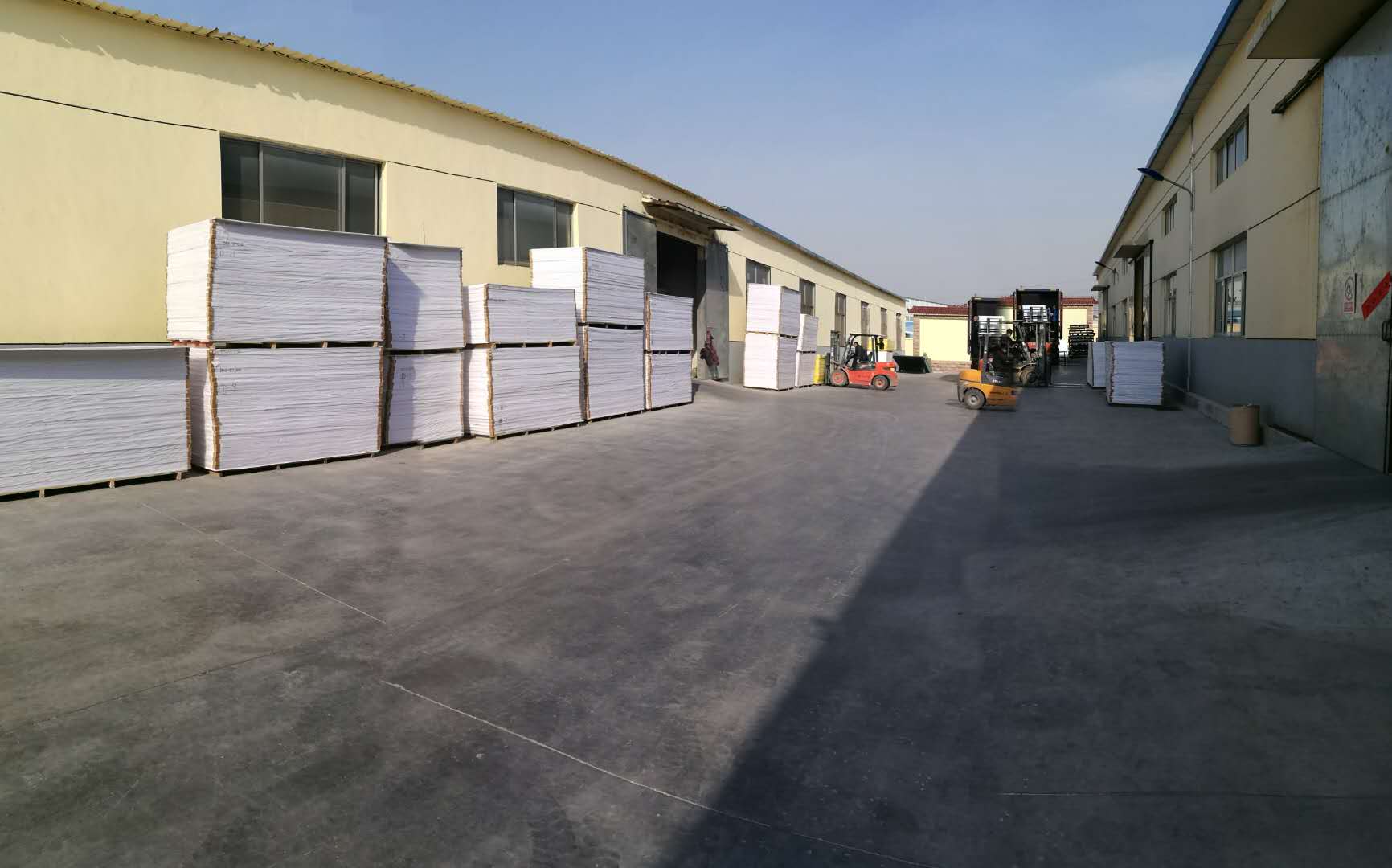
Line count, workshop layout and loading practice are what a site visit or live walk-through is meant to confirm — not the brochure photograph alone.
Check 3 — Export mix: reading the 80% figure correctly
DINGTIAN reports an export ratio of 80%, with main markets in Southeast Asia, the Middle East and South-North America; the capability record adds the EU and Africa. Applied to the reported output, that implies roughly 40,000 tons per year and about 3,360 tons per month exported — a calculated estimate derived from the 50,000-ton annual output and 4,200-ton monthly capacity, not an audited trade figure.
Why the mix matters commercially: a supplier whose business is predominantly export has usually built document routines around certificates of origin, packing lists, bills of lading and destination-specific test reports, and has learned packaging for long sea freight rather than domestic trucking. It also means destination requirements shape what the factory is used to producing. A buyer shipping into the EU benefits from a supplier already holding REACH and RoHS reports; a buyer shipping into the Middle East or Southeast Asia benefits from a supplier familiar with the documentation those markets request.
What supports the export claim
- Redacted bills of lading showing more than one destination region over time.
- Certificates of origin matching the claimed markets.
- A clear statement of which certificate was issued for which market — the REACH and RoHS reports are EU-market documents, while the formaldehyde report is scoped to the global market.
- Stated monthly loading volume: the supplier's client records describe approximately 120 containers loaded per month, and individual distributor clients are described at 10 containers per month.
Boundary: the 80% figure is company-reported. No audited export record was reviewed for this article, so treat the ratio as a claim to be sampled through shipping documents rather than as a measured statistic.
Check 4 — Certificates: a register, not a logo wall
Four documents are published with reference numbers that a buyer can put in front of the issuer. The register below is the version to keep beside the purchase order, because the value of a certificate lies in its number, issuer, standard, scope and date — not in the image of the certificate.
| Document | Reference number | Issuer | Standard and scope | Issued |
|---|---|---|---|---|
| ISO 9001 quality management system | 06924Q10470RO | Kaixin Certification (Beijing) Co., Ltd | GB/T19001-2016 & ISO9001:2015; production of PVC foam board | 18 Apr 2024 |
| Formaldehyde emission | TSNHG2301164301 | SGS | ISO 17226-1:2021; PVC foam board; global market | 10 May 2023 |
| REACH | TSNEC1701167001 | SGS | REACH Regulation (EC) No 1907/2006; PVC foam board; EU market | 3 Jul 2017 |
| RoHS | QDAFN160100422 | SGS | IEC 62321; PVC foam board; EU market | 4 Feb 2016 |
What each document does and does not establish
ISO 9001 (06924Q10470RO) certifies a management system covering the production of PVC foam board, and is listed as valid to 17 April 2027. It says nothing about the mechanical properties of a board. A buyer evaluating in late 2026 should confirm surveillance audit status and the renewal plan before the certificate lapses, because a supplier that cannot show continuity of certification creates a documentation gap in your own quality file.
Formaldehyde (TSNHG2301164301) is an SGS test report issued under ISO 17226-1:2021 and scoped to PVC foam board for the global market. It records a tested result on a sample at the issue date, which is what makes it useful for cabinets, vanities and interior fit-outs where emission documentation is requested.
REACH (TSNEC1701167001, issued 3 July 2017) and RoHS (QDAFN160100422, issued 4 February 2016) are EU-market substance reports. REACH addresses compliance with Regulation (EC) No 1907/2006; RoHS under IEC 62321 addresses restricted substances. Neither is a fire classification, and neither should be presented as one.
Fire behaviour is the clearest limitation in the published set. The product page describes the board as ignition-retardant and self-extinguishing, but no test method, specimen thickness or classification certificate accompanies that description. Industry references commonly cite Class B1/B2 under DIN 4102 and V-0 under UL 94 for PVC foam boards generally, but a general industry rating is not a certificate for a specific SKU. If a project specifies a class, request the classification report for the exact grade and thickness being ordered.
How to verify the numbers
- Send the certificate number to the issuer — Kaixin Certification for the ISO 9001 record, SGS for the three test reports — and confirm status, scope and date.
- Compare the scope wording against what you are buying. A report scoped to PVC foam board does not automatically cover a laminated, coloured or co-extruded variant.
- Ask whether a current report exists for the density and thickness in your specification, particularly where the published report predates your intended use.
Cross-checking the numbers: what arithmetic can and cannot settle
Published figures can be tested against each other before a single document is requested. Three quick calculations, all derived rather than measured, are worth running on any supplier profile.
- Monthly capacity against annual output: 4,200 tons per month × 12 = 50,400 tons, against a stated 50,000 tons per year. The two are consistent within normal rounding.
- Output per unit of plant area: 50,000 tons ÷ 30,000 m² ≈ 1.67 tons per m² per year.
- Output per employee: 50,000 tons ÷ 181 employees ≈ 276 tons per employee per year.
What this establishes is limited but useful: the profile does not contradict itself, which is the minimum standard for a document set you will later rely on. What it does not establish is whether the lines actually run at that rate, or how the figures compare with other suppliers — that comparison requires the same calculation applied to candidates working from equivalent definitions. Note also that a directory listing reproducing the company profile cites 21 production lines, while the company's own material states 22; treat line count as a figure to confirm during a walk-through rather than as a settled specification.
Attach the verification to a SKU, not to the company
Certificates and capacity figures describe a company; the order describes a product. DINGTIAN's published range covers PVC free foam, Celuka, co-extruded and laminated boards, with a stated density range of 0.32–1.0 g/cm³, thickness from 1 mm to 35 mm, standard sheet sizes of 1220×2440 mm, 915×1830 mm, 1560×3050 mm and 2050×3050 mm, glossy and matt finishes, and colours including white, red, yellow, blue, green and black. Second thermoforming and cutting are offered as value-added processing.
| Grade / process | Industry density guidance | Typical application | What to attach to the order |
|---|---|---|---|
| PVC free foam board | 0.4–0.6 g/cm³ (Laird Plastics) | Signage, UV printing, mounting | Density and thickness confirmation for the ordered SKU |
| PVC Celuka foam board | 0.55–0.8 g/cm³ (Laird Plastics) | Cabinets, furniture, vanities | Screw-holding and surface data for the grade |
| Co-extruded, laminated, coloured, high-gloss | Agreed per SKU | Decorative panels, displays, cabinetry faces | Colour and gloss tolerance, lamination adhesion data |
The industry density ranges above come from a published PVC foam board guide and describe general product categories. They are not directly comparable with the supplier's stated 0.32–1.0 g/cm³ range, because the test method, tolerance and product construction behind each figure are not aligned. Use both as inquiry benchmarks, not as a head-to-head specification comparison.
Application fit: what verified evidence changes for the buyer
Signage remains the largest single application for PVC foam board, cited at 35% of demand in a published market guide. The verification work pays off differently in each application.
Advertising and signage
Printability and dimensional stability matter more than certification theatre. A distributor client profile in the supplier's records describes 10 containers per month for advertising and furniture material over a 5–10 year relationship, and reports that the board weighs about one third of same-thickness wood, which reduces handling and hoisting effort and lowers installation cost on large-format signs. Those are client-reported outcomes for that client's application, not a performance guarantee for another buyer's job.
Cabinetry and interior fit-out
Here the formaldehyde report and the RoHS and REACH positions carry real weight, because the panel sits inside a living or wet space. A furniture-factory client profile describes use in bath cabinet panels, citing moisture resistance and screw holding. The practical check remains the same: the report on file should match the grade and thickness supplied.
Where caution is warranted
Fire performance, as noted, has no published classification. Marine, transport-interior and regulated construction uses should be treated as specification-led purchases in which the classification report, not the product page, decides eligibility.
Manufacturer-direct versus intermediary: a comparison of evidence types
This is not a supplier ranking. It is a comparison of what different seller structures can typically evidence, which is what the verification framework actually tests.
- Manufacturer-direct: the certified scope, the site address and the production line can be matched to the same legal entity; test reports can be traced to a specific production site; a walk-through is possible.
- Trading intermediary: product documents are often available, but the certificate scope may belong to a third-party factory; the address on the invoice is not the production address; a sample may come from a source that will not run your repeat order.
- Mixed model: some suppliers manufacture part of the range and trade the remainder. In that case, ask which SKUs are produced in-house and apply the certificate scope and site check to each.
None of these structures is disqualifying. The point is that the same four evidence layers — site, port, export mix, certificate register — should be applied to the entity that will actually produce and ship the goods.
A pre-order verification checklist
- Business licence address matched to the audit address and the bill of lading shipper block.
- Production capability confirmed on site or by live video: line count, workshop layout, and the line assigned to your grade.
- Port of loading confirmed across at least three shipments, and matched to the port named in the quotation.
- Incoterm and cost split confirmed: FOB, CIF or EXW, with the named port.
- Declared HS classification checked against the product and the destination tariff line.
- ISO 9001 certificate number verified with the issuer, with the April 2027 expiry and renewal plan noted.
- REACH, RoHS and formaldehyde report numbers verified with SGS, and scopes matched to the exact SKU.
- Fire classification report requested if the project specifies a class.
- Customization confirmed in writing: size, thickness, density and colour, under OEM or ODM arrangements, with the minimum order of one 20ft GP container and the agreed lead time written into the contract.
- Acceptance criteria agreed: pre-shipment testing, third-party inspection where required, and payment terms of 30% in advance with the balance against a copy of the bill of lading.
Market context and what it means for verification effort
Commercial research estimates the global PVC foam sheet market at USD 2.28 billion in 2024, with a projected compound annual growth rate of 4.99% over 2025–2035. That is a forecast from a commercial research publisher, published with a stated methodology, and it says nothing about any individual supplier's share or capability.
Its practical value is narrower: as demand broadens across signage, construction and furniture, the number of sellers presenting similar capability claims grows faster than the number of sellers able to document them. For a buyer, that shifts effort from comparing marketing language to verifying documents — and makes a cluster location useful for a different reason than the supplier usually claims. A plant inside an established plastics cluster in Zibo is easier to audit, easier to visit alongside other candidate suppliers, and easier to check against freight routing through Shandong's ports.
Frequently asked questions
How can a buyer confirm that a PVC foam board supplier actually operates the plant it lists?
Match three records to the same address: the business licence, the site used for an audit or live video walk-through, and the shipper block on a recent bill of lading. Then check that the ISO 9001 scope names production rather than sales, because a scope limited to trading activity will not tie the certificate to a factory. An on-site visit, or a scheduled live walk-through of the lines and warehouse, remains the most direct confirmation.
Which documents show a supplier's real export mix rather than a claimed percentage?
Redacted bills of lading across several shipments, certificates of origin issued for the claimed destination markets, and the market-specific test reports held on file. These show port of loading, consignee region and document routine. The 80% export ratio itself is a company-reported figure, so it should be sampled through shipping documents rather than accepted as an audited statistic.
How do I verify ISO 9001, REACH, RoHS and formaldehyde certificate numbers?
Send each reference number to its issuer and confirm status, scope and date. The ISO 9001 record is 06924Q10470RO, issued by Kaixin Certification (Beijing) Co., Ltd under GB/T19001-2016 and ISO9001:2015, valid to 17 April 2027. The three SGS reports are TSNHG2301164301 for formaldehyde under ISO 17226-1:2021, TSNEC1701167001 for REACH under Regulation (EC) No 1907/2006, and QDAFN160100422 for RoHS under IEC 62321. Check that each scope covers the specific grade, density and thickness you are ordering.
Does shipping through Qingdao or Rizhao port change the buyer's cost or schedule?
Yes, because the named port of loading sets the FOB quotation, the inland leg before loading and the sailings available for your destination. Confirm that the port in the quotation matches the port of loading on recent bills of lading, and that the Incoterm — FOB, CIF or EXW — states the same cost split. A forwarder quotation for your own destination is the reliable basis for freight cost, since port proximity alone does not establish rates or schedule reliability.
Can a supplier customize size, thickness, density and colour while keeping certification valid?
Customization and certification are separate questions. DINGTIAN offers OEM and ODM production with customization of size, thickness, density and colour, plus second thermoforming and cutting, and states a minimum order of one 20ft GP container. Because a customized SKU differs from the sample that was tested, the buyer should confirm which certificate or test report covers the customized grade and thickness, rather than assuming a report scoped to standard PVC foam board applies unchanged.
Reference document: the DINGTIAN company brochure (PDF) and the corporate site at dingtianpvcfoamboard.com carry the specifications and certificate details referred to above. Company-reported figures should be confirmed against the documents issued for your specific order.
Tem questões ou precisa de mais detalhes?
Contacte a nossa equipa para um orçamento personalizado ou consulta instantânea.
Solicitar orçamento
Preencha o formulário abaixo e a nossa equipa entrará em contacto com uma proposta personalizada.
Chat direto do WhatsApp
Prefere conversar em tempo real? Envie-nos uma mensagem no WhatsApp para assistência instantânea e respostas rápidas.
- Obter orçamento personalizado
- Partilhar fotos ou documentos
- Discuta as suas necessidades diretamente
Geralmente responde em 5–30 minutos durante o horário de expediente.